Free printable practice
Fruits Vegetables Practice Activities
Class 1 EVS worksheets help children identify fruits and vegetables, sort them, name them, and connect healthy foods with caring for the body.
Free printable worksheet PDFs
Preview every available page, then download the free worksheet PDF for home, homeschool, tutoring, or classroom practice.
Preview the exact activity before downloading it.
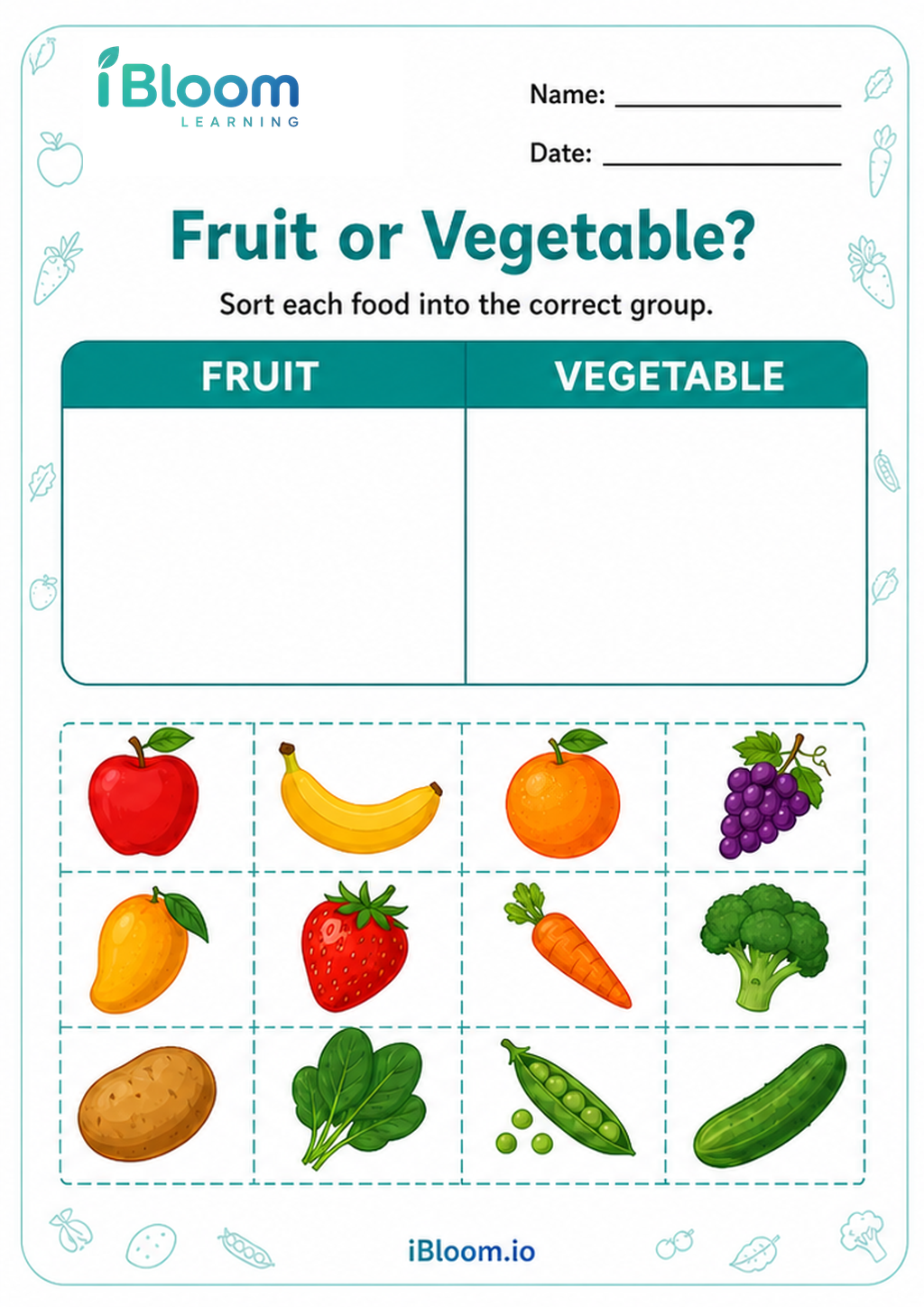 Fruit or Vegetable?Class 1 printable practice for Fruits and Vegetables.Class 1Free PDF preview
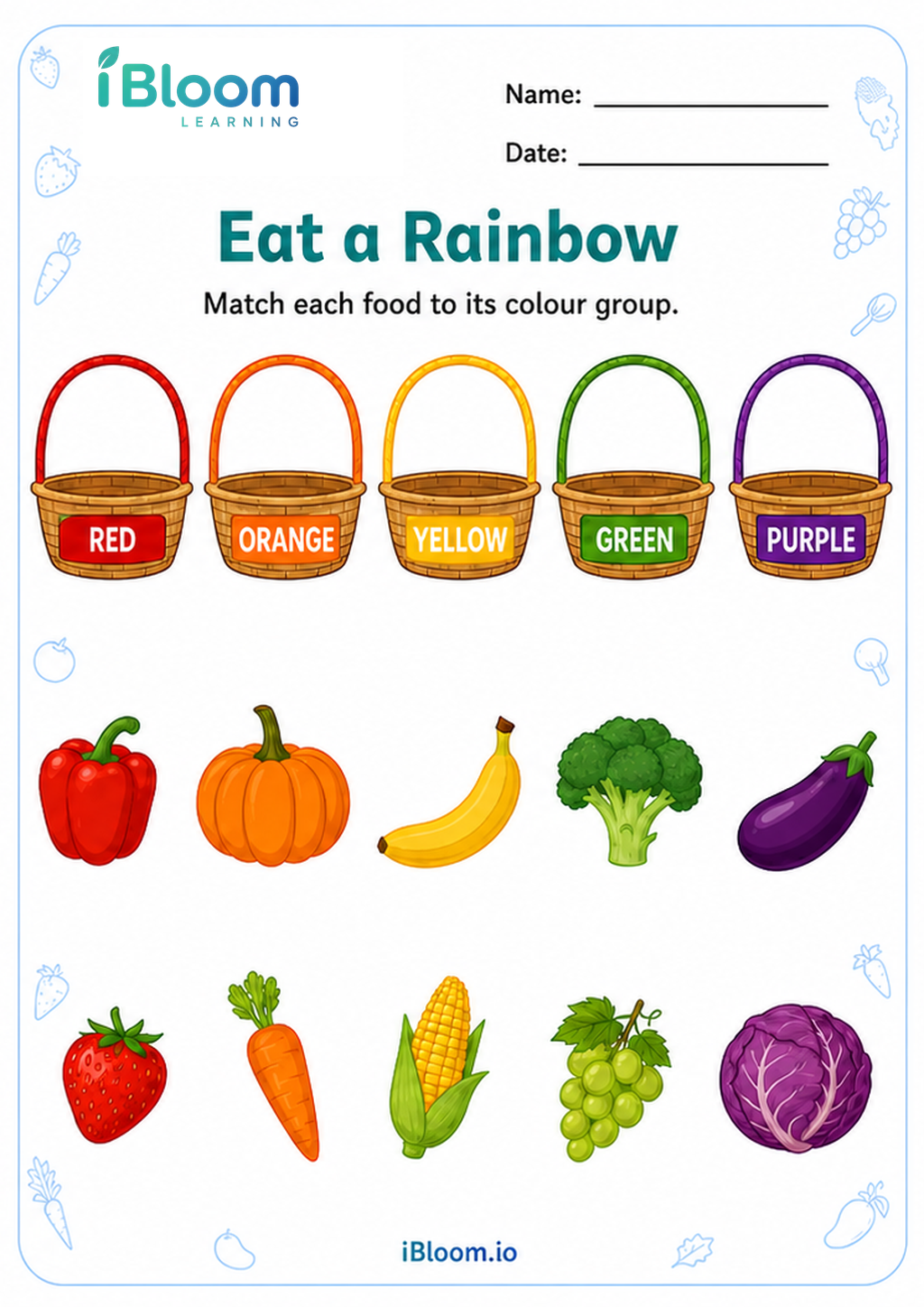 Eat a RainbowClass 1 printable practice for Fruits and Vegetables.Class 1Free PDF preview
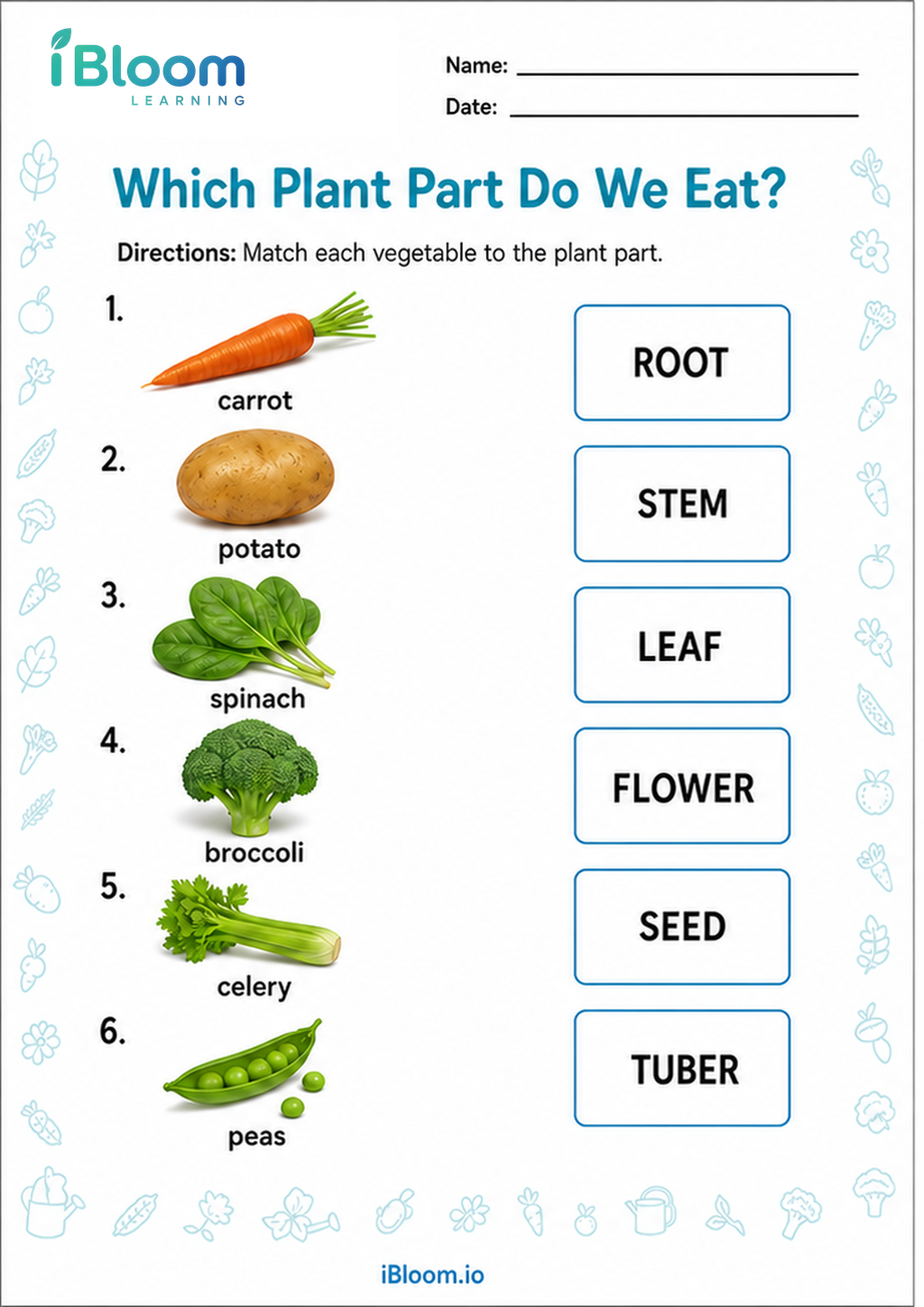 Which Plant Part Do We Eat?Class 1 printable practice for Fruits and Vegetables.Class 1Free PDF preview
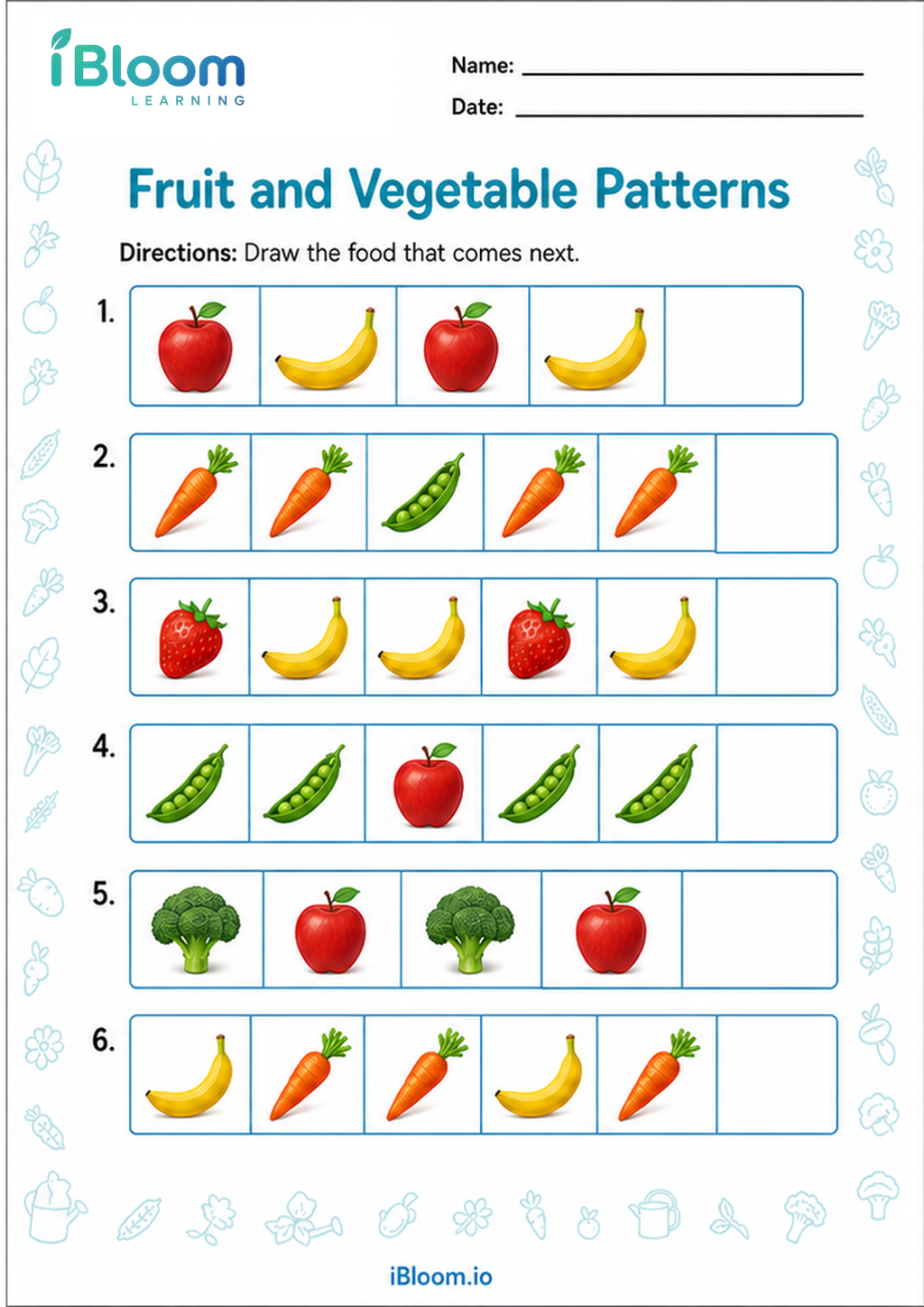 Fruit and Vegetable PatternsClass 1 printable practice for Fruits and Vegetables.Class 1Free PDF preview
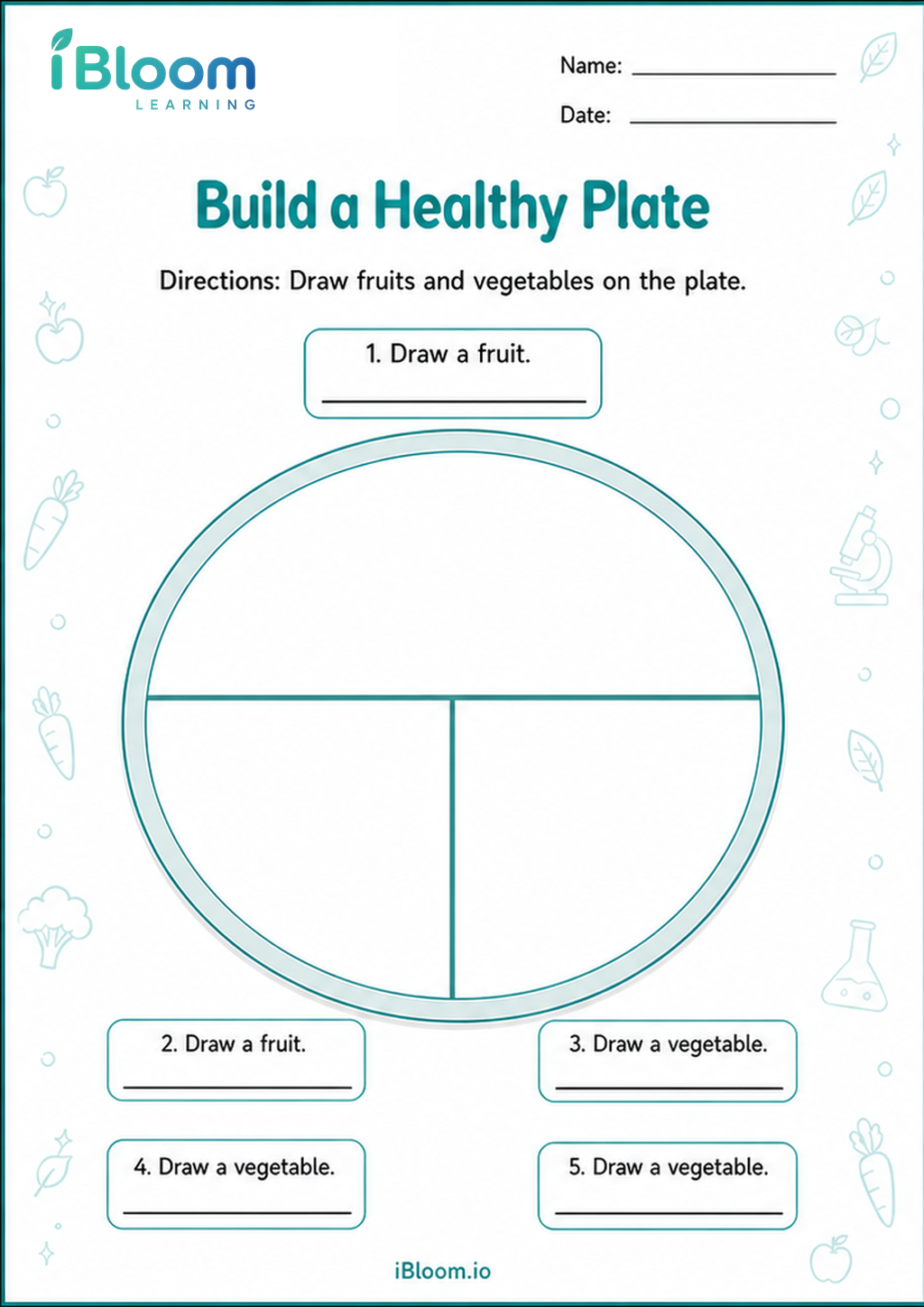 Build a Healthy PlateClass 1 printable practice for Fruits and Vegetables.Class 1Free PDF preview
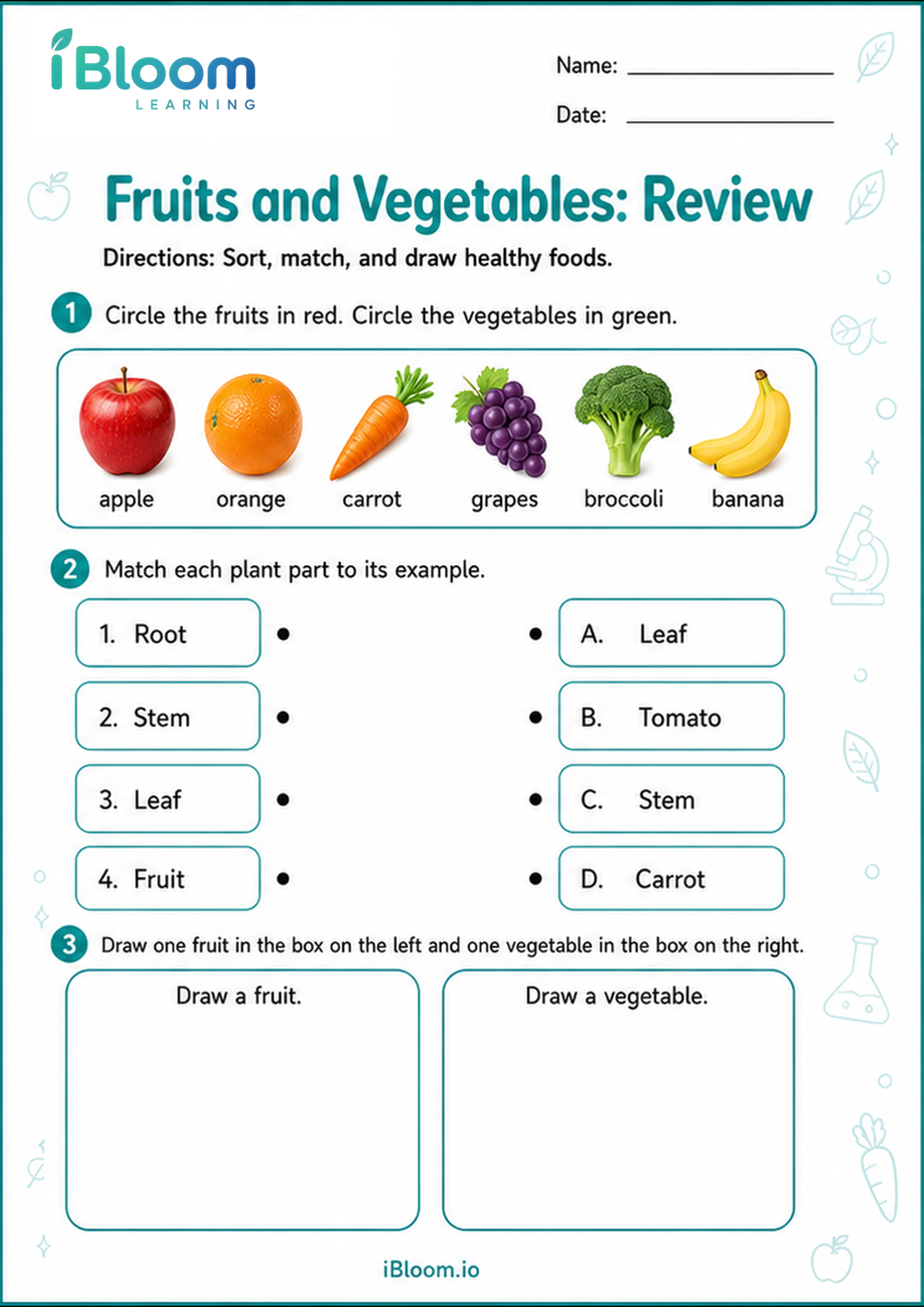 Fruits and Vegetables: ReviewClass 1 printable practice for Fruits and Vegetables.Class 1Free PDF preview
Practice that builds confidence
What this Class 1 EVS skill covers
These Class 1 Science and EVS worksheets help children practise recognising fruits and vegetables as familiar foods that help the body grow, stay active, and remain healthy. Children build vocabulary by naming common items and noticing colour, shape, size, taste, and where they may come from.
The printable activities include picture identification, matching, circling, sorting, colouring, and simple written responses. Each task keeps the focus on everyday fruits and vegetables so children can connect classroom learning with foods they see at home, in lunch boxes, and in the market.
In the Human Body section, fruits and vegetables are taught as healthy foods that support our body. Children learn to identify familiar examples such as mango, banana, apple, carrot, potato, tomato, spinach, and peas, then use words like fruit, vegetable, fresh, healthy, colour, seed, leaf, and root in simple observations.

From naming to sorting
The worksheets move from easy recognition to comparison. A child may first match a fruit picture to its name, then circle only vegetables in a mixed group, and later sort foods into two columns. This progression builds visual discrimination, early classification, and science vocabulary without making the activity too abstract for Class 1 learners.
A simple parent routine
At home, choose three fruits or vegetables from the kitchen. Ask your child to name each one, describe its colour, say whether it is usually eaten raw or cooked, and place it in a fruit or vegetable group. Then use one worksheet page to reinforce the same idea. If the child is unsure, compare with a real item or a picture instead of giving the answer immediately.

Classroom and centre use
Teachers can use these printables after a food discussion, during EVS notebook work, or in small group centres. Picture-based pages work well for children who are still developing reading fluency, while label-and-match tasks support word recognition. A quick class sorting chart on the board can prepare children before independent practice.

Common errors to watch for
Children may sort by sweetness instead of by fruit or vegetable, confuse tomato with only one category, or rely on colour clues such as calling every green item a vegetable. Some may know the food in their home language but not in English. Encourage them to observe the whole item, repeat the new word, and explain their choice in a short sentence.
Free printable PDF download
Use this class 1 fruits and vegetables worksheet page to preview the activity, print it, or download it as a PDF for quick practice. It works well for homework, homeschool lessons, tutoring, morning work, revision, and classroom centers.
Answers and answer key support
After the child completes the worksheet independently, parents and teachers can use the answer support or answer key information to check the work, review mistakes, and choose the next practice step.
Why iBloom worksheets help
iBloom worksheets use clear pictures, familiar Indian food examples, and small steps so children can succeed without guesswork. A child-friendly strategy is: “Look, name, tell one clue, then sort.” This keeps the thinking visible and helps young learners connect healthy eating vocabulary with real-life choices.
Helpful answers
Frequently asked questions
What do Class 1 children learn in fruits and vegetables worksheets?
They learn to recognise common fruits and vegetables, name them, match pictures to words, sort them into groups, and describe simple features such as colour, shape, and whether the food is commonly eaten raw or cooked.
How are fruits and vegetables connected to the Human Body topic?
In Class 1 EVS, fruits and vegetables are introduced as healthy foods that help us care for our body. The worksheets connect food identification with simple ideas about eating fresh, nutritious foods.
Can these worksheets be used if my child knows the food names in another language?
Yes. First let the child say the name in the home language, then introduce or repeat the English word. Matching and picture tasks make it easier to build vocabulary gradually.
What is a common mistake children make while sorting fruits and vegetables?
Many children sort only by taste or colour, such as thinking all sweet foods are fruits or all green foods are vegetables. Ask them to give one clue and compare with familiar examples to build better reasoning.
How can I extend these activities at home?
Use real fruits and vegetables from the kitchen or market. Ask your child to name, count, describe, and group them before completing a worksheet page for extra practice.
Is this class 1 fruits and vegetables worksheet free?
Yes. You can preview it for free and use the printable worksheet for home or classroom practice.
Can I download this class 1 fruits and vegetables worksheet as a PDF?
Yes. Use the worksheet download option to save a printable PDF, or print the worksheet directly from the page.
Does this class 1 fruits and vegetables worksheet include answers or an answer key?
When the activity has fixed answers, iBloom includes answer support so parents and teachers can check the completed worksheet.