Free printable practice
Environment Practice Activities
Class 3 Science and EVS worksheets on natural resources and reduce, reuse, recycle habits for practical environmental awareness.
Explore Environment
Free printable worksheet PDFs
Preview every available page, then download the free worksheet PDF for home, homeschool, tutoring, or classroom practice.
Preview the exact activity before downloading it.
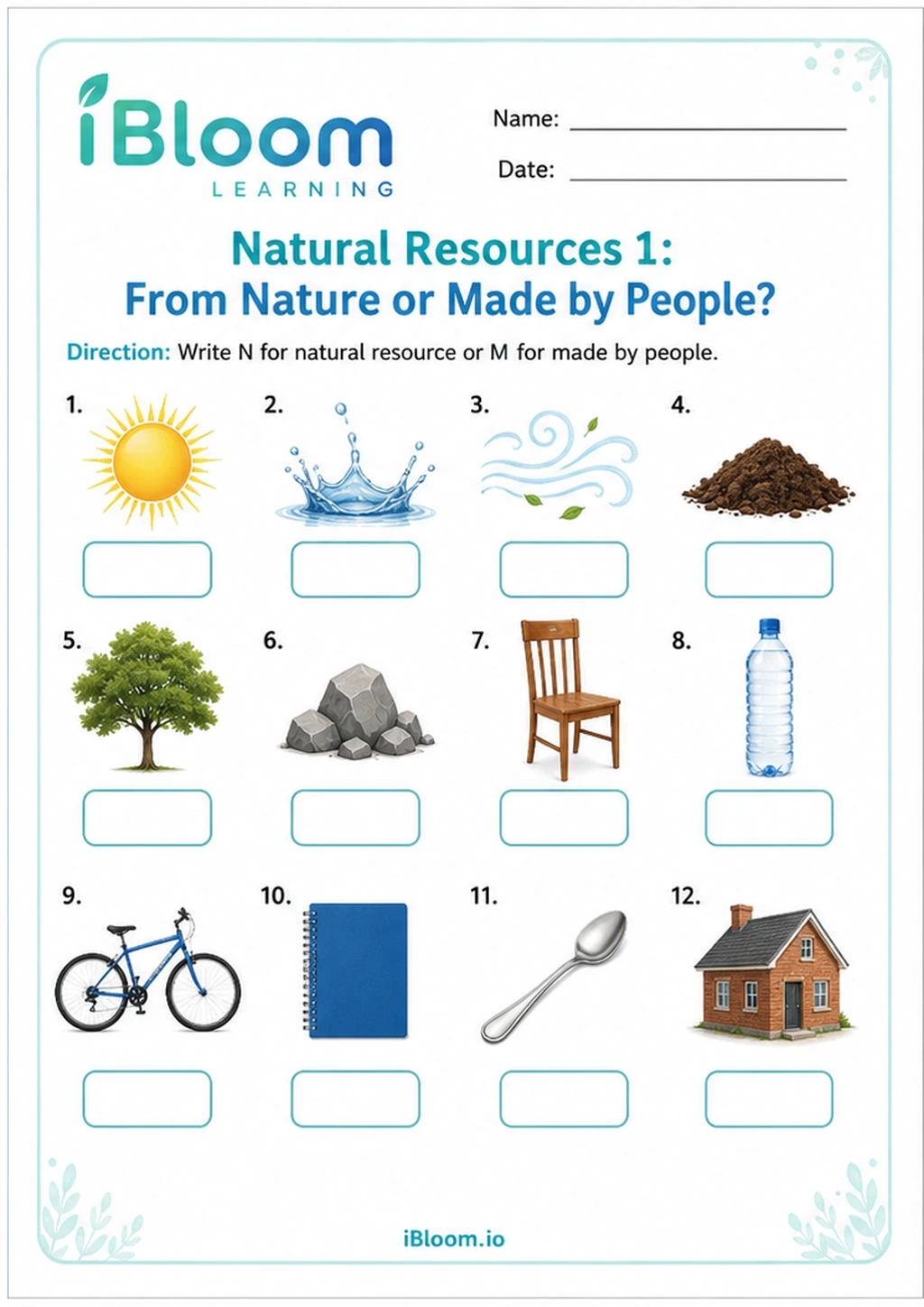 Natural Resources 1: From Nature or Made by People?Class 3 printable practice for Natural Resources.Class 3Free PDF preview
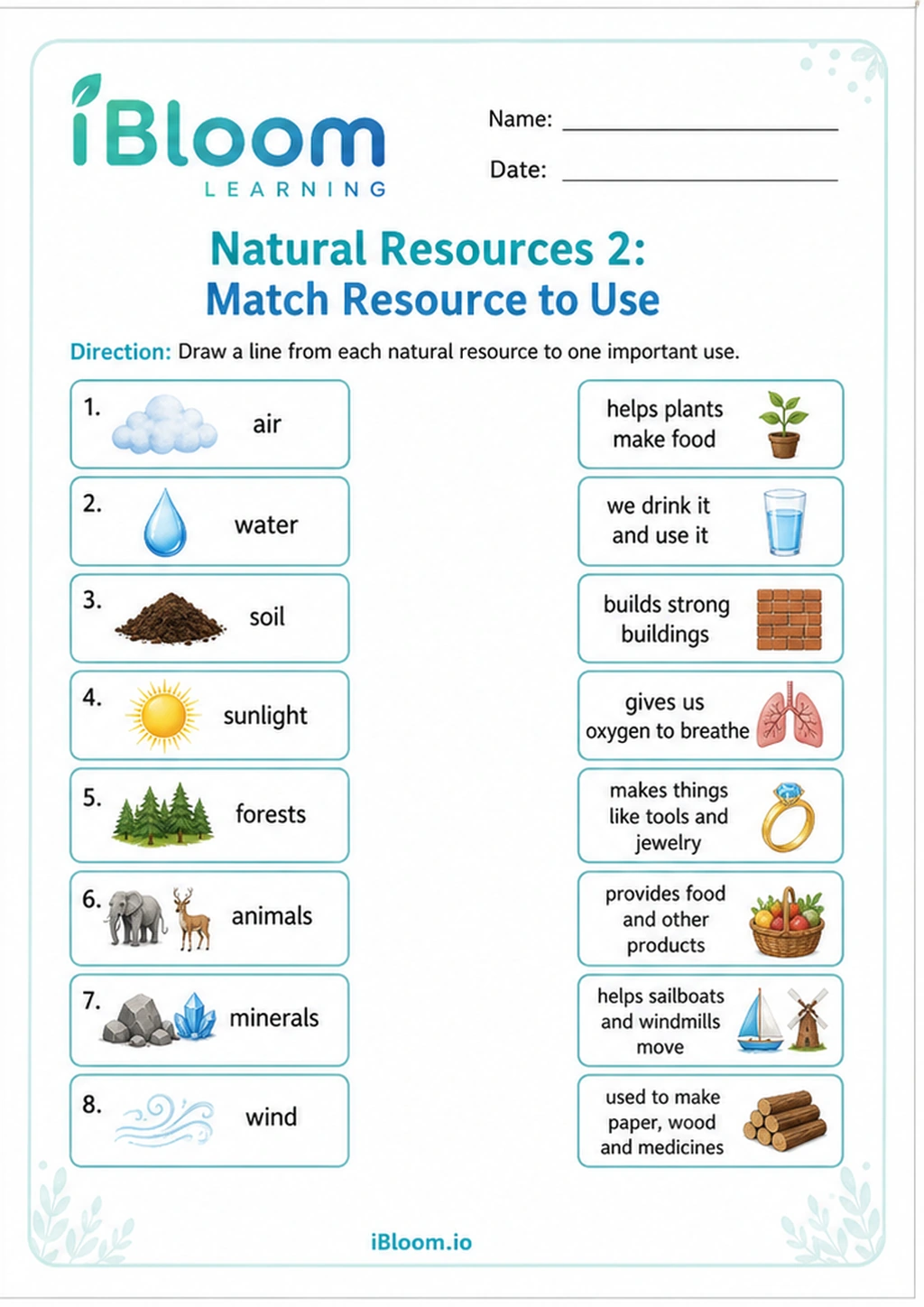 Natural Resources 2: Match Resource to UseClass 3 printable practice for Natural Resources.Class 3Free PDF preview
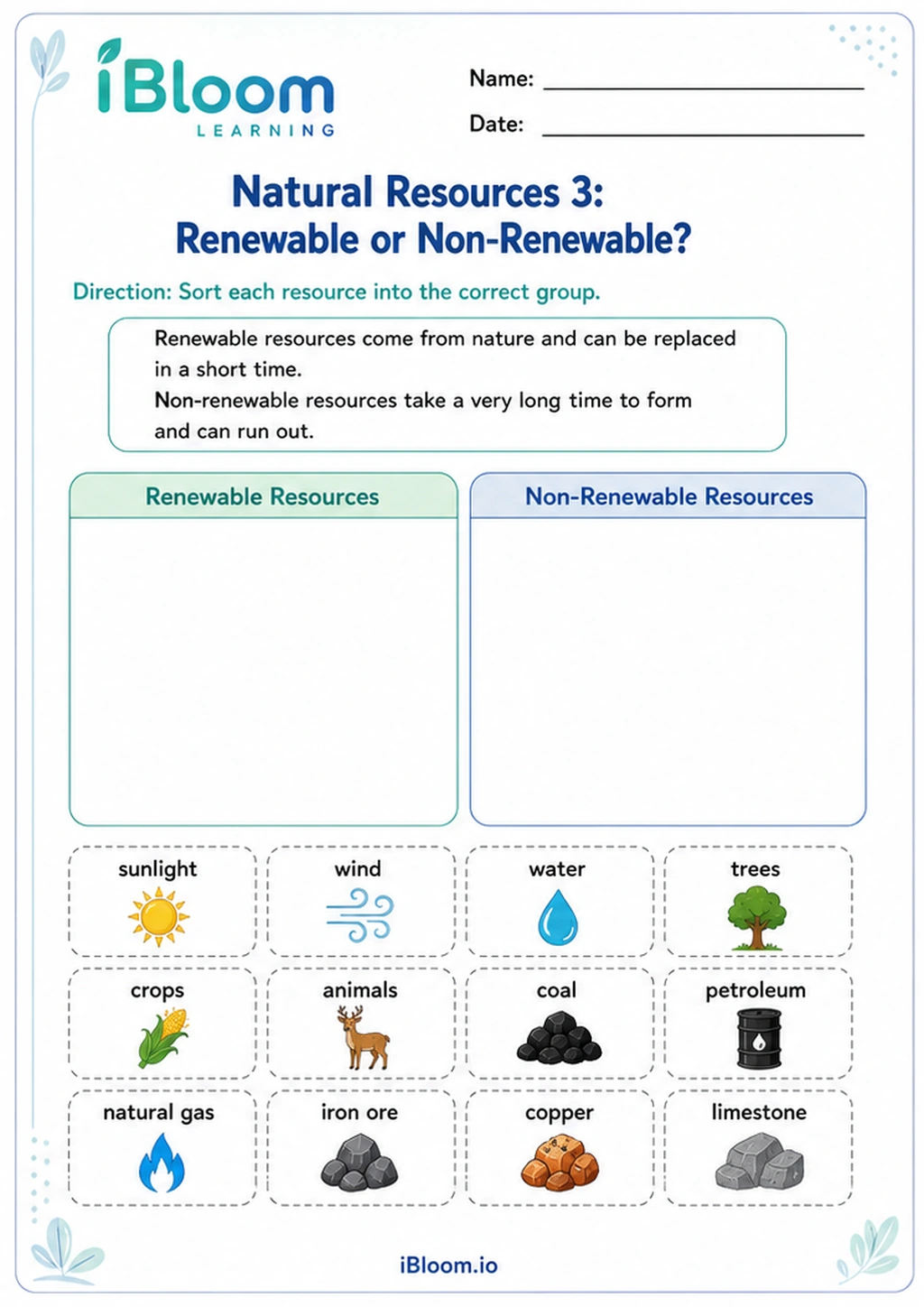 Natural Resources 3: Renewable or Non-Renewable?Class 3 printable practice for Natural Resources.Class 3Free PDF preview
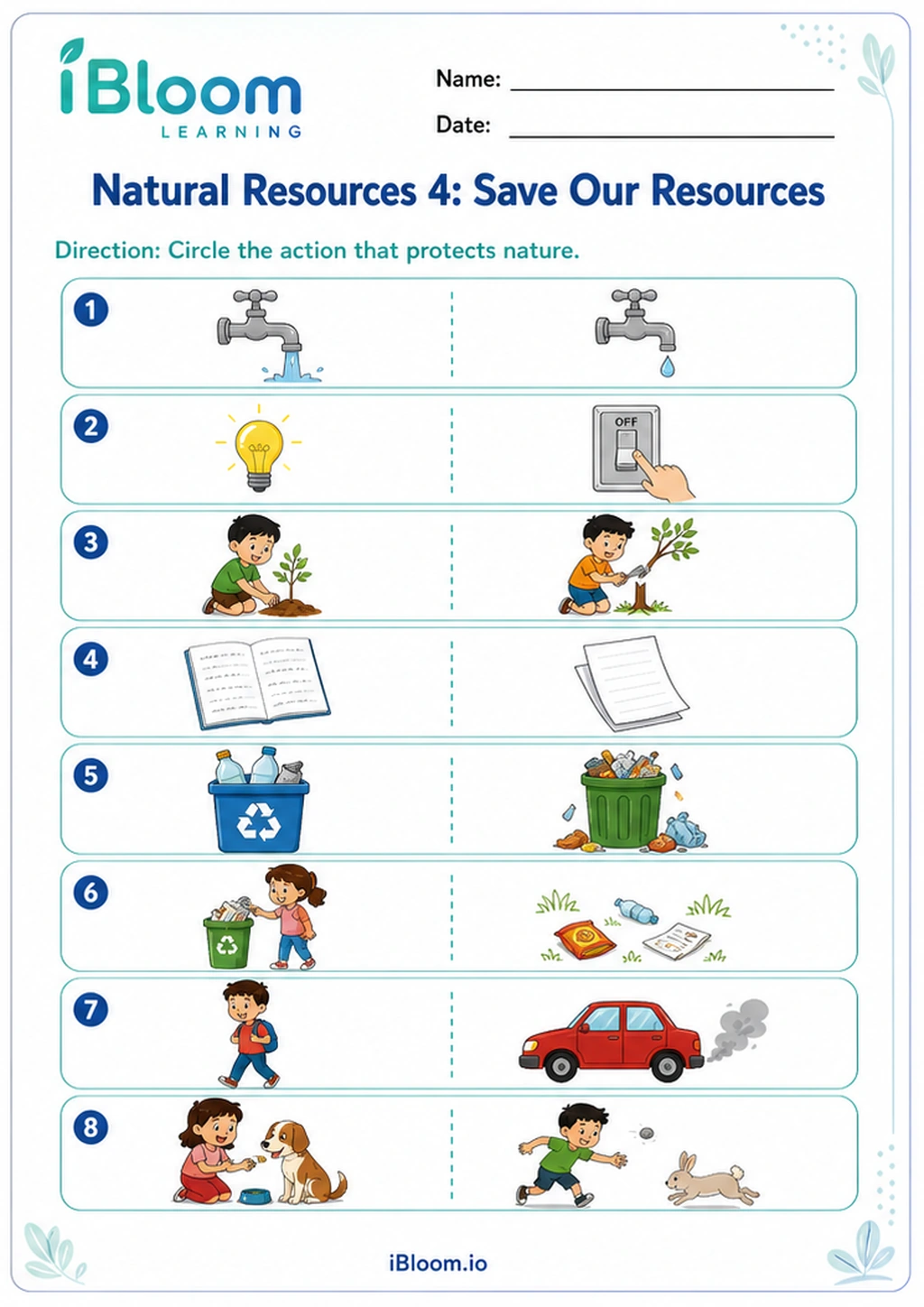 Natural Resources 4: Save Our ResourcesClass 3 printable practice for Natural Resources.Class 3Free PDF preview
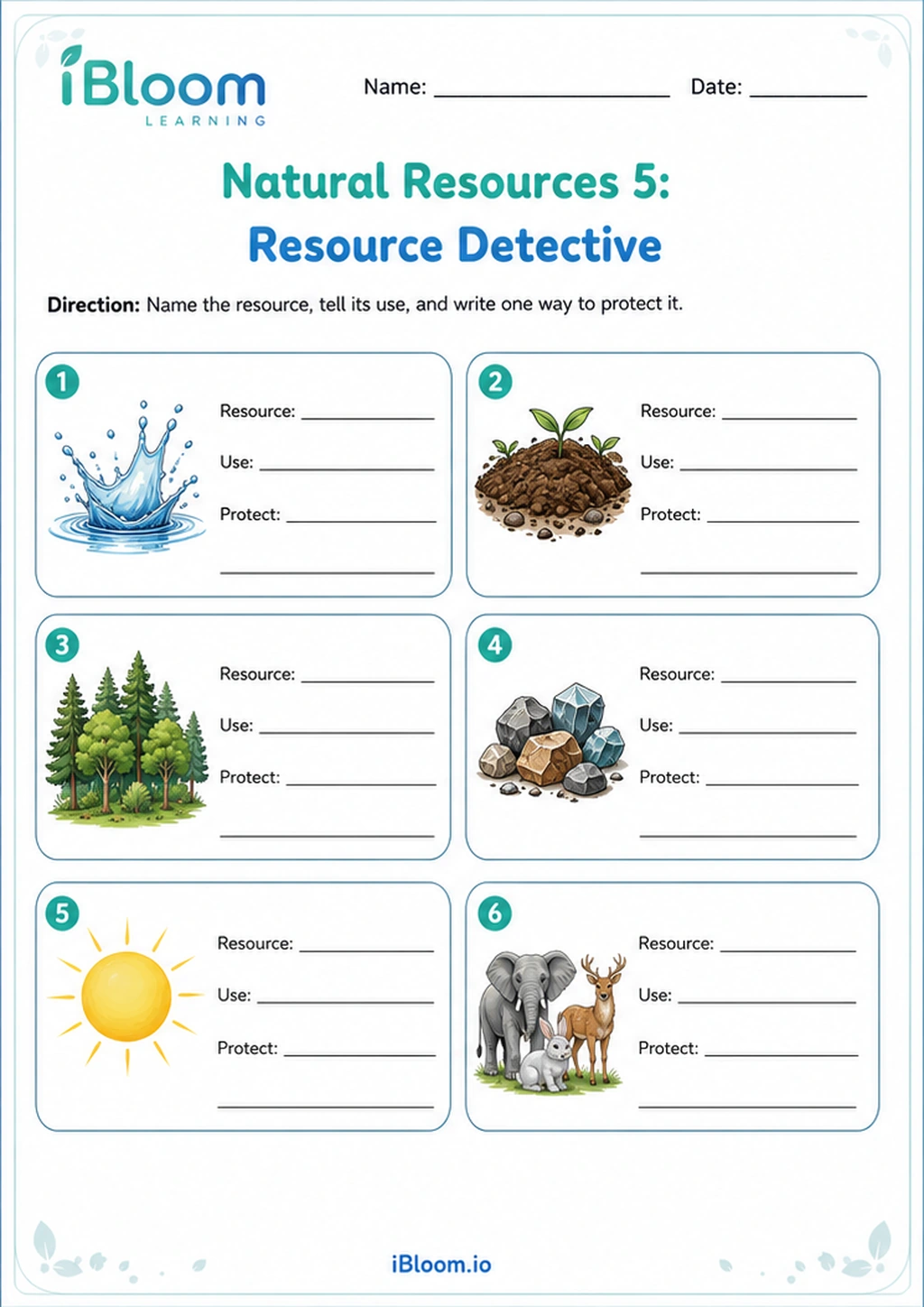 Natural Resources 5: Resource DetectiveClass 3 printable practice for Natural Resources.Class 3Free PDF preview
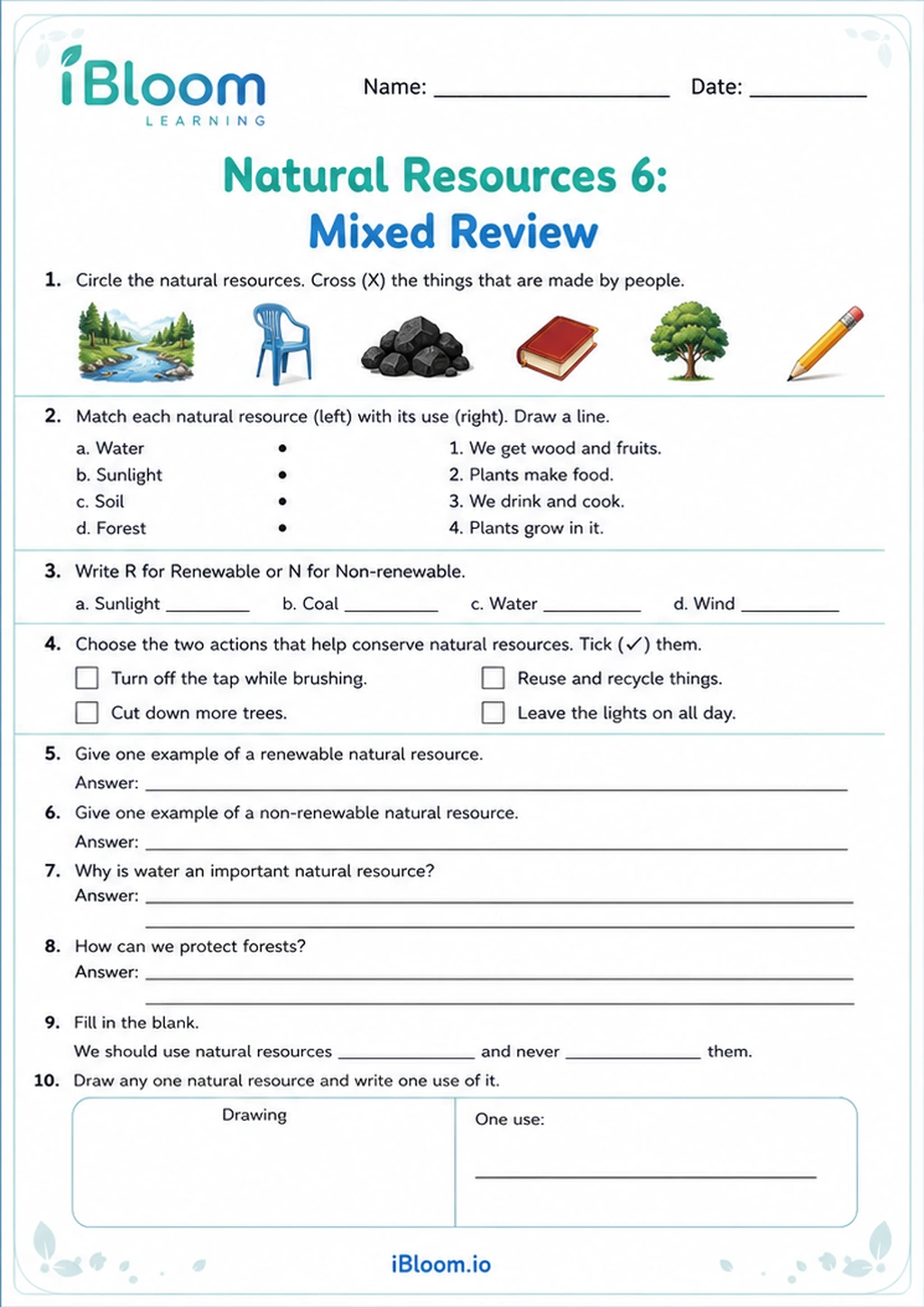 Natural Resources 6: Mixed ReviewClass 3 printable practice for Natural Resources.Class 3Free PDF preview
Practice that builds confidence
Understanding natural resources
These Class 3 Environment practice activities help children understand how air, water, soil, plants, animals and sunlight support daily life. Learners identify natural resources, sort examples, and connect classroom EVS ideas with what they see at home, school and outdoors.
The printable worksheets include observation-based questions, matching, short answers, picture prompts and simple sorting tasks on natural resources and reduce, reuse, recycle. Children practise using clear environmental vocabulary while thinking about careful use of materials.
Class 3 learners begin by naming resources that come from nature, such as water, air, soil, sunlight, forests, minerals, plants and animals. The activities guide them to see that some resources are used for drinking, growing food, building homes, making clothes or getting energy. Questions may ask children to group resources, complete sentences or explain why water and soil must be protected.

Reduce, reuse and recycle in daily life
The worksheets move from identifying resources to making responsible choices. Children practise the meaning of reduce, reuse and recycle through familiar examples: using both sides of paper, carrying a cloth bag, refilling a water bottle, repairing useful items, separating waste, and recycling paper, metal, plastic or glass where facilities are available.
A simple parent routine
At home, choose one object each day, such as a notebook, pencil, lunch box or newspaper. Ask: What natural resource helped make it? Can we reduce its use, reuse it, or recycle it? Let your child answer in one or two sentences, then complete one worksheet question. This makes EVS practical instead of only memory-based.

Classroom uses for teachers
Teachers can use these pages for warm-ups, EVS notebook work, revision, group discussions or environment-themed centres. A sorting worksheet can become a board activity where pupils place examples under “natural resource”, “reduce”, “reuse” or “recycle”. Short-answer tasks are useful for checking whether children can explain ideas in their own words.

Common errors to watch for
Children may think all waste can be recycled, or that reuse and recycle mean the same thing. Some may list only water and trees as natural resources and forget air, soil or sunlight. Encourage precise vocabulary: reduce means use less, reuse means use again, and recycle means process waste to make something useful.
Free printable PDF download
Use this class 3 environment worksheet page to preview the activity, print it, or download it as a PDF for quick practice. It works well for homework, homeschool lessons, tutoring, morning work, revision, and classroom centers.
Answers and answer key support
After the child completes the worksheet independently, parents and teachers can use the answer support or answer key information to check the work, review mistakes, and choose the next practice step.
Why iBloom worksheets help
The practice is built around Class 3 Science and EVS language, with clear prompts and everyday Indian contexts. A child-friendly strategy is: “Name it, use it, save it.” First name the resource, then say how people use it, then suggest one way to protect it.
Helpful answers
Frequently asked questions
What do Class 3 children practise in these Environment worksheets?
They practise identifying natural resources, explaining how people use them, and choosing responsible habits such as reducing waste, reusing items and recycling suitable materials.
Are these worksheets more suitable for Science or EVS?
They fit the Science and EVS breadcrumb for Class 3 because the activities combine environmental science ideas with everyday observation and responsible behaviour.
How can I explain reduce, reuse and recycle to my child?
Use simple examples: reduce means use less paper or water, reuse means use a bottle or bag again, and recycle means send materials like paper or metal to be processed into useful products.
Do the worksheets include natural resources beyond water and trees?
Yes. Children work with a wider range of resources such as air, soil, sunlight, plants, animals and materials from nature, depending on the activity.
Can teachers use these pages for group work?
Yes. The sorting, matching and short-answer tasks work well for pairs or small groups, especially when pupils discuss examples from school, home and the local environment.
Is this class 3 environment worksheet free?
Yes. You can preview it for free and use the printable worksheet for home or classroom practice.
Can I download this class 3 environment worksheet as a PDF?
Yes. Use the worksheet download option to save a printable PDF, or print the worksheet directly from the page.
Does this class 3 environment worksheet include answers or an answer key?
When the activity has fixed answers, iBloom includes answer support so parents and teachers can check the completed worksheet.