Free printable practice
Natural Resources Practice Activities
Class 3 learners explore natural resources and how air, water, soil, forests, minerals, and sunlight support daily life.
Free printable worksheet PDFs
Preview every available page, then download the free worksheet PDF for home, homeschool, tutoring, or classroom practice.
Preview the exact activity before downloading it.
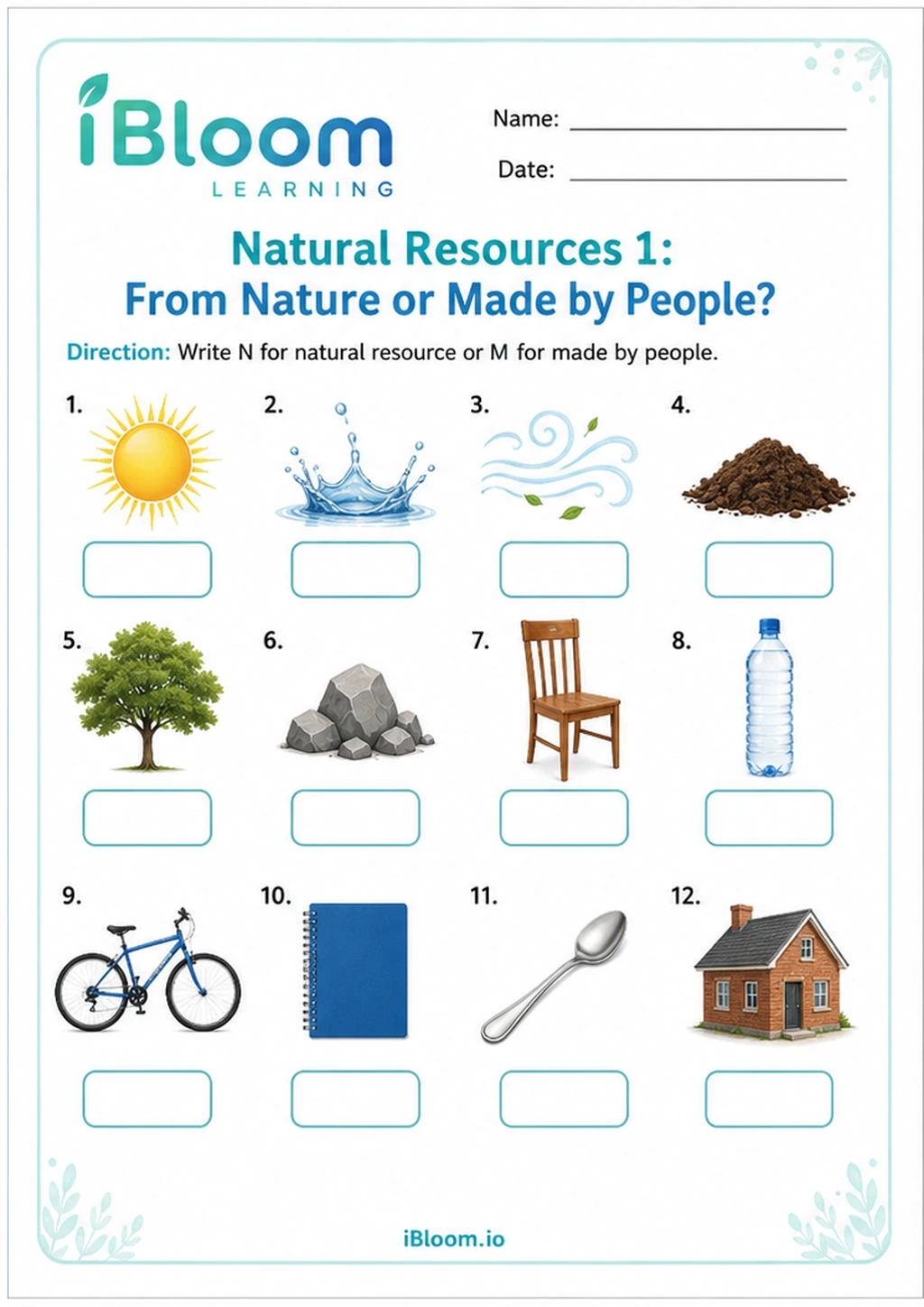 Natural Resources 1: From Nature or Made by People?Class 3 printable practice for Natural Resources.Class 3Free PDF preview
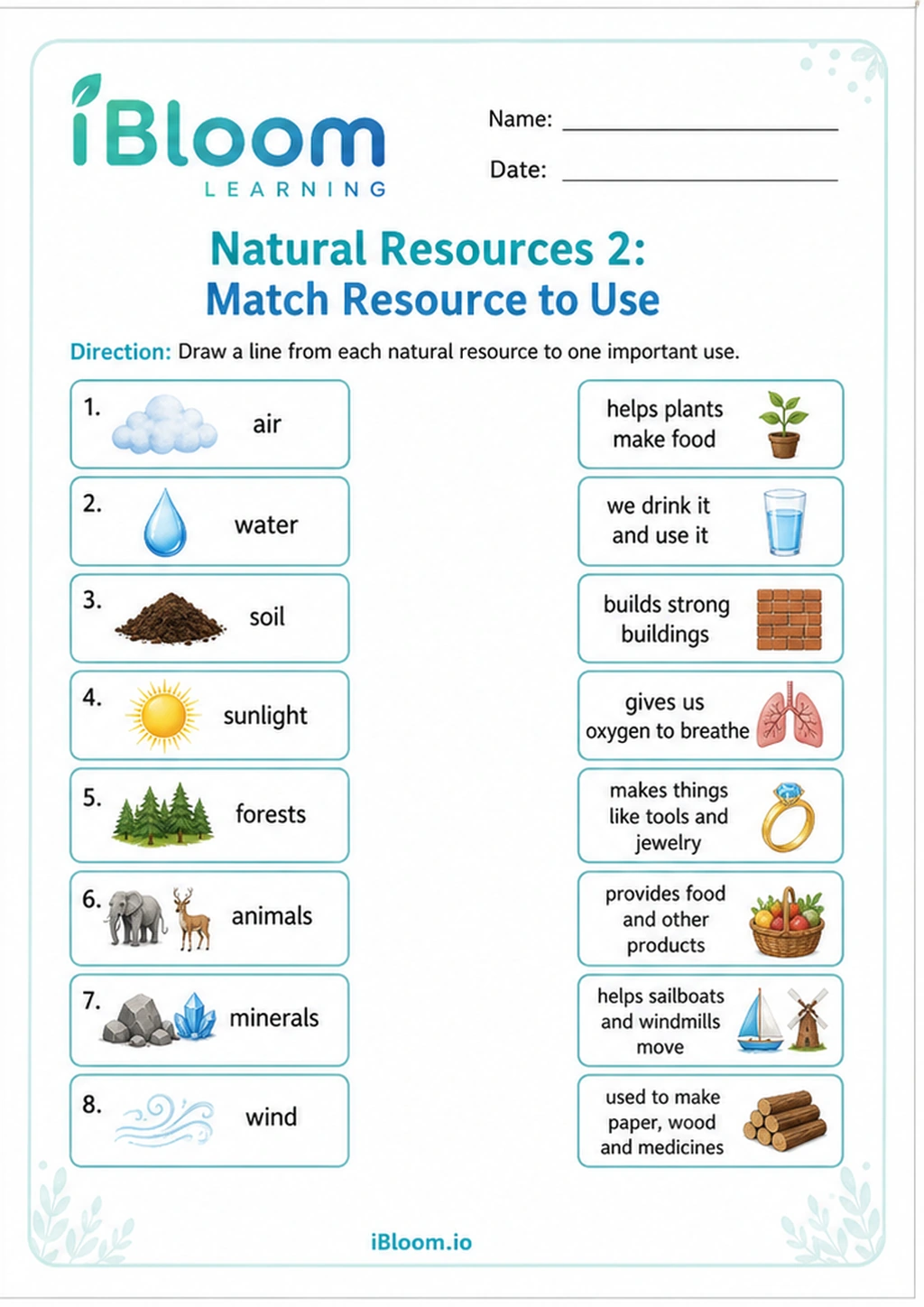 Natural Resources 2: Match Resource to UseClass 3 printable practice for Natural Resources.Class 3Free PDF preview
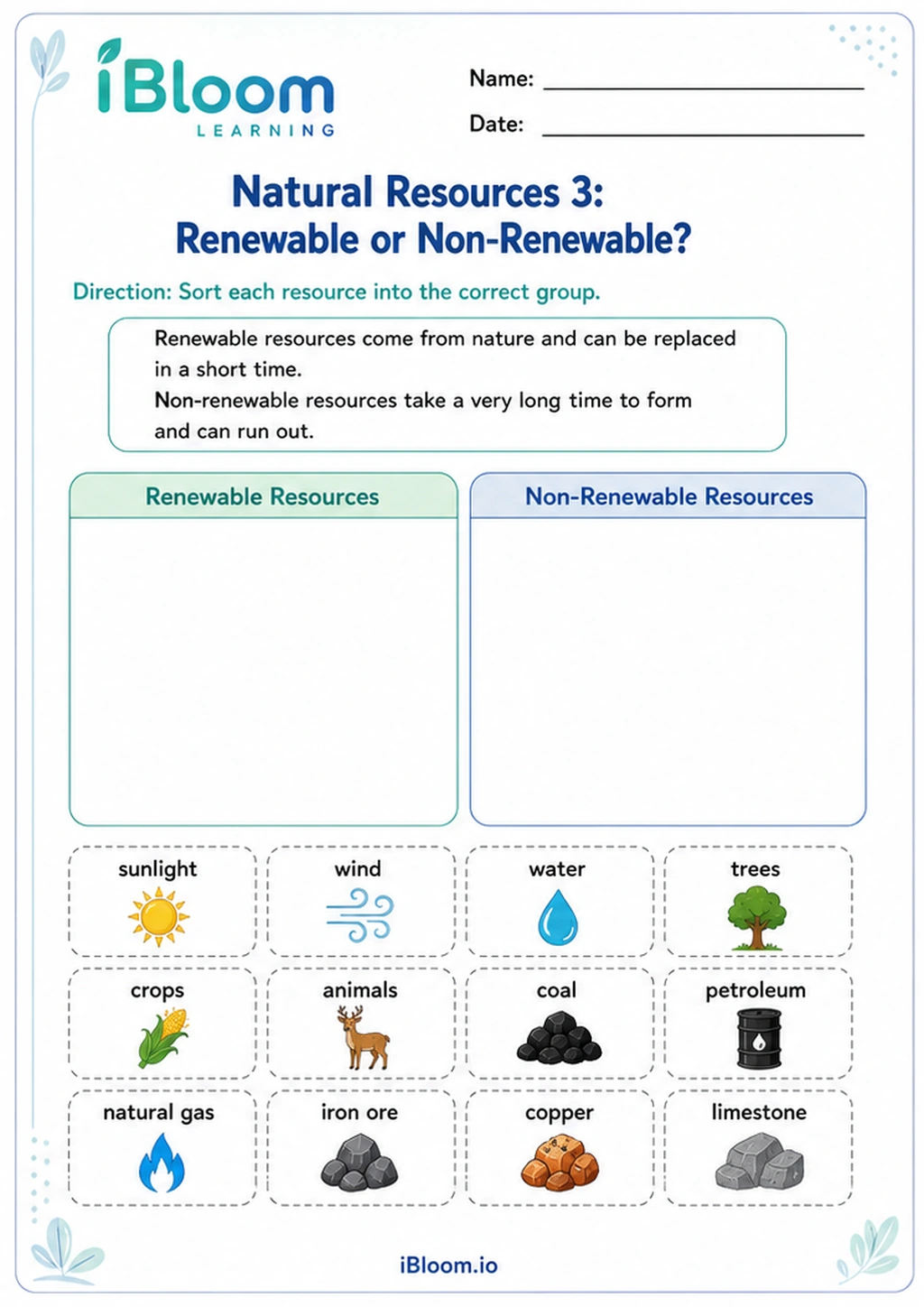 Natural Resources 3: Renewable or Non-Renewable?Class 3 printable practice for Natural Resources.Class 3Free PDF preview
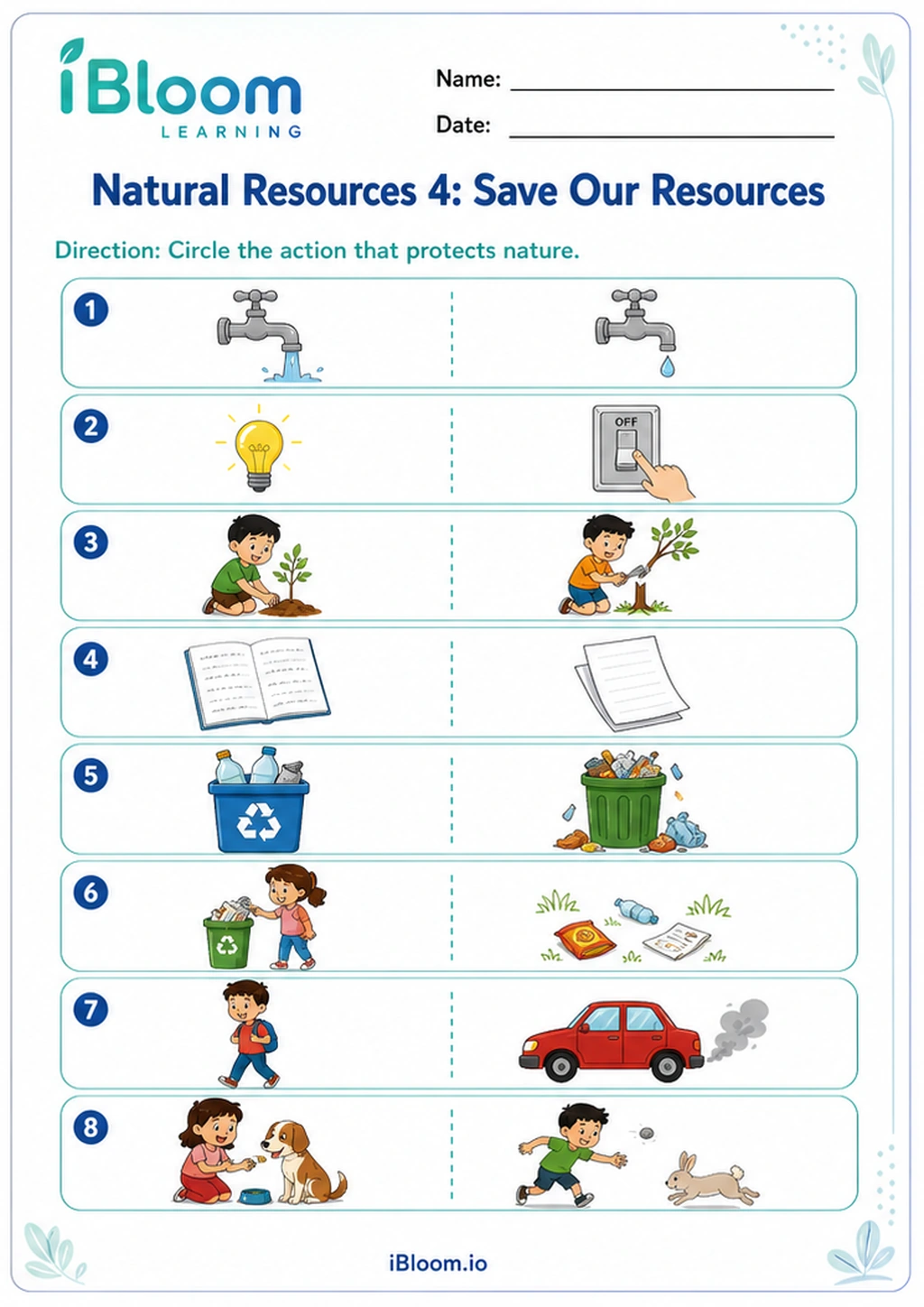 Natural Resources 4: Save Our ResourcesClass 3 printable practice for Natural Resources.Class 3Free PDF preview
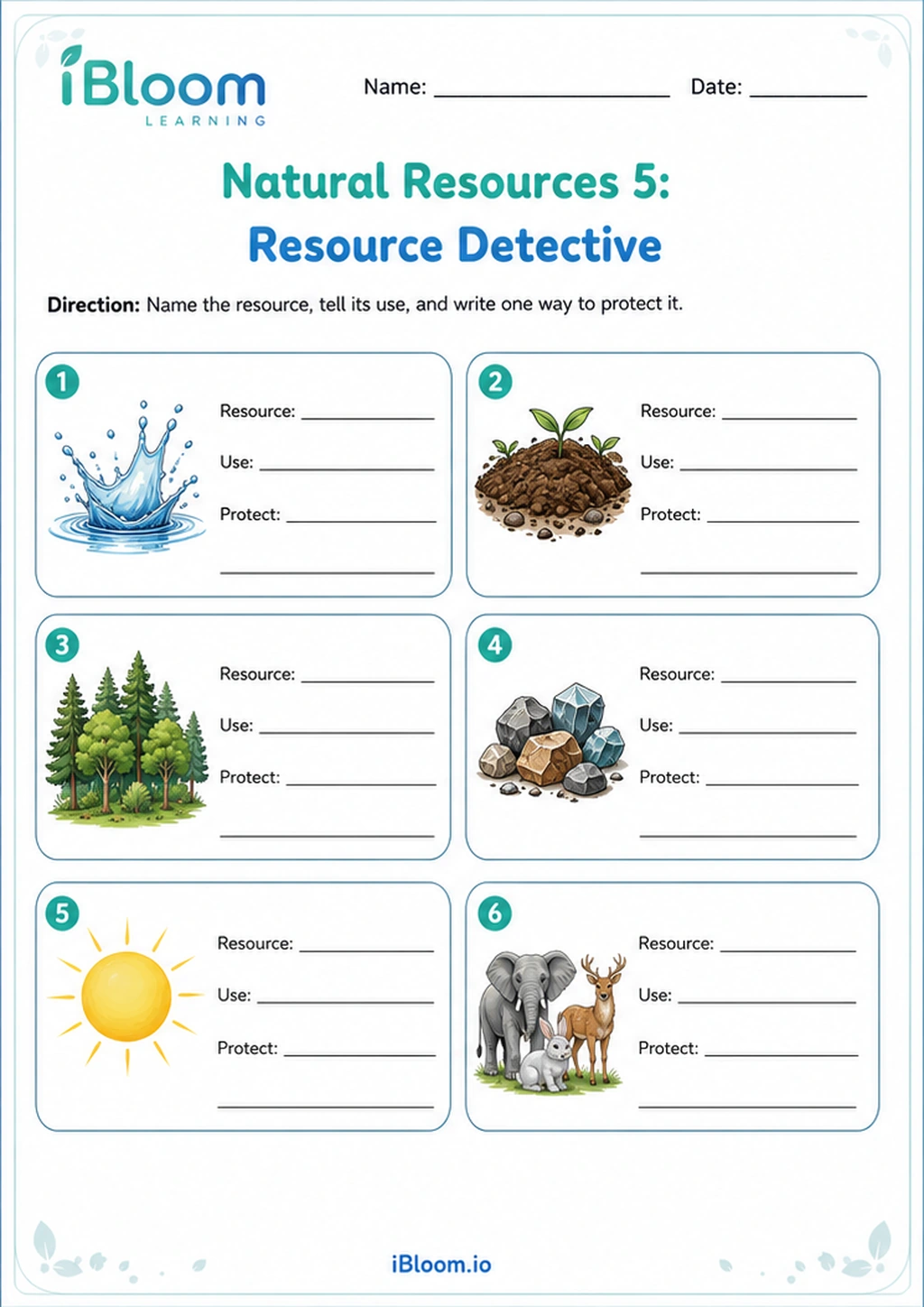 Natural Resources 5: Resource DetectiveClass 3 printable practice for Natural Resources.Class 3Free PDF preview
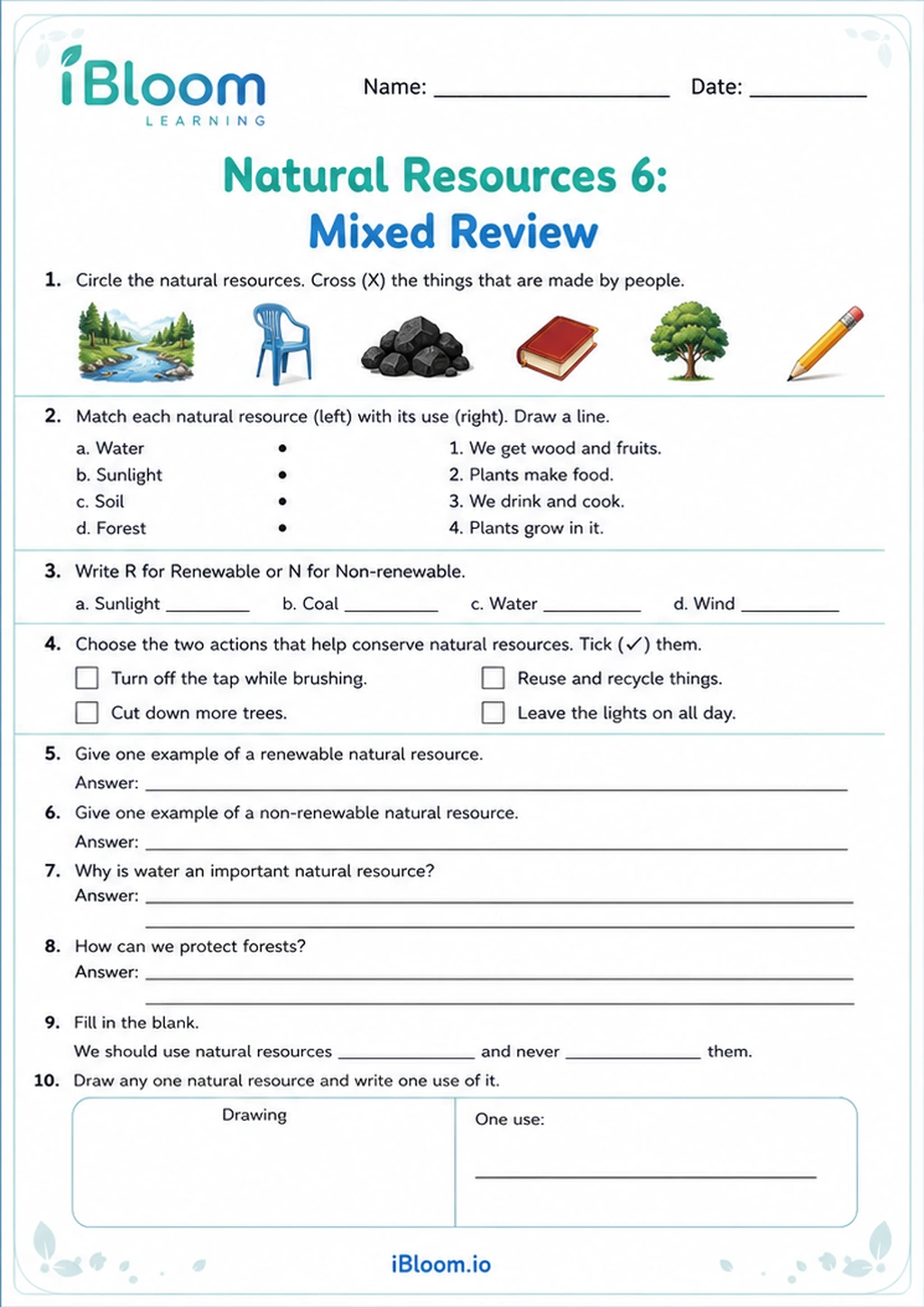 Natural Resources 6: Mixed ReviewClass 3 printable practice for Natural Resources.Class 3Free PDF preview
Practice that builds confidence
Understanding natural resources
These Class 3 Science and EVS worksheets help children understand natural resources as useful things we get from nature. Learners identify resources such as air, water, soil, sunlight, forests, plants, animals, and minerals.
The printable activities include labelling, matching, sorting, short answers, and picture-based questions. Children practise connecting resources to daily needs, environmental care, and responsible use in familiar Indian contexts.
Natural resources are materials and conditions found in nature that people, plants, and animals use. For Class 3 children, the idea becomes meaningful when linked to daily life: water for drinking and farming, air for breathing, soil for growing crops, sunlight for warmth and plant growth, and forests for wood, fruits, shade, and animal homes.

Sorting and comparing resources
Worksheets may ask learners to identify examples, group resources, or distinguish natural resources from man-made things. At this level, children can also begin to compare resources that can be renewed with care, such as trees and water, and resources that take a very long time to form, such as minerals. The aim is awareness, not memorising complex definitions.
A parent routine that works
At home, take a five-minute resource walk inside or outside. Ask your child to name three things from nature being used: sunlight in a room, water in the kitchen, soil in a plant pot, or air from an open window. Then complete one worksheet section and ask, "How should we use this carefully?" This turns EVS into everyday observation.

Classroom uses for teachers
Teachers can use these pages during environment lessons, as a notebook follow-up after discussion, or in group work where children make a chart of resources and uses. Picture questions are useful for mixed-ability classrooms because students can explain orally before writing. The topic also connects naturally to conservation habits such as saving water and not wasting paper.

Common errors to watch for
Children may call every useful object a natural resource, including plastic bottles or metal chairs. Guide them to ask, "Did this come directly from nature, or was it made by people using materials?" They may also think resources are unlimited. Use simple examples like a dry tap or a cut tree to discuss careful use.
Free printable PDF download
Use this natural resources worksheets class 3 page to preview the activity, print it, or download it as a PDF for quick practice. It works well for homework, homeschool lessons, tutoring, morning work, revision, and classroom centers.
Answers and answer key support
After the child completes the worksheet independently, parents and teachers can use the answer support or answer key information to check the work, review mistakes, and choose the next practice step.
Why iBloom worksheets help
iBloom worksheets combine identification, uses, and care of resources so children see the full idea. A child-friendly strategy is: name the resource, say where it comes from, tell one use, and share one way to protect it.
Helpful answers
Frequently asked questions
What are natural resources for Class 3 students?
Natural resources are useful things we get from nature, such as air, water, soil, sunlight, forests, plants, animals, and minerals.
Do these worksheets include conservation ideas?
Yes. Children practise not only naming resources and their uses, but also thinking about saving water, protecting trees, and using resources carefully.
How can I explain natural and man-made things to my child?
Ask whether the thing is found in nature or made by people. Soil is natural, while a clay pot is man-made using natural material.
Are renewable and non-renewable resources covered in depth?
The worksheets introduce the idea in a simple Class 3 way, such as resources that can be renewed with care and resources that take a very long time to form.
Can these pages be used for EVS homework?
Yes. The activities are suitable for home practice, revision, and short written or oral follow-up after a classroom lesson on the environment.
Is this natural resources worksheets class 3 free?
Yes. You can preview it for free and use the printable worksheet for home or classroom practice.
Can I download this natural resources worksheets class 3 as a PDF?
Yes. Use the worksheet download option to save a printable PDF, or print the worksheet directly from the page.
Does this natural resources worksheets class 3 include answers or an answer key?
When the activity has fixed answers, iBloom includes answer support so parents and teachers can check the completed worksheet.