Free printable practice
Antonyms Practice Activities
Class 2 antonyms worksheets for practising opposite words through matching, pictures, word banks, and sentence-based vocabulary activities.
Free printable worksheet PDFs
Preview every available page, then download the free worksheet PDF for home, homeschool, tutoring, or classroom practice.
Preview the exact activity before downloading it.
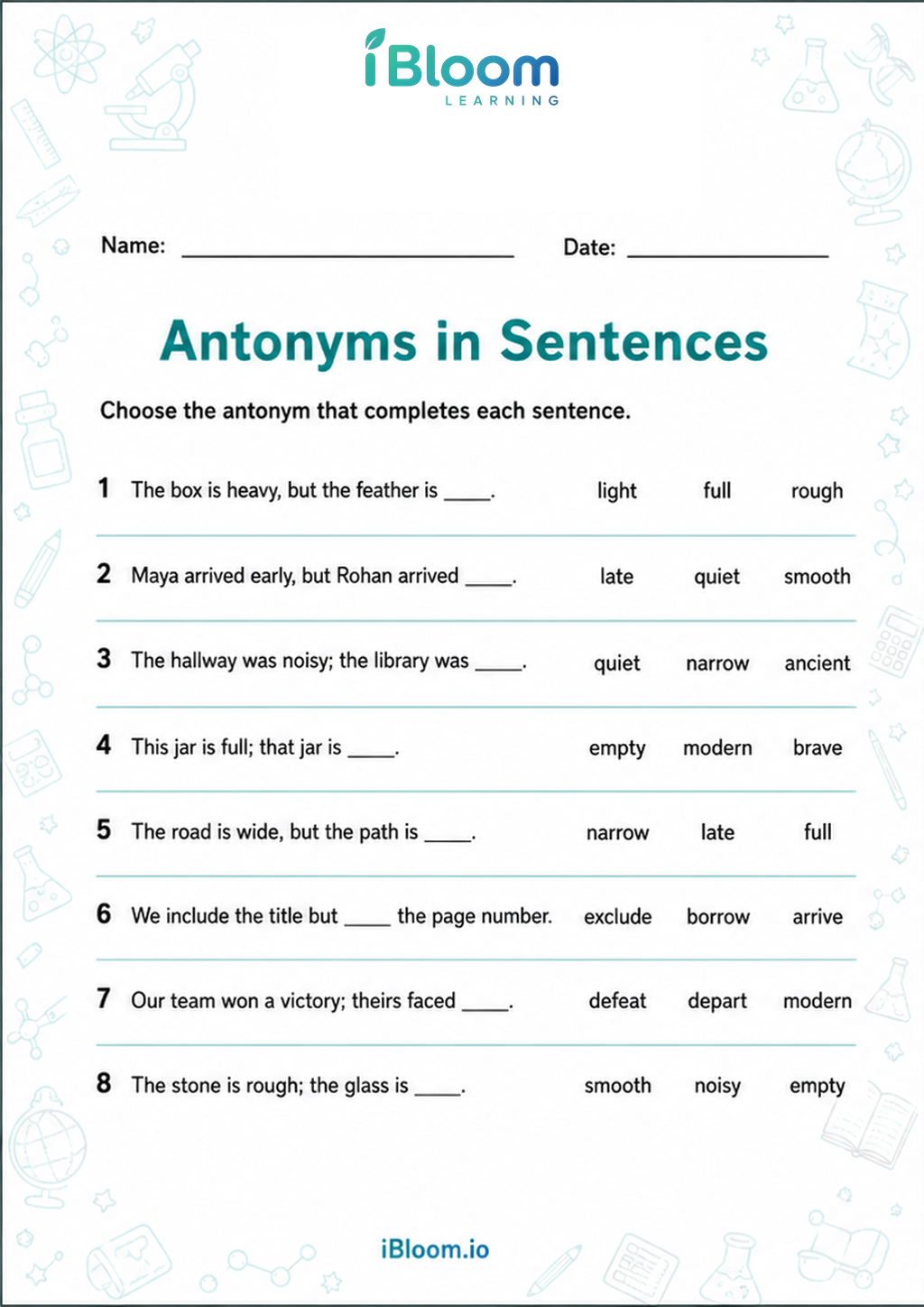 Antonyms in SentencesClass 2 printable practice for Antonyms.Class 2Free PDF preview
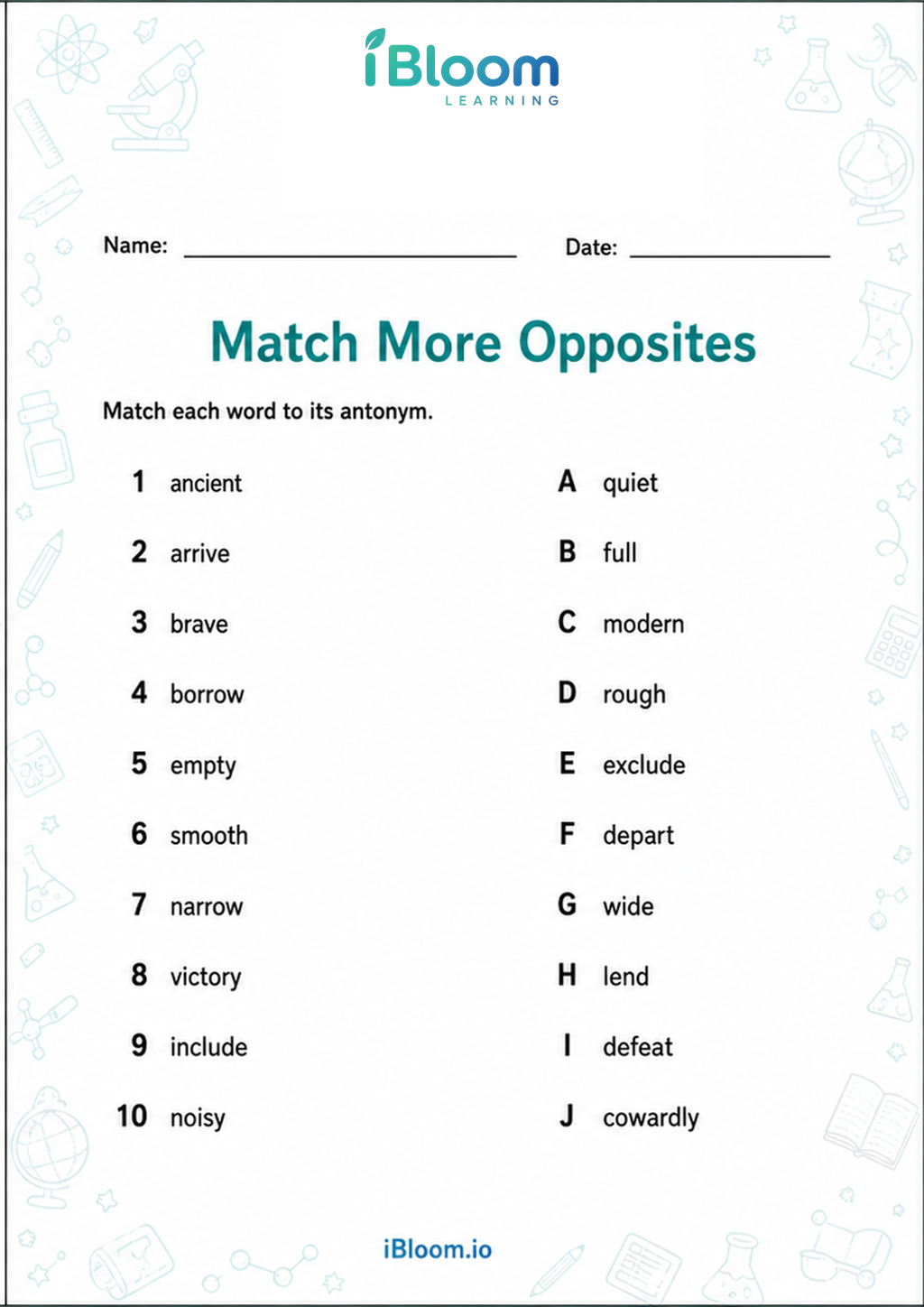 Match More OppositesClass 2 printable practice for Antonyms.Class 2Free PDF preview
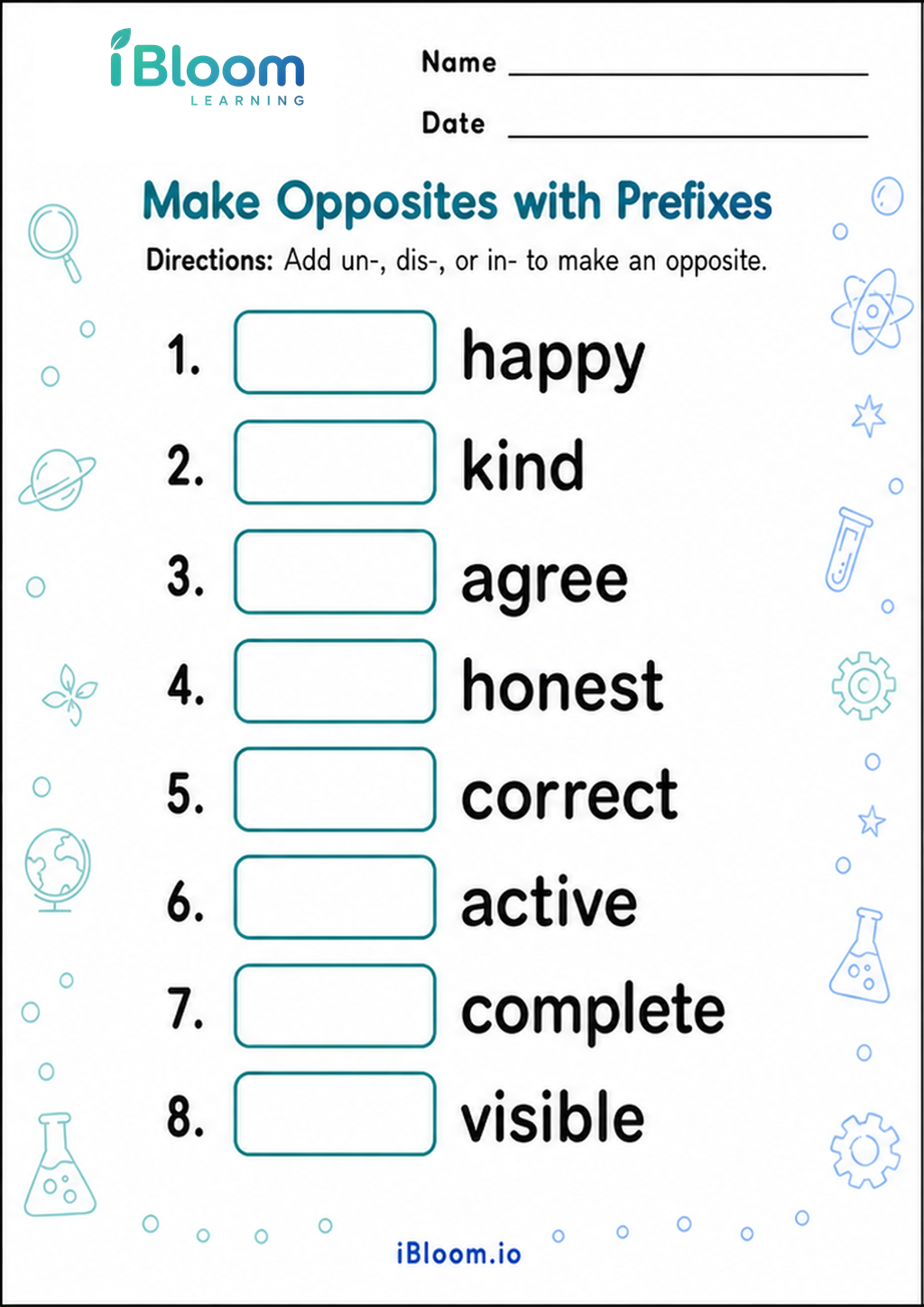 Make Opposites with PrefixesClass 2 printable practice for Antonyms.Class 2Free PDF preview
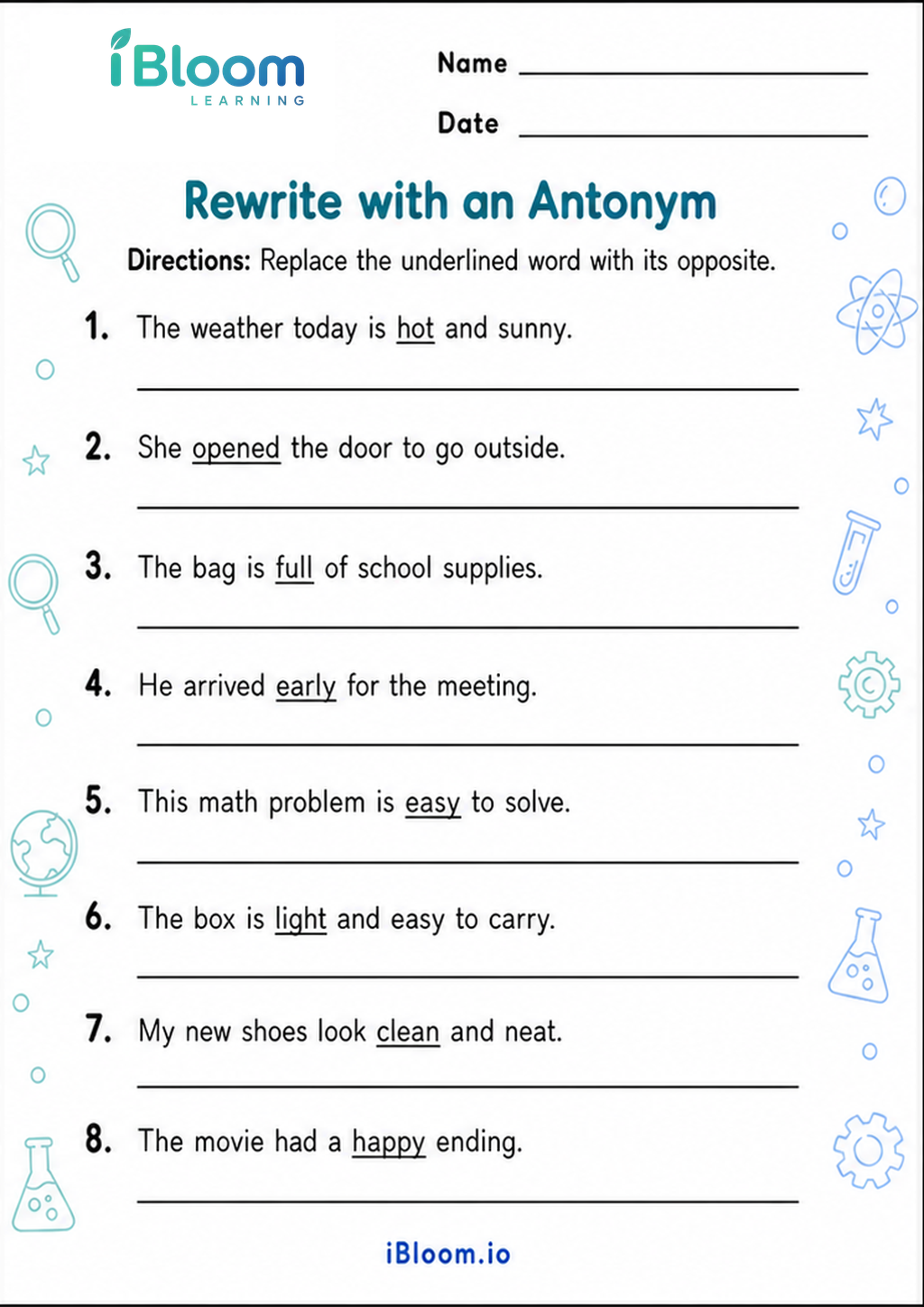 Rewrite with an AntonymClass 2 printable practice for Antonyms.Class 2Free PDF preview
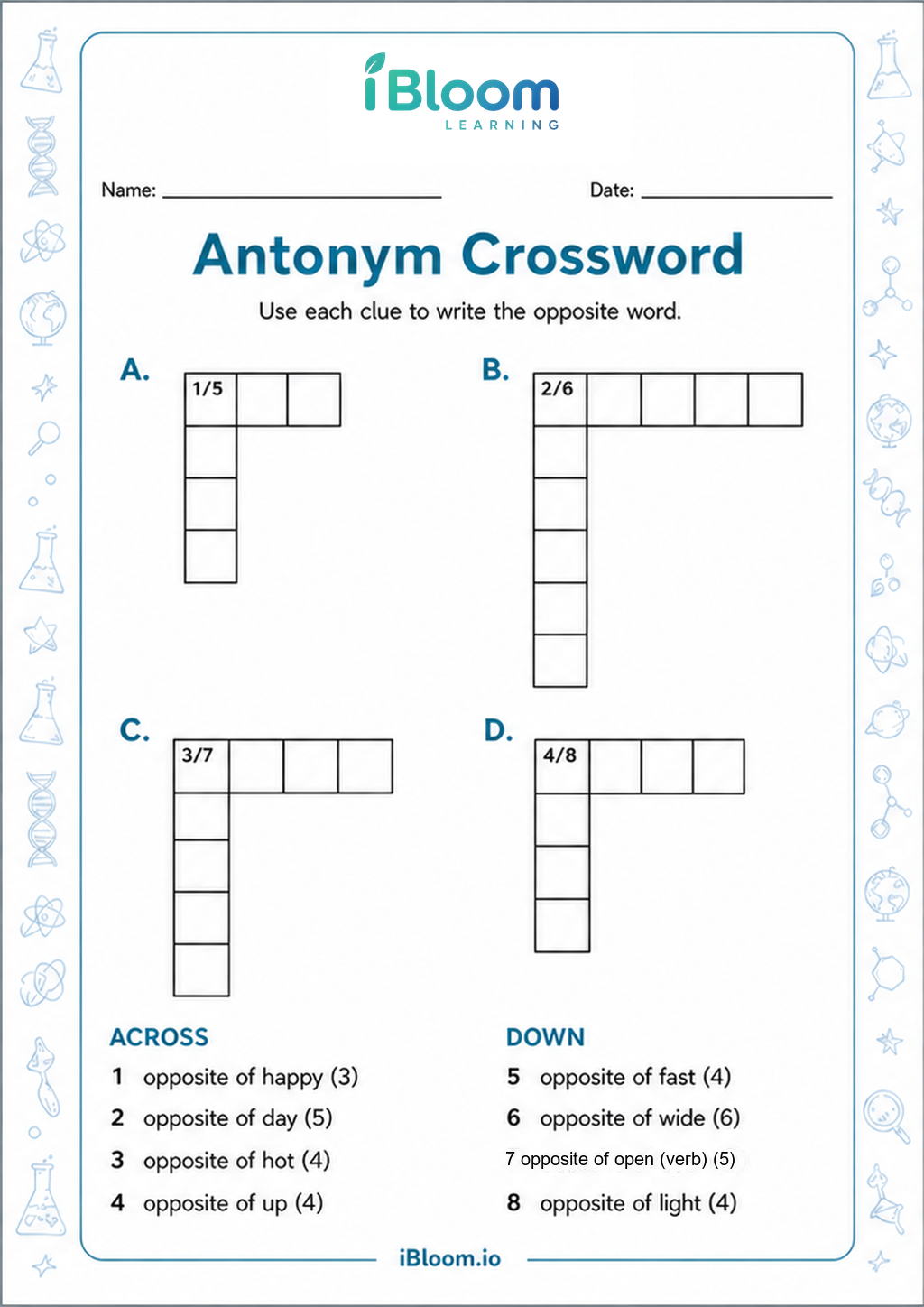 Antonym CrosswordClass 2 printable practice for Antonyms.Class 2Free PDF preview
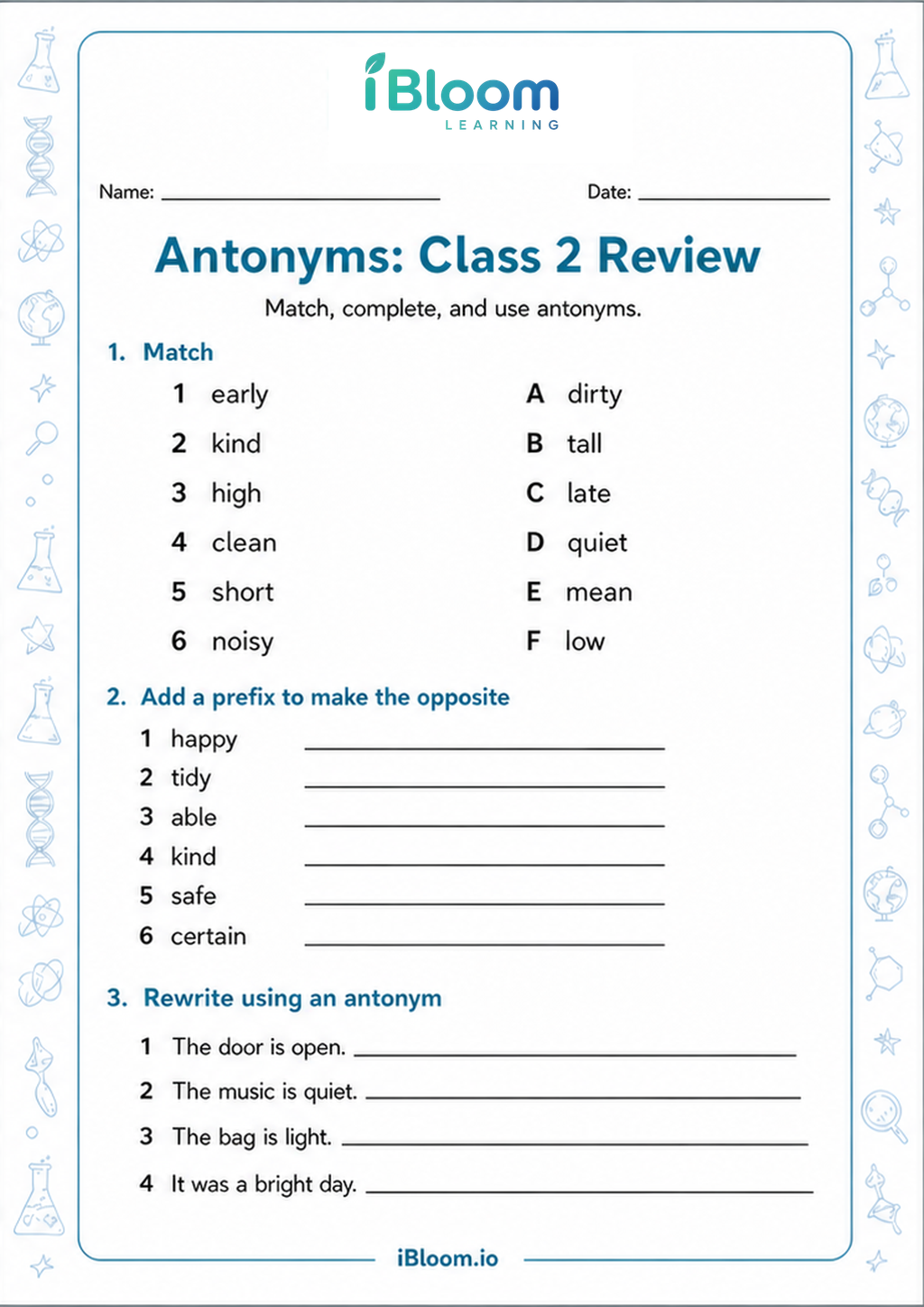 Antonyms: Class 2 ReviewClass 2 printable practice for Antonyms.Class 2Free PDF preview
Practice that builds confidence
Understanding antonyms in Class 2
These Class 2 Vocabulary worksheets focus on antonyms, helping children recognise and use opposite words such as hot and cold, tall and short, open and closed, and happy and sad. Children build word meaning, comparison skills, and confidence in choosing the right opposite for a given word.
The printable activities include picture clues, matching pairs, circling the antonym, filling in missing words, and simple sentence tasks. Each worksheet gives children repeated practice with familiar vocabulary while encouraging them to read the whole word and think about meaning.
Antonyms are words with opposite meanings. At this stage, children are not expected to memorise long word lists; they learn best by connecting words to real ideas, actions, pictures, and short sentences. These worksheets move from clear opposites like big and small to choices where children must read carefully, such as near and far or clean and dirty.

How the activities progress
The practice begins with recognition. Children may match a word to its opposite, use a picture clue, or choose from a small word bank. Later tasks ask them to complete pairs and sentences, so they learn that an antonym must make sense in context. For example, in a sentence about a door, open pairs naturally with closed; in a sentence about a day, bright may pair with dark.
A simple parent routine
At home, read the first few words aloud together and ask your child to act them out: stand and sit, laugh and cry, push and pull. Then let your child complete one section independently. After checking, choose three pairs and ask your child to say a sentence for each word. This turns worksheet practice into speaking practice and helps the meanings stay clear.

Classroom uses for teachers
Teachers can use these printables during vocabulary lessons, morning work, revision, or language centres. A worksheet can also become a quick partner activity: one child reads a word and the other finds or writes the opposite. Completed pages can be followed by a class word wall of opposite pairs for regular reading practice.

Common errors to watch for
Some children choose a related word instead of an opposite, such as selecting wet for water or fast for run. Others may match words by sound or first letter rather than meaning. Encourage them to ask, “Does this word mean the other side?” Also watch for words that change with context; light can mean not heavy or not dark.
Free printable PDF download
Use this class 2 antonyms worksheet page to preview the activity, print it, or download it as a PDF for quick practice. It works well for homework, homeschool lessons, tutoring, morning work, revision, and classroom centers.
Answers and answer key support
After the child completes the worksheet independently, parents and teachers can use the answer support or answer key information to check the work, review mistakes, and choose the next practice step.
Why iBloom worksheets help
The iBloom activities give Class 2 learners a balanced mix of visual, oral, and written practice. Clear layouts, familiar vocabulary, and gradual challenge help children move from spotting antonyms to using them accurately in sentences. A helpful child-friendly strategy is: read the word, picture it, say the opposite, then check if the pair makes sense.
Helpful answers
Frequently asked questions
What antonyms should a Class 2 child know?
A Class 2 child should first know common opposite pairs such as big and small, hot and cold, happy and sad, open and closed, near and far, clean and dirty, and fast and slow.
How do these worksheets teach antonyms?
They use matching, circling, picture clues, word banks, and simple sentence activities so children practise both recognising opposite words and using them in meaningful contexts.
What if my child memorises pairs but cannot use them in sentences?
After each worksheet, ask your child to say one short sentence with each word in a pair. For example, The bag is heavy and The feather is light.
Are antonyms the same as describing words?
Not exactly. Many antonyms are describing words, such as tall and short, but antonyms are defined by opposite meaning. Some can also be action words, such as come and go.
How can teachers extend an antonyms worksheet in class?
Teachers can ask pairs of children to act out opposite words, create a class antonym chart, or have students write two sentences showing both words in an opposite pair.
Is this class 2 antonyms worksheet free?
Yes. You can preview it for free and use the printable worksheet for home or classroom practice.
Can I download this class 2 antonyms worksheet as a PDF?
Yes. Use the worksheet download option to save a printable PDF, or print the worksheet directly from the page.
Does this class 2 antonyms worksheet include answers or an answer key?
When the activity has fixed answers, iBloom includes answer support so parents and teachers can check the completed worksheet.