Free printable practice
Match Phrases Practice Activities
Class 2 vocabulary worksheets that help children match phrase parts and build meaningful everyday expressions.
Free printable worksheet PDFs
Preview every available page, then download the free worksheet PDF for home, homeschool, tutoring, or classroom practice.
Preview the exact activity before downloading it.
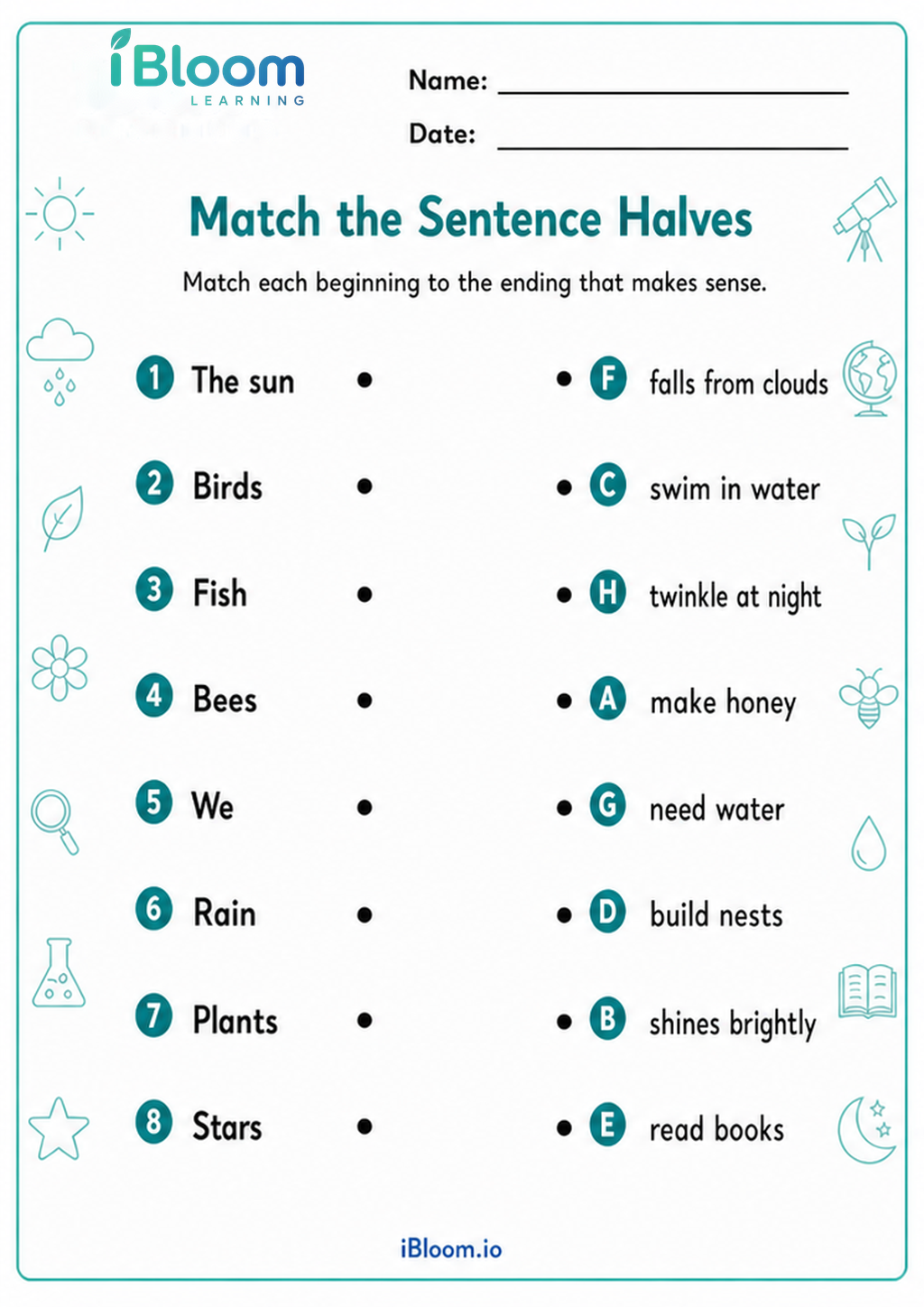 Match the Sentence HalvesClass 2 printable practice for Matching Phrases.Class 2Free PDF preview
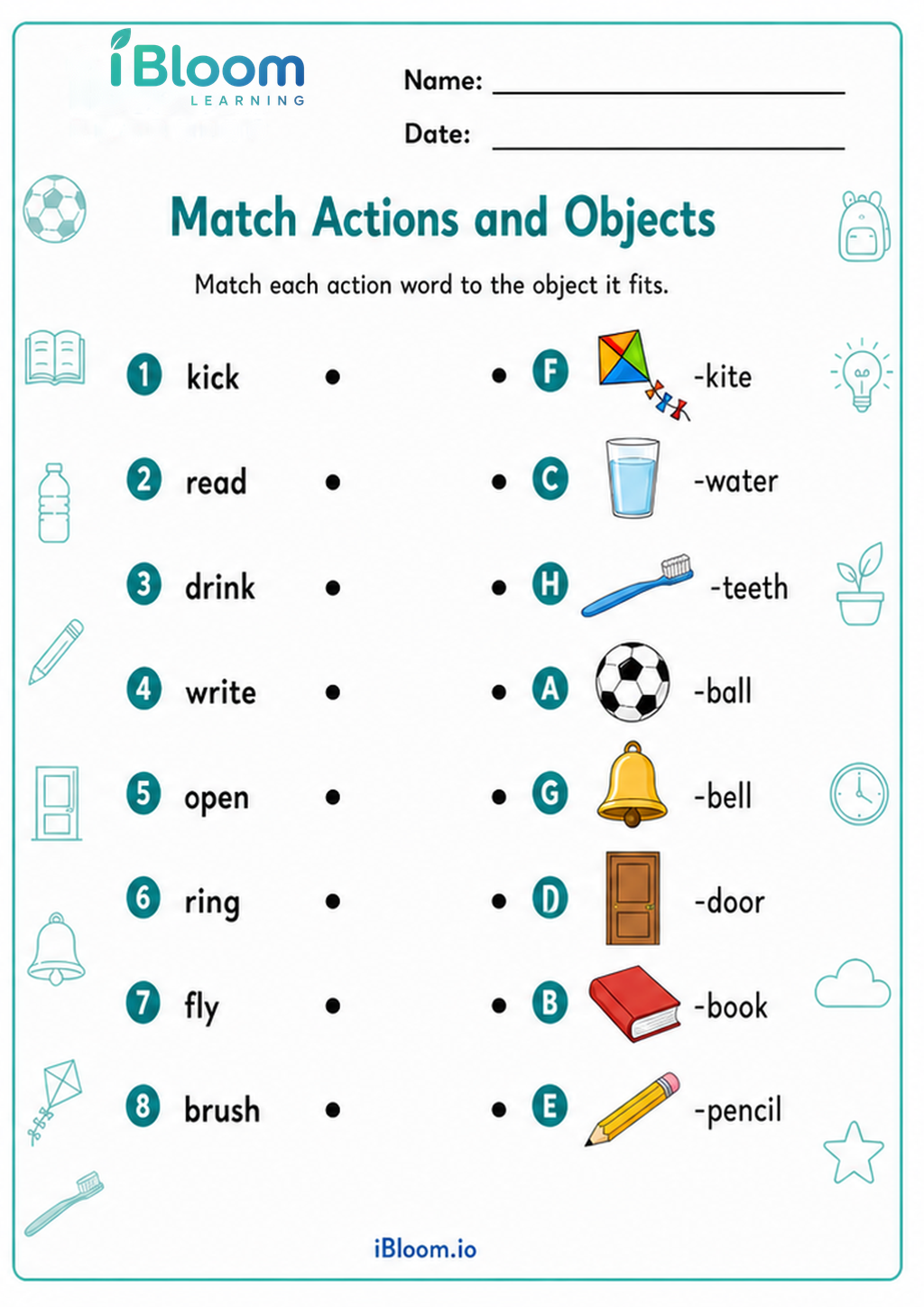 Match Actions and ObjectsClass 2 printable practice for Matching Phrases.Class 2Free PDF preview
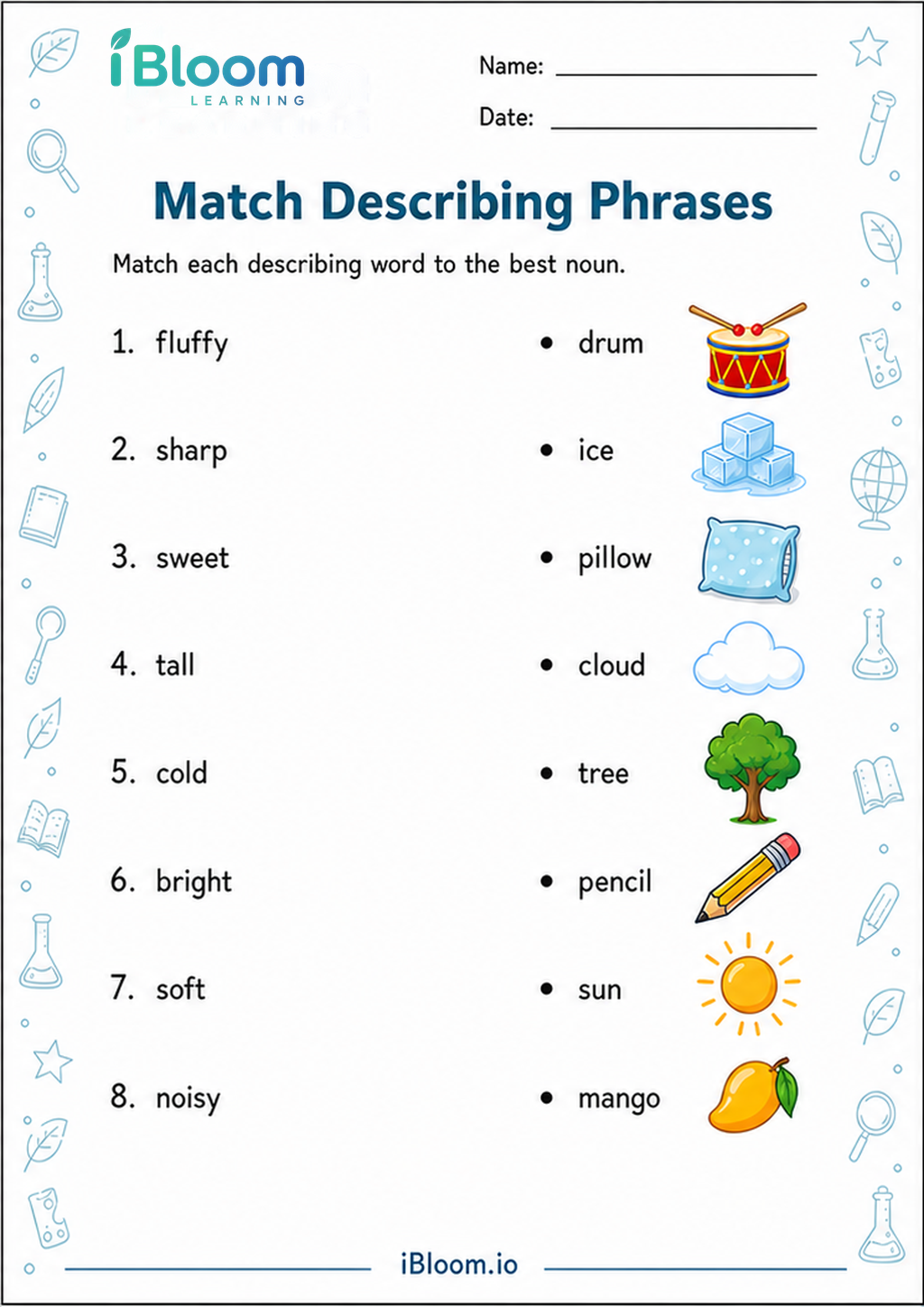 Match Describing PhrasesClass 2 printable practice for Matching Phrases.Class 2Free PDF preview
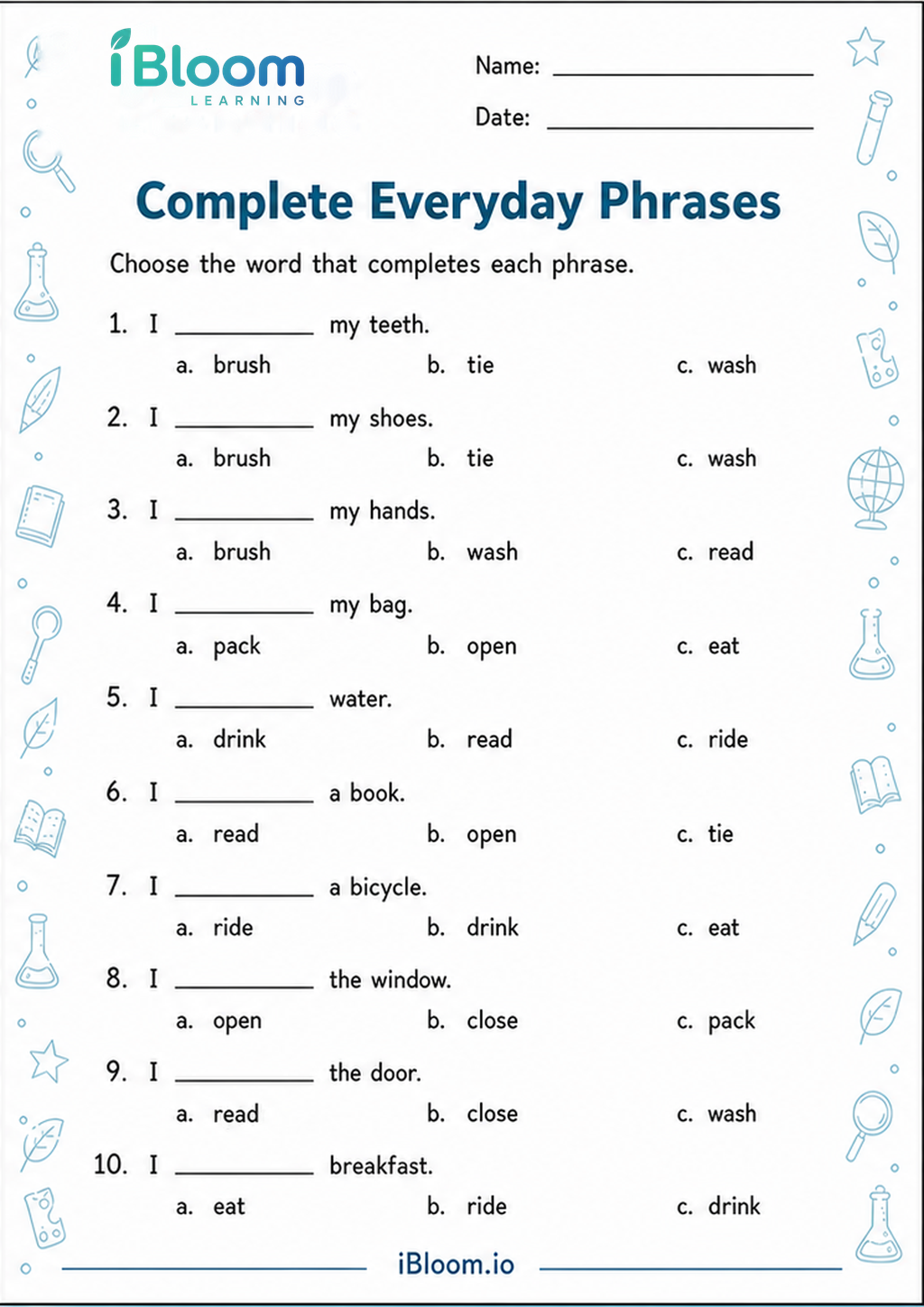 Complete Everyday PhrasesClass 2 printable practice for Matching Phrases.Class 2Free PDF preview
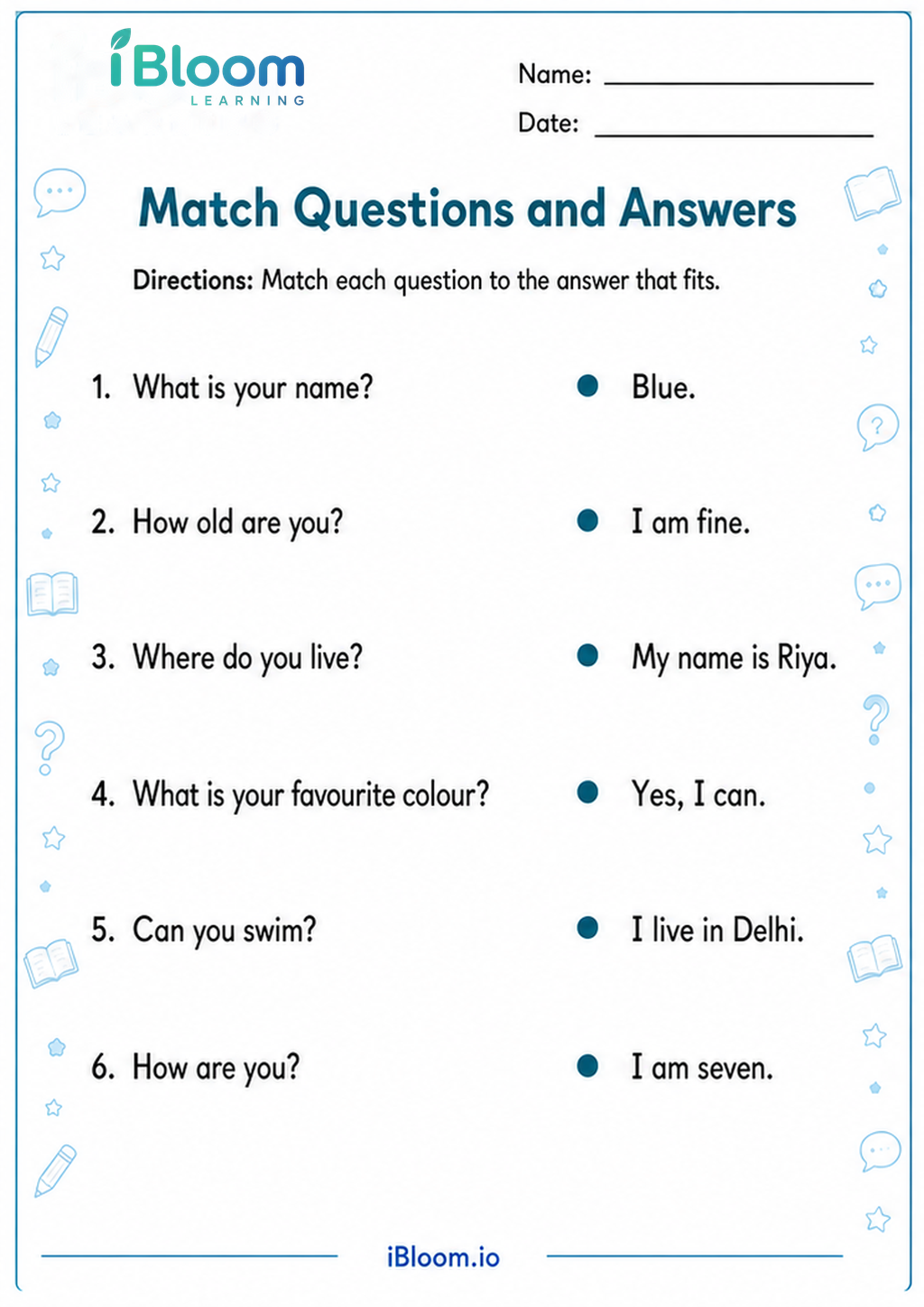 Match Questions and AnswersClass 2 printable practice for Matching Phrases.Class 2Free PDF preview
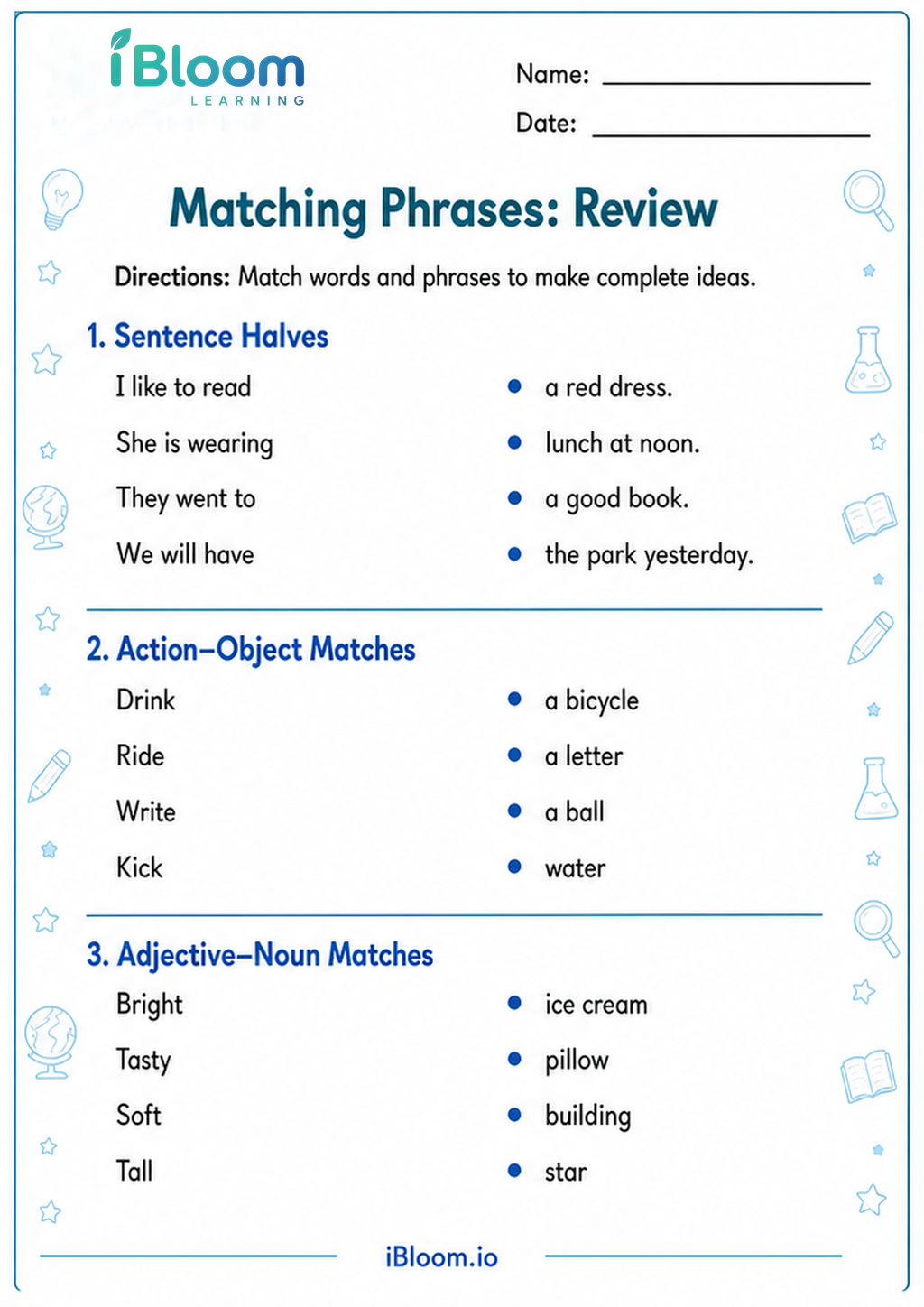 Matching Phrases: ReviewClass 2 printable practice for Matching Phrases.Class 2Free PDF preview
Practice that builds confidence
What children learn
In this Class 2 Vocabulary collection, children practise matching phrase parts to make expressions that sound right and make sense. They learn to notice how words work together in everyday phrases such as action phrases, describing phrases, and object phrases.
The printable activities include clear matching tasks, phrase-building exercises, and simple read-and-check practice. Each worksheet supports vocabulary growth while strengthening reading comprehension, sentence sense, and confidence with common English word groups.
Matching phrases helps Class 2 learners move beyond single-word vocabulary. Instead of only knowing a word like brush, they begin to understand how it connects with other words, as in brush your teeth. This builds natural English usage and prepares children for better sentence reading and writing.

How the skill progresses
The worksheets begin with familiar, easy-to-read phrase parts and ask children to join them correctly. They may match an action to an object, a describing word to a noun, or the beginning of a phrase to its ending. As the practice grows, children must read more carefully and choose the option that makes the best meaning, not just the one that looks similar.
A simple parent routine
At home, ask your child to read all choices aloud before drawing a line or writing the answer. After each match, have them say the full phrase in a sentence: “I brush my teeth every morning.” This quick routine checks meaning, pronunciation, and usage. If a match is wrong, do not give the answer immediately; ask, “Does that sound like something we say?”

Classroom uses for teachers
Teachers can use these printables in vocabulary lessons, reading groups, revision work, or language centres. They also work well as a warm-up before sentence writing. Children can compare answers with a partner and explain why a phrase is correct, which encourages speaking practice and careful listening.

Common errors to watch for
Some children match by the first letter or by word length instead of meaning. Others may create funny but incorrect phrases because they do not reread the full expression. Watch for confusion between action words and naming words, or between phrases that are grammatically possible but not commonly used.
Free printable PDF download
Use this Class 2 match phrases worksheet page to preview the activity, print it, or download it as a PDF for quick practice. It works well for homework, homeschool lessons, tutoring, morning work, revision, and classroom centers.
Answers and answer key support
After the child completes the worksheet independently, parents and teachers can use the answer support or answer key information to check the work, review mistakes, and choose the next practice step.
Why iBloom worksheets help
The activities are focused, uncluttered, and suited to the Vocabulary > Class 2 > Match Phrases skill. A child-friendly strategy is: read both parts, say the full phrase softly, ask “Does it make sense?”, then mark the match. This simple habit helps children build accurate phrases and use them in their own sentences.
Helpful answers
Frequently asked questions
What does matching phrases mean for Class 2 children?
It means joining two word groups or phrase parts so they form a meaningful expression, such as matching an action with the correct object or a describing word with a suitable noun.
How do these worksheets improve vocabulary?
They help children learn which words commonly go together. This improves not only word knowledge but also reading fluency, speaking, and sentence writing.
Should my child read the phrases aloud?
Yes. Reading aloud helps children hear whether a phrase sounds natural and gives them another way to check meaning before choosing an answer.
What if my child makes a silly or incorrect match?
Ask your child to use the full phrase in a sentence. If the sentence does not make sense, guide them to reread the options and look for a more suitable match.
Can teachers use these worksheets for group work?
Yes. They are useful for pair checking, vocabulary centres, reading groups, or quick revision before children begin writing their own sentences.
Is this Class 2 match phrases worksheet free?
Yes. You can preview it for free and use the printable worksheet for home or classroom practice.
Can I download this Class 2 match phrases worksheet as a PDF?
Yes. Use the worksheet download option to save a printable PDF, or print the worksheet directly from the page.
Does this Class 2 match phrases worksheet include answers or an answer key?
When the activity has fixed answers, iBloom includes answer support so parents and teachers can check the completed worksheet.