Proving My Answer worksheet for Class 3

Lesson-Wise Builder
A premium AI tool that creates syllabus-aligned questions and worksheets for any lesson in seconds.
Proving an answer in Class 3 reading means giving an answer, finding a clue in the passage, and explaining how that clue supports the answer. This focused routine helps children move from guessing to evidence-based reading comprehension.
Use the Proving My Answer worksheet for Class 3 as the main practice page. Related iBloom practice includes Finding Key Details, Finding Details in the Text, and How Details Support the Main Idea.
A four-step prove-your-answer routine
- Read the question: circle or say the important question word.
- Answer briefly: give the best answer in the child’s own words.
- Find evidence: return to the passage and locate the sentence or phrase that supports the answer.
- Explain the link: say why that evidence proves the answer.
Children can point to evidence before writing. Oral explanation makes the thinking visible and reduces the chance that handwriting difficulty hides reading understanding.
How to find useful text evidence
Good evidence answers the exact question. For a where question, look for a place. For a why question, look for a cause, motive, or result. For a character question, look at actions, words, and reactions. Underline only the words needed; copying a whole paragraph can hide whether the child found the strongest clue.
Choose the strongest detail
Two details may both be true, but one may support the answer more directly. Ask, “If we removed this detail, would the answer still be proved?” The strongest evidence usually names the action, fact, or description at the centre of the question.
Connect answer, evidence, and reasoning
An evidence response has three parts. The answer responds to the question. The evidence comes from the passage. The reasoning tells how the evidence supports the answer. Class 3 learners do not need a long paragraph; two or three clear sentences are often enough.
Compare two possible clues when needed. A detail that is nearby in the passage is not automatically relevant. The child should be able to finish the sentence, “This proves my answer because…”
Quote or paraphrase a clue
A short quote uses the author’s exact words. A paraphrase restates the clue accurately in new words. Both can work when the child keeps the original meaning. Teach children to quote only a useful phrase rather than copying several lines. When paraphrasing, check the passage again to make sure no fact has changed.
Sentence frames for Class 3
- My answer is ___.
- The text says, “___.”
- This detail shows ___ because ___.
- I know ___ because the passage explains ___.
- The strongest clue is ___.
Use a frame as temporary support. Once the child can organise the response independently, let them vary the wording.
Use evidence with different question types
Literal questions
For who, what, when, and where questions, the answer is usually stated directly. Children should still point to the sentence that confirms it.
Why and how questions
Look for causes, steps, character motives, or results. Sometimes two related details are needed.
Inference questions
An inference combines passage clues with reasonable background knowledge. The evidence must come from the text, while the explanation shows the connection. A personal opinion without a passage clue is not enough.
Worked reading examples
Literature example
Passage clue: “Anaya tucked the wet puppy inside her coat and hurried home.” Question: How do we know Anaya cares about the puppy? Answer: Anaya cares about it. Evidence and reasoning: She protects the wet puppy in her coat and takes it home, which shows she wants it to be safe.
Informational example
Passage clue: “The plant near the window grew taller than the plant kept in the cupboard.” Question: Which detail supports the idea that light helps the plant grow? Response: The plant near the window grew taller. This comparison supports the main idea because that plant received more light.
Reading evidence checklist
- Did I answer the exact question?
- Did I return to the passage?
- Did I choose a relevant sentence or phrase?
- Did I explain how the clue supports my answer?
- Did I keep the passage meaning accurate?
- Can I remove unrelated details?
Common mistakes and quick fixes
Answering from memory
Cover the answer and ask the child to point to proof in the passage before speaking again.
Copying too much
Limit the underline to the shortest useful phrase, then explain it in the child’s own words.
Choosing a true but unrelated detail
Repeat the question and ask which word in the evidence connects directly to it.
Giving evidence without reasoning
Add one sentence beginning with This shows or This proves.
Parent and teacher guidance
Parents can use a ten-minute routine: read a short passage, answer one question, find one clue, and explain the link. Teachers can model one response, compare one strong and one weak piece of evidence, then use the worksheet as guided or independent practice. Tutors can note whether difficulty comes from understanding the question, locating details, vocabulary, inference, or written expression.
For multilingual learners, allow the child to explain the evidence in the strongest language first, then repeat the key reading phrase in English. Accuracy of thinking should come before polished wording.
Frequently Asked Questions
What does “prove your answer” mean in Class 3?
It means support an answer with a relevant clue from the passage and explain why that clue fits.
Does a child need to quote the passage?
Not always. A short accurate quote or a careful paraphrase can both provide evidence.
How much evidence is enough?
One strong detail is often enough for a short question. Some inference or main-idea questions may need two related details.
What if the answer is correct but the evidence is weak?
Keep the answer, return to the passage, and compare possible clues until the child finds the one that supports it most directly.
How can adults help without giving the answer?
Ask, “Where did you find that?” and “How does that sentence help?” These prompts guide the child back to the text.
More practice for this grade
More English Language Arts worksheets
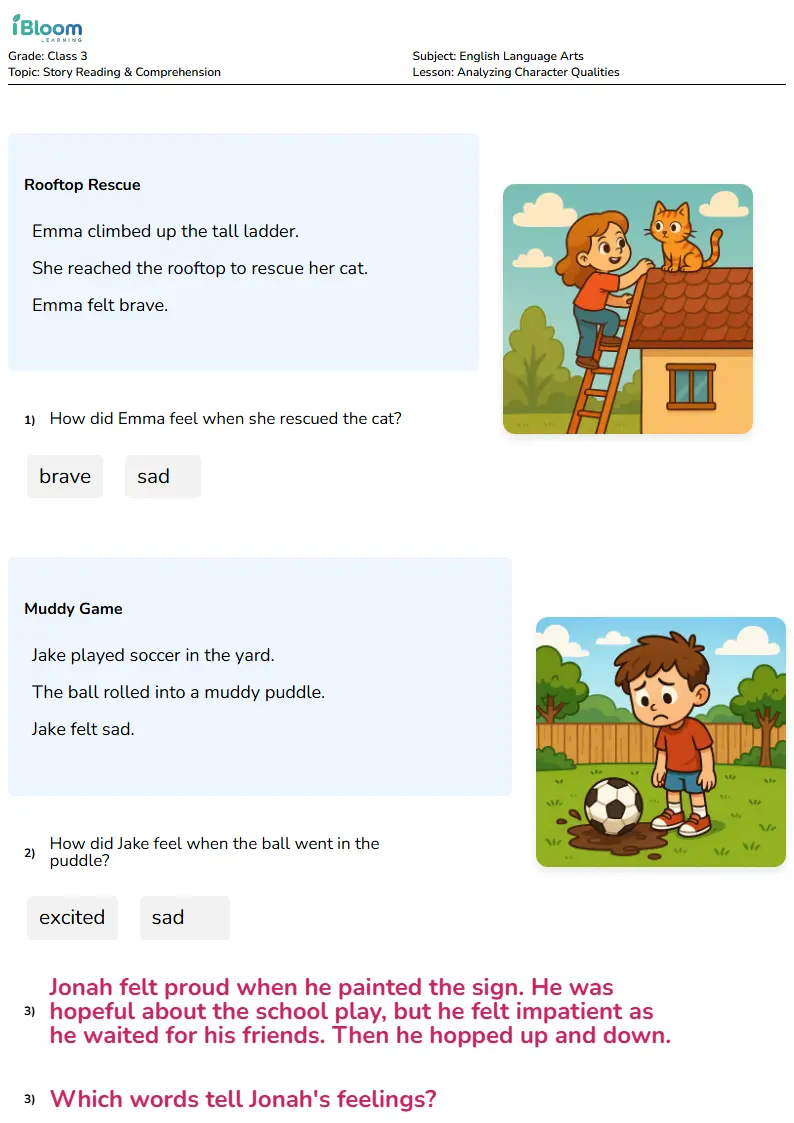
Free Analyzing Character Qualities Worksheets for Class 3
Looking for class 3 english language arts help? Download free, interactive analyzing character qualities worksheets. AI-personalized and Common Core-aligned. Practice early literacy with iBloom.
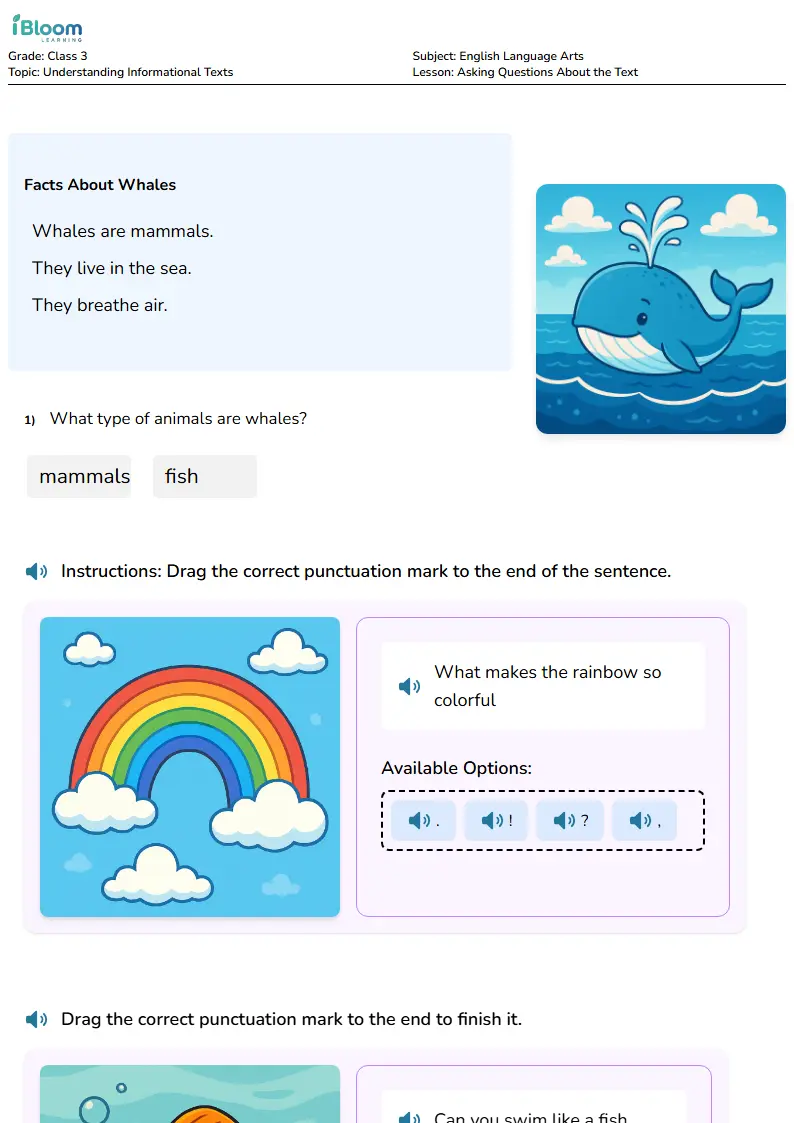
Free Asking Questions About the Text Worksheets for Class 3
Looking for class 3 english language arts help? Download free, interactive asking questions about the text worksheets. AI-personalized and Common Core-aligned. Practice early literacy with iBloom.
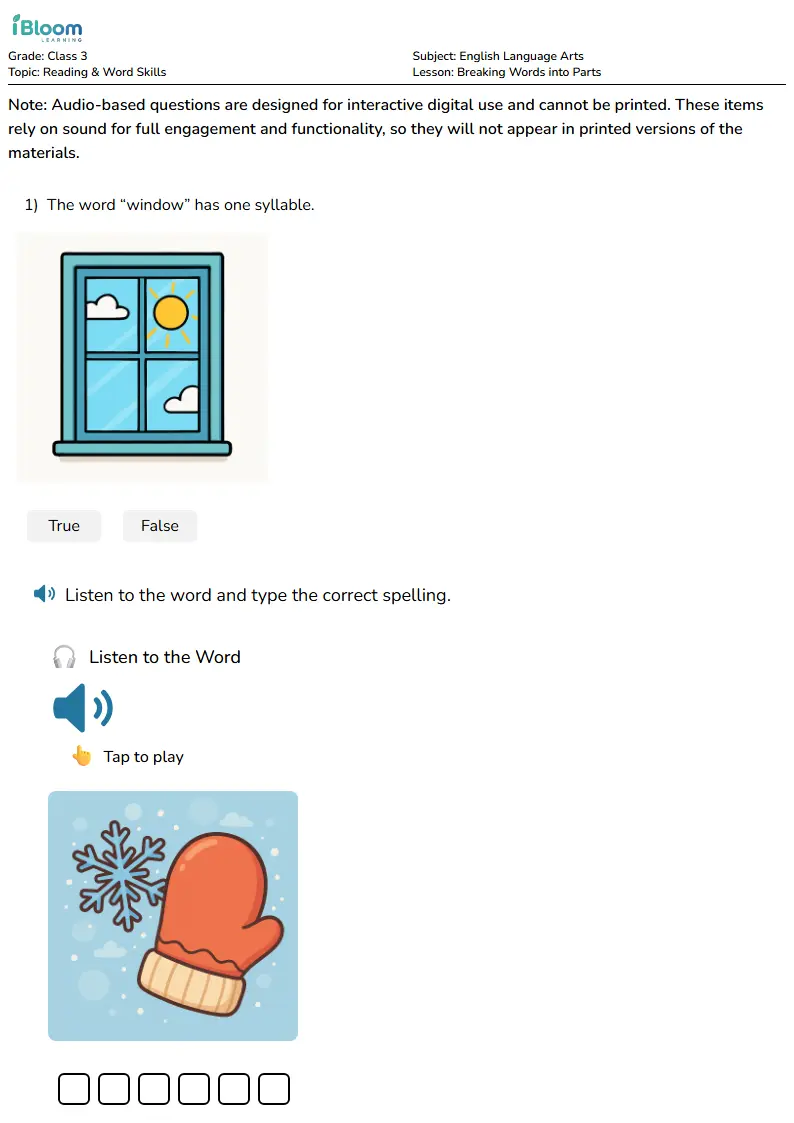
Free Breaking Words into Parts Worksheets for Class 3
Looking for class 3 english language arts help? Download free, interactive breaking words into parts worksheets. AI-personalized and Common Core-aligned. Practice early literacy with iBloom.
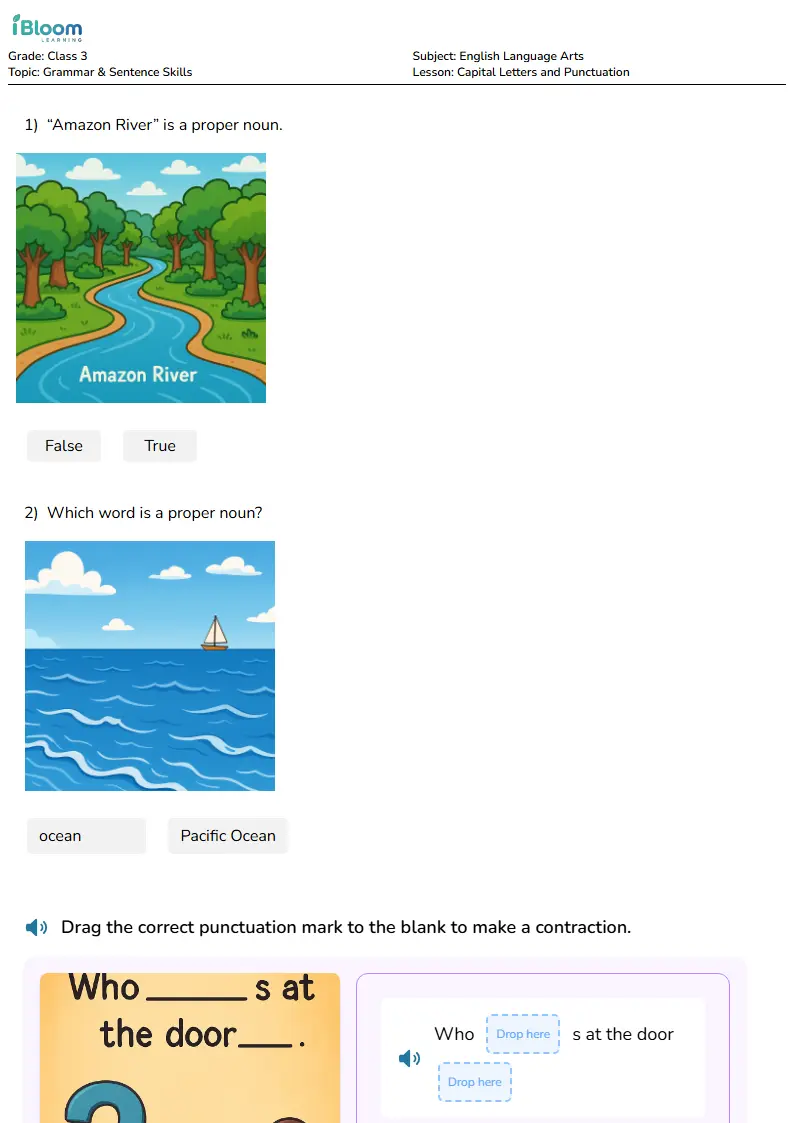
Free Capital Letters and Punctuation Worksheets for Class 3
Looking for class 3 english language arts help? Download free, interactive capital letters and punctuation worksheets. AI-personalized and Common Core-aligned. Practice early literacy with iBloom.
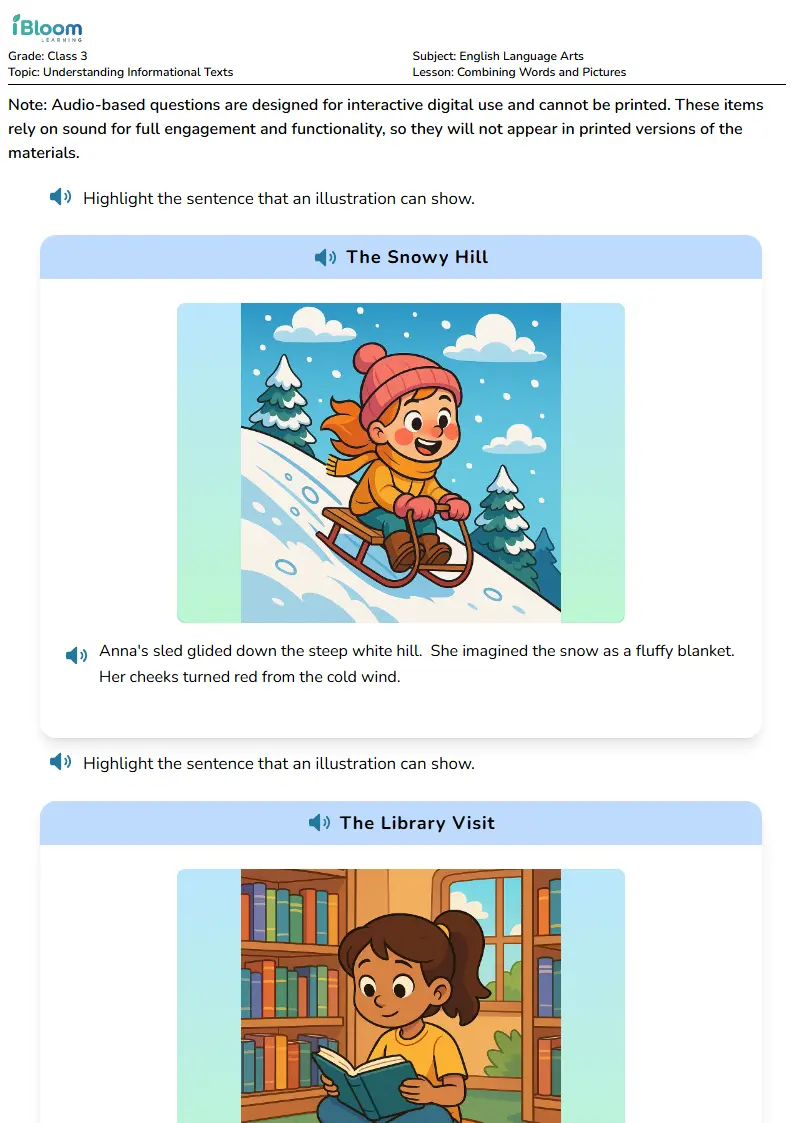
Free Combining Words and Pictures Worksheets for Class 3
Looking for class 3 english language arts help? Download free, interactive combining words and pictures worksheets. AI-personalized and Common Core-aligned. Practice early literacy with iBloom.
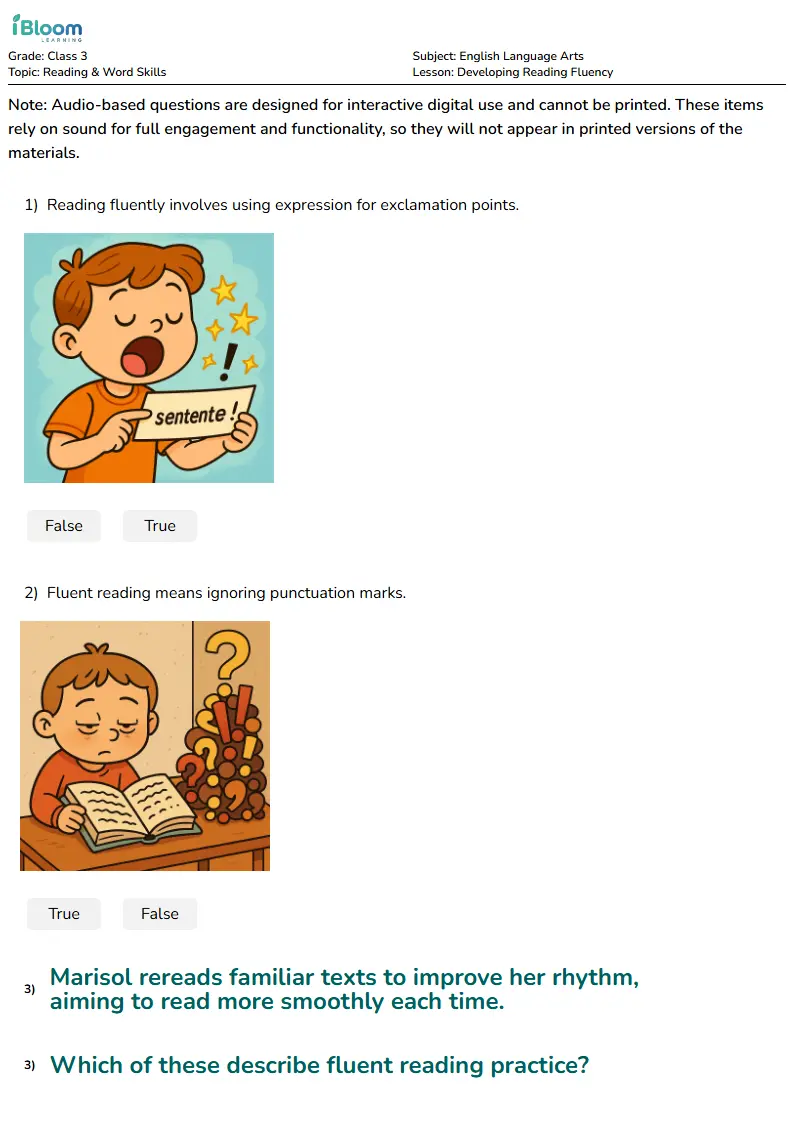
Free Developing Reading Fluency Worksheets for Class 3
Looking for class 3 english language arts help? Download free, interactive developing reading fluency worksheets. AI-personalized and Common Core-aligned. Practice early literacy with iBloom.
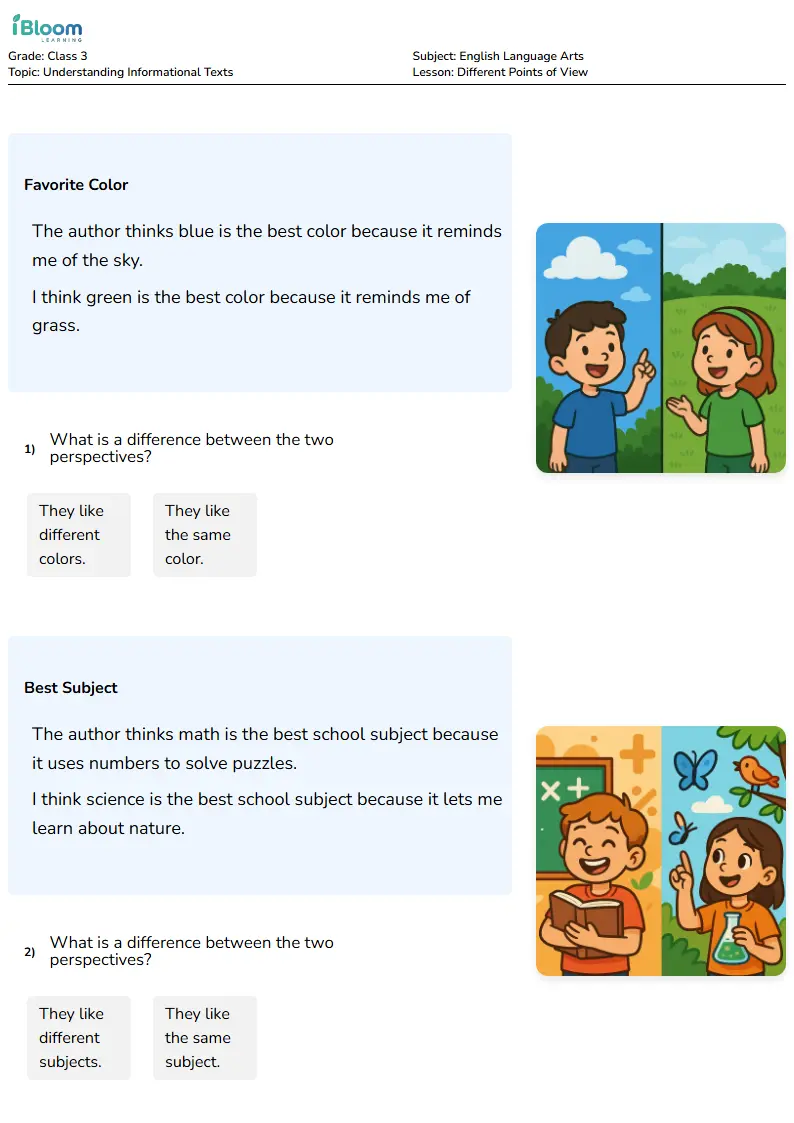
Free Different Points of View Worksheets for Class 3
Looking for class 3 english language arts help? Download free, interactive different points of view worksheets. AI-personalized and Common Core-aligned. Practice early literacy with iBloom.
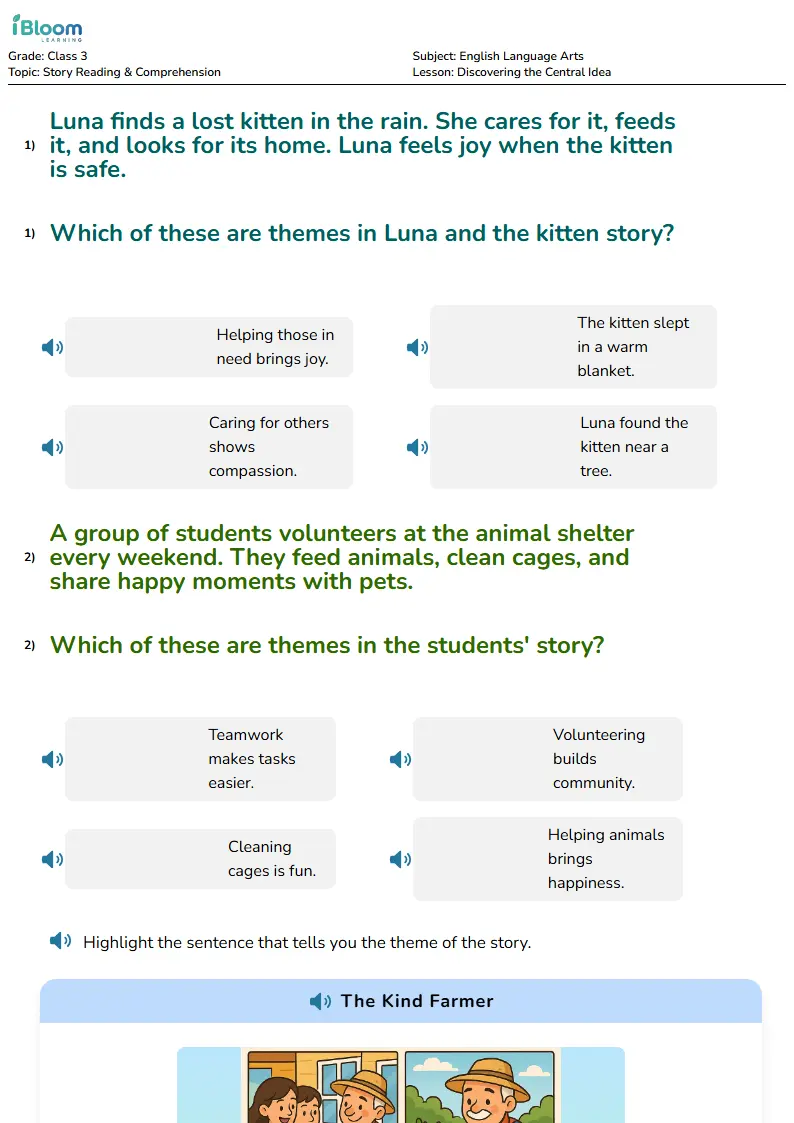
Free Discovering the Central Idea Worksheets for Class 3
Looking for class 3 english language arts help? Download free, interactive discovering the central idea worksheets. AI-personalized and Common Core-aligned. Practice early literacy with iBloom.
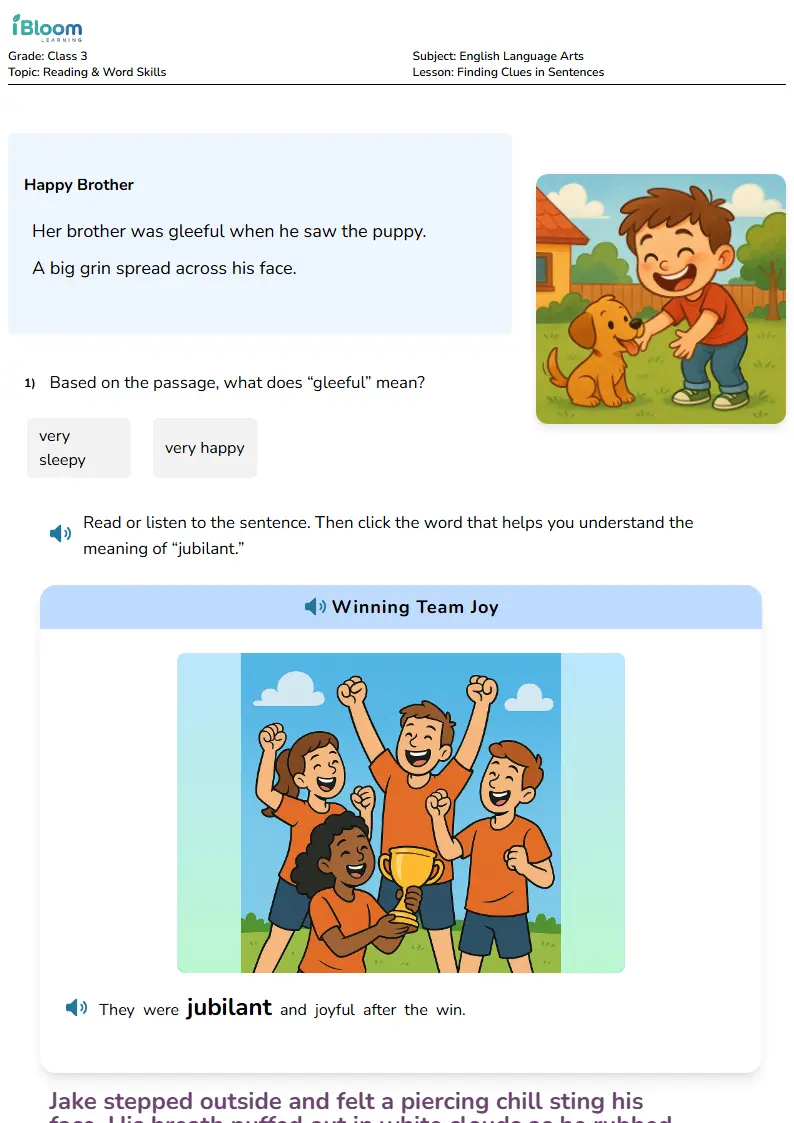
Free Finding Clues in Sentences Worksheets for Class 3
Looking for class 3 english language arts help? Download free, interactive finding clues in sentences worksheets. AI-personalized and Common Core-aligned. Practice early literacy with iBloom.
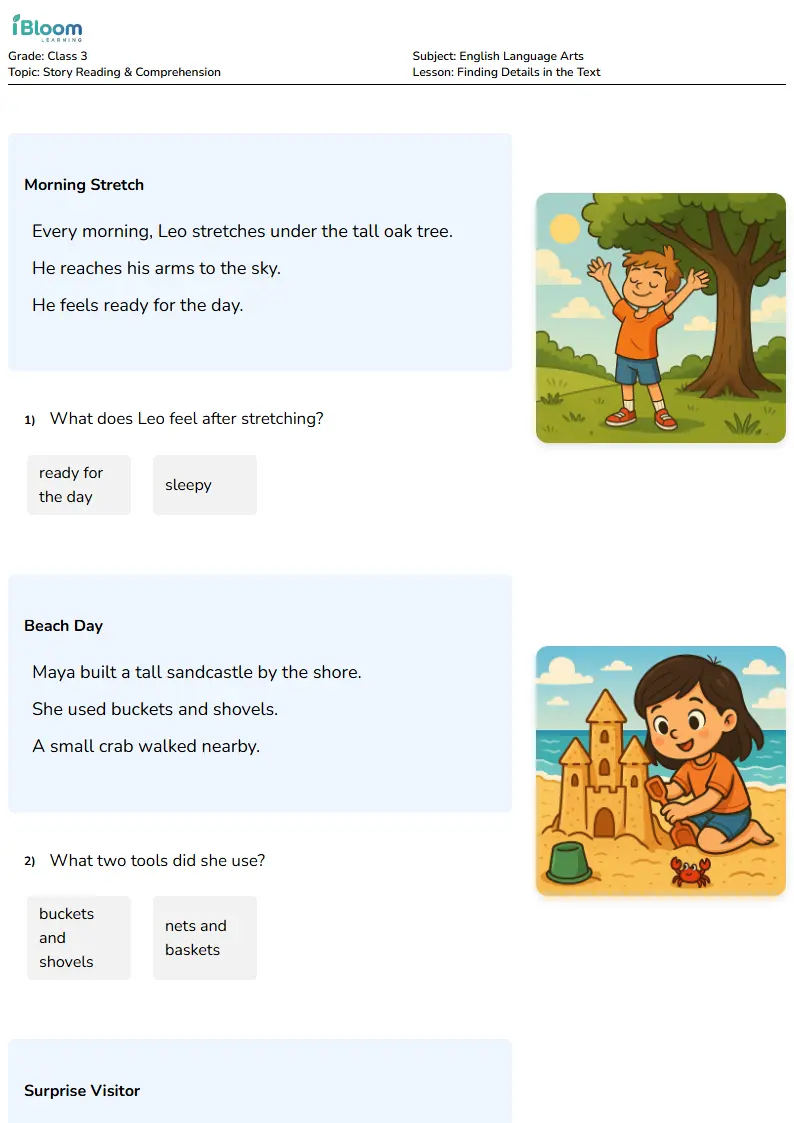
Free Finding Details in the Text Worksheets for Class 3
Looking for class 3 english language arts help? Download free, interactive finding details in the text worksheets. AI-personalized and Common Core-aligned. Practice early literacy with iBloom.
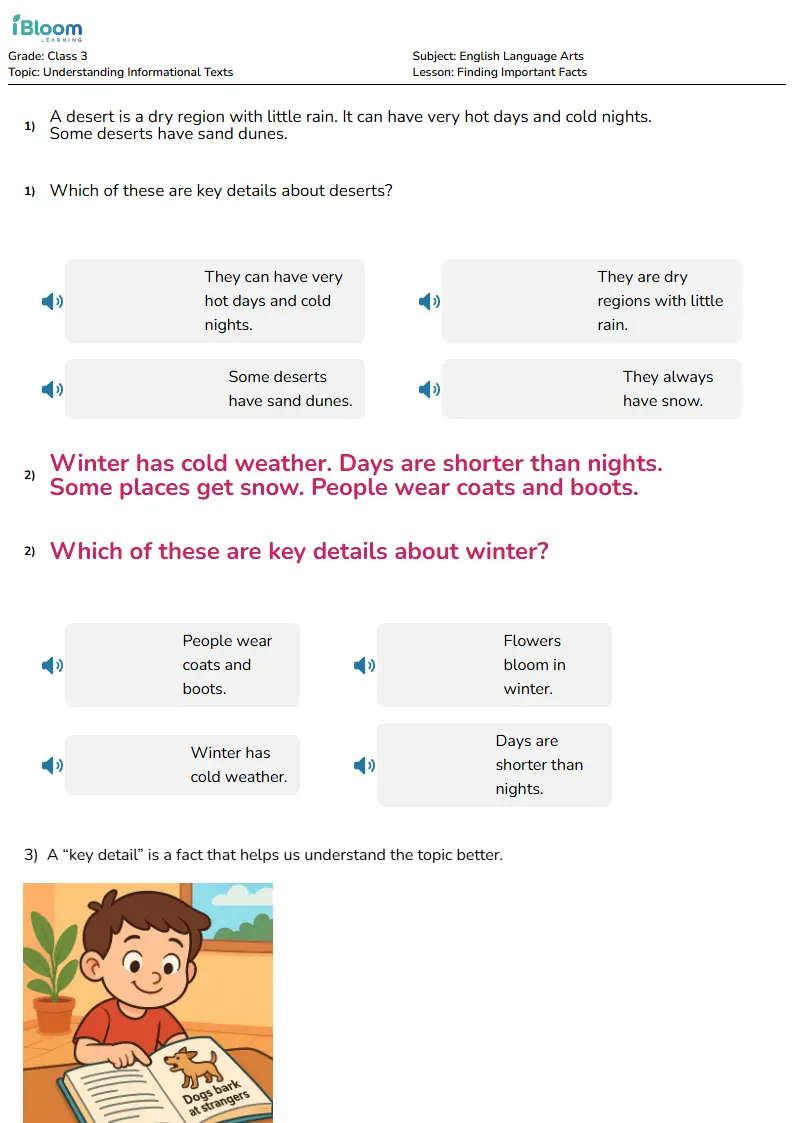
Free Finding Important Facts Worksheets for Class 3
Looking for class 3 english language arts help? Download free, interactive finding important facts worksheets. AI-personalized and Common Core-aligned. Practice early literacy with iBloom.
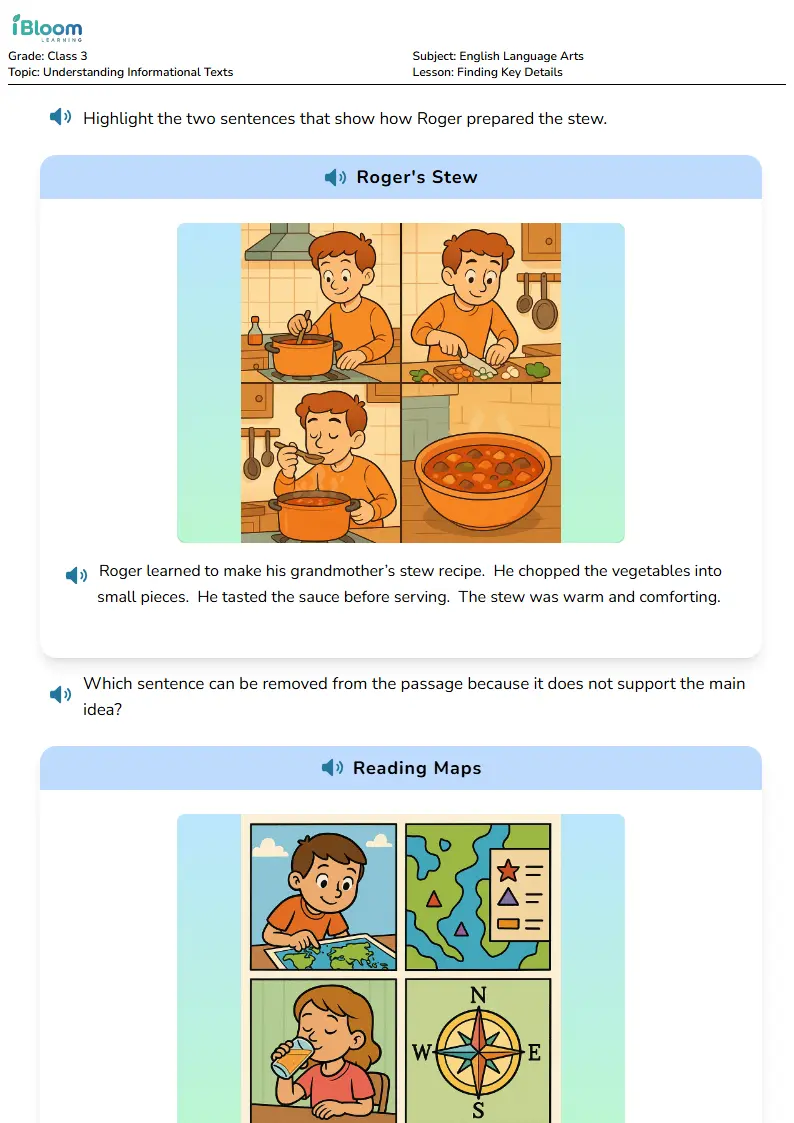
Free Finding Key Details Worksheets for Class 3
Looking for class 3 english language arts help? Download free, interactive finding key details worksheets. AI-personalized and Common Core-aligned. Practice early literacy with iBloom.
Free Finding or Guessing Information? Worksheets for Class 3
Looking for class 3 english language arts help? Download free, interactive finding or guessing information? worksheets. AI-personalized and Common Core-aligned. Practice early literacy with iBloom.
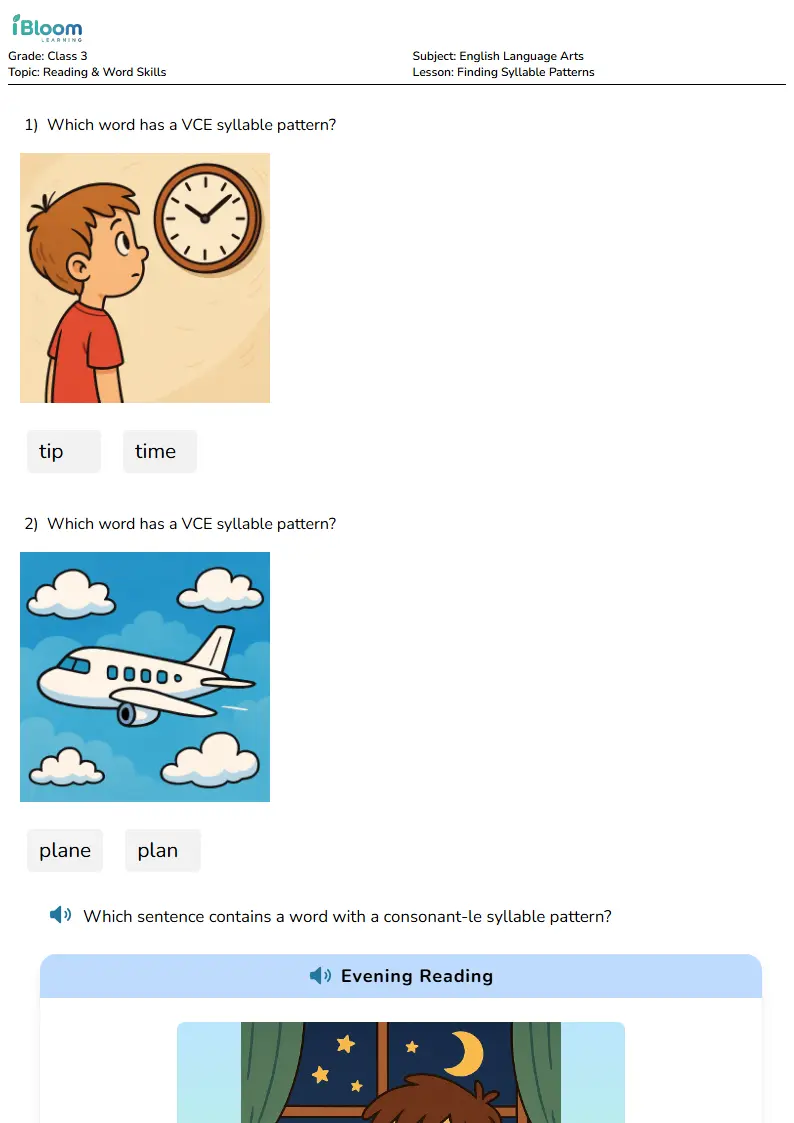
Free Finding Syllable Patterns Worksheets for Class 3
Looking for class 3 english language arts help? Download free, interactive finding syllable patterns worksheets. AI-personalized and Common Core-aligned. Practice early literacy with iBloom.
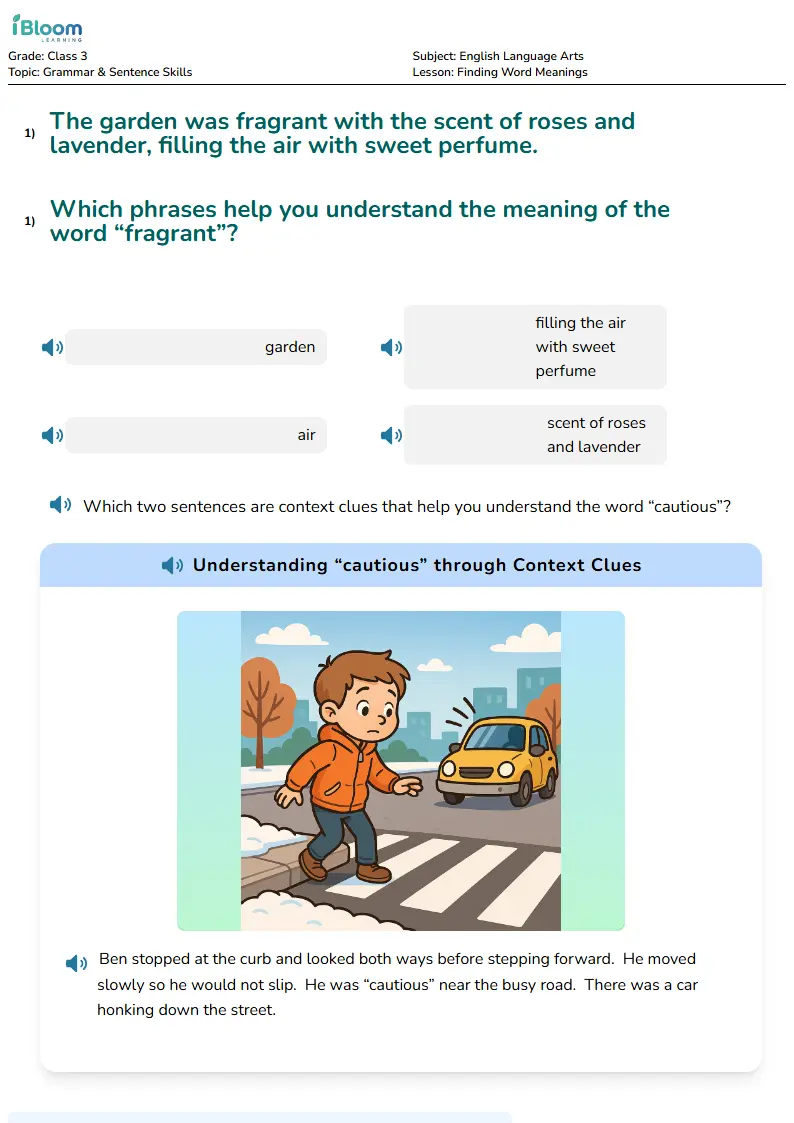
Context Clues for Word Meanings | Class 3
Help Class 3 learners use nearby phrases and sentences to infer word meanings, explain context clues, and practise with fragrant and cautious examples.
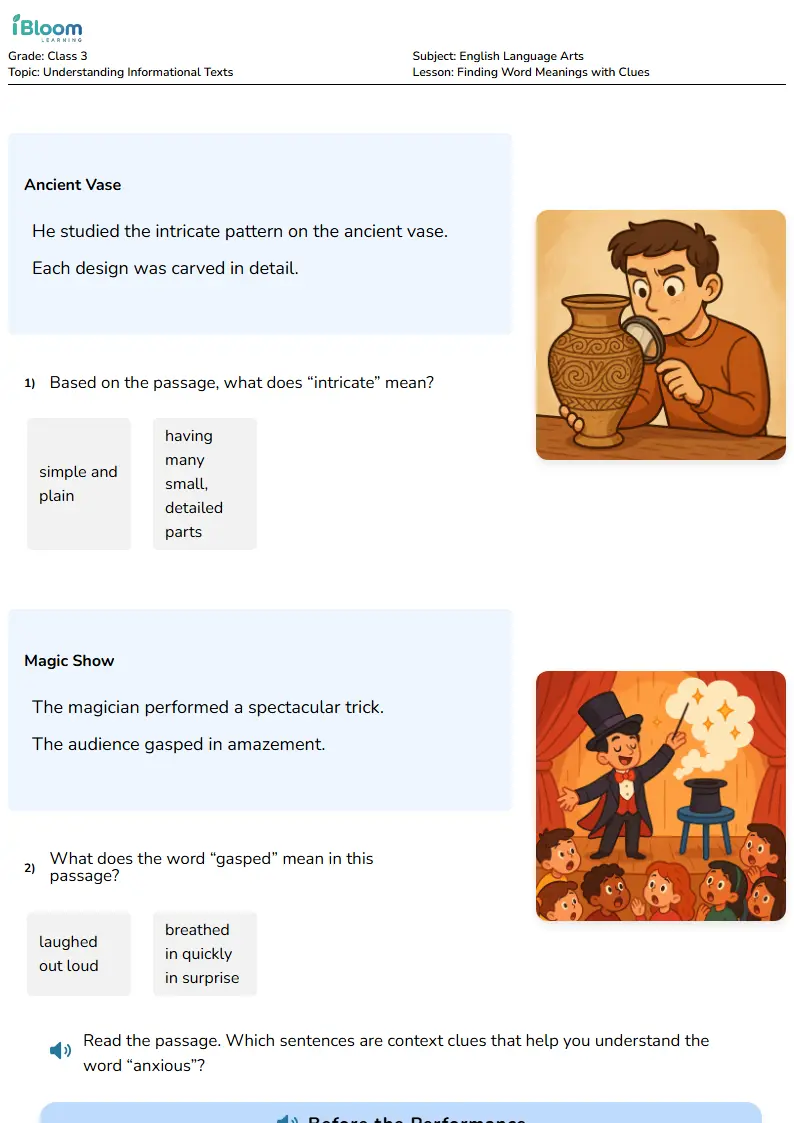
Free Finding Word Meanings with Clues Worksheets for Class 3
Looking for class 3 english language arts help? Download free, interactive finding word meanings with clues worksheets. AI-personalized and Common Core-aligned. Practice early literacy with iBloom.
Free How Are Story Plots Different? Worksheets for Class 3
Looking for class 3 english language arts help? Download free, interactive how are story plots different? worksheets. AI-personalized and Common Core-aligned. Practice early literacy with iBloom.
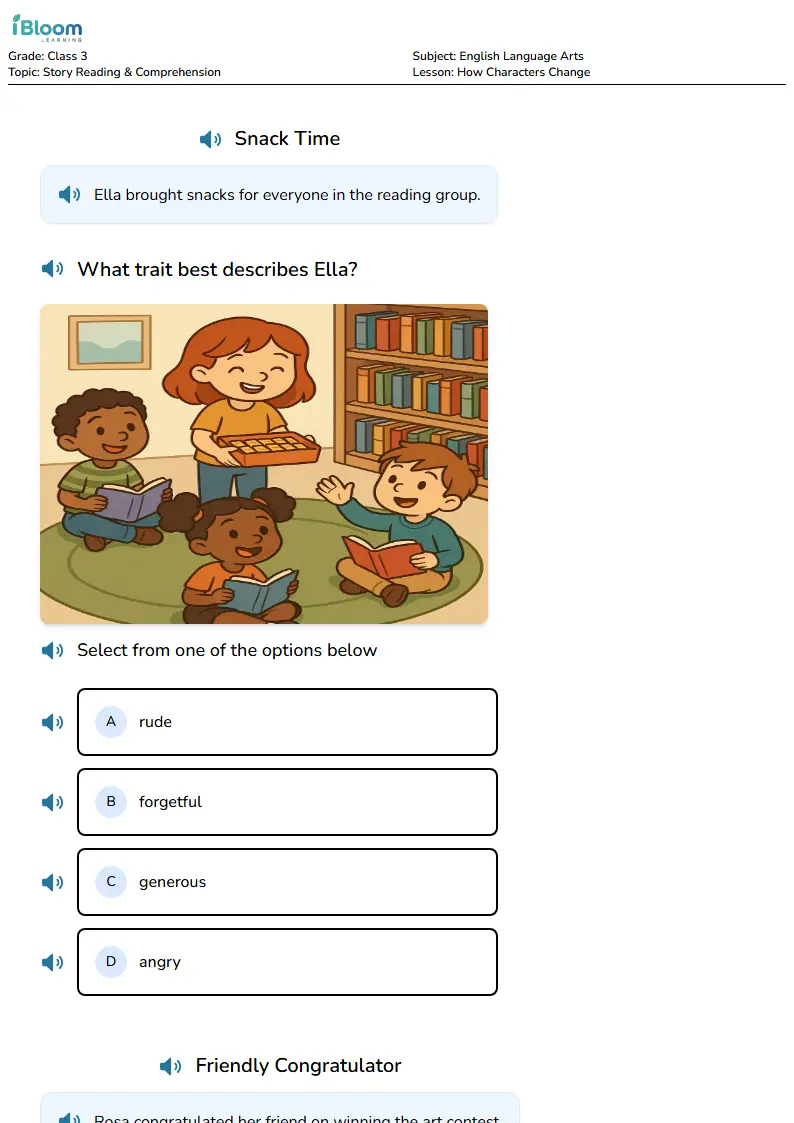
Free How Characters Change Worksheets for Class 3
Looking for class 3 english language arts help? Download free, interactive how characters change worksheets. AI-personalized and Common Core-aligned. Practice early literacy with iBloom.
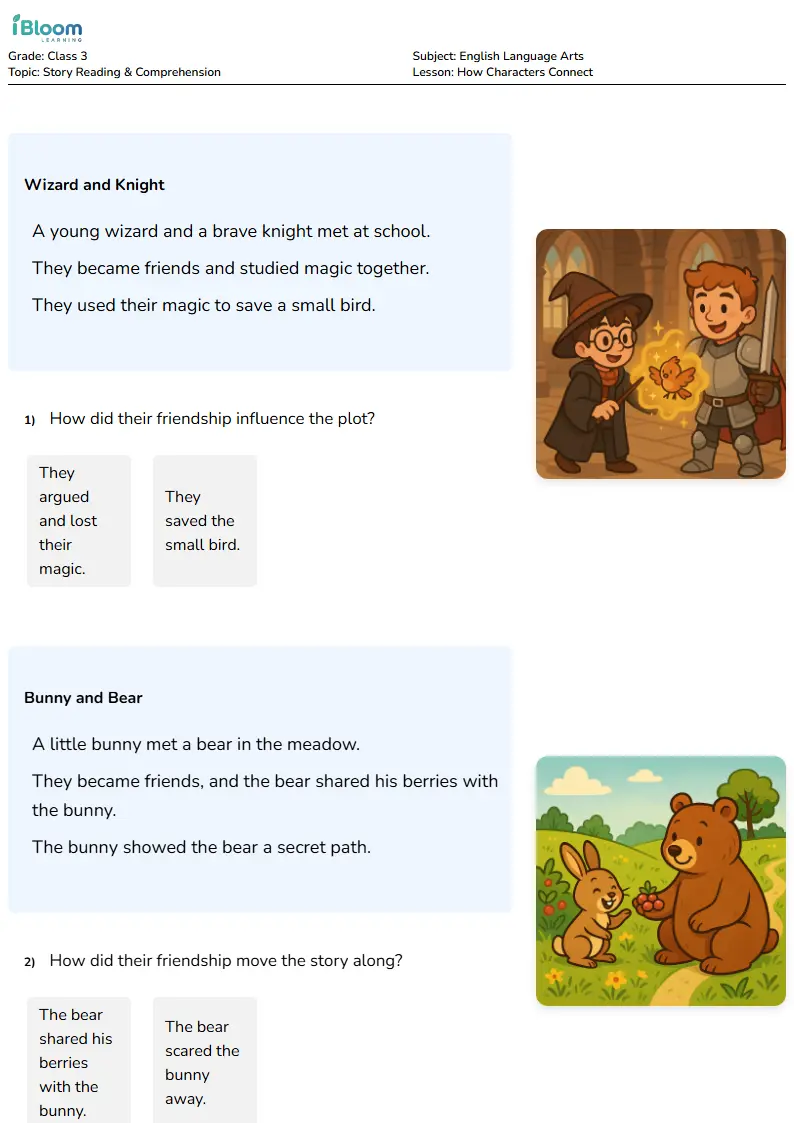
Free How Characters Connect Worksheets for Class 3
Looking for class 3 english language arts help? Download free, interactive how characters connect worksheets. AI-personalized and Common Core-aligned. Practice early literacy with iBloom.
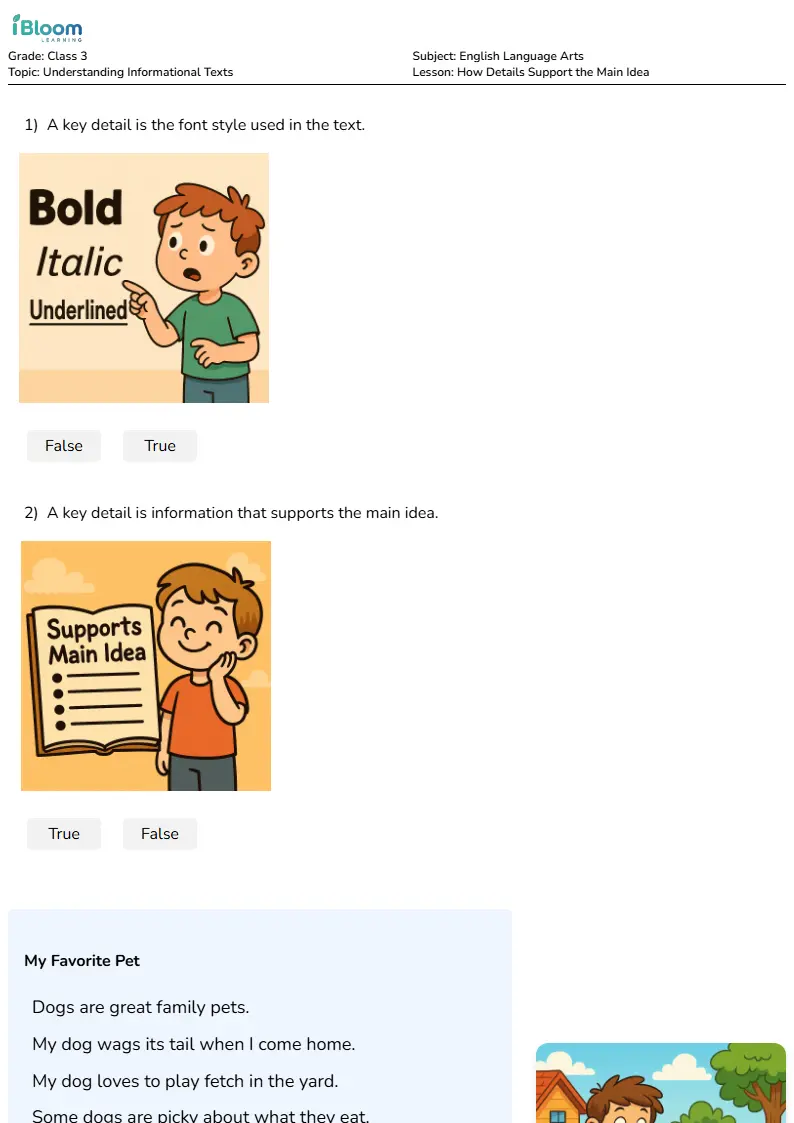
Free How Details Support the Main Idea Worksheets for Class 3
Looking for class 3 english language arts help? Download free, interactive how details support the main idea worksheets. AI-personalized and Common Core-aligned. Practice early literacy with iBloom.
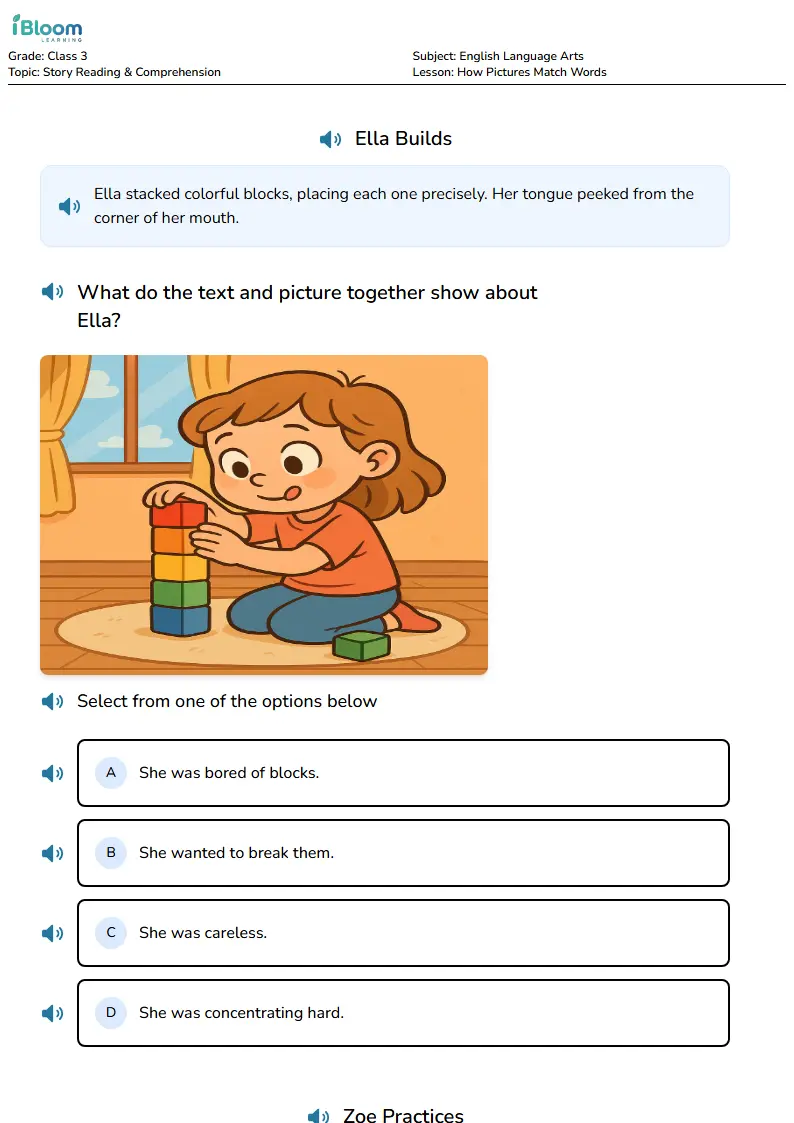
Free How Pictures Match Words Worksheets for Class 3
Looking for class 3 english language arts help? Download free, interactive how pictures match words worksheets. AI-personalized and Common Core-aligned. Practice early literacy with iBloom.
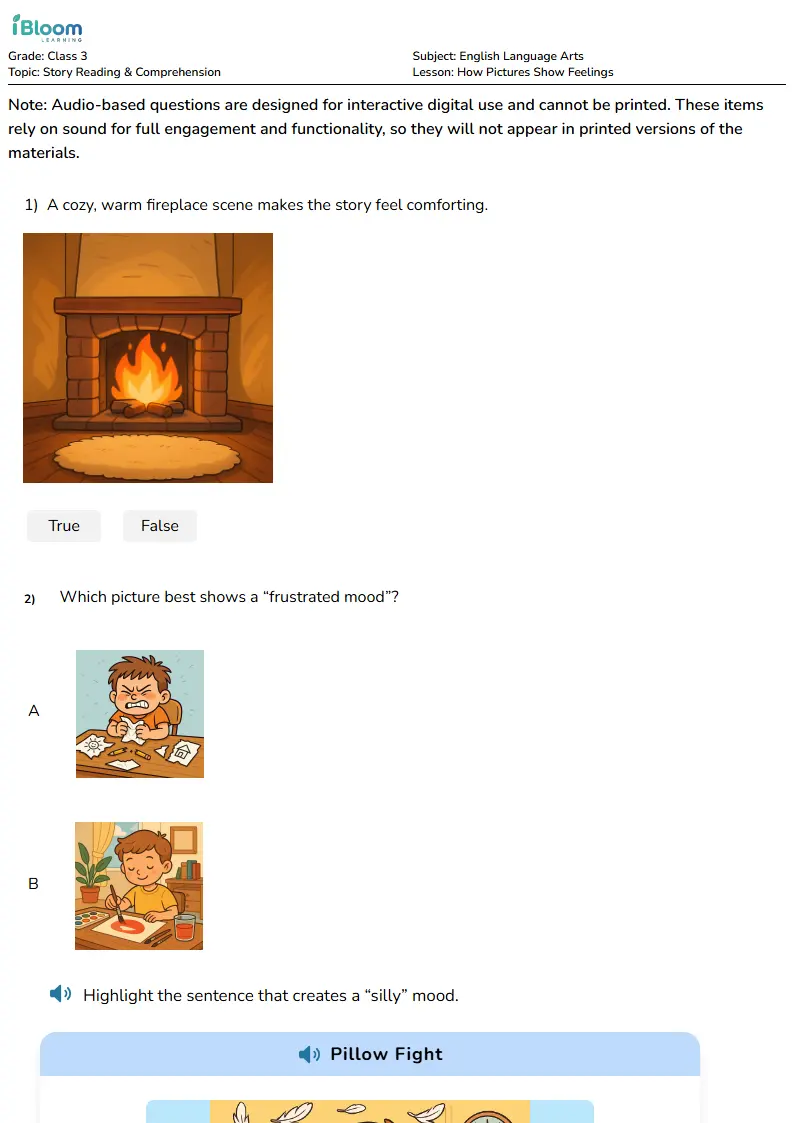
Free How Pictures Show Feelings Worksheets for Class 3
Looking for class 3 english language arts help? Download free, interactive how pictures show feelings worksheets. AI-personalized and Common Core-aligned. Practice early literacy with iBloom.
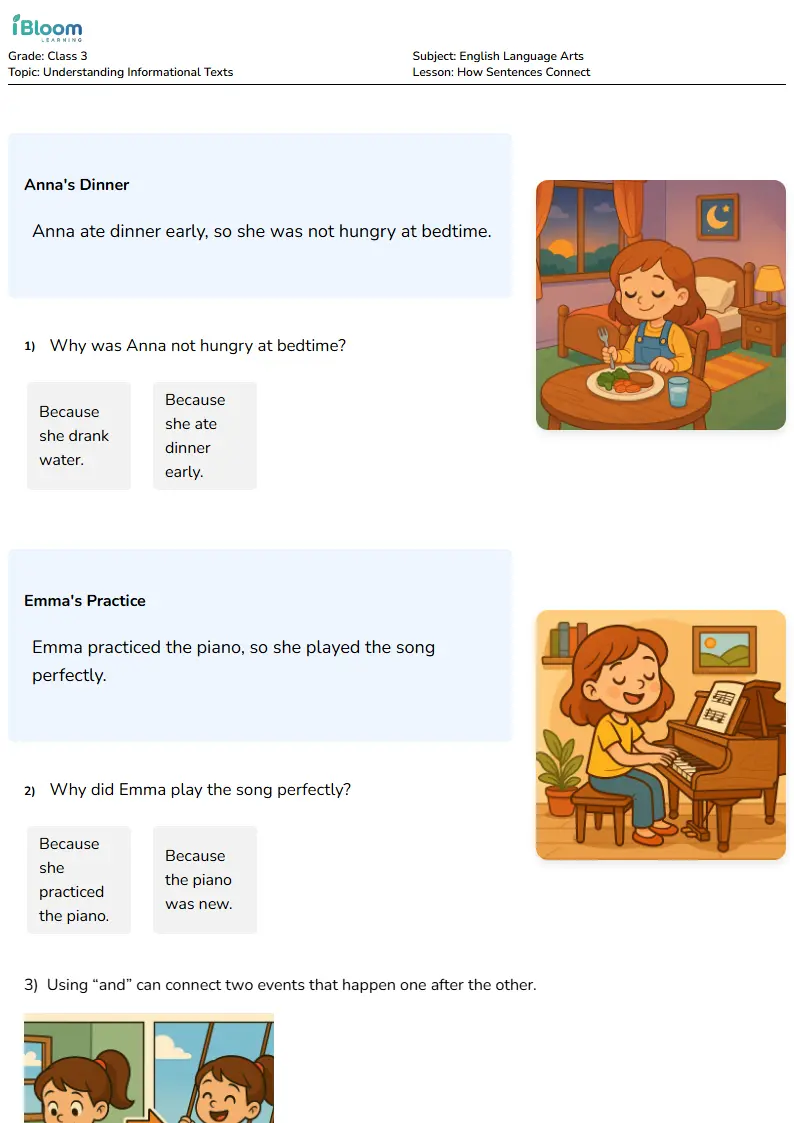
Free How Sentences Connect Worksheets for Class 3
Looking for class 3 english language arts help? Download free, interactive how sentences connect worksheets. AI-personalized and Common Core-aligned. Practice early literacy with iBloom.
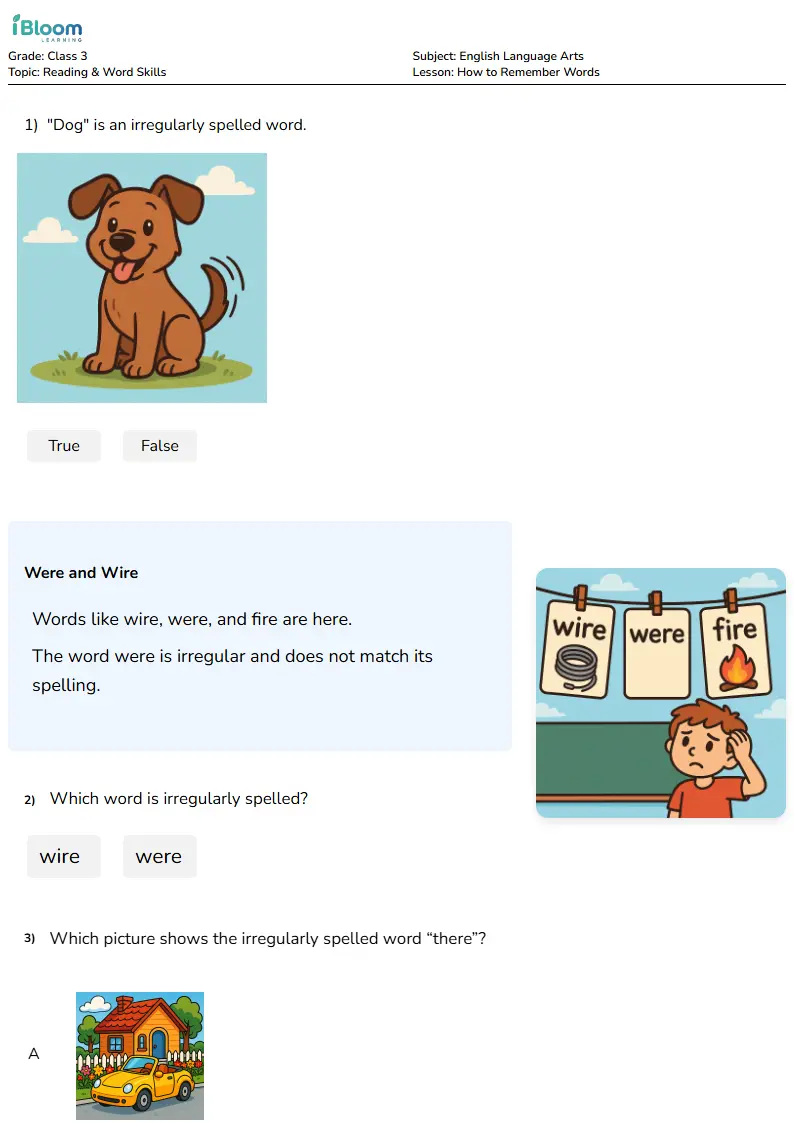
Free How to Remember Words Worksheets for Class 3
Looking for class 3 english language arts help? Download free, interactive how to remember words worksheets. AI-personalized and Common Core-aligned. Practice early literacy with iBloom.