Comparing Lengths worksheet for UKG
Lesson-Wise Builder
A premium AI tool that creates syllabus-aligned questions and worksheets for any lesson in seconds.
Comparing lengths for UKG means looking at two pictured objects and deciding which one is longer or shorter. The learner should compare the objects from one end to the other and explain the choice instead of guessing from colour, thickness, or position.
What this comparing lengths activity asks
The verified worksheet uses picture choices. A child may decide which crayon is shorter, whether chopsticks or a crayon are longer, or whether a branch extends farther than a stick. These are direct comparisons: no ruler reading or centimetre calculation is required.
Teach the words long, short, longer, and shorter
Long and short describe one object. Longer and shorter compare two objects. Encourage a full sentence such as, "The chopsticks are longer than the crayon," or, "The red crayon is shorter than the blue crayon." The words same length help when both endpoints match.
How to compare pictured objects carefully
- Name the two objects.
- Notice where each object begins and ends.
- Imagine moving them to the same starting line.
- Choose the object that extends farther for longer, or ends sooner for shorter.
- Say one sentence that explains the clue.
Use a common starting point
Pictures may sit in different places or face different directions. Position on the page does not decide length. Place two real objects side by side with one end aligned, or trace an imaginary baseline under the pictures. The object whose other end reaches farther is longer.
Ask the question in more than one useful way
Try "Which object is longer?" "Which is shorter?" "Which item extends farther?" and "How do you know?" These question forms build the same idea while checking whether the child understands the comparison words.
Move from pictures to real objects
Place two pencils, spoons, ribbons, leaves, crayons, or strips of paper together. Align one end and let the child point to the longer object. Turn the pair around and ask again so direction does not become a false clue. A short object hunt can find one item longer than a crayon and one item shorter than it.
Add same length, shortest, and longest
Once two-object comparisons are secure, cut two paper strips to the same length and match their endpoints. Then add a third strip and order all three from shortest to longest. This extends the idea without changing the attribute being compared.
Help the learner explain the visual clue
A useful answer names both objects and the relationship: "The branch is longer than the stick because it reaches farther." If a child answers in a home language first, repeat the key English words together. Pointing to both endpoints while speaking keeps the explanation connected to the picture.
Parent guidance for short practice
Use two familiar objects for about five minutes. Model one comparison, let the child align a new pair, and ask for one sentence. If the answer is wrong, say, "Make the starting ends match," rather than naming the answer. Stop after a clear success and repeat later with a different pair.
Teacher and tutor guidance
For a warm-up, show two classroom objects and ask children to signal longer or shorter. In a small group, give each learner three paper strips to order. Observe separately whether the child recognises the attribute, aligns endpoints, chooses accurately, and uses the comparison word correctly.
Common mistakes and helpful corrections
- Choosing the thicker object: trace only from one endpoint to the other.
- Confusing bigger with longer: ask which single attribute the question names.
- Comparing height: rotate or move the objects and align their ends.
- Using page position: imagine sliding both pictures to the same baseline.
- Reversing the words: restate the answer as "A is longer than B" and then "B is shorter than A."
Practice ideas that keep the skill focused
- Draw one long line and one short line for an adult to compare.
- Roll two pieces of playdough and change one to make it longer.
- Sort four paper strips from shortest to longest.
- Match pairs that have the same length.
- Create a two-picture question and explain the correct choice.
Related measurement concepts
Length is one attribute of an object. Height, width, weight, and capacity answer different questions. Direct comparison comes before measuring with repeated objects or standard units. Strong longer-than and shorter-than language also prepares children to order several lengths and discuss equal length.
How to check progress
The learner is ready to move on when they can compare unfamiliar picture pairs, align real objects without a reminder, use longer and shorter in the correct direction, and explain one choice. Next, introduce three-object ordering or informal measurement with equal-sized units.
Continue with related iBloom practice
Frequently Asked Questions
Should objects start at the same point?
Yes. Matching one endpoint makes it clear which object extends farther and prevents position from affecting the choice.
What is the difference between longer and taller?
Longer compares length from end to end. Taller usually compares vertical height. The question tells the child which attribute to notice.
Can children compare pictures without a ruler?
Yes. This activity uses direct visual comparison. Children can check the idea later by aligning similar real objects.
How long should practice last?
A few careful comparisons with explanations are more useful than a long drill. Stop when the child has shown one independent success.
More practice for this grade
More Math worksheets
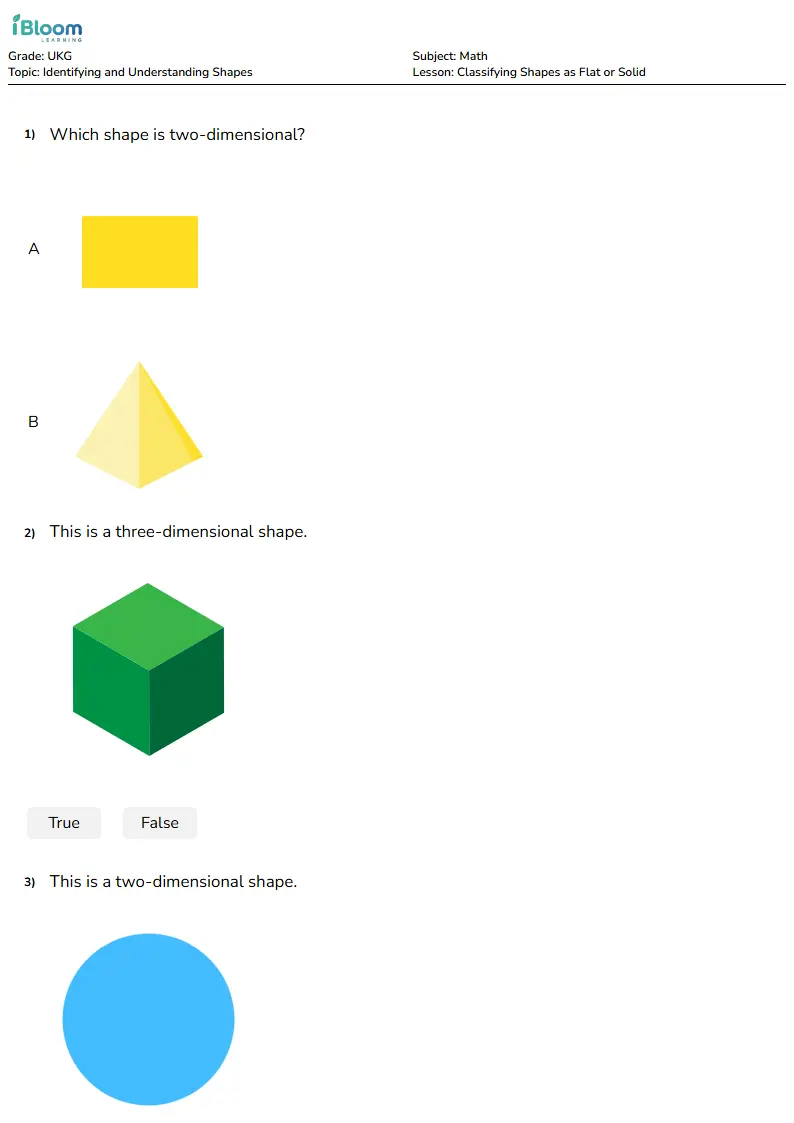
Free Classifying Shapes as Flat or Solid Worksheets for Ukg
Looking for ukg math help? Download free, interactive classifying shapes as flat or solid worksheets. AI-personalized and Common Core-aligned. Practice math with iBloom.
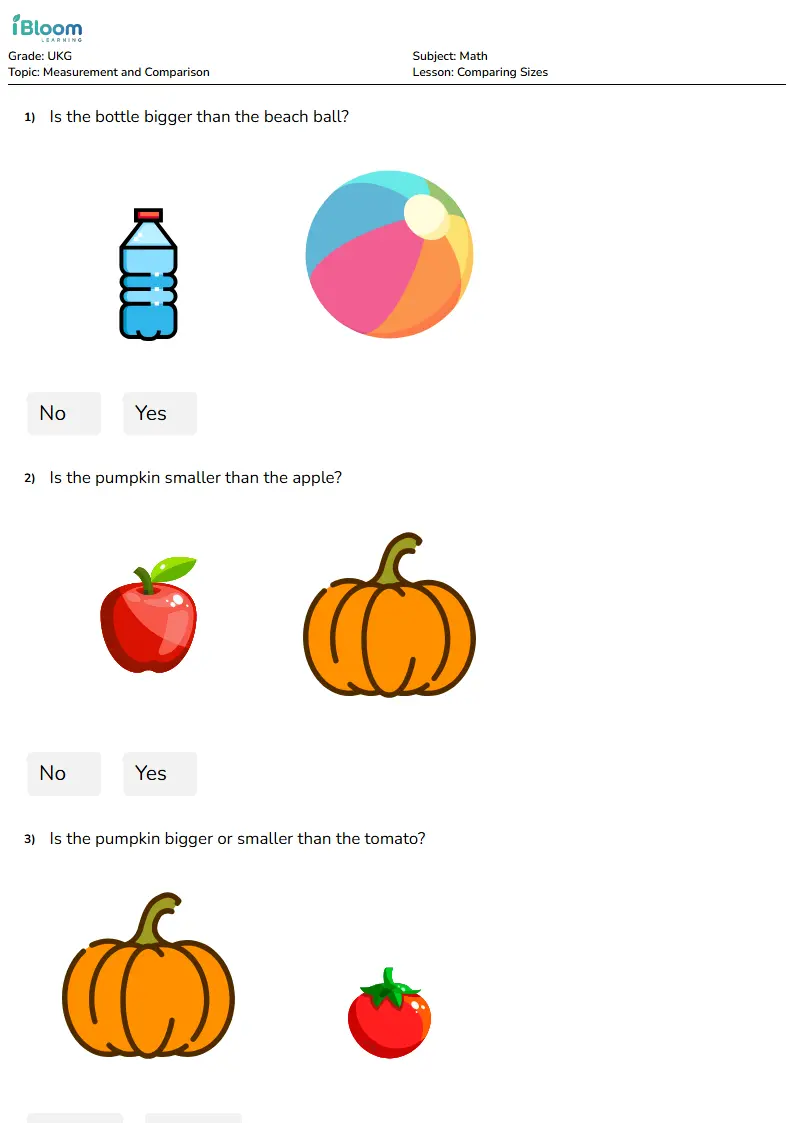
Free Comparing Sizes Worksheets for Ukg
Looking for ukg math help? Download free, interactive comparing sizes worksheets. AI-personalized and Common Core-aligned. Practice math with iBloom.
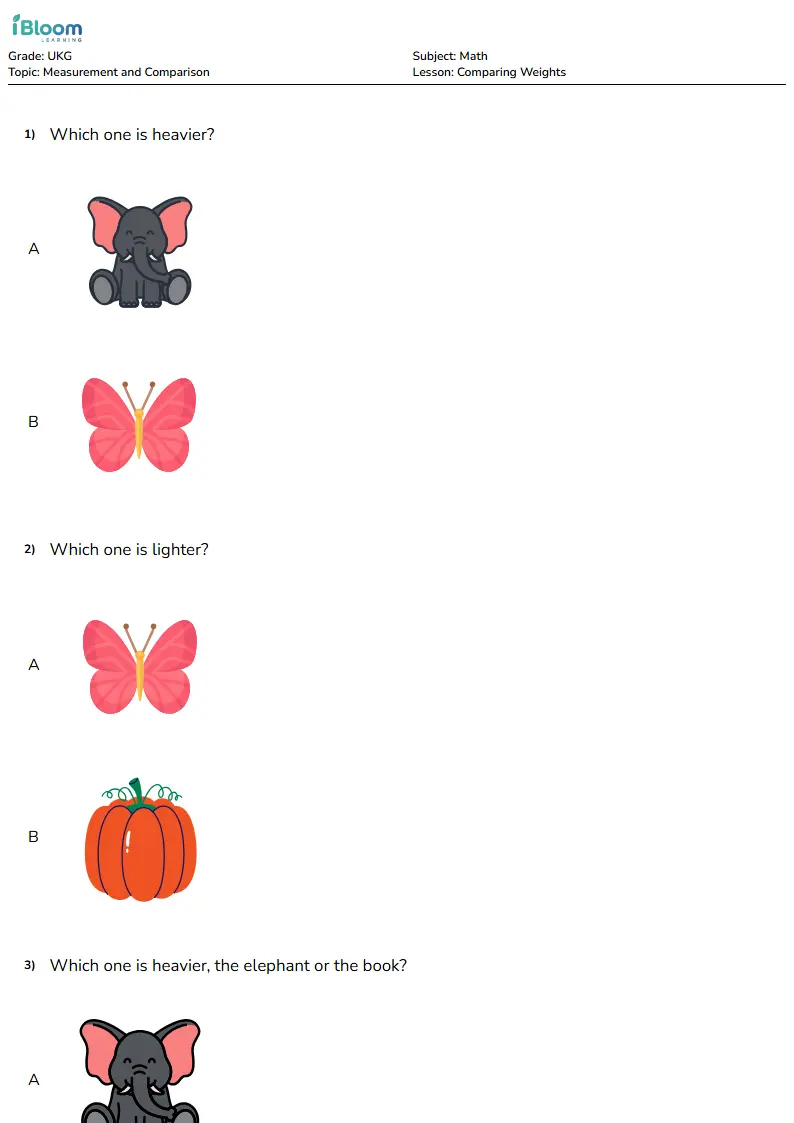
Free Comparing Weights Worksheets for Ukg
Looking for ukg math help? Download free, interactive comparing weights worksheets. AI-personalized and Common Core-aligned. Practice math with iBloom.
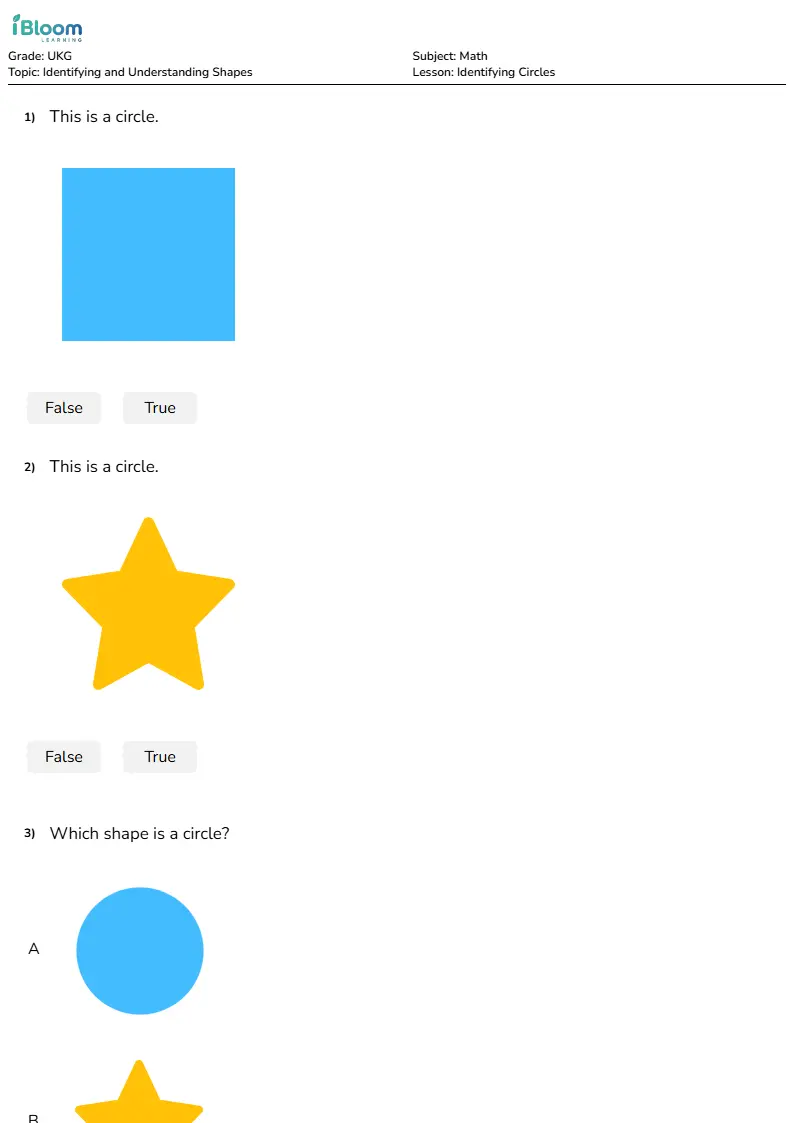
Identifying Circles Worksheet for UKG
Help UKG learners recognise circles among other shapes through true-or-false and multiple-choice picture questions, then explain the curved-edge clue.
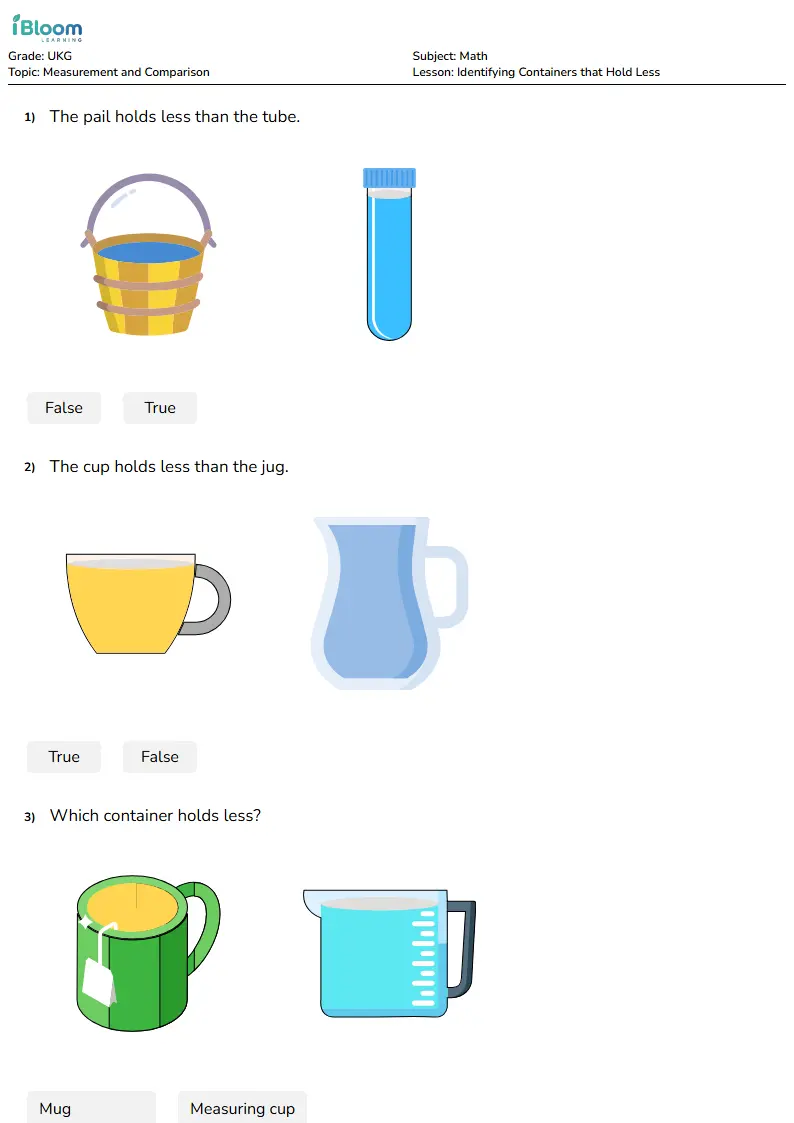
Free Identifying Containers that Hold Less Worksheets for Ukg
Looking for ukg math help? Download free, interactive identifying containers that hold less worksheets. AI-personalized and Common Core-aligned. Practice math with iBloom.
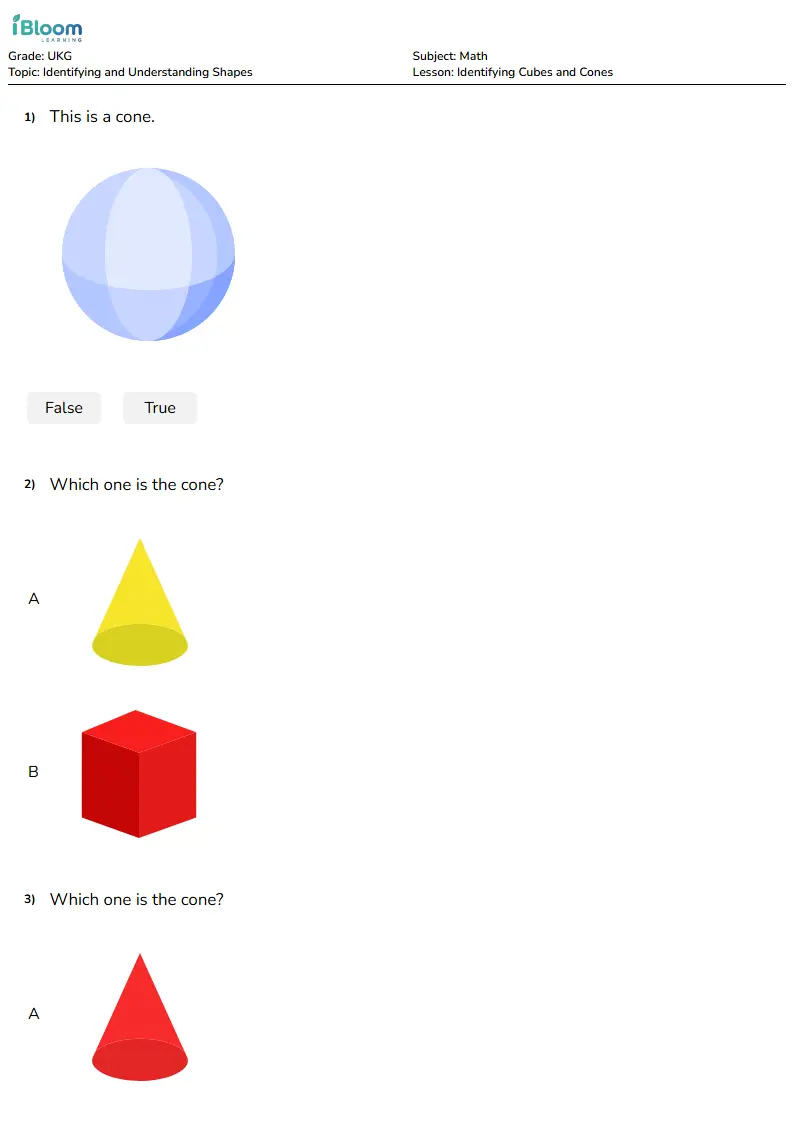
Free Identifying Cubes and Cones Worksheets for Ukg
Looking for ukg math help? Download free, interactive identifying cubes and cones worksheets. AI-personalized and Common Core-aligned. Practice math with iBloom.
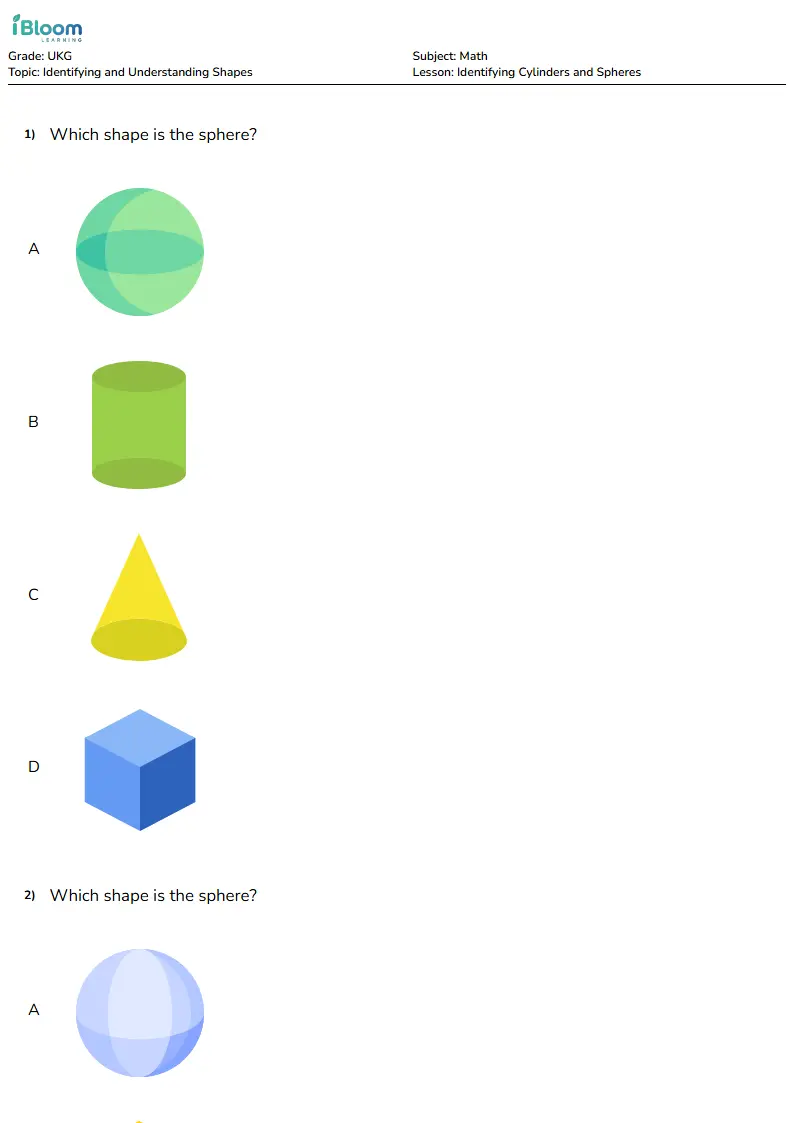
Free Identifying Cylinders and Spheres Worksheets for Ukg
Looking for ukg math help? Download free, interactive identifying cylinders and spheres worksheets. AI-personalized and Common Core-aligned. Practice math with iBloom.
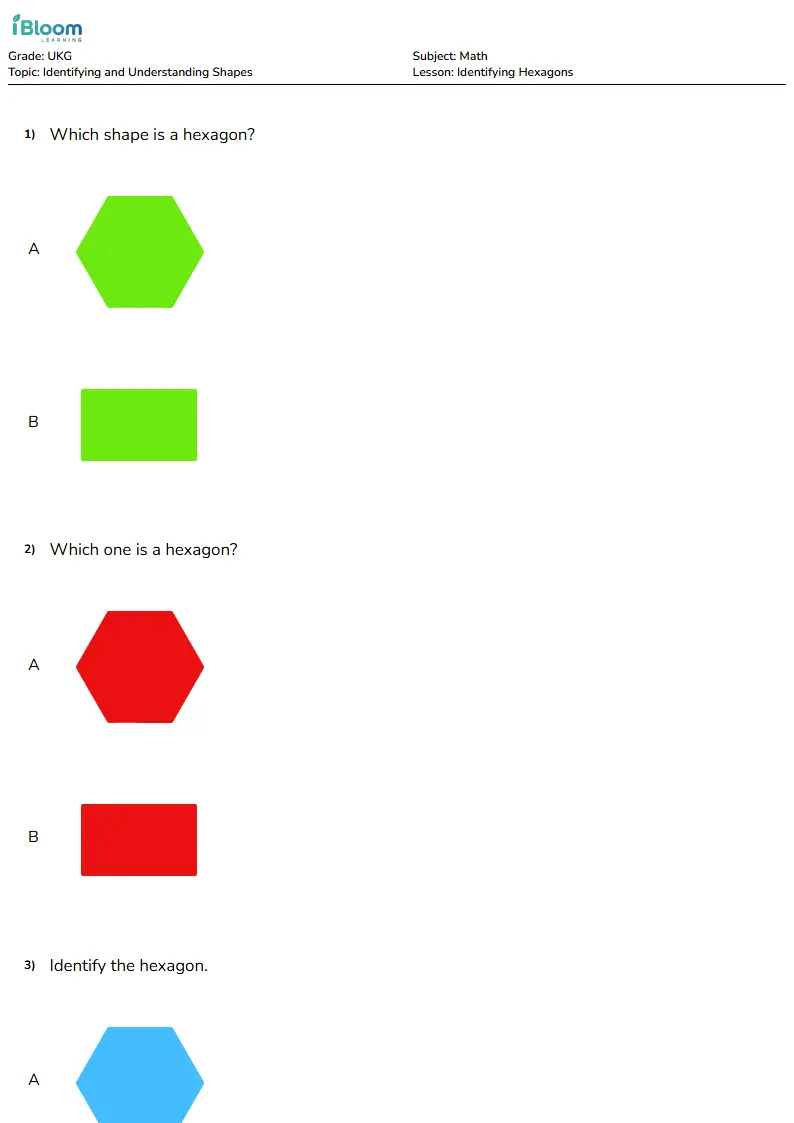
Free Identifying Hexagons Worksheets for Ukg
Looking for ukg math help? Download free, interactive identifying hexagons worksheets. AI-personalized and Common Core-aligned. Practice math with iBloom.
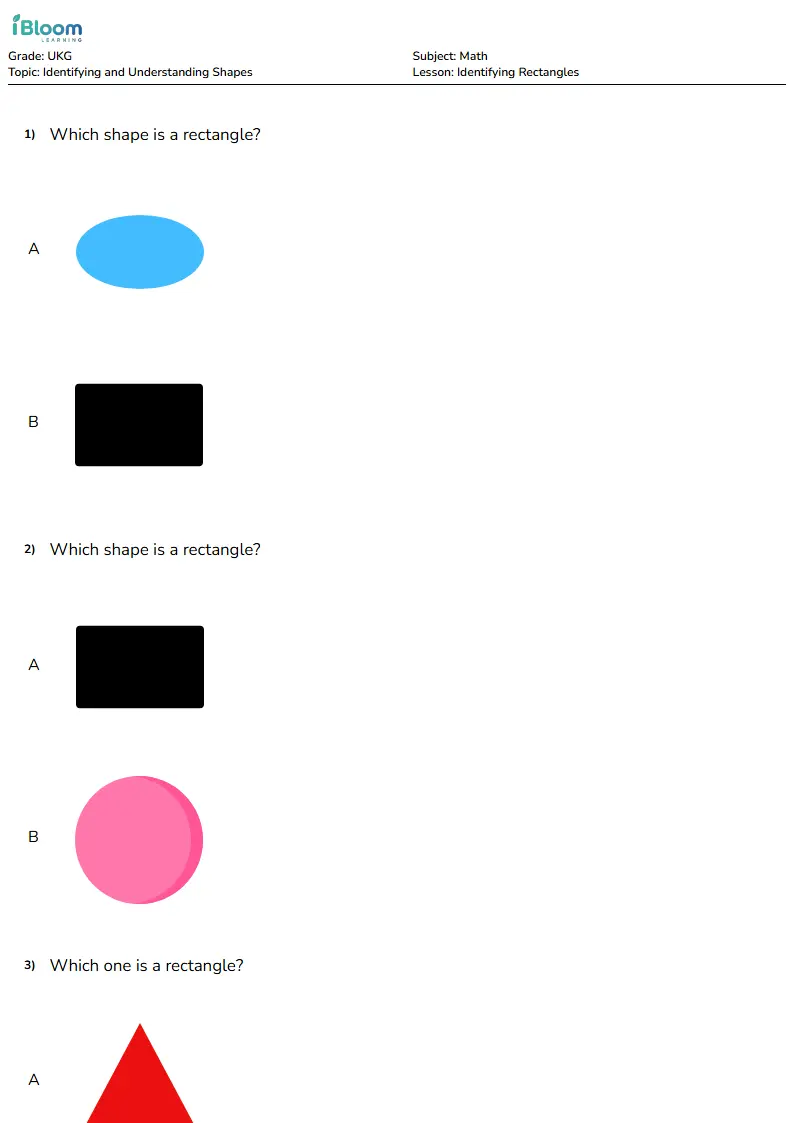
Free Identifying Rectangles Worksheets for Ukg
Looking for ukg math help? Download free, interactive identifying rectangles worksheets. AI-personalized and Common Core-aligned. Practice math with iBloom.
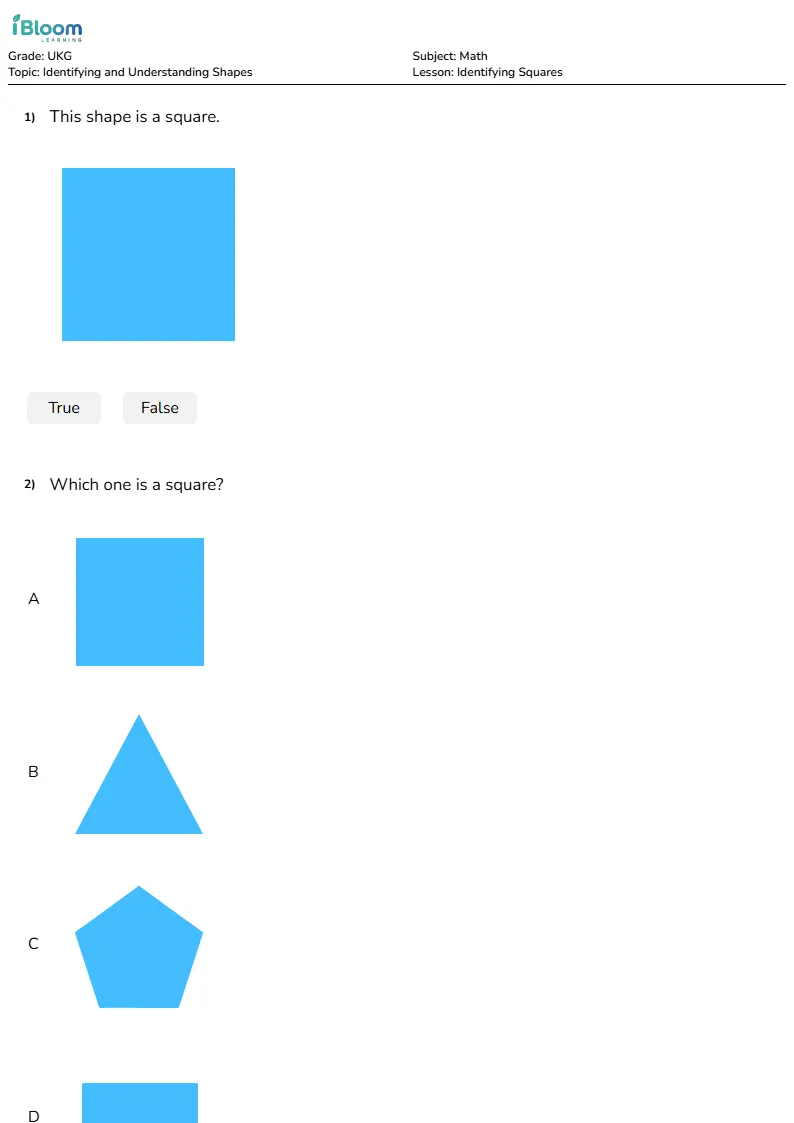
Free Identifying Squares Worksheets for Ukg
Looking for ukg math help? Download free, interactive identifying squares worksheets. AI-personalized and Common Core-aligned. Practice math with iBloom.
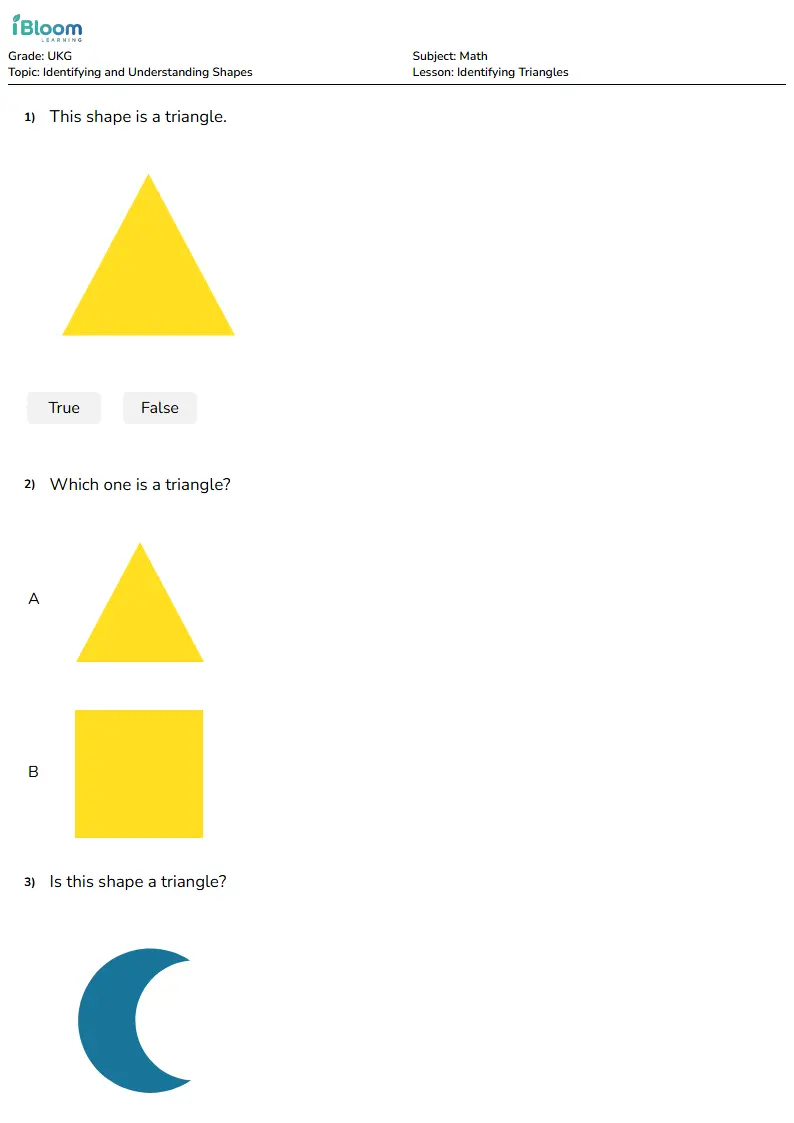
Free Identifying Triangles Worksheets for Ukg
Looking for ukg math help? Download free, interactive identifying triangles worksheets. AI-personalized and Common Core-aligned. Practice math with iBloom.
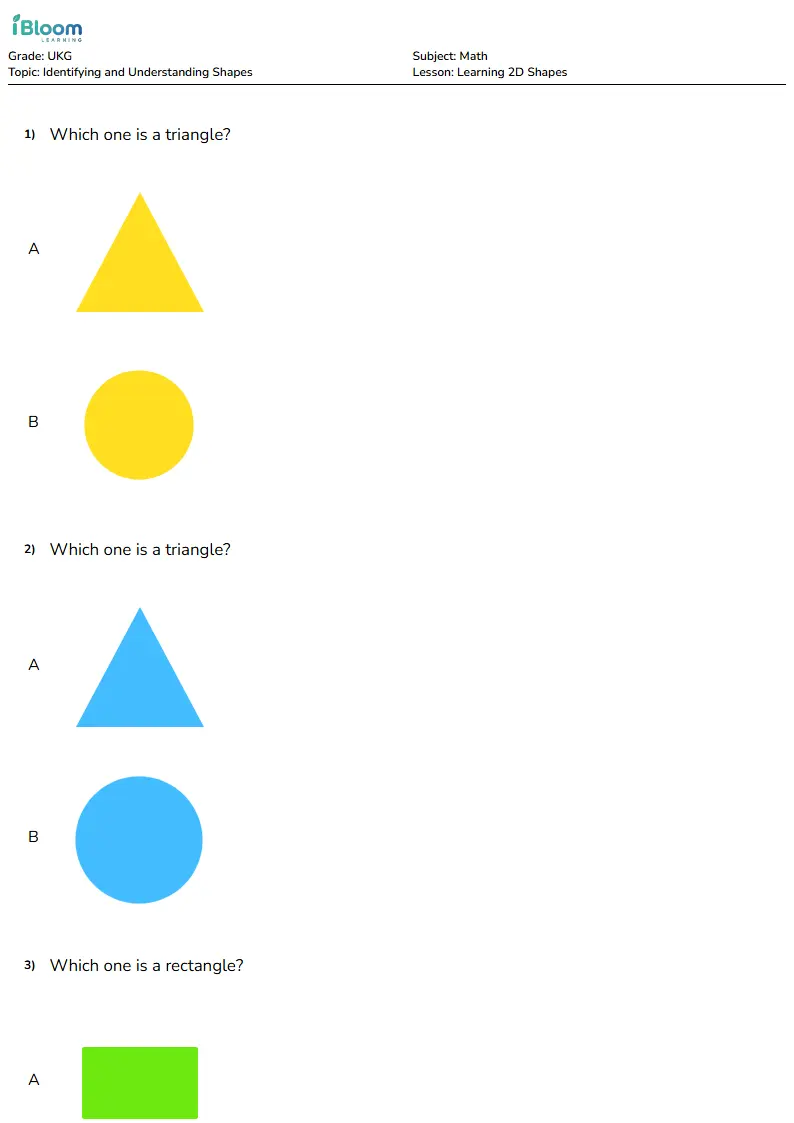
Free Learning 2D Shapes Worksheets for Ukg
Looking for ukg math help? Download free, interactive learning 2d shapes worksheets. AI-personalized and Common Core-aligned. Practice math with iBloom.
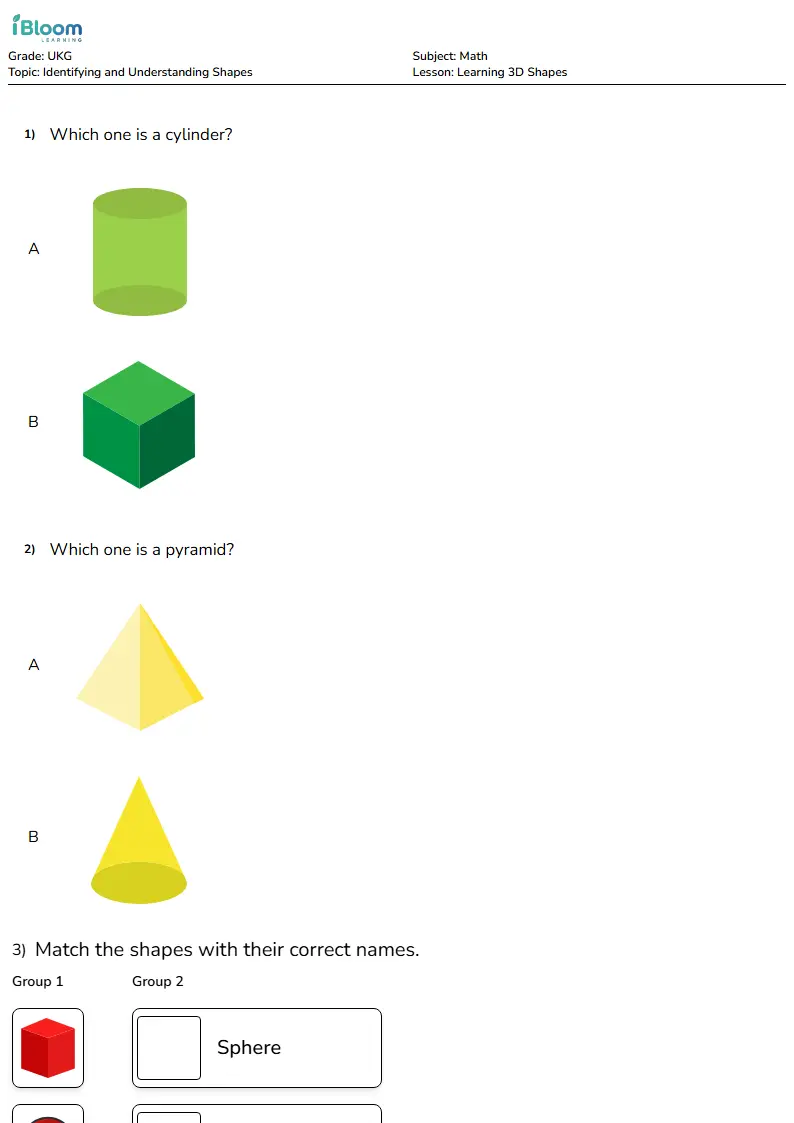
Learning 3D Shapes Worksheet for UKG
Help UKG children name cube, cuboid, sphere, cylinder and cone shapes, match them to real objects, and compare how each solid moves in practice.
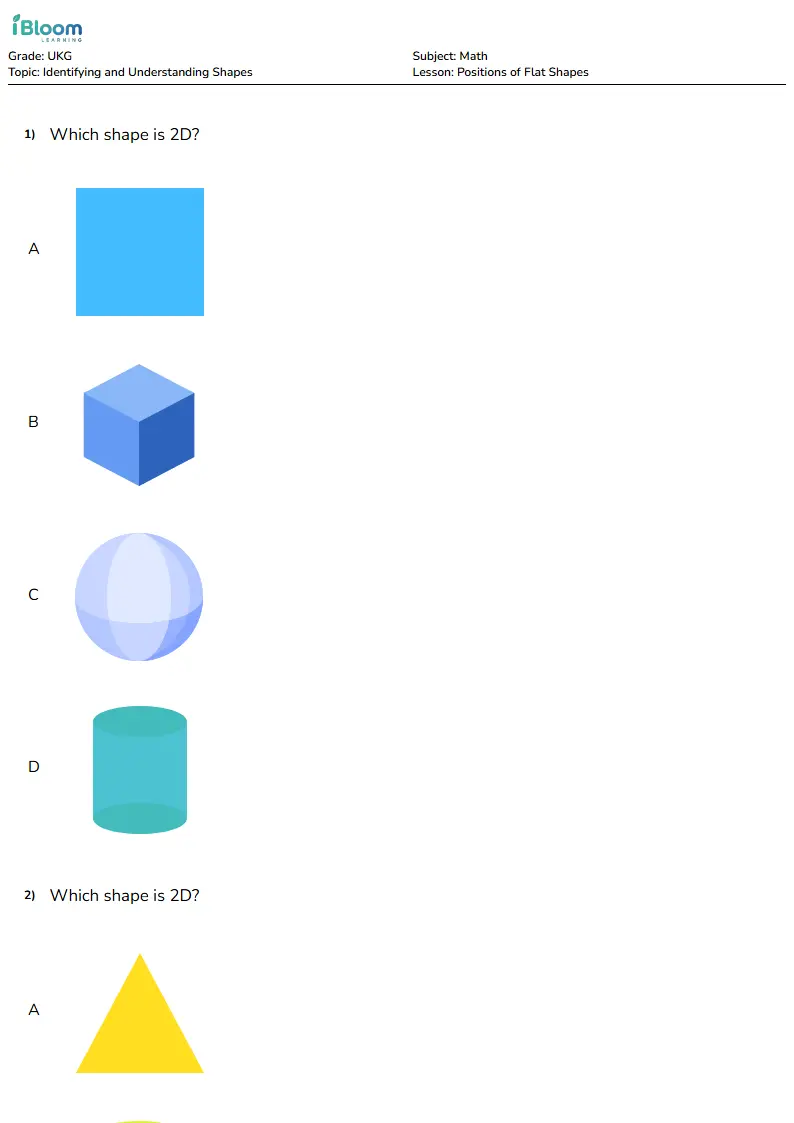
Free Positions of Flat Shapes Worksheets for Ukg
Looking for ukg math help? Download free, interactive positions of flat shapes worksheets. AI-personalized and Common Core-aligned. Practice math with iBloom.
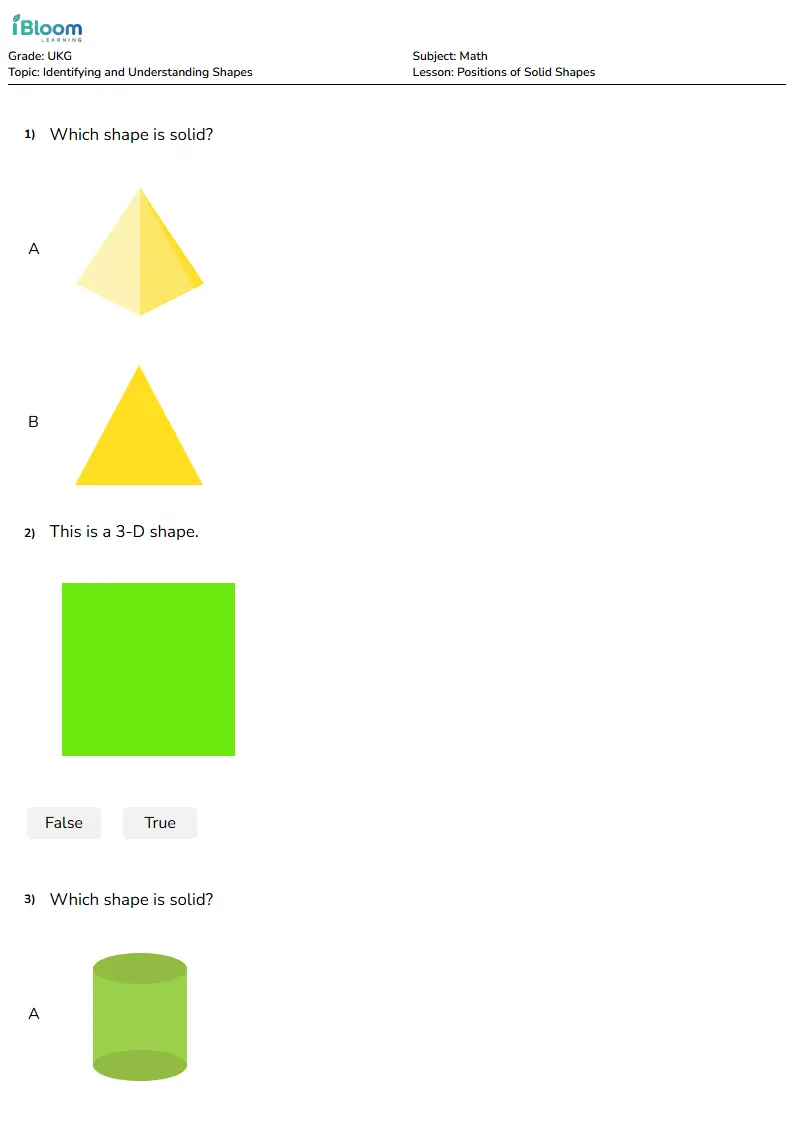
Free Positions of Solid Shapes Worksheets for Ukg
Looking for ukg math help? Download free, interactive positions of solid shapes worksheets. AI-personalized and Common Core-aligned. Practice math with iBloom.
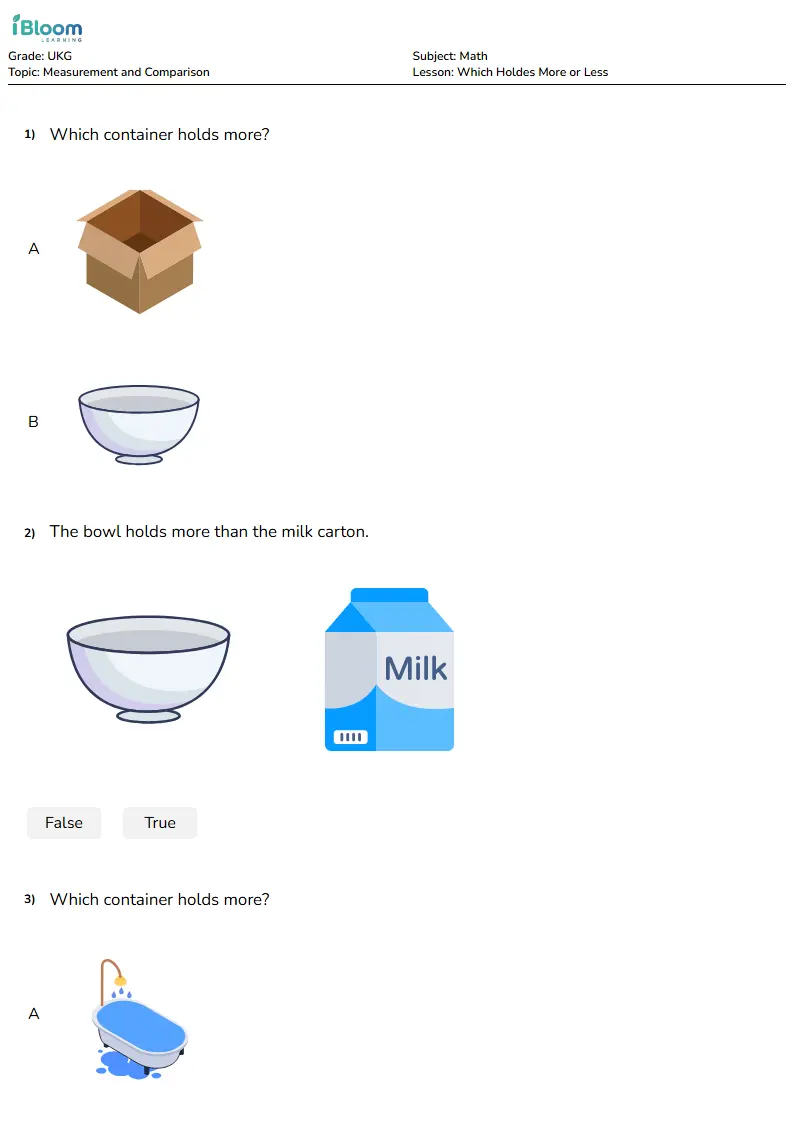
Free Which Holdes More or Less Worksheets for Ukg
Looking for ukg math help? Download free, interactive which holdes more or less worksheets. AI-personalized and Common Core-aligned. Practice math with iBloom.