Learning 3d Shapes worksheet for UKG

Lesson-Wise Builder
A premium AI tool that creates syllabus-aligned questions and worksheets for any lesson in seconds.
Learning 3D shapes in UKG starts with recognising solid shapes, saying their names, and matching them to objects children can touch and see. This worksheet supports early geometry with cube, cuboid, sphere, cylinder, and cone vocabulary.
Use the Learning 3D Shapes worksheet for UKG for focused practice. Continue with Identifying Cubes and Cones, Identifying Cylinders and Spheres, and Classifying Shapes as Flat or Solid.
Simple guide to common 3D shapes
Cube
A cube is a solid shape with flat square faces. A dice or a small cube block is a useful real-object example. A cube can slide and stack.
Cuboid
A cuboid is box-shaped. Its flat faces are rectangles, although a cube is a special cuboid whose faces are squares. A cereal box or book is a familiar cuboid example.
Sphere
A sphere is round in every direction and has one curved surface. A ball is shaped like a sphere. It rolls easily and does not stack steadily.
Cylinder
A cylinder has two flat circular faces and one curved surface. A tin or drum can show the shape. A cylinder can roll on its curved surface and stack on a flat face.
Cone
A cone has one flat circular face, one curved surface, and a pointed top. A party hat or traffic cone is a useful example. It can roll in a curved path and can stand on its flat face.
Match 3D shapes to real objects
- Sphere: ball, orange, round bead.
- Cube: dice, cube block, small cube-shaped gift box.
- Cuboid: book, cereal box, brick.
- Cylinder: tin, candle, drum.
- Cone: party hat, traffic cone, cone-shaped funnel.
Real objects are models, so they may include handles, labels, or rounded corners. Ask which main solid shape the object resembles and why.
Notice faces, surfaces, and corners
UKG learners do not need formal geometry definitions, but they can notice important attributes. Let children touch or point to a flat face, trace a curved surface, and feel a corner. Use clear language: flat, curved, round, pointed, and box-shaped.
Avoid turning the activity into memorising long number lists. At this stage, recognising and describing the shape is more useful than counting every edge or vertex.
Which shapes roll, slide, or stack?
Movement helps children connect properties with shape names. Test one safe object at a time on a table or mat.
- A sphere rolls in many directions.
- A cube and cuboid slide and stack on flat faces.
- A cylinder rolls on its curved surface and stacks on a flat end.
- A cone can stand on its flat face and roll in a curved path.
Ask the child to predict first, test the object, and describe what happened.
Understand 2D and 3D shapes
A 2D shape is flat, such as a circle, square, rectangle, or triangle. A 3D shape is solid and takes up space, such as a sphere, cube, cuboid, cylinder, or cone. A circle is not a sphere, and a square is not a cube. The flat shape may appear as one face or outline of a solid.
Show a paper circle beside a ball, and a paper square beside a cube block. Let the child describe what can be held, rolled, or stacked.
Compare shapes with careful words
Cube and cuboid
Both are box-shaped solids with flat faces. A cube has square faces of equal size; a typical cuboid has rectangular faces and may be longer in one direction.
Sphere and cylinder
Both can roll, but a sphere is curved all around. A cylinder also has two flat circular faces, so it can stand and stack.
Cone and cylinder
Both have a curved surface and a flat circular face. A cylinder has two flat circular faces, while a cone has one and narrows to a point.
Try a 3D shape hunt
- Name one shape to find.
- Look around the room for a safe object with that main shape.
- Say the object name and shape name together.
- Explain one matching property.
- Sort the objects by shape, movement, or flat and curved surfaces.
Example: “The tin is a cylinder because it has round flat ends and a curved side.”
Practice ideas for home and school
- Place three objects in a bag and identify each shape by touch.
- Sort picture cards into cube, cuboid, sphere, cylinder, and cone groups.
- Build a small model with blocks and name the solids used.
- Choose one object that rolls and one that stacks, then explain why.
- Draw a circle beside a sphere and discuss flat versus solid.
- Play “Which shape am I?” using two property clues.
Early geometry checklist
- Can the child name a cube, cuboid, sphere, cylinder, and cone?
- Can the child match each shape to a familiar object?
- Can the child use flat, curved, round, or pointed accurately?
- Can the child tell a flat shape from a solid shape?
- Can the child predict whether a shape will roll, slide, or stack?
- Can the child explain one answer in a short sentence?
Common mistakes and quick fixes
Calling a sphere a circle
Place a paper circle beside a ball. Ask which one is flat and which one can roll in every direction.
Calling every box a cube
Compare a dice with a book. Point out the cube’s equal square faces and the cuboid’s longer rectangular shape.
Naming by colour or size
Show the same shape in different colours and sizes so the child focuses on properties.
Memorising without finding examples
Return to real objects and ask the child to explain why each object matches its solid shape.
Parent and teacher guidance
Parents can practise for five to ten minutes with safe household objects. Let the child touch, name, and test each shape. Teachers can introduce two shapes at a time, model comparison language, and use the worksheet after hands-on exploration. Tutors can record whether the child needs support with vocabulary, visual matching, flat-versus-solid ideas, or describing properties.
For multilingual learners, say the shape name in the home language when helpful, then repeat the English term while holding or pointing to the object.
Frequently Asked Questions
Which 3D shapes should UKG children learn first?
Cube, cuboid, sphere, cylinder, and cone are useful starting shapes because children can find many real examples.
What is the difference between a circle and a sphere?
A circle is flat and two-dimensional. A sphere is solid, curved all around, and can roll in many directions.
Can a cylinder roll and stack?
Yes. It rolls on its curved surface and can stack when placed on a flat circular face.
How can children remember a cone?
Use a familiar object such as a party hat or traffic cone, then notice the flat circular base and pointed top.
Should UKG children count faces and edges?
They can notice simple properties, but accurate naming, matching, and describing are the main goals for this activity.
More practice for this grade
More Math worksheets
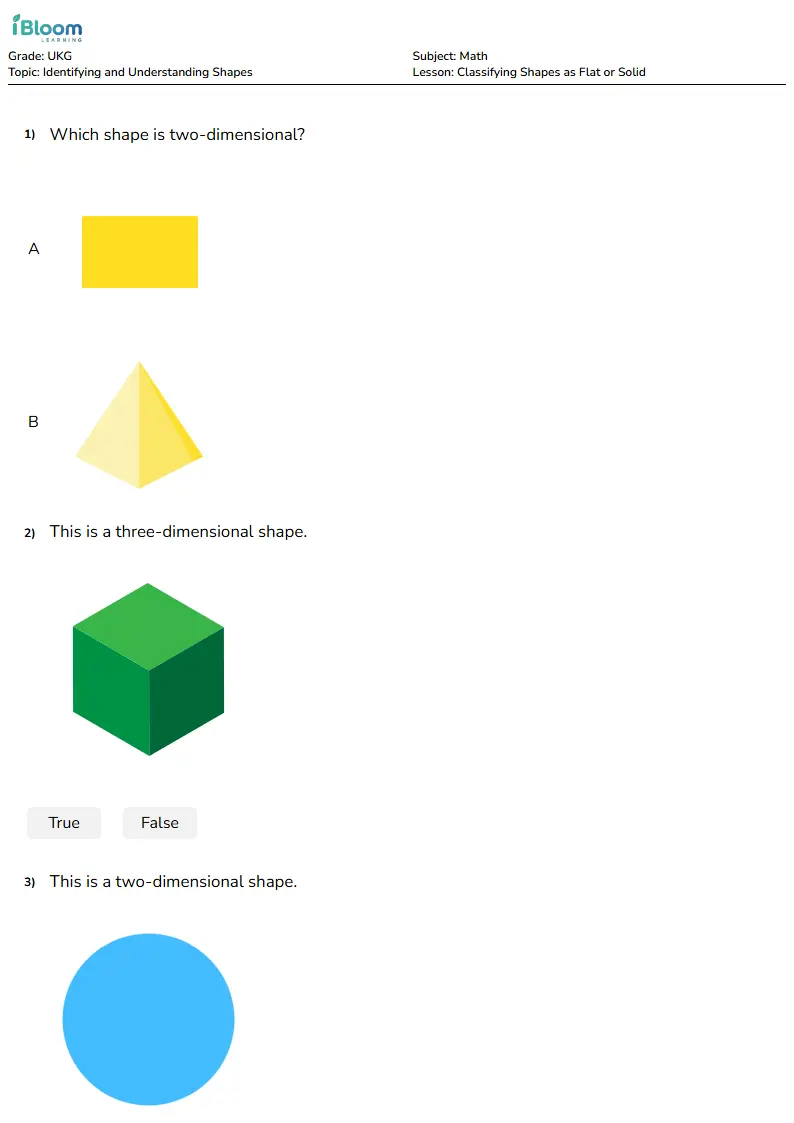
Free Classifying Shapes as Flat or Solid Worksheets for Ukg
Looking for ukg math help? Download free, interactive classifying shapes as flat or solid worksheets. AI-personalized and Common Core-aligned. Practice math with iBloom.
Comparing Lengths Worksheet for UKG
Help UKG learners compare pictured objects by length, choose which is longer or shorter, explain the visual clue, and build careful measurement language.
Free Comparing Sizes Worksheets for Ukg
Looking for ukg math help? Download free, interactive comparing sizes worksheets. AI-personalized and Common Core-aligned. Practice math with iBloom.
Free Comparing Weights Worksheets for Ukg
Looking for ukg math help? Download free, interactive comparing weights worksheets. AI-personalized and Common Core-aligned. Practice math with iBloom.
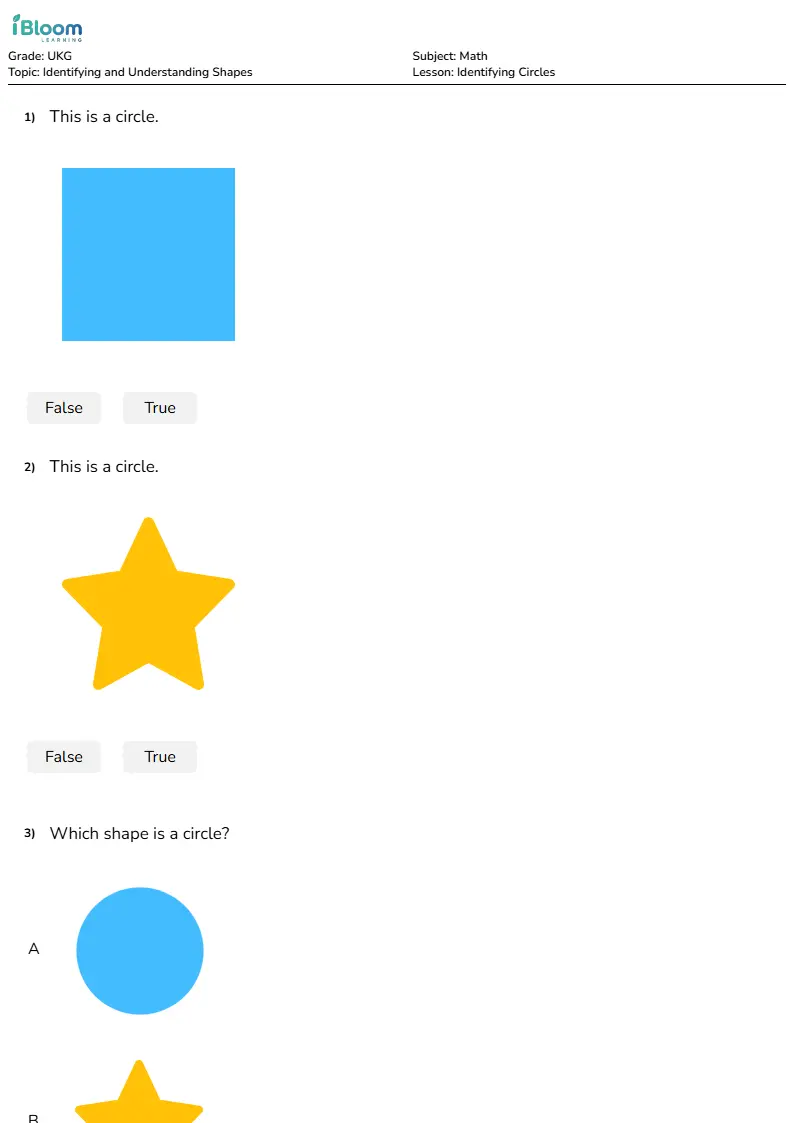
Identifying Circles Worksheet for UKG
Help UKG learners recognise circles among other shapes through true-or-false and multiple-choice picture questions, then explain the curved-edge clue.
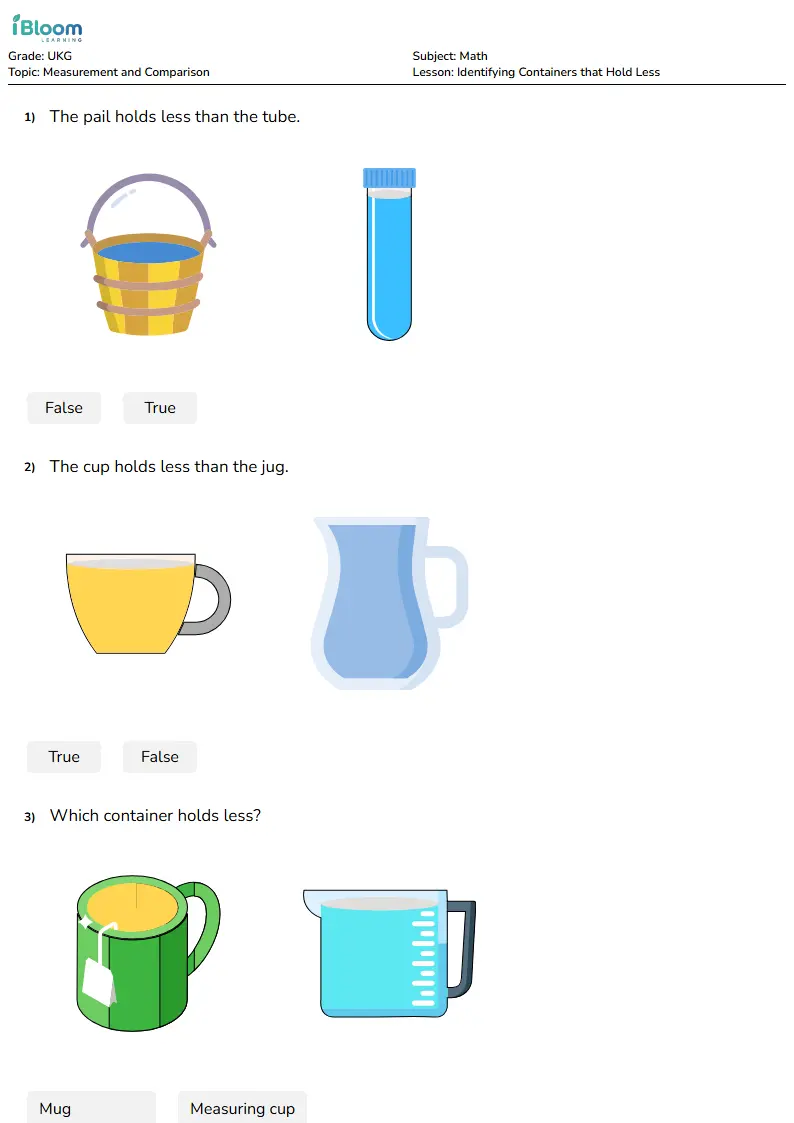
Free Identifying Containers that Hold Less Worksheets for Ukg
Looking for ukg math help? Download free, interactive identifying containers that hold less worksheets. AI-personalized and Common Core-aligned. Practice math with iBloom.
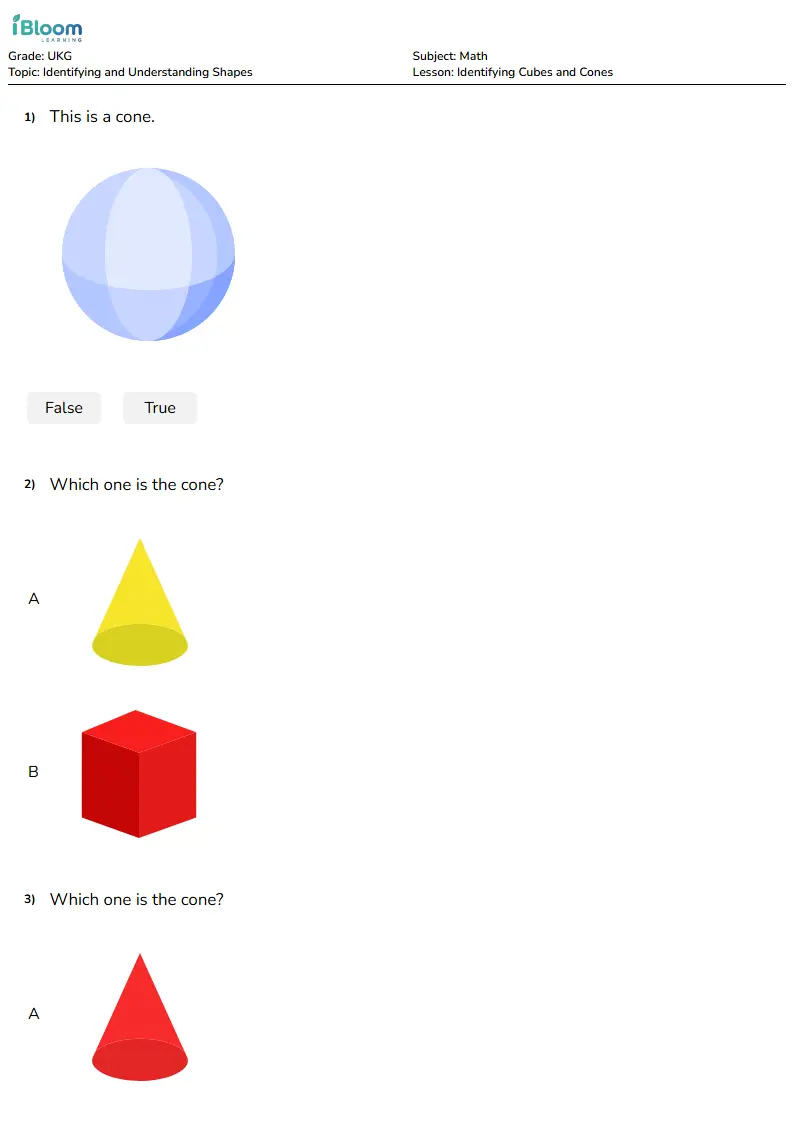
Free Identifying Cubes and Cones Worksheets for Ukg
Looking for ukg math help? Download free, interactive identifying cubes and cones worksheets. AI-personalized and Common Core-aligned. Practice math with iBloom.
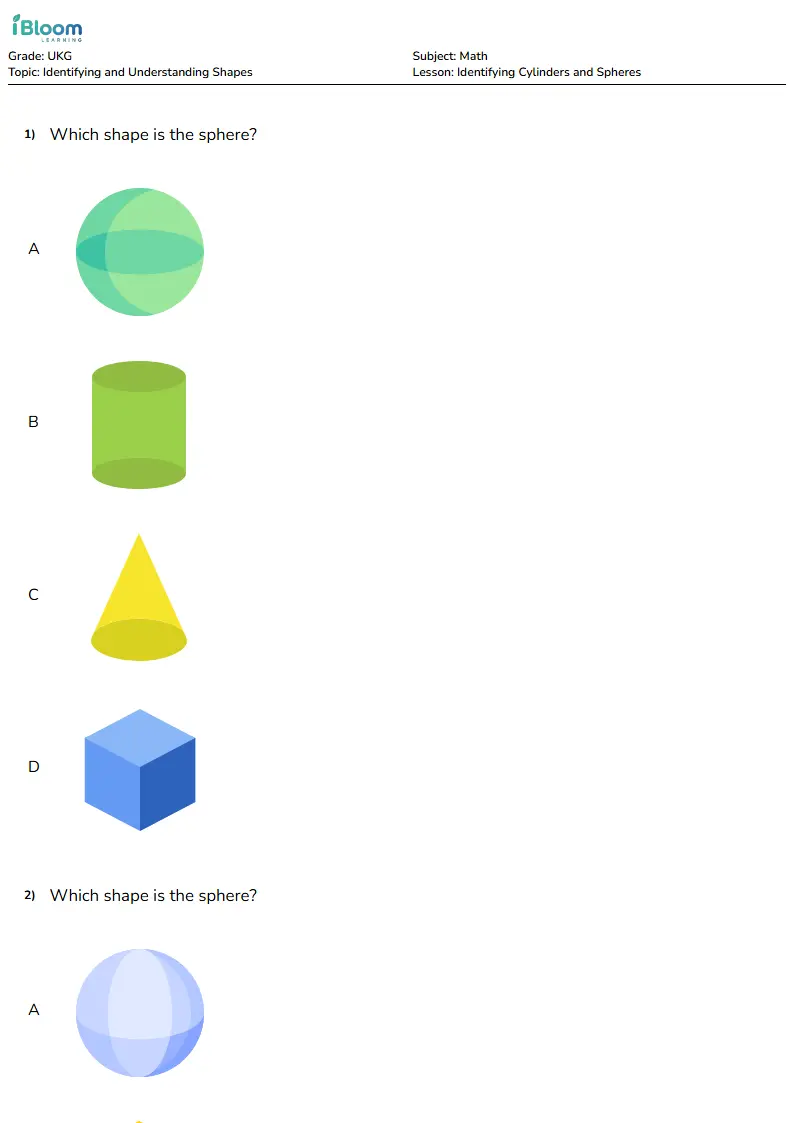
Free Identifying Cylinders and Spheres Worksheets for Ukg
Looking for ukg math help? Download free, interactive identifying cylinders and spheres worksheets. AI-personalized and Common Core-aligned. Practice math with iBloom.
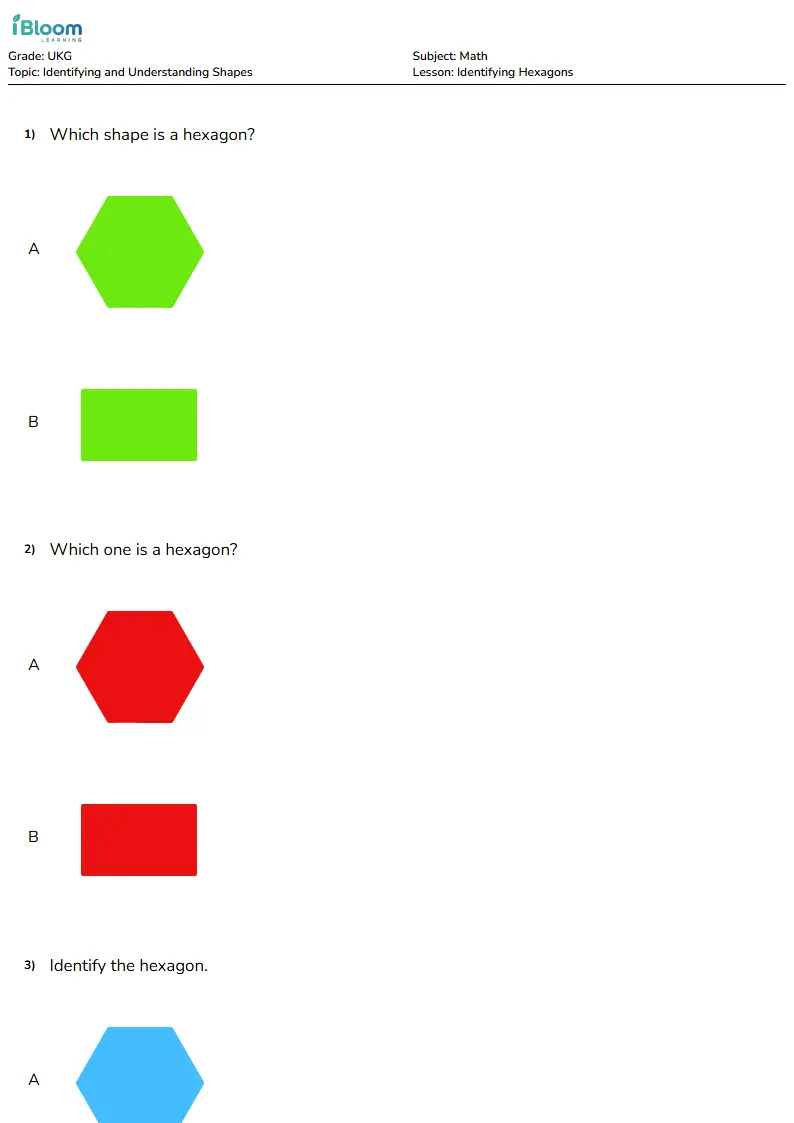
Free Identifying Hexagons Worksheets for Ukg
Looking for ukg math help? Download free, interactive identifying hexagons worksheets. AI-personalized and Common Core-aligned. Practice math with iBloom.
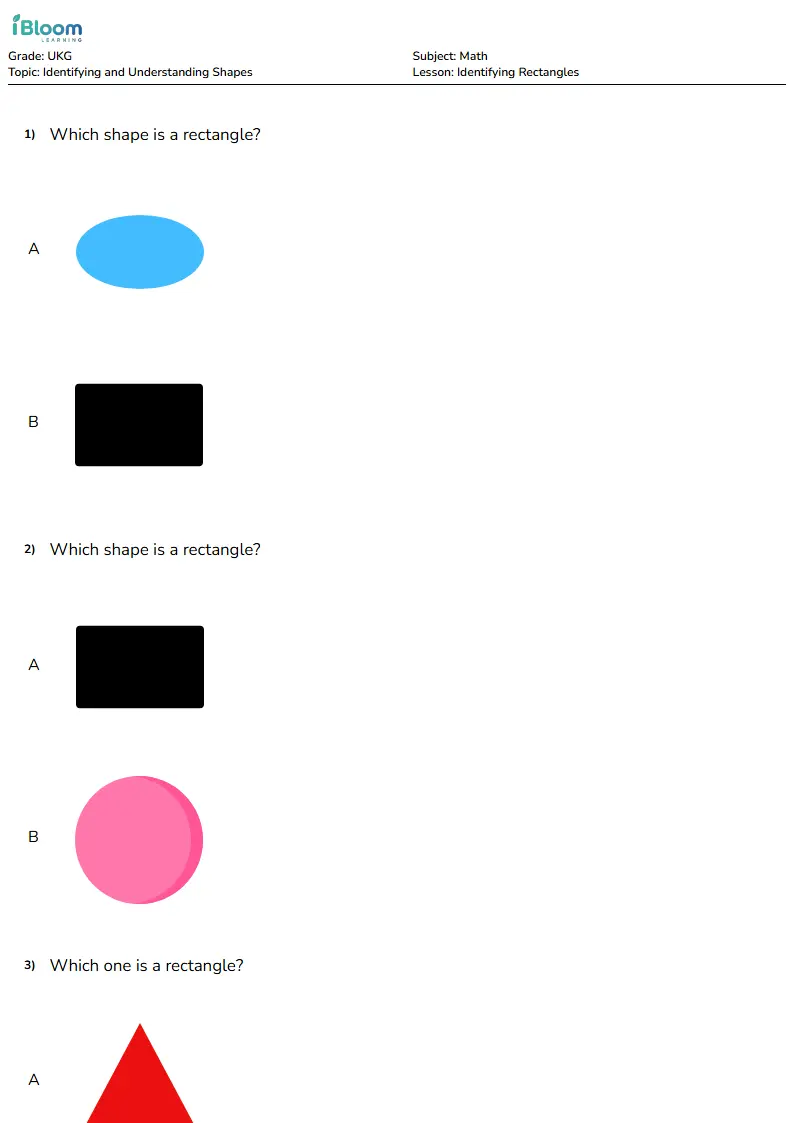
Free Identifying Rectangles Worksheets for Ukg
Looking for ukg math help? Download free, interactive identifying rectangles worksheets. AI-personalized and Common Core-aligned. Practice math with iBloom.
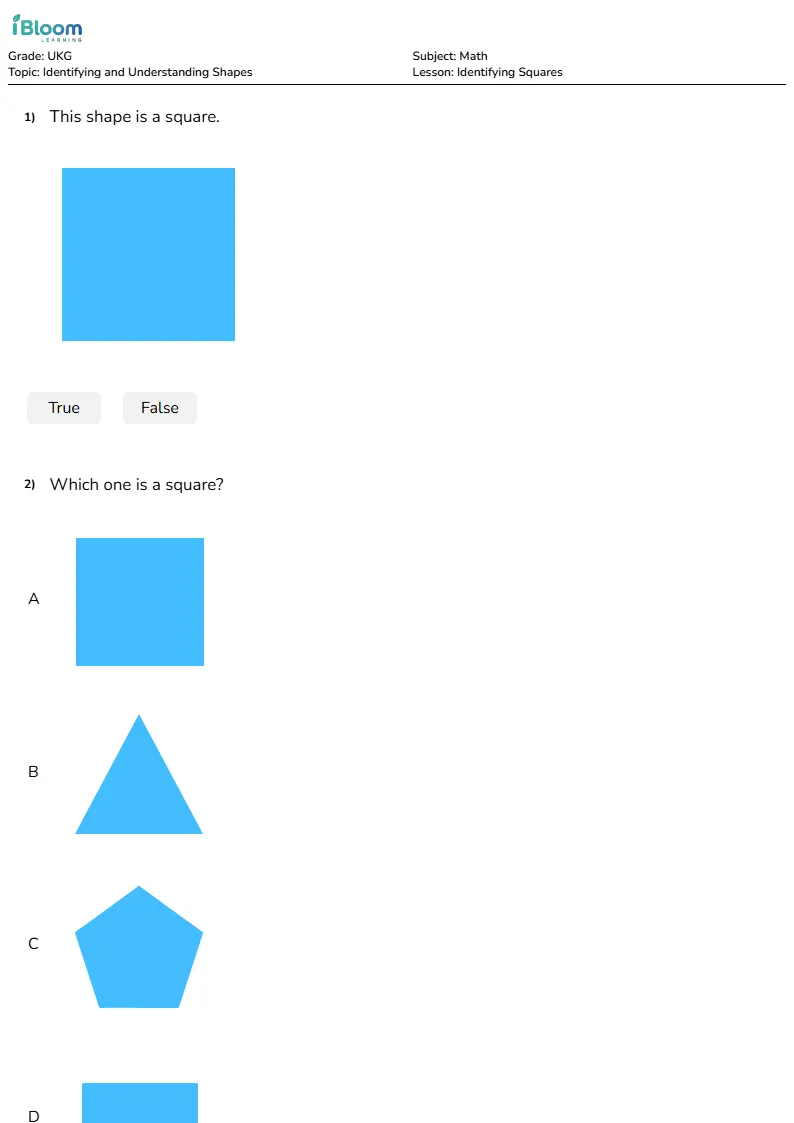
Free Identifying Squares Worksheets for Ukg
Looking for ukg math help? Download free, interactive identifying squares worksheets. AI-personalized and Common Core-aligned. Practice math with iBloom.
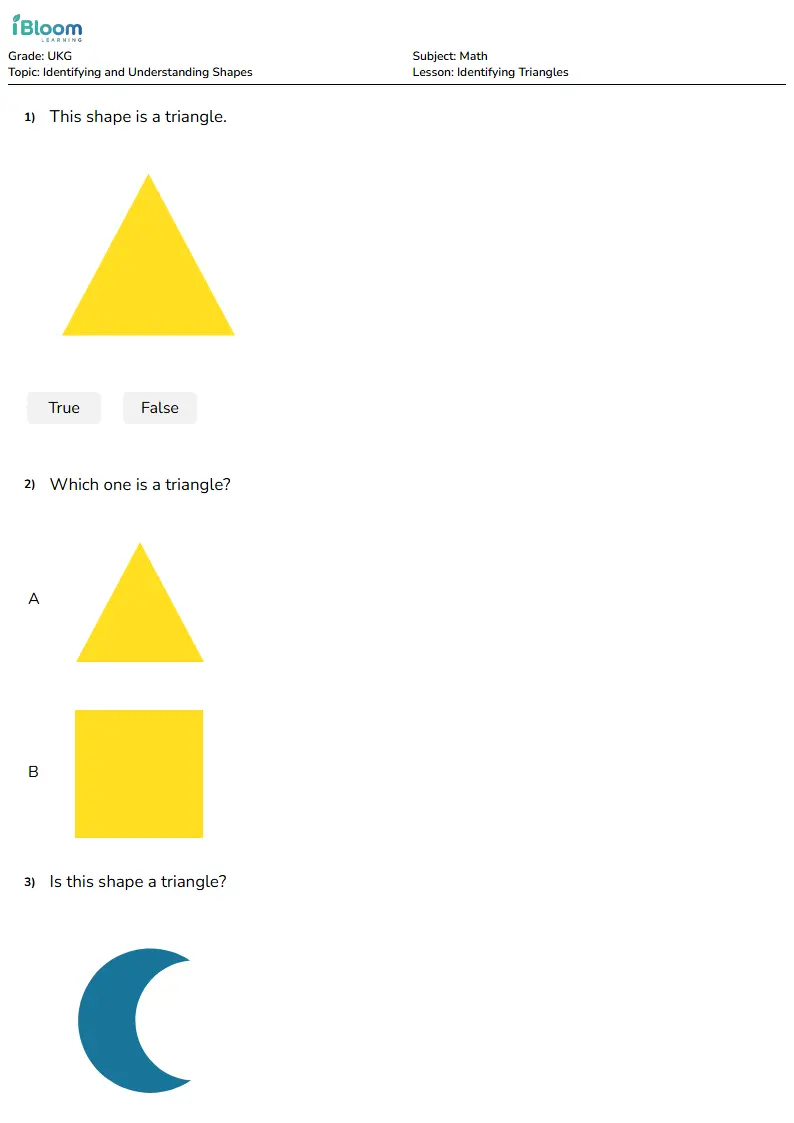
Free Identifying Triangles Worksheets for Ukg
Looking for ukg math help? Download free, interactive identifying triangles worksheets. AI-personalized and Common Core-aligned. Practice math with iBloom.
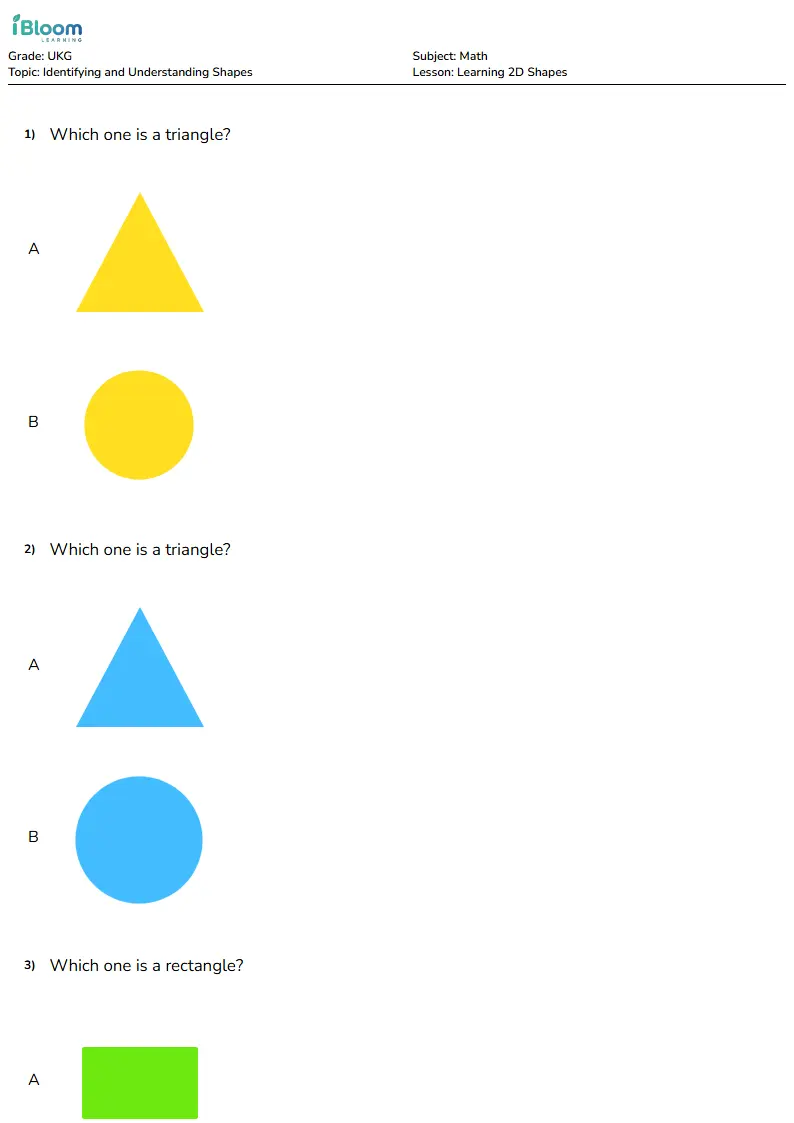
Free Learning 2D Shapes Worksheets for Ukg
Looking for ukg math help? Download free, interactive learning 2d shapes worksheets. AI-personalized and Common Core-aligned. Practice math with iBloom.
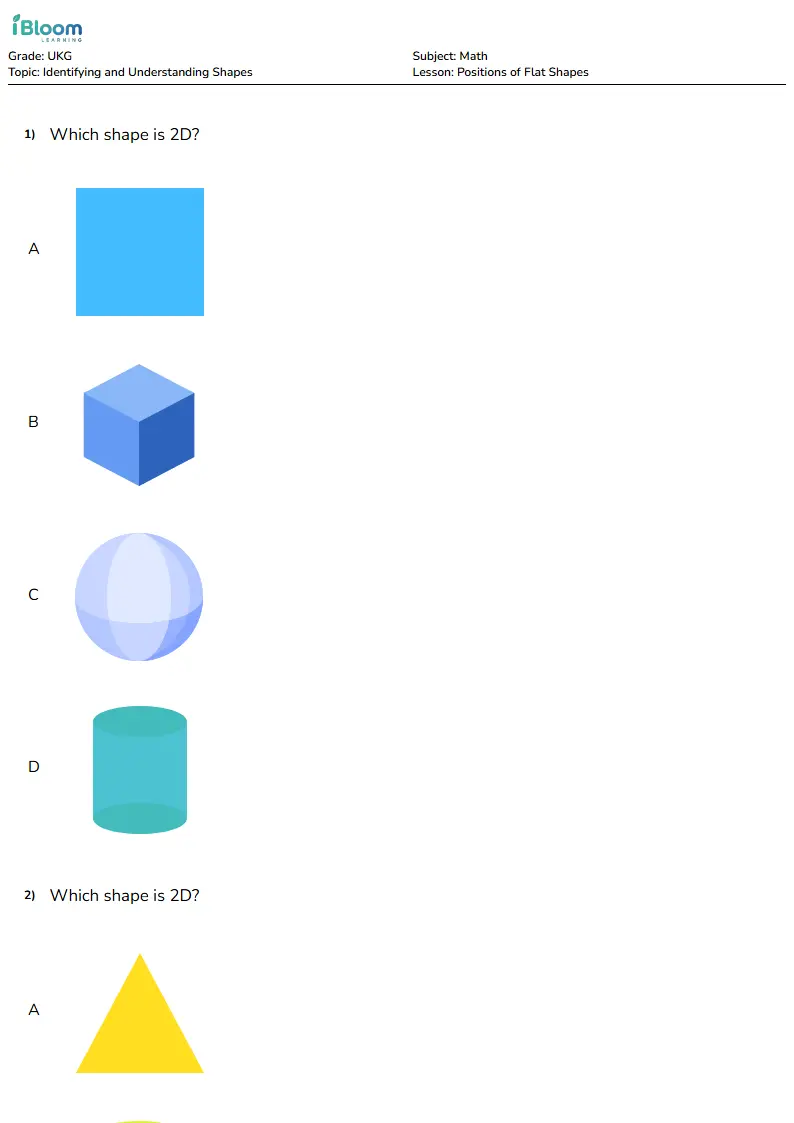
Free Positions of Flat Shapes Worksheets for Ukg
Looking for ukg math help? Download free, interactive positions of flat shapes worksheets. AI-personalized and Common Core-aligned. Practice math with iBloom.
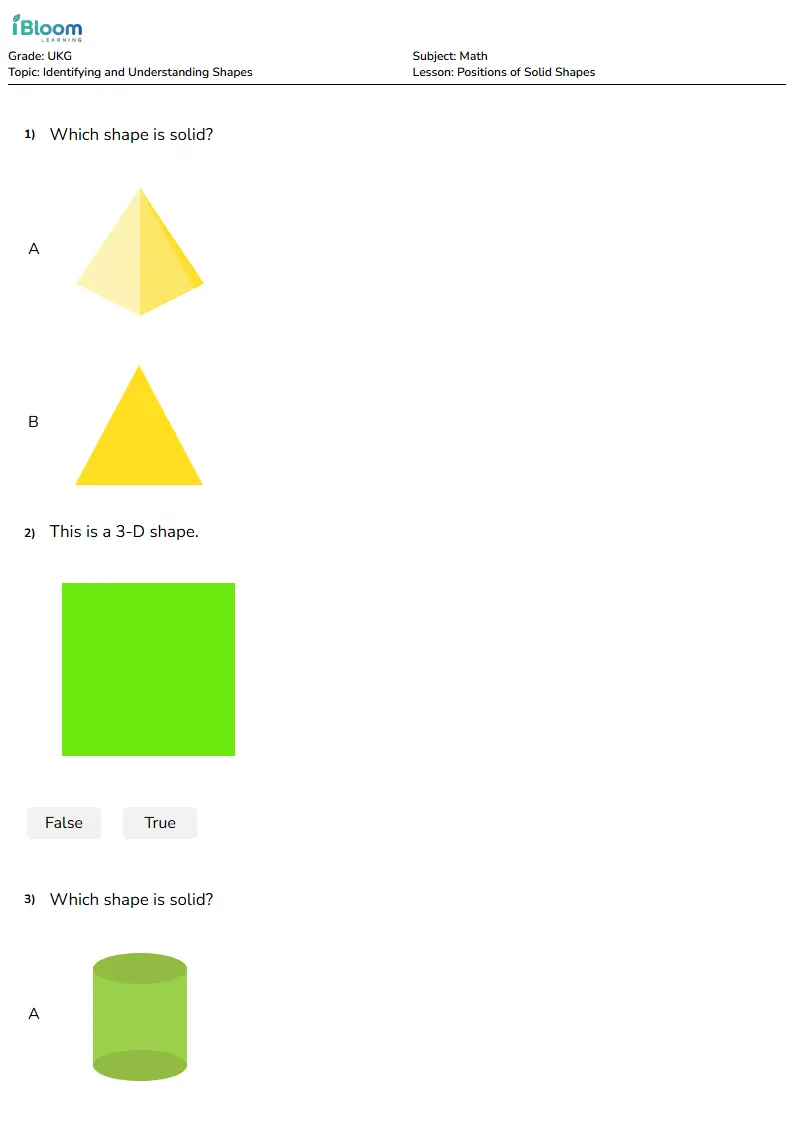
Free Positions of Solid Shapes Worksheets for Ukg
Looking for ukg math help? Download free, interactive positions of solid shapes worksheets. AI-personalized and Common Core-aligned. Practice math with iBloom.
Free Which Holdes More or Less Worksheets for Ukg
Looking for ukg math help? Download free, interactive which holdes more or less worksheets. AI-personalized and Common Core-aligned. Practice math with iBloom.