Collecting and Organizing Information Lesson for Class 4
Preparing your worksheet
Collecting and Organizing Information Lesson for Class 4: focused practice for Class 4 children
The strongest use of Collecting and Organizing Information Lesson for Class 4 is a small loop: preview the task, try two examples, explain one answer, and correct one mistake. That loop keeps practice specific to this page instead of turning it into a generic worksheet session. Start with Collecting and Organizing Information Lesson for Class 4, then use the paired worksheet page when the child needs the same skill in a different format.
This page supports reading comprehension worksheets for kids in the wider reading comprehension and story skills path. It is written for parents, teachers, tutors, and children, so the guidance stays practical: try a small set, talk about the thinking, and connect the answer to a new example.
What this exact page helps children practise
The main learning move is moving from quick guessing into evidence-based reading. Children often struggle when they skip that move and rush straight to the answer. A strong session makes the hidden thinking visible with pointing, counting, reading aloud, marking a clue, drawing a model, or saying a complete sentence.
Across CBSE, ICSE, state-board, US elementary, homeschool, UAE British, UAE American, IB, and Indian-curriculum classrooms, this kind of focused practice helps adults adapt one page to many learning settings. The page can support school homework, after-school review, homeschool planning, classroom stations, and short tutoring sessions.
Best way to use this page
Preview
Read the page title with the child and ask what the task is asking. If the child cannot explain the task, model one item and keep the model short.
Try
Let the child complete two or three items independently. Watch for the exact point where the child slows down, guesses, skips a step, or asks for help. That point tells you what to teach next.
Explain
Ask, "How do you know?" The child can answer with a sentence, a drawing, a model, a marked clue, a count, or a corrected example. The explanation matters more than finishing a long page.
Extend
Stop after a successful correction so the child remembers the strategy. Then ask the child to make one similar item. Creating an item shows whether the skill is becoming independent.
Practice prompts made for this topic
- Name the character, setting, detail, or event connected to collecting and organizing information.
- Point to the sentence or picture that proves the answer.
- Retell the answer using first, next, because, or finally. This is the main check for this page.
- Ask the child to create one new question about the passage.
When a child needs extra support, connect this page with main idea worksheets, supporting details worksheets, and finding facts worksheets. These related iBloom resources help adults choose the next practice step instead of searching from scratch.
Parent plan
Use Collecting and Organizing Information Lesson for Class 4 for 10 to 15 minutes. Begin with one shared item, let the child try a few independently, and end with one explanation. If the child is multilingual, a quick explanation in the home language can come first, followed by a simple English sentence or math sentence.
Parents should keep the session calm and specific. If the child is stuck, reduce the number of questions and use a clue, object, drawing, or sentence frame. If the page is easy, ask for a second method, a new example, or a short teaching-back moment.
Teacher and tutor plan
Teachers can use this page for a center rotation. Tutors can use it as a diagnostic page because one explanation usually reveals whether the child needs help with vocabulary, number sense, reading the full question, handwriting, confidence, or attention.
- Use one item as a think-aloud.
- Ask partners to compare answers and reasons.
- Let children mark the clue, number, word, picture, or model that helped.
- Turn one mistake into a short correction routine.
- Return to the same skill after a few days for spaced review.
Connected iBloom practice path
Use these related pages and guides to keep practice connected:
- Collecting and Organizing Information Lesson for Class 4
- paired worksheet for Collecting and Organizing Information Lesson for Class 4
- main idea worksheets
- supporting details worksheets
- finding facts worksheets
- Free Match characters to settings Worksheets for Kindergarten
- Keeping My Information Safe Lesson for Ukg
- Free Explore similarities and differences Worksheets for Kindergarten
- Free Identify characters Worksheets for Kindergarten
Trusted support for adults
Adults who want background support can use this topic resource and this supporting education resource. Use these references for adult planning, then return to iBloom for the child's concrete practice.
Common mistakes to watch for
- Guessing without using the clue, model, number, picture, or sentence.
- Finishing the page but being unable to explain one answer.
- Needing the adult to solve every item instead of trying one small step.
- Skipping review after a mistake, which makes the same error return later.
Frequently asked questions
Who should use this page?
Use it when a Class 4 child needs focused english language arts practice for collecting and organizing information.
How long should practice take?
Most children do best with a short session of 10 to 15 minutes. A short session with one good explanation is better than a long session with rushed answers.
Can teachers use it in class?
Yes. It can work as a mini lesson, group task, center activity, exit check, or homework review.
What should happen after the page is complete?
Ask for one explanation, correct one mistake if needed, and choose one related iBloom page so the skill repeats in a new context.
More practice for this grade
More English Language Arts lessons
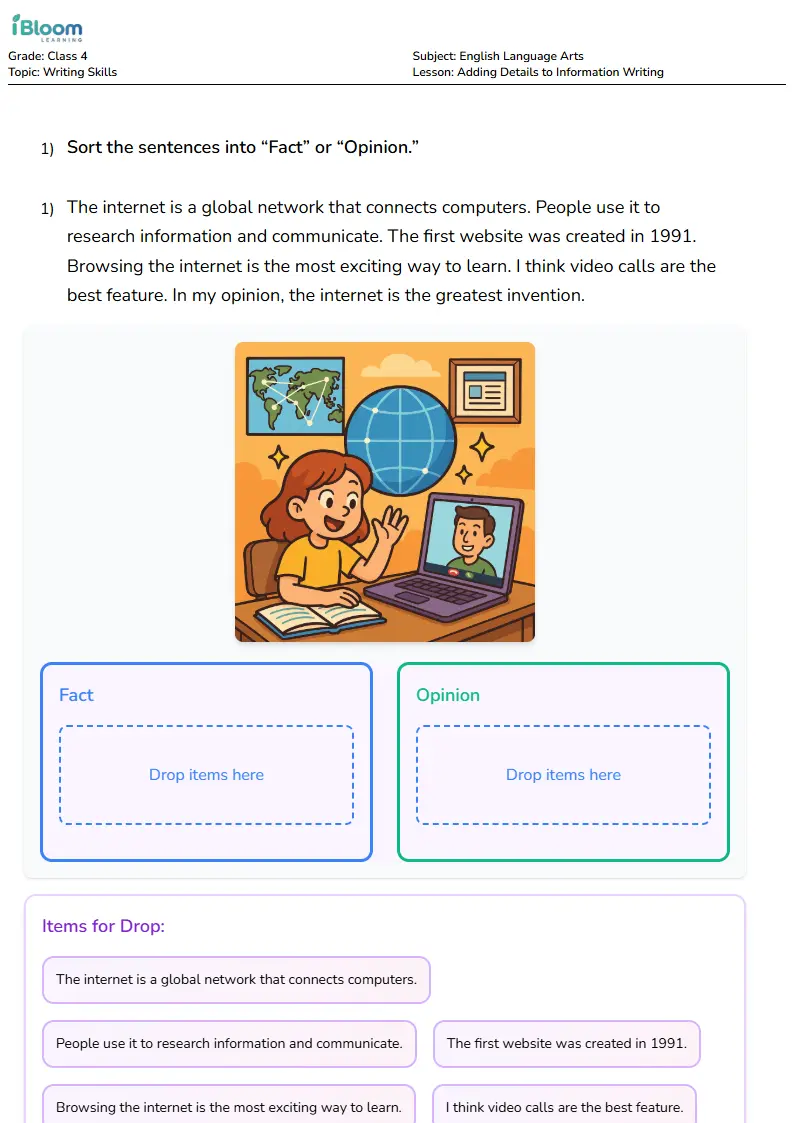
Adding Details to Information Writing Lesson for Class 4
Explore a free interactive english language arts lesson for class 4: Adding Details to Information Writing. AI-personalized, Common Core-aligned, and built for kids.
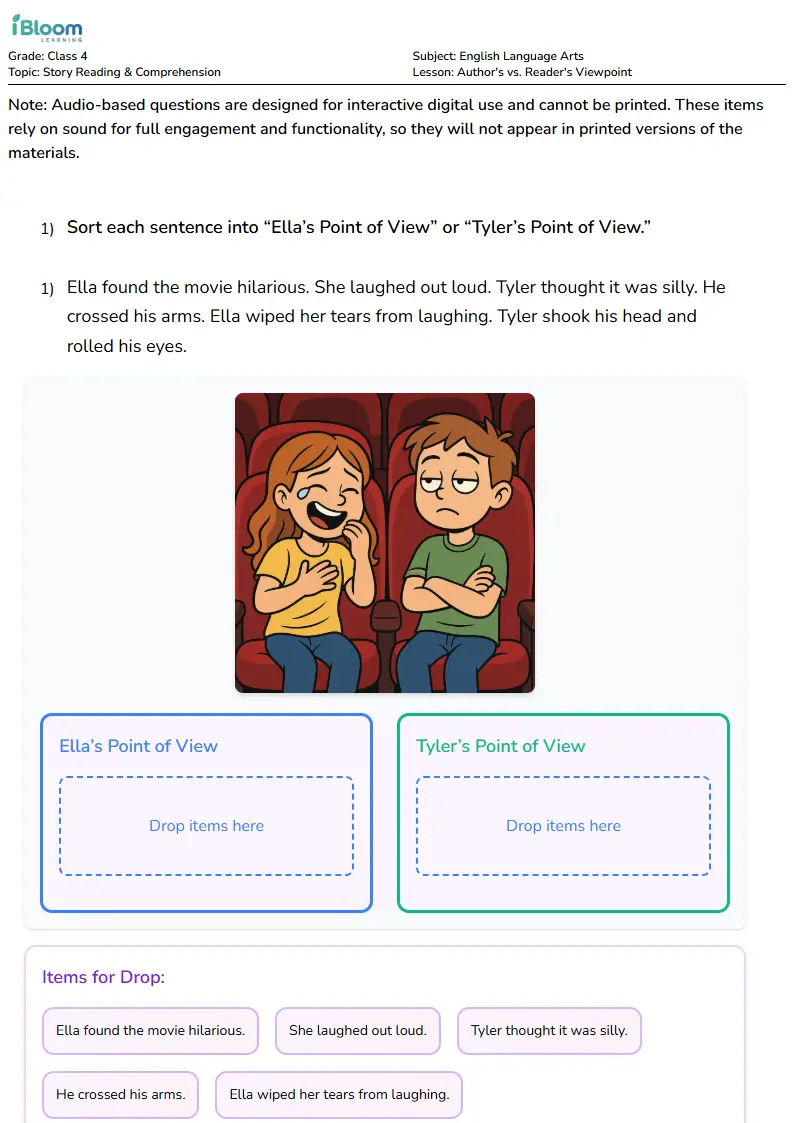
Author's vs. Reader's Viewpoint Lesson for Class 4
Explore a free interactive english language arts lesson for class 4: Author's vs. Reader's Viewpoint. AI-personalized, Common Core-aligned, and built for kids.
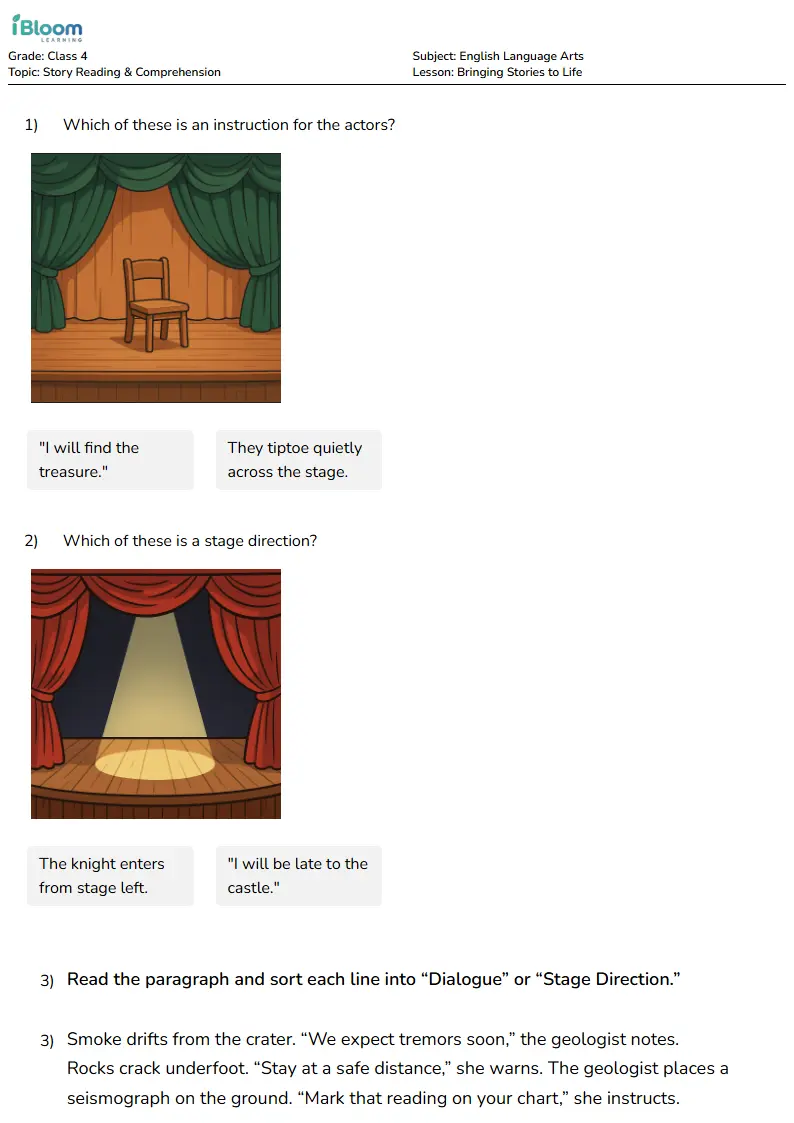
Bringing Stories to Life Lesson for Class 4
Explore a free interactive english language arts lesson for class 4: Bringing Stories to Life. AI-personalized, Common Core-aligned, and built for kids.
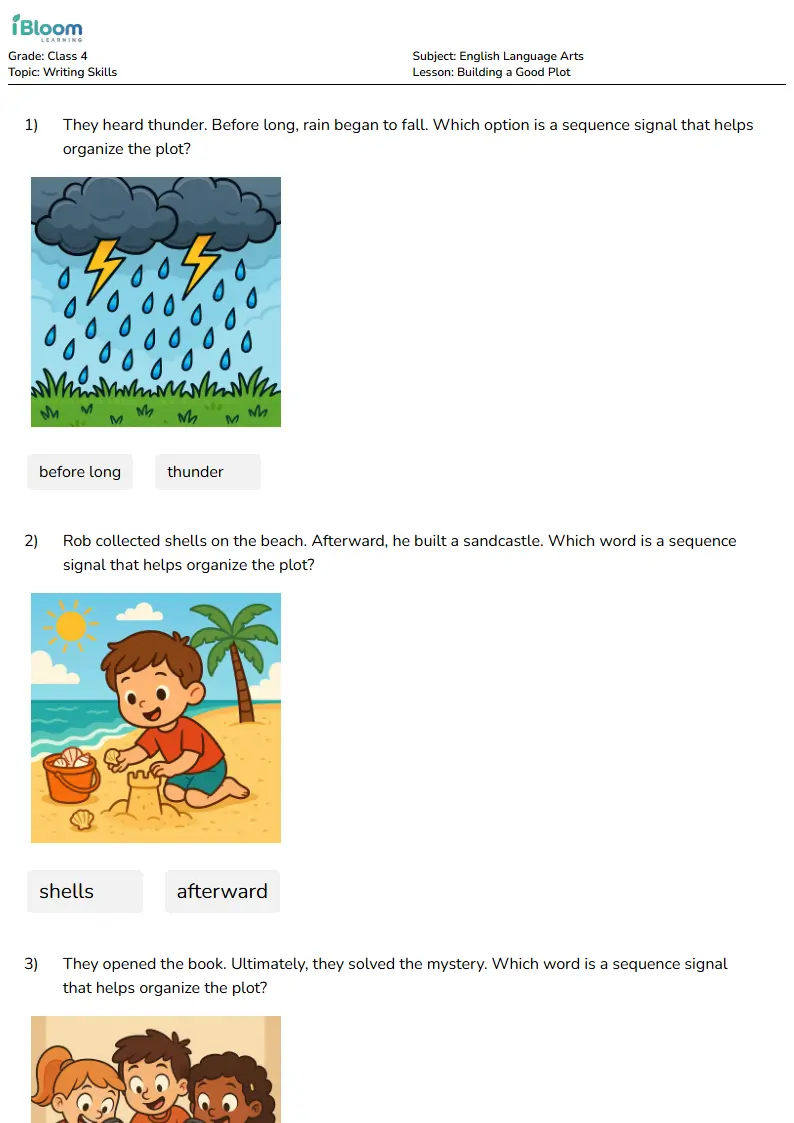
Building a Good Plot Lesson for Class 4
Explore a free interactive english language arts lesson for class 4: Building a Good Plot. AI-personalized, Common Core-aligned, and built for kids.
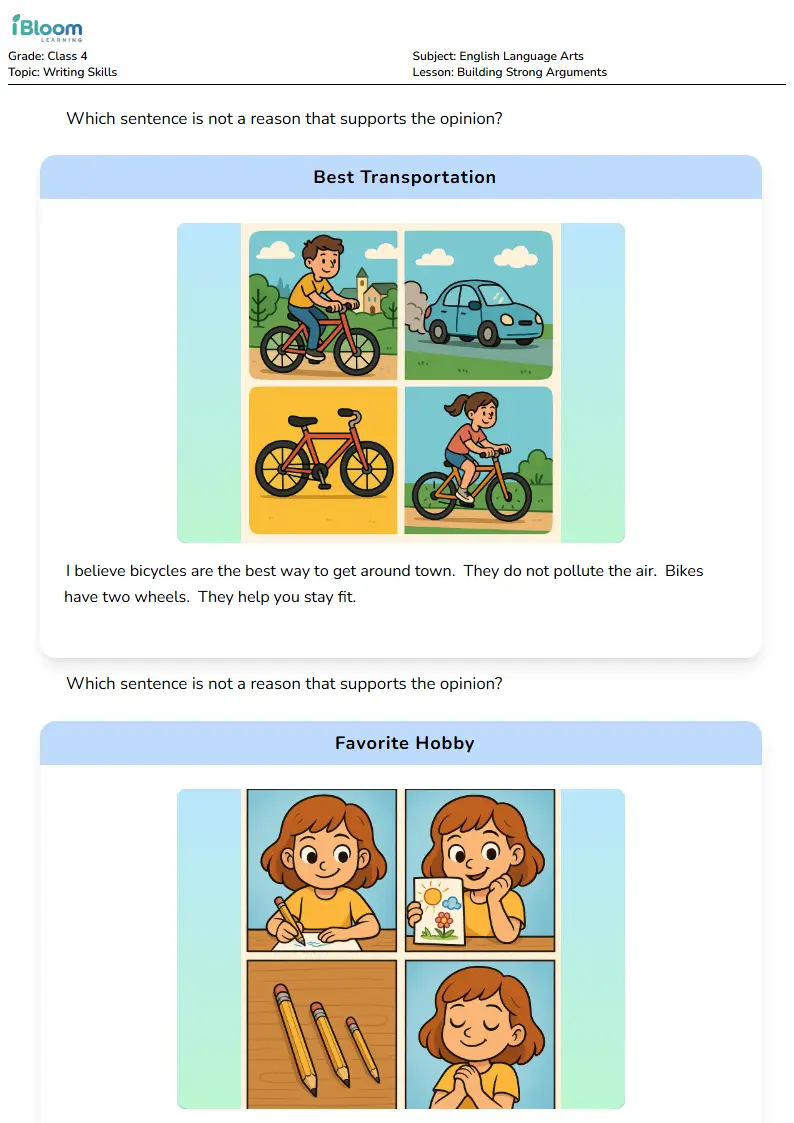
Building Strong Arguments Lesson for Class 4
Explore a free interactive english language arts lesson for class 4: Building Strong Arguments. AI-personalized, Common Core-aligned, and built for kids.
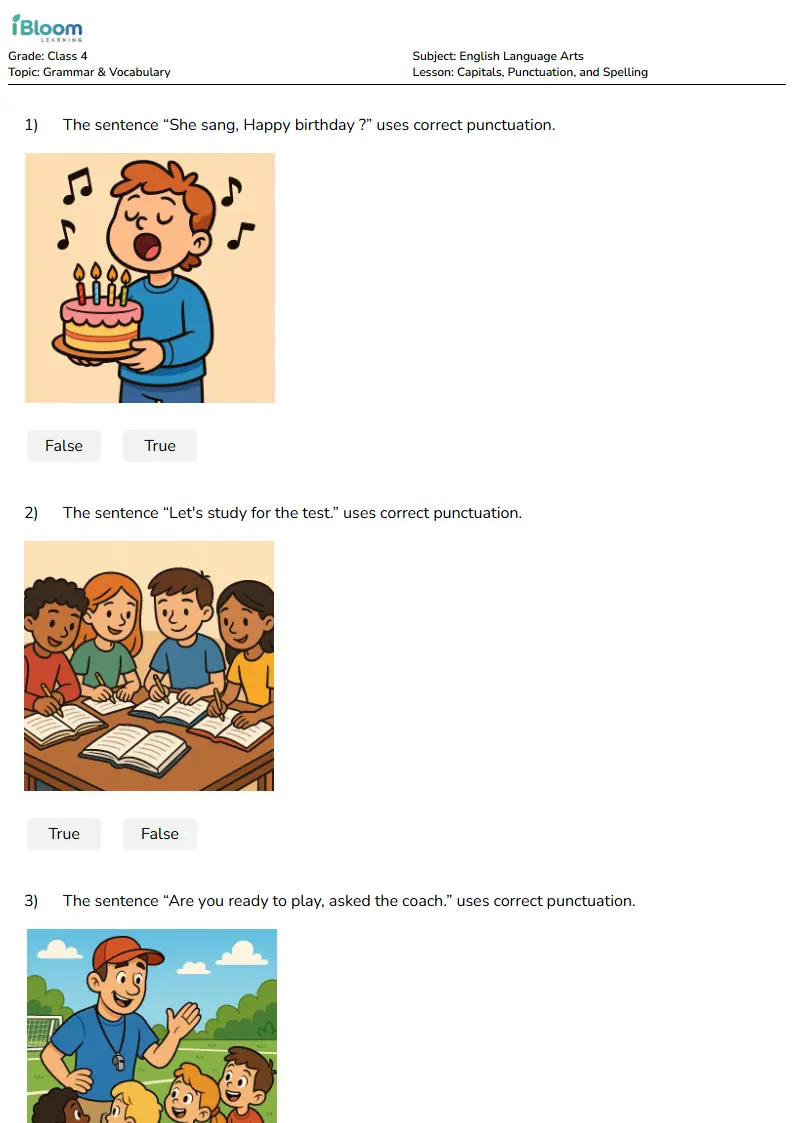
Capitals, Punctuation, and Spelling Lesson for Class 4
Explore a free interactive english language arts lesson for class 4: Capitals, Punctuation, and Spelling. AI-personalized, Common Core-aligned, and built for kids.
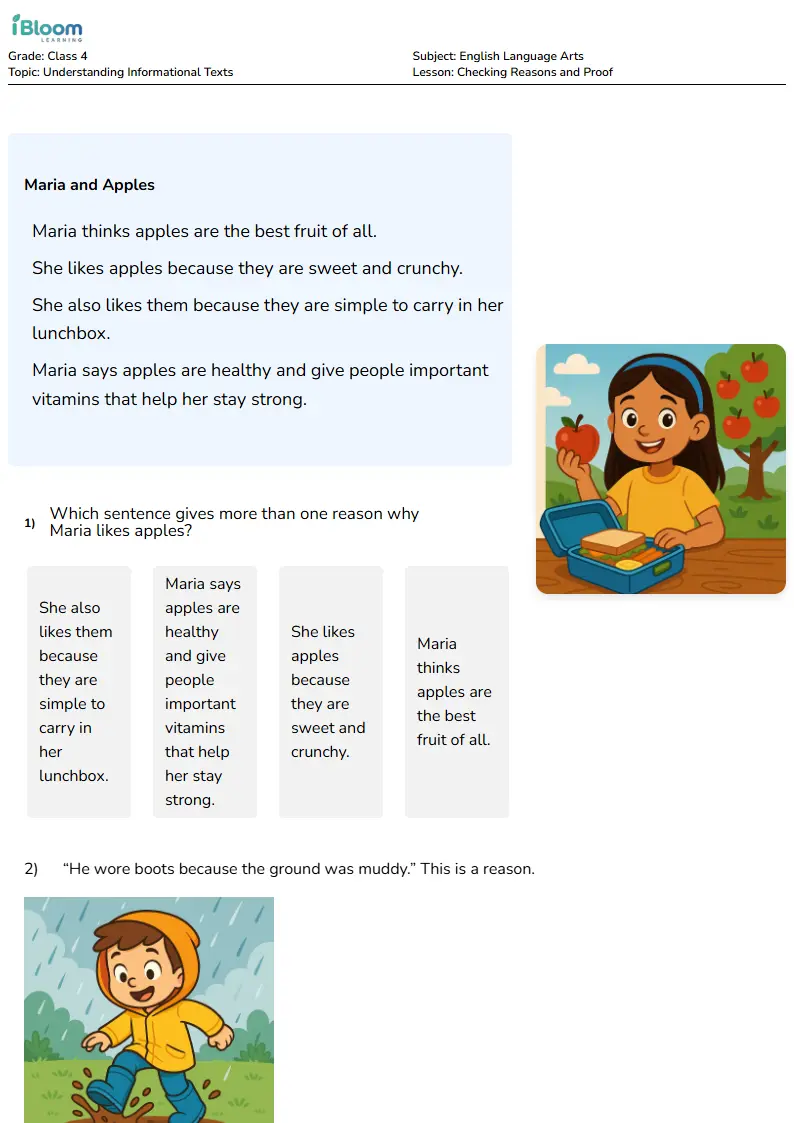
Checking Reasons and Proof Lesson for Class 4
Explore a free interactive english language arts lesson for class 4: Checking Reasons and Proof. AI-personalized, Common Core-aligned, and built for kids.
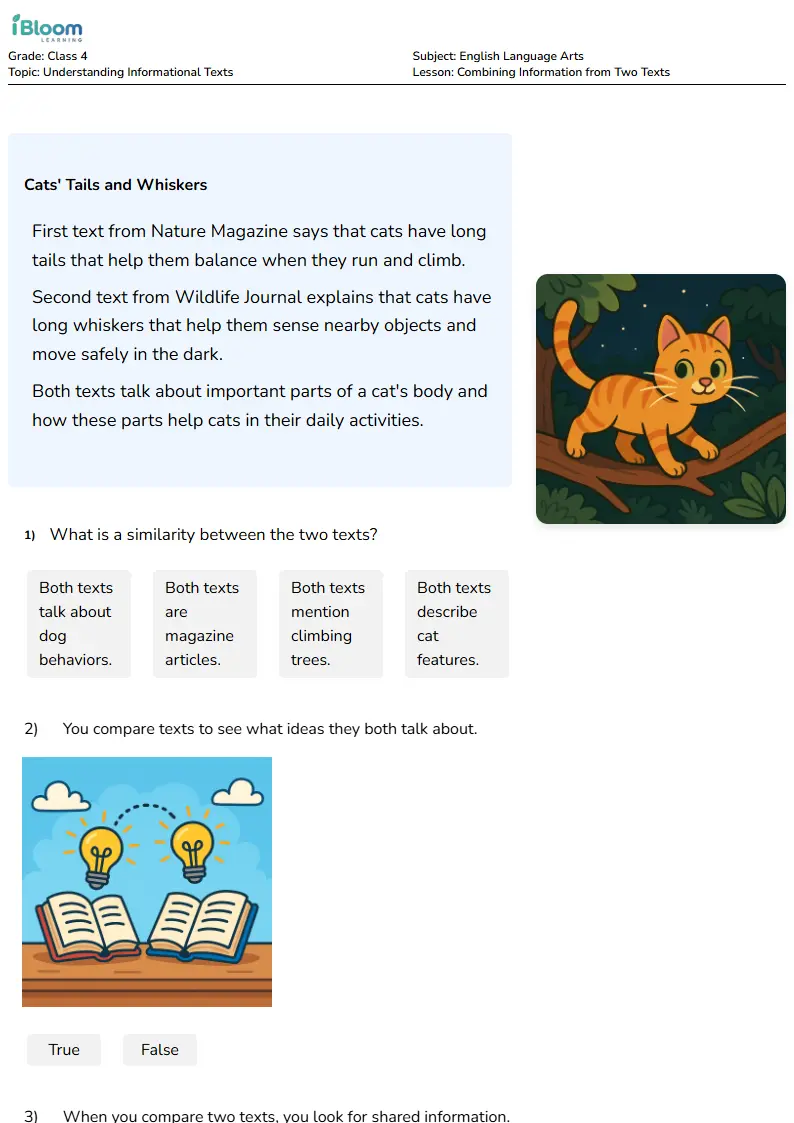
Combining Information from Two Texts Lesson for Class 4
Explore a free interactive english language arts lesson for class 4: Combining Information from Two Texts. AI-personalized, Common Core-aligned, and built for kids.
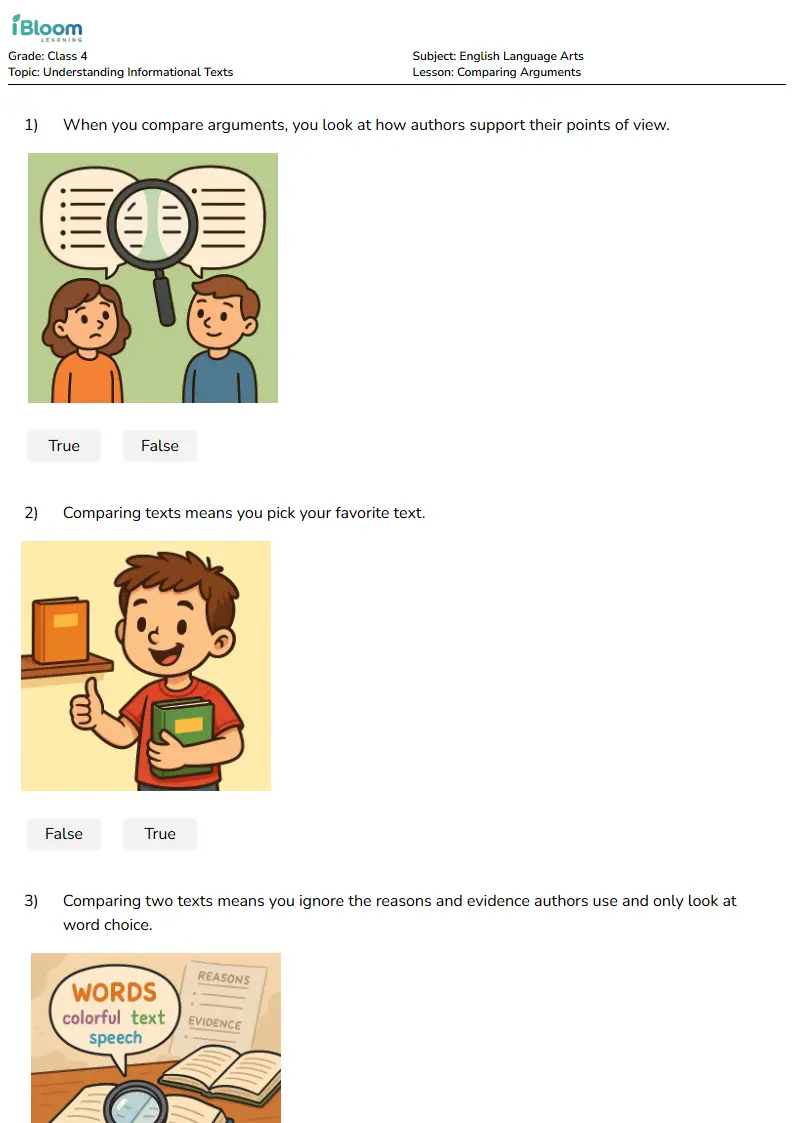
Comparing Arguments Lesson for Class 4
Explore a free interactive english language arts lesson for class 4: Comparing Arguments. AI-personalized, Common Core-aligned, and built for kids.
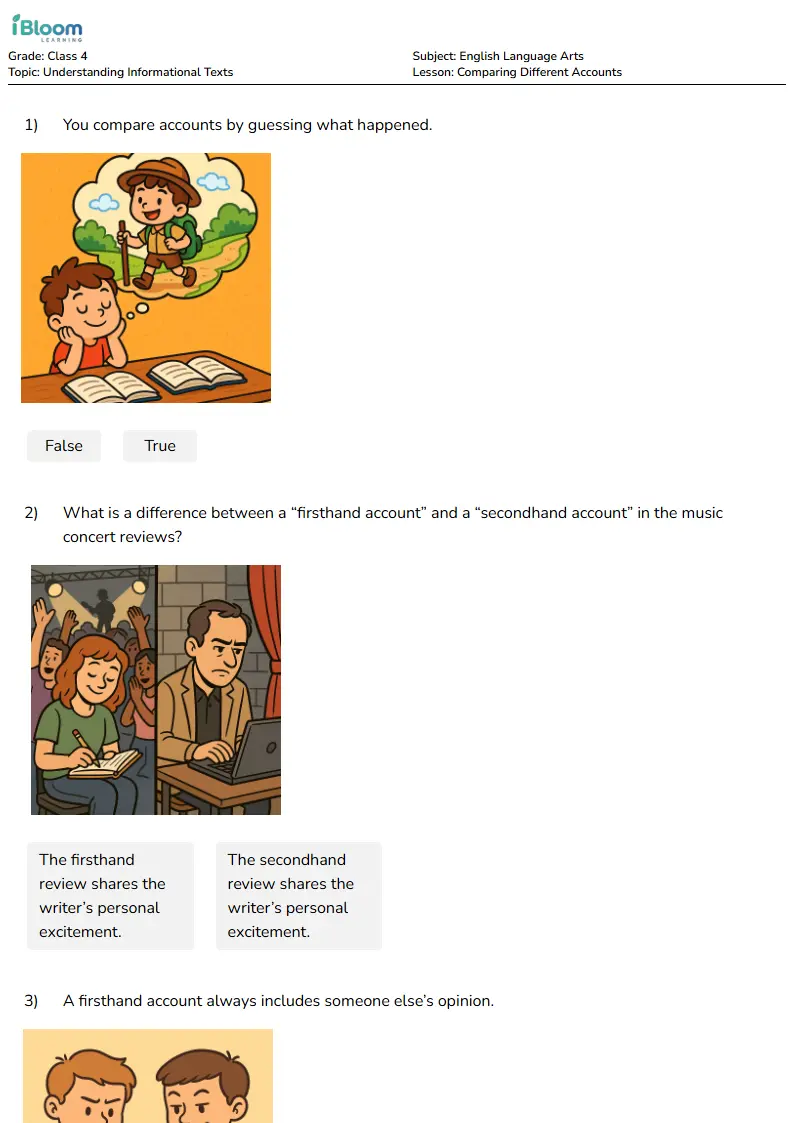
Comparing Different Accounts Lesson for Class 4
Explore a free interactive english language arts lesson for class 4: Comparing Different Accounts. AI-personalized, Common Core-aligned, and built for kids.
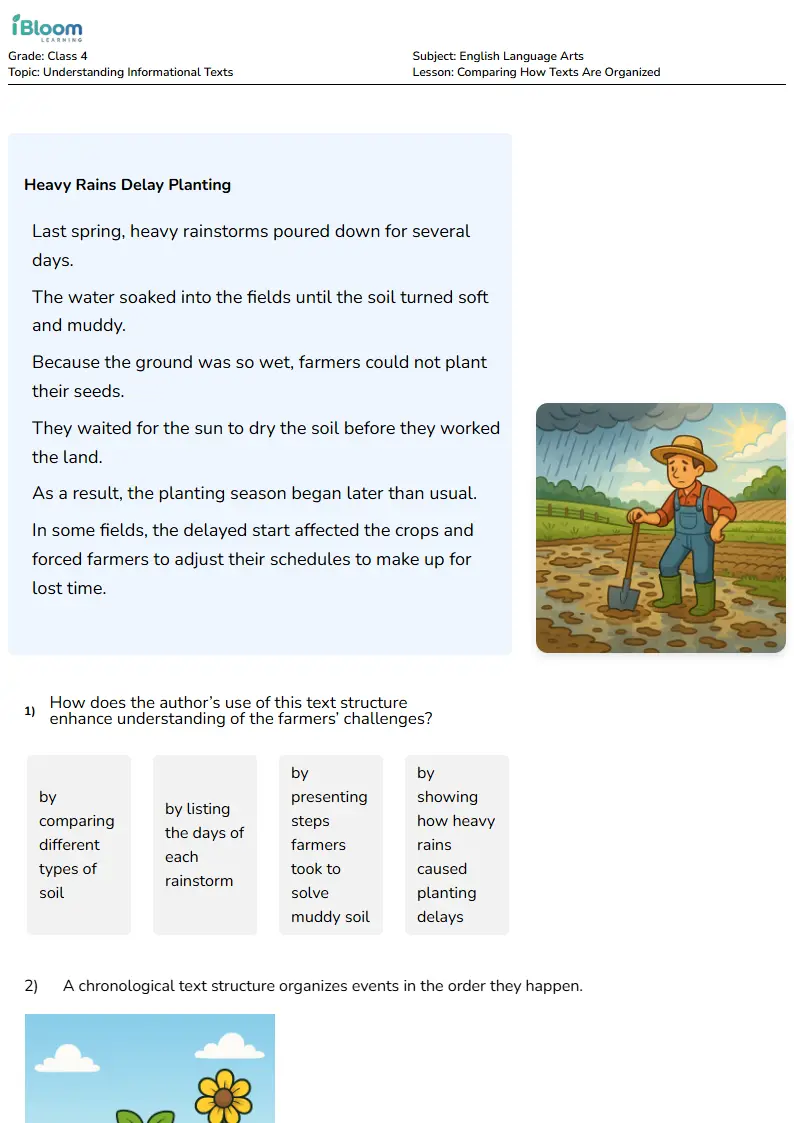
Comparing How Texts Are Organized Lesson for Class 4
Explore a free interactive english language arts lesson for class 4: Comparing How Texts Are Organized. AI-personalized, Common Core-aligned, and built for kids.
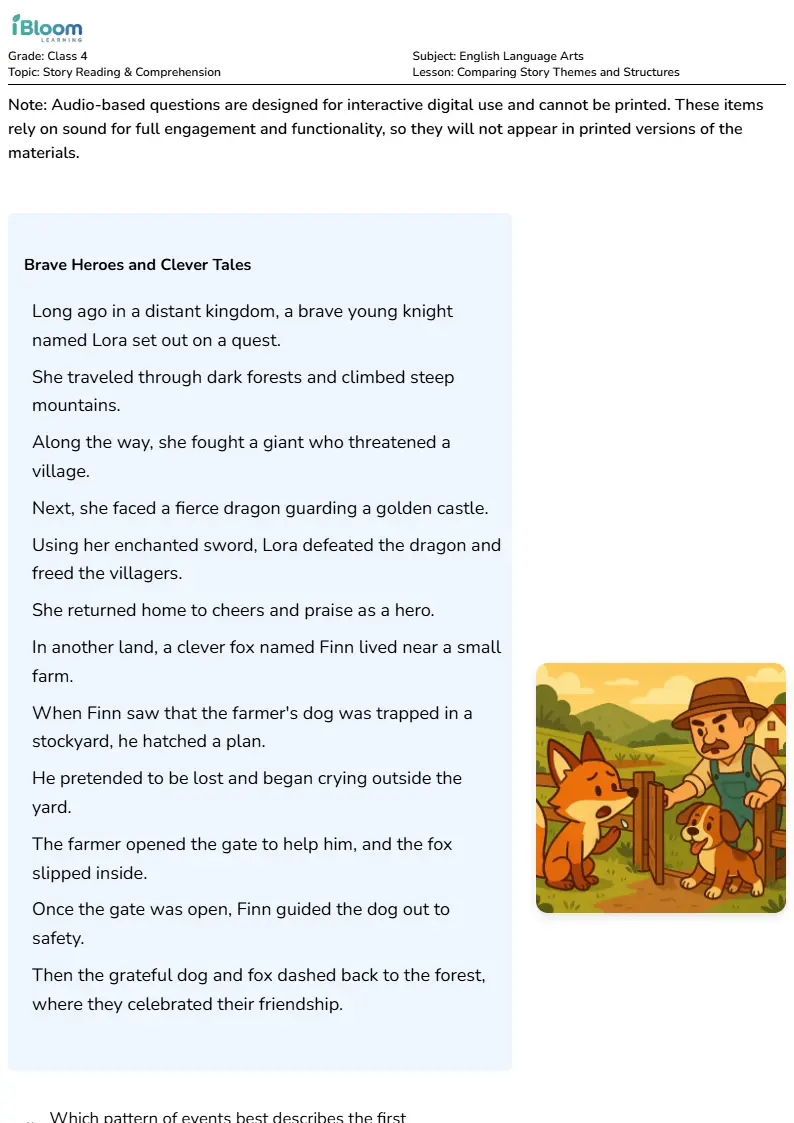
Comparing Story Themes and Structures Lesson for Class 4
Explore a free interactive english language arts lesson for class 4: Comparing Story Themes and Structures. AI-personalized, Common Core-aligned, and built for kids.
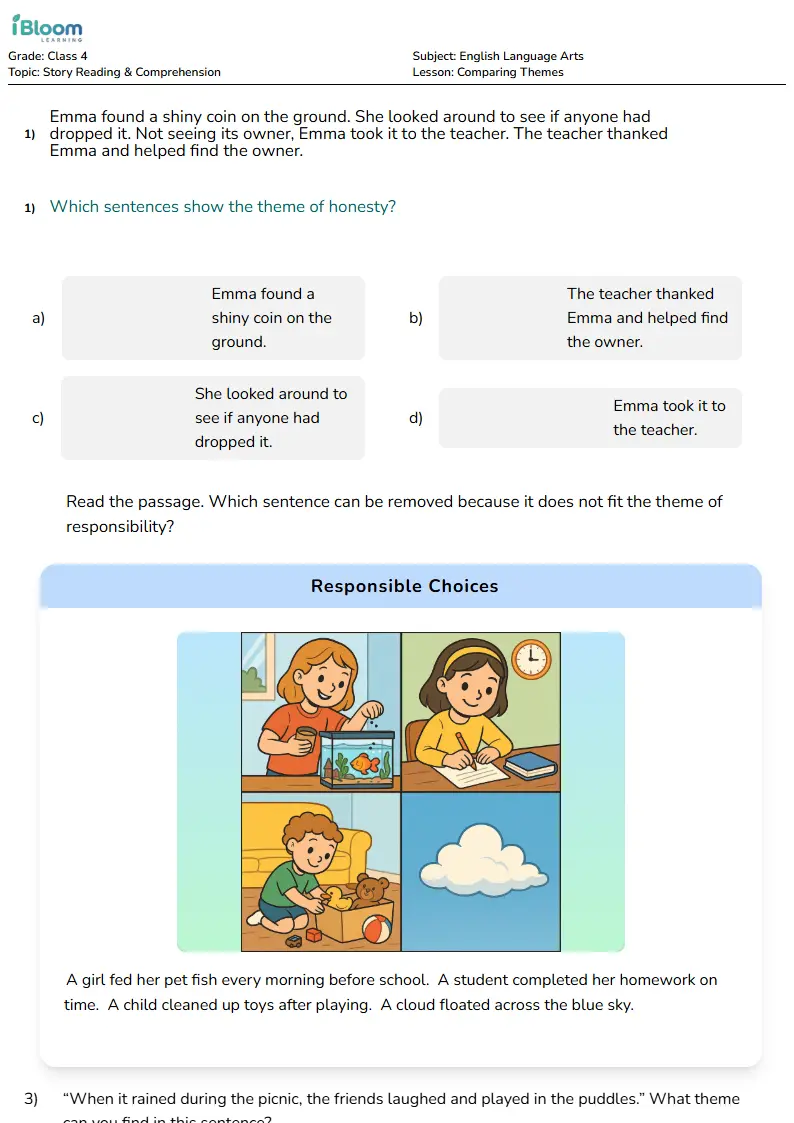
Comparing Themes Lesson for Class 4
Explore a free interactive english language arts lesson for class 4: Comparing Themes. AI-personalized, Common Core-aligned, and built for kids.
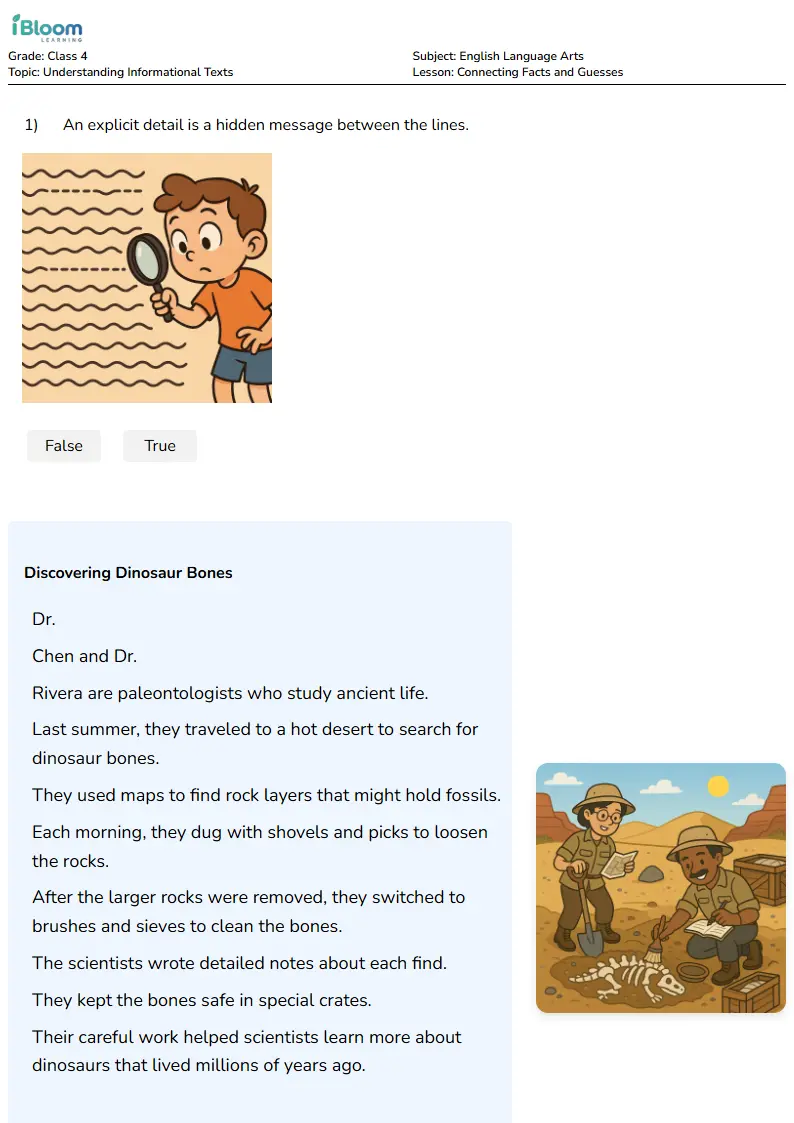
Connecting Facts and Guesses Lesson for Class 4
Explore a free interactive english language arts lesson for class 4: Connecting Facts and Guesses. AI-personalized, Common Core-aligned, and built for kids.
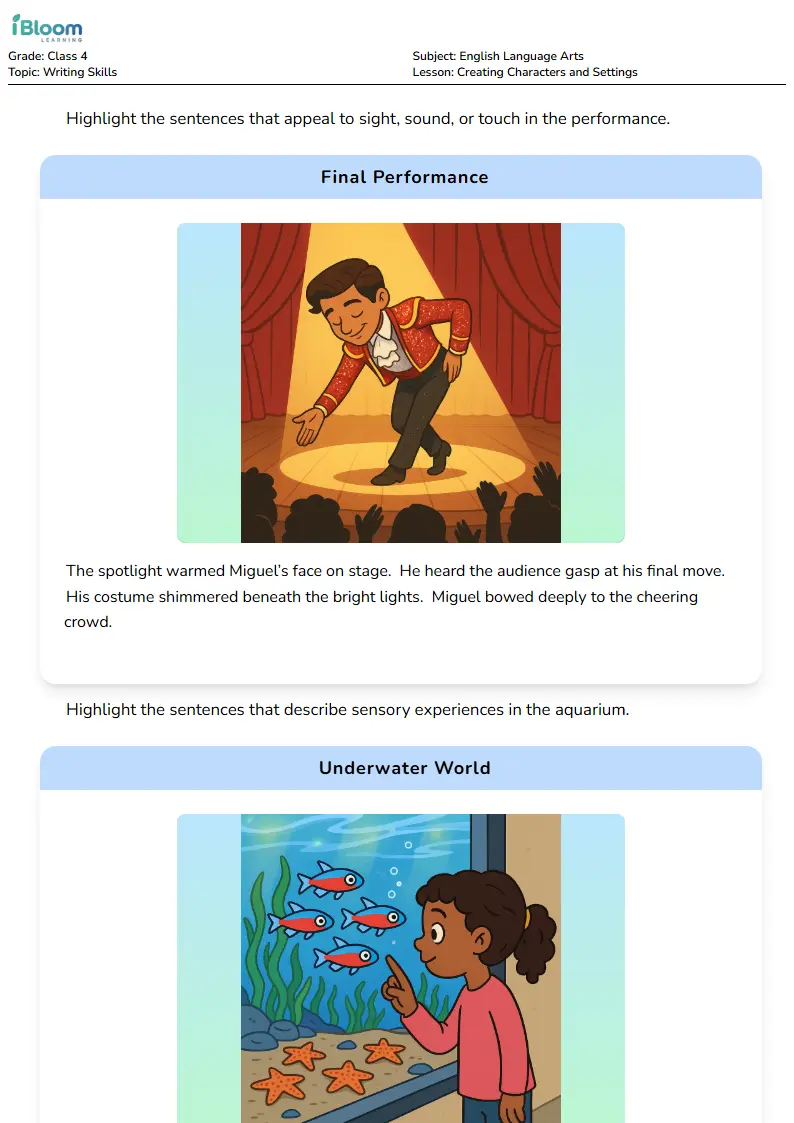
Creating Characters and Settings Lesson for Class 4
Explore a free interactive english language arts lesson for class 4: Creating Characters and Settings. AI-personalized, Common Core-aligned, and built for kids.
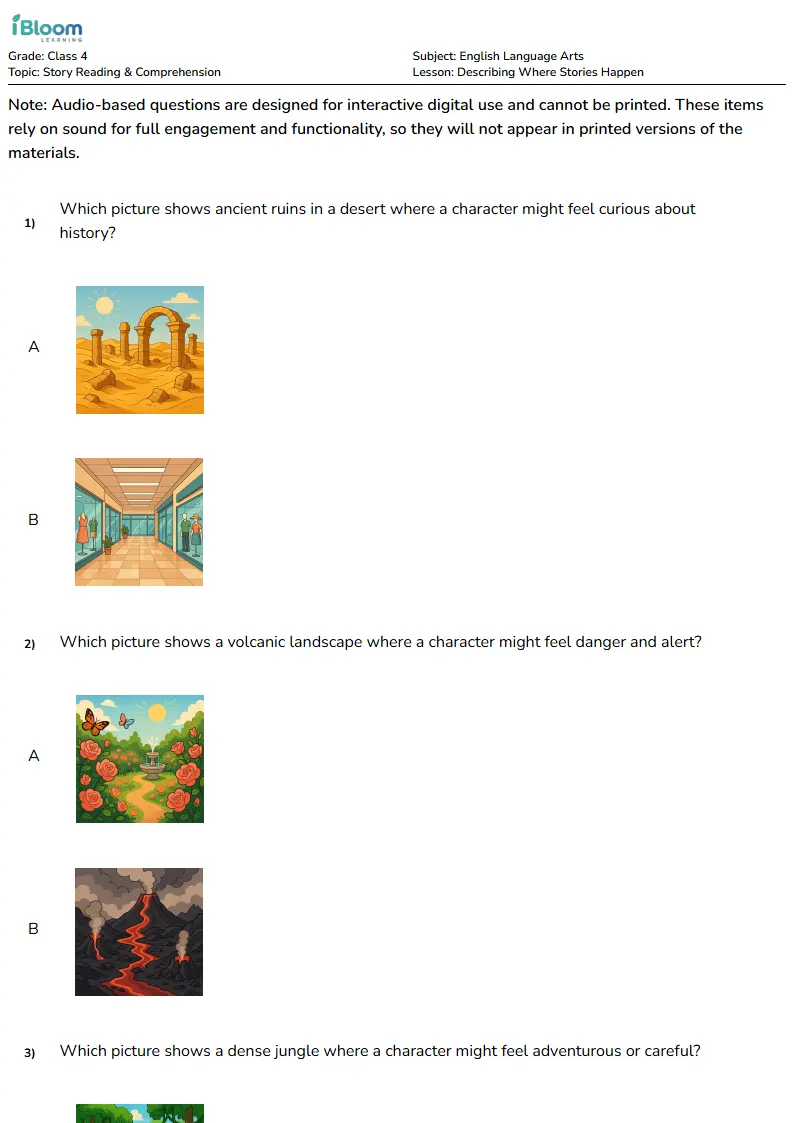
Describing Where Stories Happen Lesson for Class 4
Explore a free interactive english language arts lesson for class 4: Describing Where Stories Happen. AI-personalized, Common Core-aligned, and built for kids.
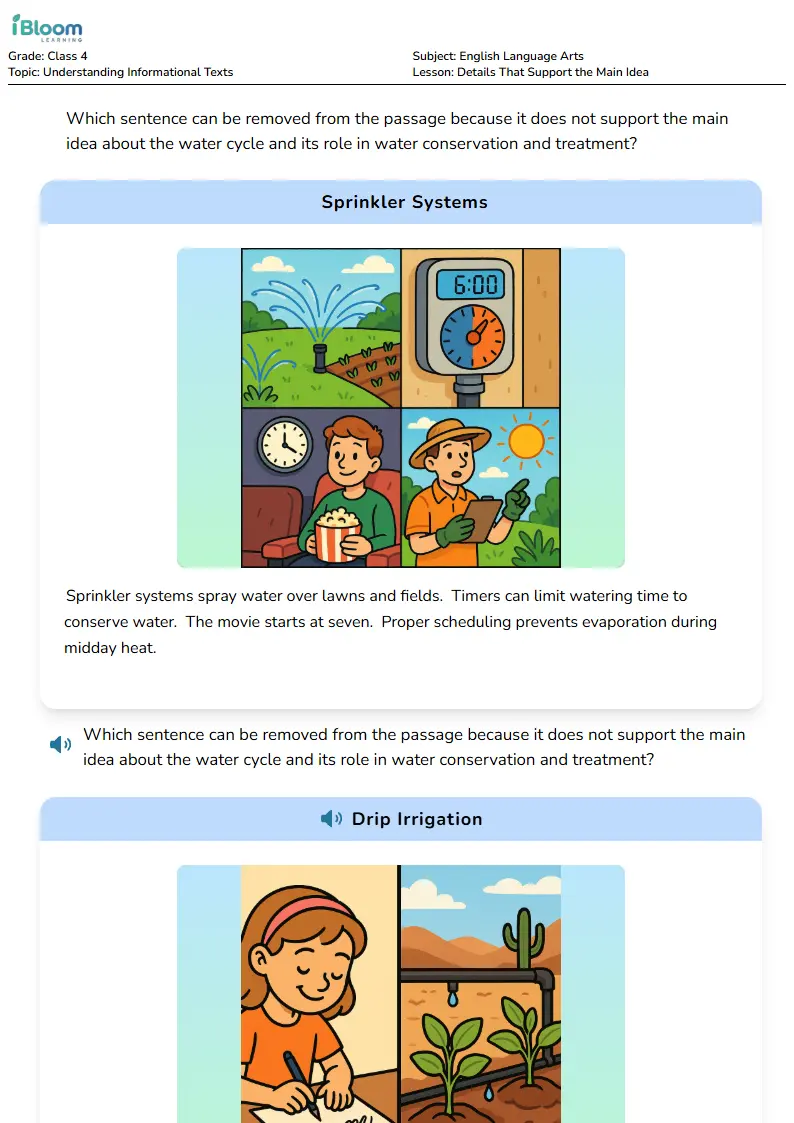
Details That Support the Main Idea Lesson for Class 4
Explore a free interactive english language arts lesson for class 4: Details That Support the Main Idea. AI-personalized, Common Core-aligned, and built for kids.
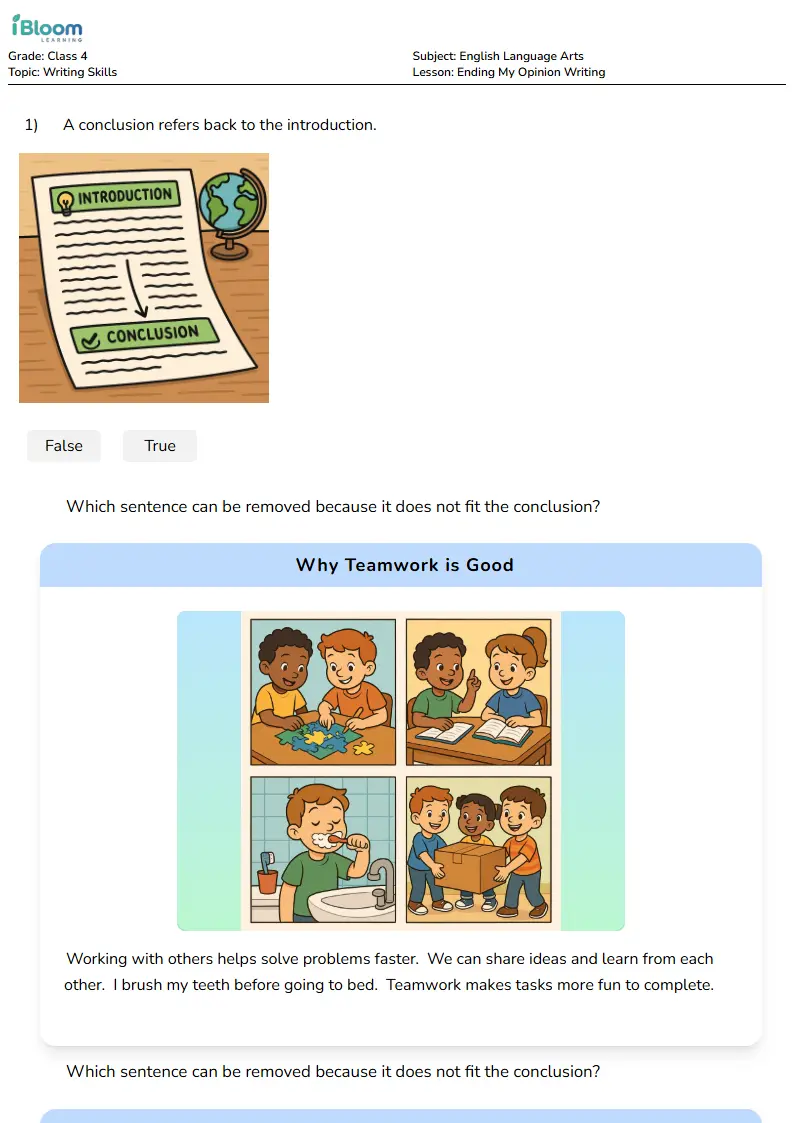
Ending My Opinion Writing Lesson for Class 4
Explore a free interactive english language arts lesson for class 4: Ending My Opinion Writing. AI-personalized, Common Core-aligned, and built for kids.
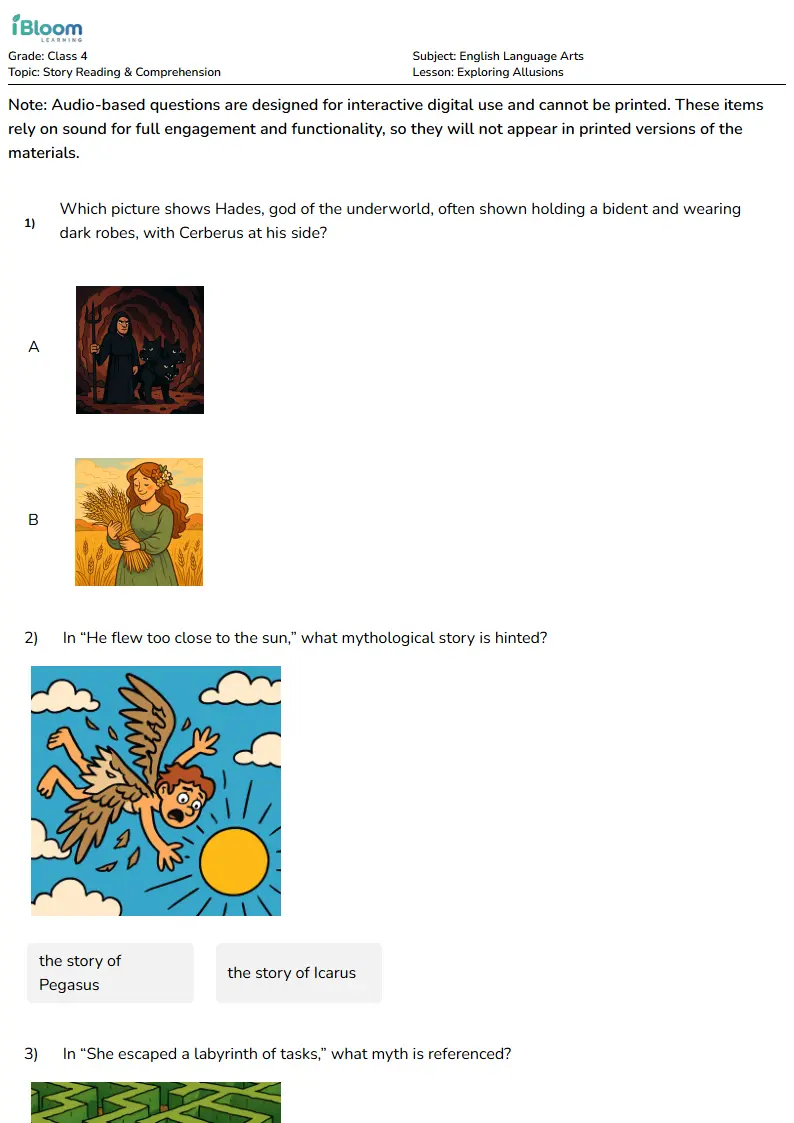
Exploring Allusions Lesson for Class 4
Explore a free interactive english language arts lesson for class 4: Exploring Allusions. AI-personalized, Common Core-aligned, and built for kids.
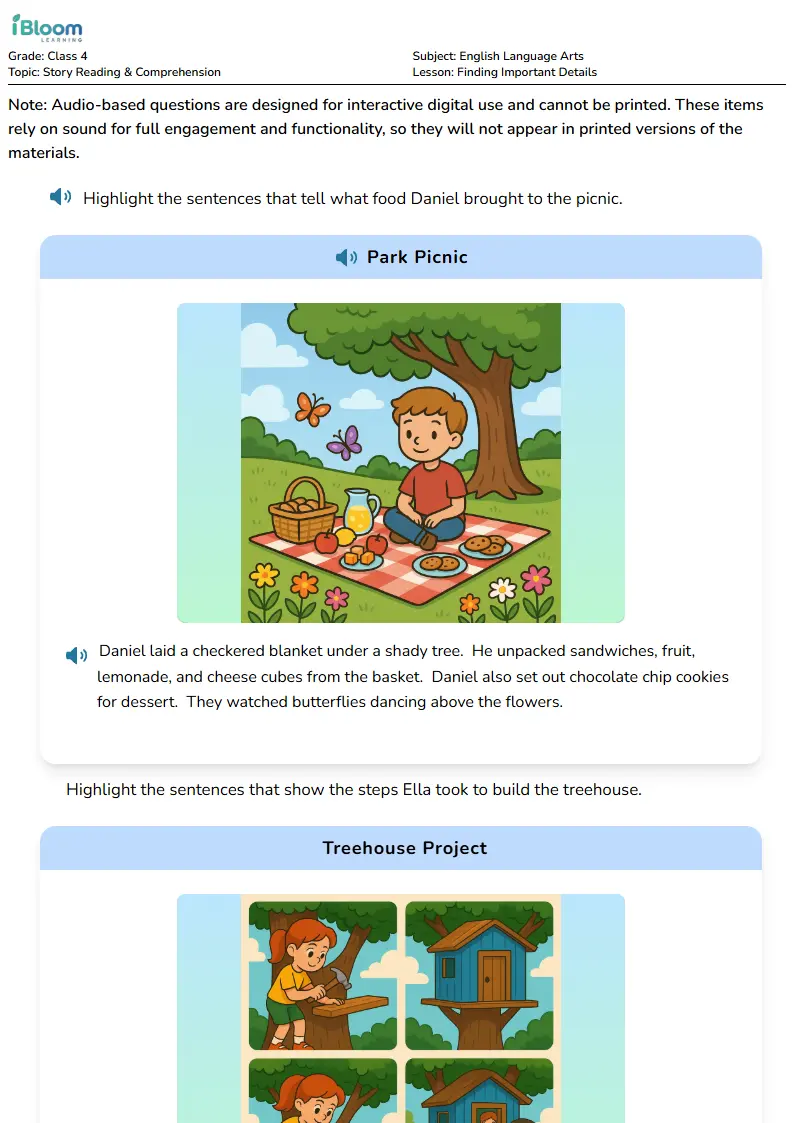
Finding Important Details Lesson for Class 4
Explore a free interactive english language arts lesson for class 4: Finding Important Details. AI-personalized, Common Core-aligned, and built for kids.
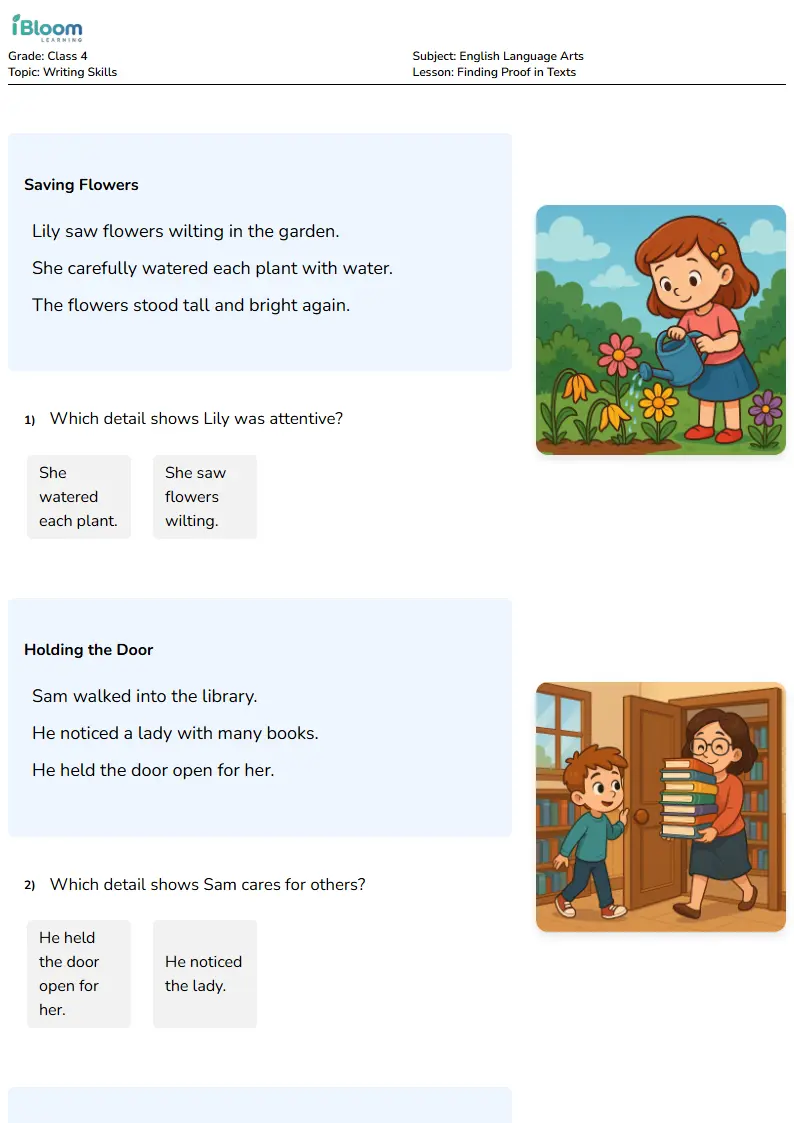
Finding Proof in Texts Lesson for Class 4
Explore a free interactive english language arts lesson for class 4: Finding Proof in Texts. AI-personalized, Common Core-aligned, and built for kids.
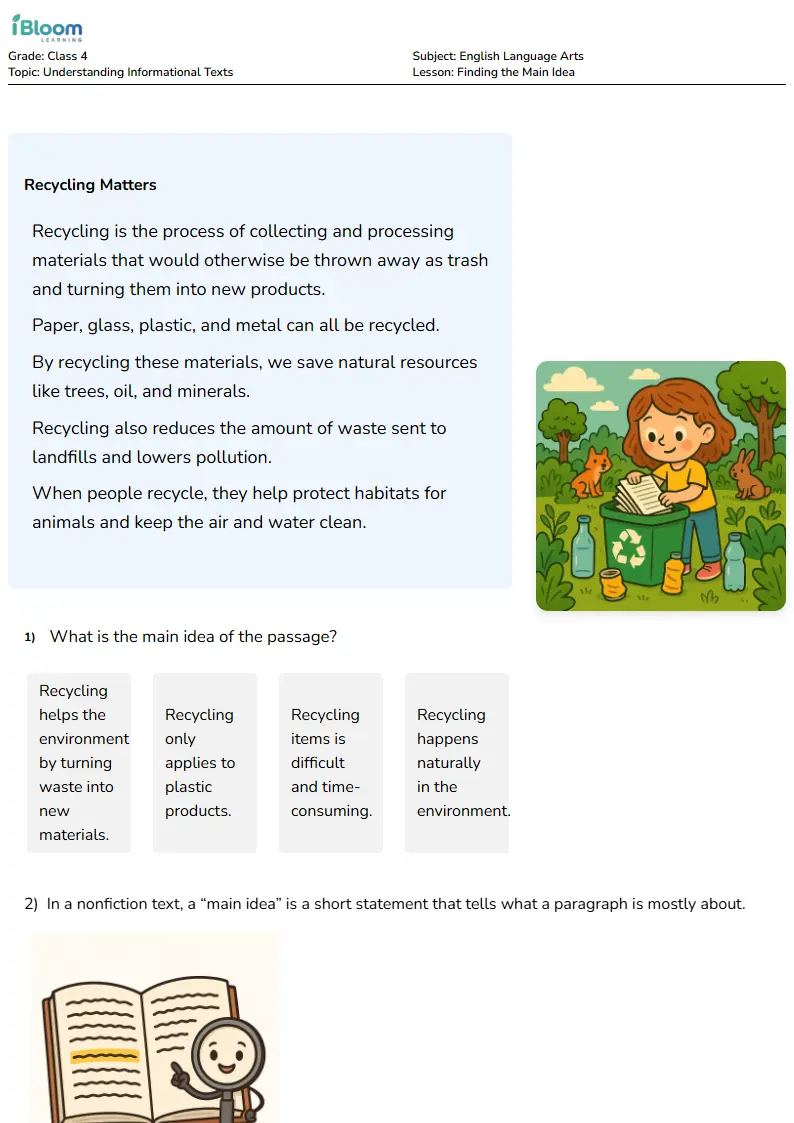
Finding the Main Idea Lesson for Class 4
Explore a free interactive english language arts lesson for class 4: Finding the Main Idea. AI-personalized, Common Core-aligned, and built for kids.
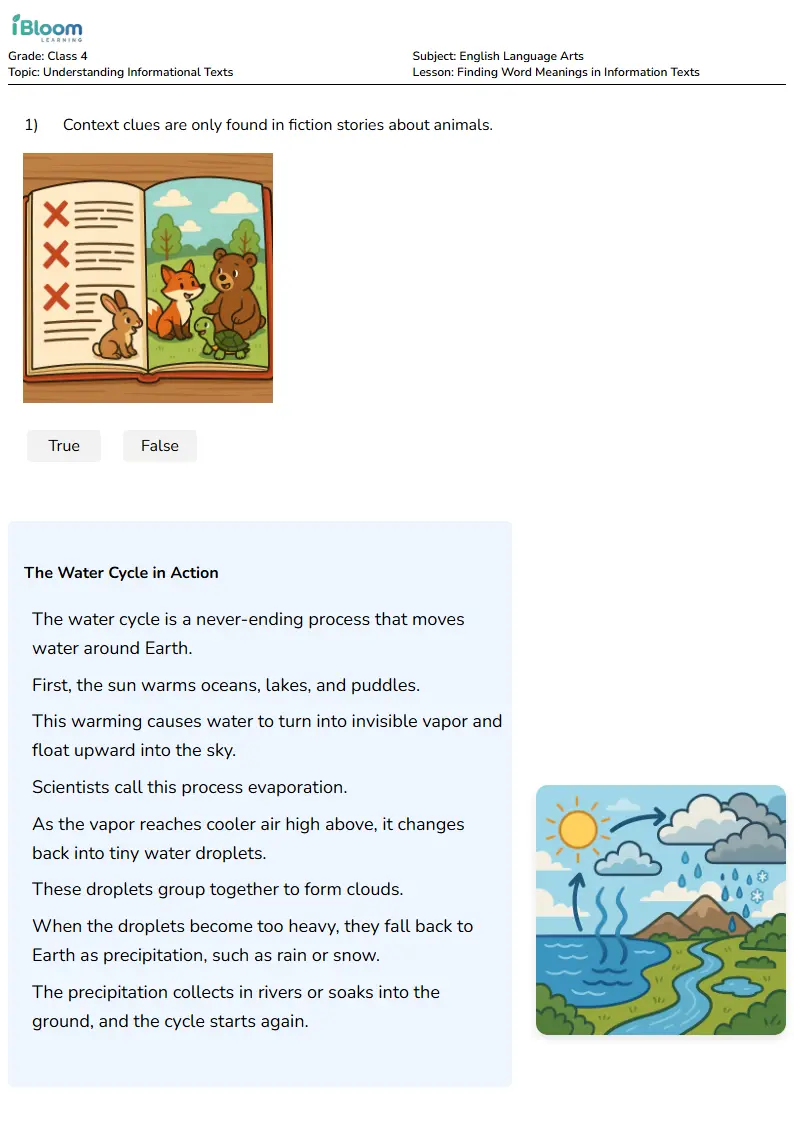
Finding Word Meanings in Information Texts Lesson for Class 4
Explore a free interactive english language arts lesson for class 4: Finding Word Meanings in Information Texts. AI-personalized, Common Core-aligned, and built for kids.
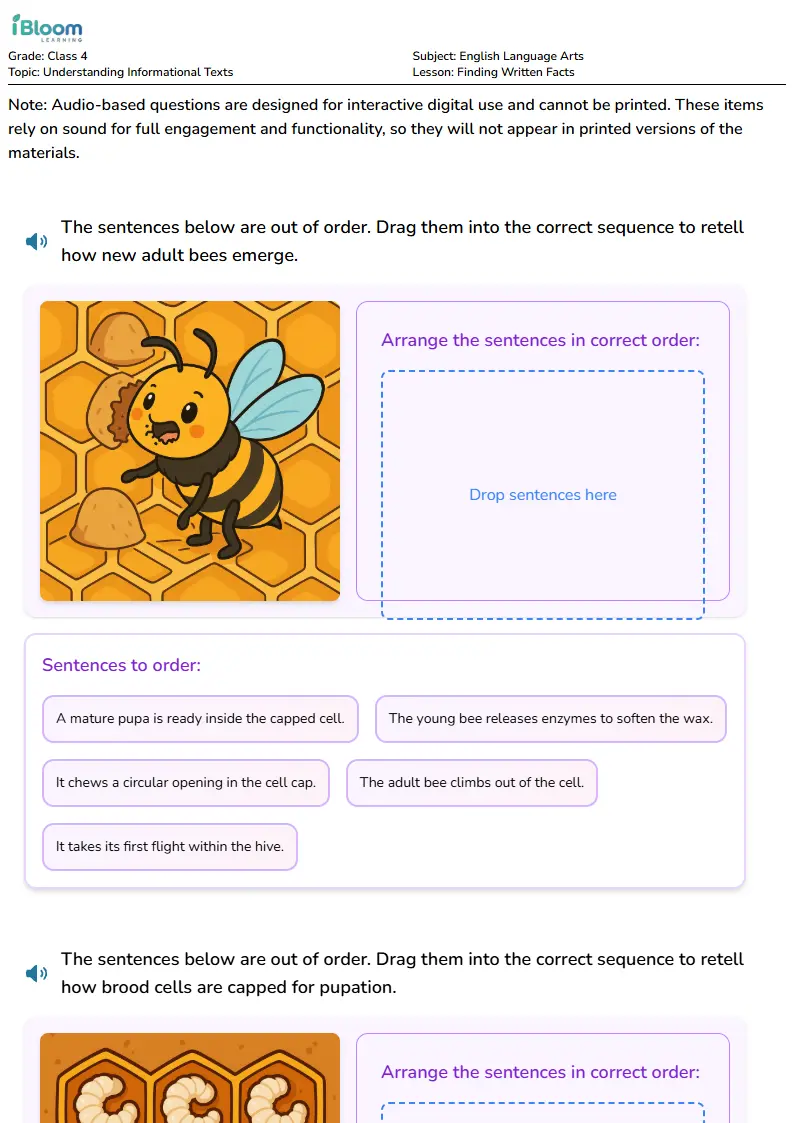
Finding Written Facts Lesson for Class 4
Explore a free interactive english language arts lesson for class 4: Finding Written Facts. AI-personalized, Common Core-aligned, and built for kids.