Free printable practice
A F Practice Activities
Printable cursive A to F worksheets help children practise clear letter formation, smooth strokes, spacing and line control.
Free printable worksheet PDFs
Preview every available page, then download the free worksheet PDF for home, homeschool, tutoring, or classroom practice.
Preview the exact activity before downloading it.
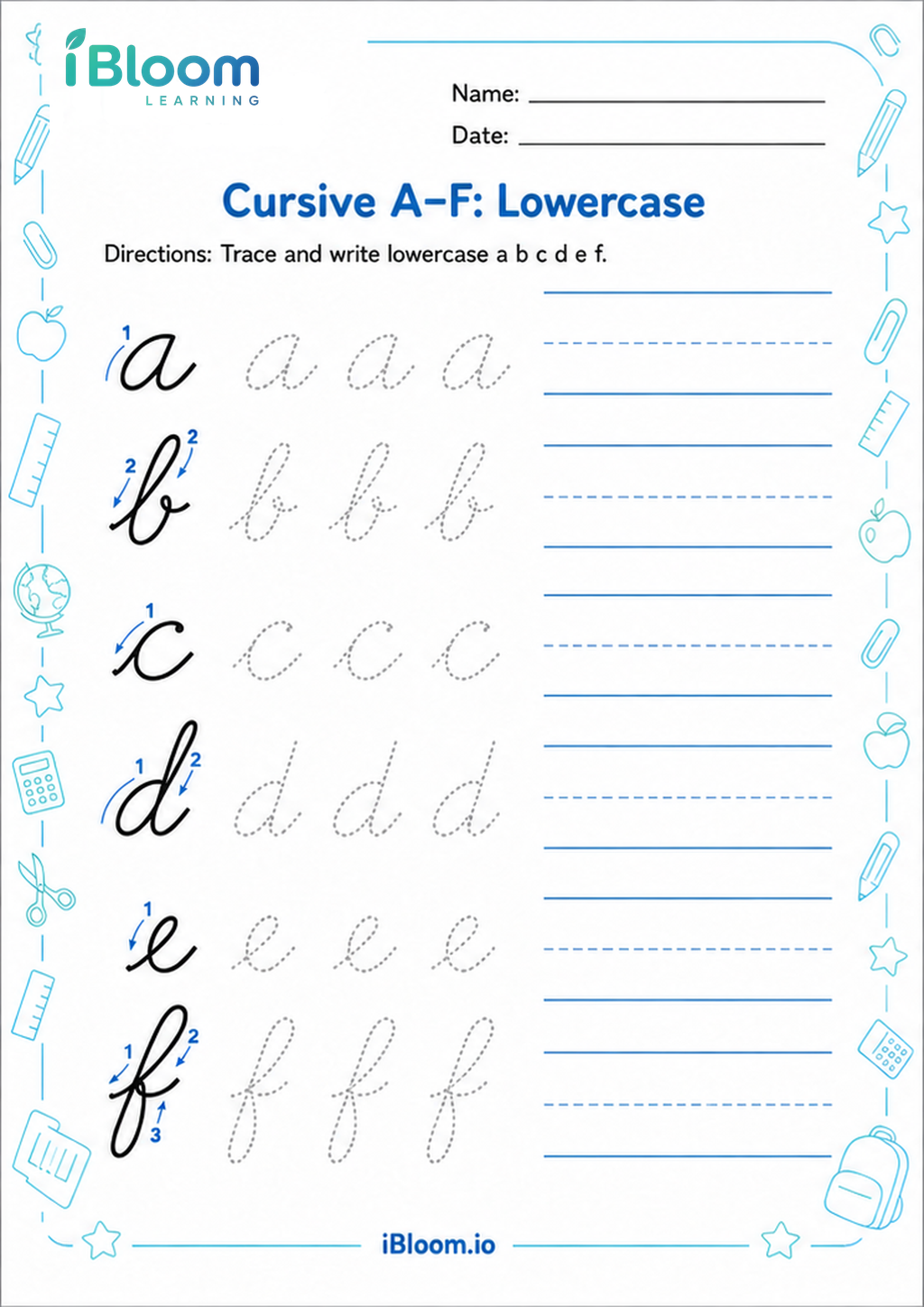 Cursive A–F: LowercaseClass 2 printable practice for Cursive Letters A–F.Class 2Free PDF preview
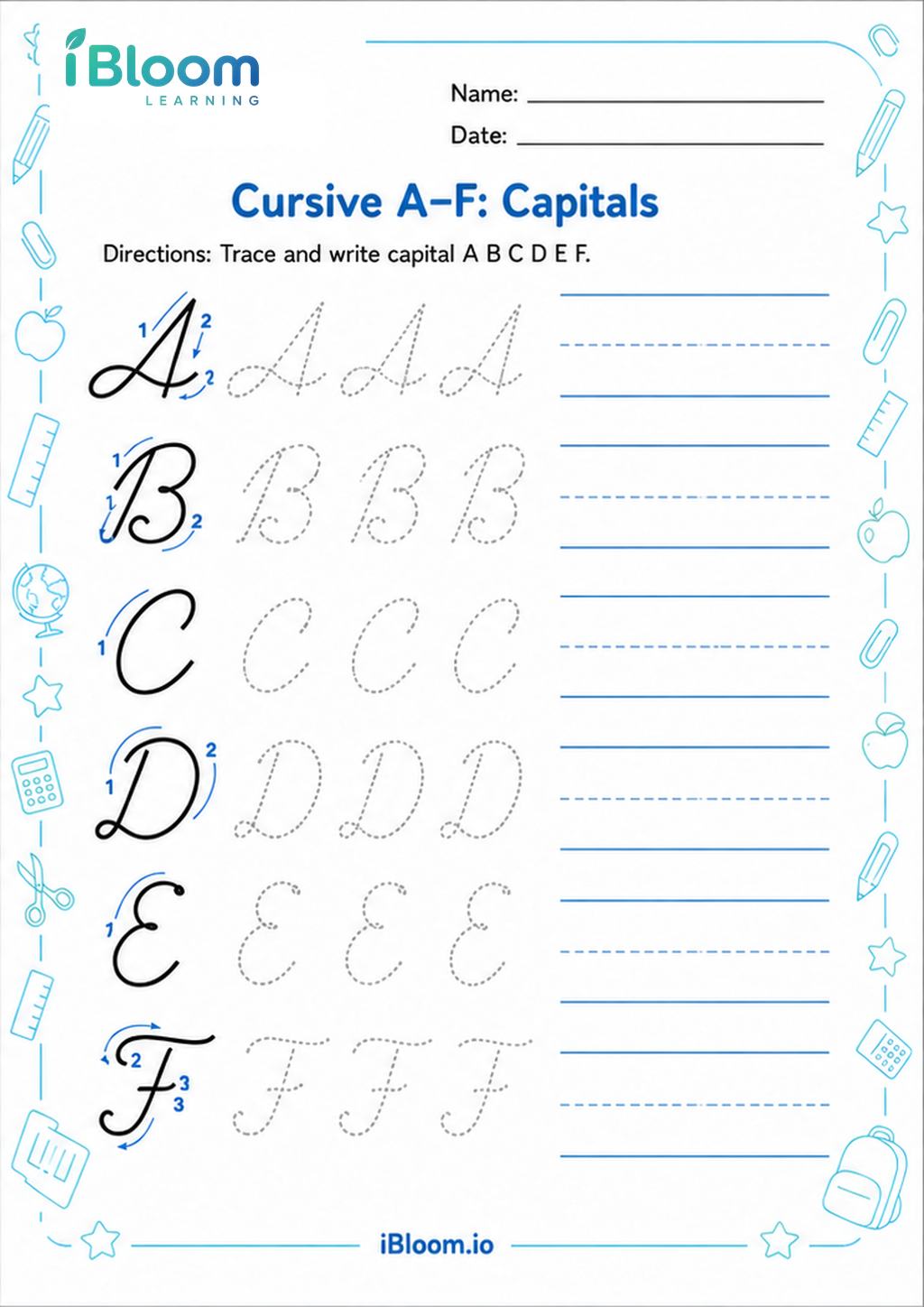 Cursive A–F: CapitalsClass 2 printable practice for Cursive Letters A–F.Class 2Free PDF preview
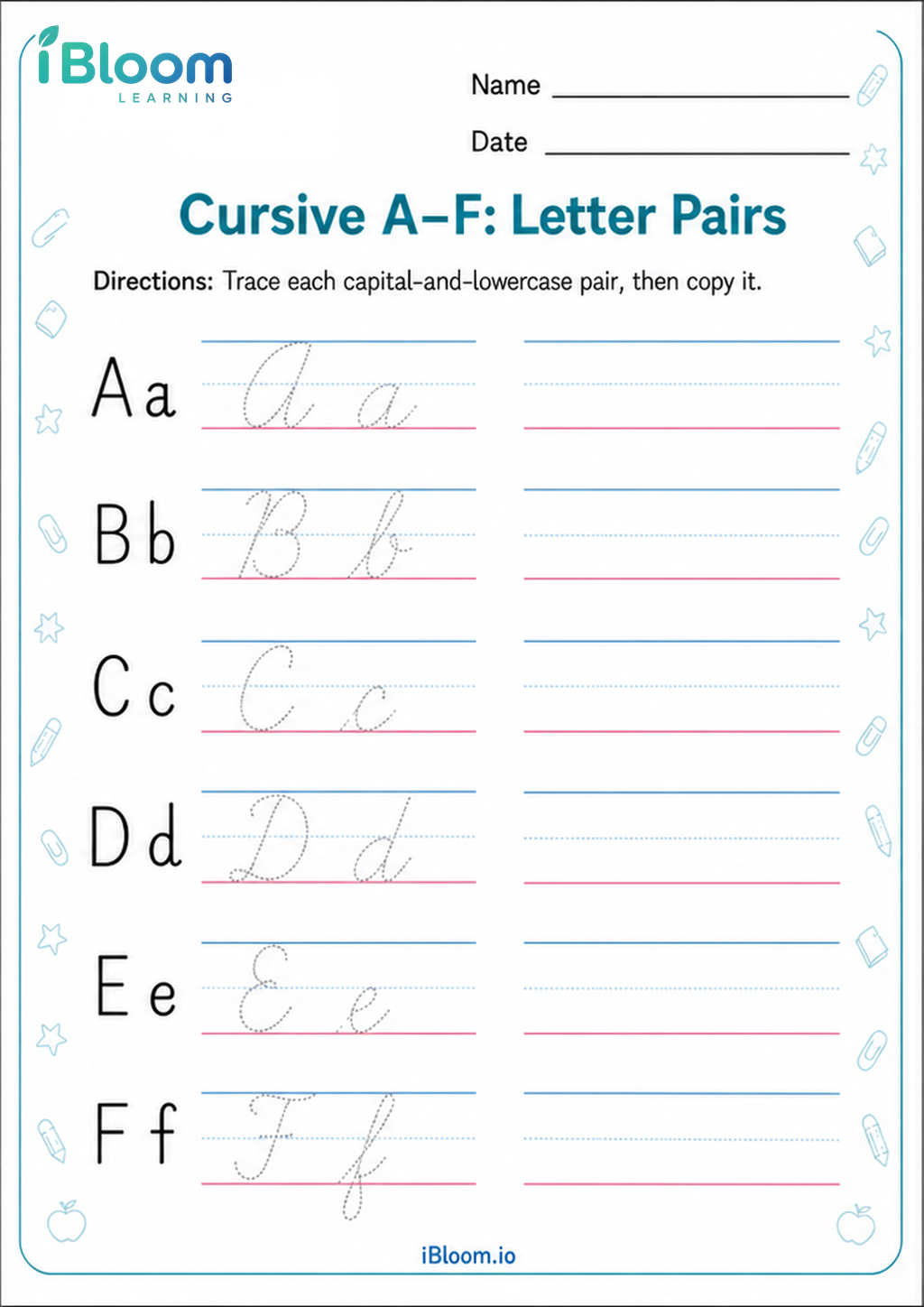 Cursive A–F: Letter PairsClass 2 printable practice for Cursive Letters A–F.Class 2Free PDF preview
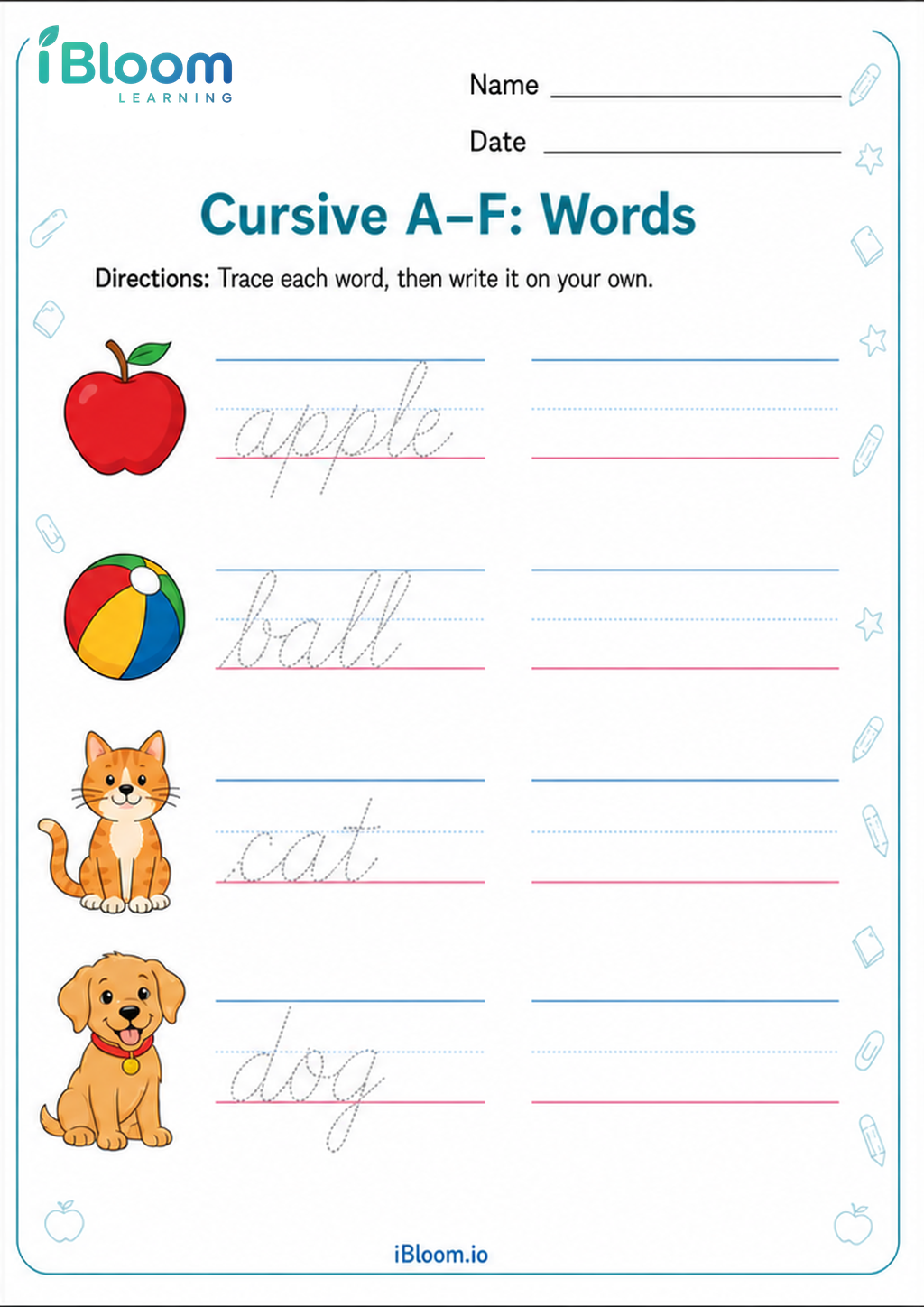 Cursive A–F: WordsClass 2 printable practice for Cursive Letters A–F.Class 2Free PDF preview
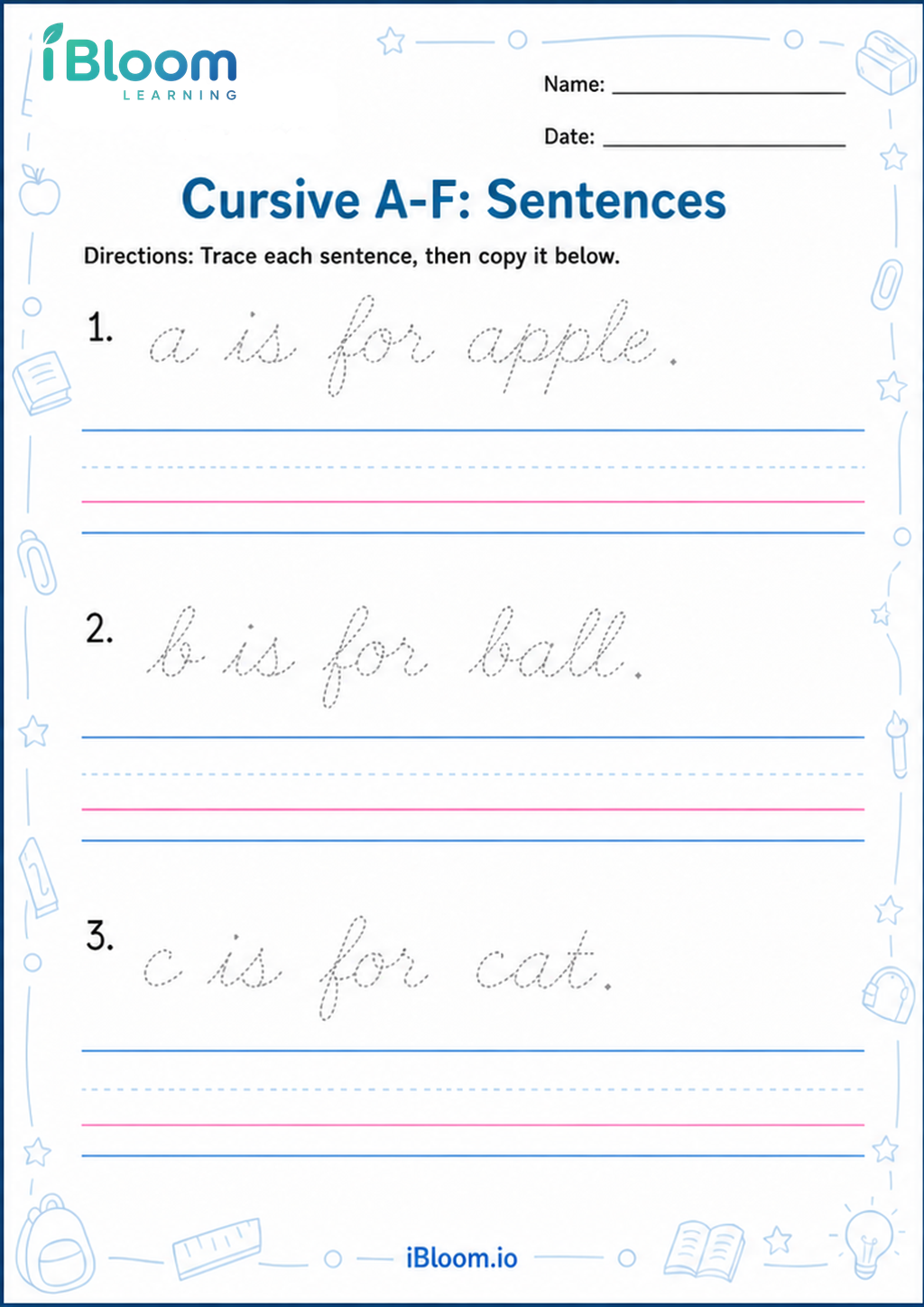 Cursive A–F: SentencesClass 2 printable practice for Cursive Letters A–F.Class 2Free PDF preview
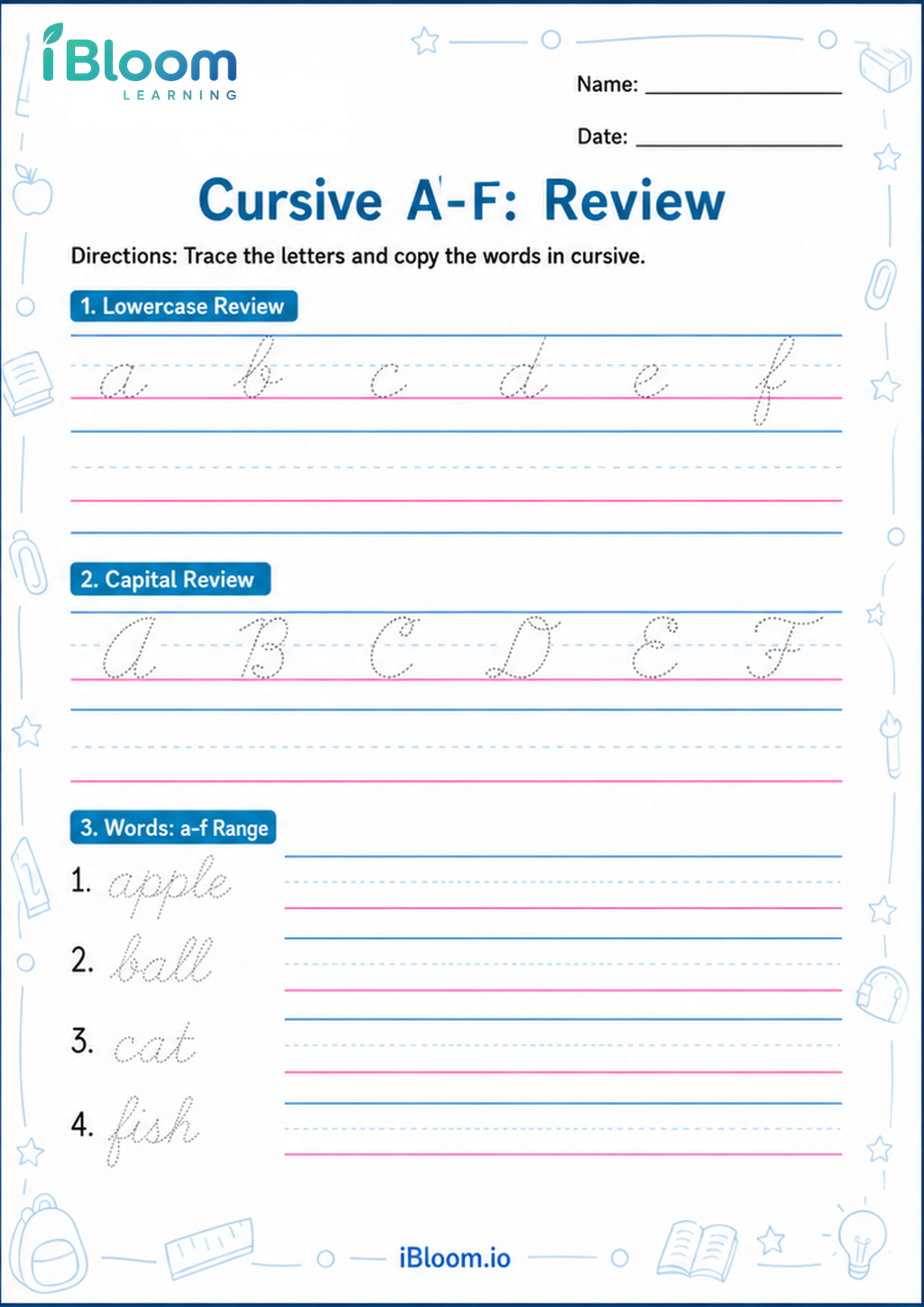 Cursive A–F: ReviewClass 2 printable practice for Cursive Letters A–F.Class 2Free PDF preview
Practice that builds confidence
Building the first cursive letter shapes
These cursive A to F practice activities help children build confidence with the first six letters of the alphabet in cursive writing. They practise how each letter starts, curves, loops, slants and sits on the writing line.
The printable worksheets include focused tracing and independent writing opportunities for A, B, C, D, E and F. Children can use them for daily handwriting practice at home, in class, or as revision after learning each cursive letter.
Cursive writing becomes easier when children learn letters in small groups. This A to F collection focuses on six early letters, giving children repeated practice with curved strokes, tall lines, rounded shapes and controlled exits. Letters such as A, C and D need smooth curves, while B, E and F help children manage height, direction and neat finishing strokes.

How the practice progresses
Children begin by following guided letter shapes, then move towards writing the letters with less support. This progression helps them notice where the pencil should begin, how far the stroke should travel, and where the letter should end. Encourage children to say the letter name softly, trace with care, then write it independently. Neatness improves when they slow down and keep each letter within the ruled space.
A simple parent routine
At home, choose one letter at a time rather than rushing through A to F together. First, ask your child to trace the letter with a finger. Next, let them trace with a pencil, paying attention to grip and posture. Finally, ask them to write the same letter on their own and circle the one they like best. This makes handwriting practice positive and helps children recognise their own improvement.

Classroom uses for teachers
Teachers can use these worksheets after introducing each cursive letter on the board. They work well for handwriting warm-ups, early finisher tasks, small-group support, or revision in a cursive writing folder. The A to F range is also useful for observing pencil control before moving children towards longer letter groups, words and joining practice.

Common errors to watch for
Children may begin a letter from the wrong place, make loops too large, float above the baseline, or press too hard on the page. Some may write too quickly and lose the cursive flow. Remind them to keep the paper steady, leave comfortable space between letters and check that tall letters reach the correct height.
Free printable PDF download
Use this cursive A to F worksheet page to preview the activity, print it, or download it as a PDF for quick practice. It works well for homework, homeschool lessons, tutoring, morning work, revision, and classroom centers.
Answers and answer key support
After the child completes the worksheet independently, parents and teachers can use the answer support or answer key information to check the work, review mistakes, and choose the next practice step.
Why iBloom worksheets help
The iBloom worksheets give children clear, repeated practice without overwhelming the page. The focus on A to F lets learners master a small set of cursive letters before adding more. A helpful child-friendly strategy is: “start carefully, move smoothly, finish neatly.” This simple reminder supports better control, rhythm and confidence.
Helpful answers
Frequently asked questions
Which letters are covered in these worksheets?
This collection focuses on the cursive letters A, B, C, D, E and F, giving children practice with the first six letters in a manageable group.
Should my child trace or write independently first?
Start with finger tracing, then pencil tracing, and finally independent writing. This order helps children understand the movement before trying the letter on their own.
Are these worksheets suitable for beginners in cursive writing?
Yes. They are useful for children who are beginning cursive letters or revising early letter formation, especially when introduced one letter at a time.
How can I help if my child writes the cursive letters too large?
Point to the ruled lines and ask your child to check where each letter should sit. Slow tracing and comparing one neat example with one oversized example can also help.
Can teachers use these for classroom handwriting practice?
Yes. Teachers can use them after teaching each letter, during handwriting warm-ups, for small-group support, or as revision before moving to more cursive letters.
Is this cursive A to F worksheet free?
Yes. You can preview it for free and use the printable worksheet for home or classroom practice.
Can I download this cursive A to F worksheet as a PDF?
Yes. Use the worksheet download option to save a printable PDF, or print the worksheet directly from the page.
Does this cursive A to F worksheet include answers or an answer key?
When the activity has fixed answers, iBloom includes answer support so parents and teachers can check the completed worksheet.