Free printable practice
R V Practice Activities
Printable cursive R–V worksheets help children practise smooth letter formation for R, S, T, U and V with tracing, copying and independent writing.
Free printable worksheet PDFs
Preview every available page, then download the free worksheet PDF for home, homeschool, tutoring, or classroom practice.
Preview the exact activity before downloading it.
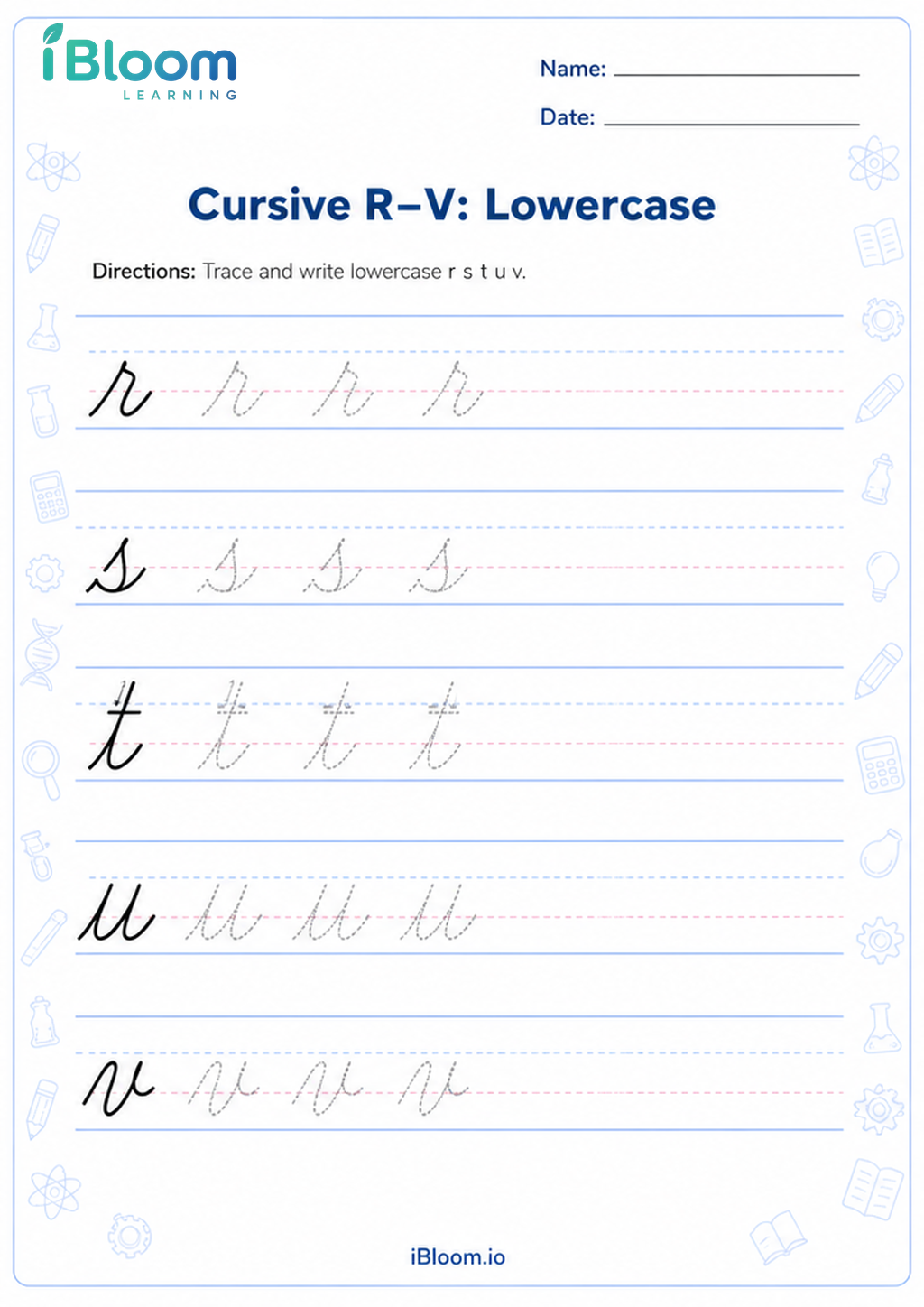 Cursive R–V: LowercaseClass 2 printable practice for Cursive Letters R–V.Class 2Free PDF preview
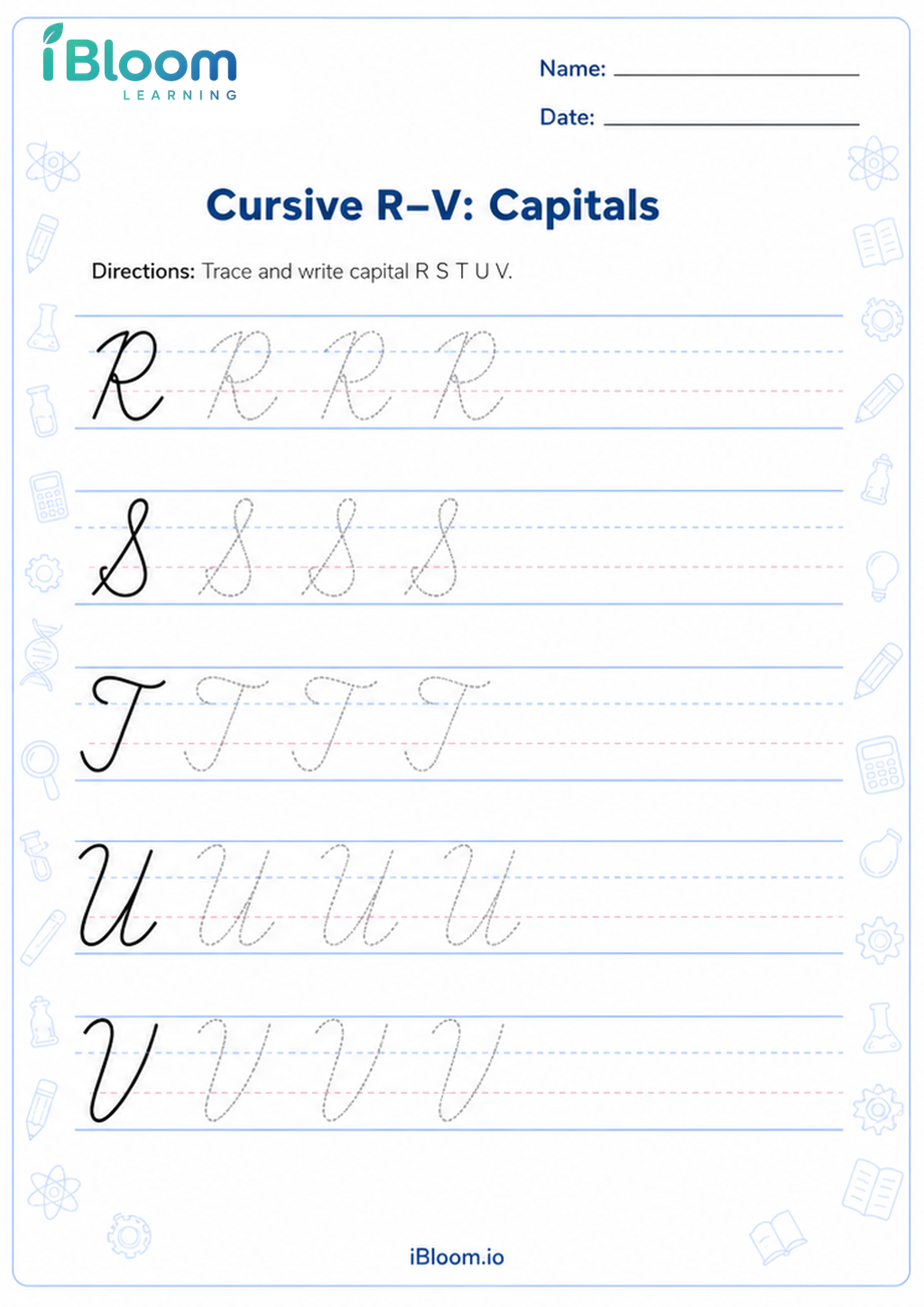 Cursive R–V: CapitalsClass 2 printable practice for Cursive Letters R–V.Class 2Free PDF preview
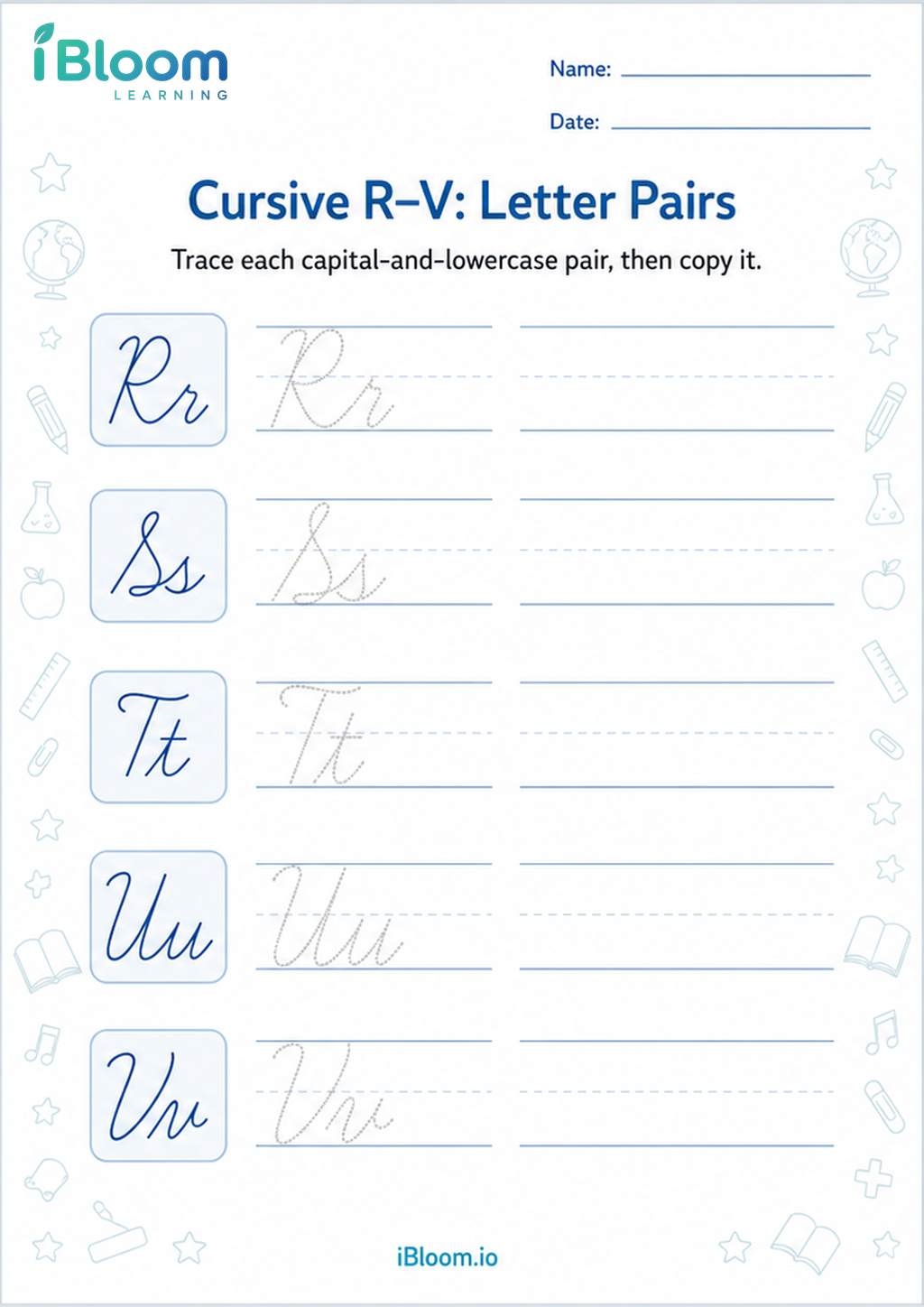 Cursive R–V: Letter PairsClass 2 printable practice for Cursive Letters R–V.Class 2Free PDF preview
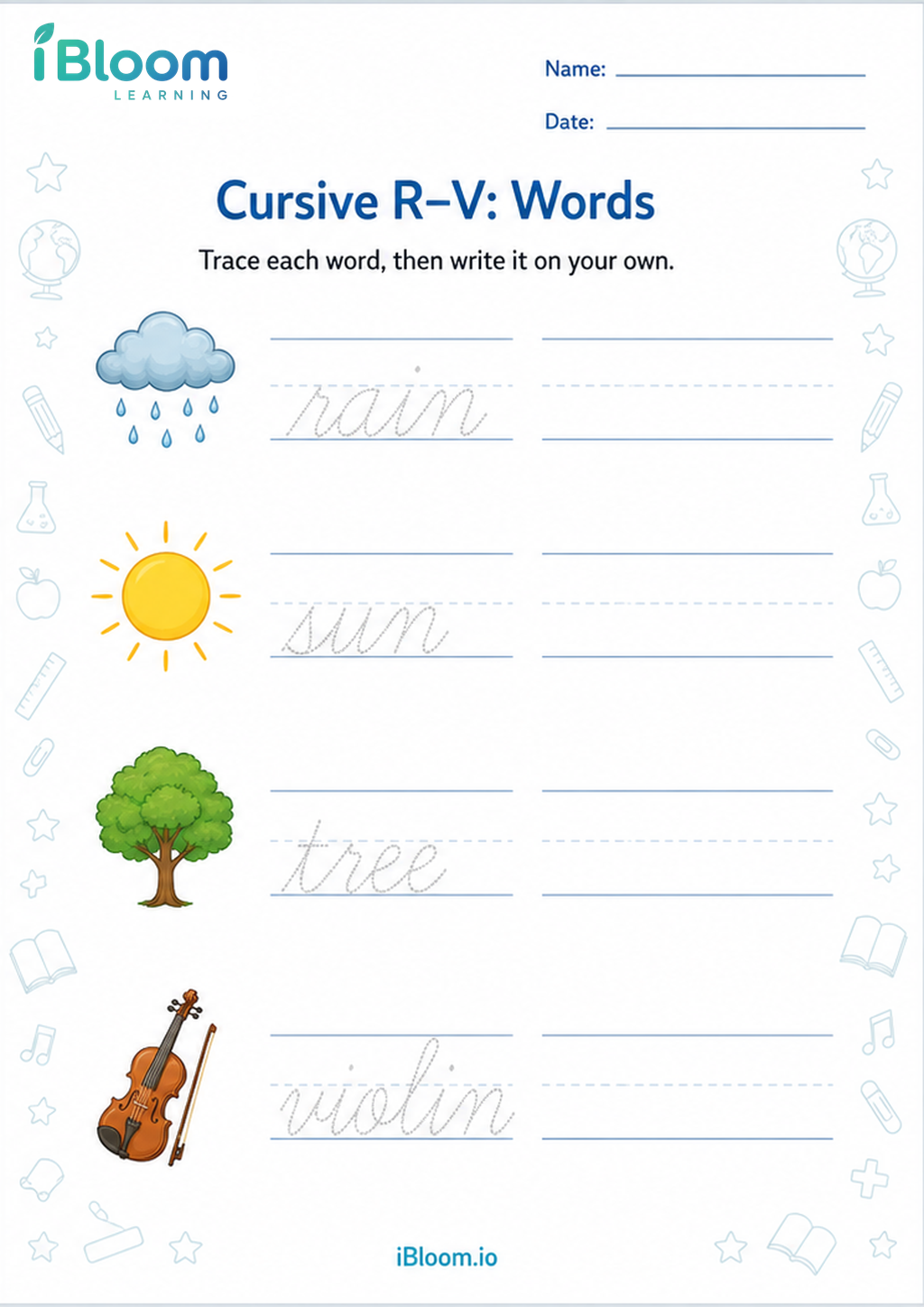 Cursive R–V: WordsClass 2 printable practice for Cursive Letters R–V.Class 2Free PDF preview
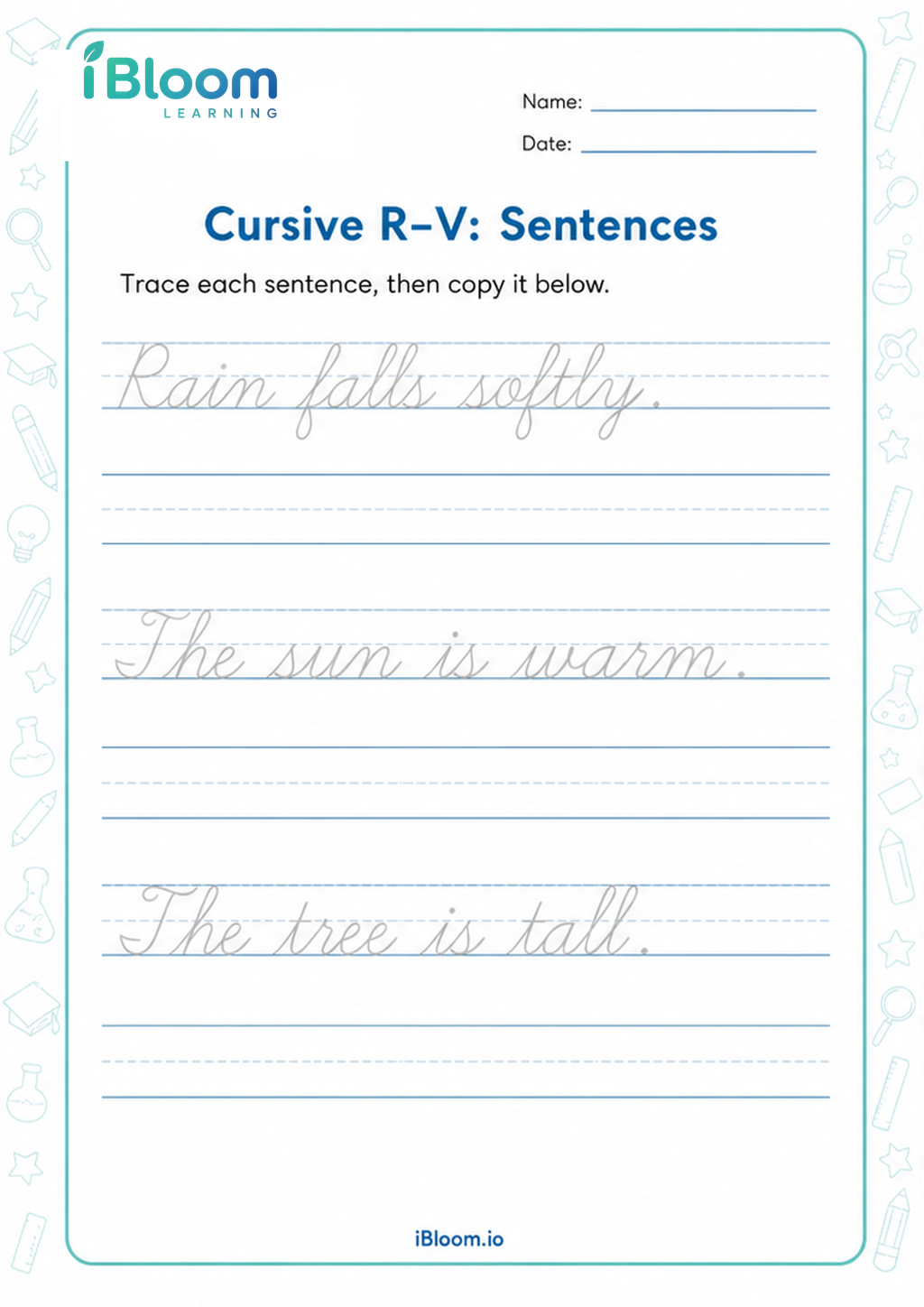 Cursive R–V: SentencesClass 2 printable practice for Cursive Letters R–V.Class 2Free PDF preview
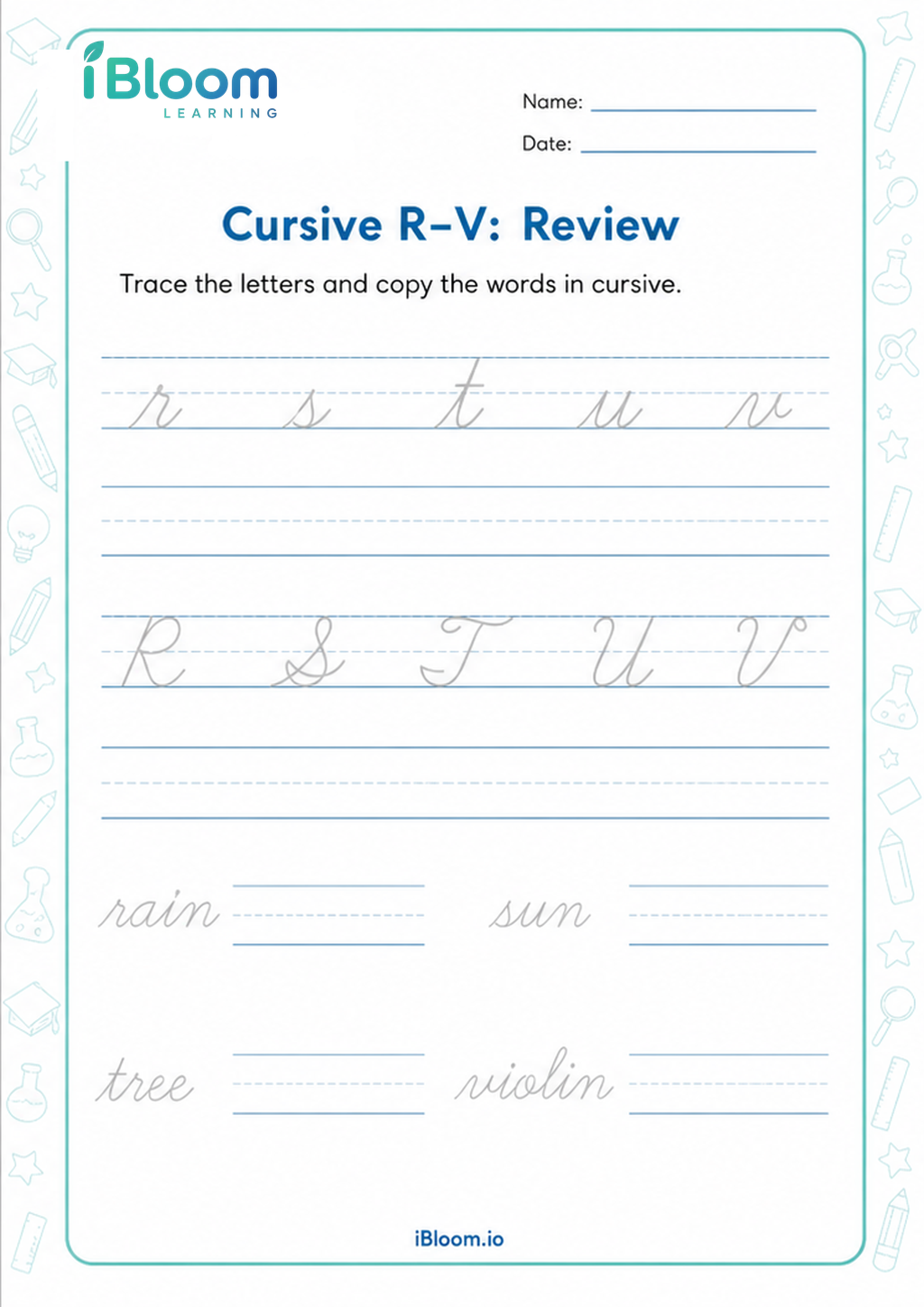 Cursive R–V: ReviewClass 2 printable practice for Cursive Letters R–V.Class 2Free PDF preview
Practice that builds confidence
Letter focus: R to V
These cursive R–V practice activities focus on the letter group R, S, T, U and V within the Cursive Writing > Cursive Letters sequence. Children practise recognising each cursive form, following the correct stroke path, and writing the letters with steady size and spacing.
The printable worksheets include guided tracing, line practice and independent letter writing so children can move from support to control. They are useful for home revision, handwriting folders, classwork and extra practice for children who need more confidence with cursive movements.
This collection gives children repeated practice with cursive R, S, T, U and V. The aim is not just to copy a shape, but to learn how each letter begins, curves, turns and finishes on the writing line. Children notice details such as rounded strokes in S, the dip and lift in U and V, and the difference between a tall letter form and a shorter flowing form.

Building smooth pencil control
The activities progress from tracing to copying and then writing without guides. Tracing helps the hand remember direction. Copying checks whether the child can keep the same height, slant and spacing. Independent writing shows whether the letter can be formed from memory. Encourage children to say simple vocabulary while writing, such as start, curve, join, lift, baseline and spacing.
A simple parent routine
At home, begin with one careful row rather than many rushed rows. Ask your child to point to the starting place, trace the first model with a finger, then write with a pencil. After each line, choose the best letter and ask why it looks neat. End by writing a short row mixing two letters, such as R and S or U and V, so the child learns to switch forms with control.

Classroom uses
Teachers can use these worksheets for handwriting practice, morning work, small-group support or writing centers. They also work well after a board demonstration: model the letter once, let children air-write it, then move to the sheet. Completed pages can be kept in a cursive folder to show progress across the letter sequence.

Common errors to watch for
Children may begin a letter from the wrong point, make V look like U, crowd letters together, or change slant from one row to the next. Some may press too hard when concentrating. A child-friendly strategy is: slow start, smooth curve, check the line. This short reminder helps children focus on movement before neatness.
Free printable PDF download
Use this cursive R V practice worksheet page to preview the activity, print it, or download it as a PDF for quick practice. It works well for homework, homeschool lessons, tutoring, morning work, revision, and classroom centers.
Answers and answer key support
After the child completes the worksheet independently, parents and teachers can use the answer support or answer key information to check the work, review mistakes, and choose the next practice step.
Why iBloom worksheets help
The iBloom worksheets keep the practice clear and focused on this exact R–V letter group. The mix of models, traceable letters and open writing lines supports gradual independence, while the familiar layout lets children concentrate on cursive formation instead of figuring out new instructions each time.
Helpful answers
Frequently asked questions
Which cursive letters are practised in this collection?
This page focuses on the R–V letter group: R, S, T, U and V. Children practise the cursive forms through tracing, copying and independent writing.
How should my child start using these worksheets?
Begin by tracing the model letters slowly, then copy one row carefully. Once the movements feel familiar, let your child try a line without tracing support.
What mistakes are common with cursive U and V?
Children may make V too rounded so it looks like U, or make U too sharp at the bottom. Ask them to check the bottom shape and say whether it is a dip or a point.
Can these worksheets be used in class?
Yes. Teachers can use them for handwriting lessons, extra practice, small groups, morning work or writing centers after demonstrating each cursive letter on the board.
Should children write many rows at once?
Neat, careful practice is more useful than filling many lines quickly. One well-formed row with correct starting points, spacing and slant is a strong practice goal.
Is this cursive R V practice worksheet free?
Yes. You can preview it for free and use the printable worksheet for home or classroom practice.
Can I download this cursive R V practice worksheet as a PDF?
Yes. Use the worksheet download option to save a printable PDF, or print the worksheet directly from the page.
Does this cursive R V practice worksheet include answers or an answer key?
When the activity has fixed answers, iBloom includes answer support so parents and teachers can check the completed worksheet.