Free printable practice
M Q Practice Activities
Printable cursive M–Q worksheets help children trace, form, connect, and write the letters M, N, O, P, and Q with steady joins and spacing.
Free printable worksheet PDFs
Preview every available page, then download the free worksheet PDF for home, homeschool, tutoring, or classroom practice.
Preview the exact activity before downloading it.
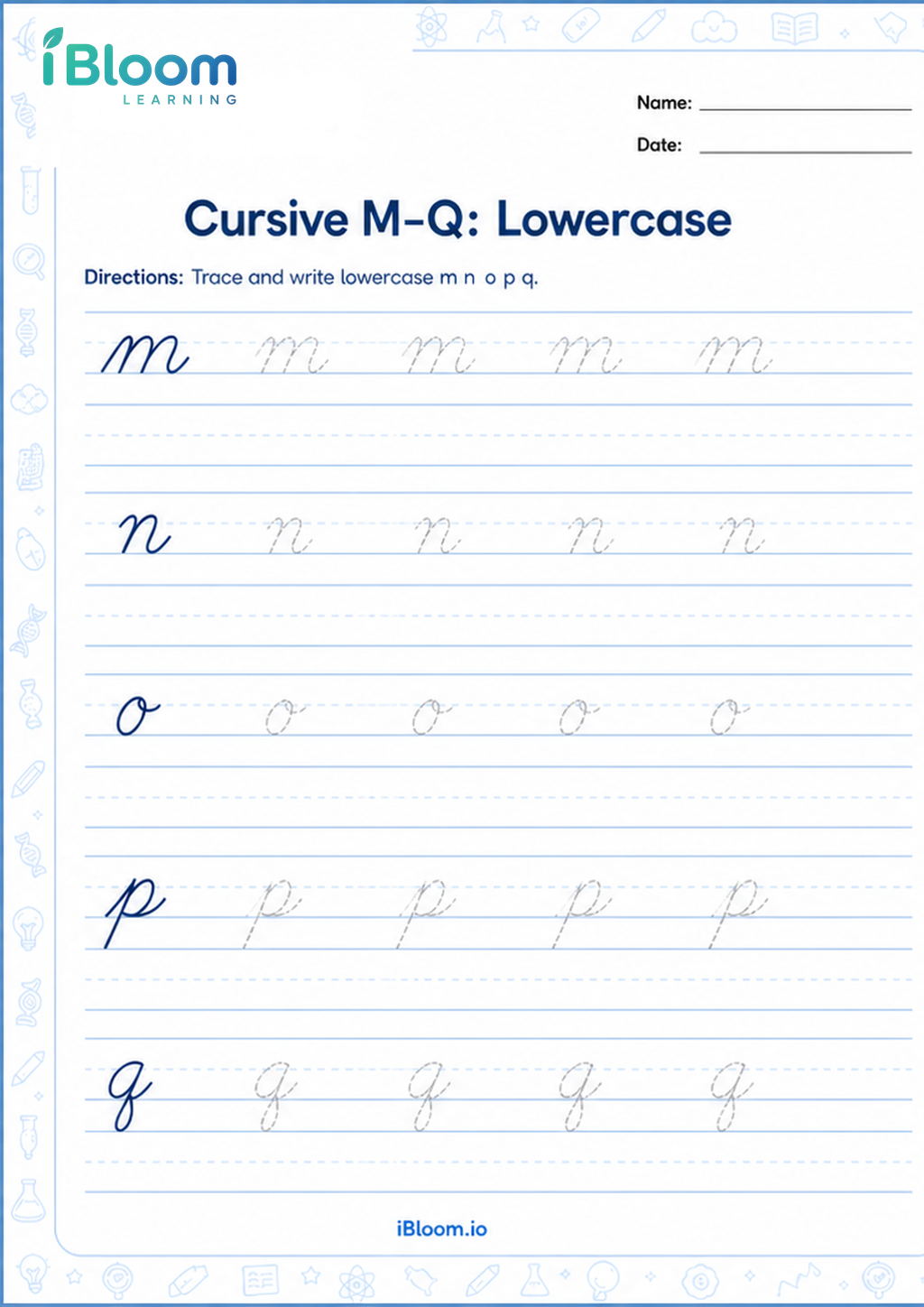 Cursive M–Q: LowercaseClass 2 printable practice for Cursive Letters M–Q.Class 2Free PDF preview
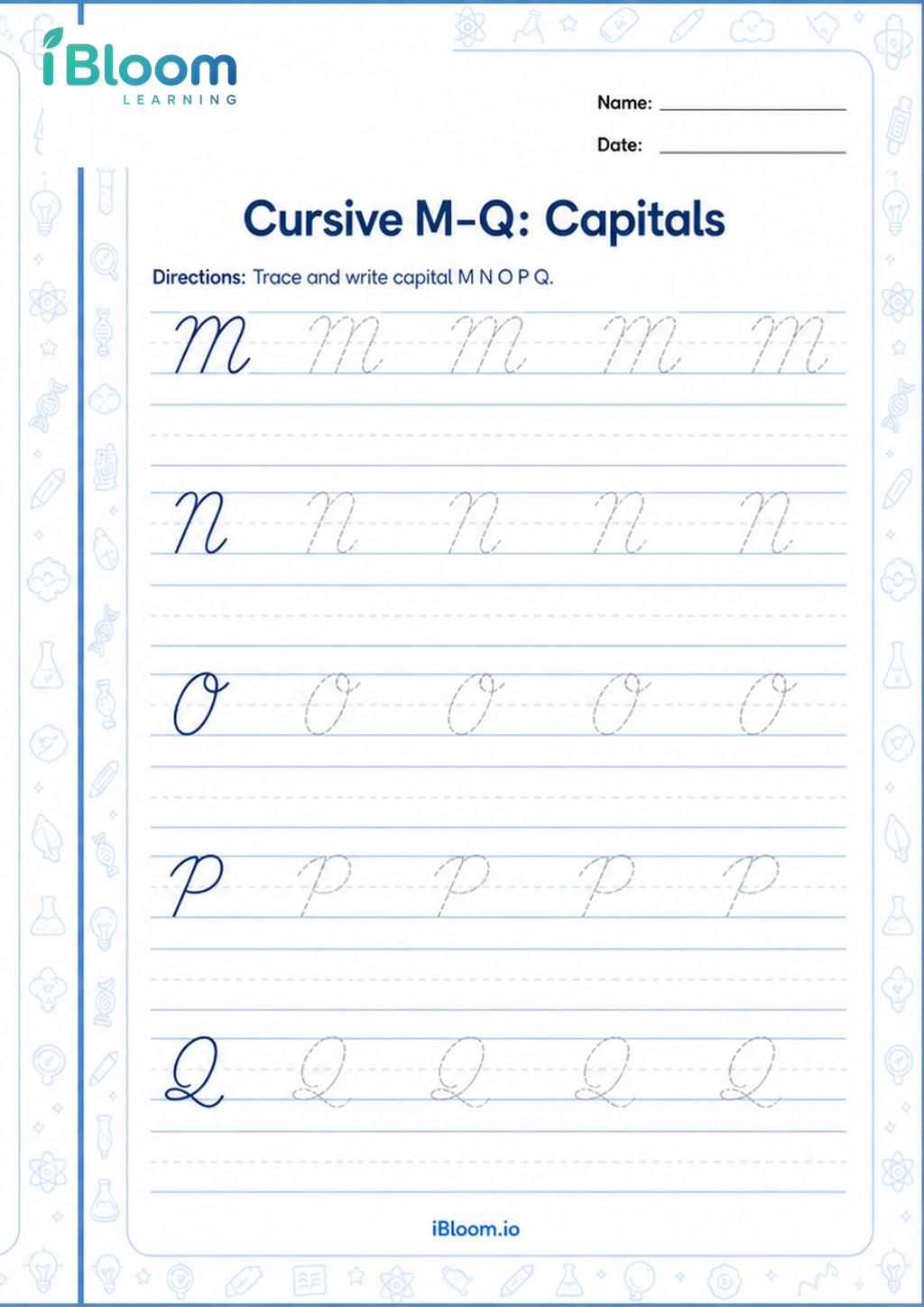 Cursive M–Q: CapitalsClass 2 printable practice for Cursive Letters M–Q.Class 2Free PDF preview
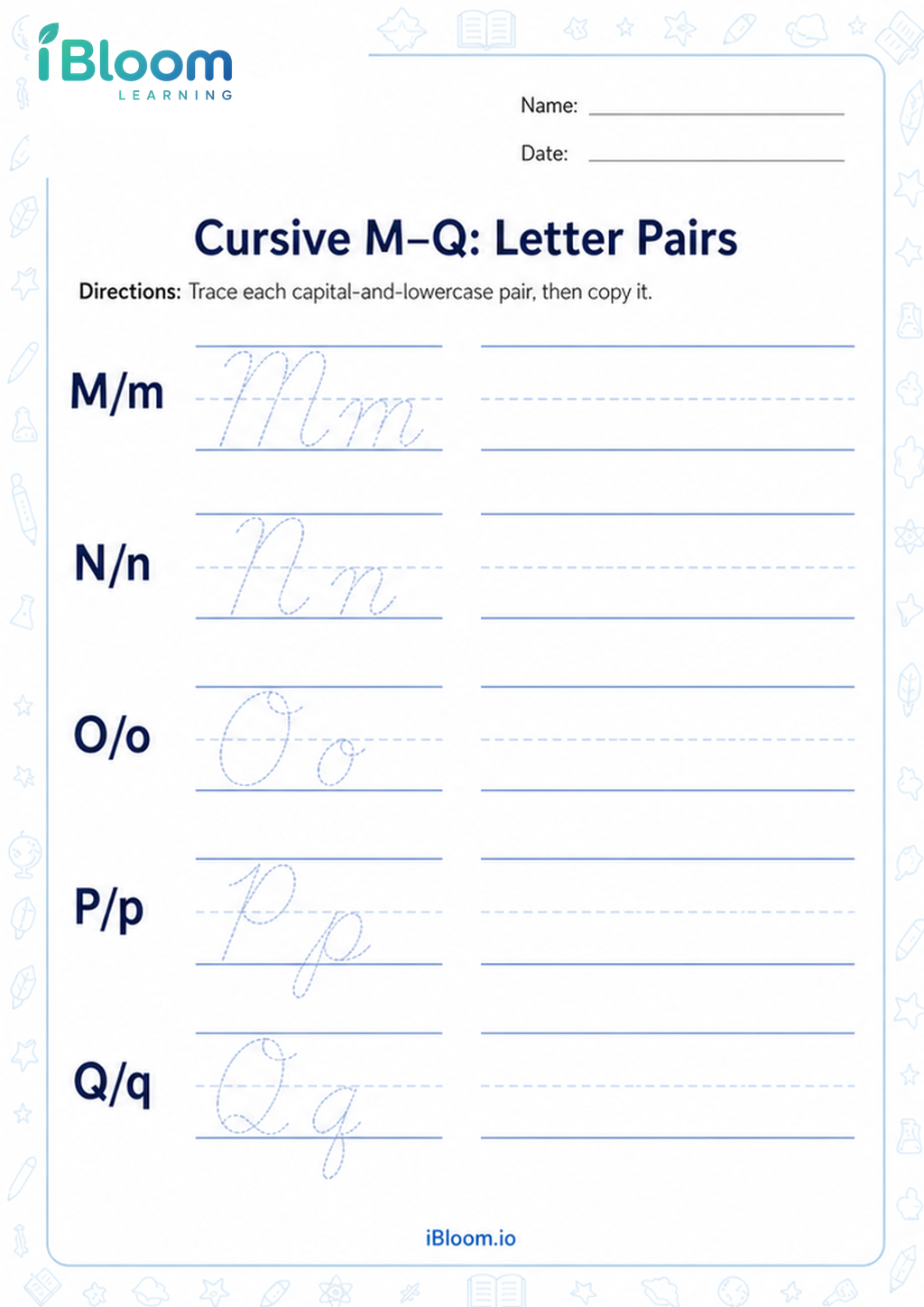 Cursive M–Q: Letter PairsClass 2 printable practice for Cursive Letters M–Q.Class 2Free PDF preview
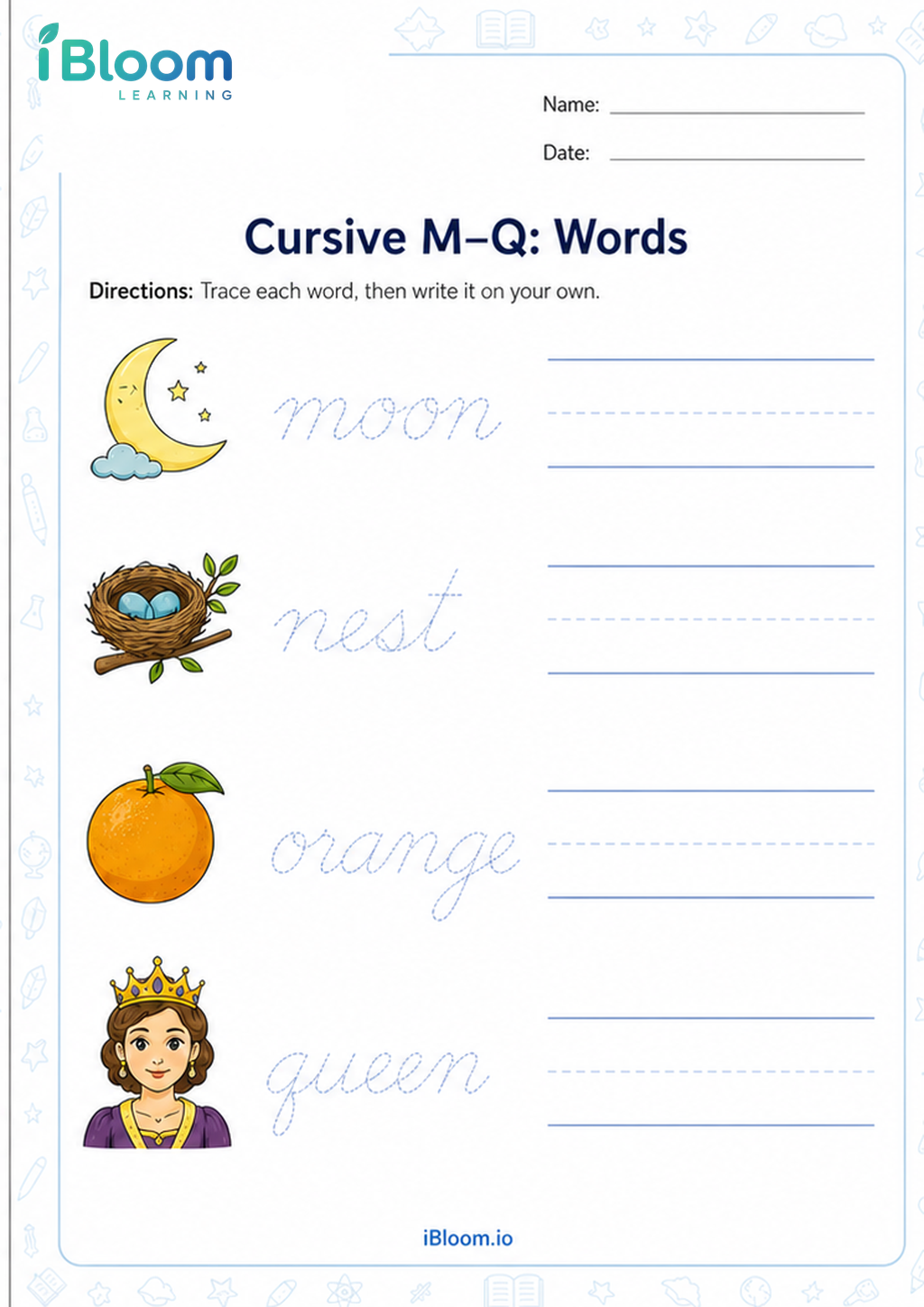 Cursive M–Q: WordsClass 2 printable practice for Cursive Letters M–Q.Class 2Free PDF preview
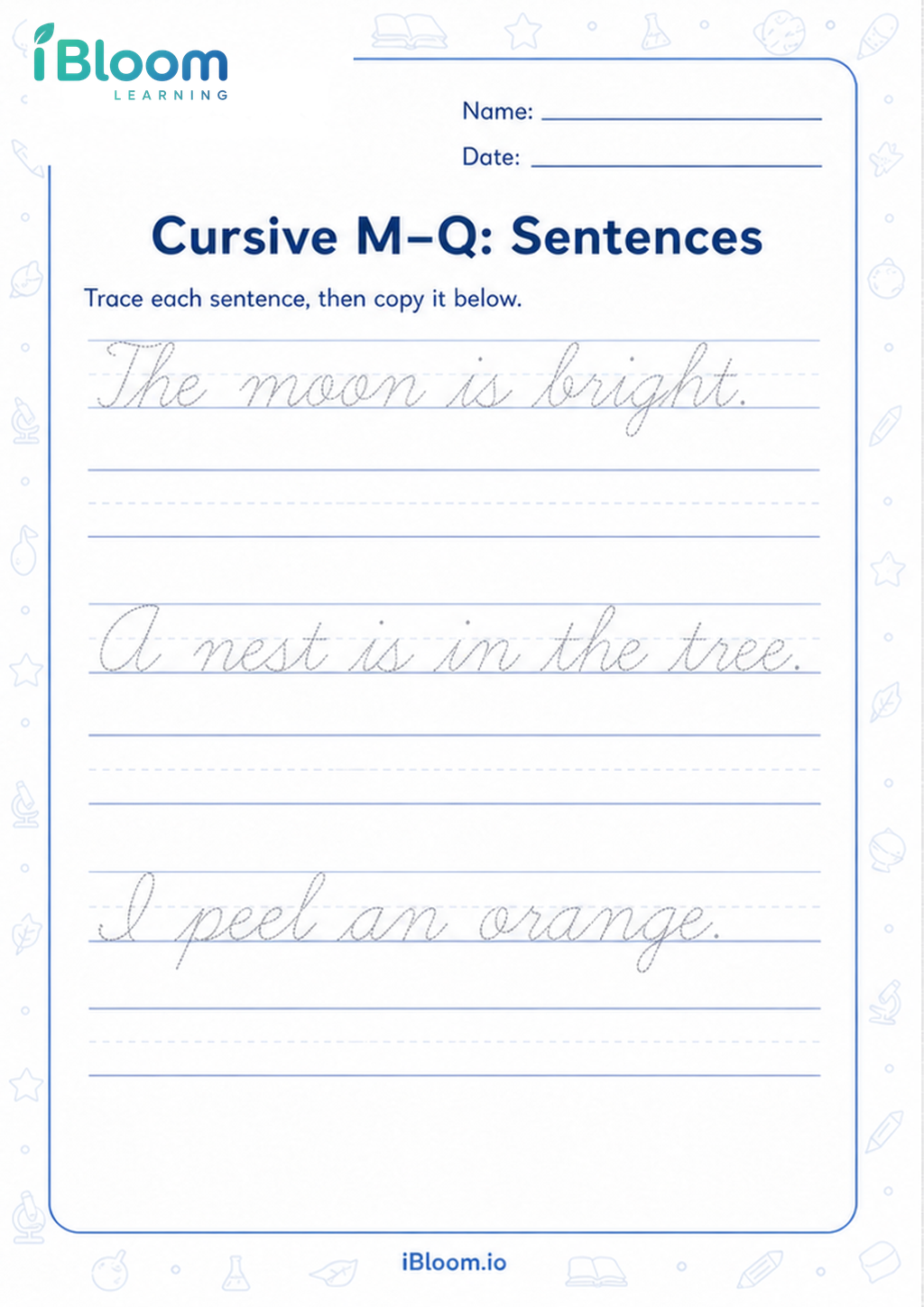 Cursive M–Q: SentencesClass 2 printable practice for Cursive Letters M–Q.Class 2Free PDF preview
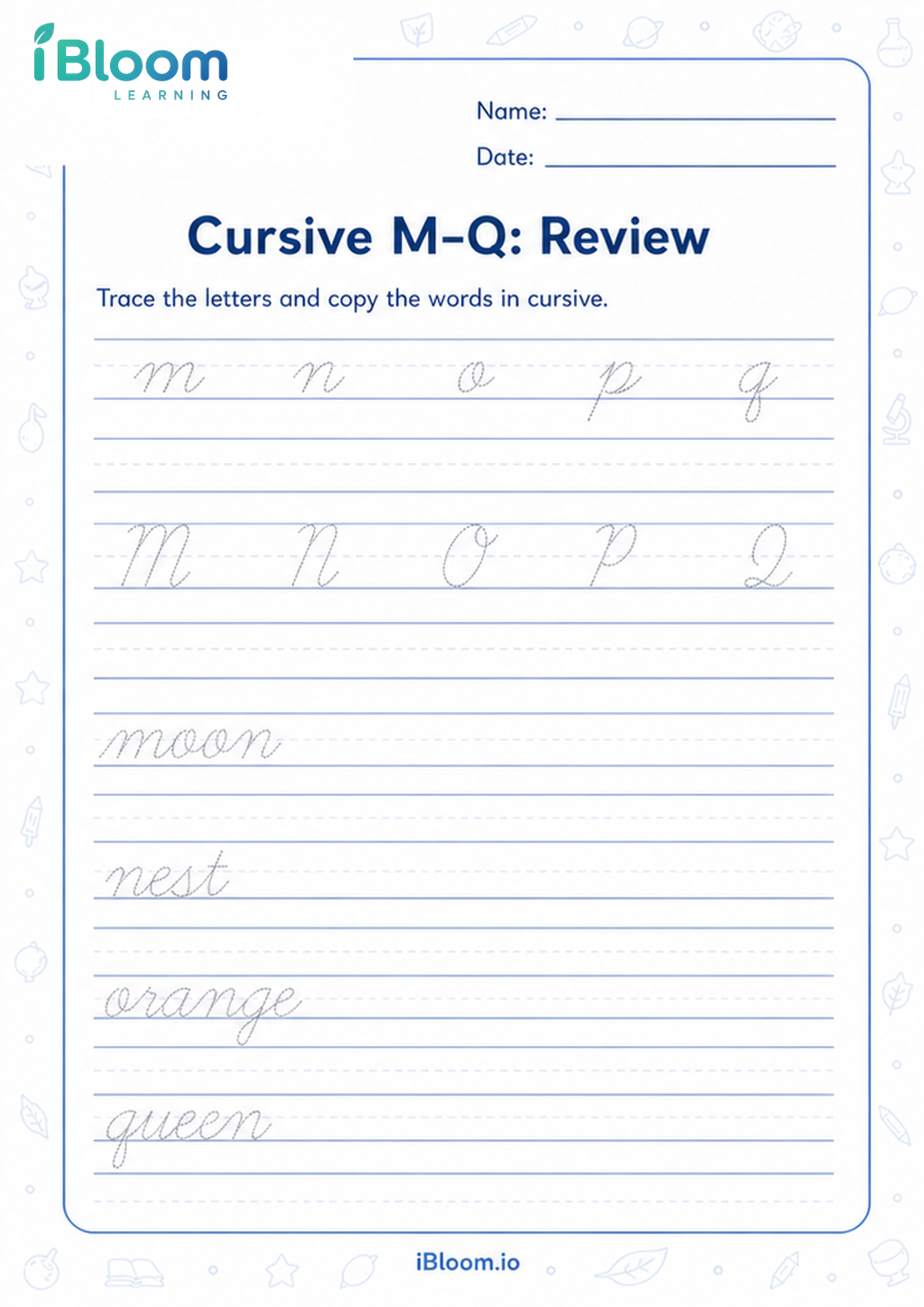 Cursive M–Q: ReviewClass 2 printable practice for Cursive Letters M–Q.Class 2Free PDF preview
Practice that builds confidence
Building the M–Q letter family
These cursive writing practice activities focus on the letter group M–Q: M, N, O, P, and Q. Children practise smooth pencil movement, correct starting points, rounded curves, tall strokes, descenders, and neat joins used in connected handwriting.
The printable worksheets include guided tracing and independent writing practice so children can move from copying the letter shape to forming it with confidence. They are useful for handwriting practice at home, in class, or as a focused revision set for cursive letters.
This set sits within Cursive Writing > Cursive Letters and gives children repeated practice with the middle section of the alphabet. The letters M and N need controlled humps and clear upward strokes, O needs a smooth closed loop, P needs a tall stem with a rounded top, and Q adds a tail that must not look untidy or disconnected.

How the practice progresses
Children begin by following the printed guides, then copy the same letters on their own. This gradual shift helps them notice height, slant, spacing, and baseline control. If both capital and small cursive forms are being practised, encourage children to compare how the uppercase letters stand taller while the lowercase letters stay within the writing lines.
A simple parent routine
At home, ask your child to first trace the letter in the air with a finger while saying the movement aloud, such as “up, curve, down” or “round and tail.” Next, let them trace one line with a pencil, write one line independently, and circle their neatest letter. Finish with two or three simple words that begin with the practised letters, such as man, nest, pot, or queen, only if the child is ready for word practice.

Classroom use for teachers
Teachers can use these pages for handwriting warm-ups, small-group correction, notebook reinforcement, or writing centres. They also work well after a blackboard demonstration: model the letter once, ask children to trace it with their finger on the desk, and then move to the worksheet. Keep the focus on one or two letters at a time for children who need extra support.

Common errors to watch for
Children may make the humps in M and N uneven, leave O slightly open, make P too small, or draw Q like a printed letter instead of a cursive form. Some may lift the pencil too often or crowd letters together. Remind them that cursive writing should look smooth, not rushed.
Free printable PDF download
Use this cursive M Q worksheet page to preview the activity, print it, or download it as a PDF for quick practice. It works well for homework, homeschool lessons, tutoring, morning work, revision, and classroom centers.
Answers and answer key support
After the child completes the worksheet independently, parents and teachers can use the answer support or answer key information to check the work, review mistakes, and choose the next practice step.
Why iBloom worksheets help
The iBloom M–Q worksheets give children clear, repeated practice without overwhelming the page. The letter range is narrow enough for careful correction but broad enough to build fluency across related shapes. A child-friendly strategy is: “start carefully, move smoothly, sit on the line, and check your tail.”
Helpful answers
Frequently asked questions
Which letters are practised in the M–Q cursive worksheets?
The worksheets focus on the cursive letters M, N, O, P, and Q, giving children practice with their shapes, strokes, spacing, and joins.
Should children practise capital or small cursive letters first?
Children usually find it easier to begin with the form shown in the worksheet sequence. If both are included, practise one case at a time before mixing capital and small cursive letters.
How can I help my child write cursive Q neatly?
Ask your child to make the round part of Q first and then add a controlled tail. The tail should be smooth and purposeful, not a random extra line.
Why do M and N often look messy in cursive writing?
M and N need even humps and steady spacing. Children may rush these strokes, making them too pointed, too wide, or uneven. Slow tracing helps correct this.
Can teachers use these worksheets for handwriting correction?
Yes. Teachers can use them in small groups, handwriting centres, or after board demonstration to correct specific issues such as uneven slant, weak joins, or letters not sitting on the line.
Is this cursive M Q worksheet free?
Yes. You can preview it for free and use the printable worksheet for home or classroom practice.
Can I download this cursive M Q worksheet as a PDF?
Yes. Use the worksheet download option to save a printable PDF, or print the worksheet directly from the page.
Does this cursive M Q worksheet include answers or an answer key?
When the activity has fixed answers, iBloom includes answer support so parents and teachers can check the completed worksheet.