

About this worksheet
This Grade 1 data worksheet gives students 16 real-world tally records to read. Each item draws the tally marks beside a familiar context, from books borrowed to trees planted, so students count groups of five and any extra marks. The counts range from 3 to 20, and a separate answer key lists each total. The practice supports CCSS 1.MD.C.4.
Aligned to 1.MD.C.4
How does a tally bundle help?
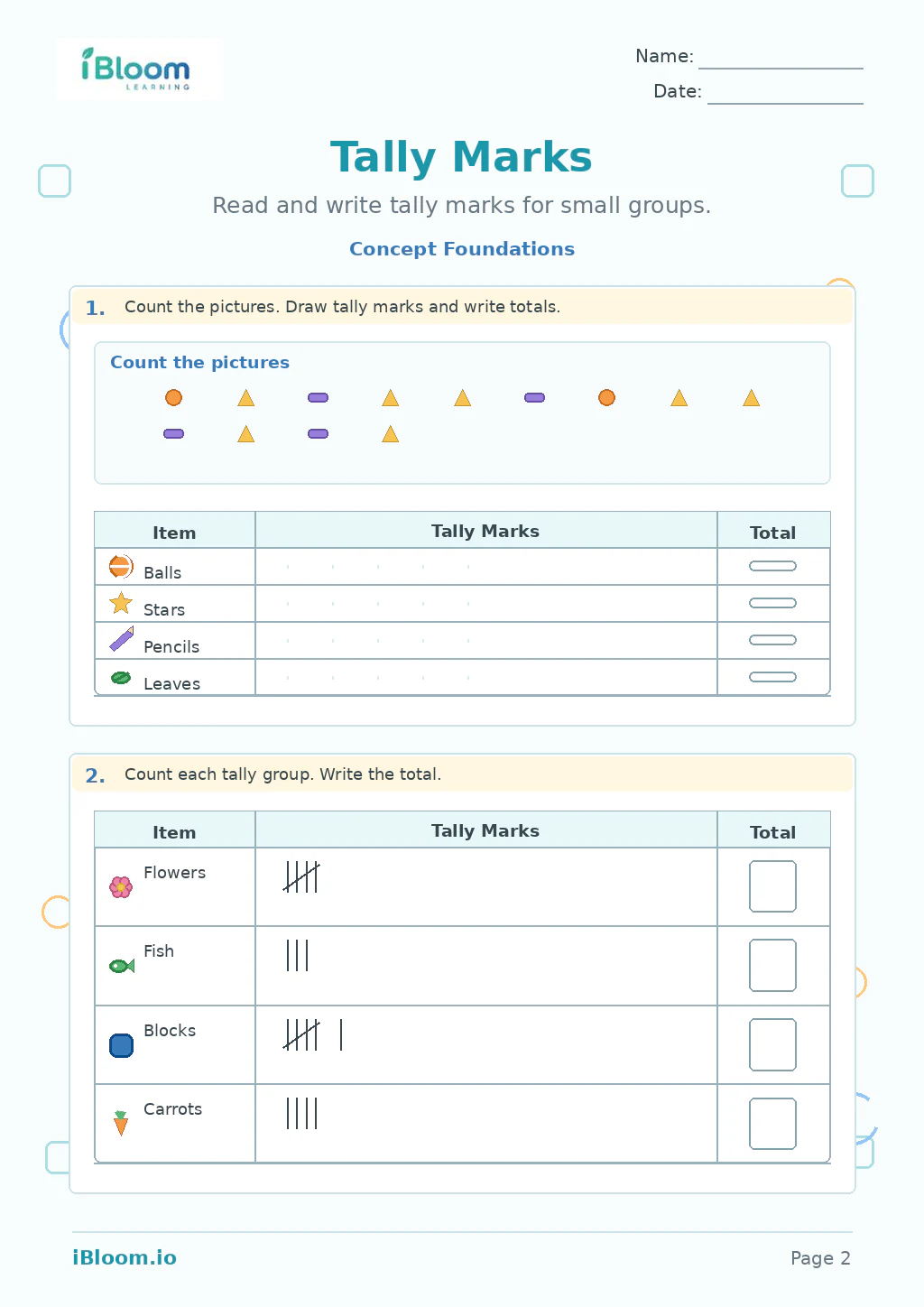
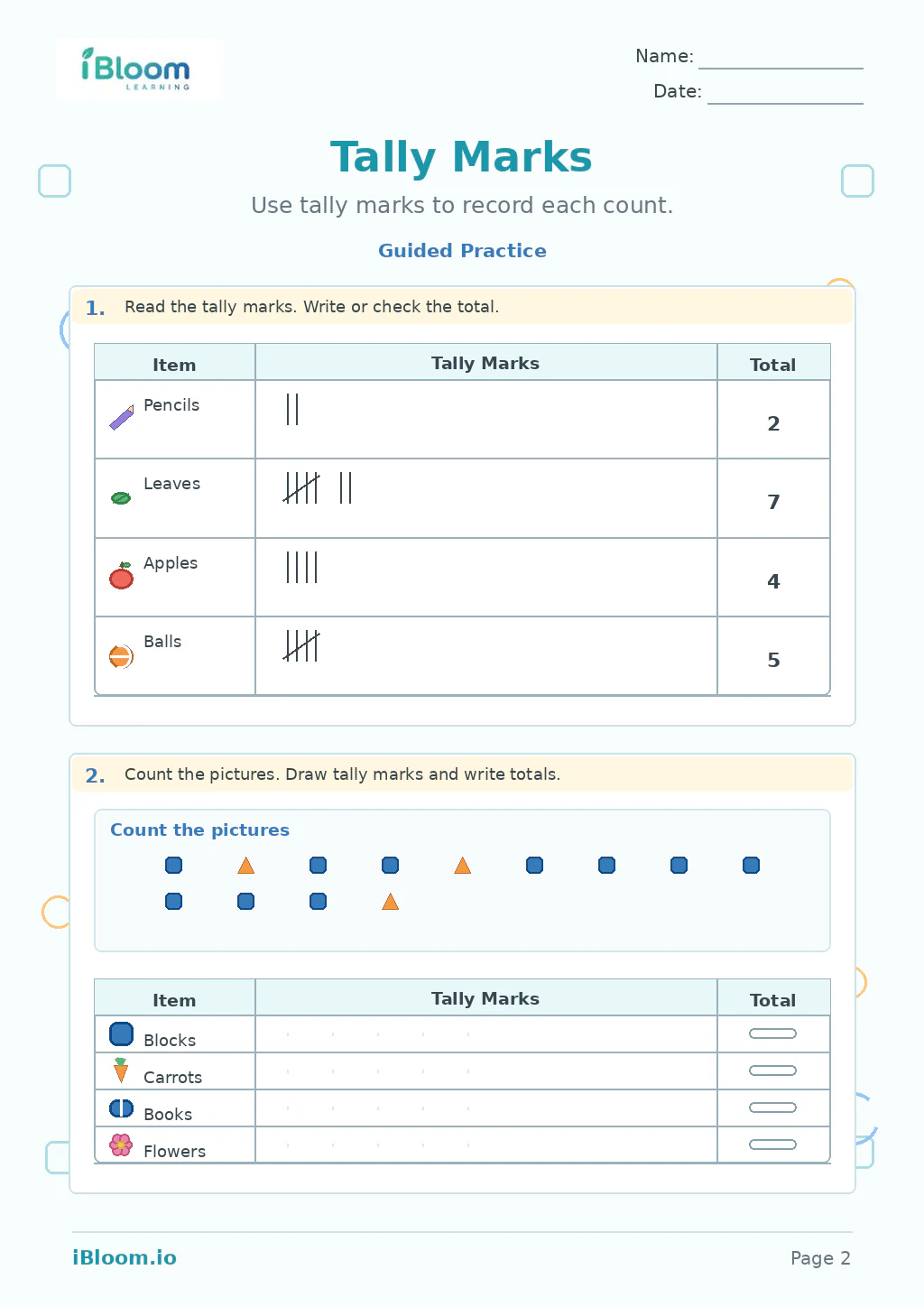
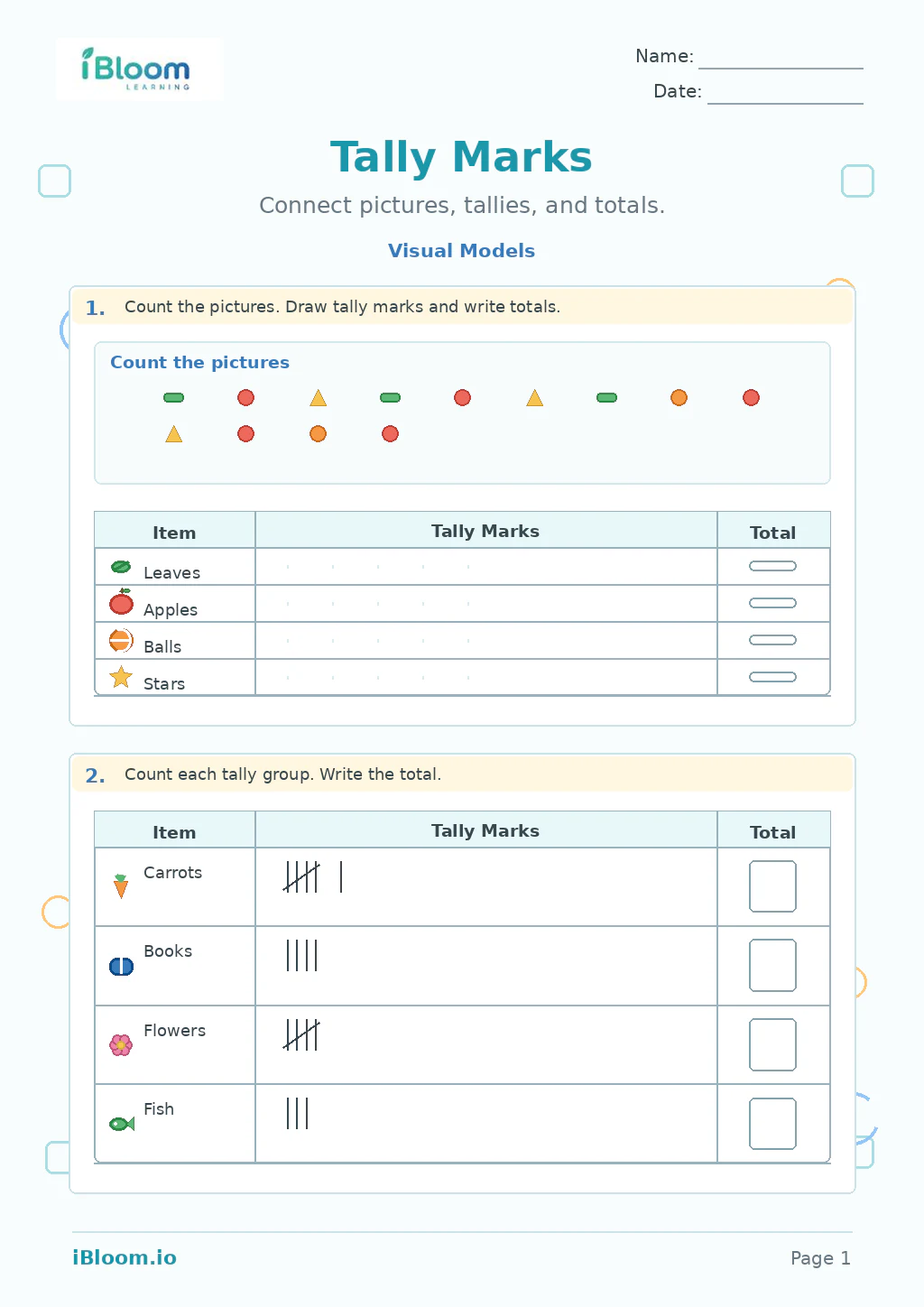
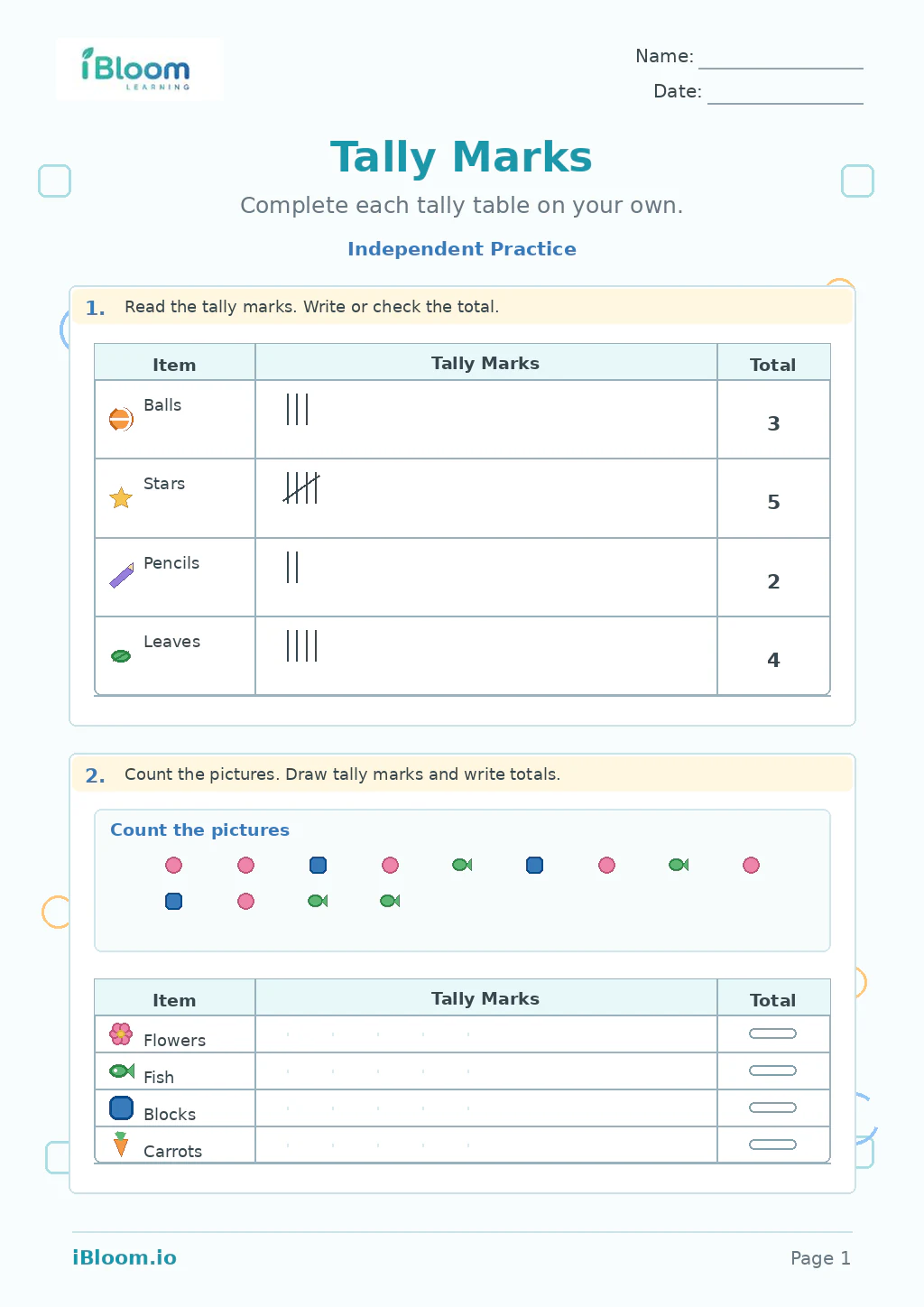
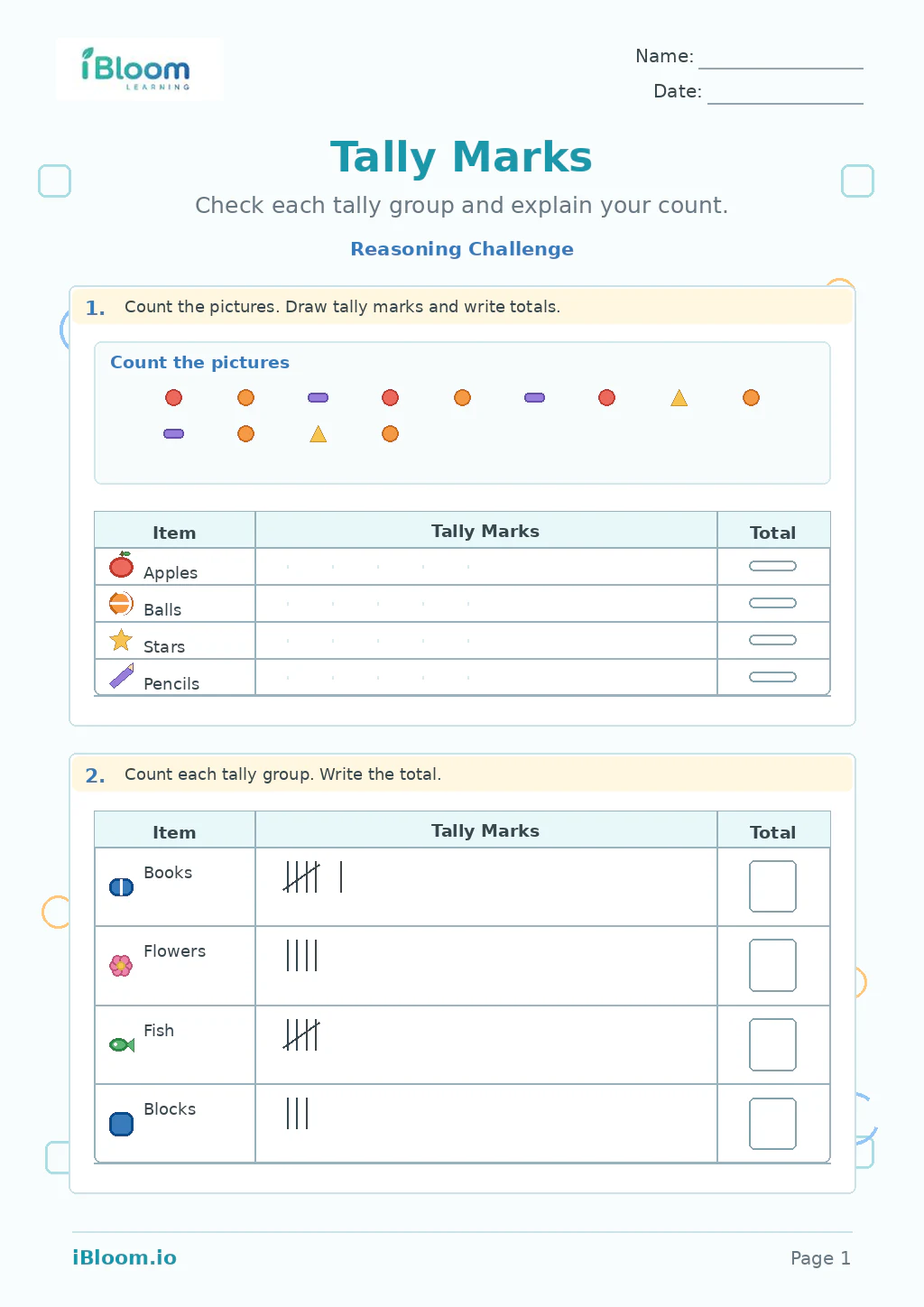
Tally marks record one item per stroke. The fifth mark crosses the first four, so a bundle stands for five. Count complete bundles first, then add the strokes left over.
- 1One bundle = 5
- 2Two extra marks = 2
- 35 + 2 = 7 apples
What real-world counts are included?
The sheet shows 16 tally drawings with short real-world labels. Students count each record and write its total; the answer key gives the matching totals.
- Part A: eight tallies from 3 to 12
- Part B: eight more records from 11 to 20
- Every question has a drawn tally to read
How can a child check a tally total?
Point to each completed bundle and say 5, 10, 15, or 20. Then count the extra marks one by one. Compare the count with the number written in the answer space. Keeping track of the bundles prevents counting every stroke from the beginning.
How to use this worksheet
- 1Find each complete crossed bundle.
- 2Say the bundle totals in fives.
- 3Count leftover strokes one at a time.
- 4Write the total for that record.
Common mistakes and quick fixes
The mistake
Counting each stroke without keeping track of bundles.
The fix
Count one bundle as five, then continue with extra strokes.
The mistake
Counting the crossing stroke as an extra mark.
The fix
The crossing stroke belongs to the group of five.
The mistake
Stopping after counting the bundles.
The fix
Look for extra tally strokes after the last complete group.
Common Core alignment
The questions focus on reading and interpreting data displays.
Read data records and answer questions about category totals.
On this sheet: Children interpret each tally record as a count of real-world items.
Show the official wordingHide the official wording
Organize, represent, and interpret data with up to three categories; ask and answer questions about the total number of data points, how many in each category, and how many more or less are in one category than in another.
What to practice next
Make more practice
Further reading
Questions parents and teachers ask
What does a group of five tally marks look like?
A tally bundle has four straight marks crossed by a fifth mark. It stands for five items. Count complete bundles by fives, then add any strokes left outside the bundles. Question 1 has one bundle and two extra marks, so it records seven apples.
How many tally marks are on question 11?
Question 11 shows 13 stars: two complete bundles make 10, and three extra marks make 13. Count bundles first, then loose marks. The answer key lists all 16 totals so children can check each tally drawing after finishing the page.
Why do some tally pictures have more than one bundle?
A bundle of five makes larger counts easier to read. Instead of recounting every stroke, children can count 5, 10, 15, and then add extra marks. The worksheet includes familiar records with totals from three through twenty, giving practice with one or more bundles.
What kinds of real-world records are on the sheet?
The tally examples record familiar items such as books, pencils, garden flowers, birds, party balloons, and cookies. Each prompt gives a real-world context, and every question has its own tally drawing for the child to read and count carefully.
Does the worksheet include an answer key?
Yes. The printable has a separate answer key with the total for every tally drawing. Children can first count each bundle and any extra strokes, then use the key to review their work and revisit any totals they want to recount.