

About this worksheet
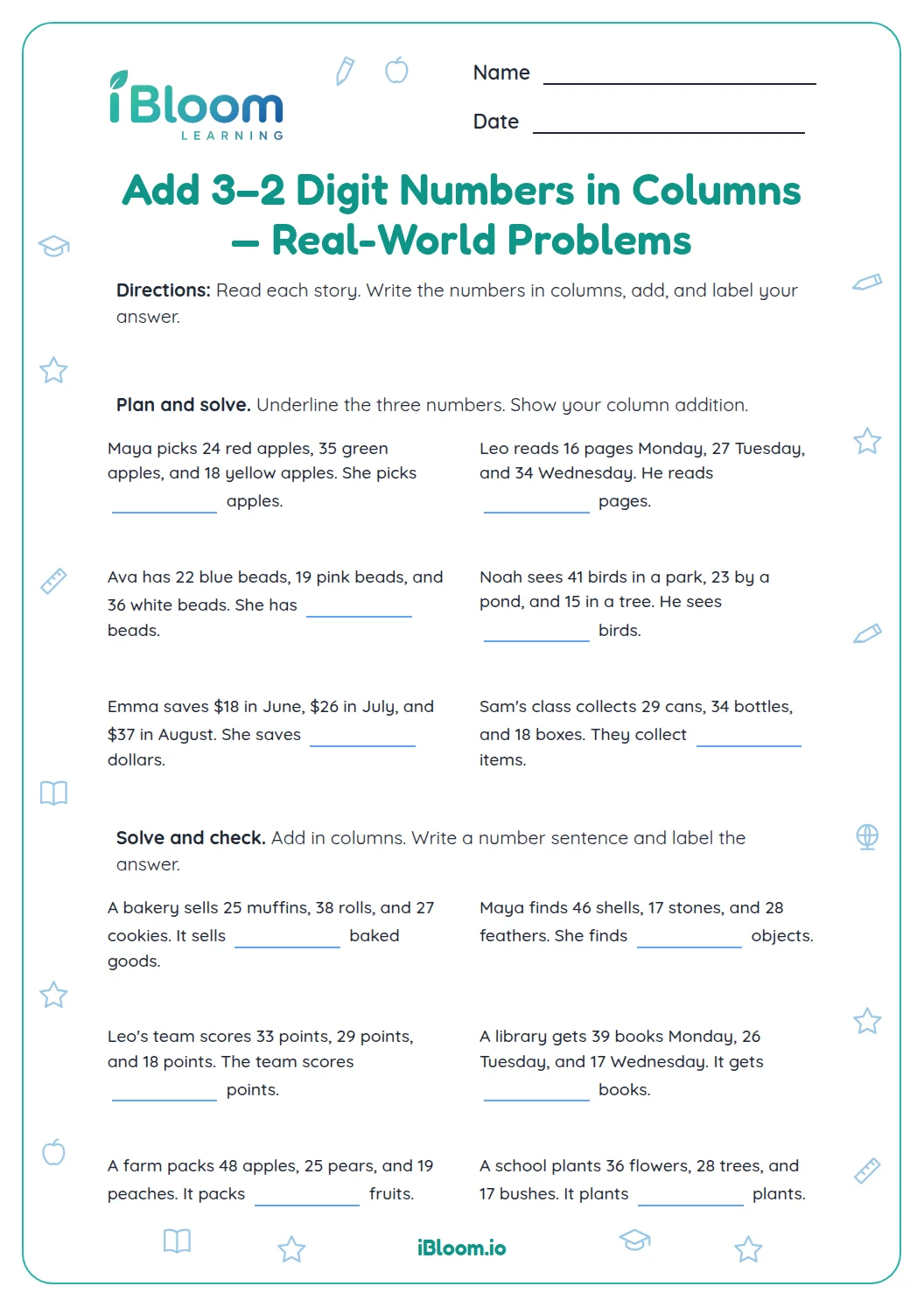
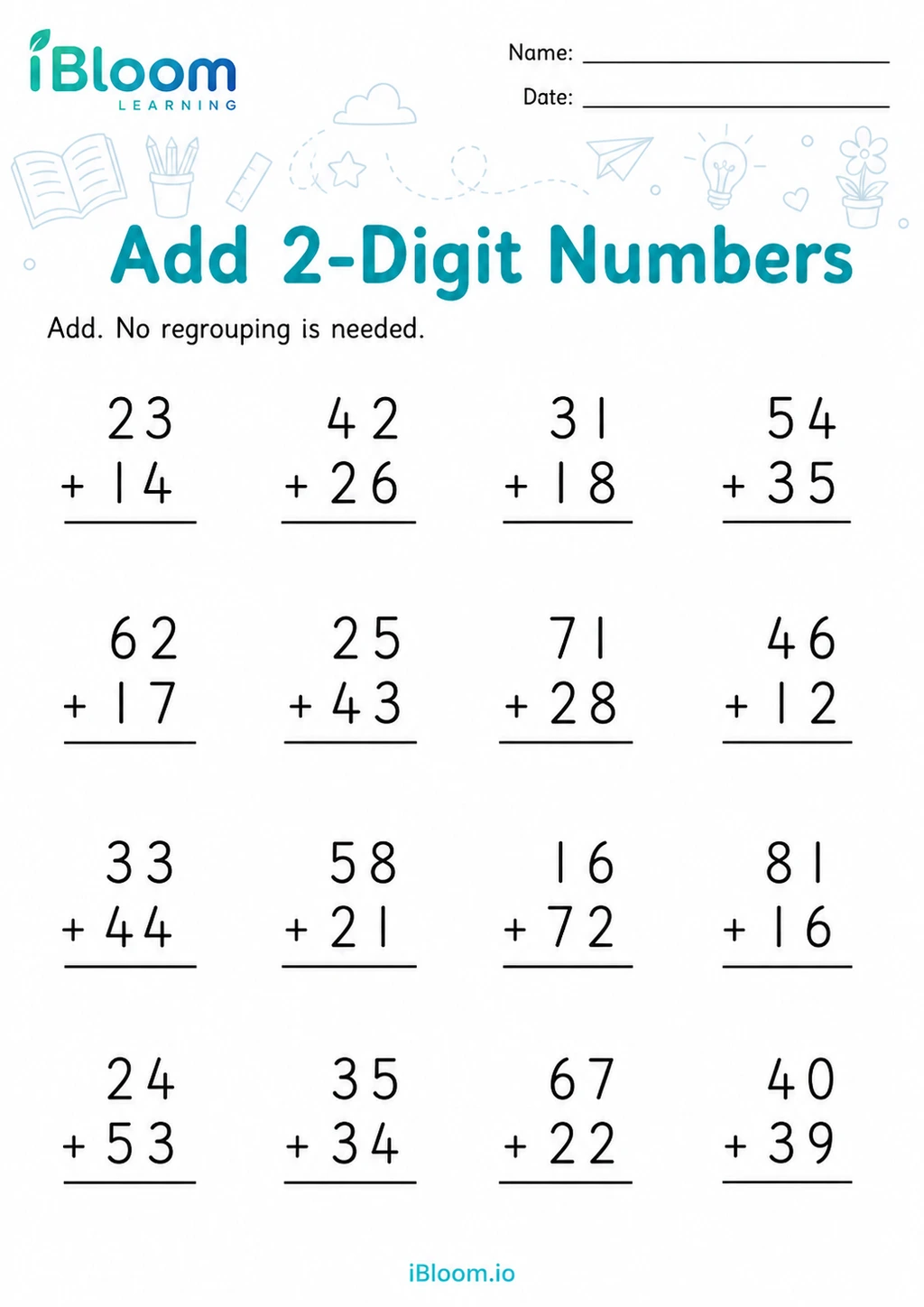
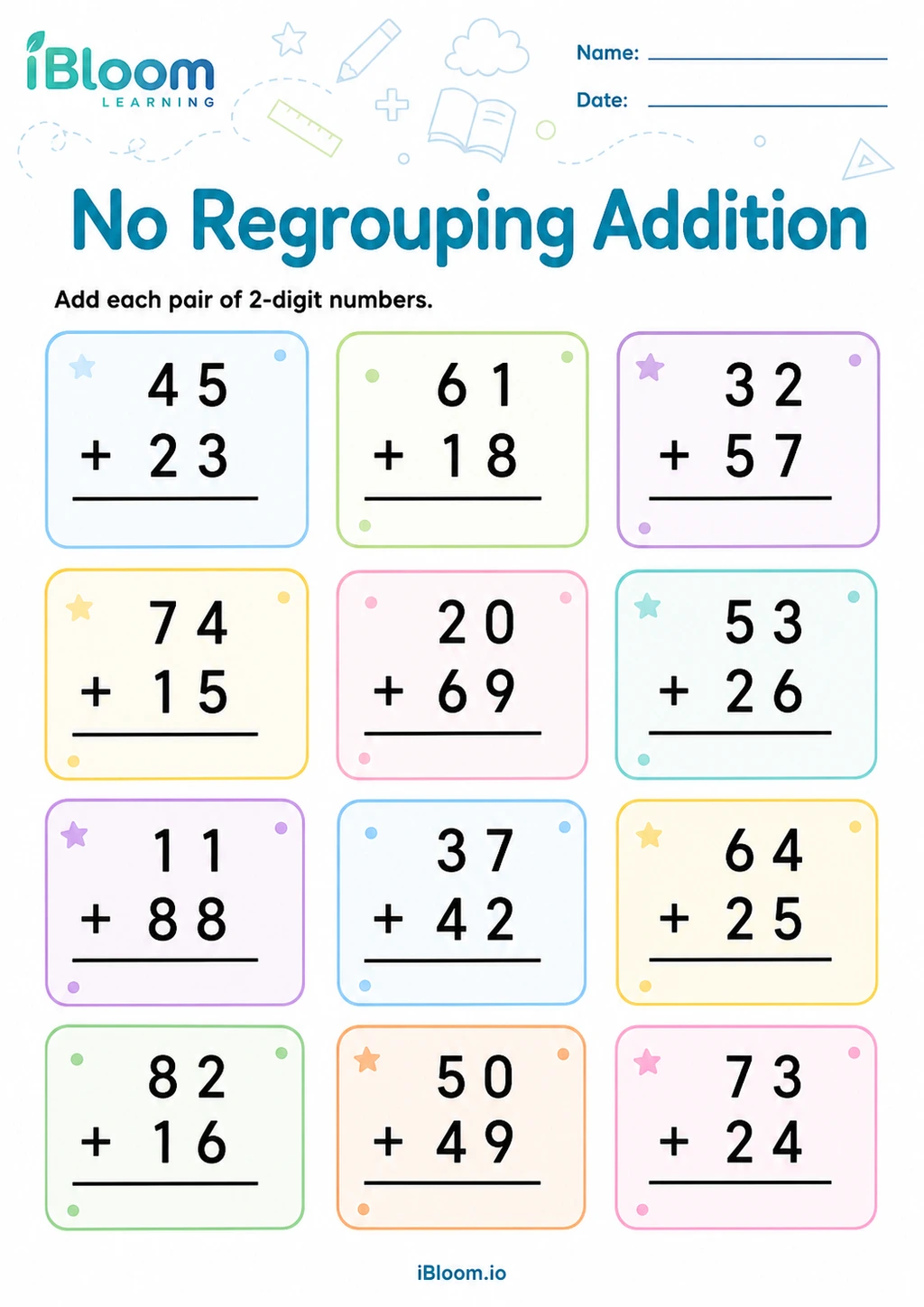
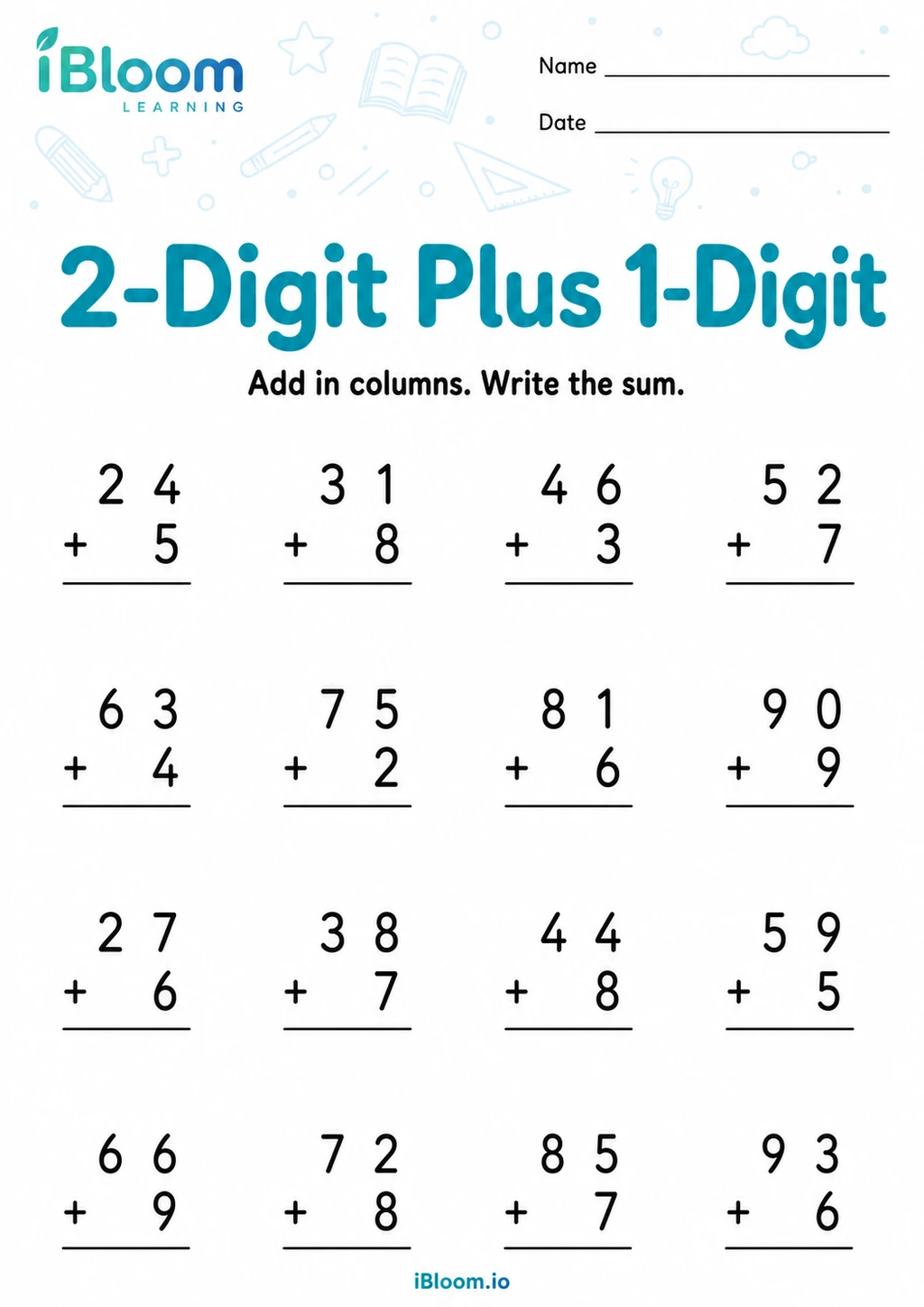
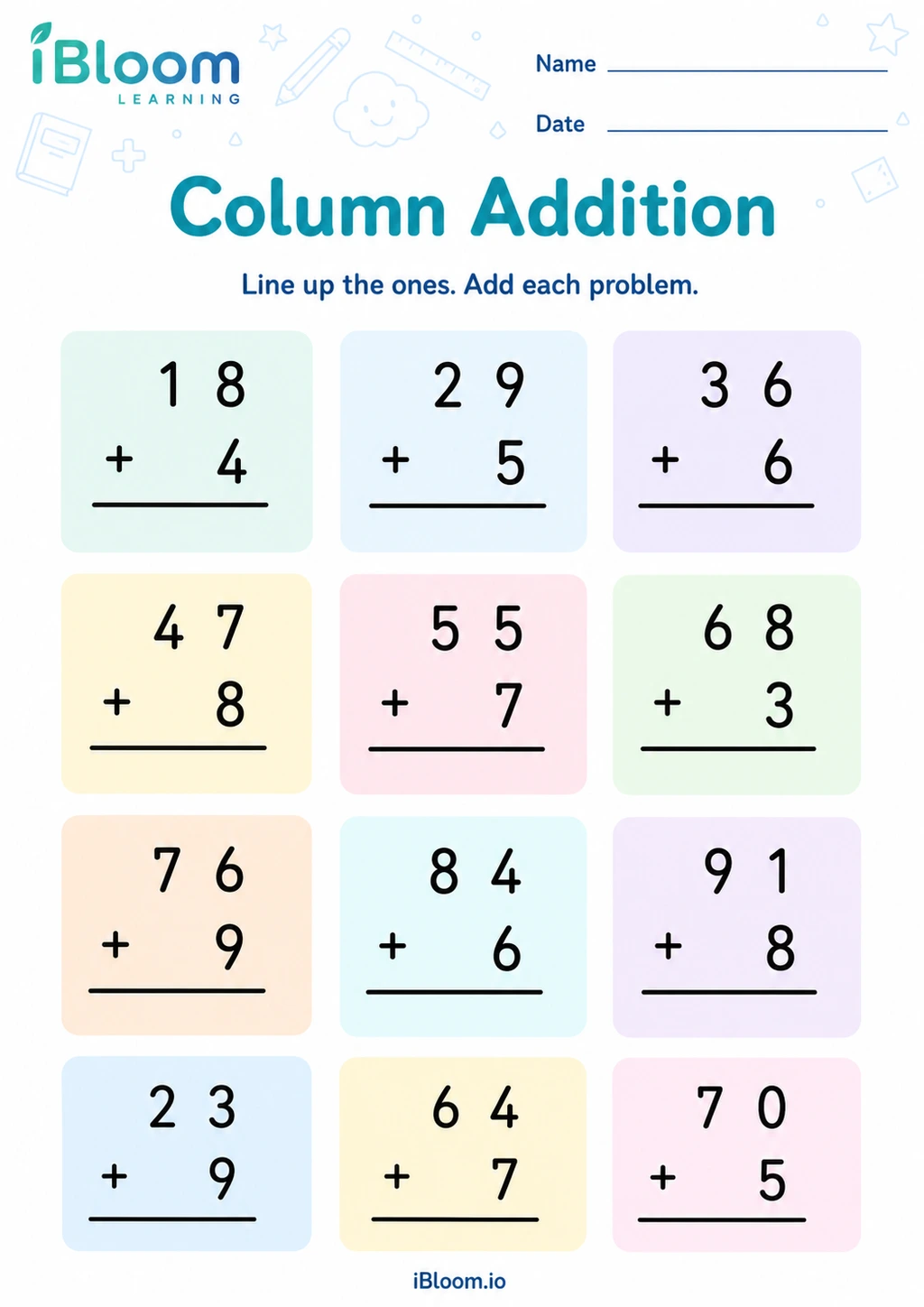
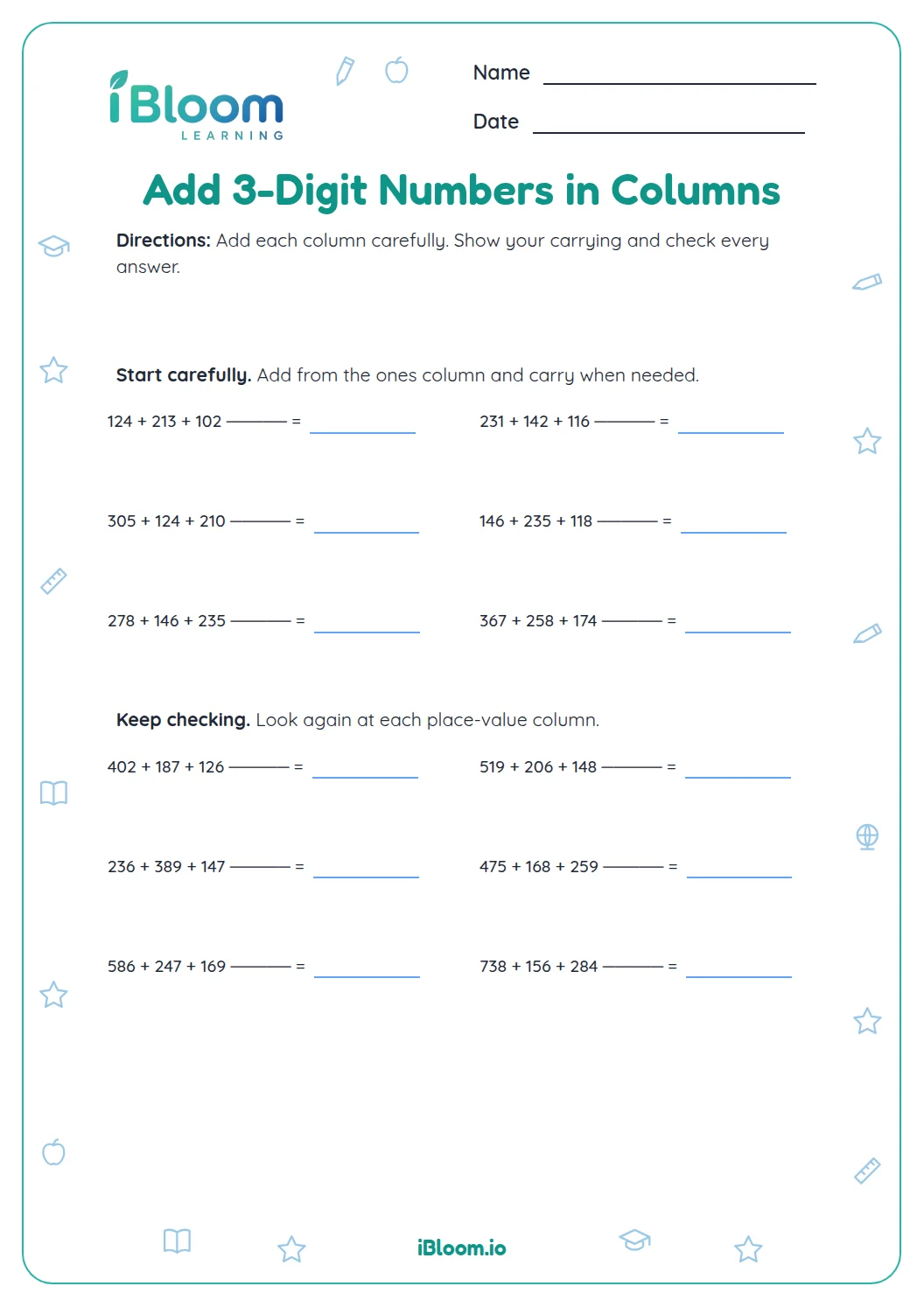
This two-page printable introduces Grade 2 students to adding three two-digit numbers in columns. Four opening questions check tens and ones, the order of the columns, regrouping and lining up addends; eight sums provide space to apply those ideas, followed by two quick totals. Every addend has a plus sign between it and the next. The sheet practices Common Core 2.NBT.B.6, with a separate answer key.
Aligned to 2.NBT.B.6
What does each digit represent?
In 57, the 5 stands for 5 tens, or 50, and the 7 stands for 7 ones. When adding several numbers, line up the tens digits and the ones digits so each column contains matching place values.
Which column should students add first?
Start with the ones column. If the ones total reaches 10 or more, write the ones digit and regroup a ten into the tens column.
- 1Ones total: 14
- 2Write 4 ones and regroup 1 ten.
How does the sheet move from ideas to sums?
Four opening questions review place value and regrouping. Eight problems ask students to add three two-digit numbers in columns, with two quick sums for a final check.
How to use this worksheet
- 1Read each digit by its place.
- 2Line up the tens and ones in all three addends.
- 3Add the ones, writing the ones digit and regrouping a ten if needed.
- 4Add the tens, including any regrouped ten.
- 5Compare the eight column-work answers, two quick totals and four checks with the key.
Common two-digit addition mistakes
The mistake
Treating the 5 in 57 as 5 ones.
The fix
Read the place: 5 tens equals 50.
The mistake
Writing 14 in the ones column.
The fix
Write 4 ones and regroup 1 ten.
The mistake
Leaving out one addend.
The fix
Count three numbers in the vertical setup before adding.
Common Core alignment
Students add three two-digit numbers in columns using place-value strategies.
Add up to four two-digit numbers using place-value strategies.
On this sheet: Students add three two-digit numbers in columns using place-value strategies.
Show the official wordingHide the official wording
Add up to four two-digit numbers using strategies based on place value and properties of operations.
What to practice next
Make more practice
Further reading
Questions parents and teachers ask
What is the value of the 5 in 57?
The 5 is in the tens place, so it represents 50. Question 1 checks that idea before the addition practice begins. In a column setup, tens digits belong together and ones digits belong together, even when the numbers have different digits.
What should a student do when the ones total is 14?
Write 4 in the ones place and regroup 1 ten into the tens column. Then add that regrouped ten with the tens digits from all three addends. The third opening question asks students to identify this step before they work through the full sums.
How many addition problems are included?
The worksheet has eight column sums, two quick totals and four short checks about place value and regrouping. Each column sum uses three two-digit addends and leaves room to show the written method. Students can use the separate key to check all 14 responses.
Why line up the ones digits?
The column layout keeps equal place values together: ones under ones and tens under tens. After lining up all three addends, start at the ones column and regroup a ten when the column total is 10 or more. This keeps the written method organized.
Is an answer key included?
Yes. The key gives answers for all four place-value checks and all 12 sums. Students should compare each result after they finish the column work, then review the ones or tens column if their total differs from the key. Use the printed examples to review the method.