

About this worksheet
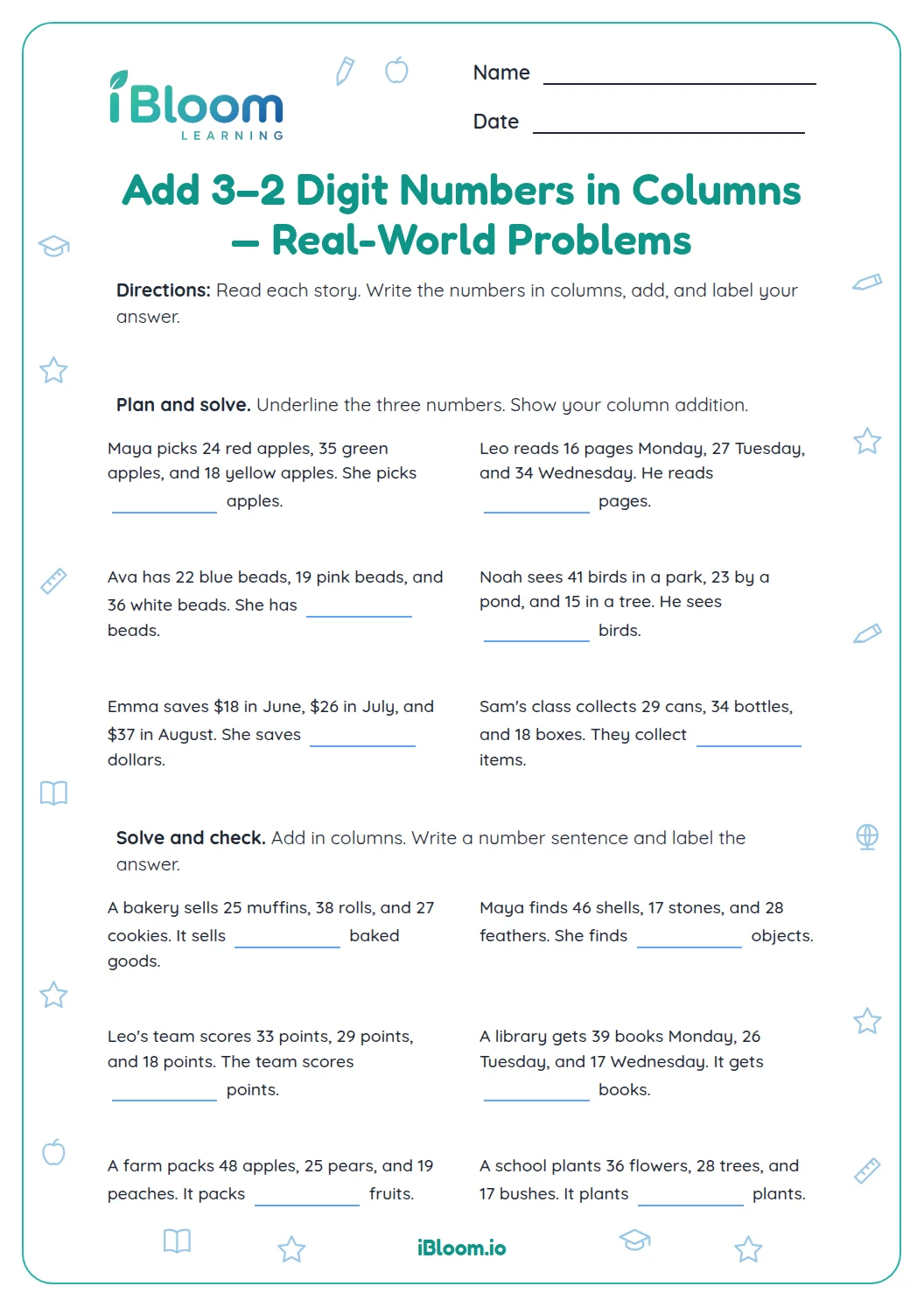
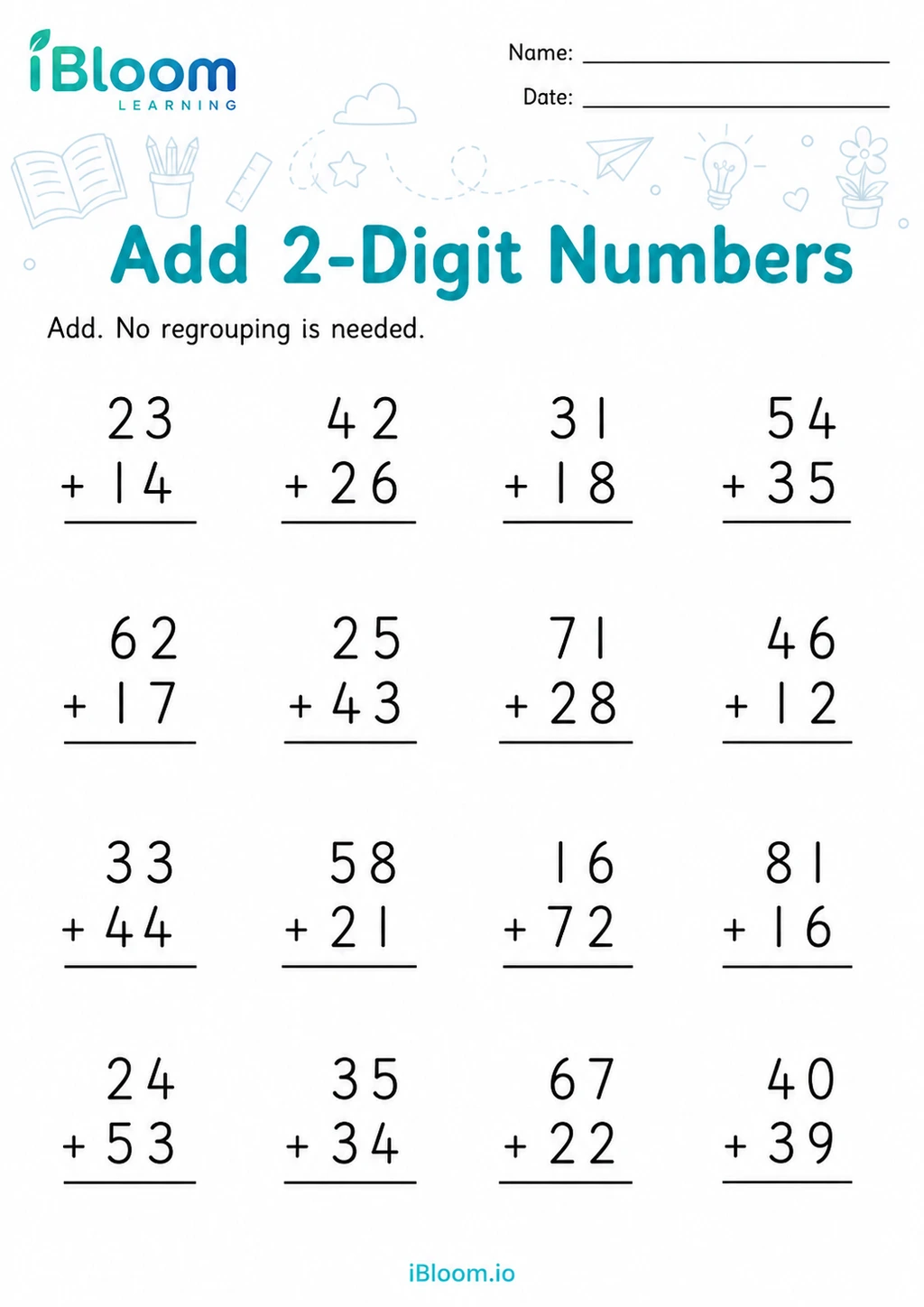
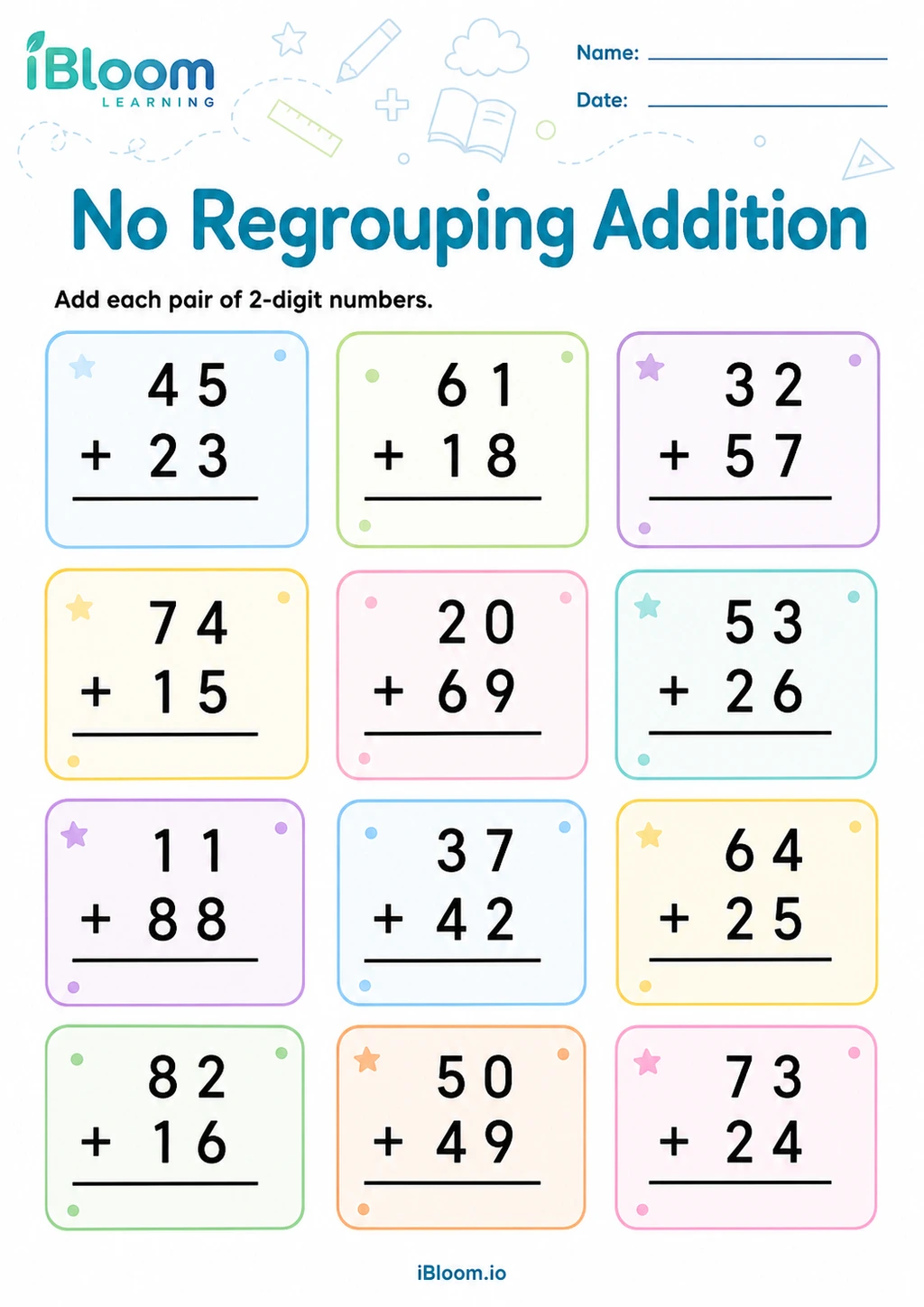
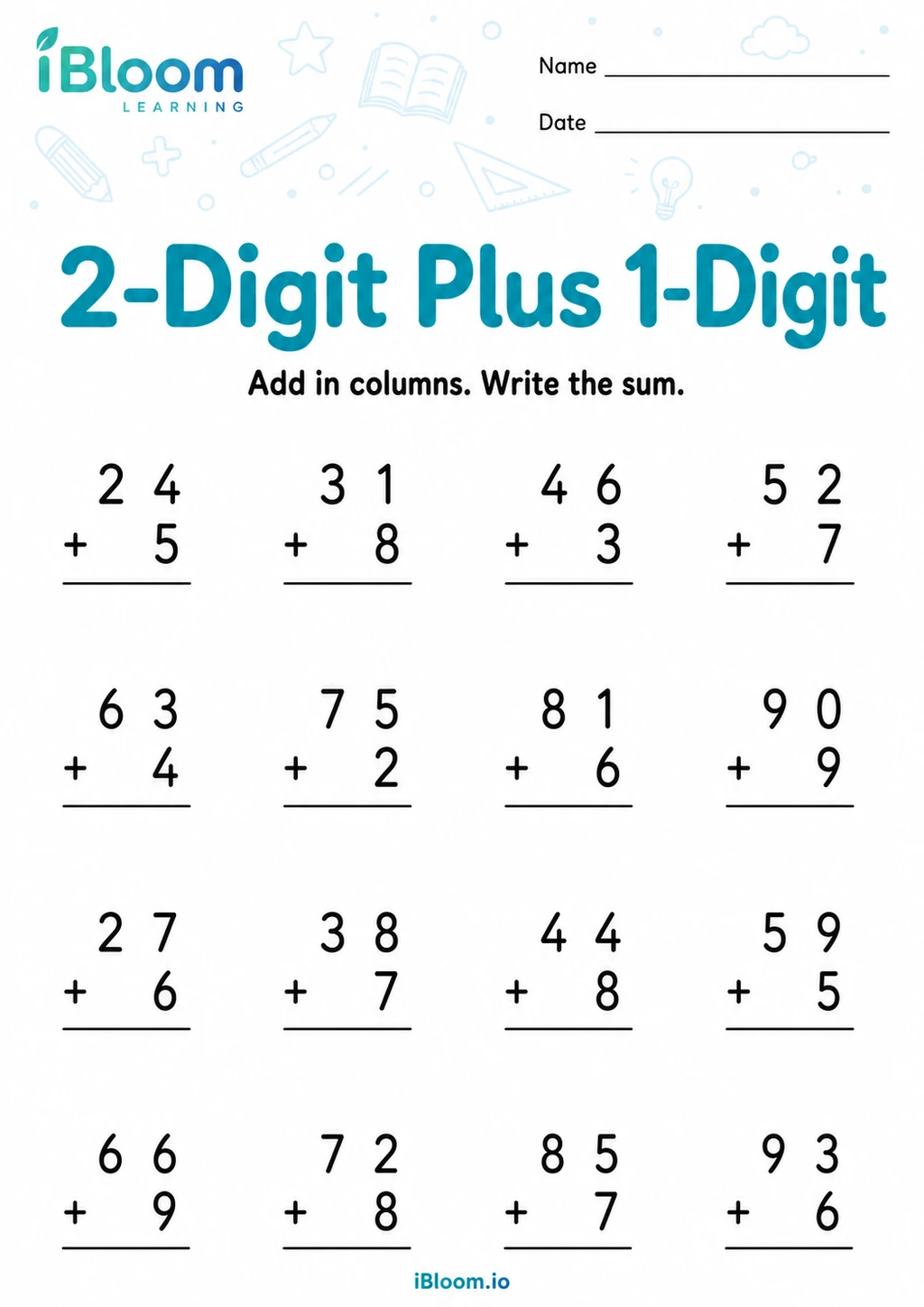
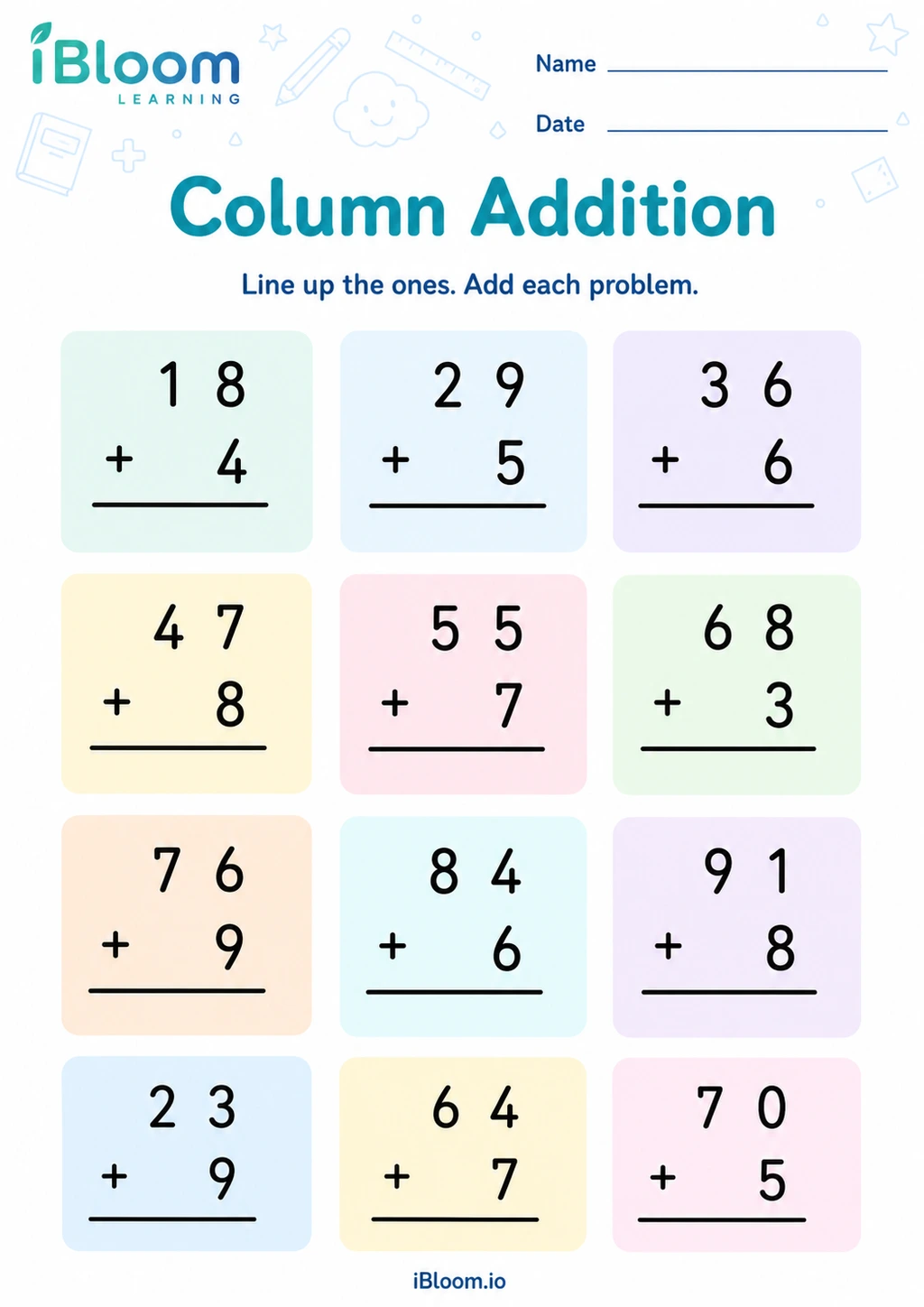
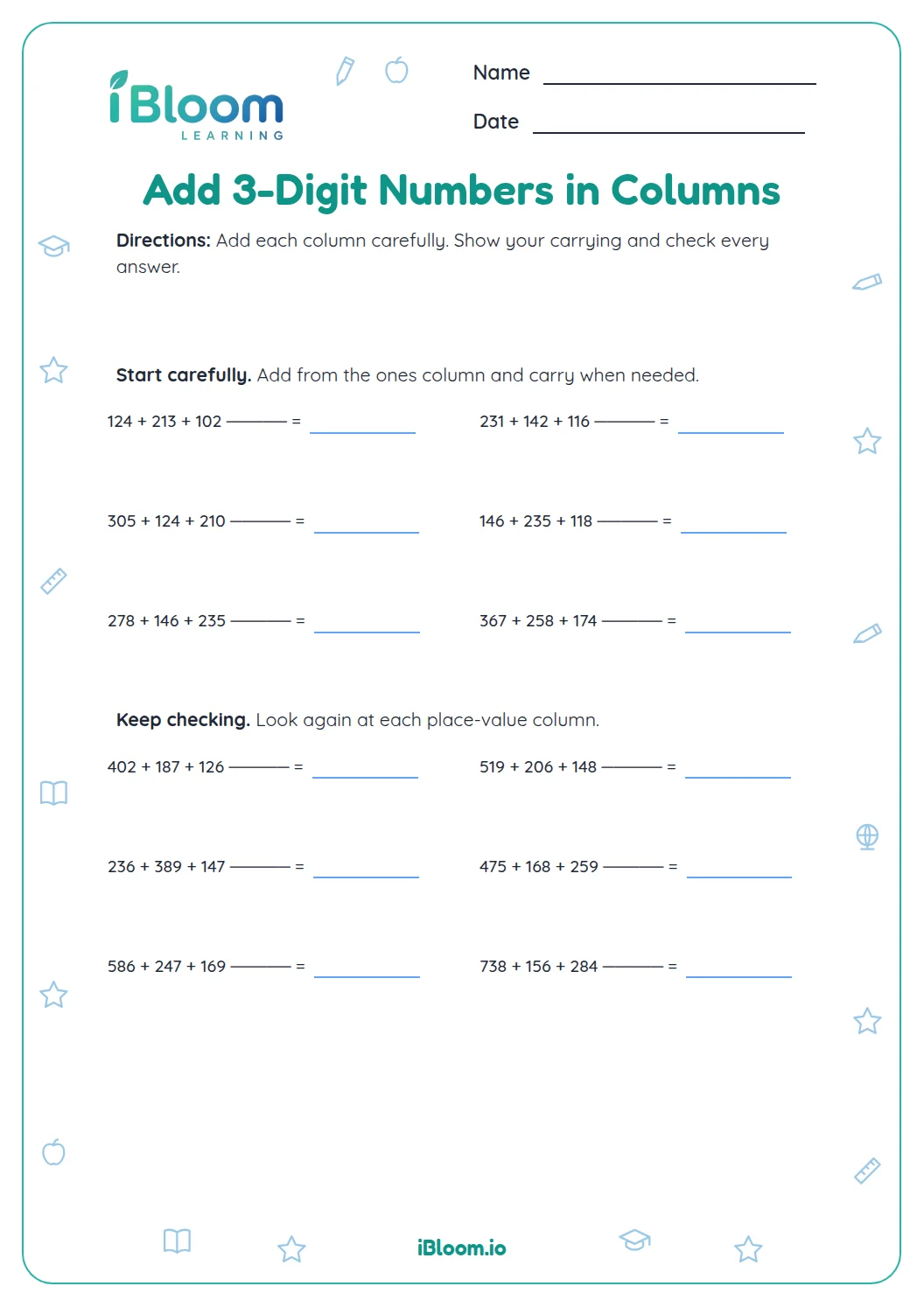
This two-page Grade 2 printable provides 14 independent problems adding three two-digit numbers. Six give room to line up tens and ones and show regrouping in columns; eight quick totals offer additional practice. Each problem shows plus signs between the addends, and a separate answer key lists every sum. The work aligns with Common Core 2.NBT.B.6.
Aligned to 2.NBT.B.6
How should students set up three addends?
For the first six problems, write one addend on each row and align the ones digits in one column and the tens digits in another. Keep a plus sign before each later addend. The remaining eight questions ask for totals.
When should students regroup?
Add the ones digits first. When their total is 10 or more, write its ones digit and carry the extra ten to the tens column.
- 147 + 26 + 18
- 27 + 6 + 8 = 21 ones
- 3Write 1 one and regroup 2 tens.
How can students check the finished sums?
Add the tens, including the regrouped tens, then compare the result with the answer key. An estimate to the nearest ten can also catch a total that is far too high or low.
How to use this worksheet
- 1Copy all three addends in a vertical setup.
- 2Line up the tens and ones.
- 3Add the ones and regroup any full tens.
- 4Add the tens, including those regrouped.
- 5Estimate and check the total in the key.
Common two-digit addition mistakes
The mistake
Adding tens to ones.
The fix
Align each digit by its place before adding.
The mistake
Forgetting a regrouped ten.
The fix
Include every regrouped ten in the tens column.
The mistake
Skipping one of the three addends.
The fix
Check that all three numbers appear in the vertical setup.
Common Core alignment
Students add three two-digit numbers in columns using place-value strategies.
Add up to four two-digit numbers using place-value strategies.
On this sheet: Students add three two-digit numbers in columns using place-value strategies.
Show the official wordingHide the official wording
Add up to four two-digit numbers using strategies based on place value and properties of operations.
What to practice next
Make more practice
Further reading
Questions parents and teachers ask
How do you line up three two-digit addends?
Write one number on each row and align the ones digits in one column and the tens digits in another. Keep a plus sign before each later addend. The worksheet provides 16 expressions, so students can focus on the column method rather than inventing their own problems.
When should a student regroup?
Regroup when the ones column totals 10 or more. Write the ones digit in that column and carry the extra ten to the tens column. In question 1, 7 + 6 + 8 makes 21 ones, so write 1 and regroup 2 tens.
How many problems are on the sheet?
There are 14 independent sums, and each one has three two-digit addends. Six problems leave space to show the column setup and regrouping, while eight ask for a quick total. A separate answer key lists the result for every question.
Can students estimate before checking?
Yes. Round each addend to the nearest ten and add those rounded values for a quick check. The estimate will not match exactly, but it should be close to the written total. A large difference can point to a missed addend or regrouping step.
Does the answer key include all 16 totals?
Yes. It lists each sum’s result in question order. After finishing the work, students can compare each answer and revisit the ones and tens columns when a total does not match. The key supports checking without replacing the column method.