




About this worksheet
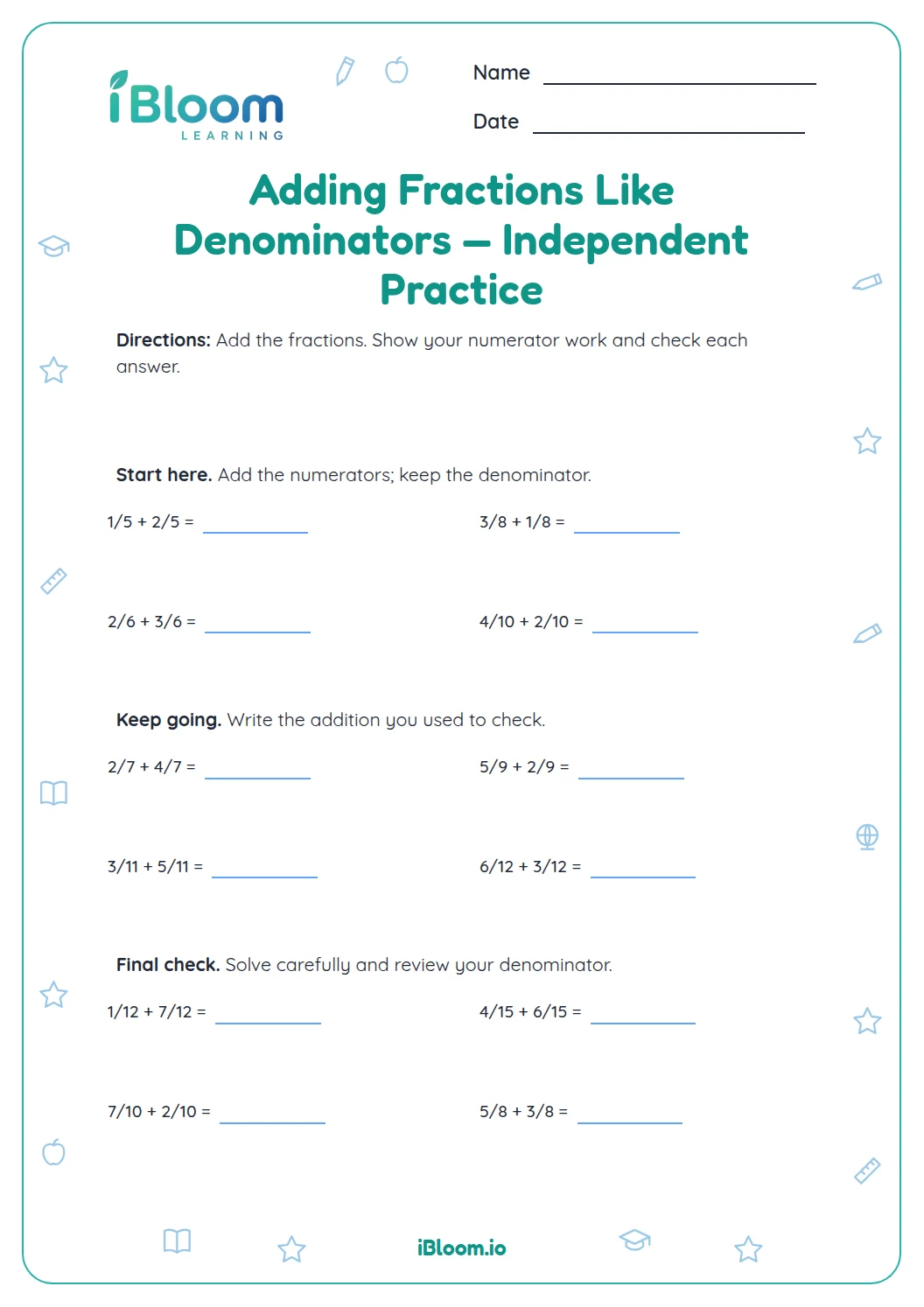
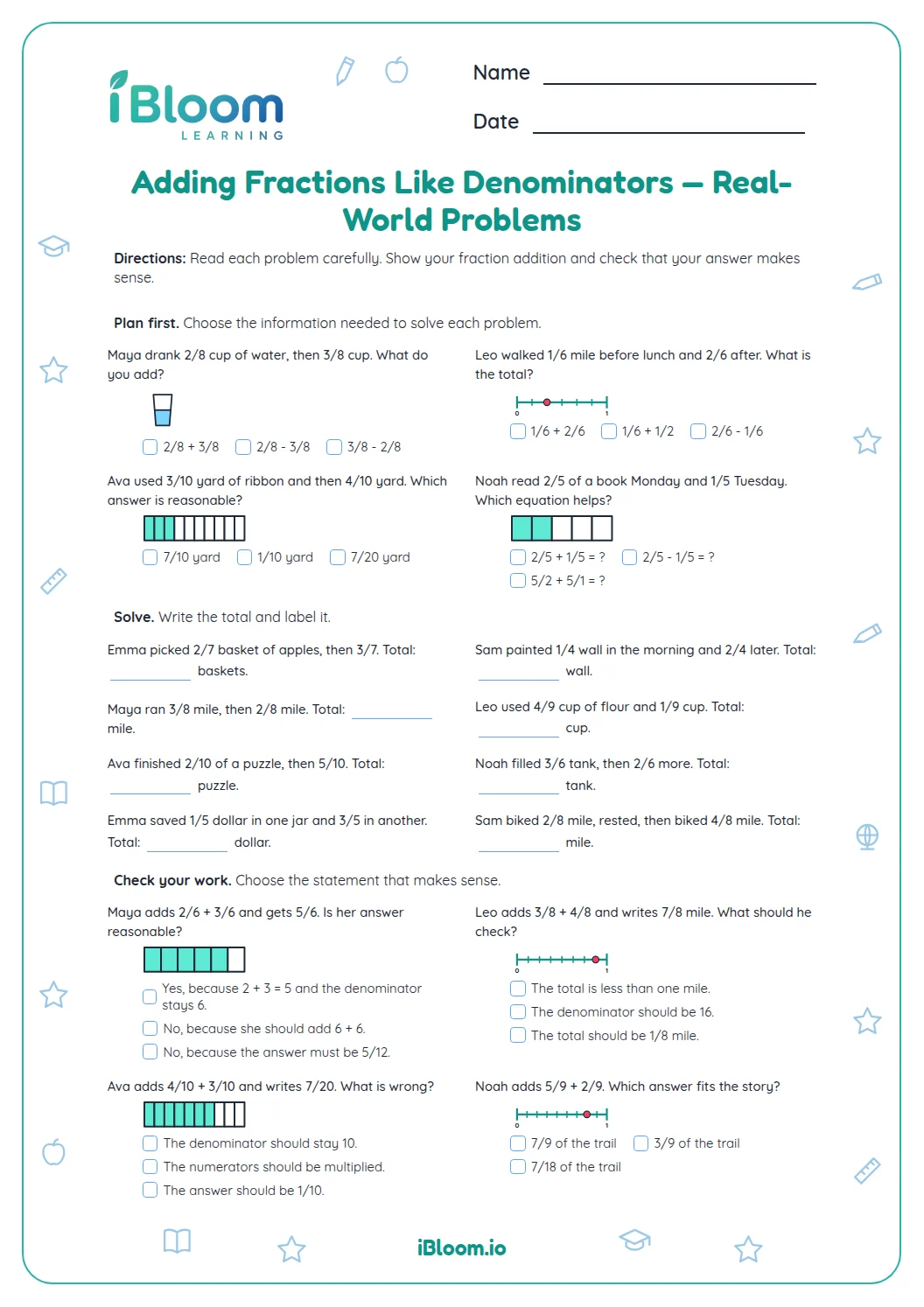
This Grade 3 printable practices adding fractions with like denominators using shaded bars and circles. Each of the 14 problems gives a real starting fraction in the prompt and model, then asks students to add equal-sized pieces. The answer key lists every sum.
Aligned to 4.NF.B.3.a
How do shaded models show fractions?
A fraction model is divided into equal parts. The shaded parts show the first fraction in each problem. For example, a bar with 2 of 6 equal pieces shaded represents 2/6.
How do I add fractions with matching denominators?
When the pieces are the same size, add the number of pieces and keep the denominator. For example, 2/6 + 3/6 = 5/6. The denominator stays 6 because the whole is still divided into sixths.
What does the worksheet include?
The printable has 14 questions in 3 parts, followed by a separate answer key.
How to add like denominators
- 1Count the equal pieces in the whole to identify the denominator.
- 2Count the shaded pieces to read the starting fraction.
- 3Add the numerator of the second fraction.
- 4Keep the common denominator in the sum.
- 5Check that the answer shows the total number of shaded-size pieces.
Fraction checks
The mistake
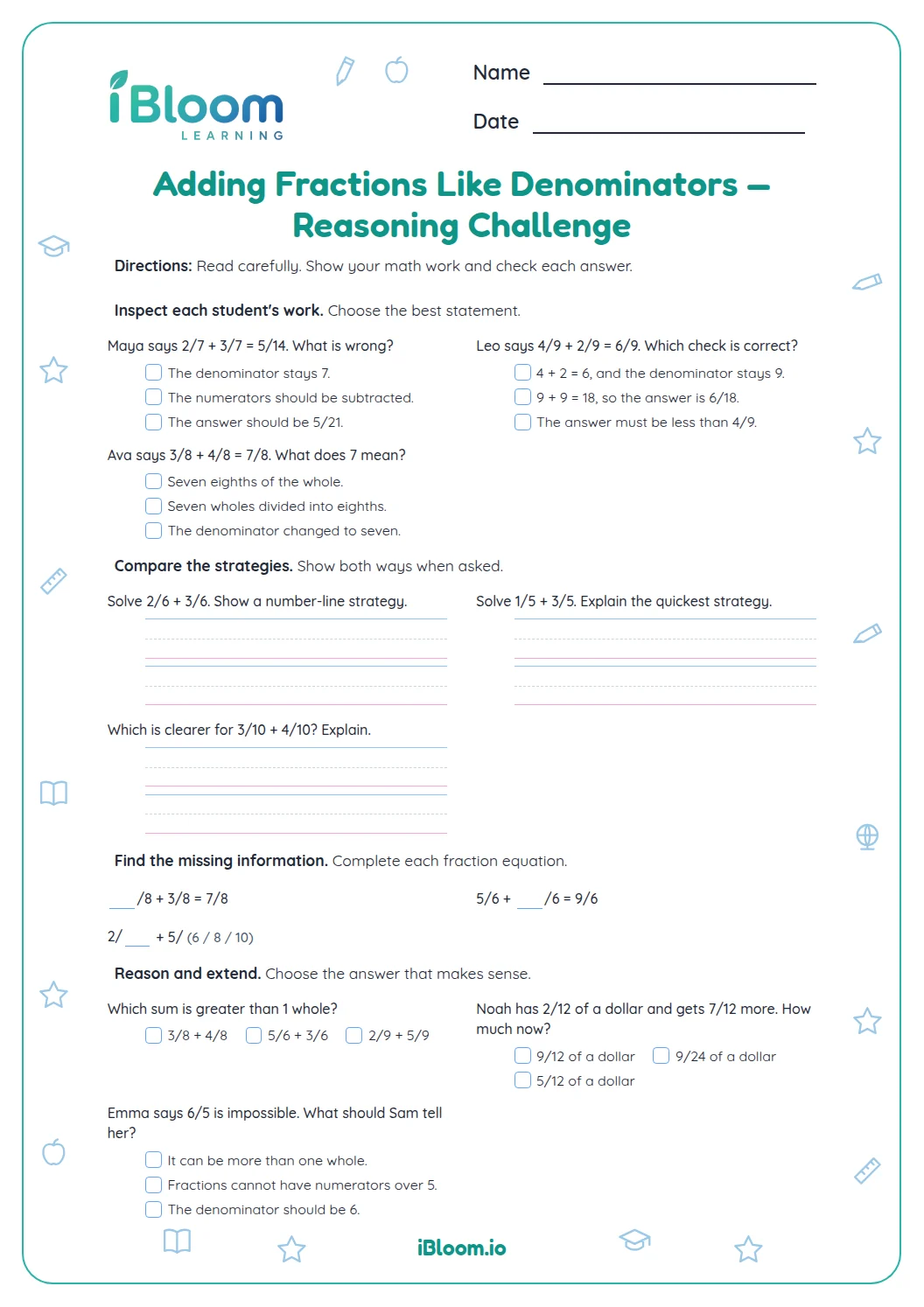
Adding the denominators as well as the numerators.
The fix
Keep the common denominator because the pieces stay the same size.
The mistake
Reading the total number of parts as the shaded amount.
The fix
Count only the shaded pieces for the numerator.
The mistake
Changing the whole when adding more pieces.
The fix
The whole remains split into the same number of equal parts.
Common Core alignment
This worksheet practices the following Common Core skill.
Understand fraction addition as joining parts of the same whole.
On this sheet: Students join fractional parts with the same denominator, matching the named skill.
Show the official wordingHide the official wording
Understand addition and subtraction of fractions as joining and separating parts referring to the same whole.
What to practice next
Make more practice
Further reading
Questions parents and teachers ask
What does the denominator tell me?
The denominator tells how many equal pieces make one whole. In 3/8, the whole is divided into eight equal pieces, and the numerator counts three of them. The model makes those equal pieces easy to see. Each model uses equal parts.
How do I add fractions with like denominators?
Add the numerators and keep the shared denominator. For example, 2/8 plus 3/8 equals 5/8 because the pieces are all eighths. The denominator stays the same because each part has the same size. Count how many equal pieces are joined.
What does the shaded part show?
The shaded bar or circle shows the first fraction in the problem. Count the shaded pieces for its numerator and all equal pieces for its denominator. Then add the second fraction shown in the prompt. The drawings are labeled with the same values.
Why does the denominator stay the same?
The size of each piece does not change when you join more pieces. If both fractions use eighths, the total is still counted in eighths. Only the number of pieces changes when you add them. Only the total count of parts changes.
Is an answer key included?
Yes. A separate answer key lists each sum for all 14 questions. Students can compare the numerator and denominator after completing the worksheet, then look back at the model to check the parts. The models let students check their written sums.