
About this worksheet
This Grade 4 worksheet gives students 14 real-world addition problems, each built from four four-digit addends. Students organize each set in columns, regroup across place values, and check the total. It practices CCSS 4.NBT.B.4 with a separate answer key.
Aligned to 4.NBT.B.4
What should line up in each problem?
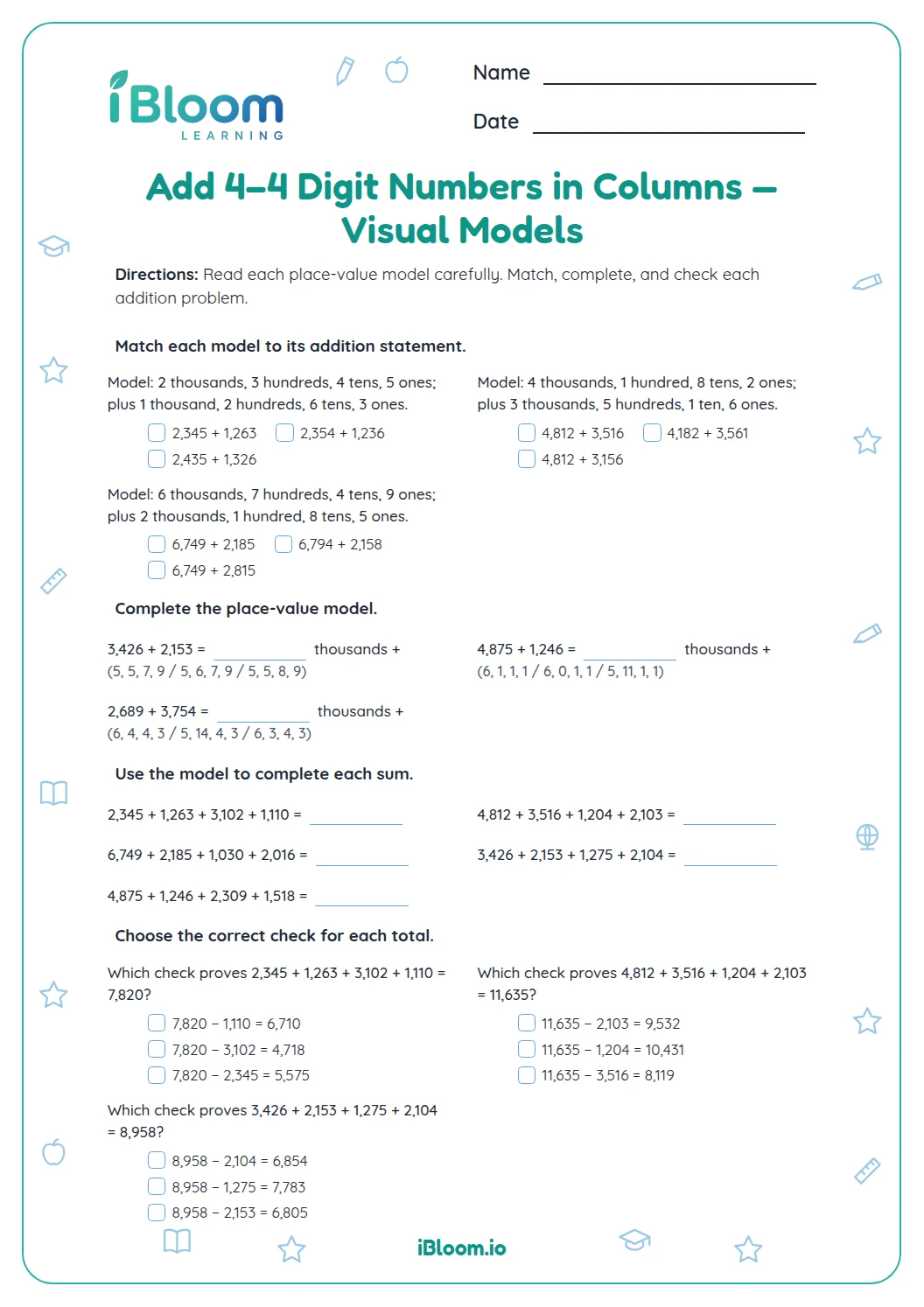
Each story gives four four-digit amounts. For question 1, align the ones digits in 1,284 + 2,357 + 1,906 + 3,142 vertically, then add from right to left.
How does regrouping keep the sum accurate?
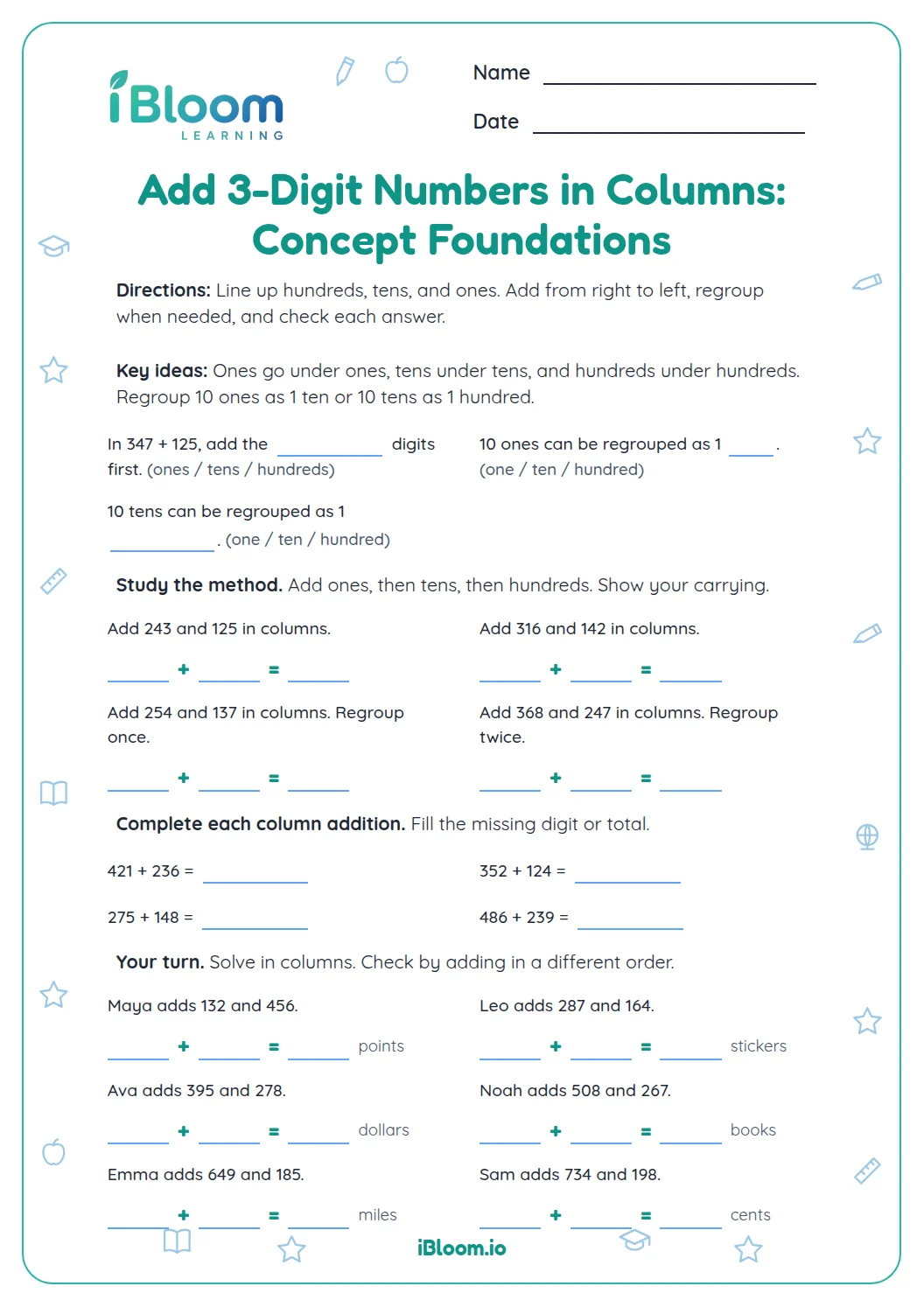
Add the ones first. Exchange each group of ten for one in the next place, then add the tens, hundreds, and thousands if present.
How can students check a total?
Estimate the four amounts to see whether the total is reasonable. Then add the numbers again by a different grouping or check each column from right to left.
How can I use this worksheet?
- 1Read the story and identify all four amounts.
- 2Write each addend on its own line.
- 3Align the ones digits, then the tens, hundreds, and thousands.
- 4Add from right to left, regrouping whenever a column totals ten or more.
- 5Estimate the total and compare it with your exact sum.
Common mistakes and quick fixes
The mistake
Shifting a number one place to the left or right.
The fix
Check that every ones digit is in the ones column before adding.
The mistake
Forgetting to carry a regrouped ten into the next column.
The fix
Write the carry above the next place and include it in that column.
The mistake
Adding only two or three of the four amounts.
The fix
Count the four rows of addends before finding the final total.
This sheet gives students practice with the stated Common Core skill.
Add four multi-digit addends accurately with the standard algorithm.
On this sheet:
Show the official wordingHide the official wording
Fluently add and subtract multi-digit whole numbers using the standard algorithm.
What to practice next
Make more practice
Further reading
Questions parents and teachers ask
Why use column addition for four addends?
Columns keep matching place values together while students add the ones, tens, hundreds, and thousands. Each of the 14 stories gives four amounts, and the separate key lists one total for every problem. Students regroup as needed in each place-value column.
Should every addend have a plus sign?
Yes. Each printed expression uses a plus sign between the four addends, and students should copy all four numbers into aligned columns. Then they add ones, tens, hundreds, and thousands as needed, regrouping when a column totals ten or more.
What grade is this worksheet for?
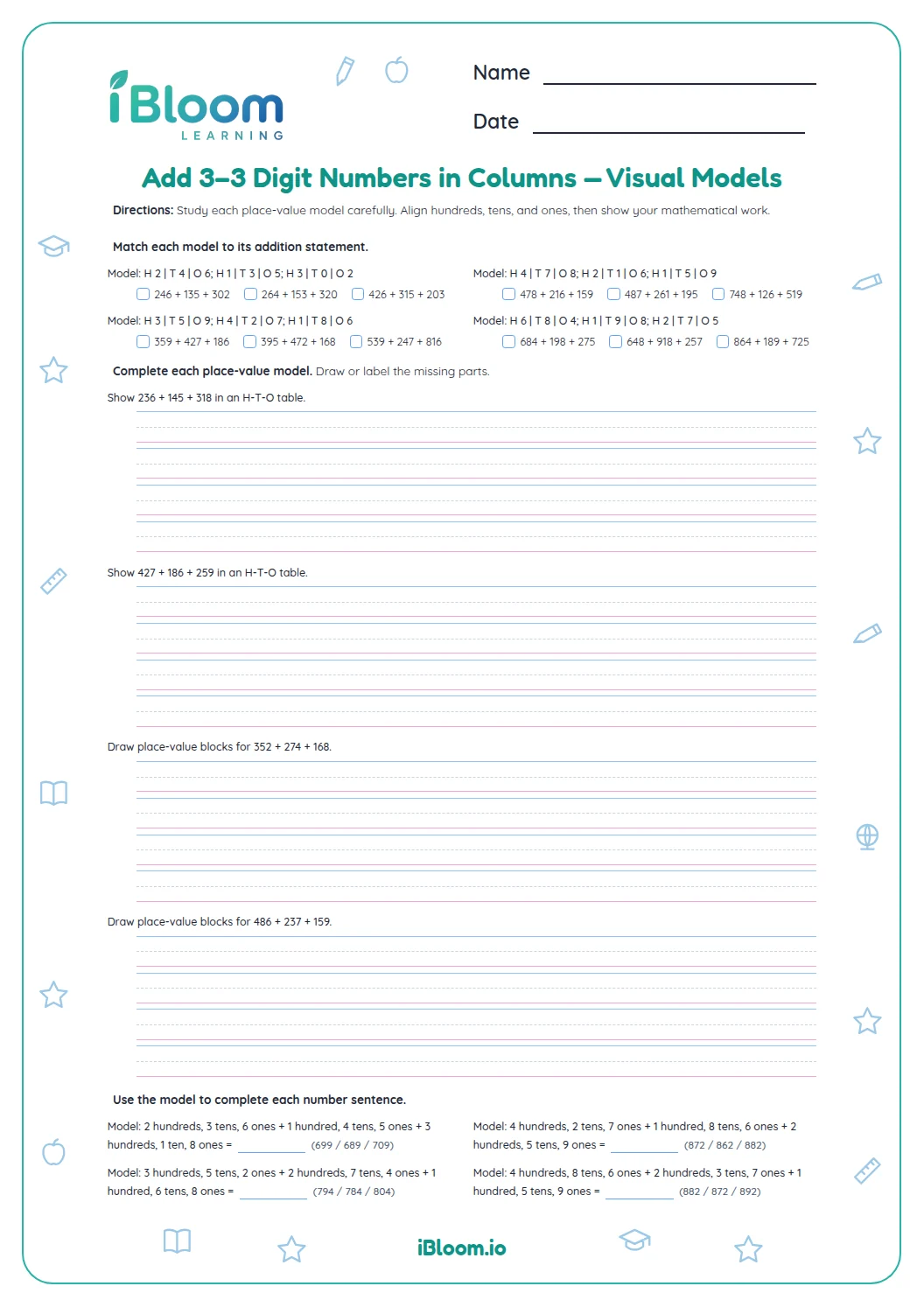
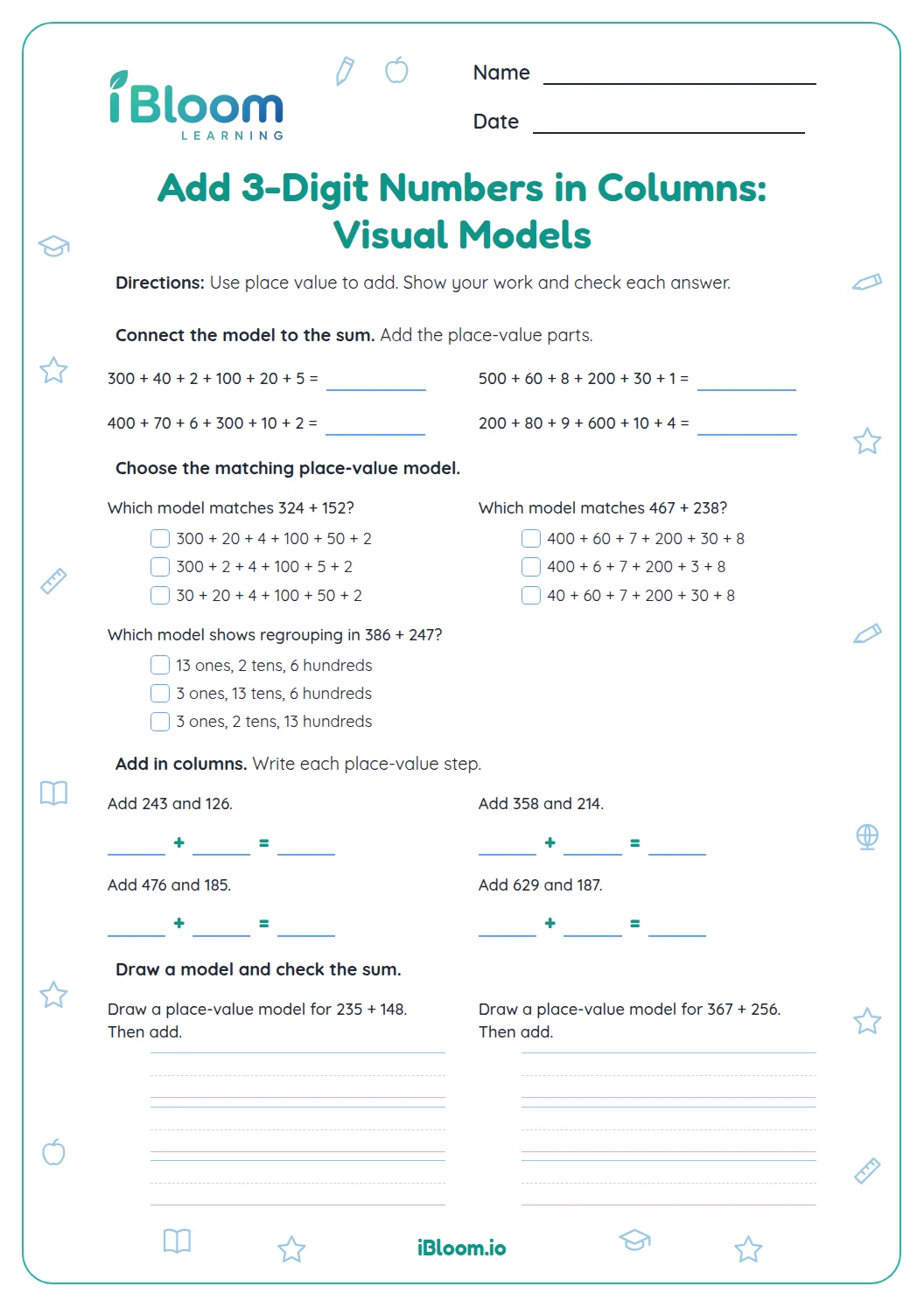
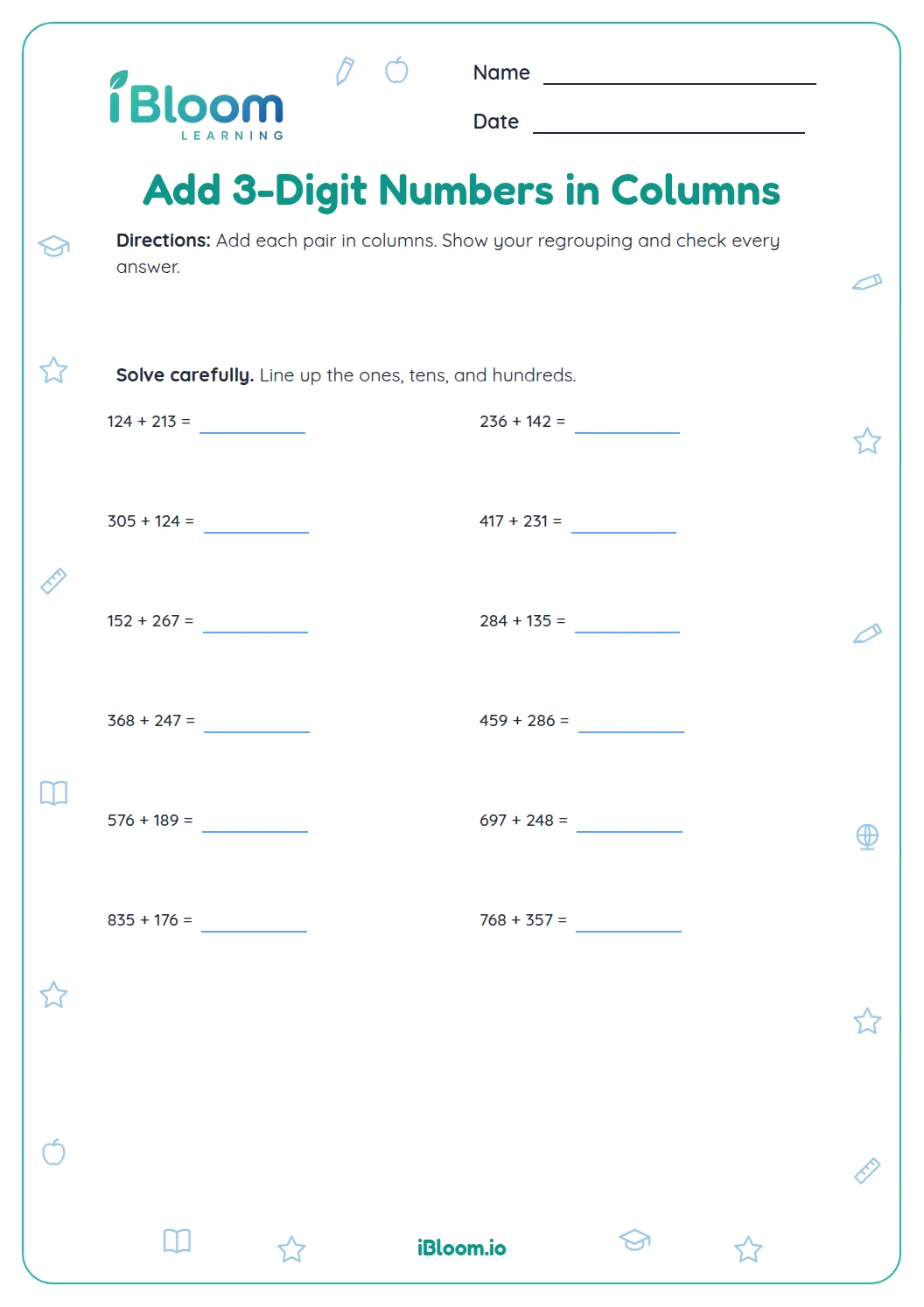
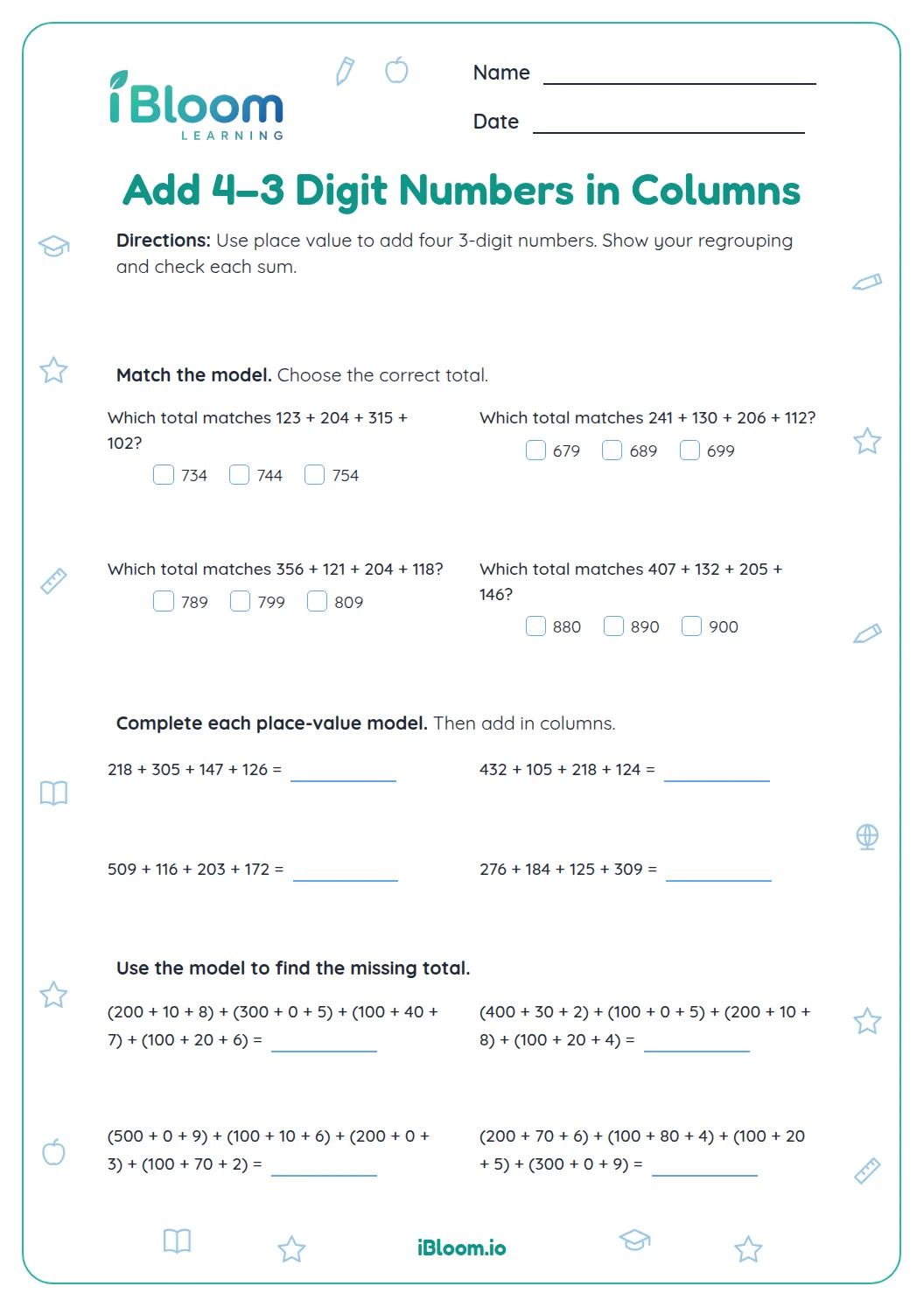
This page is designed for Grade 4 students practicing multi-digit addition with the standard algorithm. The three-digit version uses four three-digit addends in each story; the four-digit version uses four four-digit addends in every story. Each item has room for column work.
How can a student check the answer?
Estimate each amount to the nearest hundred or thousand, then see whether the exact sum is close to that estimate. The student can also add the numbers again by pairing different addends, or check the regrouping one column at a time.
Is an answer key included?
Yes. A separate answer key lists all 14 totals. Students can compare each total after showing their column work, which makes a regrouping error easier to locate and correct. Check each place-value column before copying the final sum, including the ones and tens.