Free printable practice
Social Emotional Practice Activities
Printable social emotional activities for Nursery, LKG and UKG children to practise manners, emotions, friendship, self-control and awareness.
Explore Social Emotional
Free printable worksheet PDFs
Preview every available page, then download the free worksheet PDF for home, homeschool, tutoring, or classroom practice.
Preview the exact activity before downloading it.
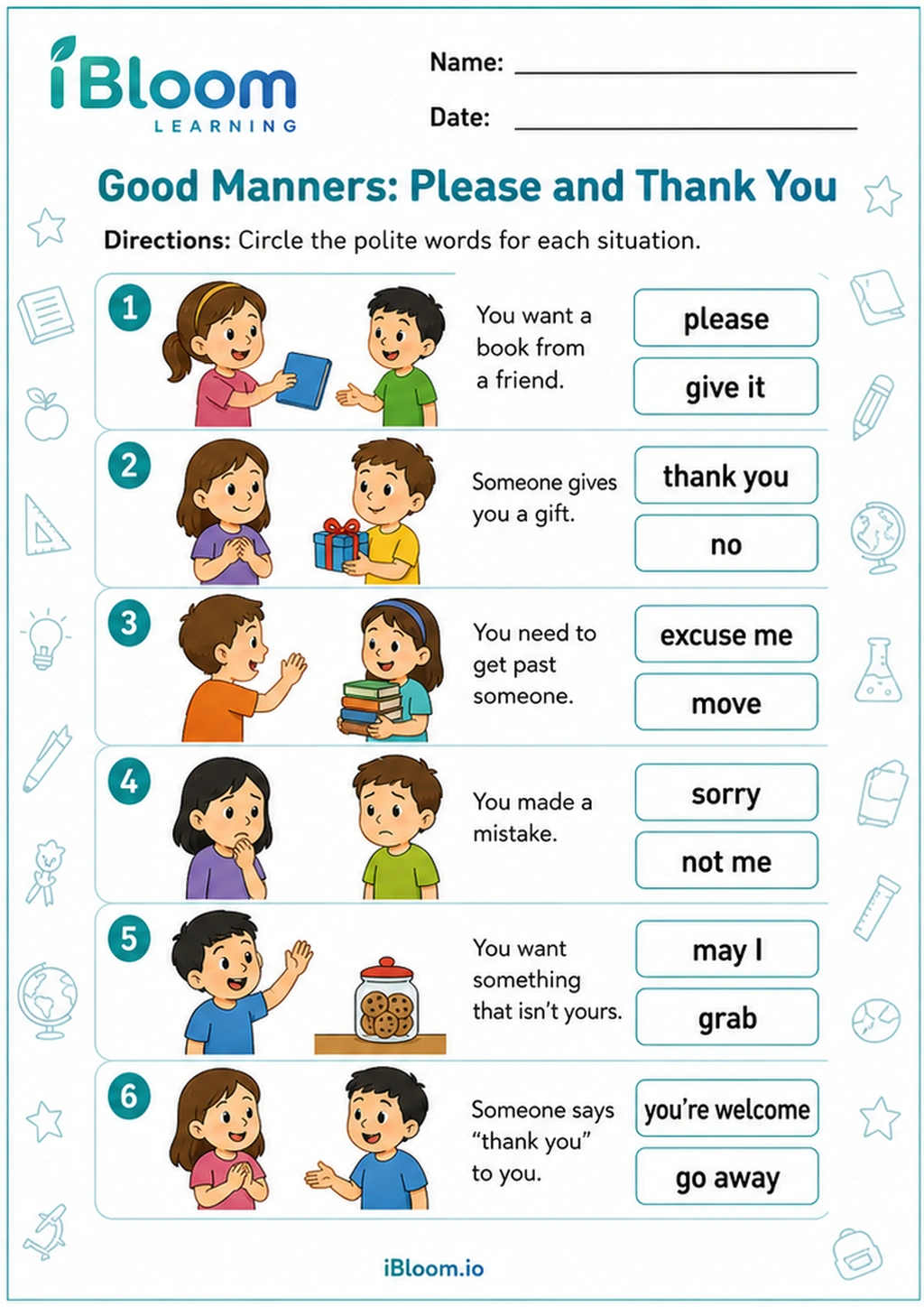 Good Manners: Please and Thank YouLKG printable practice for Good Manners.LKGFree PDF preview
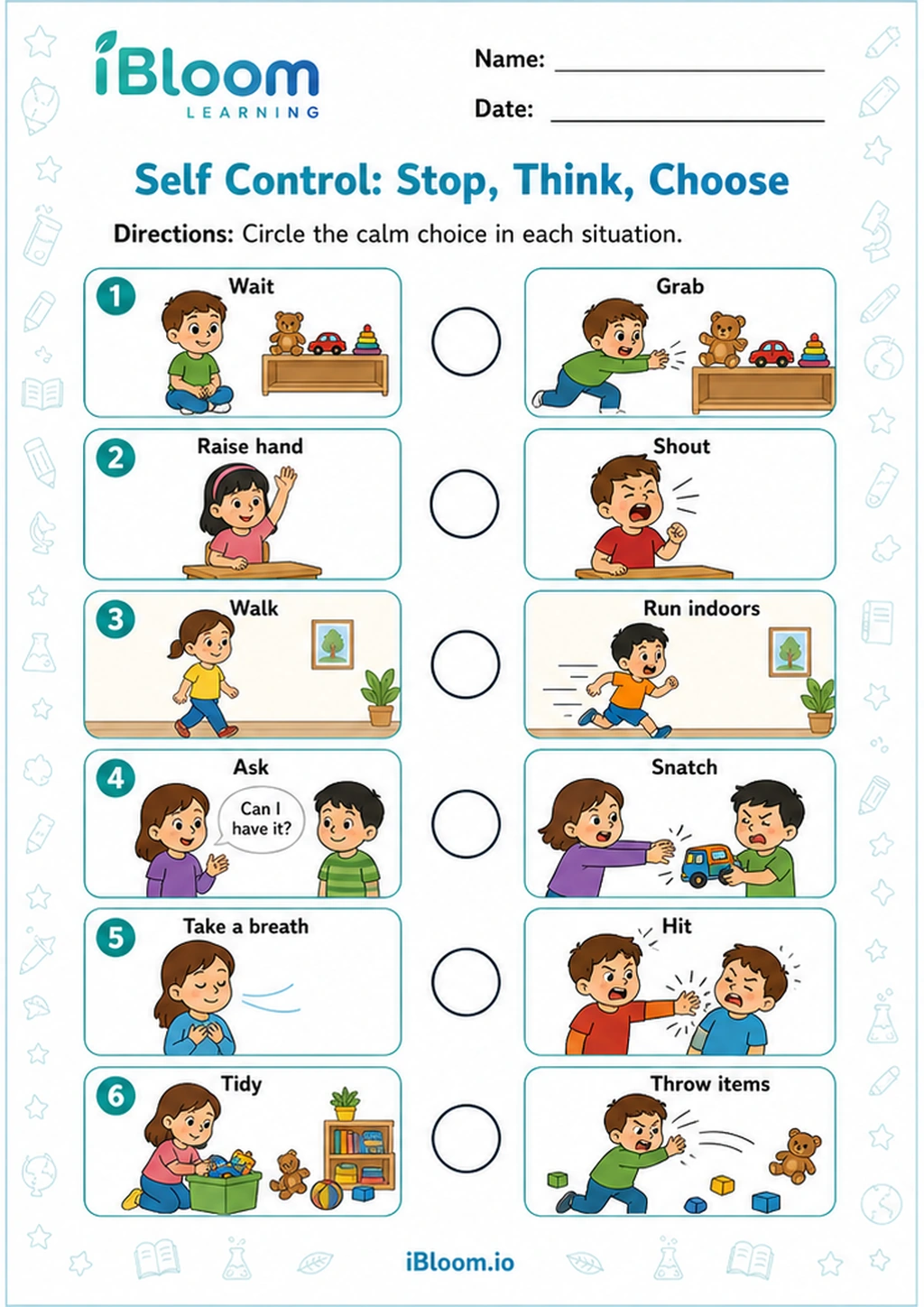 Self Control: Stop, Think, ChooseUKG printable practice for Self Control.UKGFree PDF preview
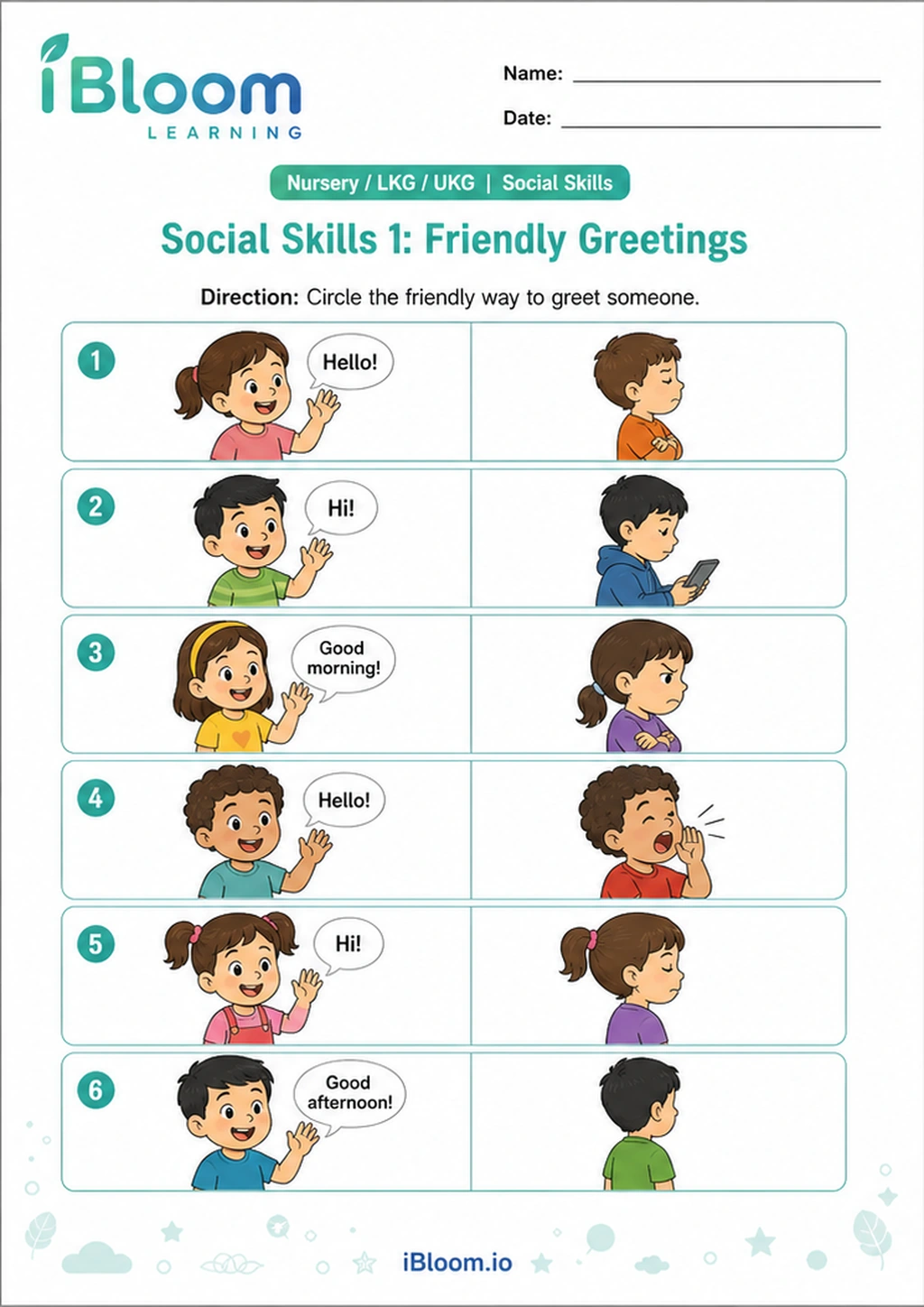 Social Skills 1: Friendly GreetingsNursery LKG UKG printable practice for Social Skills.Nursery LKG UKGFree PDF preview
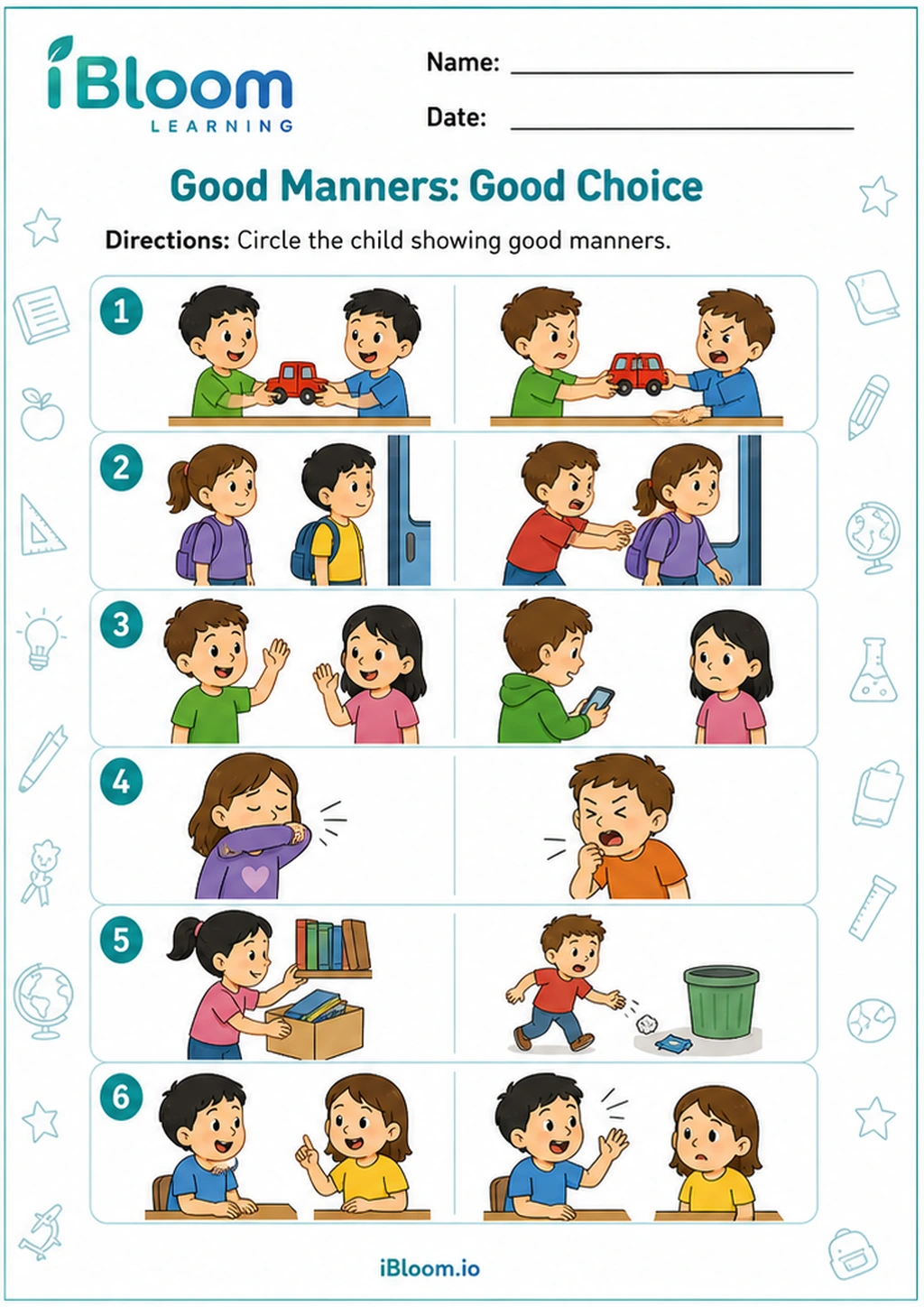 Good Manners: Good ChoiceLKG printable practice for Good Manners.LKGFree PDF preview
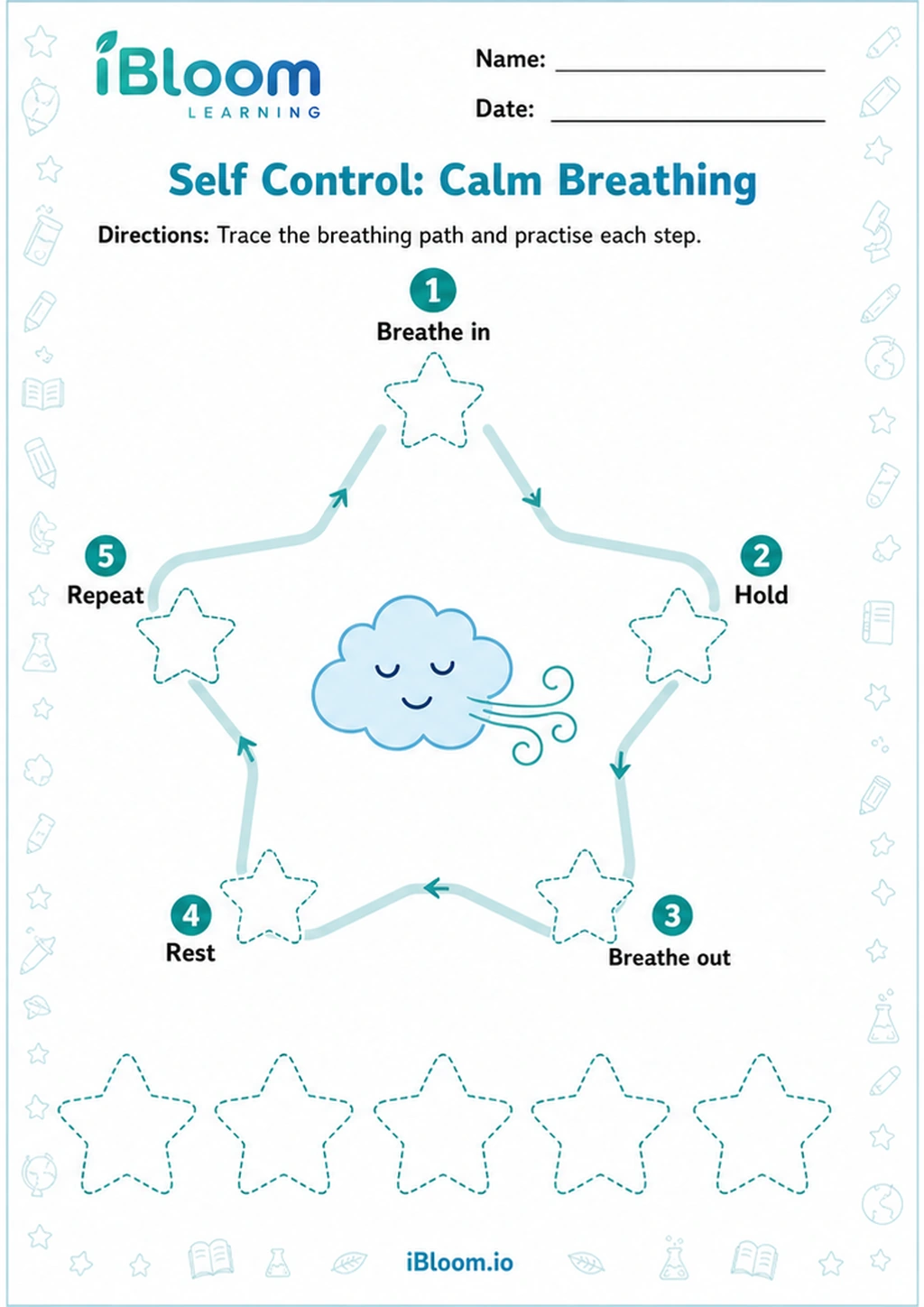 Self Control: Calm BreathingUKG printable practice for Self Control.UKGFree PDF preview
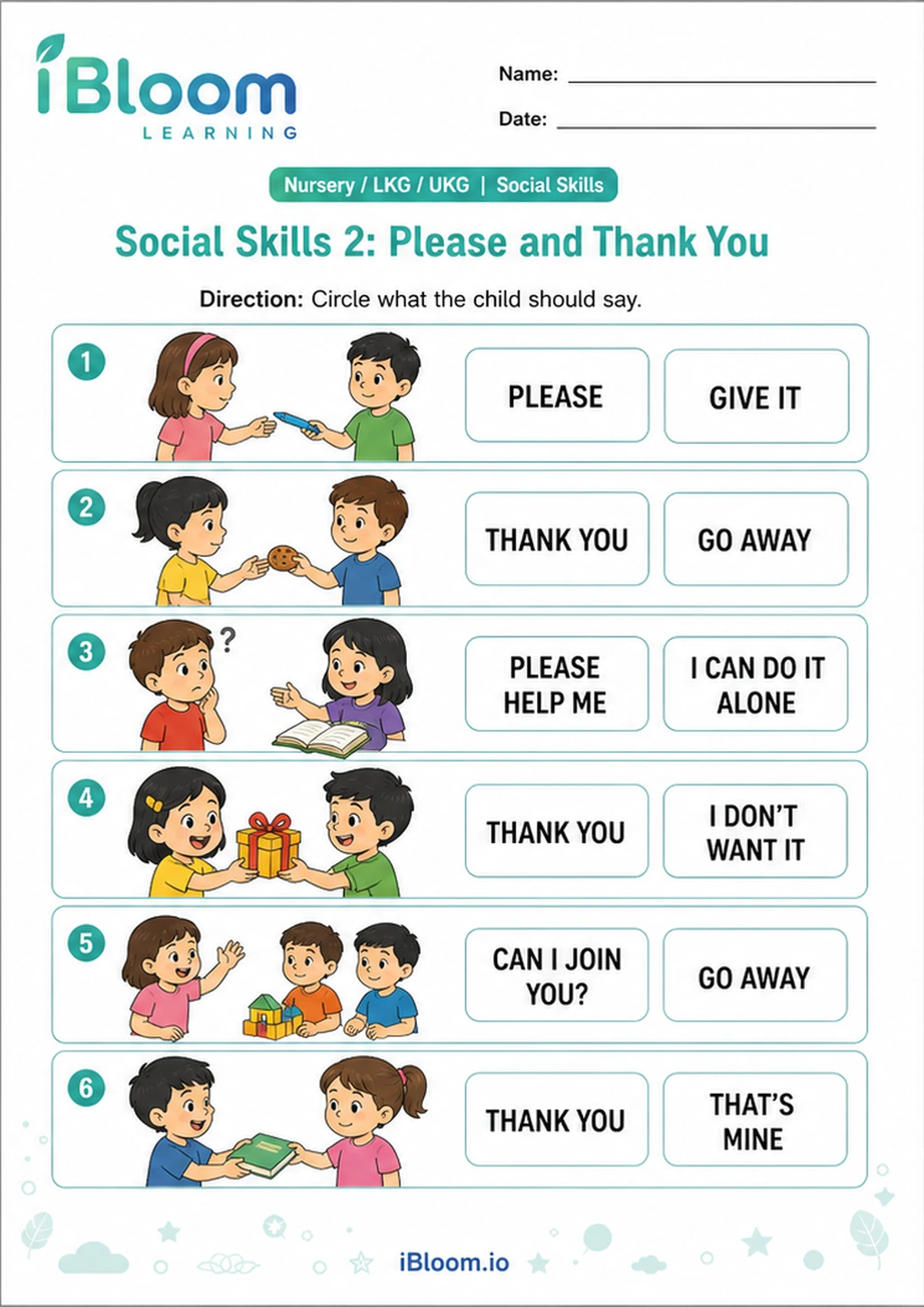 Social Skills 2: Please and Thank YouNursery LKG UKG printable practice for Social Skills.Nursery LKG UKGFree PDF preview
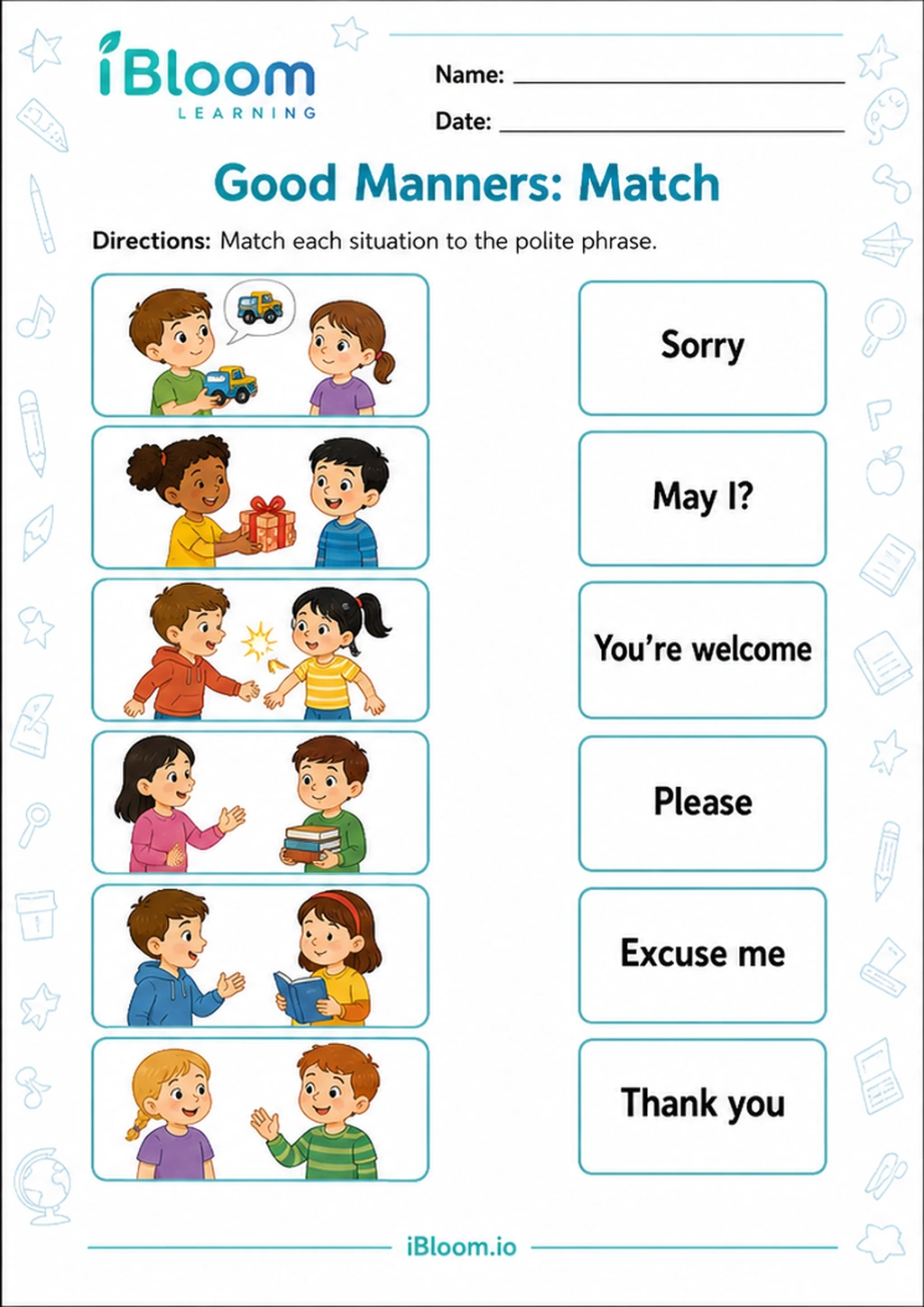 Good Manners: MatchLKG printable practice for Good Manners.LKGFree PDF preview
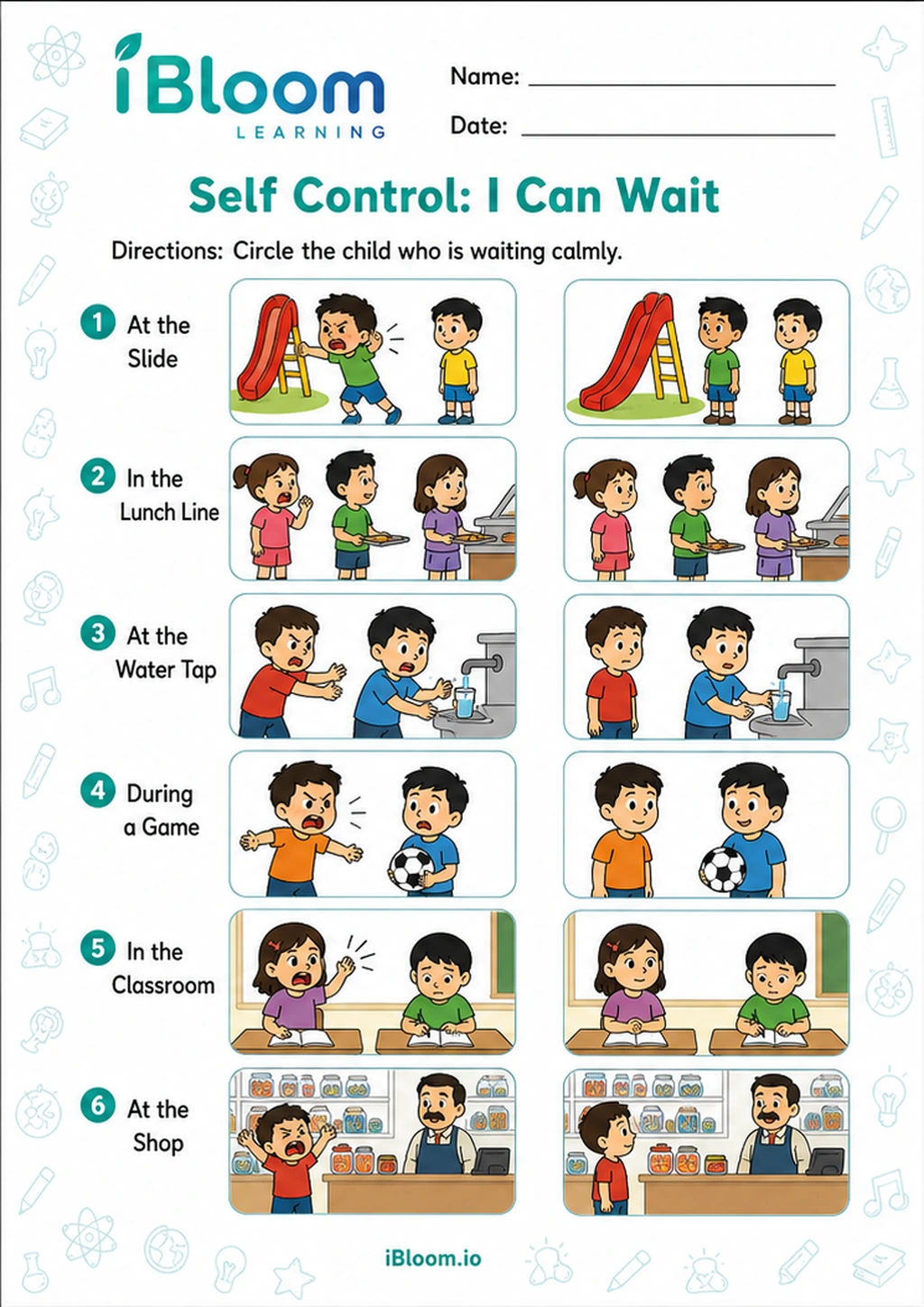 Self Control: I Can WaitUKG printable practice for Self Control.UKGFree PDF preview
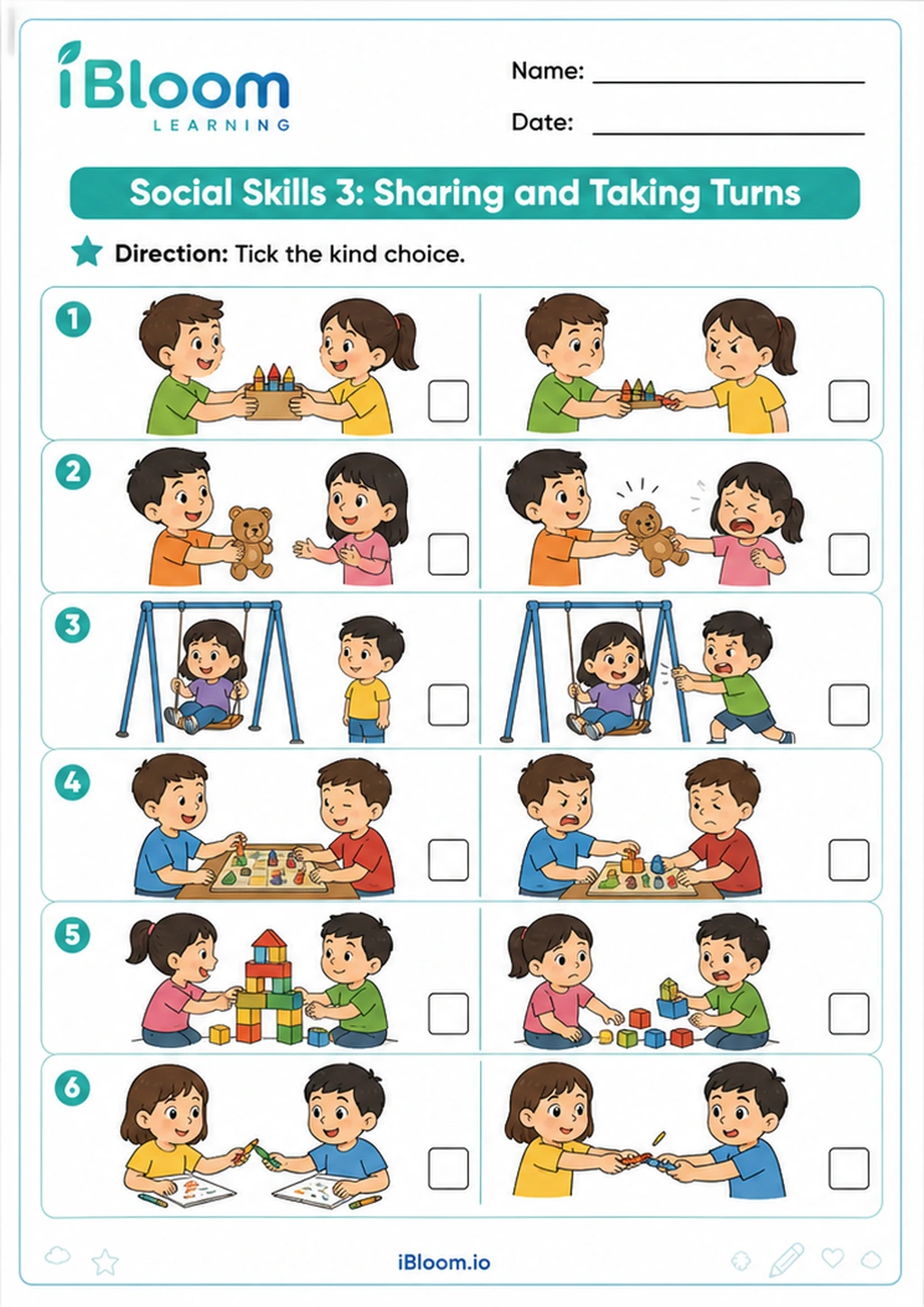 Social Skills 3: Sharing and Taking TurnsNursery LKG UKG printable practice for Social Skills.Nursery LKG UKGFree PDF preview
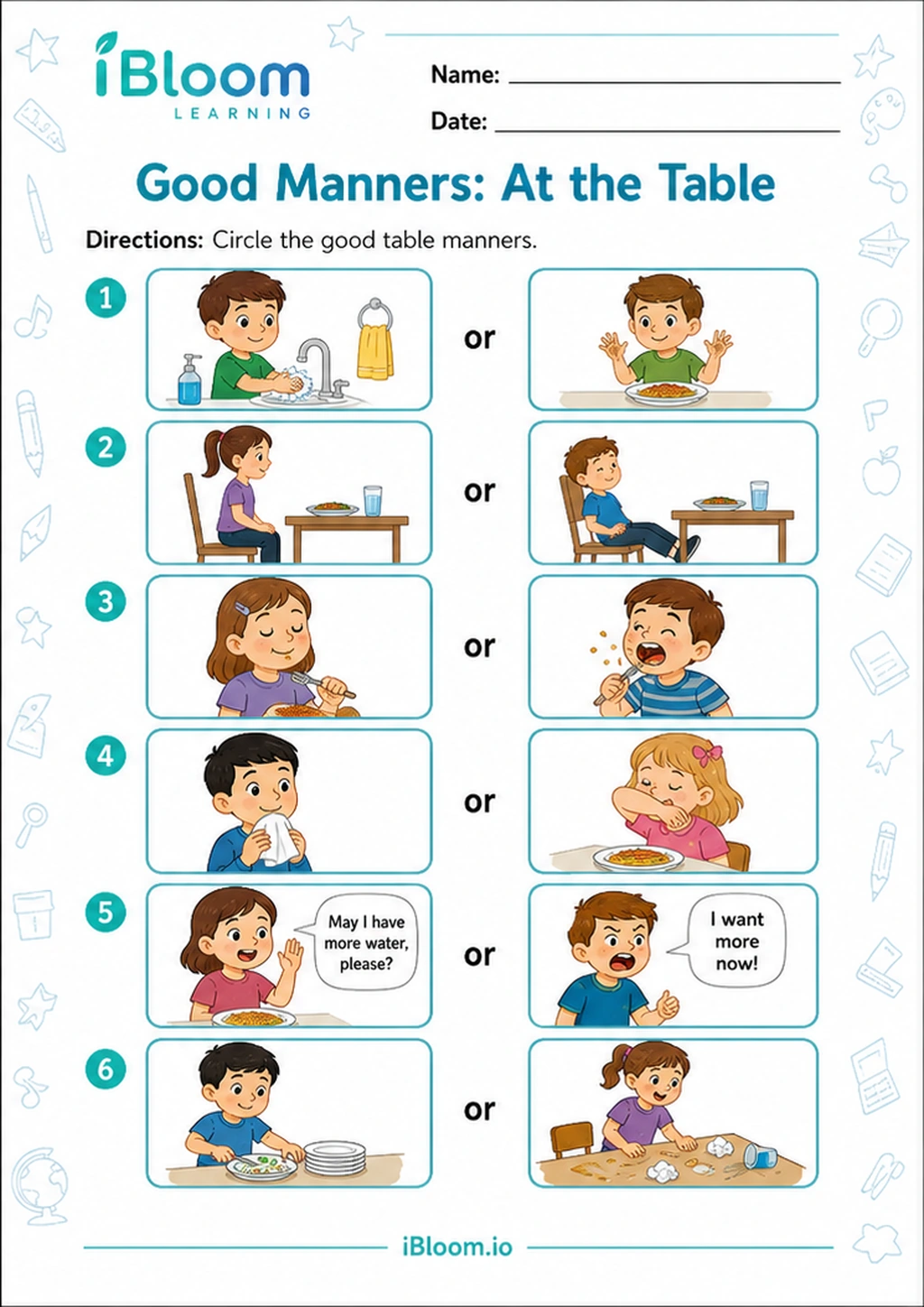 Good Manners: At the TableLKG printable practice for Good Manners.LKGFree PDF preview
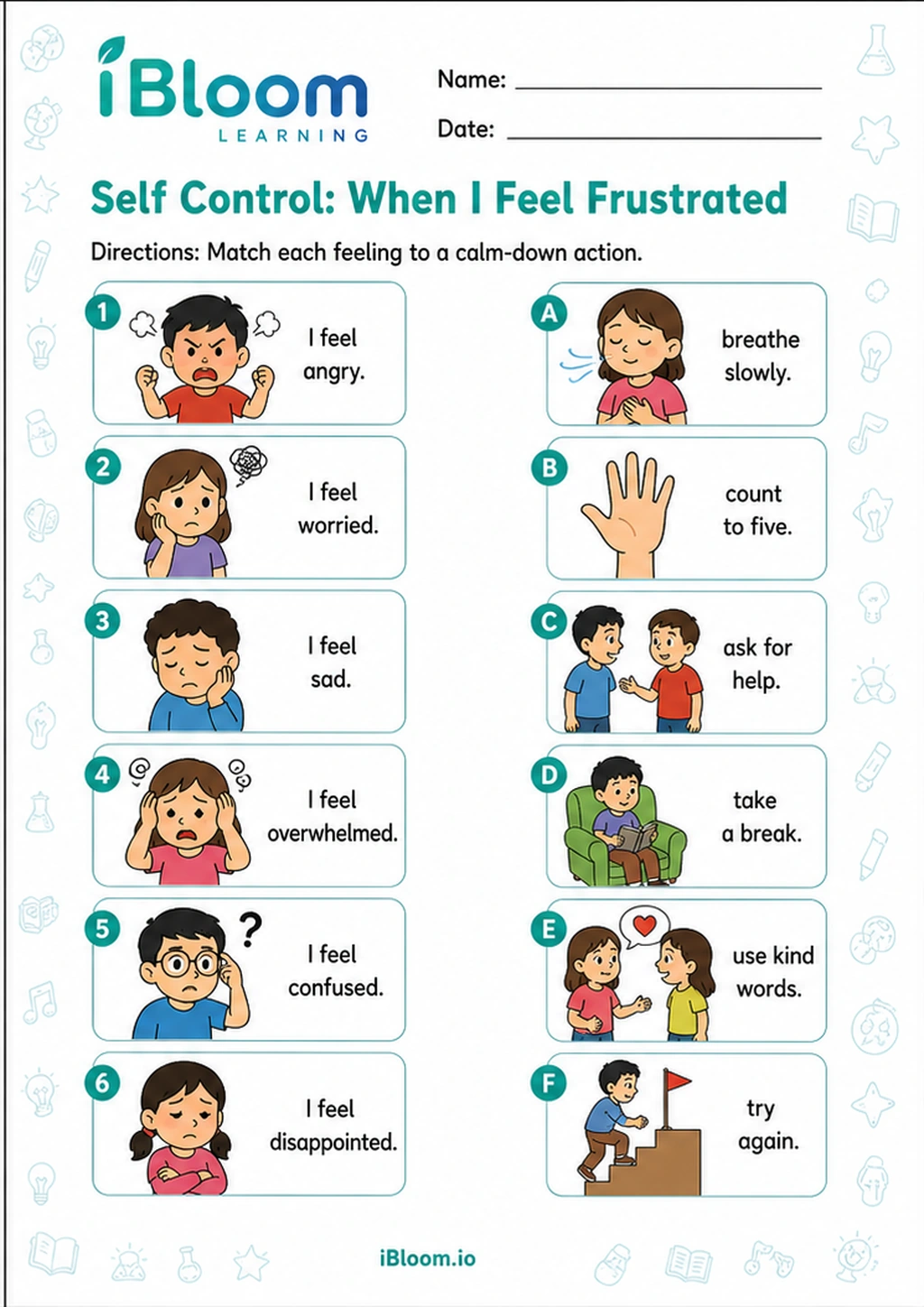 Self Control: When I Feel FrustratedUKG printable practice for Self Control.UKGFree PDF preview
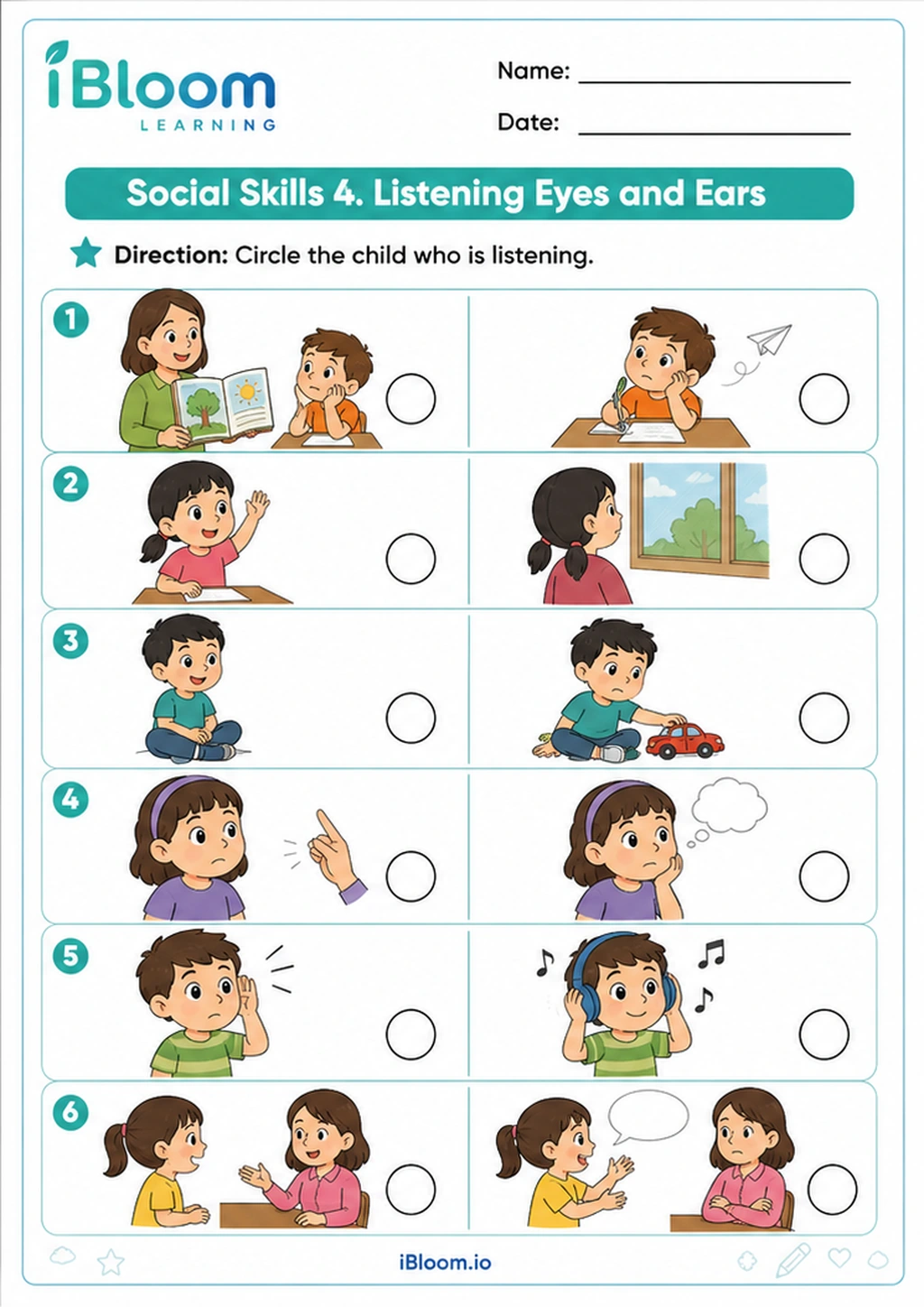 Social Skills 4: Listening Eyes and EarsNursery LKG UKG printable practice for Social Skills.Nursery LKG UKGFree PDF preview
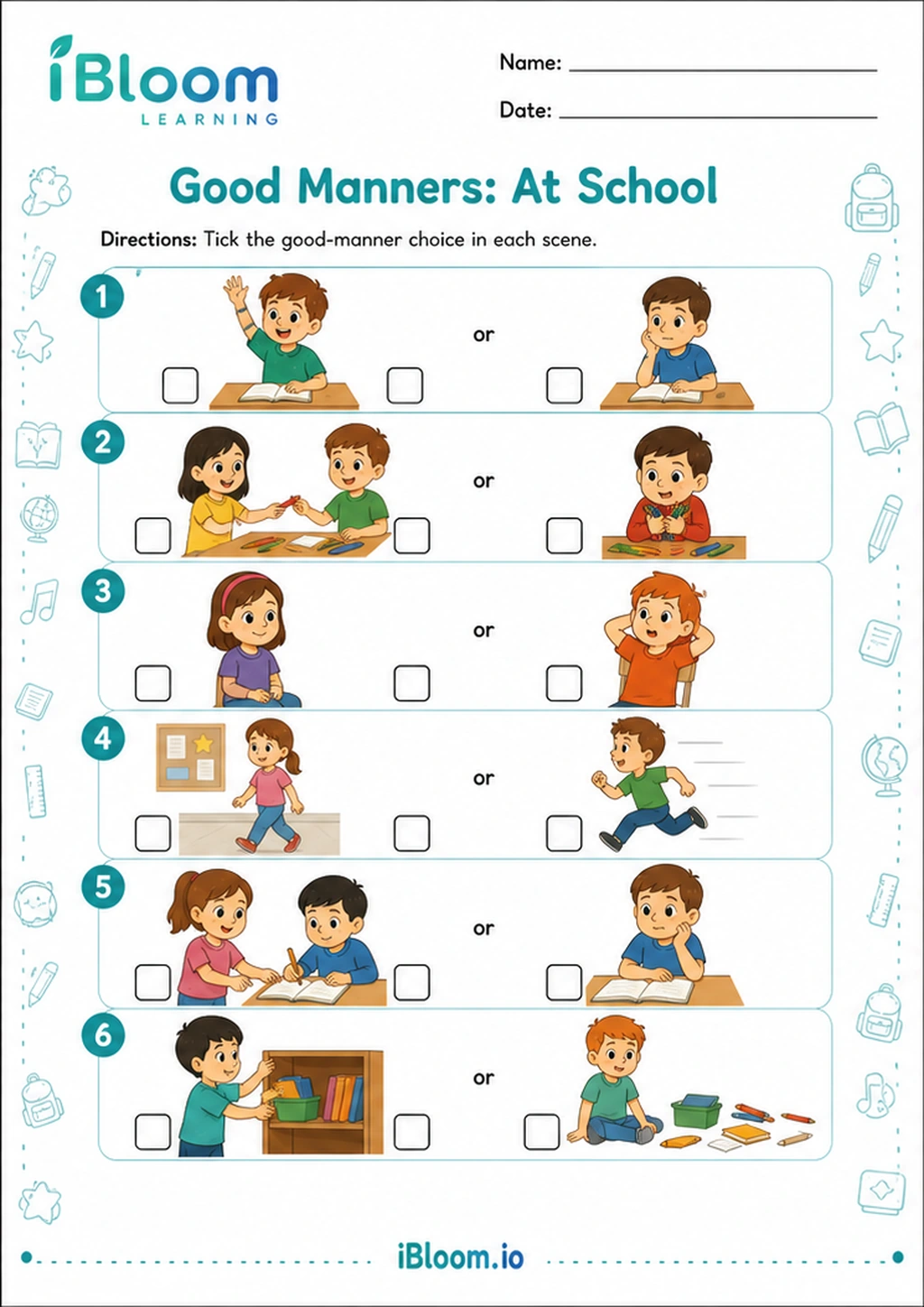 Good Manners: At SchoolLKG printable practice for Good Manners.LKGFree PDF preview
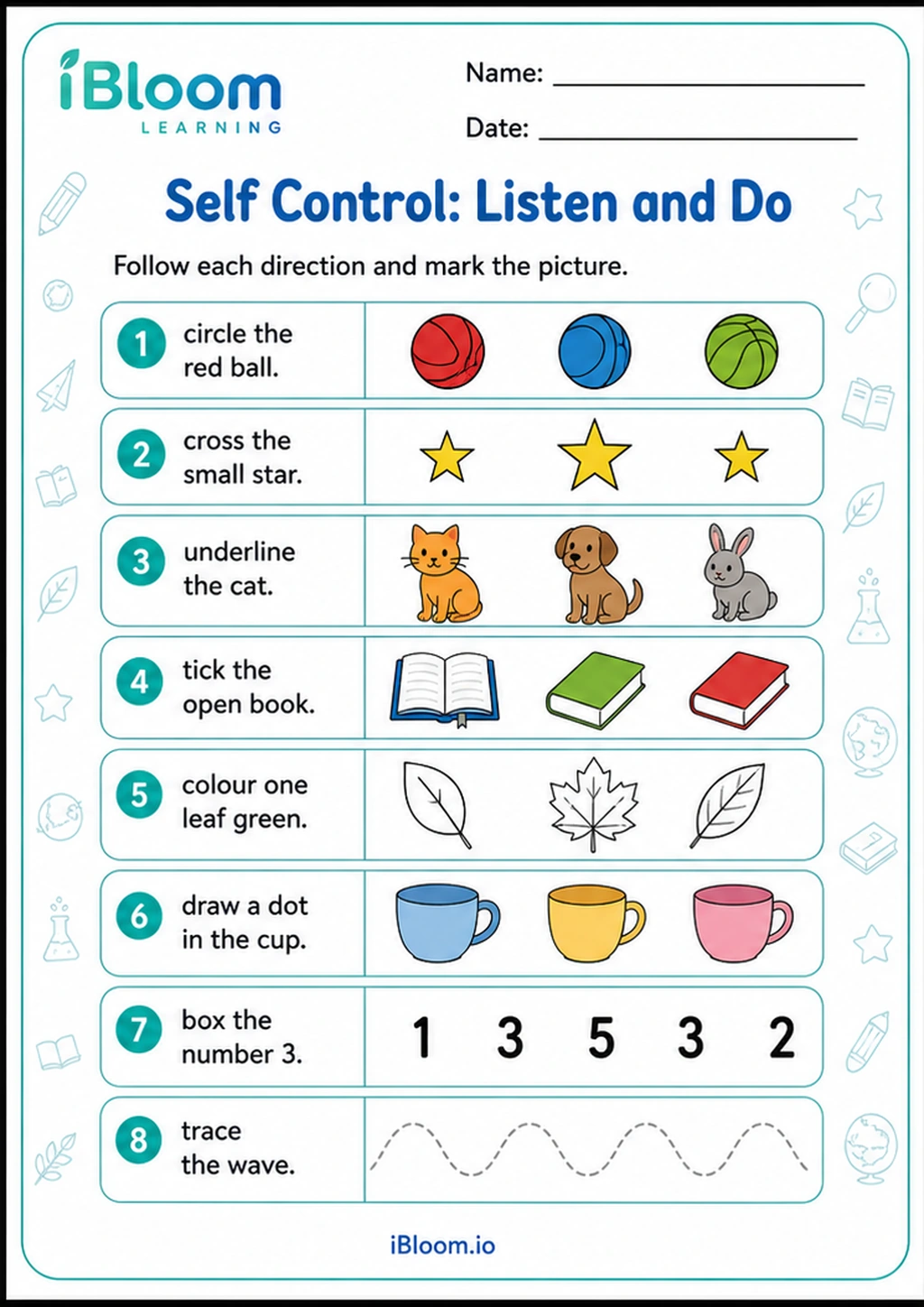 Self Control: Listen and DoUKG printable practice for Self Control.UKGFree PDF preview
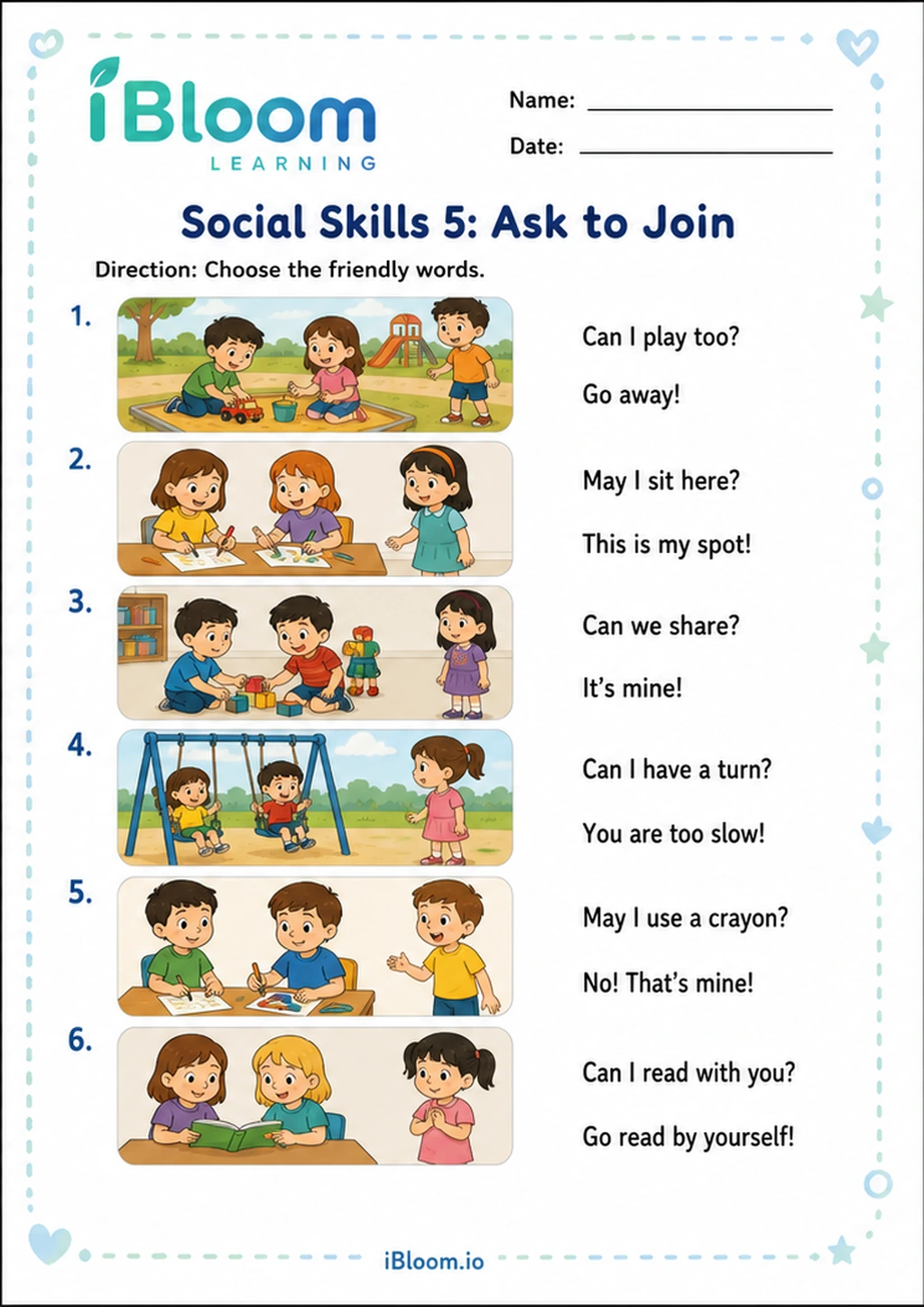 Social Skills 5: Ask to JoinNursery LKG UKG printable practice for Social Skills.Nursery LKG UKGFree PDF preview
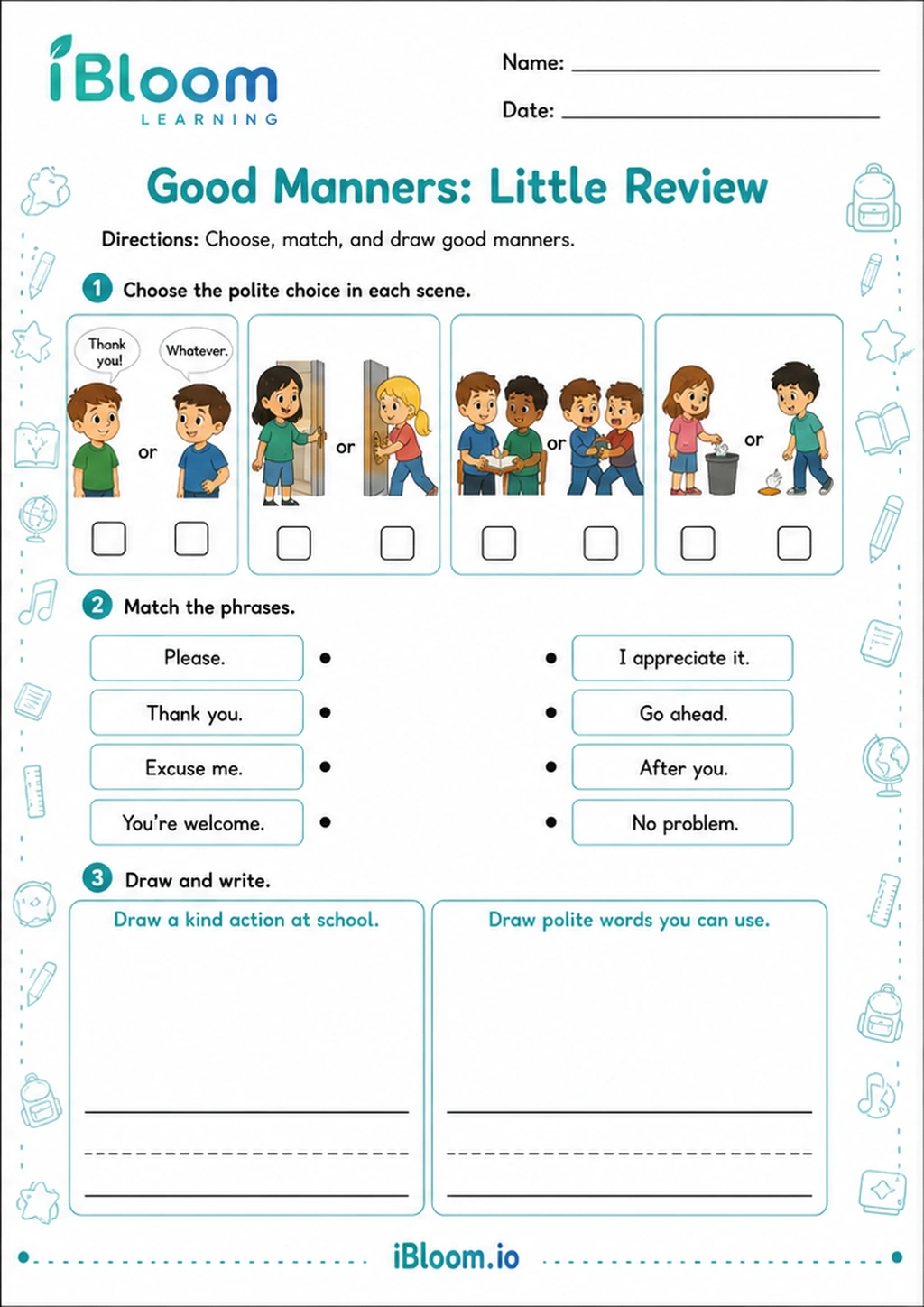 Good Manners: Little ReviewLKG printable practice for Good Manners.LKGFree PDF preview
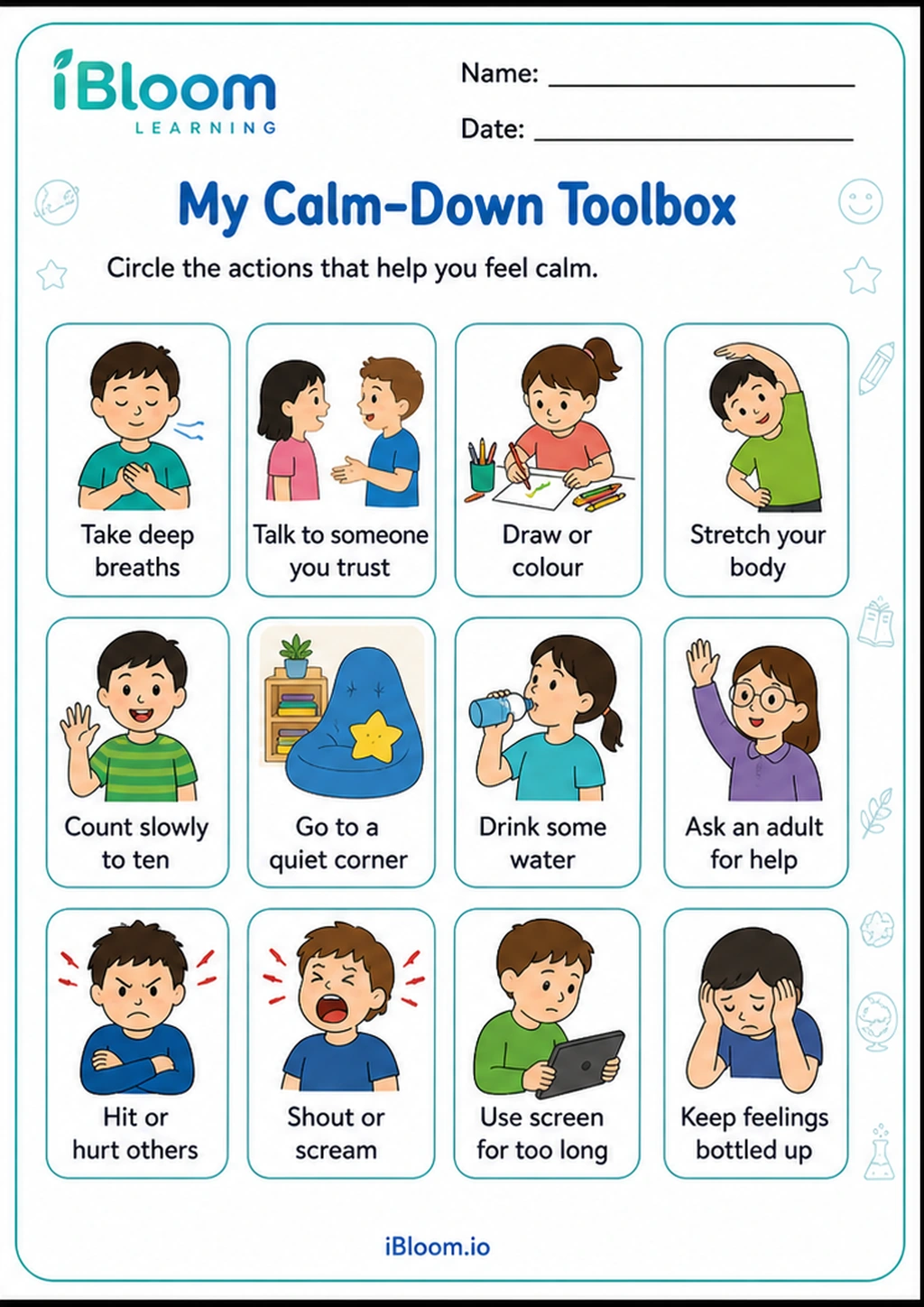 My Calm-Down ToolboxUKG printable practice for Self Control.UKGFree PDF preview
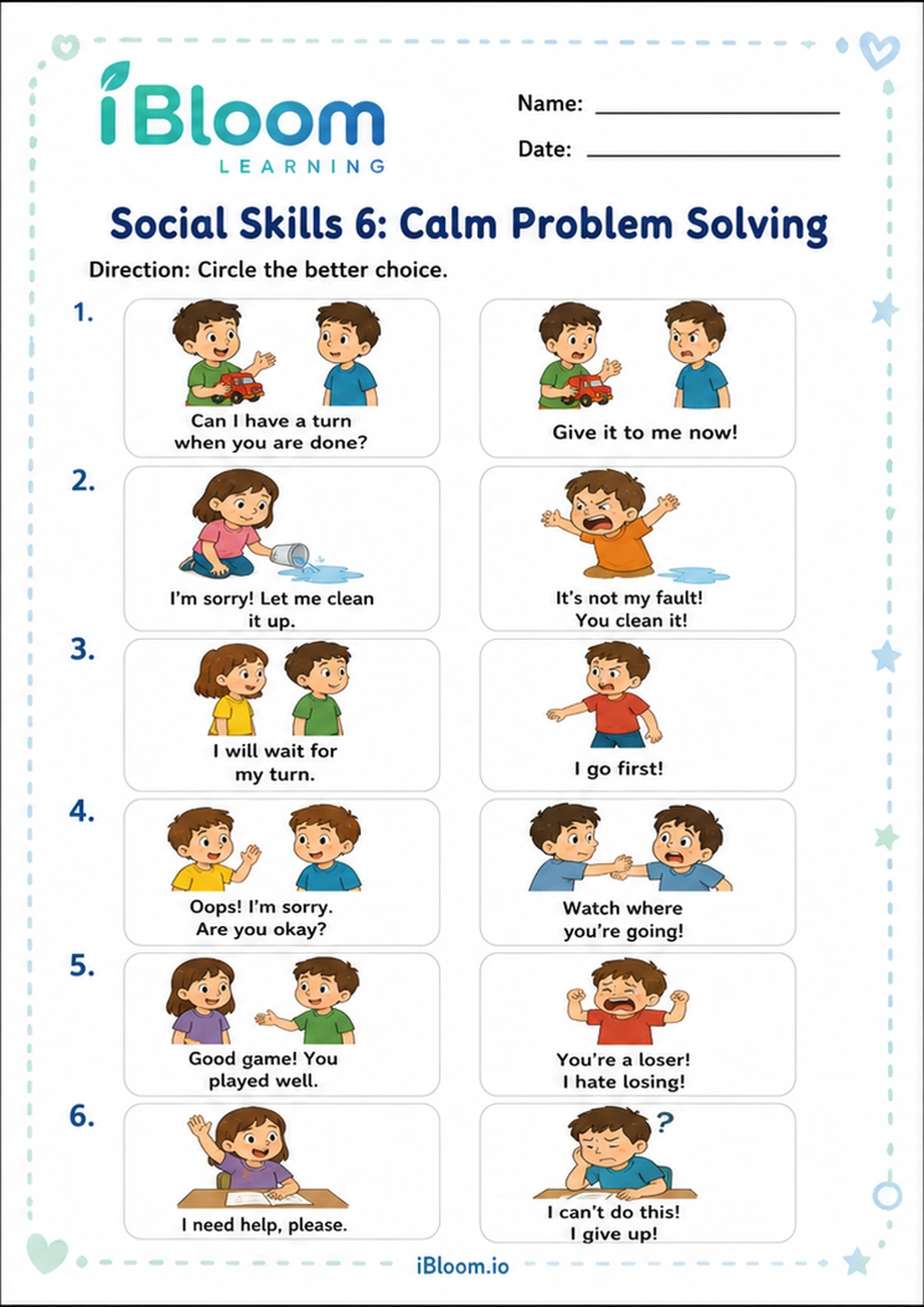 Social Skills 6: Calm Problem SolvingNursery LKG UKG printable practice for Social Skills.Nursery LKG UKGFree PDF preview
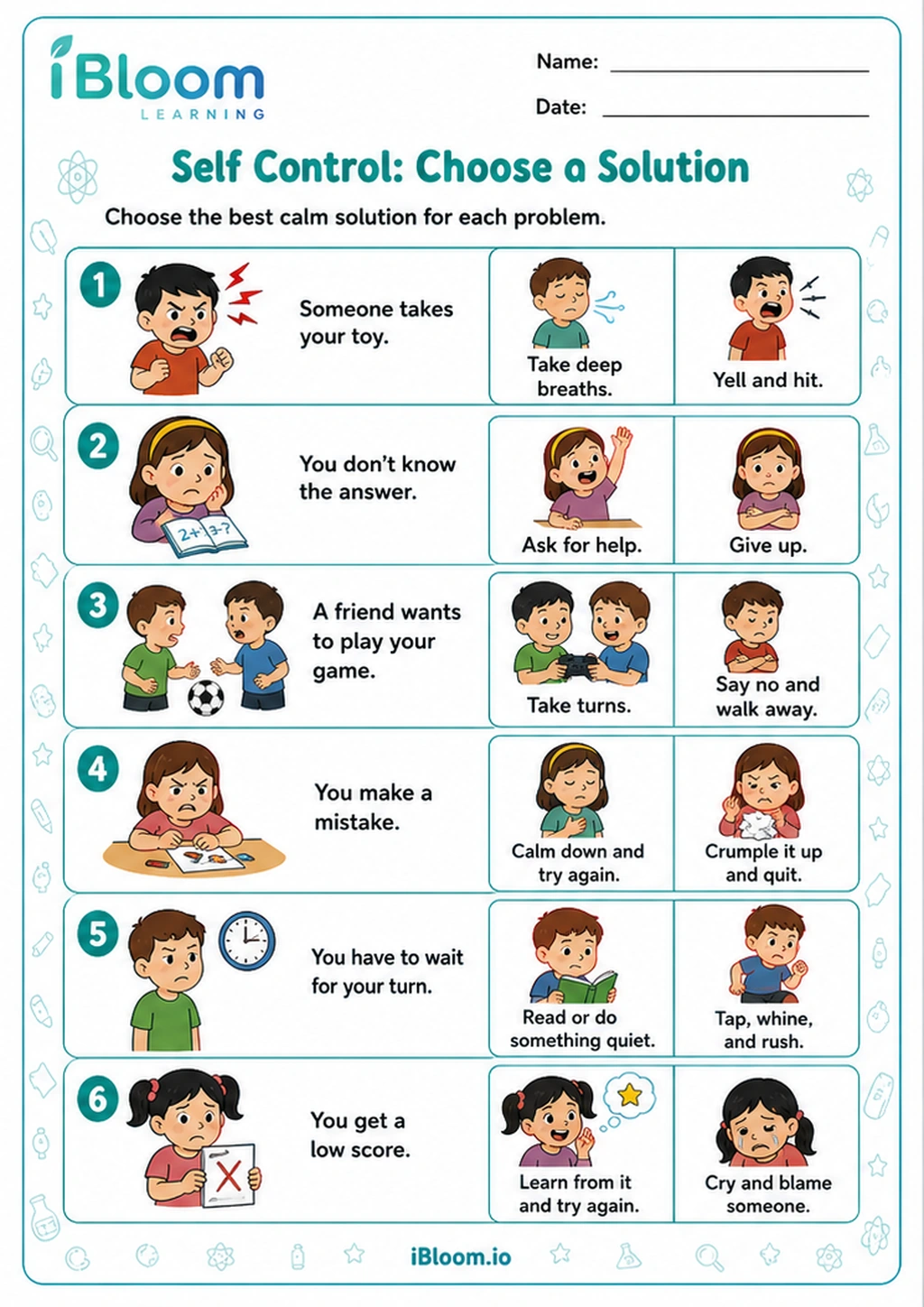 Self Control: Choose a SolutionUKG printable practice for Self Control.UKGFree PDF preview
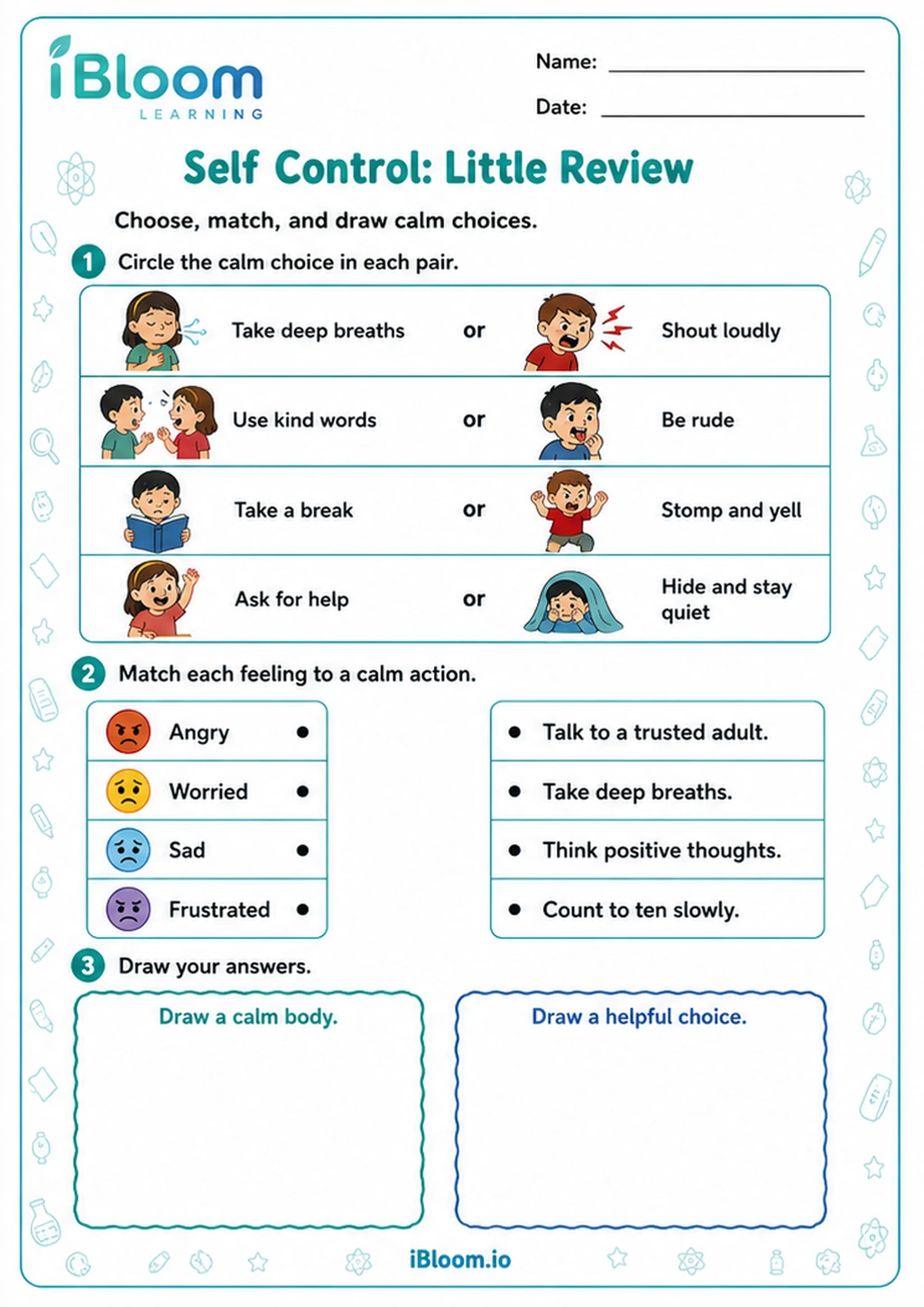 Self Control: Little ReviewUKG printable practice for Self Control.UKGFree PDF preview
Practice that builds confidence
What children practise
These Nursery, LKG and UKG social emotional worksheets help young children recognise feelings, use good manners, calm their bodies, share with friends and talk about everyday classroom situations. The focus is on simple, age-appropriate practice through pictures, stories and guided responses.
The printable activities include emotion matching, mindfulness prompts, self-control choices, friendship conflict scenarios, social skills practice, self-awareness tasks and short story-based discussions. They are designed for gentle conversation, not testing, so children can build confidence while learning how to behave with care.
At this stage, social emotional learning begins with naming feelings and noticing behaviour. Children practise words such as happy, sad, angry, scared, calm, kind, sorry, please and thank you. Activities may ask them to colour an emotion face, choose a polite response, identify a helpful action, or talk about what a story character could do next.

From feelings to actions
The worksheets move from recognising emotions to choosing safe and kind actions. A child may first point to how someone feels, then decide whether to wait, ask, share, breathe, apologise or get help from an adult. Topics such as good manners, self control, social skills and friendship conflict are kept concrete, using familiar situations like taking turns with toys, joining a game, listening during circle time, or saying sorry after hurting a friend.
A simple parent routine
Use one page at a calm moment, not during a tantrum. Read the instruction aloud, let your child point or answer, then ask one short follow-up question: “What could you say?” or “How can the body calm down?” Practise the same skill later in real life: greeting a neighbour, waiting for a snack, putting toys away, or using a breathing trick before bedtime. Praise the behaviour clearly: “You waited for your turn. That was self control.”

Classroom uses for teachers
Teachers can use these pages during morning circle, story time, value education, quiet corners or small-group discussion. They also work well for role play: two children can act out sharing crayons, inviting a friend to play, or asking for help. Finished sheets can become visual reminders near the class rules board, feelings chart or calm-down area.

Common errors to watch for
Young children may say every upset face is “angry,” confuse shyness with rudeness, or think saying sorry is enough without changing the action. Some may choose the “right” answer on paper but need repeated modelling in play. Keep language simple, avoid shaming, and connect each choice to the feeling behind it.
Free printable PDF download
Use this social emotional worksheets for nursery lkg ukg page to preview the activity, print it, or download it as a PDF for quick practice. It works well for homework, homeschool lessons, tutoring, morning work, revision, and classroom centers.
Answers and answer key support
After the child completes the worksheet independently, parents and teachers can use the answer support or answer key information to check the work, review mistakes, and choose the next practice step.
Why iBloom worksheets help
These iBloom printables combine pictures, stories, emotions and everyday choices so children can see, say and practise the skill. A child-friendly strategy is: Name it, breathe, choose—name the feeling, take one slow breath, then choose a kind or safe action.
Helpful answers
Frequently asked questions
Are these social emotional worksheets suitable for Nursery children?
Yes. Nursery children can use the picture-based pages with adult guidance. Keep the discussion short and focus on simple ideas like happy, sad, kind hands, waiting and saying please.
How should I use the friendship conflict activities?
Read the situation aloud, ask how each child might feel, then practise one helpful response such as sharing, asking for a turn, saying sorry or calling a teacher. Role play makes the lesson easier to remember.
Do these worksheets teach mindfulness to very young children?
They introduce mindfulness in a simple way, such as noticing feelings, taking slow breaths, calming the body and paying attention to the present moment. The activities are meant to be gentle and practical.
Can teachers use these pages in class without making children feel judged?
Yes. Use them as discussion prompts, not as behaviour marks. Talk about story characters or picture situations first, then connect the idea to classroom routines like lining up, sharing materials or listening.
What if my child knows the right answer but still struggles with self-control?
That is normal for this age. Revisit the same skill often, model the words, and praise small attempts. Paper practice helps children understand the choice, but real-life practice builds the habit.
Is this social emotional worksheets for nursery lkg ukg free?
Yes. You can preview it for free and use the printable worksheet for home or classroom practice.
Can I download this social emotional worksheets for nursery lkg ukg as a PDF?
Yes. Use the worksheet download option to save a printable PDF, or print the worksheet directly from the page.
Does this social emotional worksheets for nursery lkg ukg include answers or an answer key?
When the activity has fixed answers, iBloom includes answer support so parents and teachers can check the completed worksheet.