Free printable practice
Self Control Practice Activities
Printable self-control worksheets for Nursery, LKG and UKG children to practise waiting, calming down, taking turns and making thoughtful choices.
Free printable worksheet PDFs
Preview every available page, then download the free worksheet PDF for home, homeschool, tutoring, or classroom practice.
Preview the exact activity before downloading it.
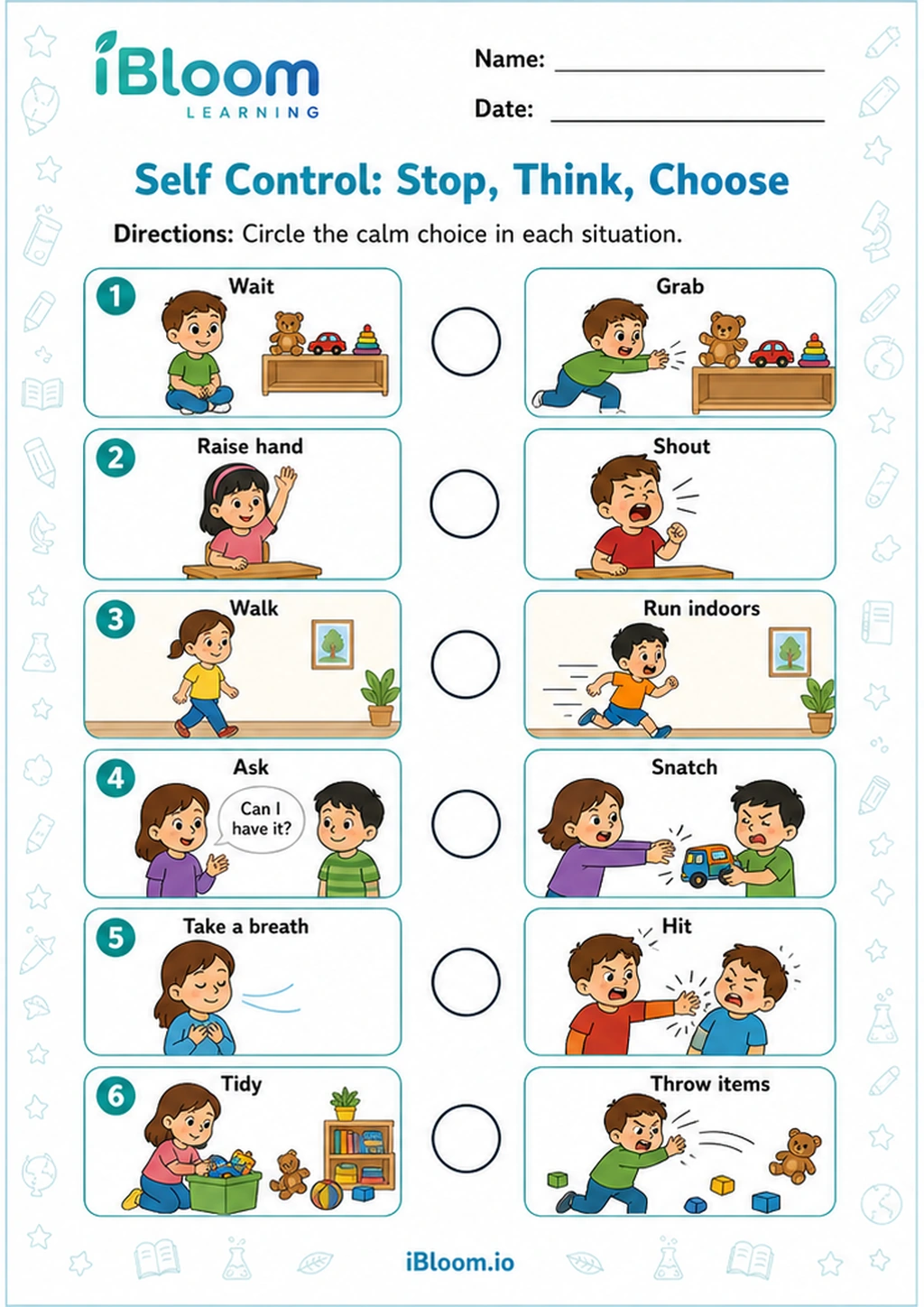 Self Control: Stop, Think, ChooseUKG printable practice for Self Control.UKGFree PDF preview
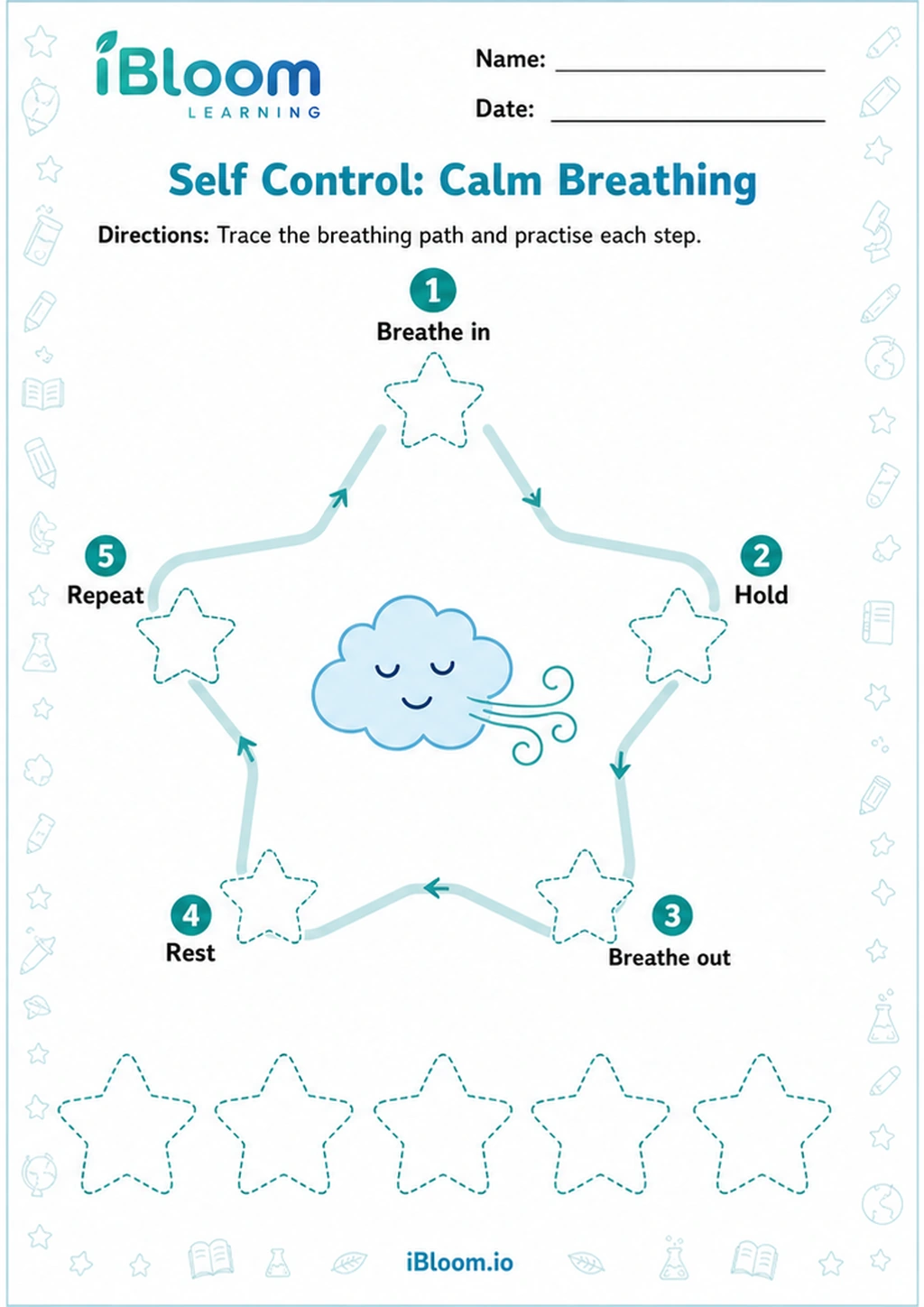 Self Control: Calm BreathingUKG printable practice for Self Control.UKGFree PDF preview
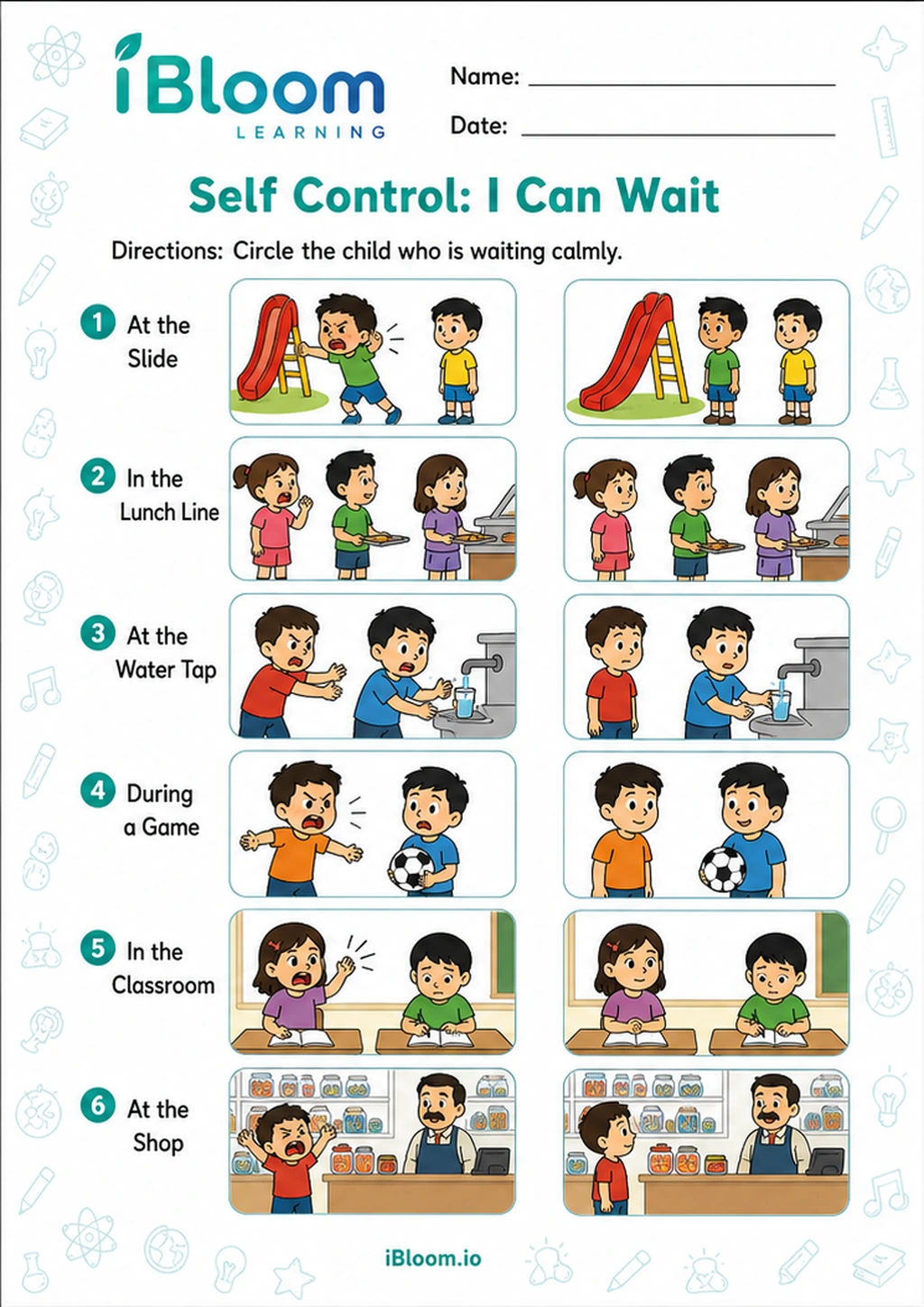 Self Control: I Can WaitUKG printable practice for Self Control.UKGFree PDF preview
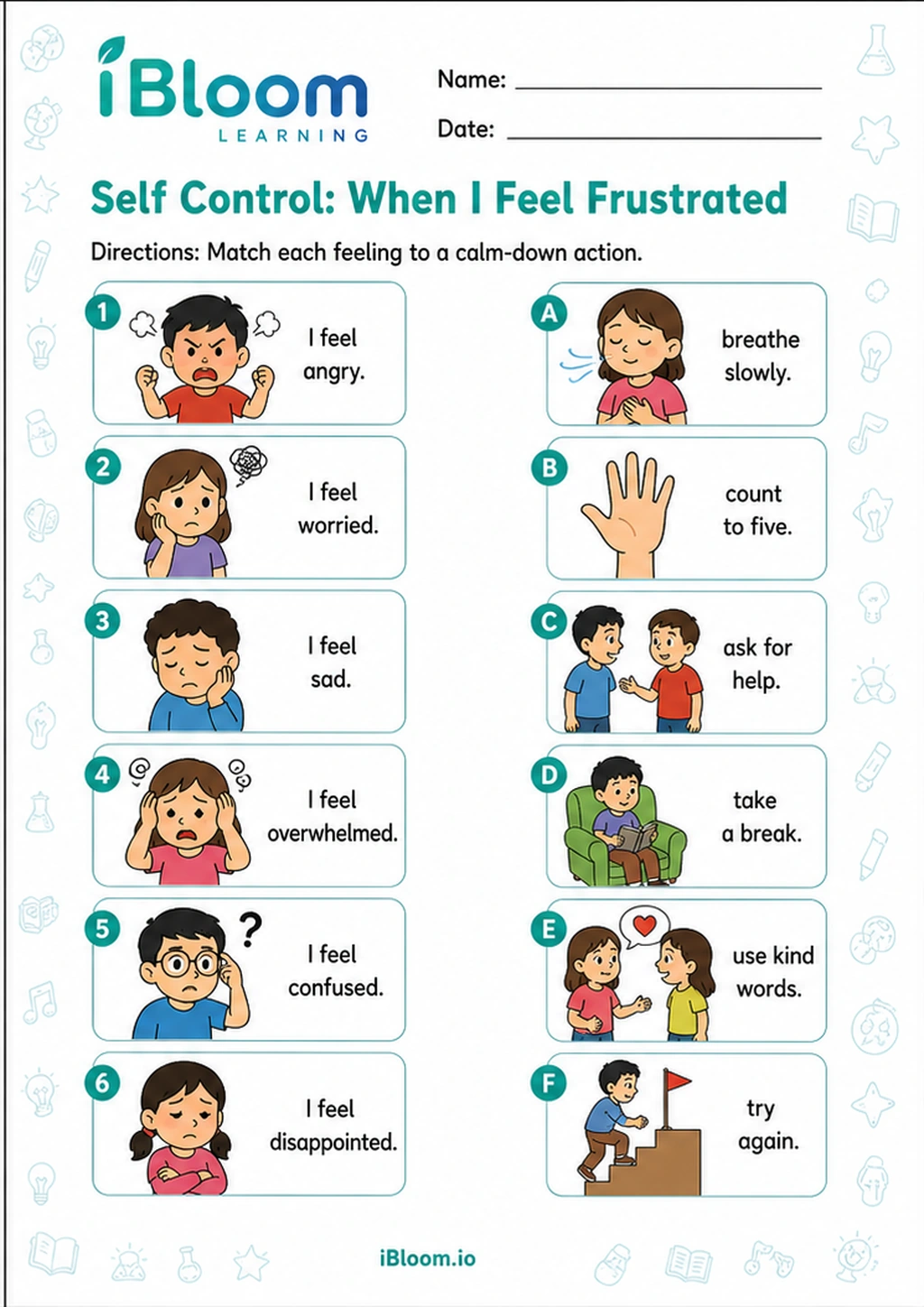 Self Control: When I Feel FrustratedUKG printable practice for Self Control.UKGFree PDF preview
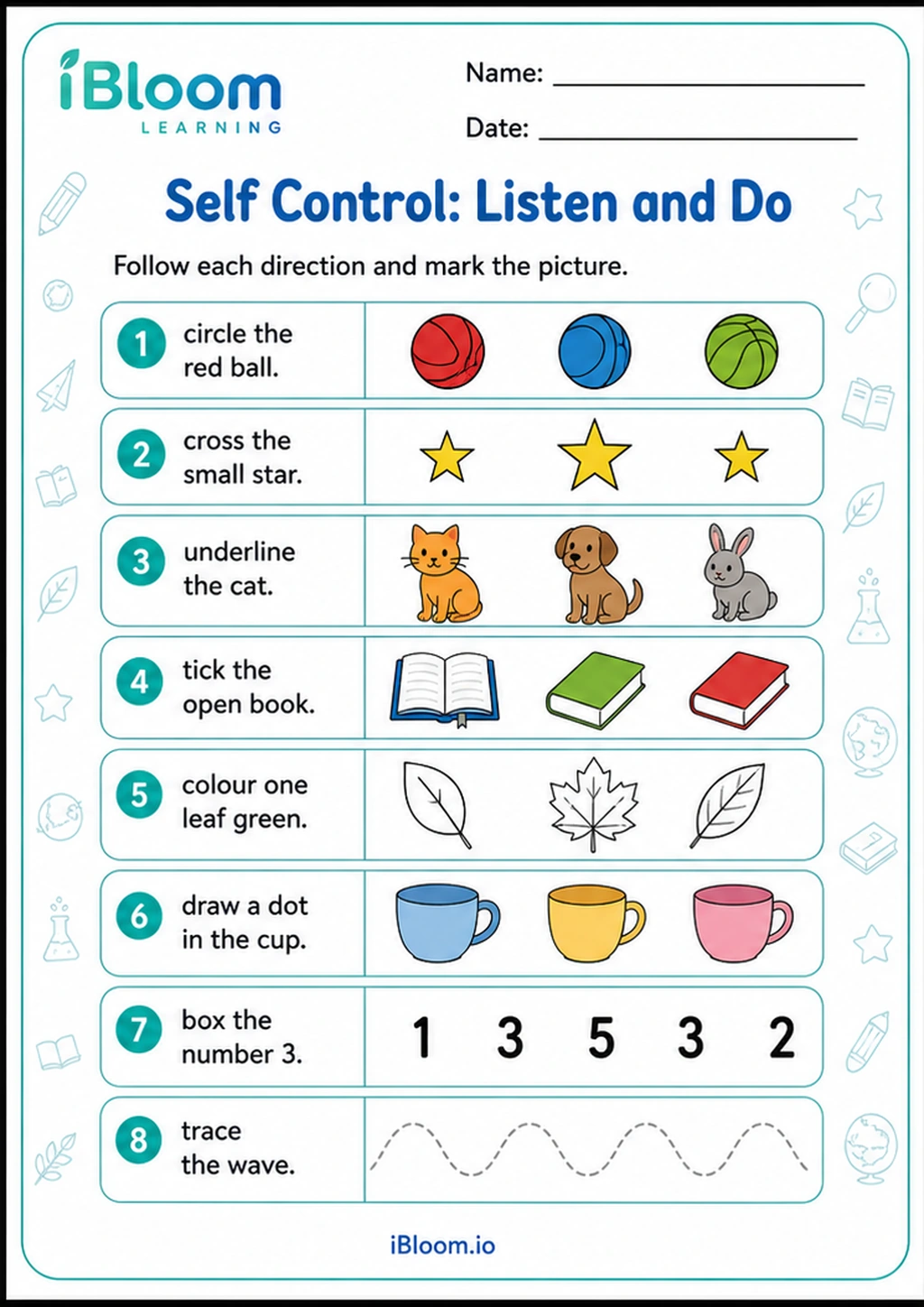 Self Control: Listen and DoUKG printable practice for Self Control.UKGFree PDF preview
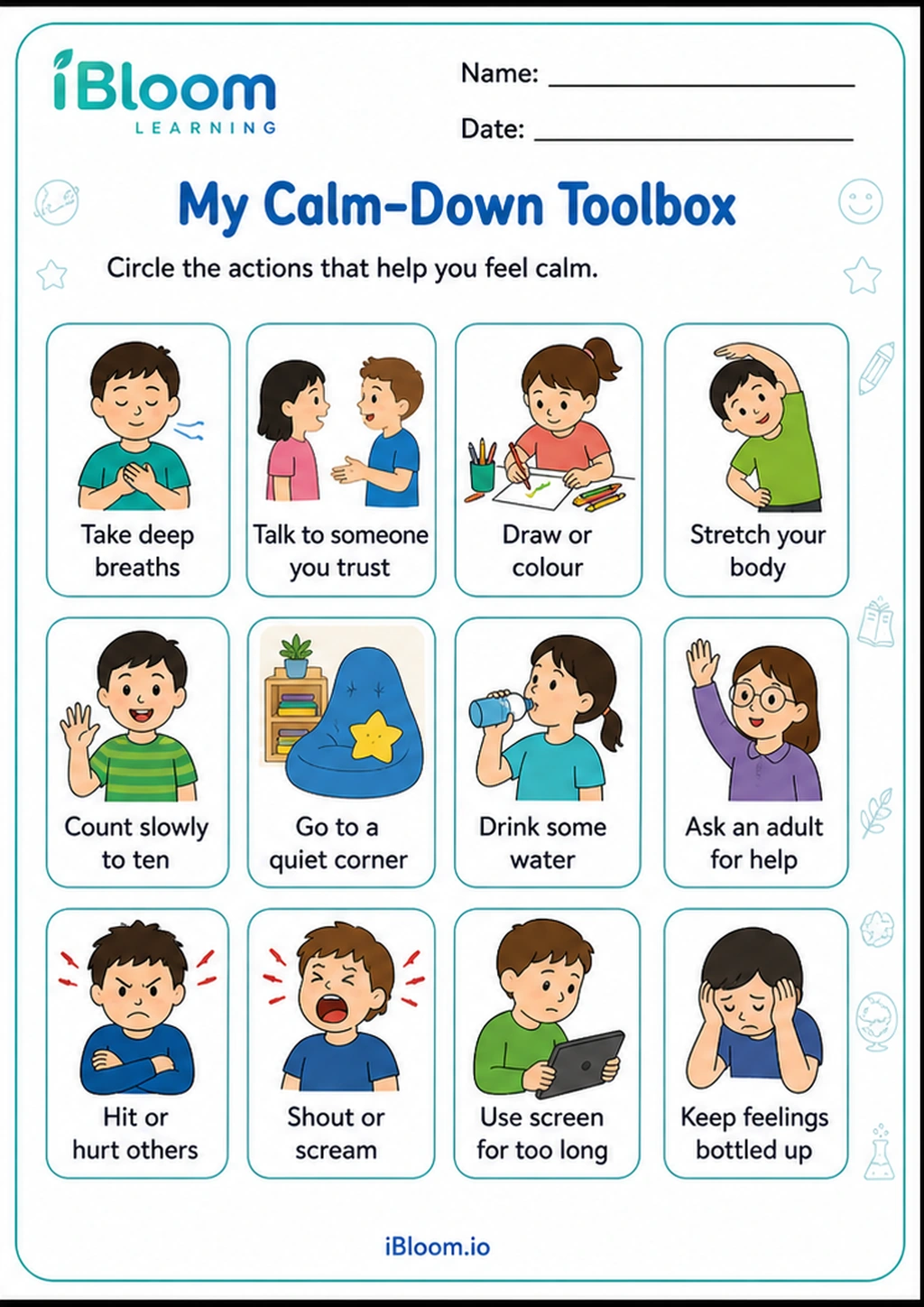 My Calm-Down ToolboxUKG printable practice for Self Control.UKGFree PDF preview
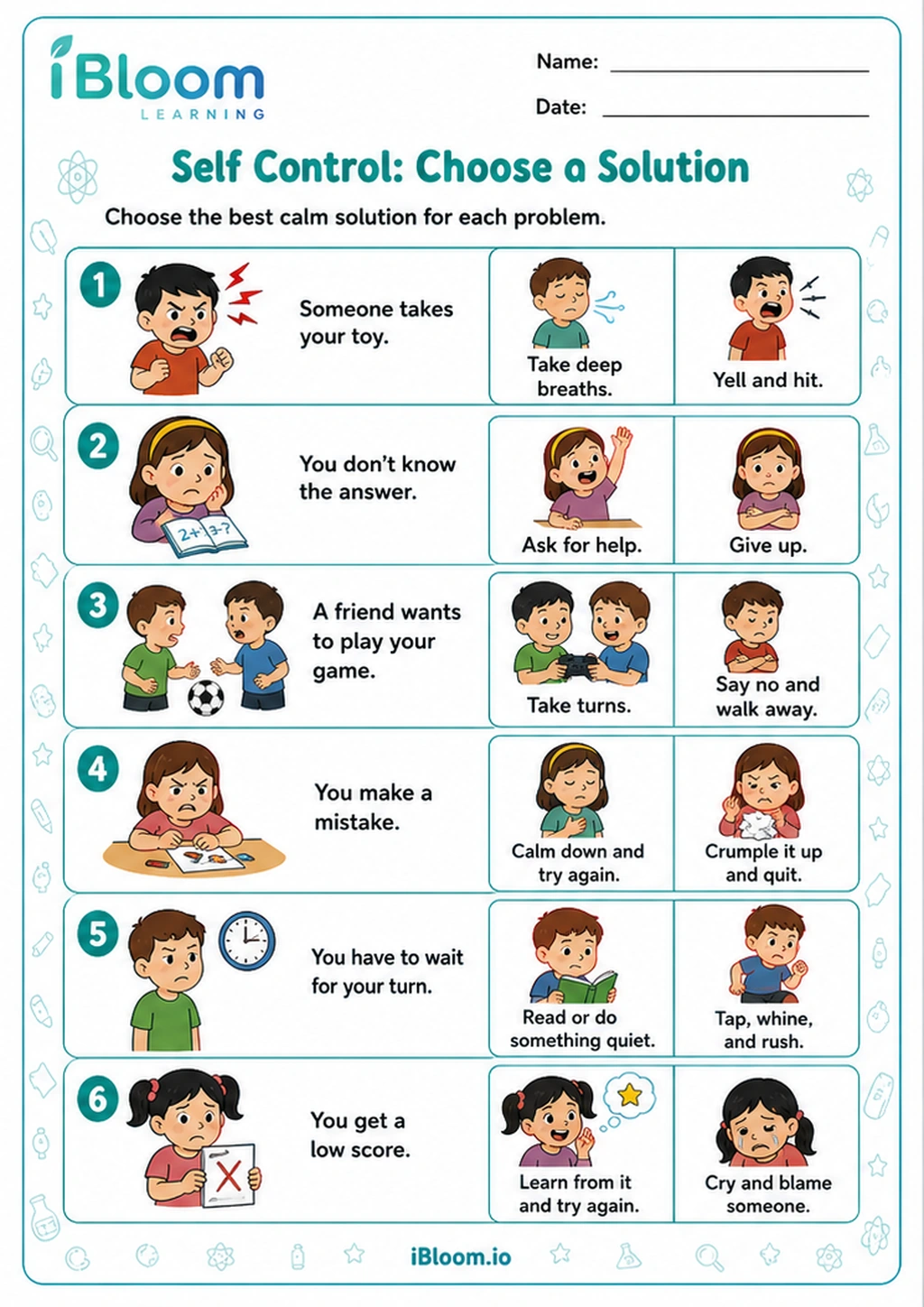 Self Control: Choose a SolutionUKG printable practice for Self Control.UKGFree PDF preview
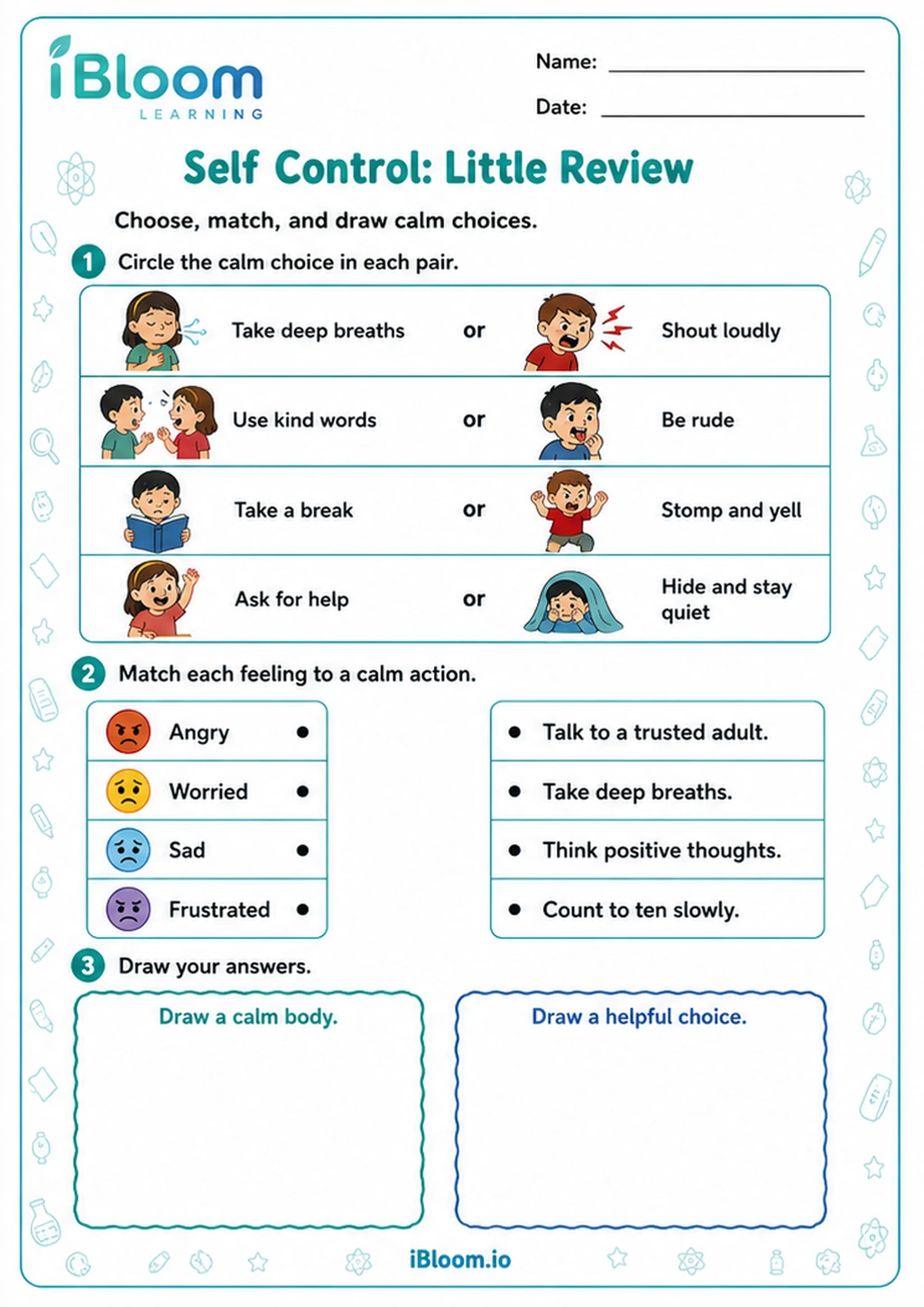 Self Control: Little ReviewUKG printable practice for Self Control.UKGFree PDF preview
Practice that builds confidence
What self-control means at this age
These self-control practice activities help Nursery, LKG and UKG children notice impulses and choose a calmer response. Children practise simple skills such as waiting for a turn, stopping before grabbing, listening to instructions, and using words when they feel upset.
The printable worksheets use age-appropriate pictures, matching, colouring, circling, tracing, and scenario-based prompts. They give young learners repeated practice with everyday classroom and home situations where self-control matters.
For young children, self-control is not about being silent or “perfect”. It is the growing ability to pause, manage strong feelings, follow simple rules, and make a safe choice. These worksheets focus on familiar moments: waiting in a line, sharing toys, raising a hand, tidying up, listening during story time, or calming the body after disappointment.

Skill progression in the worksheets
The activities move from recognising emotions and actions to choosing better responses. A child may first identify a picture of pushing, shouting, snatching, waiting, asking, or breathing. Later pages ask the child to circle the helpful choice, match a problem to a calm action, trace key words such as wait or stop, and talk about what the character should do next.
A simple parent routine
Use one worksheet after a real-life moment, not only when the child is upset. Read the picture prompt aloud, ask, “What is happening here?”, then offer two choices: “Grab or ask?” Let the child point, colour, or circle the better option. Finish with one short practice: hold a toy, count slowly to five, breathe in and out, and say, “My turn next.” Keep the tone warm and matter-of-fact.

Classroom use for teachers
Teachers can use these printables during social-emotional learning, morning circle, calm-down corners, or small-group discussions. They also work well before transitions, games, art sharing, or playground time. The worksheets support oral language because children explain what a character feels and what choice would help the class stay safe and kind.

Common errors to watch for
Some children may repeat the “right” answer but still struggle during play. That is normal. Watch for confusing self-control with fear of speaking, rushing through picture choices, or saying sorry without changing the action. Encourage specific vocabulary: stop, think, wait, breathe, ask, share, turn, calm, and choice.
Free printable PDF download
Use this self control worksheets for nursery lkg ukg page to preview the activity, print it, or download it as a PDF for quick practice. It works well for homework, homeschool lessons, tutoring, morning work, revision, and classroom centers.
Answers and answer key support
After the child completes the worksheet independently, parents and teachers can use the answer support or answer key information to check the work, review mistakes, and choose the next practice step.
Why iBloom worksheets help
iBloom worksheets break self-control into small, visible steps that young children can understand. The picture-led tasks reduce heavy reading demands, while colouring and matching keep practice hands-on. A child-friendly strategy to repeat is: “Stop hands, take a breath, use words.” With regular practice, children begin to connect the worksheet choices with real behaviour at home and in class.
Helpful answers
Frequently asked questions
What self-control skills do these worksheets practise?
They focus on simple early childhood skills such as waiting, taking turns, keeping hands to self, listening to instructions, using words instead of grabbing, and calming down with a pause or breath.
Are these worksheets suitable for Nursery children who cannot read yet?
Yes. The activities are picture-led and include tasks such as colouring, circling, matching, and talking about what is happening. An adult can read any short prompt aloud.
How can I use these pages when my child has a tantrum?
Use them after the child has calmed down, not in the middle of the tantrum. Look at a similar picture, name the feeling, and practise one replacement action such as breathing, asking for help, or waiting.
Can teachers use these for a whole class?
Yes. Teachers can use them during circle time, social-emotional lessons, transition reminders, small groups, or as part of a calm corner discussion.
How often should young children practise self-control activities?
Short, regular practice works best. Use one page or one picture prompt at a time, then connect it to a real classroom or home routine such as sharing materials or waiting for a turn.
Is this self control worksheets for nursery lkg ukg free?
Yes. You can preview it for free and use the printable worksheet for home or classroom practice.
Can I download this self control worksheets for nursery lkg ukg as a PDF?
Yes. Use the worksheet download option to save a printable PDF, or print the worksheet directly from the page.
Does this self control worksheets for nursery lkg ukg include answers or an answer key?
When the activity has fixed answers, iBloom includes answer support so parents and teachers can check the completed worksheet.