Free printable practice
Social Skills Practice Activities
Printable social skills activities for Nursery, LKG and UKG children to practise greetings, sharing, turn-taking, listening and friendly classroom behaviour.
Free printable worksheet PDFs
Preview every available page, then download the free worksheet PDF for home, homeschool, tutoring, or classroom practice.
Preview the exact activity before downloading it.
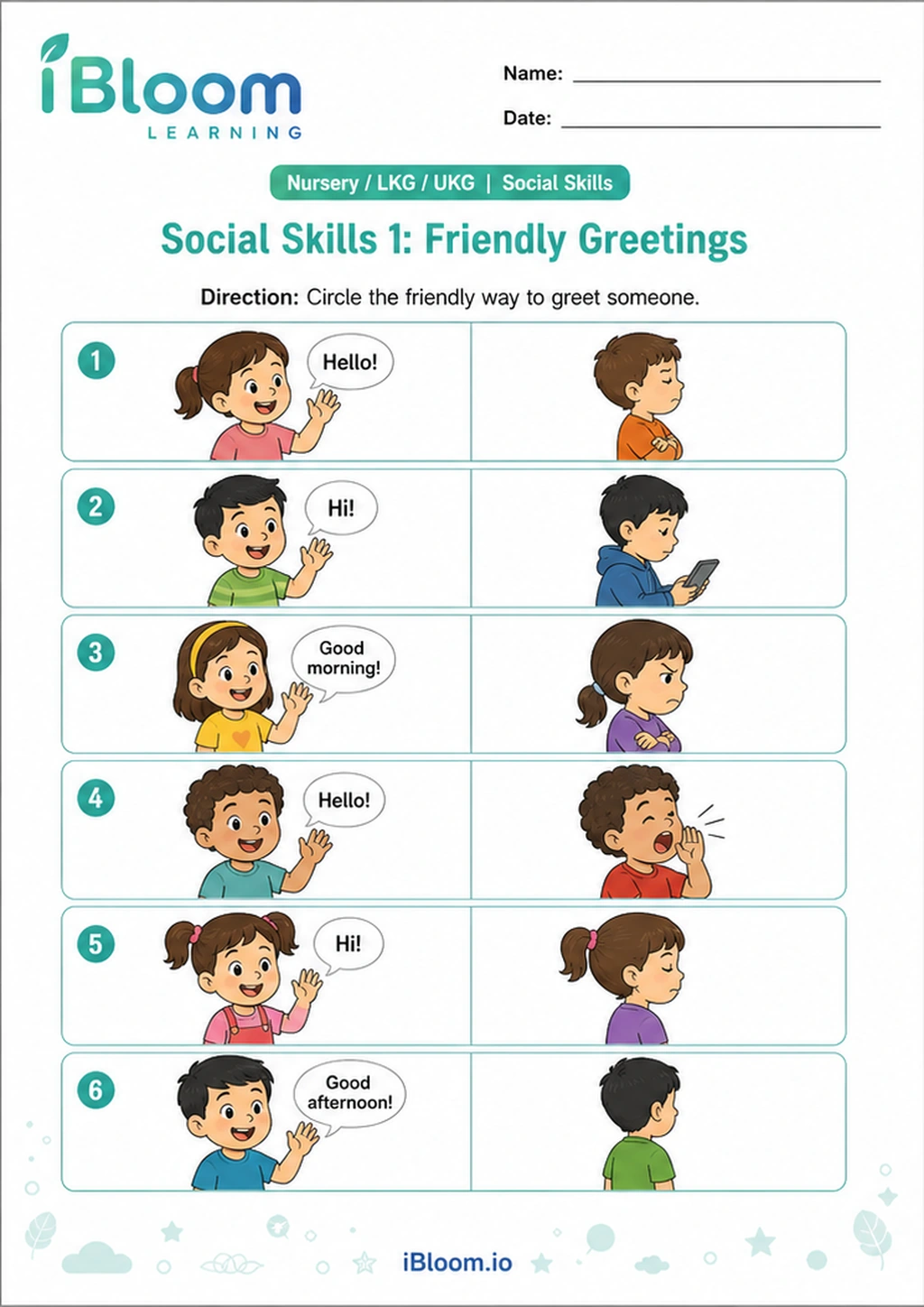 Social Skills 1: Friendly GreetingsNursery LKG UKG printable practice for Social Skills.Nursery LKG UKGFree PDF preview
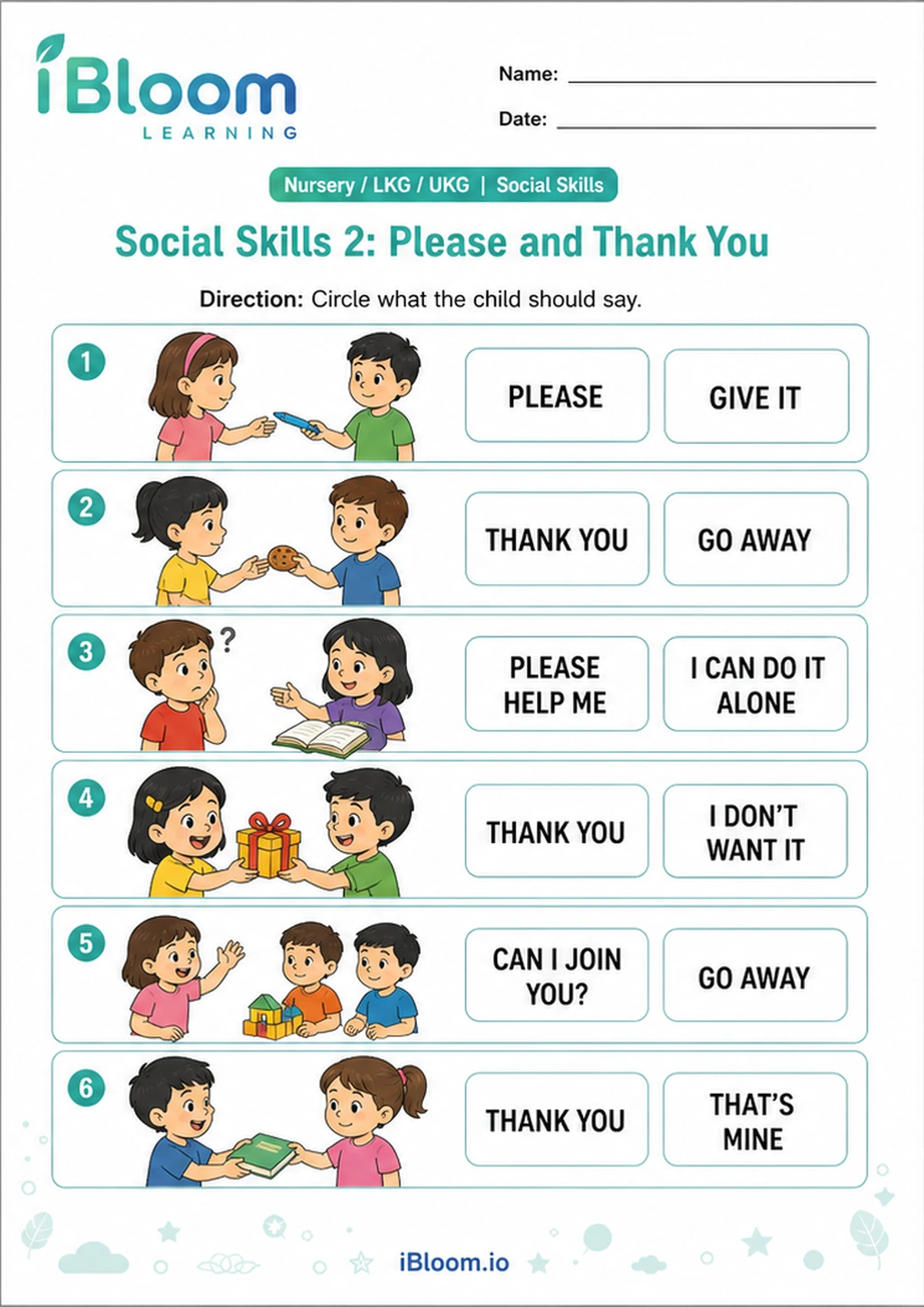 Social Skills 2: Please and Thank YouNursery LKG UKG printable practice for Social Skills.Nursery LKG UKGFree PDF preview
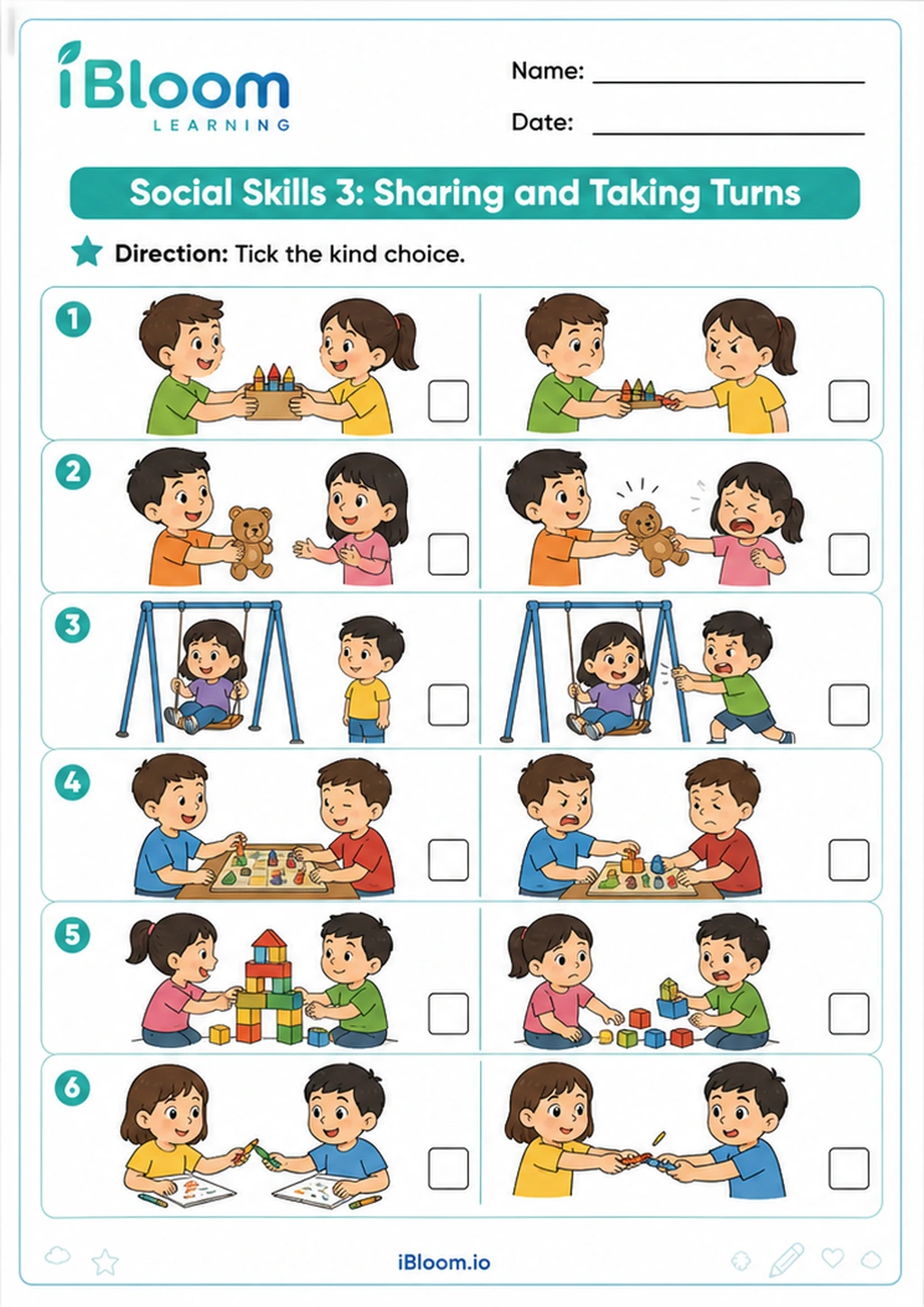 Social Skills 3: Sharing and Taking TurnsNursery LKG UKG printable practice for Social Skills.Nursery LKG UKGFree PDF preview
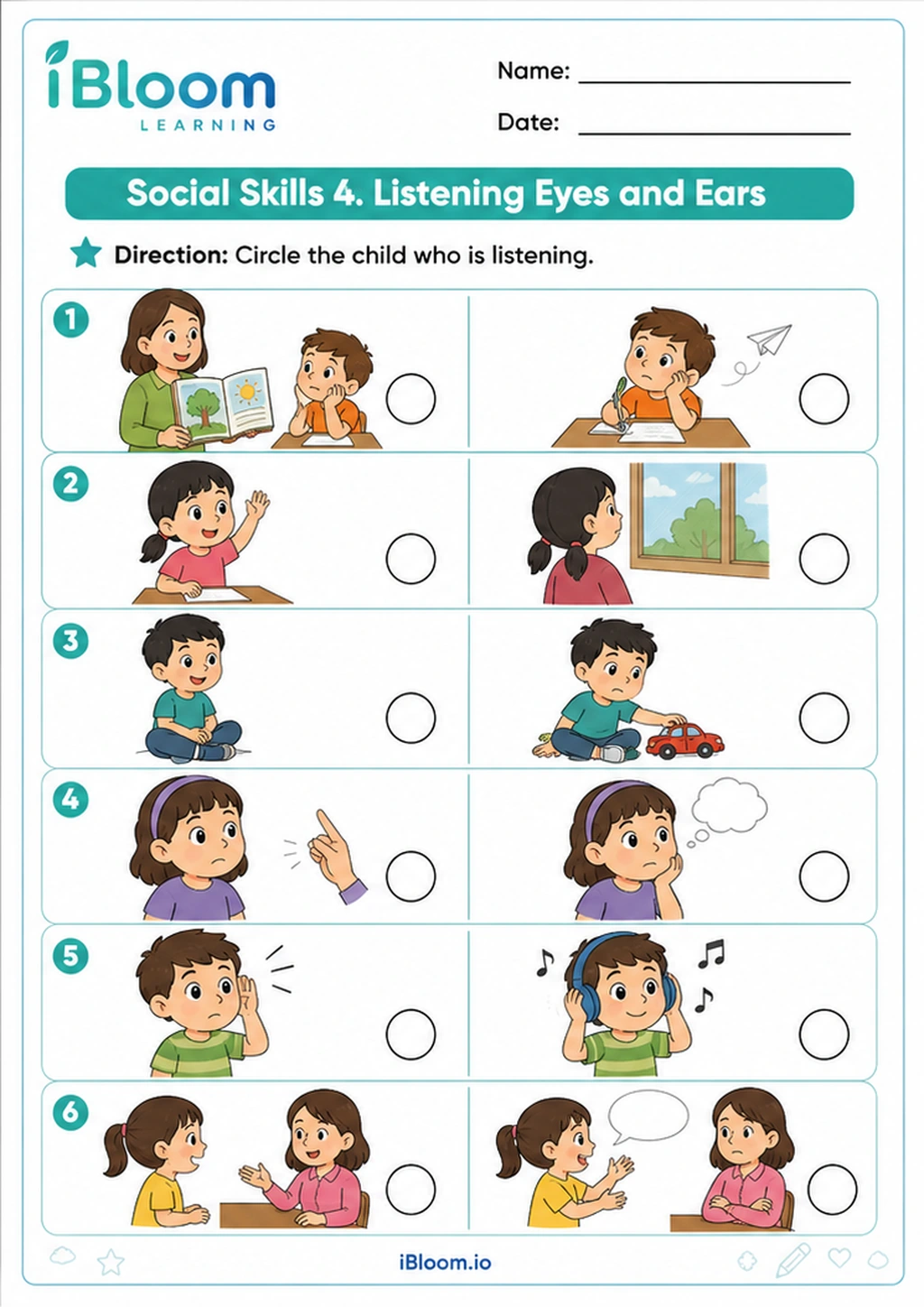 Social Skills 4: Listening Eyes and EarsNursery LKG UKG printable practice for Social Skills.Nursery LKG UKGFree PDF preview
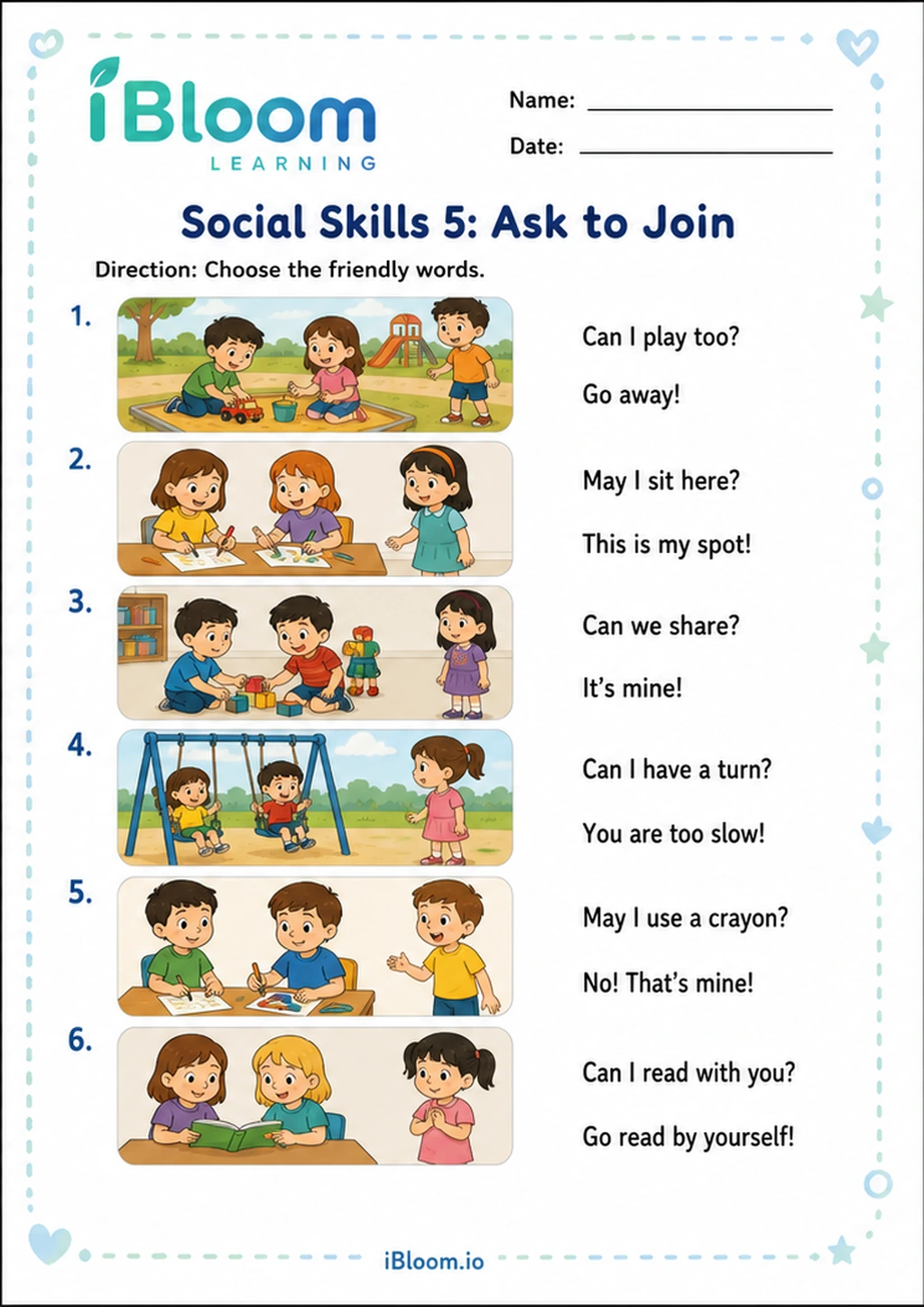 Social Skills 5: Ask to JoinNursery LKG UKG printable practice for Social Skills.Nursery LKG UKGFree PDF preview
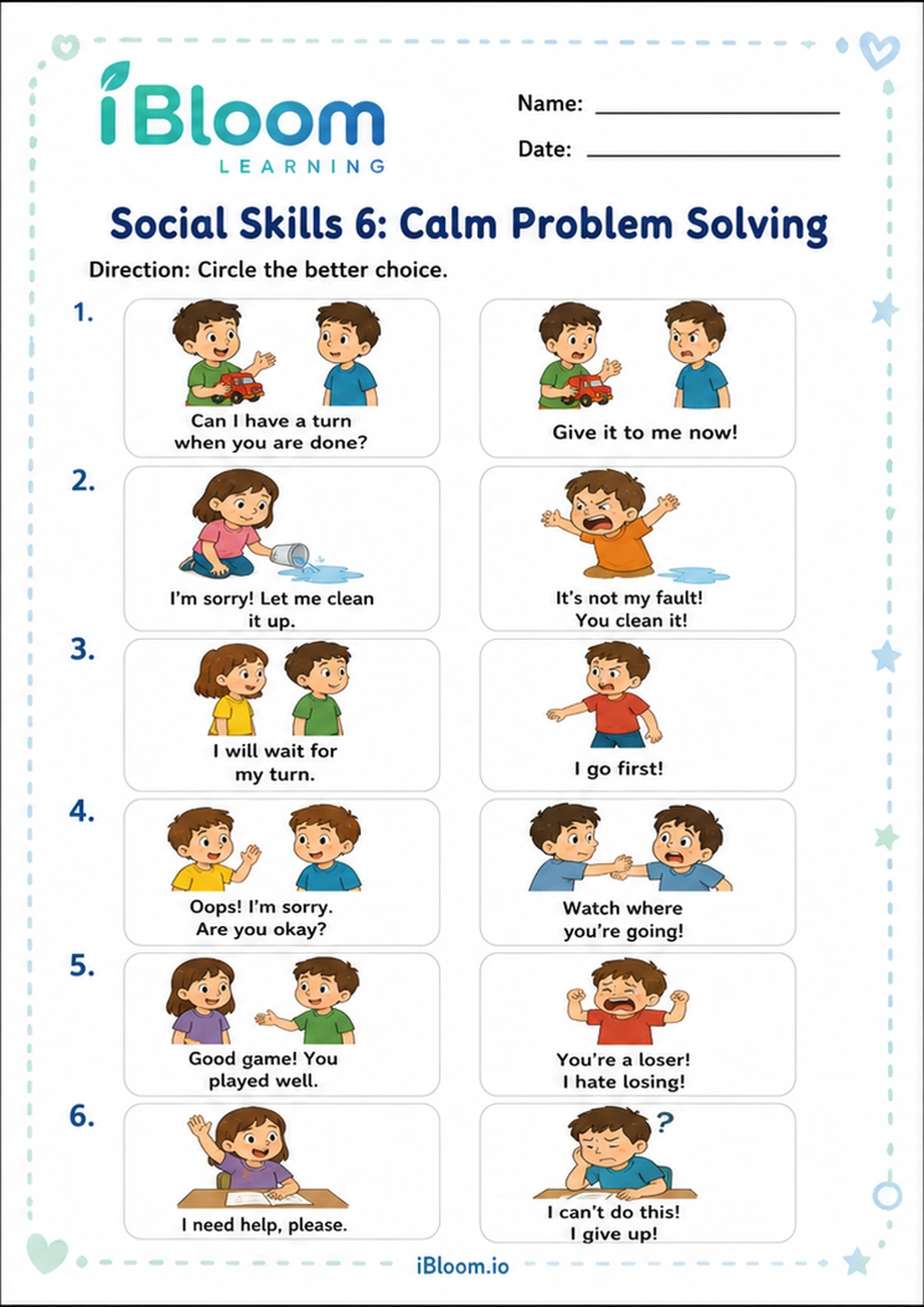 Social Skills 6: Calm Problem SolvingNursery LKG UKG printable practice for Social Skills.Nursery LKG UKGFree PDF preview
Practice that builds confidence
Building everyday social confidence
These social skills practice activities help Nursery, LKG and UKG children learn how to interact kindly with classmates, teachers and family members. Children practise greetings, waiting for a turn, sharing materials, asking for help, listening to others and using polite words in everyday situations.
The printable activities include simple picture prompts, matching tasks, cut-and-paste choices, colouring responses and role-play ideas. Each worksheet supports early social emotional learning through familiar school and home scenes that young children can understand and talk about.
At this age, social skills are taught through repeated, concrete situations rather than long explanations. These worksheets focus on small behaviours children can see and try: saying “hello”, using “please” and “thank you”, sitting with a group, waiting while someone else speaks, and choosing gentle words during play. The aim is not perfect behaviour, but growing awareness of how our actions affect others.

What children practise on the page
Activities may ask children to identify a friendly choice, match a feeling to a helpful action, colour the child who is listening, or choose what to say when they want a toy. Picture-based tasks are especially useful for pre-readers because children can point, name, describe and act out the scene. Teachers and parents can add oral language by asking, “What is happening?”, “What should the child do next?” and “How will the friend feel?”
A simple parent routine
Use one worksheet at a time after a real event, such as playtime, a visit, or sharing crayons with a sibling. First, look at the picture together. Next, let the child tell what they notice. Then practise the exact sentence they can use: “May I have a turn?”, “Can I play too?”, “I am sorry”, or “Please help me.” End by role-playing the same situation with a toy, cup, book or colour pencil so the skill moves from paper to daily life.

Classroom uses for teachers
In Nursery, LKG and UKG classrooms, these printables work well during circle time, life skills discussions, buddy activities and calm-down conversations. Teachers can use them before group play, before distributing shared materials, or after a minor conflict to revisit a better choice. They also fit into display boards and class rule charts because the pictures give children a visual reminder of expected behaviour.

Common errors to watch for
Young children may say the “right” answer on a worksheet but still grab, interrupt or walk away in real situations. They may also confuse sharing with giving up something completely, or think saying sorry is enough without changing the action. Watch for children who need extra practice with personal space, voice volume, waiting, eye contact or asking to join a game.
Free printable PDF download
Use this social skills worksheets for nursery lkg ukg page to preview the activity, print it, or download it as a PDF for quick practice. It works well for homework, homeschool lessons, tutoring, morning work, revision, and classroom centers.
Answers and answer key support
After the child completes the worksheet independently, parents and teachers can use the answer support or answer key information to check the work, review mistakes, and choose the next practice step.
Why iBloom worksheets help
The activities use familiar settings, clear choices and child-friendly language so social rules feel practical, not abstract. A helpful strategy for children is: stop, look, use words, then try again. Repeating this with pictures, role play and real classroom routines builds confidence step by step.
Helpful answers
Frequently asked questions
What social skills do these Nursery, LKG and UKG worksheets cover?
They focus on everyday early years skills such as greeting others, sharing, waiting for a turn, listening, asking for help, saying sorry, using polite words and joining group play.
Can children use these worksheets if they cannot read yet?
Yes. The activities are picture-led, so children can point, colour, match, choose and talk about the scenes with an adult’s guidance.
How should I use a social skills worksheet at home?
Choose one real-life skill, discuss the picture, practise a simple sentence like “May I have a turn?”, and then role-play the same situation using toys or household objects.
Are these activities useful after classroom conflicts?
Yes. Teachers can use them calmly after a small disagreement to help children identify what happened, how others felt and what a better choice could be next time.
How do these worksheets support shy children?
They give shy children safe practice with words and actions before using them in a group, such as asking to join play, greeting a friend or requesting help from a teacher.
Is this social skills worksheets for nursery lkg ukg free?
Yes. You can preview it for free and use the printable worksheet for home or classroom practice.
Can I download this social skills worksheets for nursery lkg ukg as a PDF?
Yes. Use the worksheet download option to save a printable PDF, or print the worksheet directly from the page.
Does this social skills worksheets for nursery lkg ukg include answers or an answer key?
When the activity has fixed answers, iBloom includes answer support so parents and teachers can check the completed worksheet.