Free printable practice
Good Manners Practice Activities
Printable good manners activities for Nursery, LKG and UKG children to practise polite words, respectful actions and everyday social behaviour.
Free printable worksheet PDFs
Preview every available page, then download the free worksheet PDF for home, homeschool, tutoring, or classroom practice.
Preview the exact activity before downloading it.
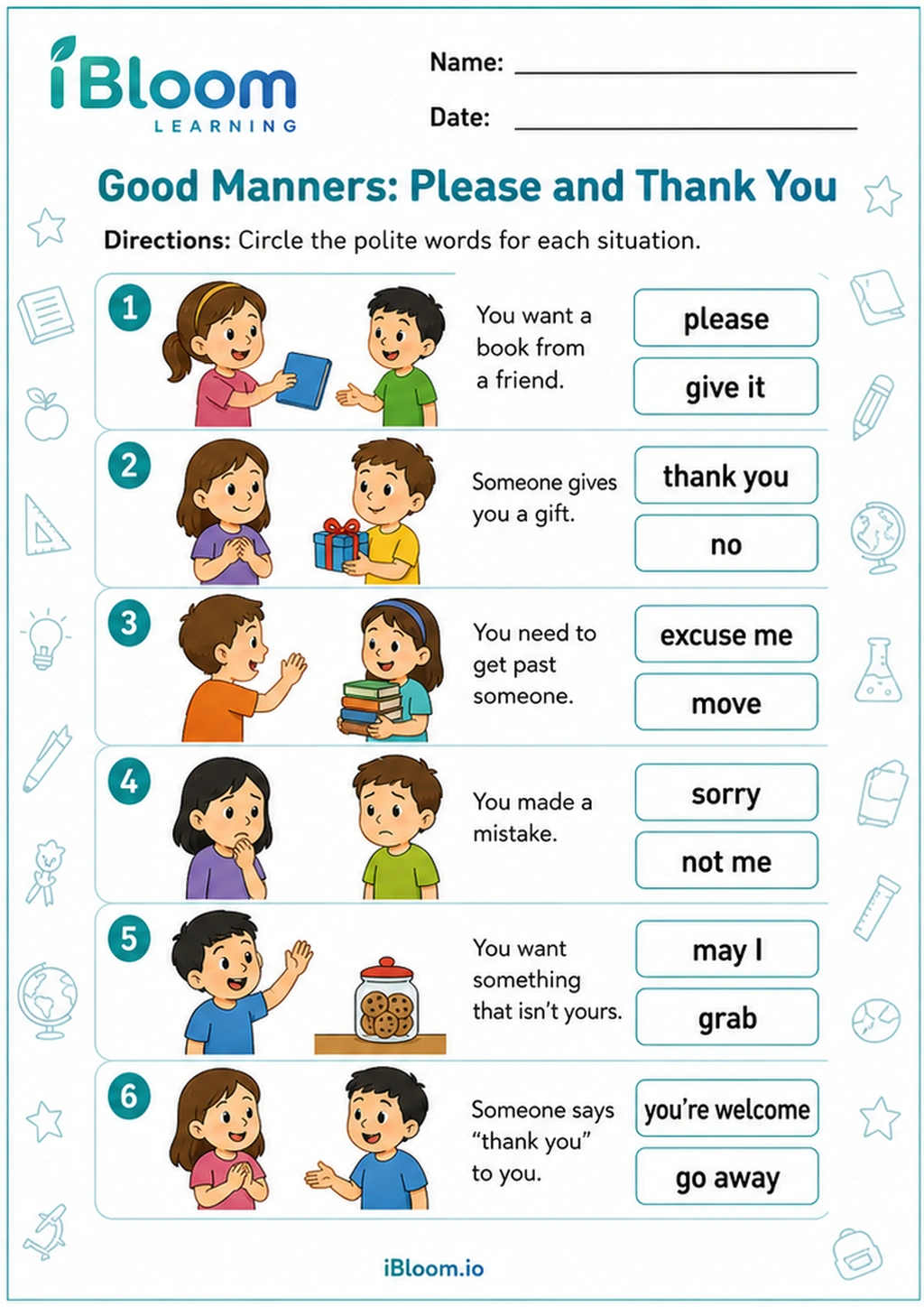 Good Manners: Please and Thank YouLKG printable practice for Good Manners.LKGFree PDF preview
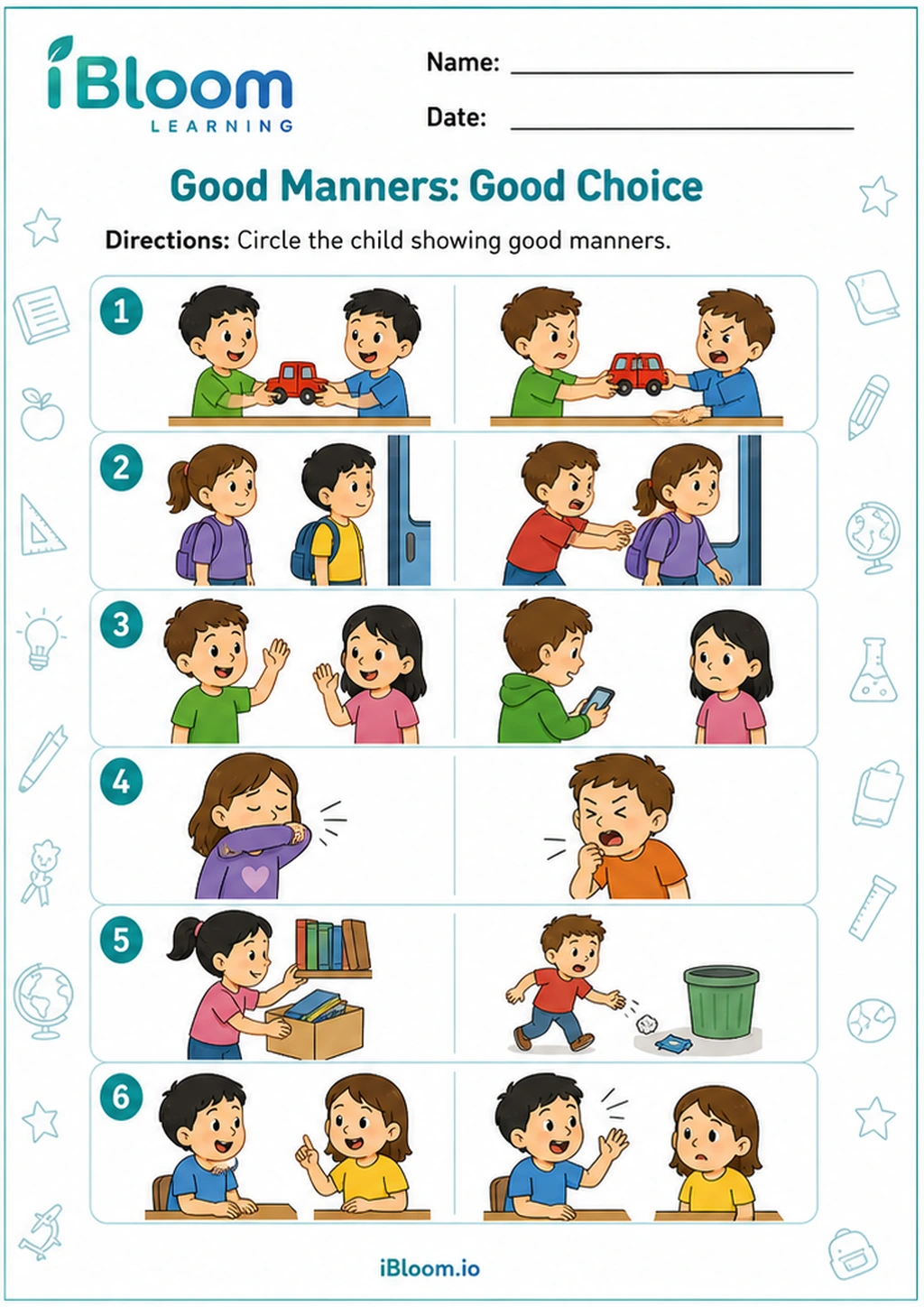 Good Manners: Good ChoiceLKG printable practice for Good Manners.LKGFree PDF preview
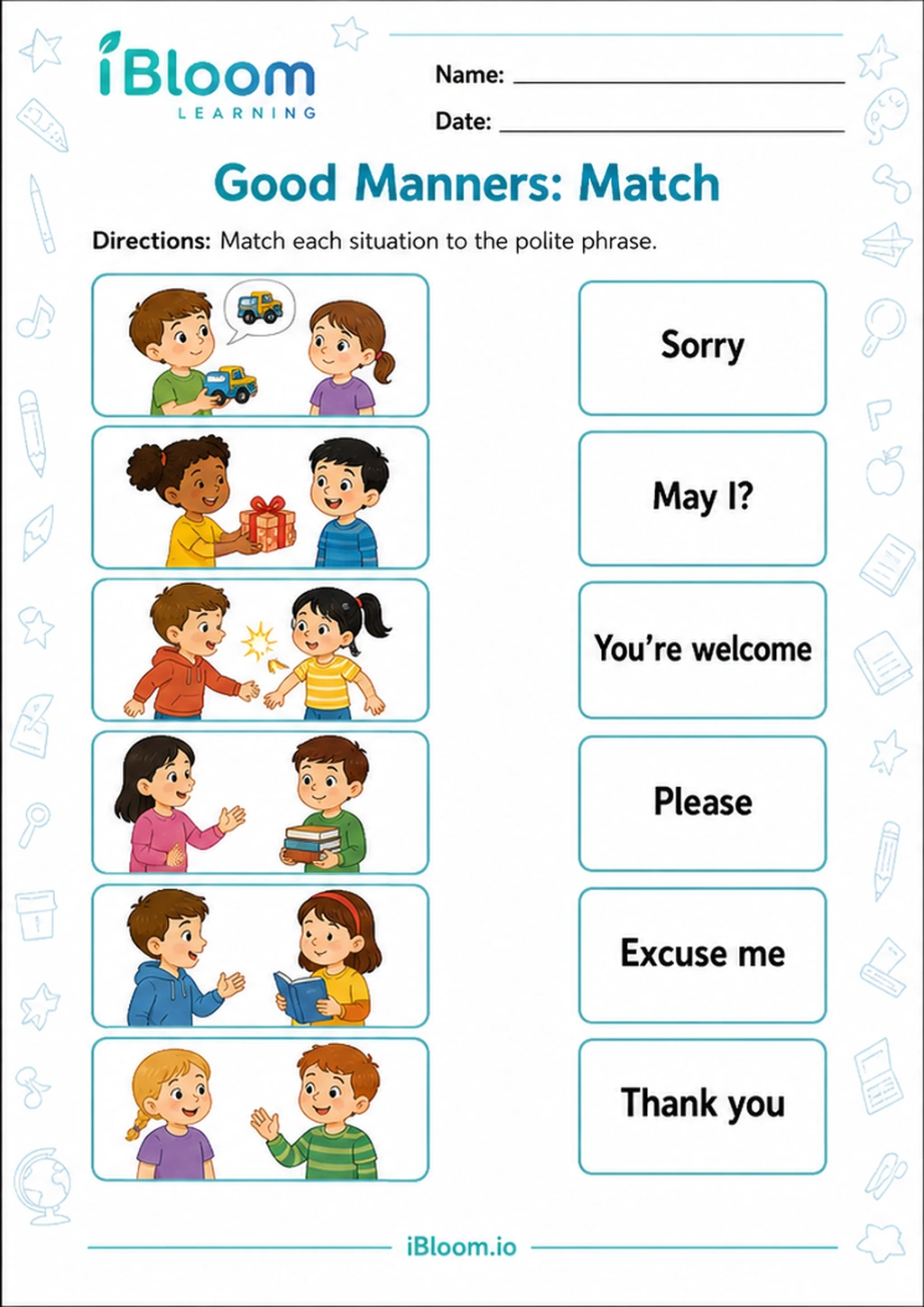 Good Manners: MatchLKG printable practice for Good Manners.LKGFree PDF preview
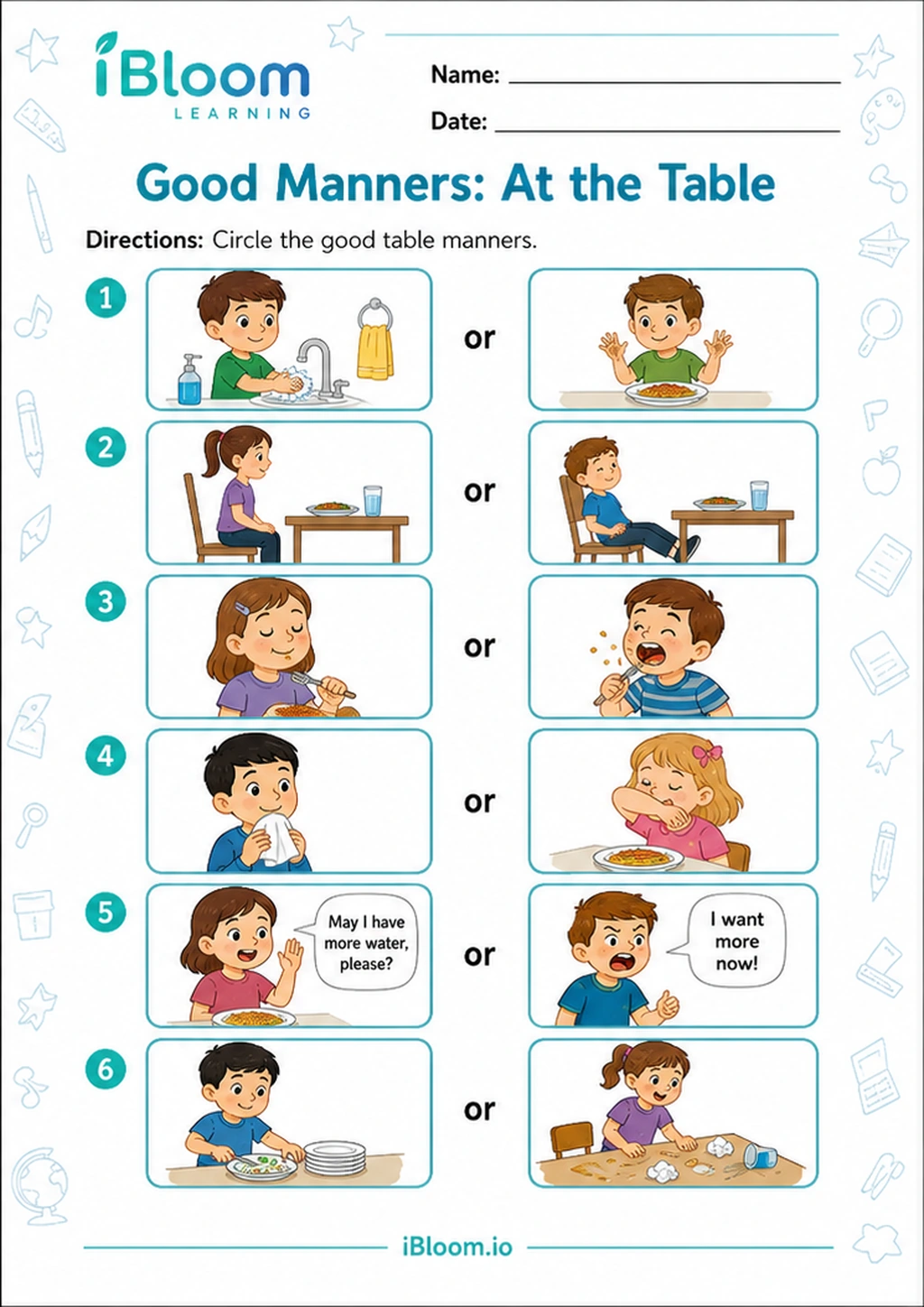 Good Manners: At the TableLKG printable practice for Good Manners.LKGFree PDF preview
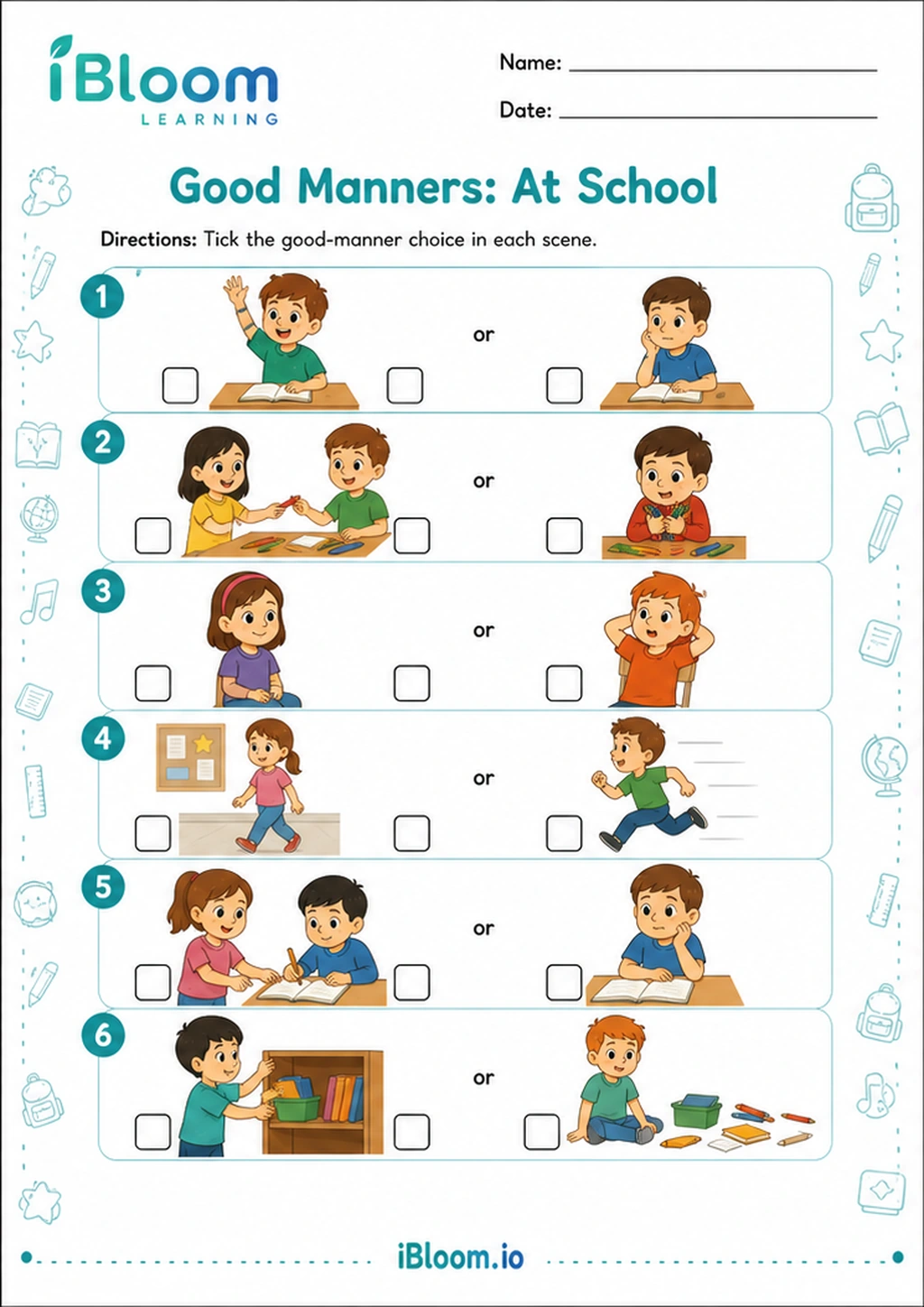 Good Manners: At SchoolLKG printable practice for Good Manners.LKGFree PDF preview
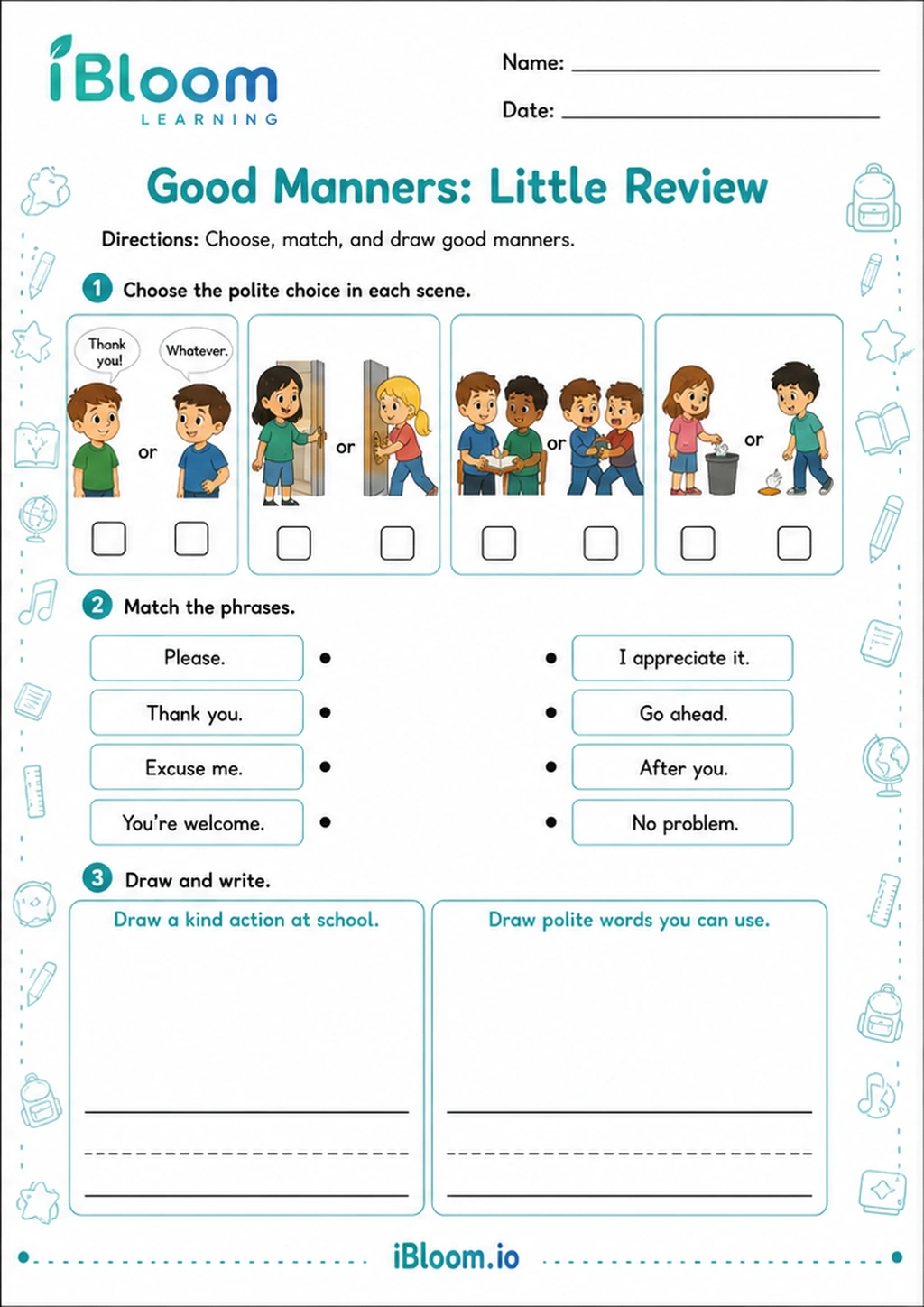 Good Manners: Little ReviewLKG printable practice for Good Manners.LKGFree PDF preview
Practice that builds confidence
Manners children practise
These Good Manners practice activities help Nursery, LKG and UKG children learn how polite behaviour sounds and looks in daily life. Children practise using words such as please, thank you, sorry and excuse me, while recognising actions like sharing, greeting, waiting for a turn and helping others.
The printable worksheets include picture-based tasks, matching, colouring, sorting, tracing and simple situation prompts suited to early learners. Each activity connects manners to familiar places such as home, school, the classroom, playground and mealtime, so children can use the skill beyond the worksheet.
Good manners are part of early social-emotional learning. In this Nursery, LKG and UKG collection, children practise polite words, gentle actions and respectful routines. Activities may ask them to choose the child who is saying thank you, match sorry to an accidental spill, colour a sharing scene, or identify when to say excuse me.

How the activities progress
The worksheets begin with clear picture recognition because young children understand behaviour best through scenes. They then move to simple choices, matching polite words to situations, tracing key phrases and talking about what a kind child could do next. This progression supports oral language, listening and self-control without making the task too abstract.
A simple home routine
Parents can use one page at a time after a real situation. For example, after snack time, ask, “What did we say when we got the banana?” Then complete a thank you activity together. Keep a small “manners spot” on the fridge for finished pages. During the day, notice the same behaviour aloud: “You waited for your turn. That was good manners.” This helps children connect the worksheet with real habits.

Classroom uses for teachers
Teachers can use these printables during circle time, value education, life skills, social-emotional lessons or calm-down corners. A page showing greeting, sharing or helping can start a short class discussion before role play. The same sheet can also be used in small groups, where children point, colour and say the polite phrase together.

Common errors to watch for
Some children repeat polite words without understanding when to use them. Others may know the right answer on paper but forget during play, especially when excited. Watch for confusing sorry with excuse me, grabbing while saying please, or saying thank you only when reminded. Gentle practice and modelling work better than scolding.
Free printable PDF download
Use this good manners worksheets for nursery lkg ukg page to preview the activity, print it, or download it as a PDF for quick practice. It works well for homework, homeschool lessons, tutoring, morning work, revision, and classroom centers.
Answers and answer key support
After the child completes the worksheet independently, parents and teachers can use the answer support or answer key information to check the work, review mistakes, and choose the next practice step.
Child-friendly strategy and why iBloom worksheets help
Teach children the quick rule: “Stop, smile, say.” Stop your body, look at the person, and say the kind words. iBloom worksheets help because each printable keeps the scene simple, the language familiar and the action visible. Children are not just memorising manners; they are learning to notice feelings, choose kind words and practise respectful behaviour in everyday Indian preschool settings.
Helpful answers
Frequently asked questions
What good manners do these worksheets cover?
They focus on early manners such as saying please, thank you, sorry and excuse me, greeting others, sharing, waiting for a turn, helping and behaving respectfully at home and school.
Are these activities suitable for Nursery children who cannot read yet?
Yes. The activities use pictures, colouring, matching and adult-led discussion, so Nursery children can participate even before they read words independently.
How can I teach polite words without forcing my child to repeat them?
Model the words in real situations, then use the worksheet picture to ask what the child could say. Praise the effort when the child uses the words naturally.
Can teachers use these good manners pages in class?
Yes. They work well for circle time, value education, social-emotional lessons, small-group work and role play before practising the same behaviour in class routines.
What should I do if my child knows the answer but forgets manners while playing?
This is common for young children. Give a calm reminder such as “Stop, smile, say,” then let the child try again. Repeated real-life practice builds the habit.
Is this good manners worksheets for nursery lkg ukg free?
Yes. You can preview it for free and use the printable worksheet for home or classroom practice.
Can I download this good manners worksheets for nursery lkg ukg as a PDF?
Yes. Use the worksheet download option to save a printable PDF, or print the worksheet directly from the page.
Does this good manners worksheets for nursery lkg ukg include answers or an answer key?
When the activity has fixed answers, iBloom includes answer support so parents and teachers can check the completed worksheet.