Free printable practice
Synonyms Crossword Practice Activities
Printable Class 1 vocabulary crosswords that help children match simple words with similar meanings and spell each synonym correctly in the grid.
Free printable worksheet PDFs
Preview every available page, then download the free worksheet PDF for home, homeschool, tutoring, or classroom practice.
Preview the exact activity before downloading it.
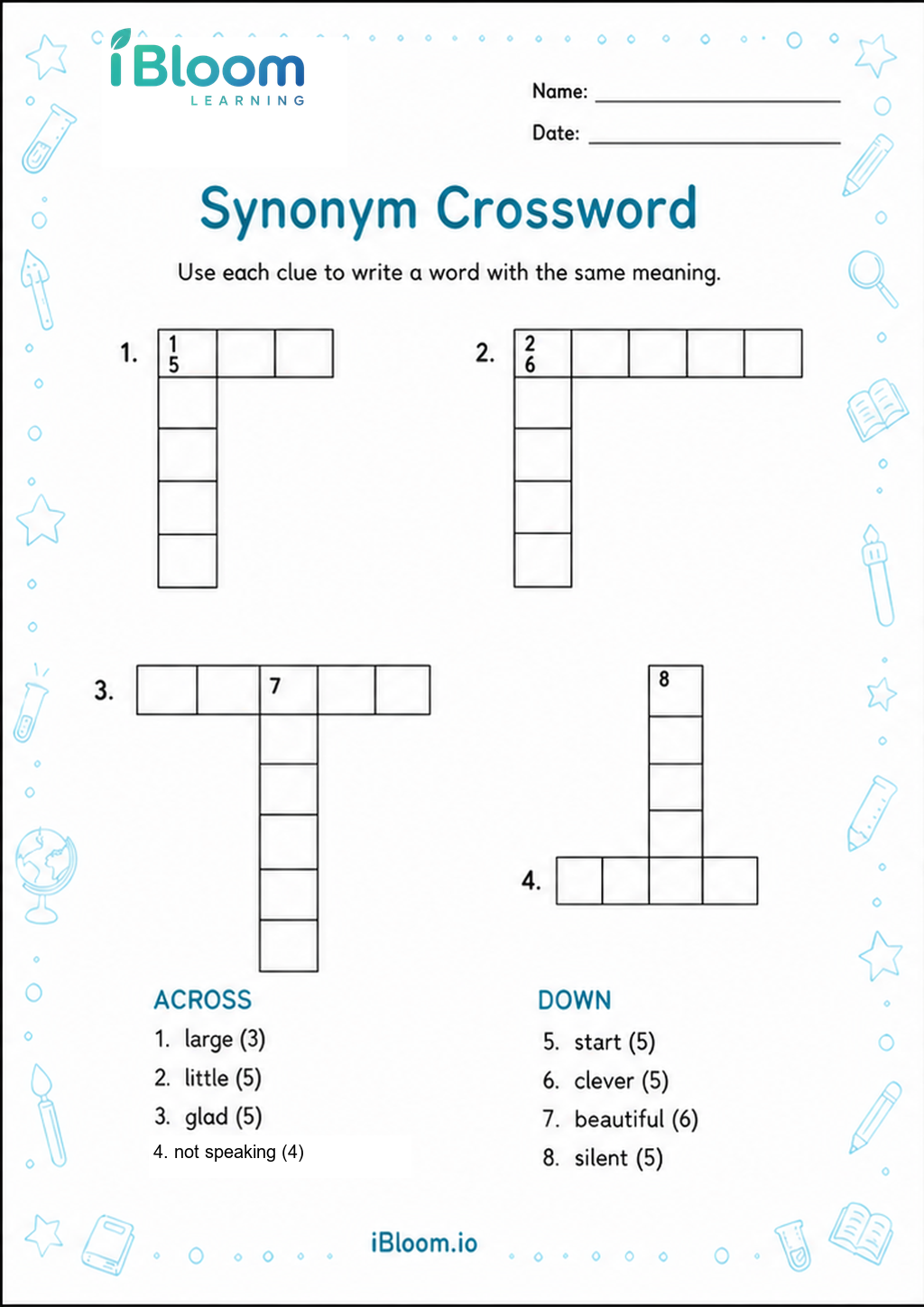 Synonym CrosswordClass 1 printable practice for Synonyms.Class 1Free PDF preview
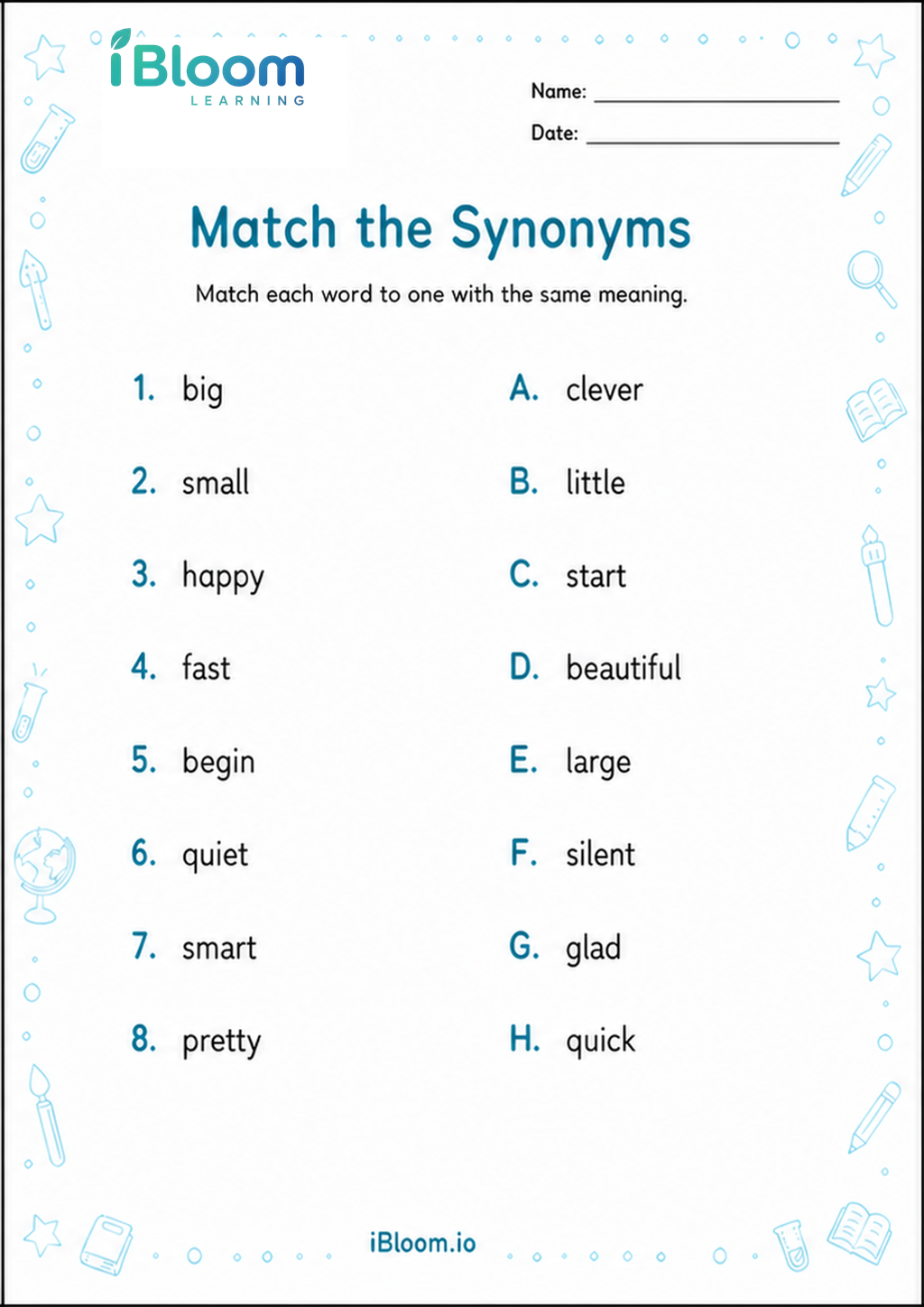 Match the SynonymsClass 1 printable practice for Synonyms.Class 1Free PDF preview
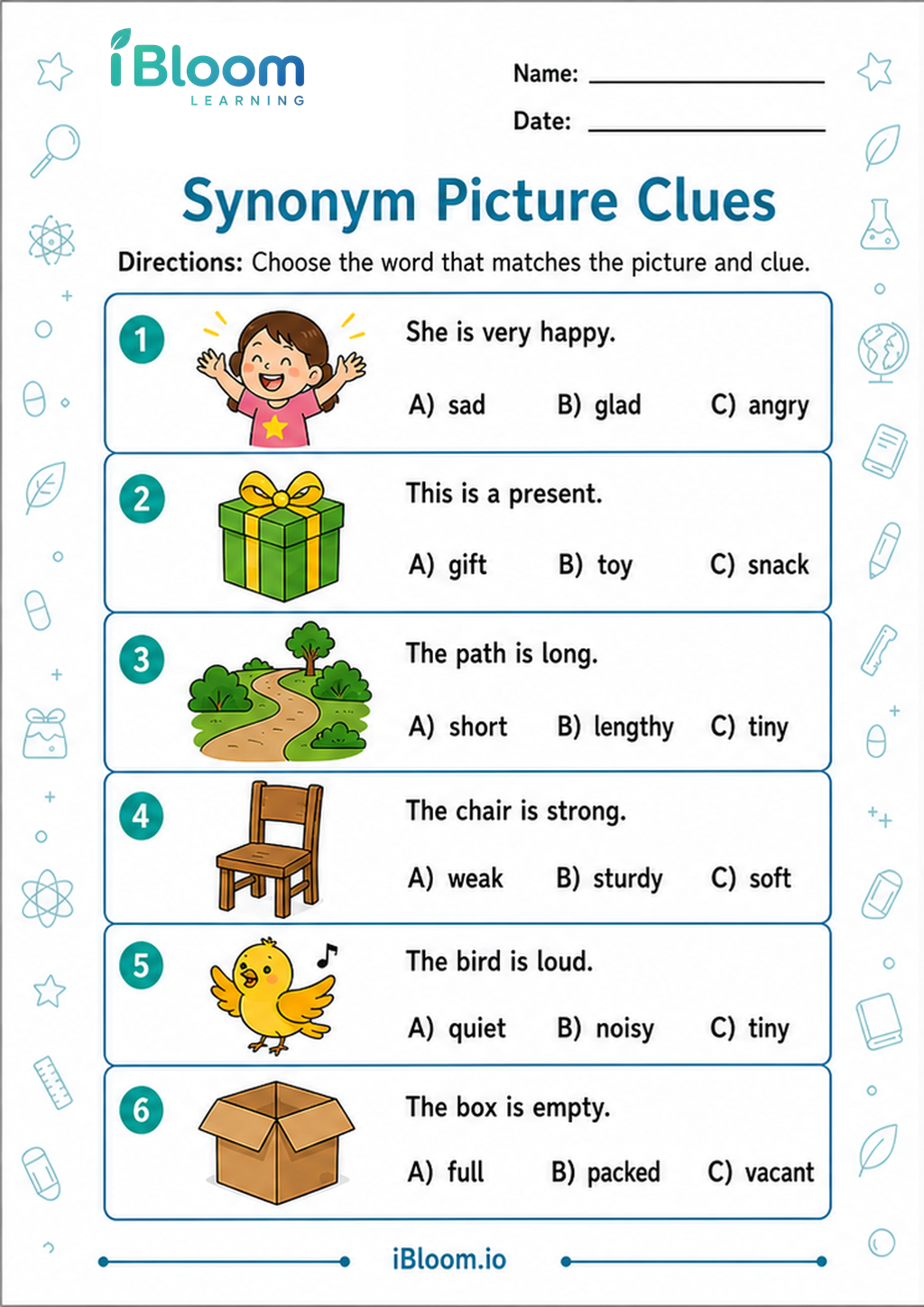 Synonym Picture CluesClass 1 printable practice for Synonyms.Class 1Free PDF preview
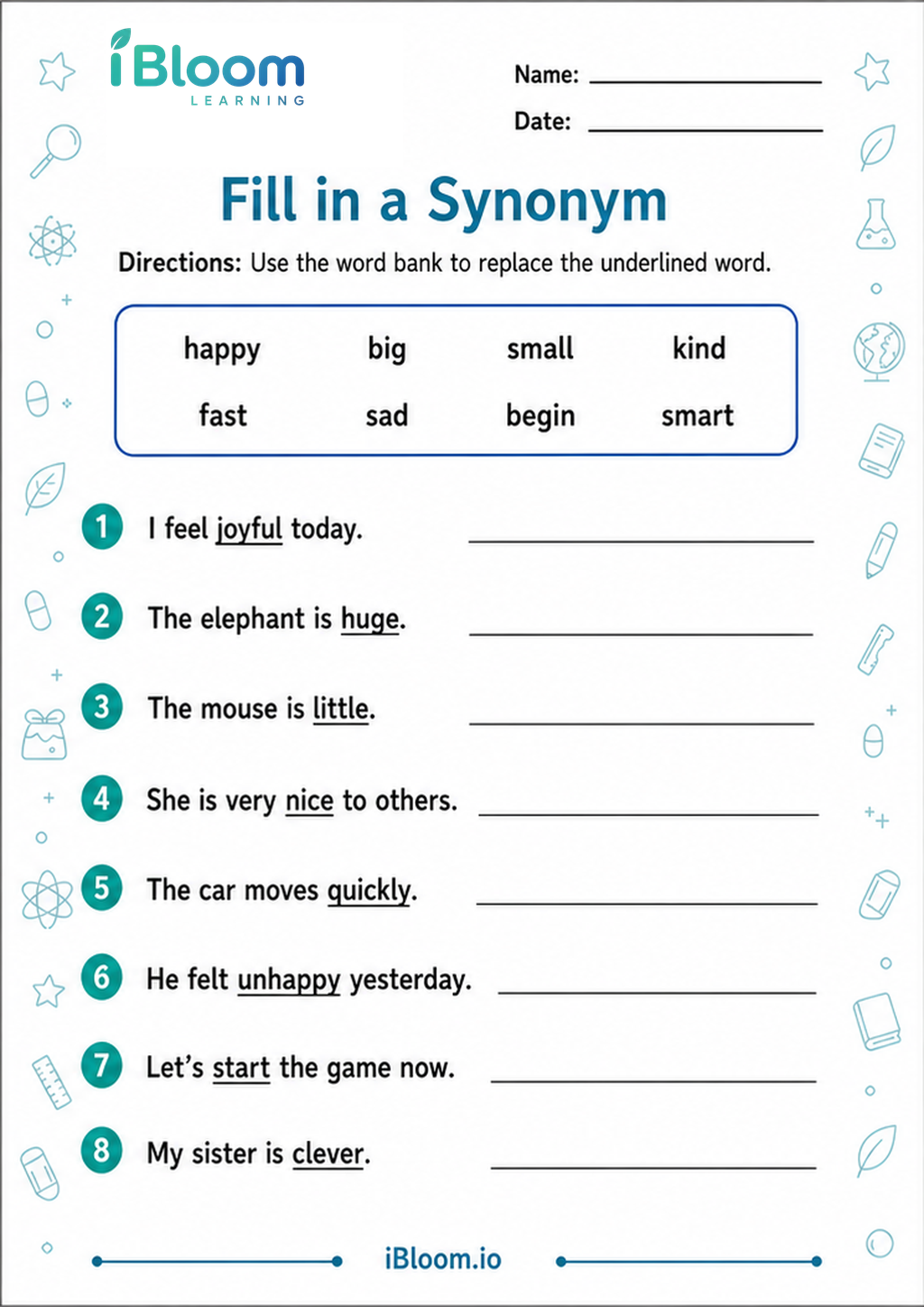 Fill in a SynonymClass 1 printable practice for Synonyms.Class 1Free PDF preview
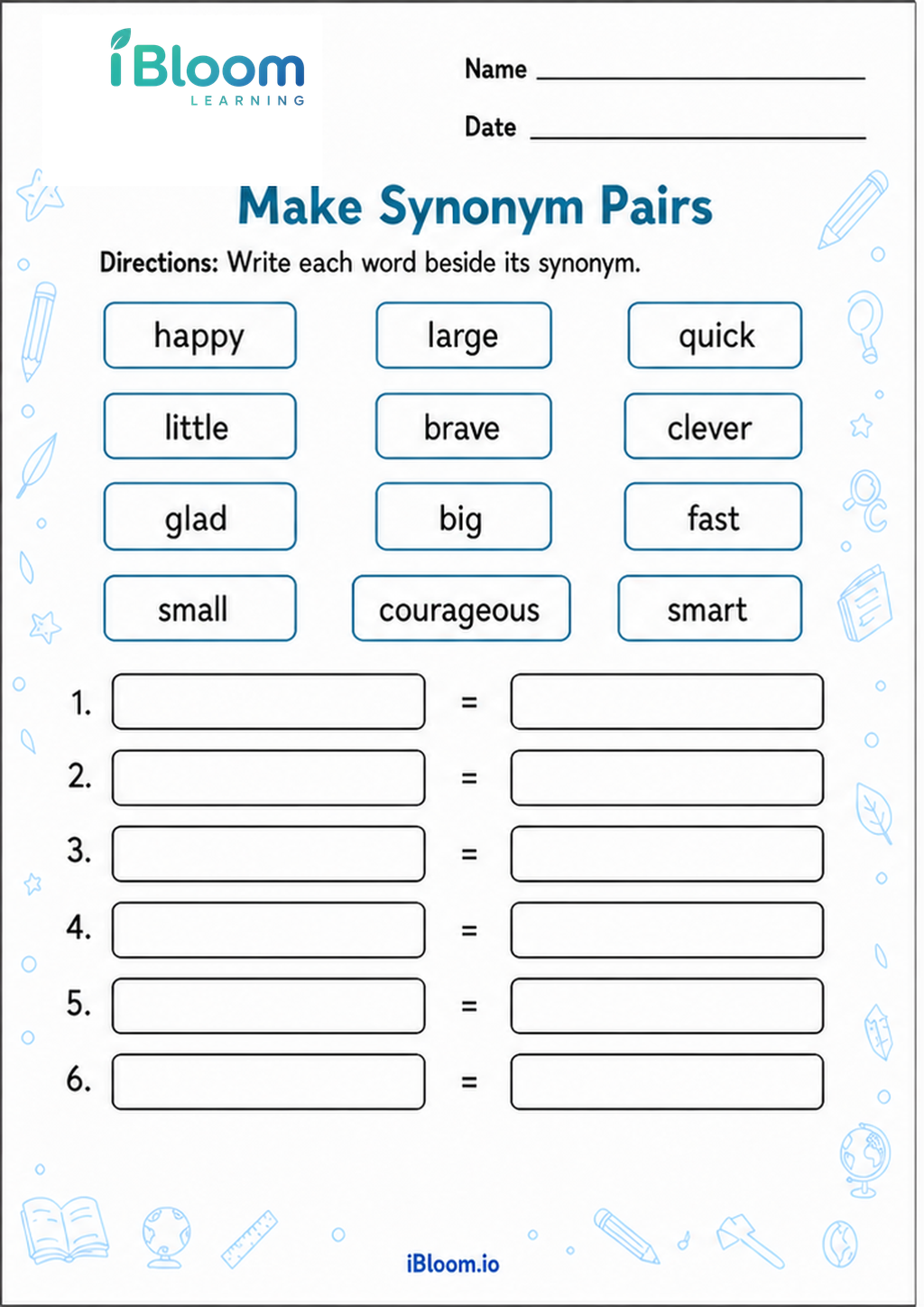 Make Synonym PairsClass 1 printable practice for Synonyms.Class 1Free PDF preview
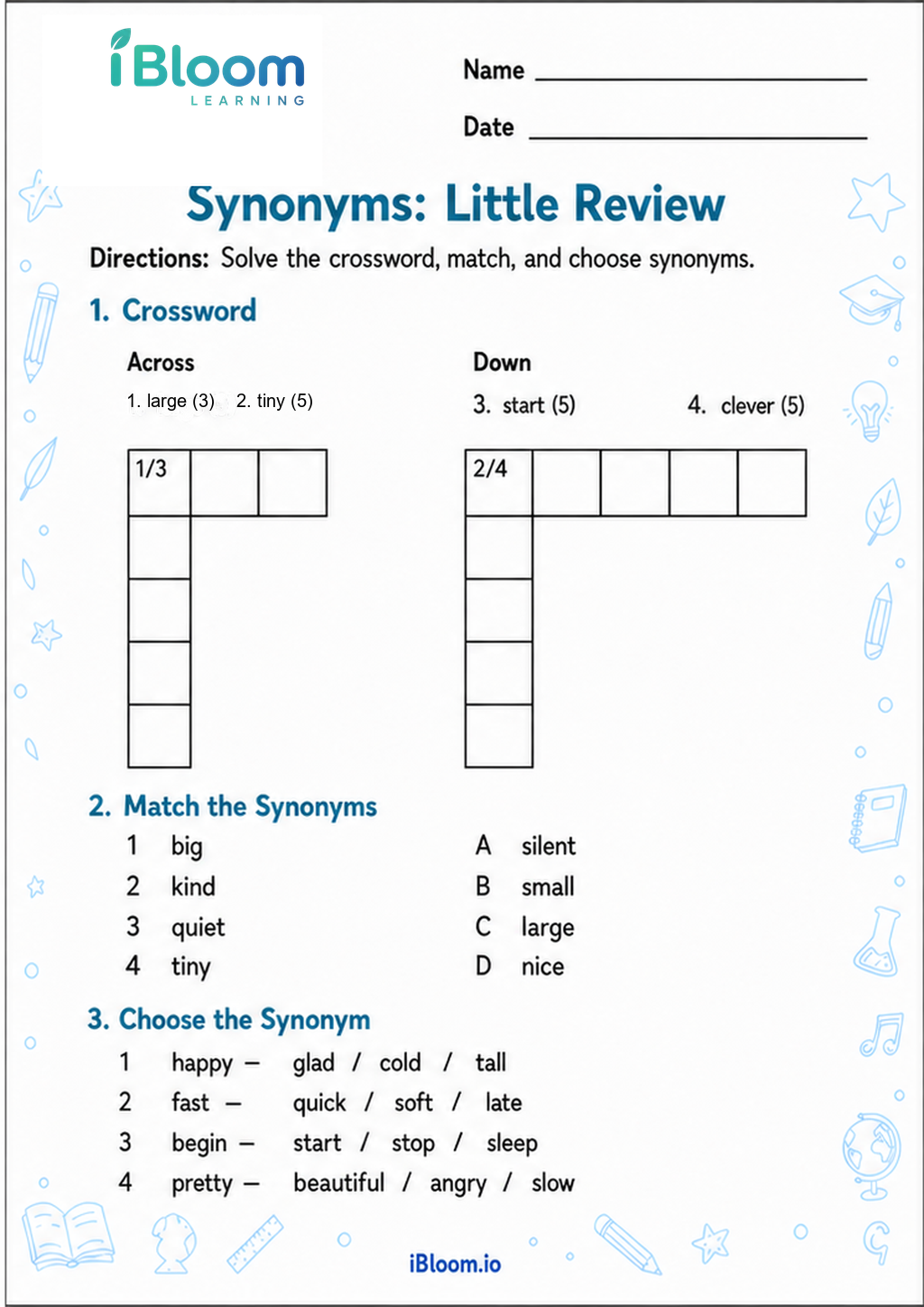 Synonyms: Little ReviewClass 1 printable practice for Synonyms.Class 1Free PDF preview
Practice that builds confidence
From meaning to crossword answers
These Class 1 vocabulary worksheets help children practise synonyms through simple crossword activities. Children read a clue word, think of a word with a similar meaning, and place the answer into a crossword grid using the given spaces and crossing letters.
The printables include age-appropriate word pairs such as big/large, small/little, happy/glad, quick/fast, and begin/start. The crossword format adds spelling practice, clue reading, and careful letter placement to regular synonym learning.
Synonyms are words that have the same or nearly the same meaning. In these worksheets, children do not only circle a matching word; they must use meaning, spelling, and grid position together. A clue such as “small” may lead to “little,” and the child checks whether the letters fit the boxes and match any crossing word.

How the practice builds
The activities are designed for early vocabulary learners in Class 1. Children begin by recognising familiar everyday words, then connect them with a similar word. The crossword structure encourages them to count letters, write one letter in each box, and notice how words meet across and down. This makes the work more thoughtful than copying a list of word pairs.
A simple parent routine
At home, read each clue word aloud and ask, “Which word means almost the same?” Let your child say the answer before writing it. If they are unsure, offer two choices, such as “glad or sad?” After each answer, ask them to use both words in short oral sentences: “I am happy” and “I am glad.” This helps the synonym feel natural, not memorised.

Classroom uses for teachers
Teachers can use these printable synonym crosswords during vocabulary lessons, literacy centres, early finisher tasks, or small-group revision. They also work well after a story-reading session: children can look for familiar words in the text and connect them with similar words from the worksheet. Pair work is useful because children explain their choices before filling the grid.

Common errors to watch for
Some children choose opposites instead of synonyms, for example sad for happy. Others pick a related word that is not close enough in meaning, such as run for fast. Spelling can also become difficult when a child knows the right answer but leaves out a letter. A child-friendly strategy is: “Think, say, check, write” — think of the meaning, say the word, check the number of boxes, then write carefully.
Free printable PDF download
Use this Class 1 synonyms crossword worksheet page to preview the activity, print it, or download it as a PDF for quick practice. It works well for homework, homeschool lessons, tutoring, morning work, revision, and classroom centers.
Answers and answer key support
After the child completes the worksheet independently, parents and teachers can use the answer support or answer key information to check the work, review mistakes, and choose the next practice step.
Why iBloom worksheets help
These iBloom worksheets combine vocabulary understanding with a playful puzzle task. The crossword format gives children built-in clues through letter spaces and crossing letters, while still requiring them to understand each word. This supports meaning, spelling, attention to detail, and confidence with Class 1 vocabulary practice.
Helpful answers
Frequently asked questions
What does a Class 1 child practise in a synonyms crossword?
The child practises matching a clue word with another word that has a similar meaning, then writes the answer correctly in the crossword grid.
Are these worksheets suitable for children who are new to synonyms?
Yes. The activities use simple, familiar words and the crossword boxes give extra support by showing how many letters the answer needs.
How can I help if my child knows the meaning but cannot spell the answer?
Ask your child to say the word slowly, count the boxes, and write one sound or letter at a time. Crossing letters can also help them check the spelling.
Can these crosswords be used in a classroom vocabulary centre?
Yes. Teachers can place them in literacy centres, use them for pair work, or give them as revision after teaching simple synonym pairs.
What mistake should I watch for during synonym practice?
A common mistake is choosing an opposite word instead of a similar word, such as writing sad for happy. Ask the child to test both words in the same sentence to check the meaning.
Is this Class 1 synonyms crossword worksheet free?
Yes. You can preview it for free and use the printable worksheet for home or classroom practice.
Can I download this Class 1 synonyms crossword worksheet as a PDF?
Yes. Use the worksheet download option to save a printable PDF, or print the worksheet directly from the page.
Does this Class 1 synonyms crossword worksheet include answers or an answer key?
When the activity has fixed answers, iBloom includes answer support so parents and teachers can check the completed worksheet.