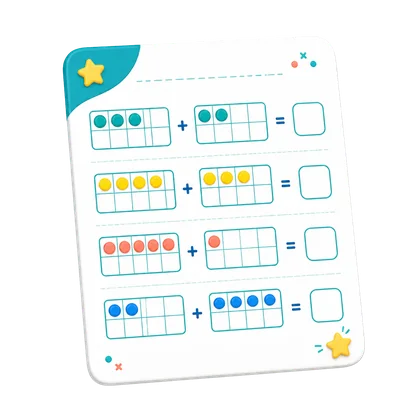

UKG Subtraction with Pictures Lesson
Preparing your worksheet
UKG Subtraction with Pictures Lesson | iBloom India: math practice for Ukg
UKG Subtraction with Pictures Lesson | iBloom India gives children a practical way to work on objects, pictures, counters, and real-life scenes. Use one solved example as a bridge between classroom language and home practice. Start with UKG Subtraction with Pictures Lesson | iBloom India, then use the paired worksheet for UKG Subtraction with Pictures Lesson | iBloom India when the child needs a second format for the same idea.
This page is written for parents, teachers, tutors, homeschool families, and children. The goal is for the learner to build the story with objects, remove the changed part, and explain what is left. In the United States, it can support kindergarten, first grade, second grade, homeschool, classroom centers, intervention, California, Texas, Florida, New York, Illinois, Pennsylvania, Ohio, Georgia, North Carolina, Michigan, Los Angeles, Houston, Chicago, Dallas, Austin, Seattle, Boston, Denver, Atlanta, and Miami. In the UAE, it can support families and teachers in Dubai, Abu Dhabi, Sharjah, Ajman, Al Ain, Ras Al Khaimah, Fujairah, Umm Al Quwain, British curriculum, American curriculum, IB, and Indian curriculum schools. In India, this page can support CBSE, ICSE, state-board, Class 1, Class 2, tuition revision, Delhi, Mumbai, Bengaluru, Chennai, Hyderabad, Pune, Kolkata, Ahmedabad, Jaipur, Lucknow, Kerala, Tamil Nadu, Karnataka, Maharashtra, Telangana, Gujarat, Rajasthan, and West Bengal.
What the child is learning
The child is learning to connect a math situation with a model and a short explanation. For subtraction pages, that means noticing the starting amount, seeing what is taken away, and naming what remains. For related math pages, it means using a clear model before moving to symbols or faster answers.
Children often appear to know a fact but still need help with the story or model. A learner may answer a number sentence correctly and then struggle when the same idea is shown through objects, frames, pictures, or a number line. Use the page to build flexible understanding, not only speed.
Parent practice routine
Parents can use this page for ten calm minutes. Read the first direction aloud, solve one example together, and ask the child to show the thinking with a finger, object, drawing, frame, number line, or spoken sentence. Then let the child complete a small set independently.
- Create a understanding subtraction with pictures story with 7 objects, remove 2, and ask the child to say what is left.
- Ask the child to draw or point to the objects, pictures, counters, and real-life scenes before writing the answer.
- Ask, "What did you start with, what changed, and what is left?"
- End with one confident explanation instead of pushing through a long packet.
If the child needs adult background before practice, read Subtraction Story Sums for Class 1 and then return to the child-facing iBloom page. The broader article gives parents the language; the worksheet or lesson gives the child the practice.
Teacher and tutor routine
Teachers can use the same page as a warm-up, center activity, small-group reteach, intervention check, homework review, or exit ticket. Tutors can use it to see whether the child struggles with reading the direction, choosing the operation, using the model, or explaining the answer.
A useful classroom routine is: model one item, let children solve two items, then ask partners to compare explanations. The explanation can be short: "I started with the whole group, took away a part, and counted what was left." This keeps the work child-friendly and still mathematically precise.
Examples to try before the page
- Let the child solve one item from UKG Subtraction with Pictures Lesson | iBloom India, then explain the answer to an adult.
- Use the paired page, paired worksheet for UKG Subtraction with Pictures Lesson | iBloom India, when the child needs the same idea taught another way.
- Ask the child to make a similar question for a parent, teacher, or classmate.
- Change one number in the story and ask how the answer changes.
For children who are ready for more, connect this page to Subtraction Word Problems for Class 1, Subtraction Word Problems Grade 1, and Subtraction Worksheets for Grade 1. For children who need a gentler start, use UKG Subtraction Worksheets or Picture Subtraction Worksheets for UKG.
How to support different learners
If the page feels hard, reduce the number of items, cover part of the page, read the direction aloud, or return to real objects. If the page feels easy, ask the child to write a new problem, compare two methods, or explain why a wrong answer is tempting.
In mixed classrooms, one page can support three levels. One group solves fewer items with counters or drawings. Another group completes the main set and explains one answer. A third group writes a new word problem or checks a partner's model. The skill stays the same while the support changes.
Common mistakes to watch for
- The child loses track on a busy page. Cover part of the page and solve one item slowly.
- The child subtracts the numbers but ignores the story. Ask the child to retell the situation and show what changed.
- The child writes a correct answer but cannot explain it. Ask for one sentence: I started with..., took away..., and had... left.
- The page is used once and never revisited. Return after two or three days for spaced practice.
When a mistake appears, pause and model one item. The [IES early math practice guide](https://ies.ed.gov/ncee/wwc/PracticeGuide/18) is useful adult background for why models, examples, and intentional practice matter. For child practice, stay with the iBloom worksheet or lesson until the explanation is clear.
India, US, and UAE classroom notes
Different schools use different labels, but the child task should stay clear. Indian families may say Class 1 subtraction sums or story sums. US classrooms may say first grade word problems, math models, or number-line subtraction. UAE families may move between British, American, IB, Indian, and home-language routines.
Let multilingual children tell the story in their strongest language first if needed. Then repeat the key English words: start, take away, left, subtract, difference, answer, model, frame, object, and number line. This helps the child connect home understanding with school vocabulary.
Connected iBloom practice
Choose the next page based on what the child needs: a lesson for modelling, a worksheet for independent practice, or a related article for adult planning.
- UKG Subtraction with Pictures Lesson | iBloom India
- paired worksheet for UKG Subtraction with Pictures Lesson | iBloom India
- Subtraction Story Sums for Class 1
- Subtraction Word Problems for Class 1
- Subtraction Word Problems Grade 1
- Subtraction Worksheets for Grade 1
- How to Teach Subtraction to First Graders
- iBloom Math Worksheets
- Free Adds and Subtracts Using Pictures (Numbers 1 to 10) Worksheets for Class 1
- Free Adds and Subtracts Using Pictures (Numbers 1 to 20) Worksheets for Class 1
Frequently asked questions
Who should use this page?
Use it when a Ukg child needs focused math practice connected to understanding subtraction with pictures, especially when the child benefits from a model and a spoken explanation.
How long should practice take?
Most children do well with 10 to 15 minutes. Stop after one useful correction or one clear explanation.
Should parents give the answer if the child is stuck?
Give one small prompt first. Ask the child to show the starting amount, the changed part, and what is left. Then model the next item if needed.
What should we do next?
Use one connected iBloom link above so the child sees the same skill again in a new format.
More practice for this grade
More Math lessons
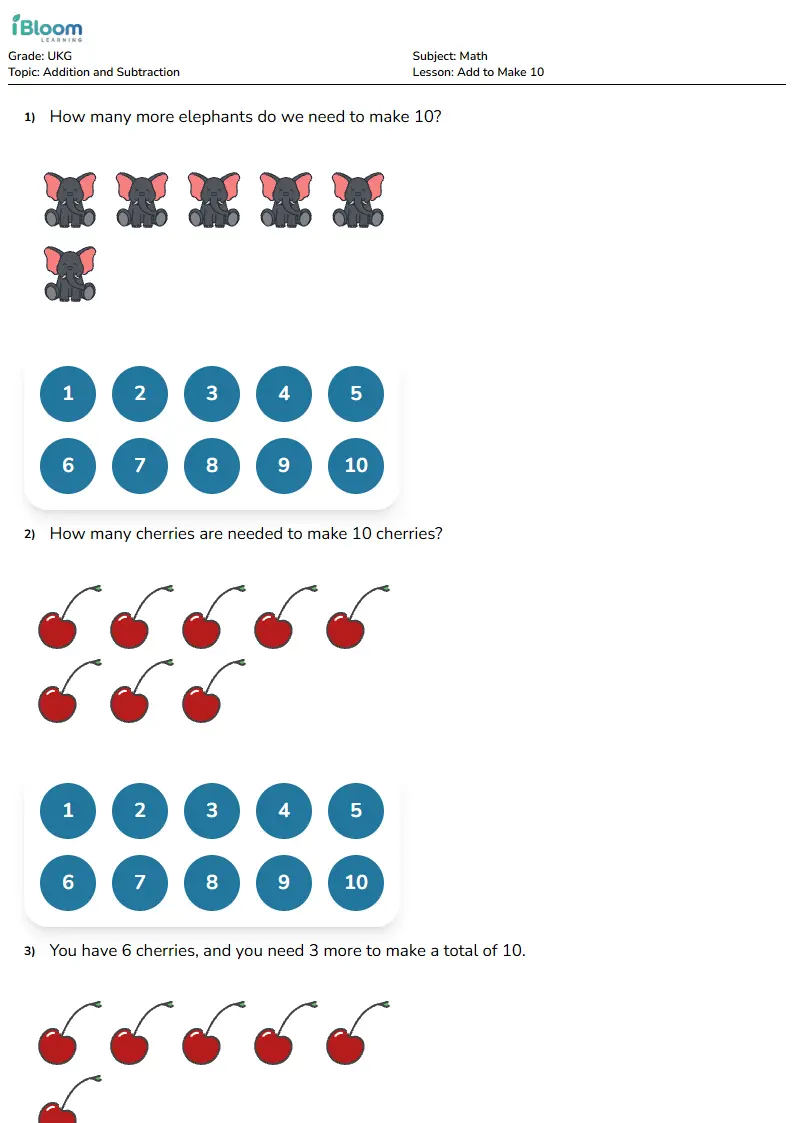
Add to Make 10 Lesson for Ukg
Explore a free interactive math lesson for ukg: Add to Make 10. AI-personalized, Common Core-aligned, and built for kids.
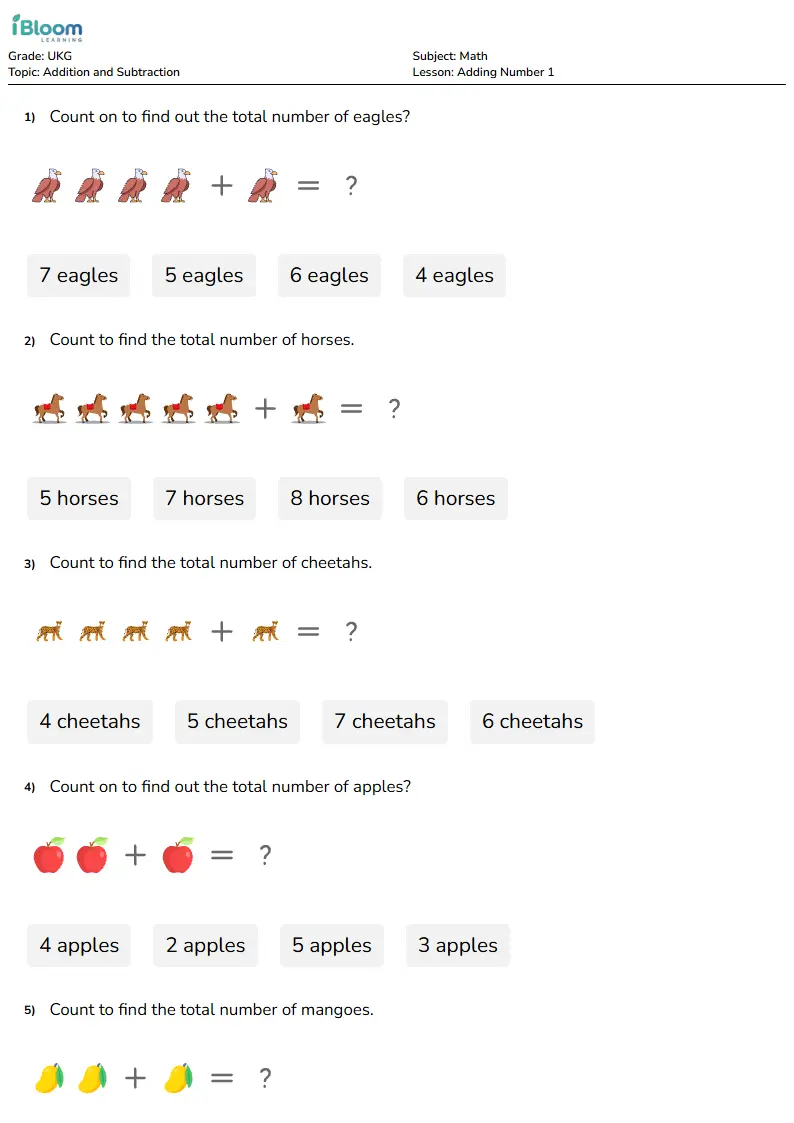
Adding Number 1 Lesson for Ukg
Explore a free interactive math lesson for ukg: Adding Number 1. AI-personalized, Common Core-aligned, and built for kids.
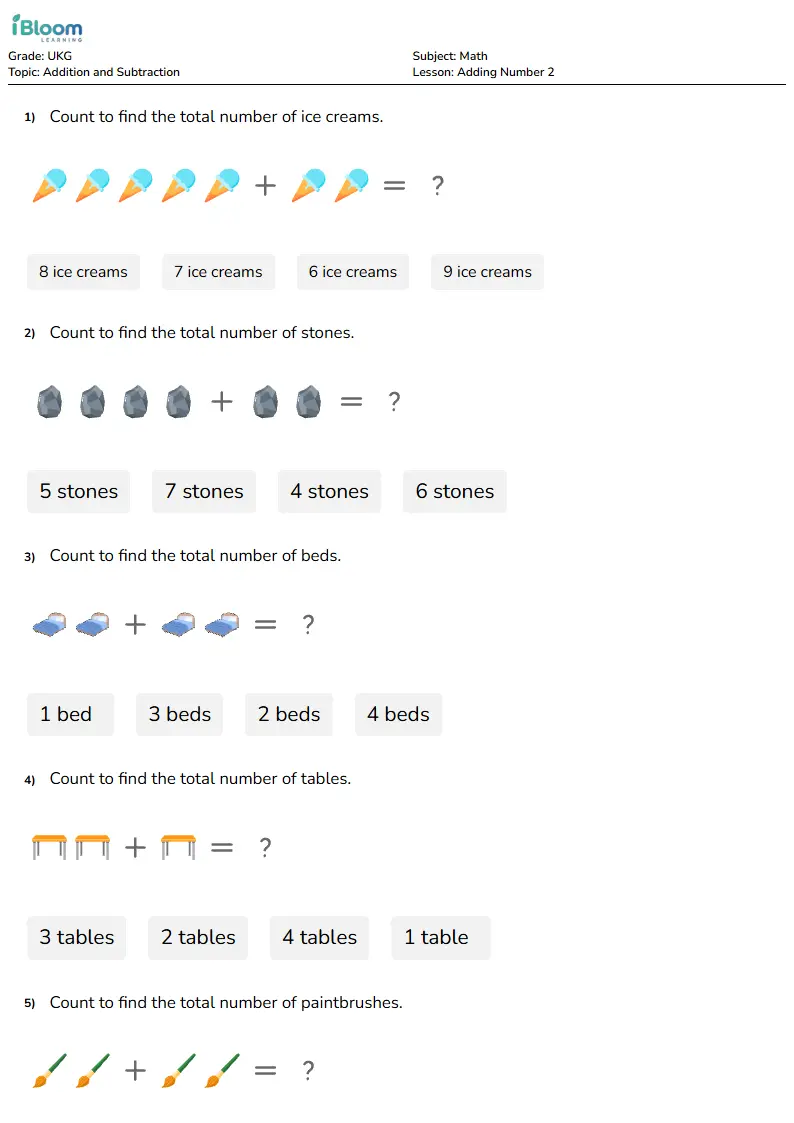
Adding Number 2 Lesson for Ukg
Explore a free interactive math lesson for ukg: Adding Number 2. AI-personalized, Common Core-aligned, and built for kids.
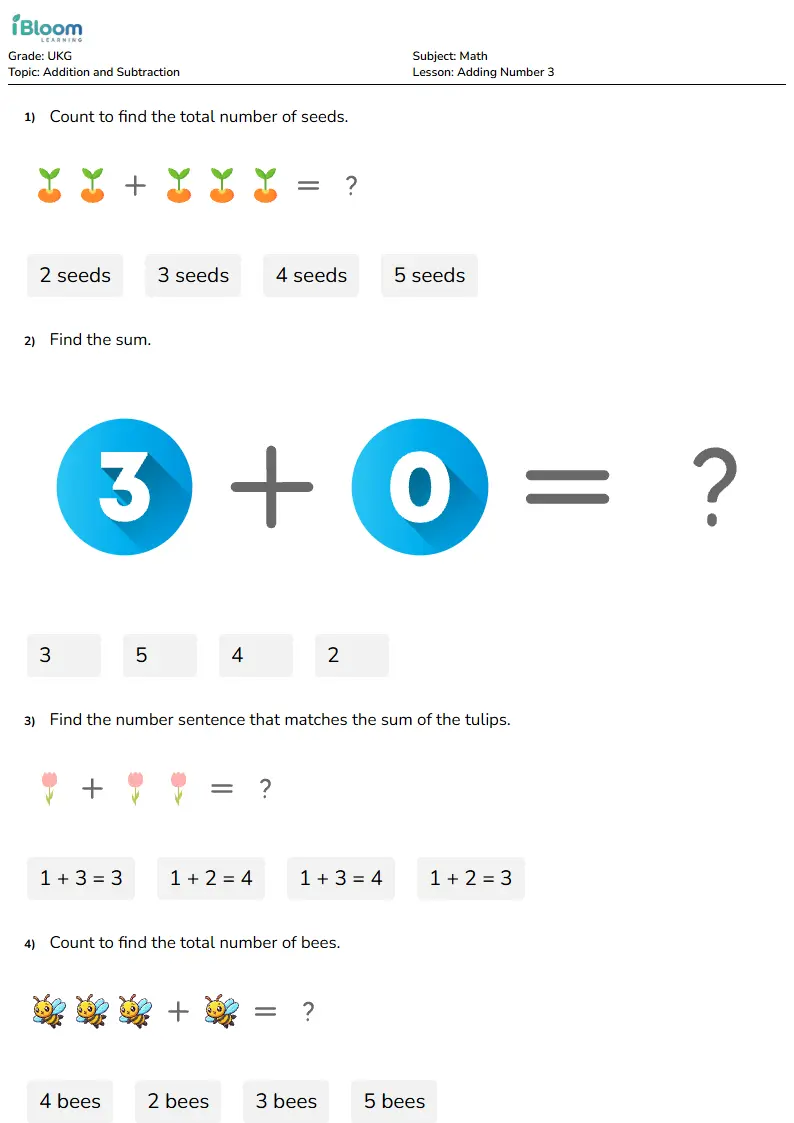
Adding Number 3 Lesson for Ukg
Explore a free interactive math lesson for ukg: Adding Number 3. AI-personalized, Common Core-aligned, and built for kids.
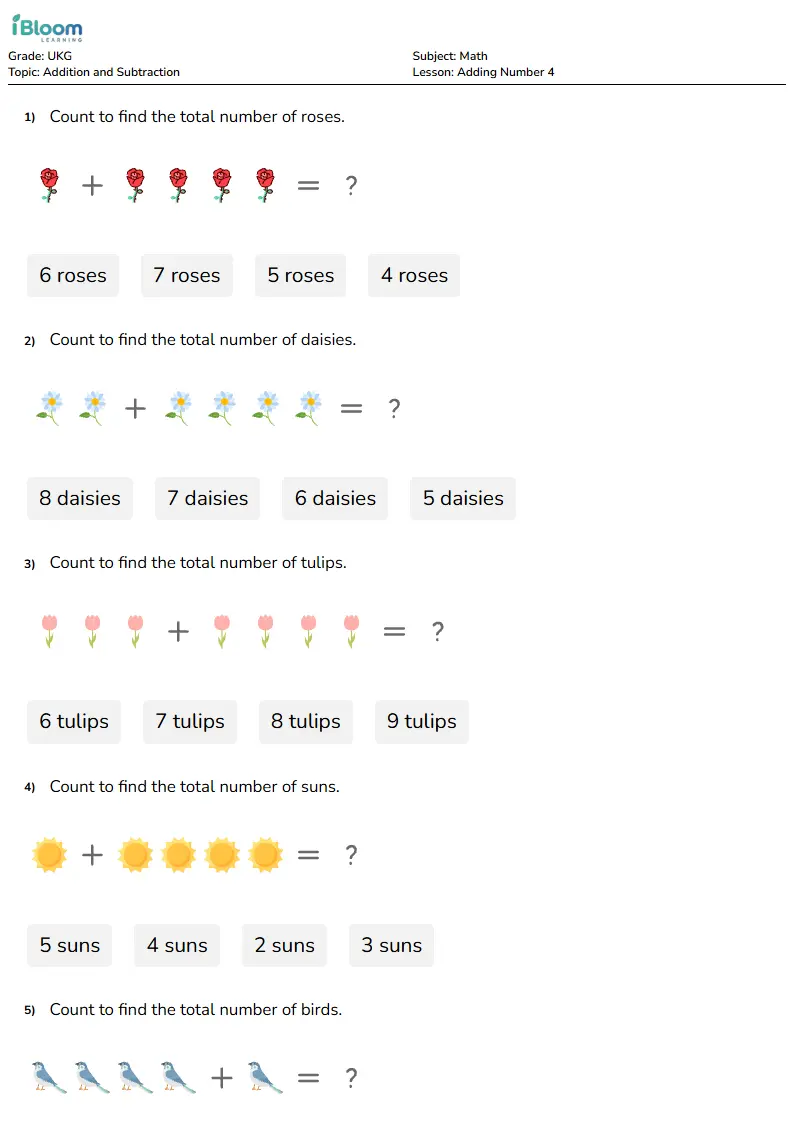
Adding Number 4 Lesson for Ukg
Explore a free interactive math lesson for ukg: Adding Number 4. AI-personalized, Common Core-aligned, and built for kids.
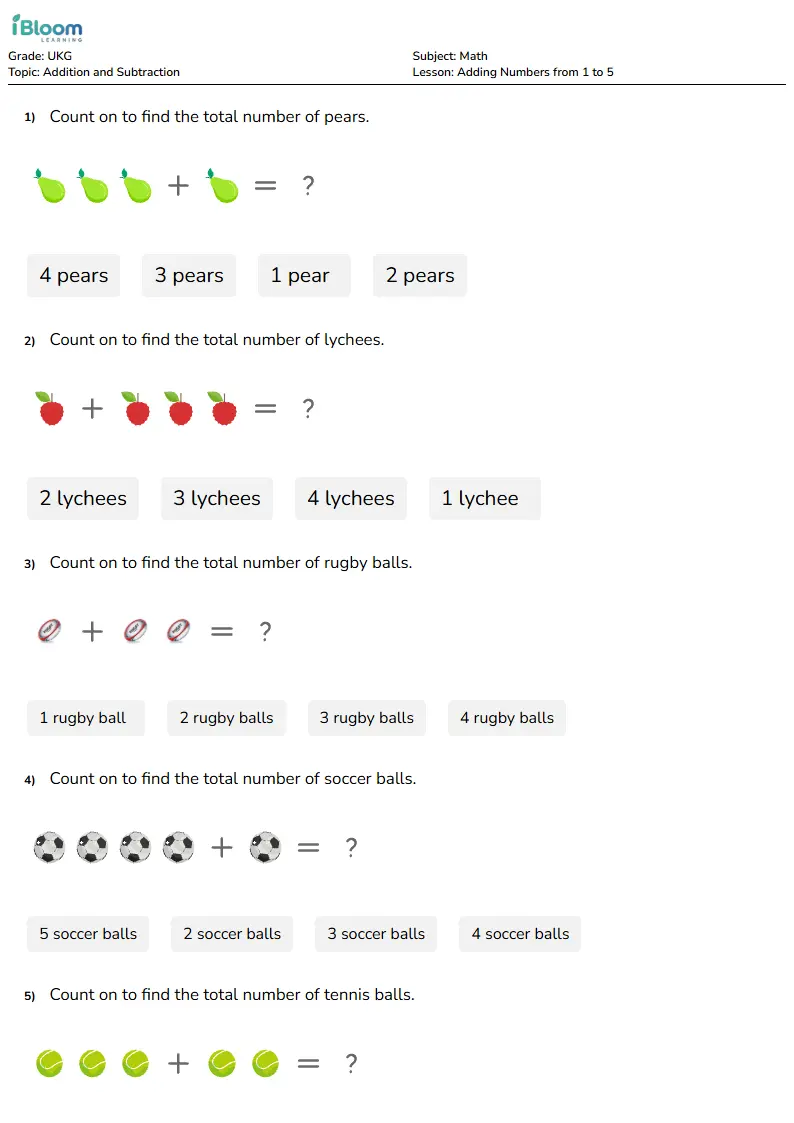
Adding Numbers from 1 to 5 Lesson for Ukg
Explore a free interactive math lesson for ukg: Adding Numbers from 1 to 5. AI-personalized, Common Core-aligned, and built for kids.
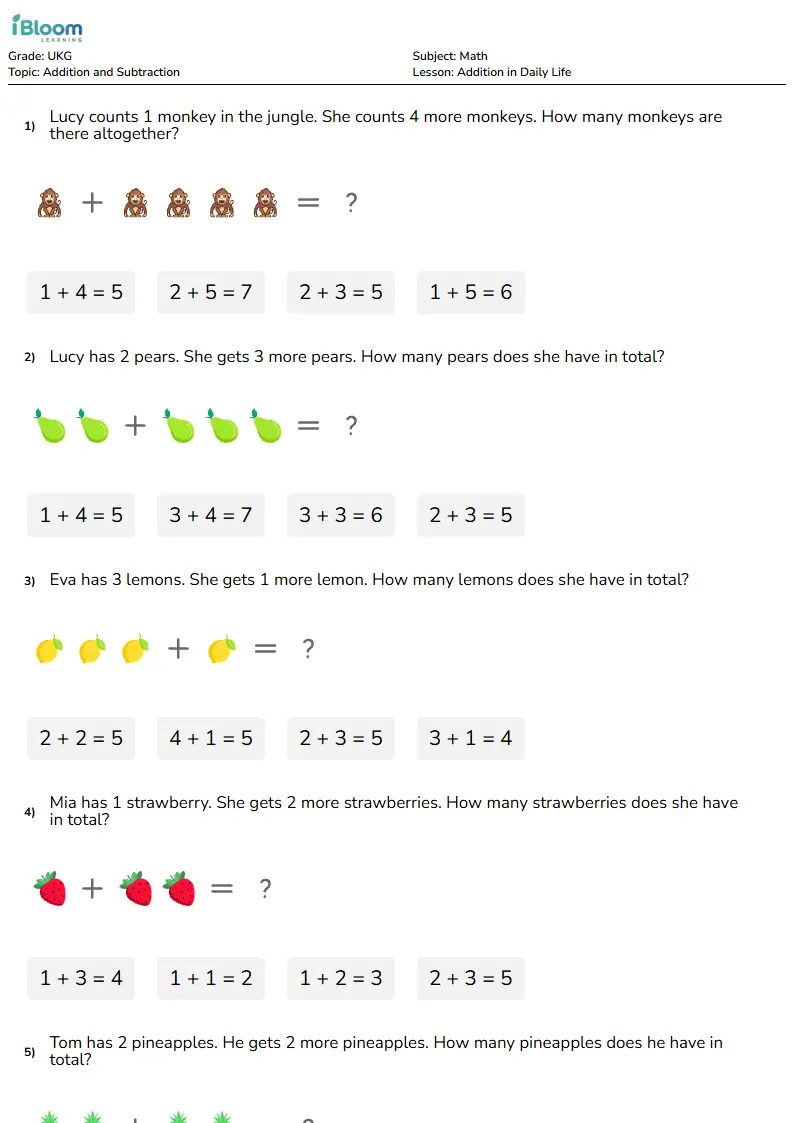
Addition in Daily Life Lesson for Ukg
Explore a free interactive math lesson for ukg: Addition in Daily Life. AI-personalized, Common Core-aligned, and built for kids.
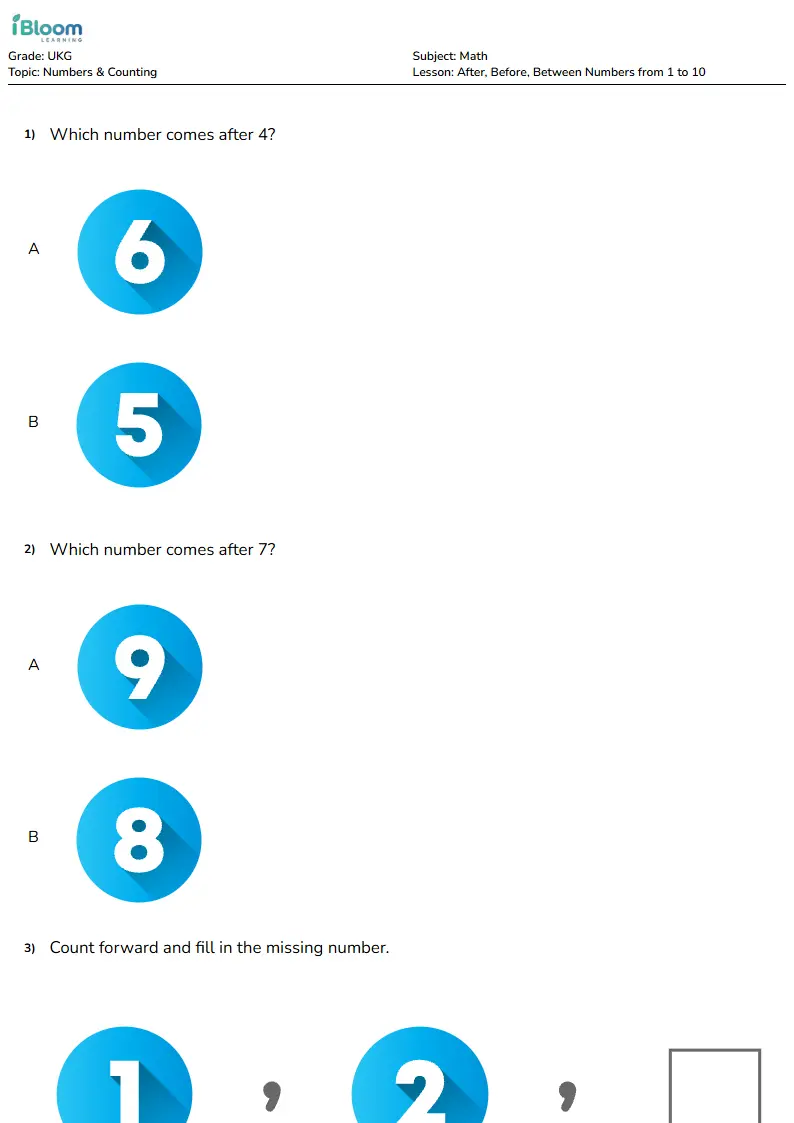
After, Before, Between Numbers from 1 to 10 Lesson for Ukg
Explore a free interactive math lesson for ukg: After, Before, Between Numbers from 1 to 10. AI-personalized, Common Core-aligned, and built for kids.
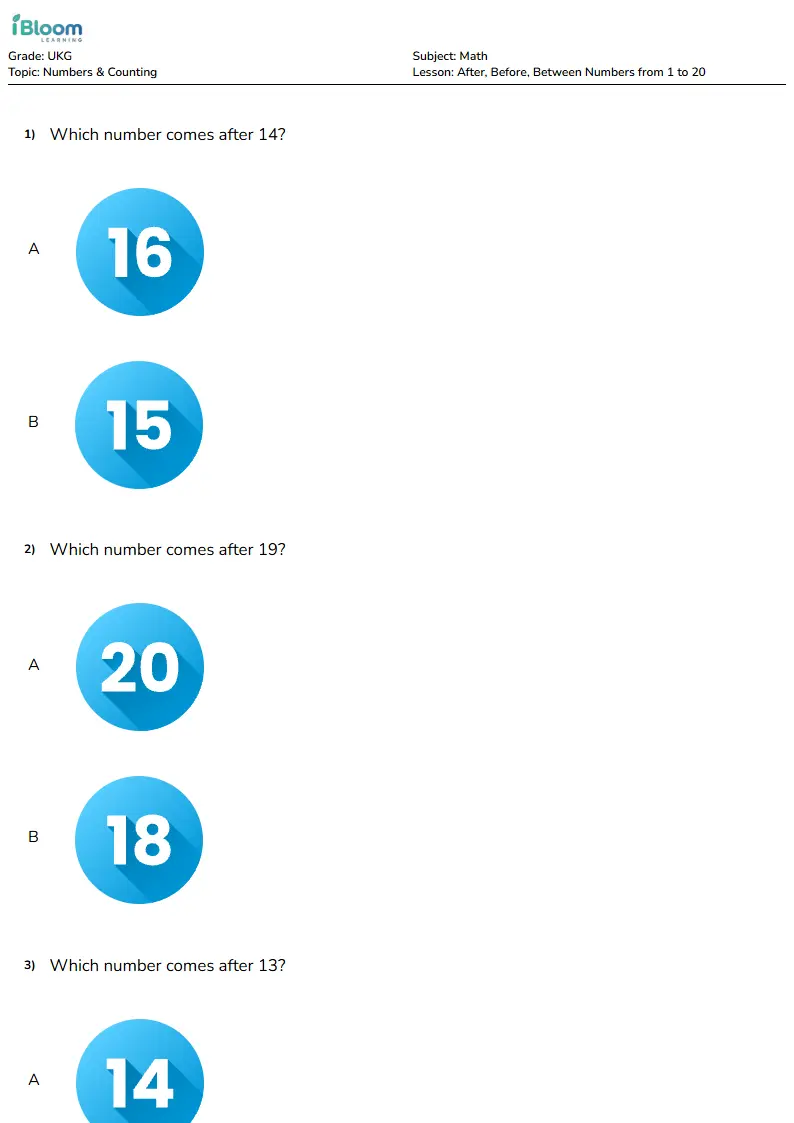
After, Before, Between Numbers from 1 to 20 Lesson for Ukg
Explore a free interactive math lesson for ukg: After, Before, Between Numbers from 1 to 20. AI-personalized, Common Core-aligned, and built for kids.
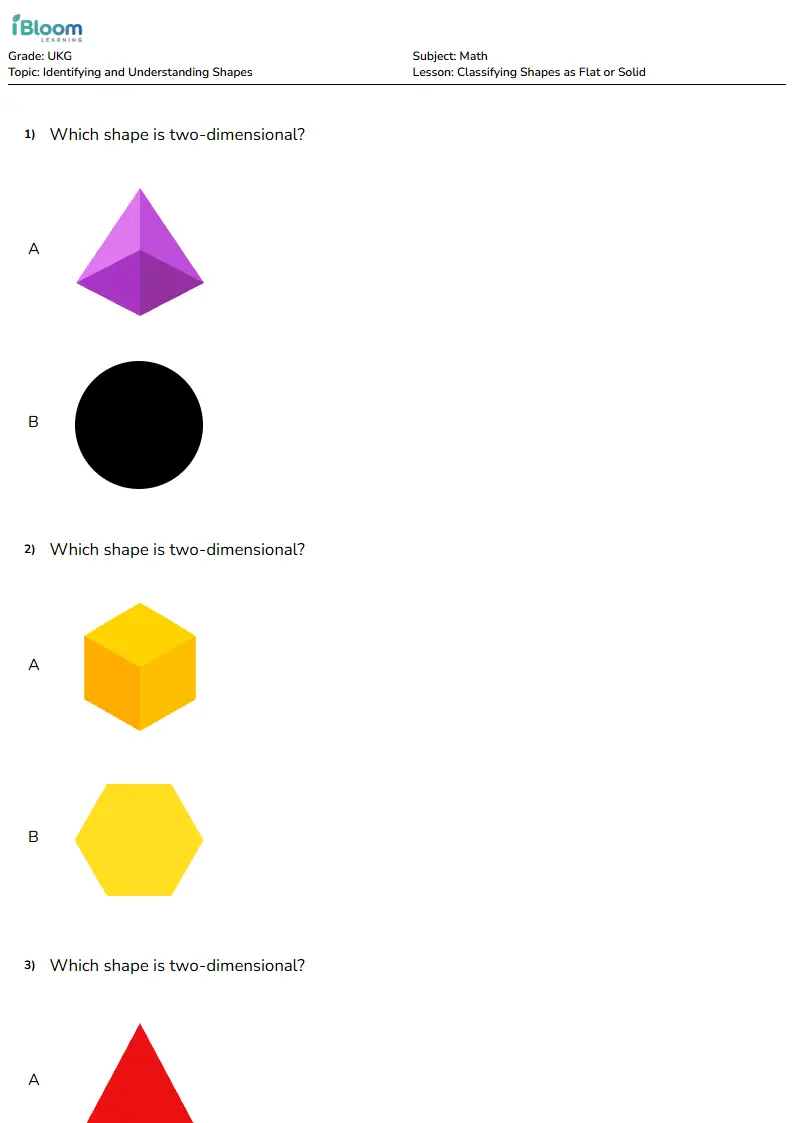
Classifying Shapes as Flat or Solid Lesson for Ukg
Explore a free interactive math lesson for ukg: Classifying Shapes as Flat or Solid. AI-personalized, Common Core-aligned, and built for kids.
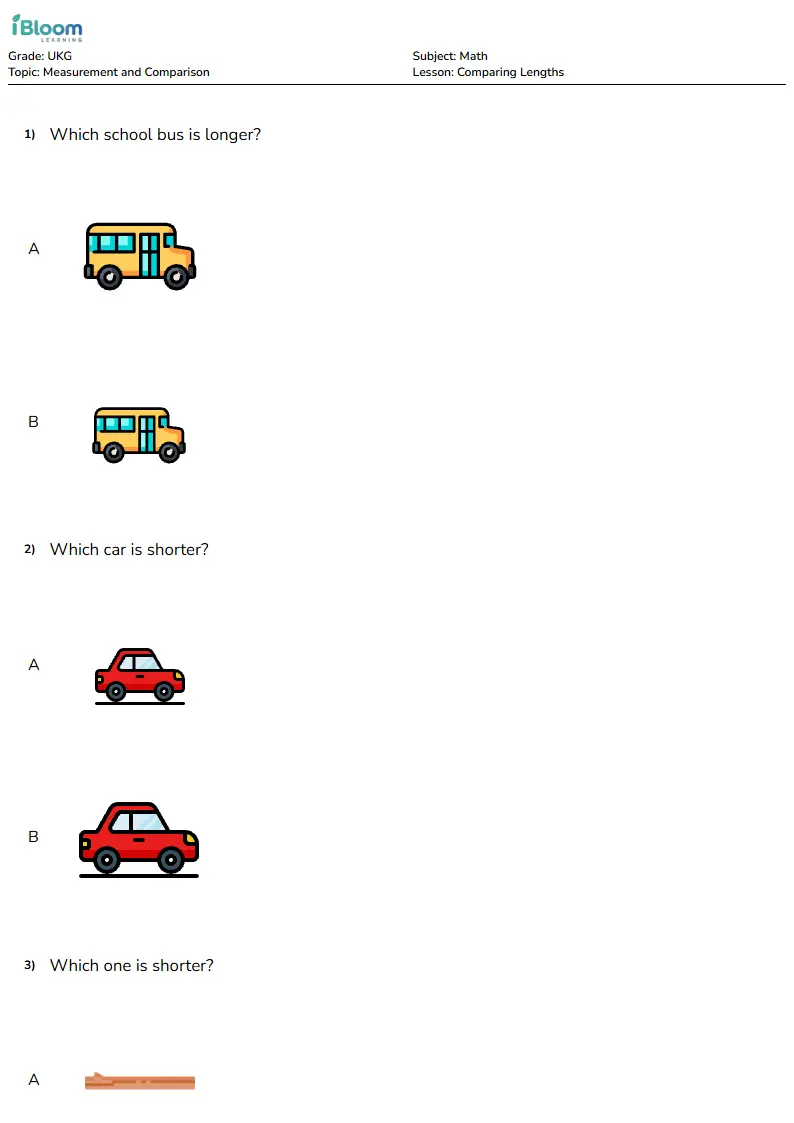
Comparing Lengths Lesson for Ukg
Explore a free interactive math lesson for ukg: Comparing Lengths. AI-personalized, Common Core-aligned, and built for kids.
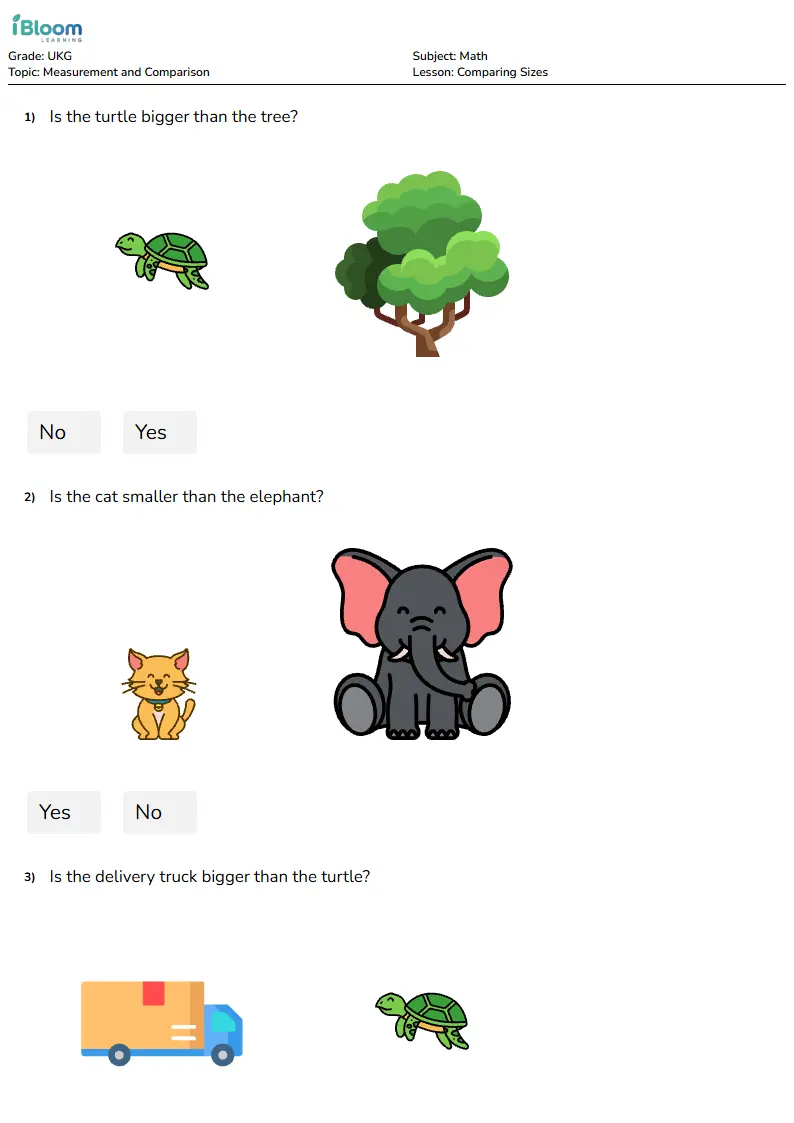
Comparing Sizes Lesson for Ukg
Explore a free interactive math lesson for ukg: Comparing Sizes. AI-personalized, Common Core-aligned, and built for kids.
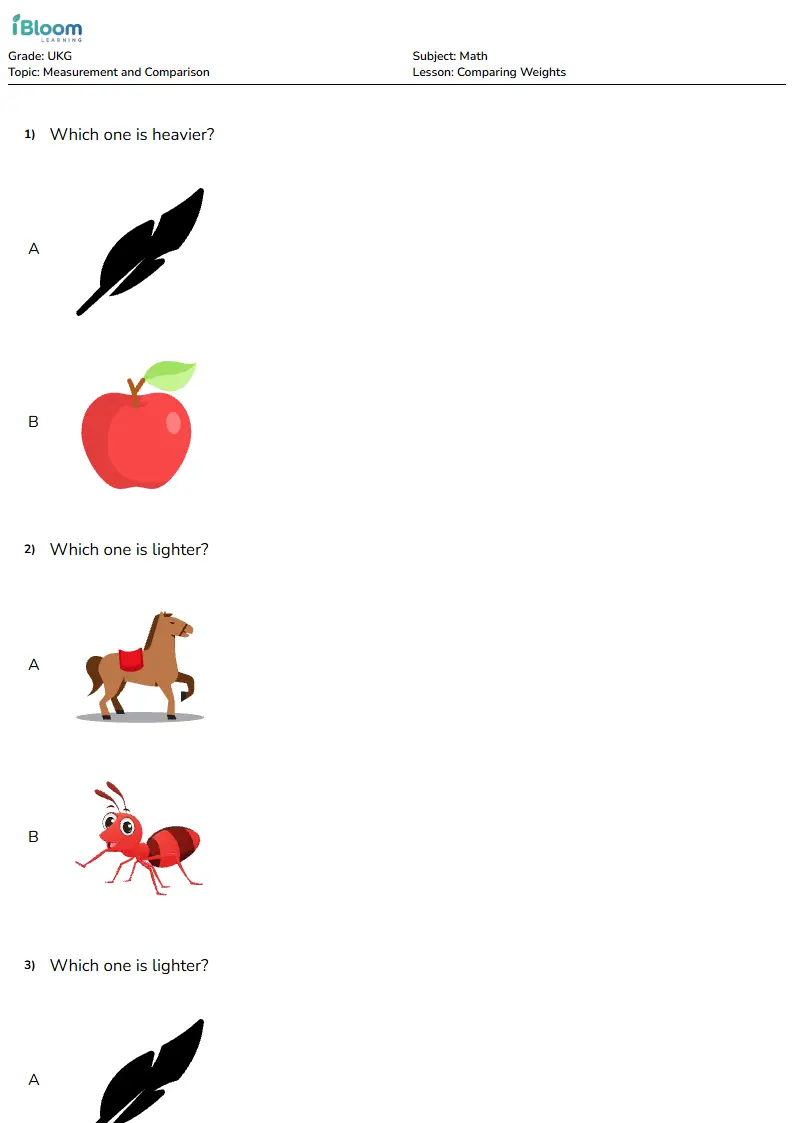
Comparing Weights Lesson for Ukg
Explore a free interactive math lesson for ukg: Comparing Weights. AI-personalized, Common Core-aligned, and built for kids.
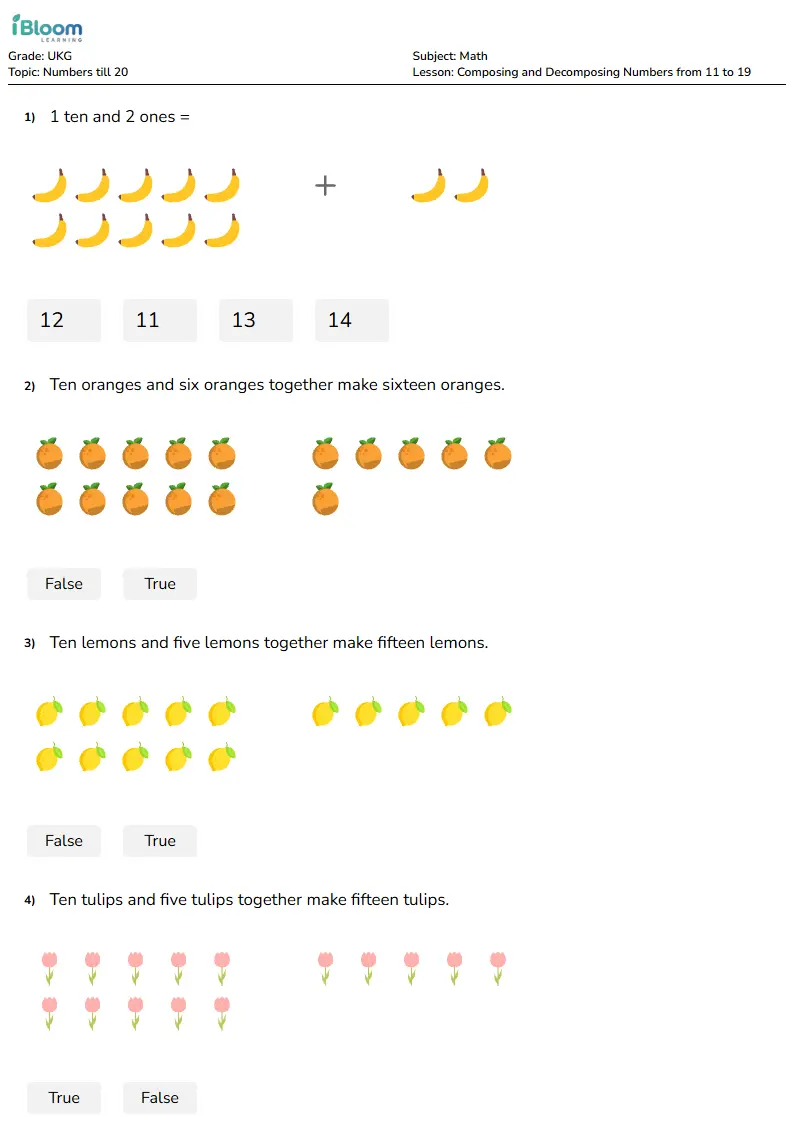
Composing and Decomposing Numbers from 11 to 19 Lesson for Ukg
Explore a free interactive math lesson for ukg: Composing and Decomposing Numbers from 11 to 19. AI-personalized, Common Core-aligned, and built for kids.
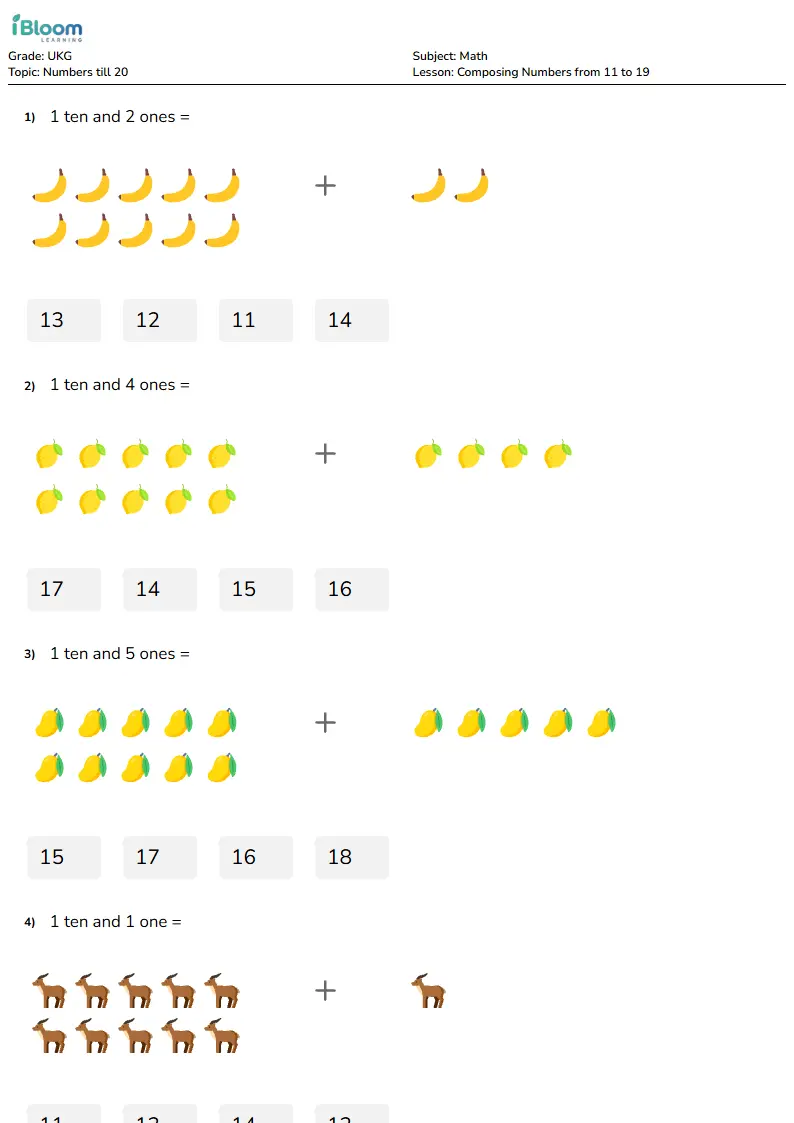
Composing Numbers from 11 to 19 Lesson for Ukg
Explore a free interactive math lesson for ukg: Composing Numbers from 11 to 19. AI-personalized, Common Core-aligned, and built for kids.
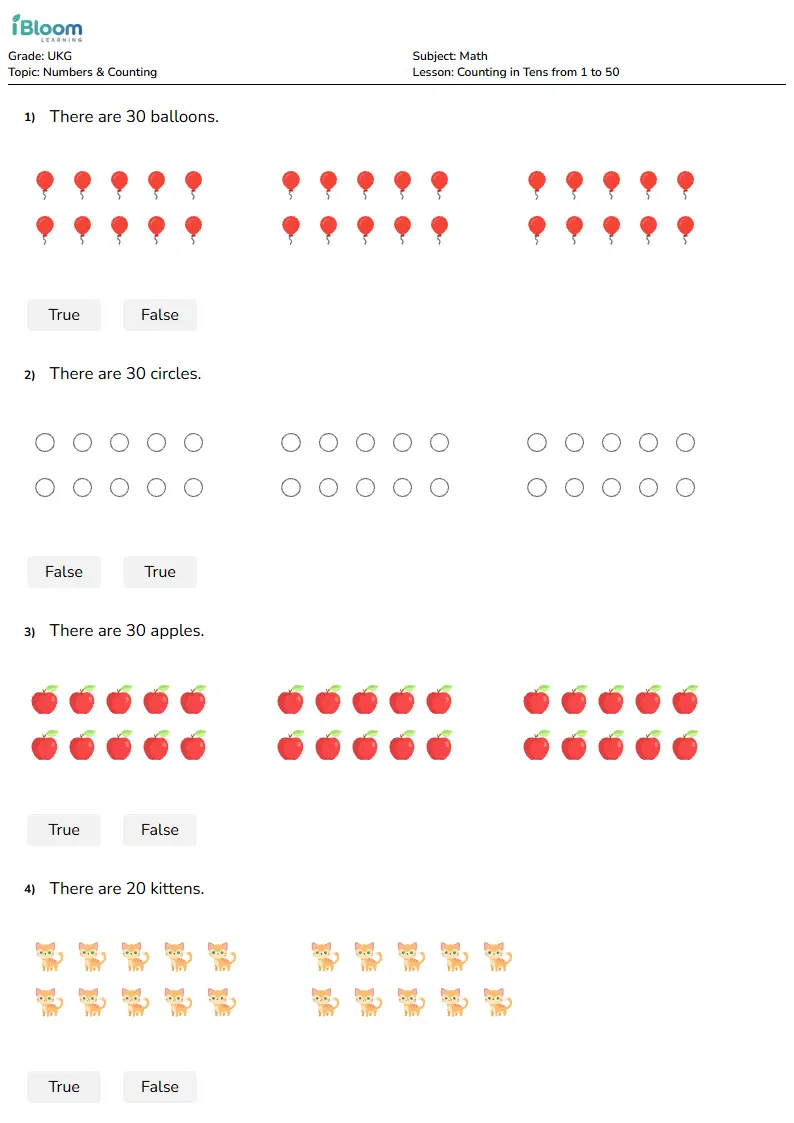
Counting in Tens from 1 to 50 Lesson for Ukg
Explore a free interactive math lesson for ukg: Counting in Tens from 1 to 50. AI-personalized, Common Core-aligned, and built for kids.
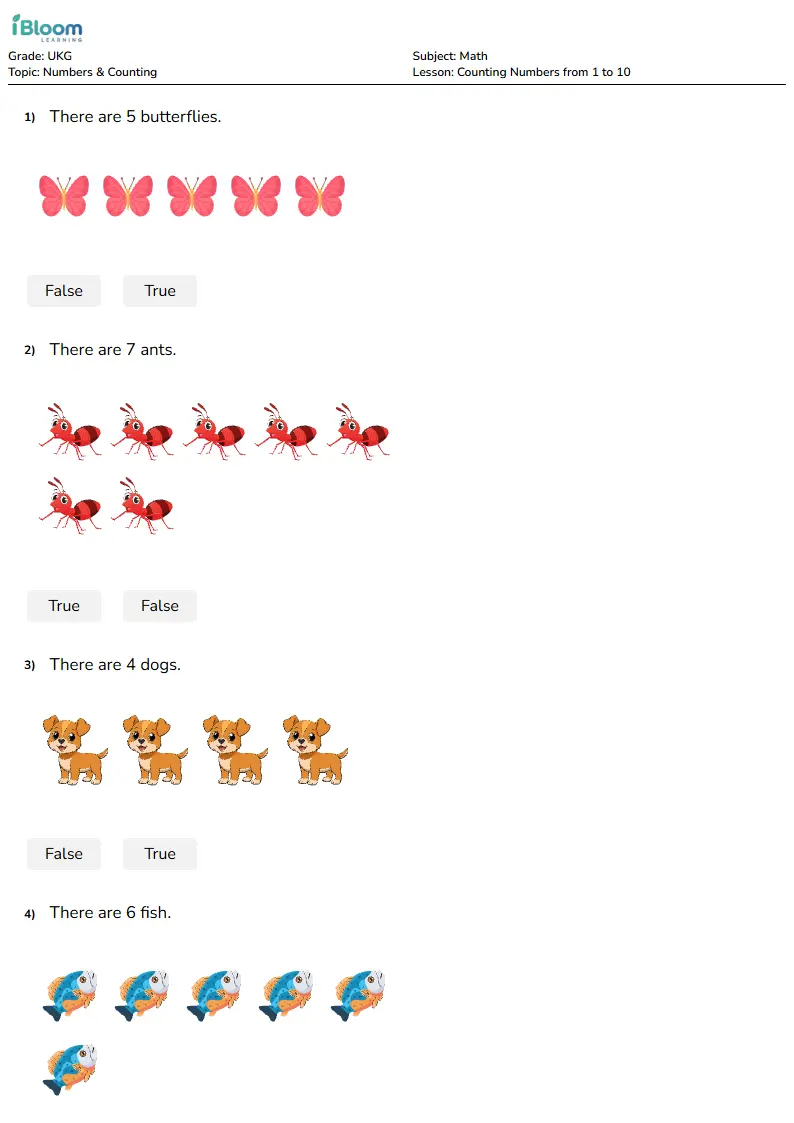
Counting Numbers from 1 to 10 Lesson for Ukg
Explore a free interactive math lesson for ukg: Counting Numbers from 1 to 10. AI-personalized, Common Core-aligned, and built for kids.
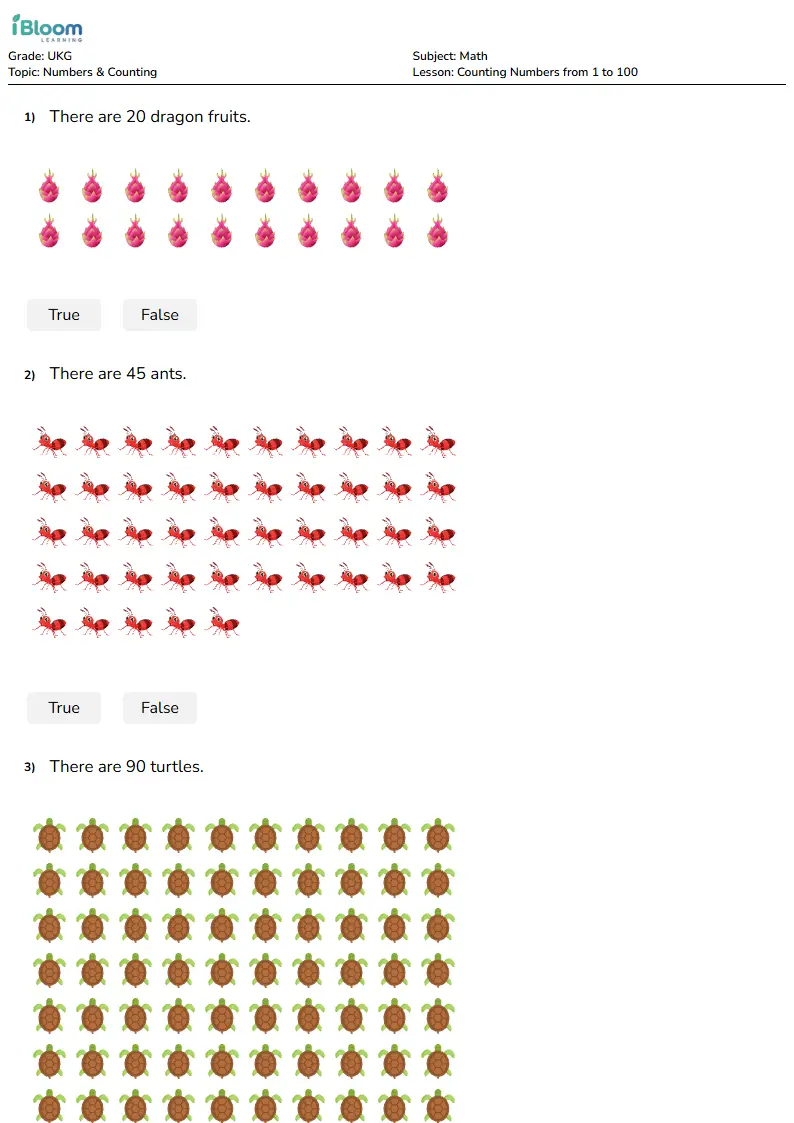
Counting Numbers from 1 to 100 Lesson for Ukg
Explore a free interactive math lesson for ukg: Counting Numbers from 1 to 100. AI-personalized, Common Core-aligned, and built for kids.
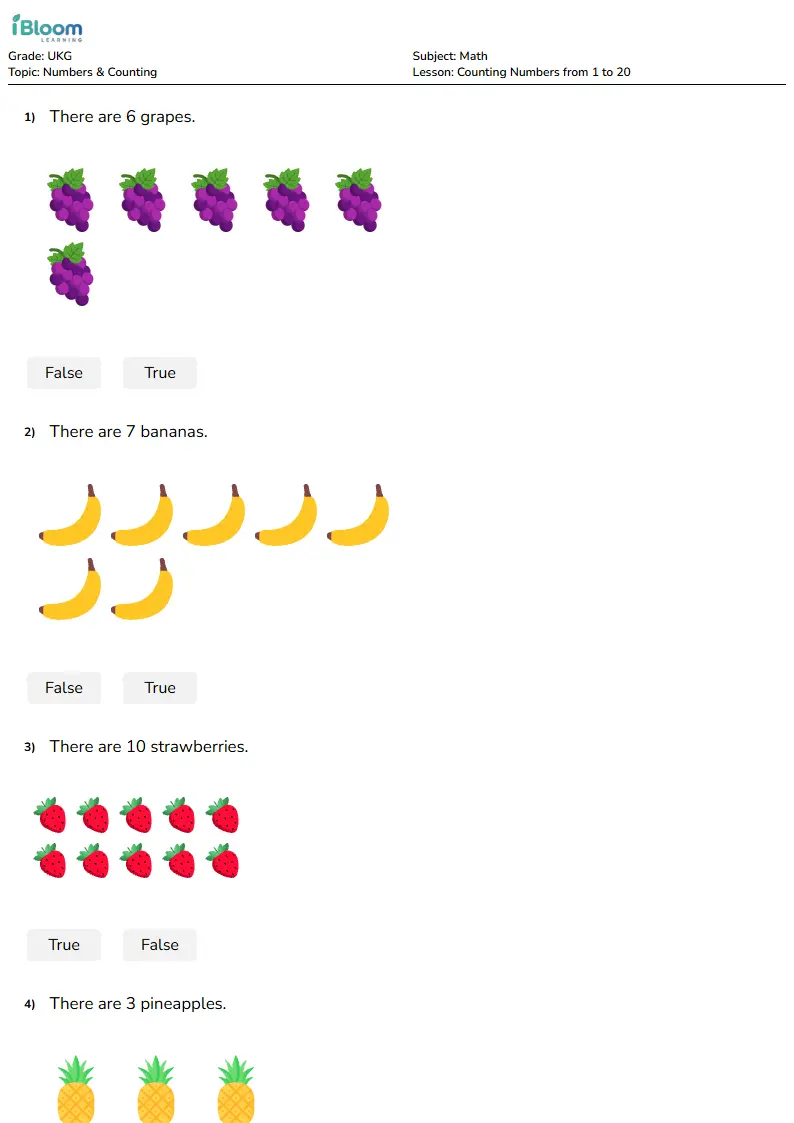
Counting Numbers from 1 to 20 Lesson for Ukg
Explore a free interactive math lesson for ukg: Counting Numbers from 1 to 20. AI-personalized, Common Core-aligned, and built for kids.
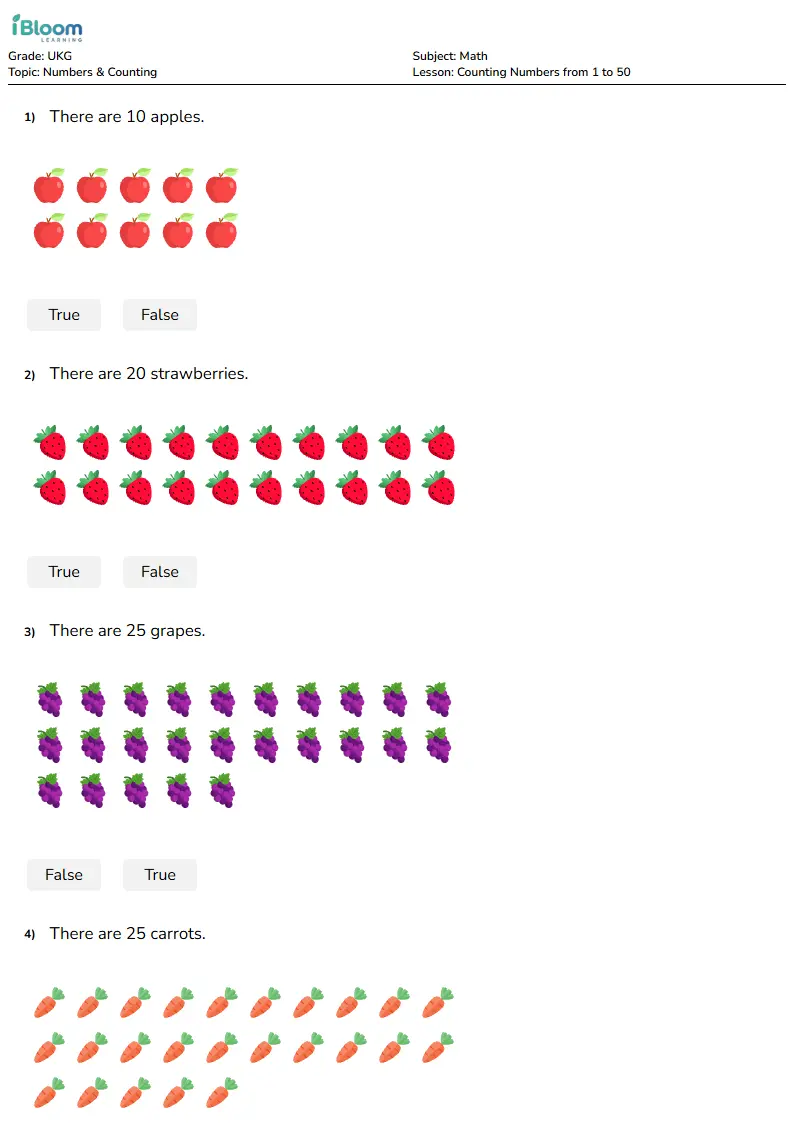
Counting Numbers from 1 to 50 Lesson for Ukg
Explore a free interactive math lesson for ukg: Counting Numbers from 1 to 50. AI-personalized, Common Core-aligned, and built for kids.
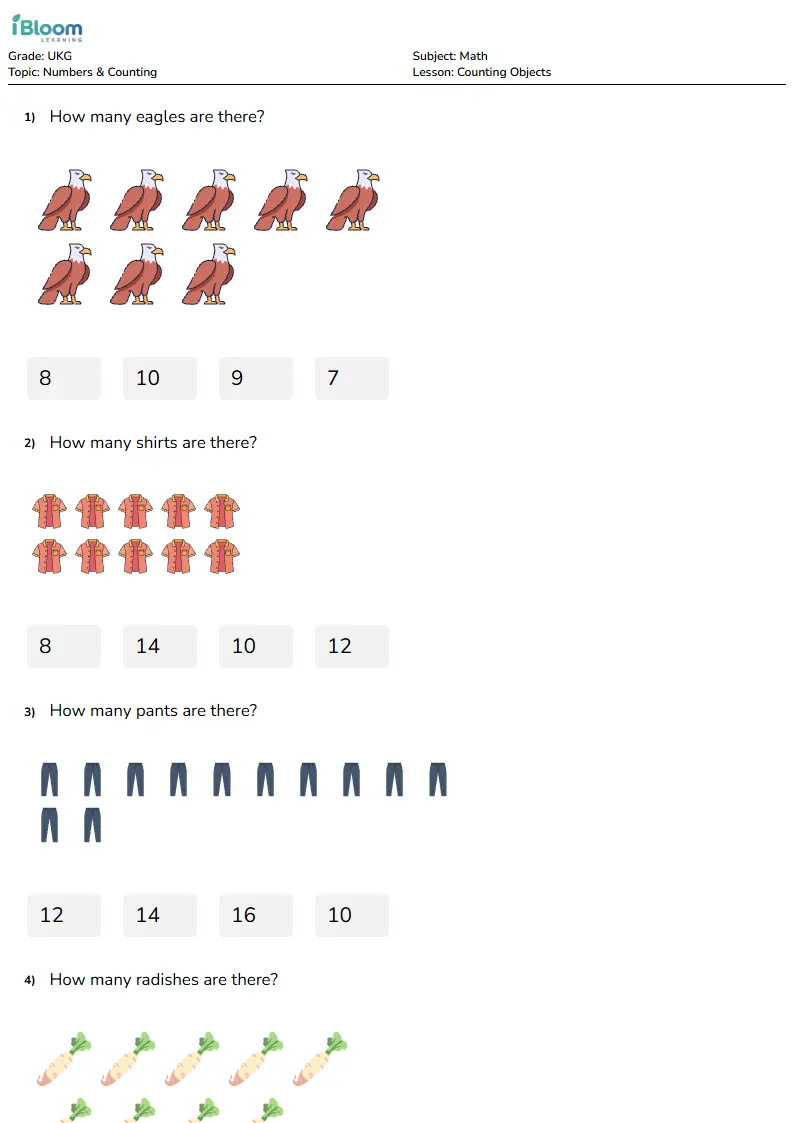
Counting Objects Lesson for Ukg
Explore a free interactive math lesson for ukg: Counting Objects. AI-personalized, Common Core-aligned, and built for kids.
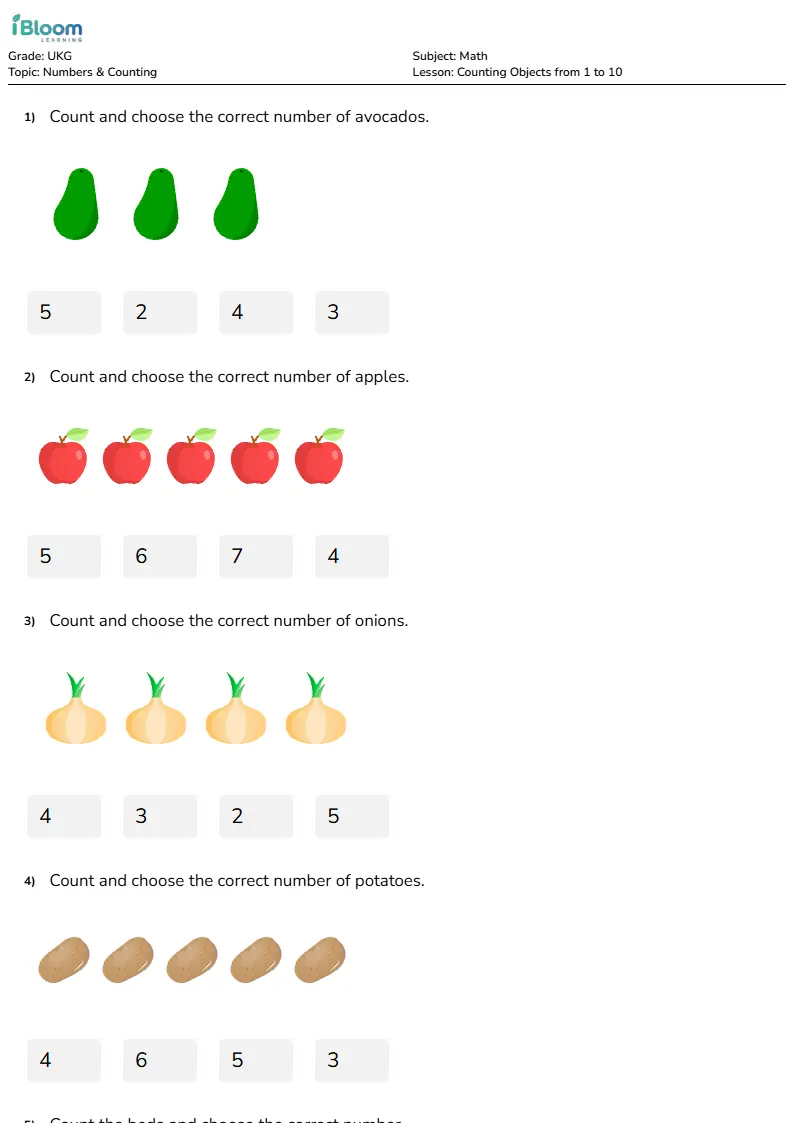
Counting Objects from 1 to 10 Lesson for Ukg
Explore a free interactive math lesson for ukg: Counting Objects from 1 to 10. AI-personalized, Common Core-aligned, and built for kids.
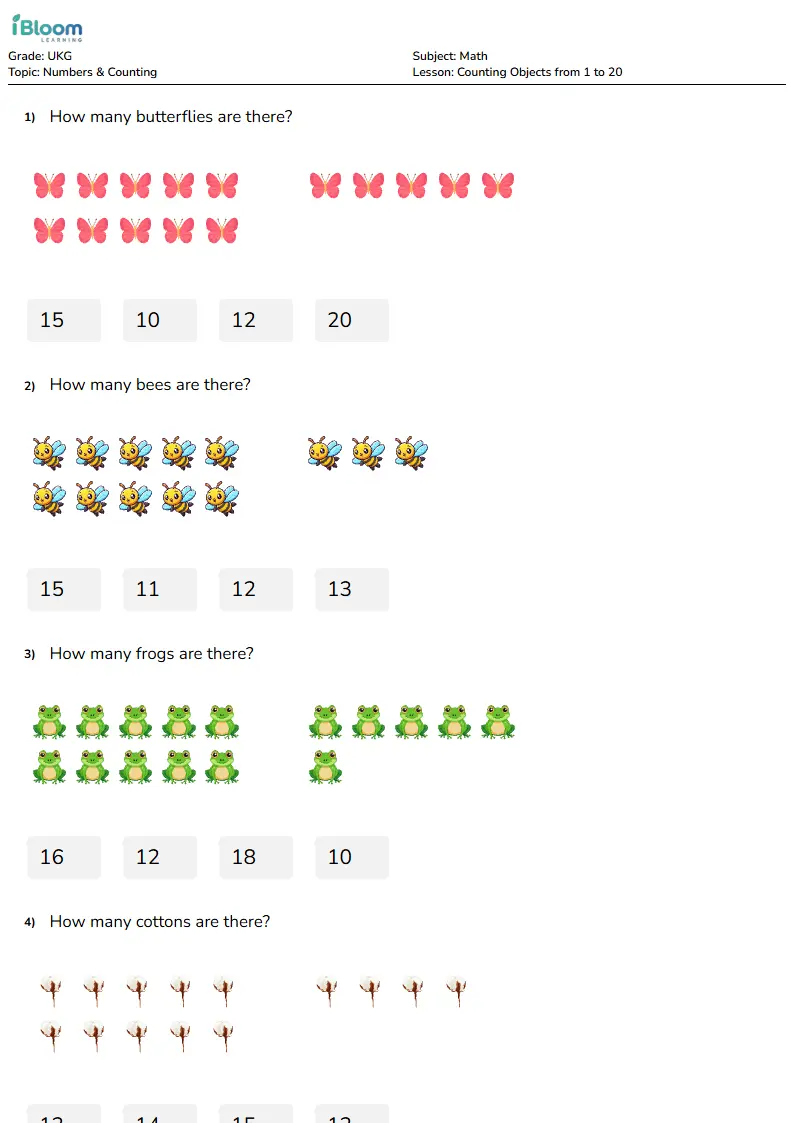
Counting Objects from 1 to 20 Lesson for Ukg
Explore a free interactive math lesson for ukg: Counting Objects from 1 to 20. AI-personalized, Common Core-aligned, and built for kids.
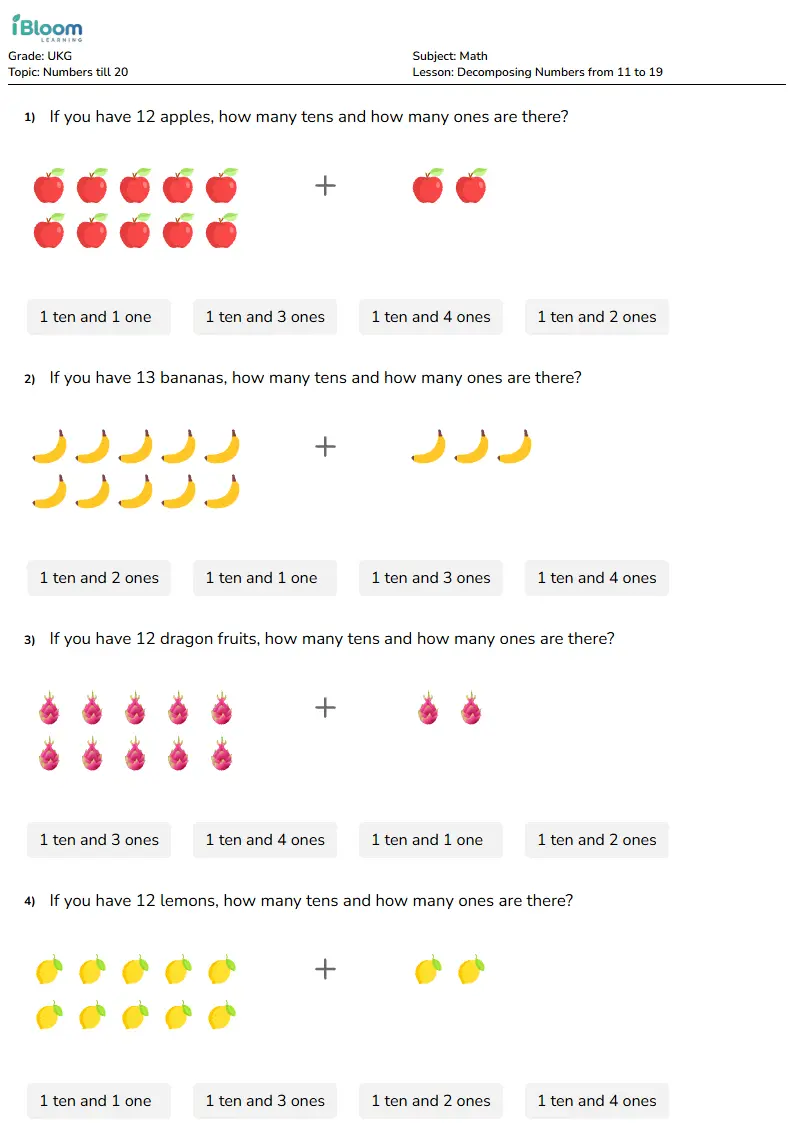
Decomposing Numbers from 11 to 19 Lesson for Ukg
Explore a free interactive math lesson for ukg: Decomposing Numbers from 11 to 19. AI-personalized, Common Core-aligned, and built for kids.