



About this worksheet
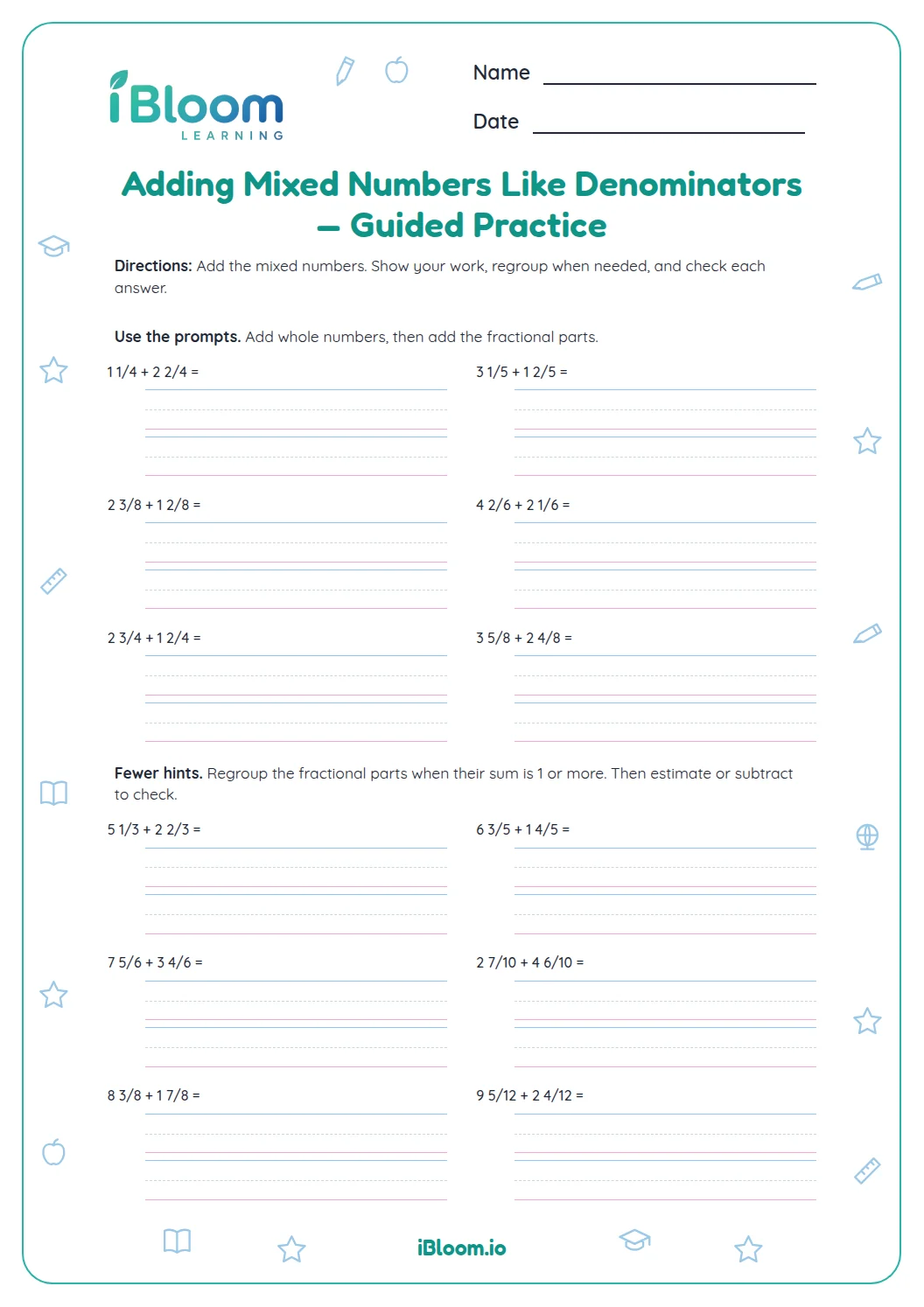
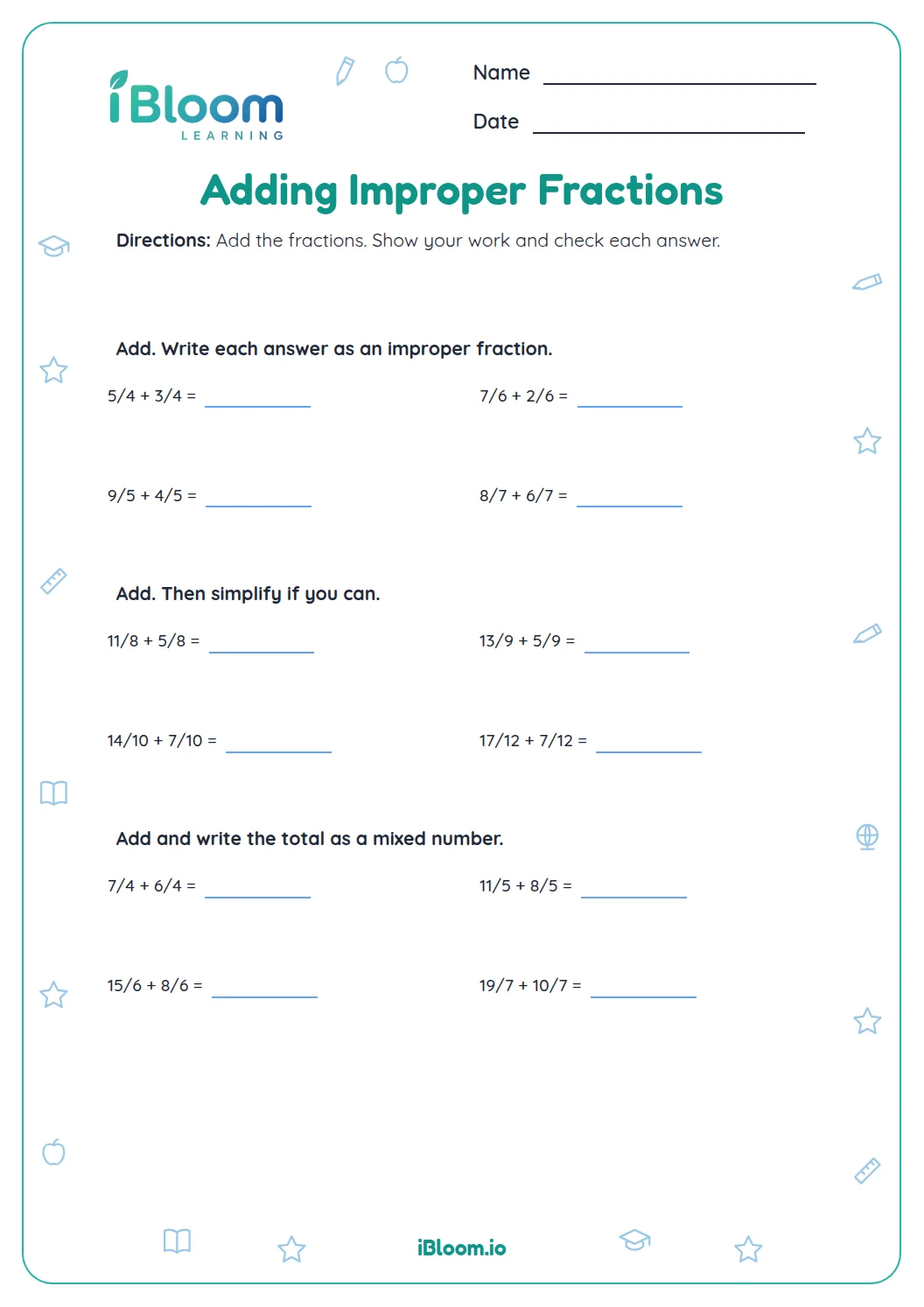
This free printable worksheet practices adding a mixed number and a fraction with the same denominator in short everyday situations. Ten questions use halves, thirds, fourths, sixths, or eighths, and each fraction bar models the first amount stated in its story. The sheet practices the Grade 4 Common Core idea of joining fractional parts and includes a separate answer key.
Aligned to 4.NF.B.3.a
What is the key idea?
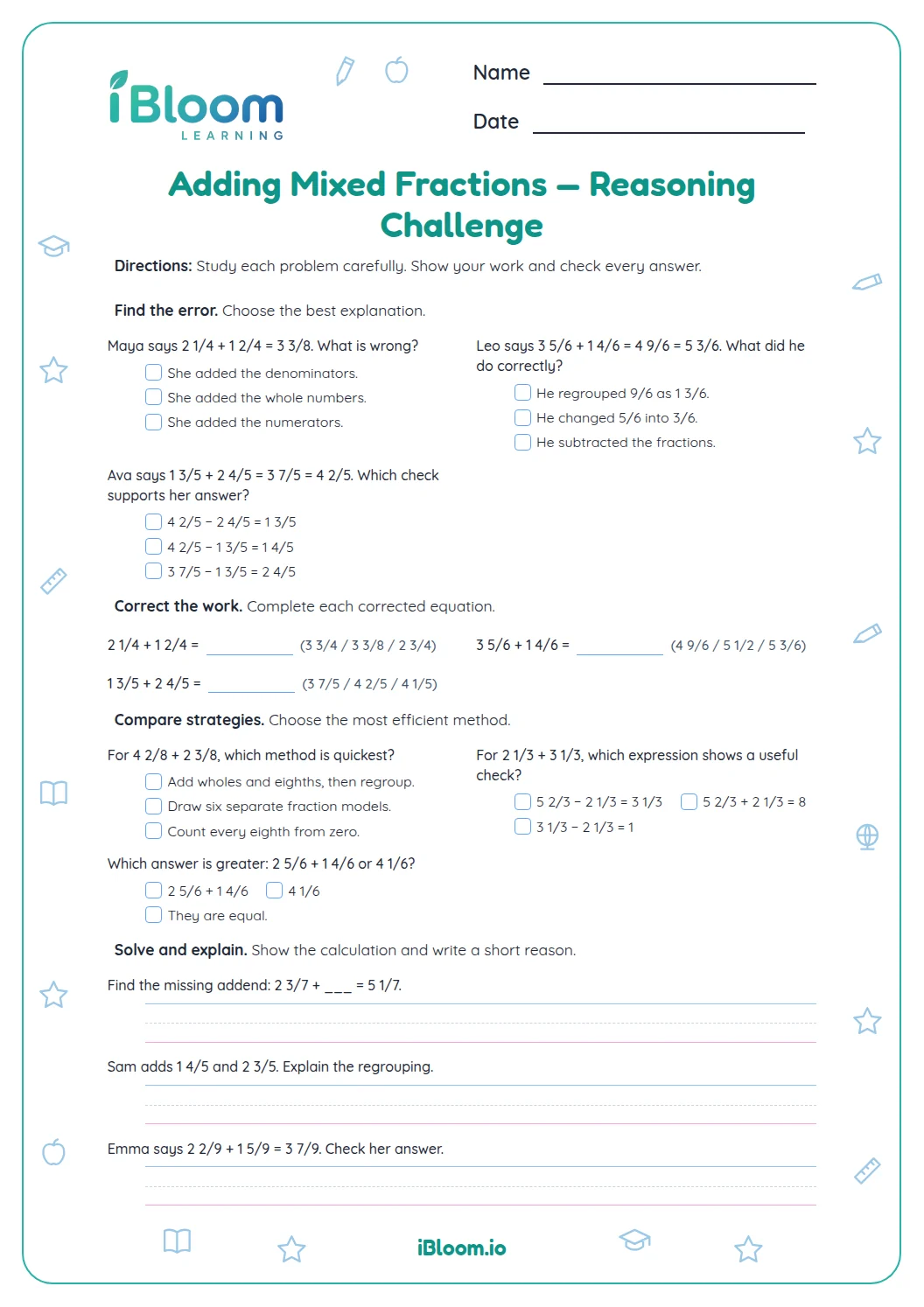
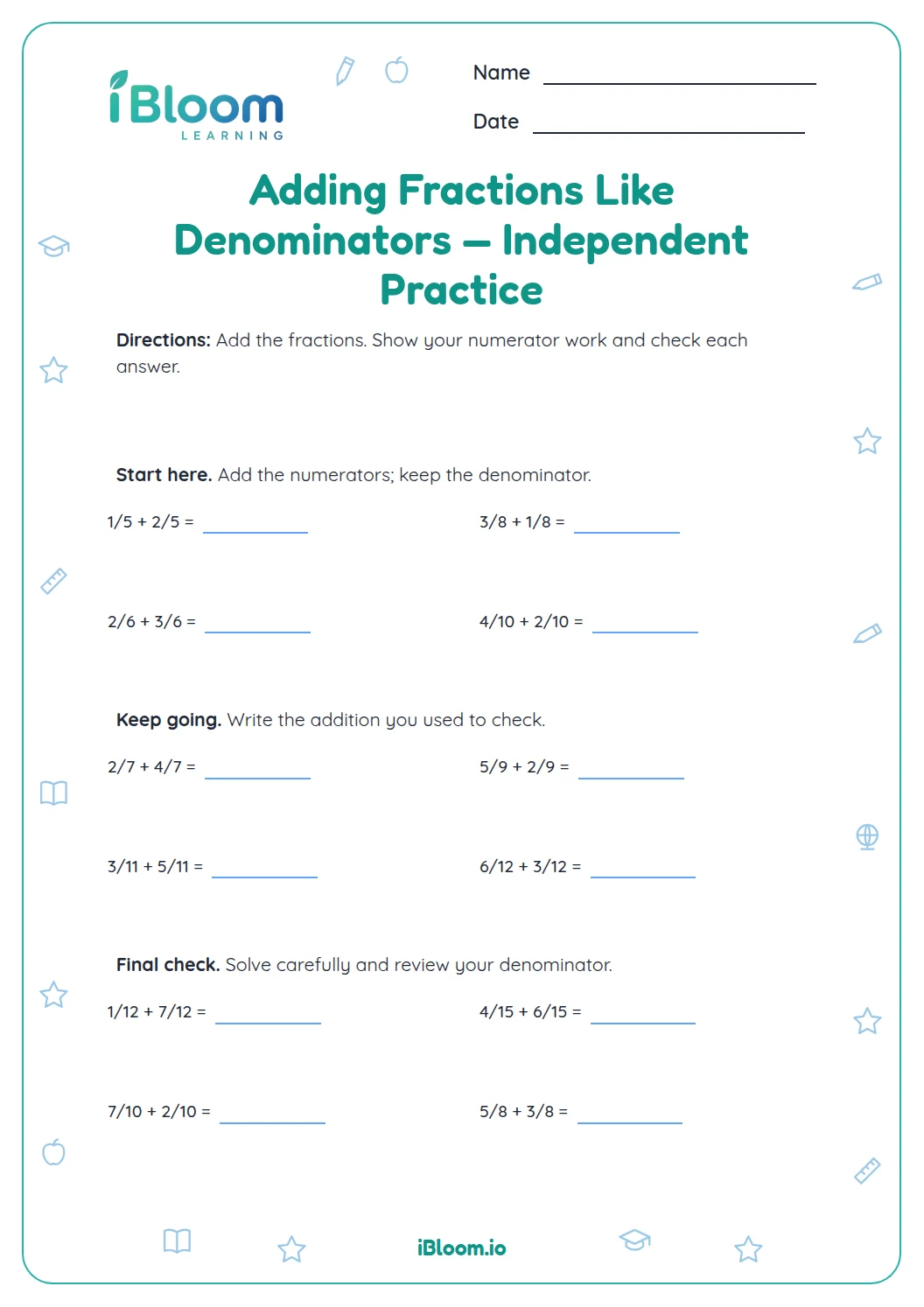
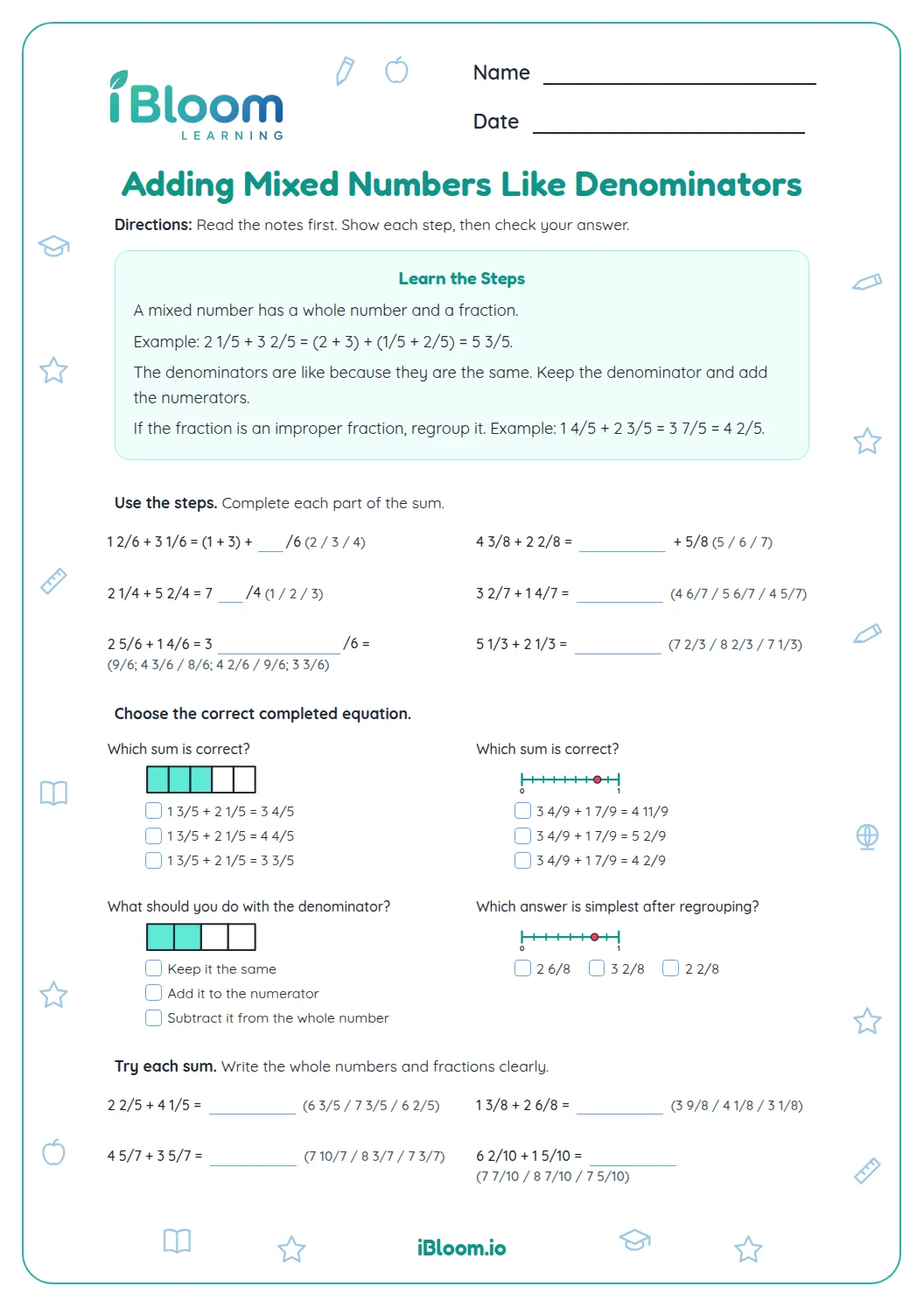
When the fractional pieces have the same denominator, add their numerators and keep that denominator. Add any whole numbers too; if the fractional sum makes a whole, regroup it.
How does one problem work?
In question 1, Ava eats 1 1/4 cups and 2/4 cup more. Add 1/4 + 2/4 to get 3/4, then keep the 1 whole cup: 1 3/4 cups.
- 11 1/4 cups + 2/4 cup
- 21/4 + 2/4 = 3/4
- 3Keep the 1 whole cup.
- 4Total: 1 3/4 cups
What is on the worksheet?
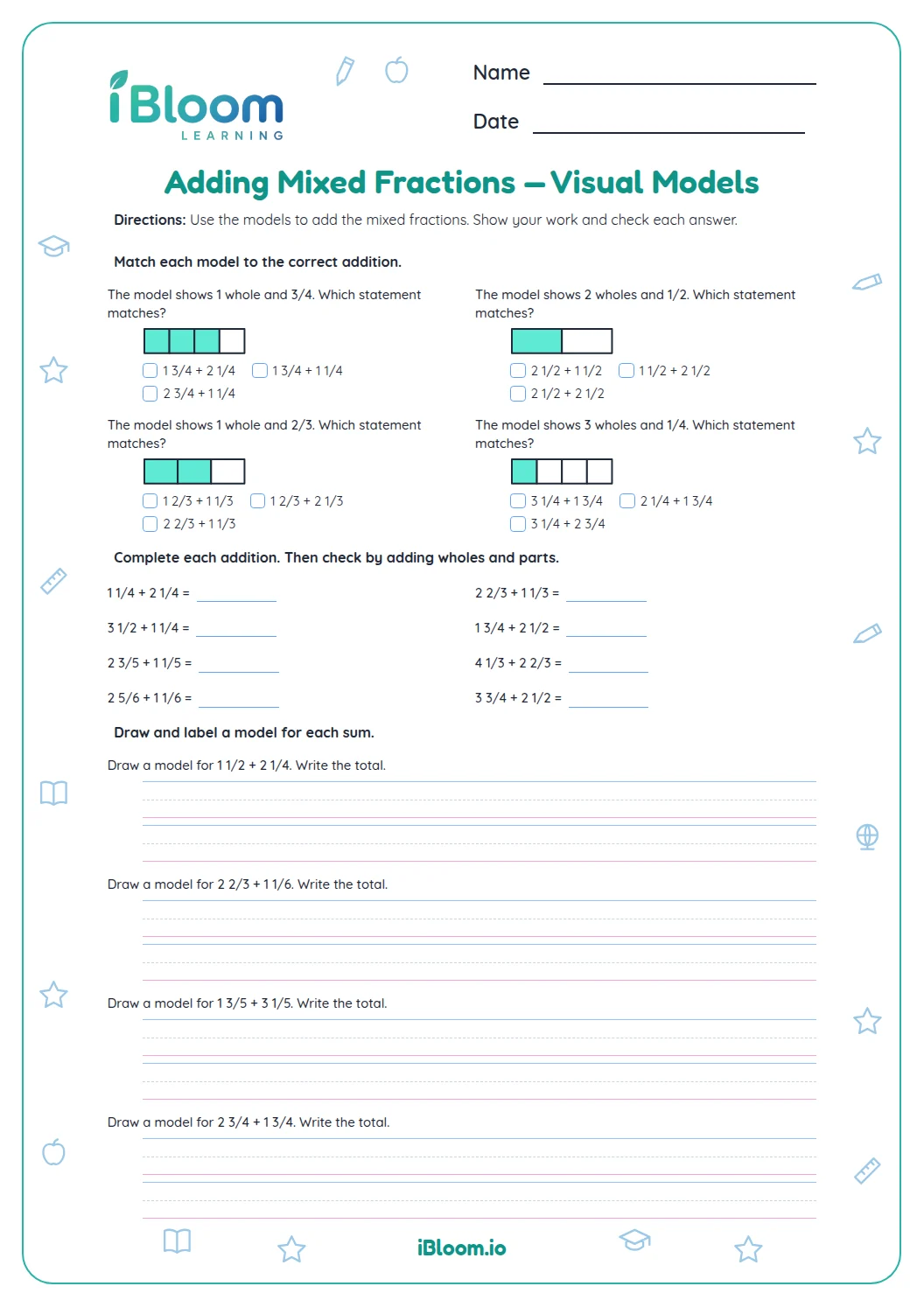
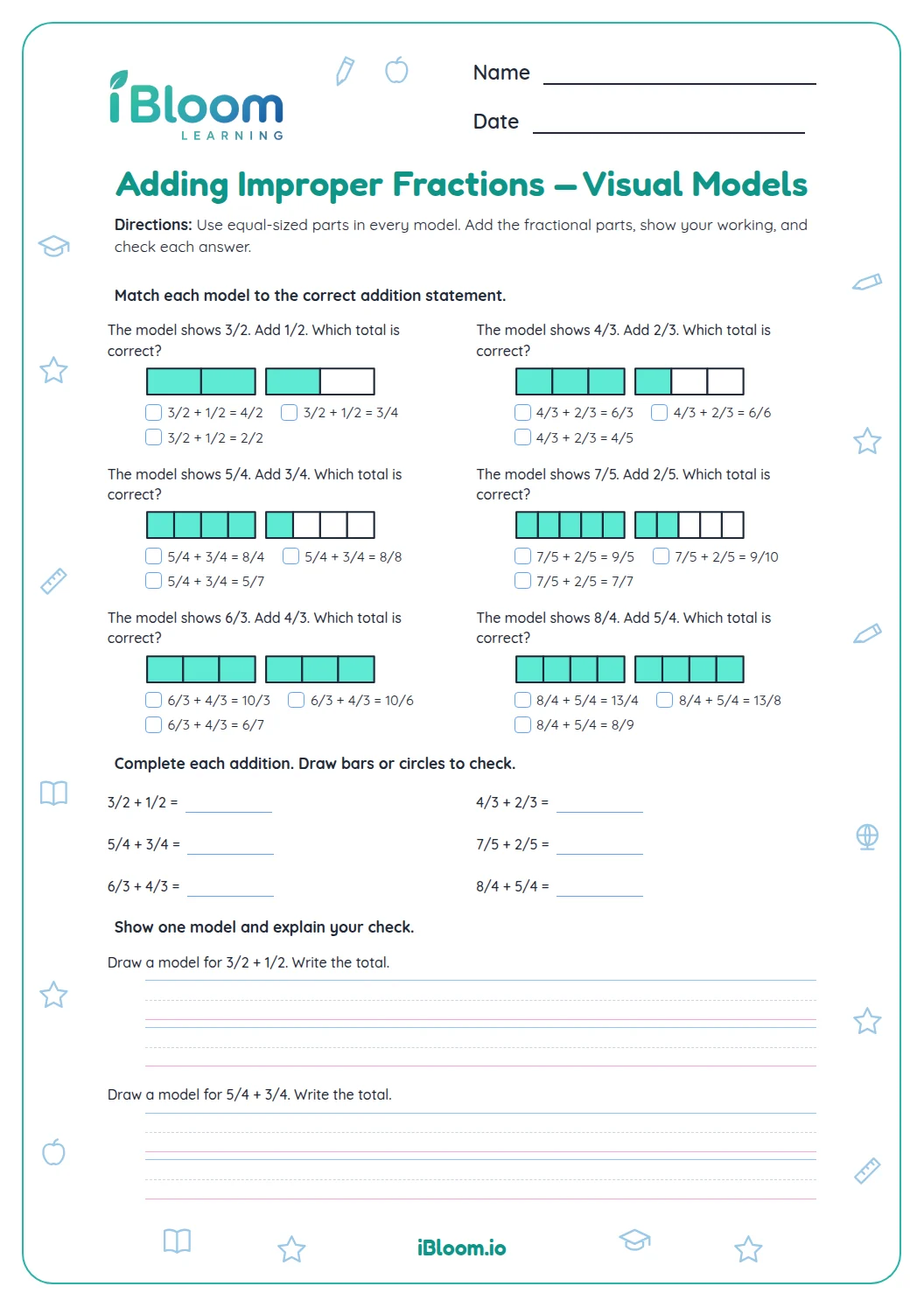
The 10 story problems use lengths and amounts with like denominators. Each bar shows the first mixed number named in the story; the second addend is printed in the sentence and should be added to the first amount.
How can I use the sheet?
- 1Underline the two amounts in the story.
- 2Check that the fractional parts have the same denominator.
- 3Add the numerators and keep the denominator.
- 4Add any whole-number parts and regroup if the fraction makes a whole.
- 5Write the total with the unit named in the story.
Common mistakes and quick fixes
The mistake
Adding the denominators.
The fix
Keep the shared denominator and add only the numerators.
The mistake
Leaving out the whole-number part.
The fix
Add the fractional pieces, then include the starting whole amount.
The mistake
Forgetting to regroup a fraction equal to one whole.
The fix
Trade a group such as 3/3 for 1 whole.
Common Core alignment
This worksheet practices the standard below.
Add fractions with like denominators by joining parts of the same whole.
On this sheet: Add fractions with like denominators by joining parts of the same whole.
Show the official wordingHide the official wording
Understand addition and subtraction of fractions as joining and separating parts referring to the same whole.
What to practice next
Make more practice
Further reading
Questions parents and teachers ask
How do you add mixed numbers with like denominators?
Add the numerators because both fractional parts are divided into the same number of equal pieces. Keep that denominator, then add any whole-number part. For example, 1 1/4 + 2/4 = 1 3/4. The story gives the second amount, so students can add both values.
What does the fraction bar show?
Each fraction bar models the first mixed number in its story, including its whole shape or shapes and shaded fractional pieces. The second addend is written in the story text. Whole shapes show the whole-number part of the starting mixed number.
Which fraction denominators appear?
The problems use halves, thirds, fourths, sixths, and eighths. In each question, the fractional addends share a denominator, so their numerators can be added while the denominator stays the same. These denominators give equal-sized pieces within each question.
How many questions are on the worksheet?
There are 10 story problems in three parts. They use everyday situations involving amounts such as cups, miles, yards, inches, liters, and hours, with a separate answer key. The scenarios provide a context for the same fraction-addition step.
Why do some answers have another whole?
When the fractional numerators add to the denominator, they make one whole. For example, 1/3 + 2/3 = 3/3 = 1, so 2 1/3 + 2/3 = 3. Regrouping gives an equivalent total written as a whole number.