

About this worksheet
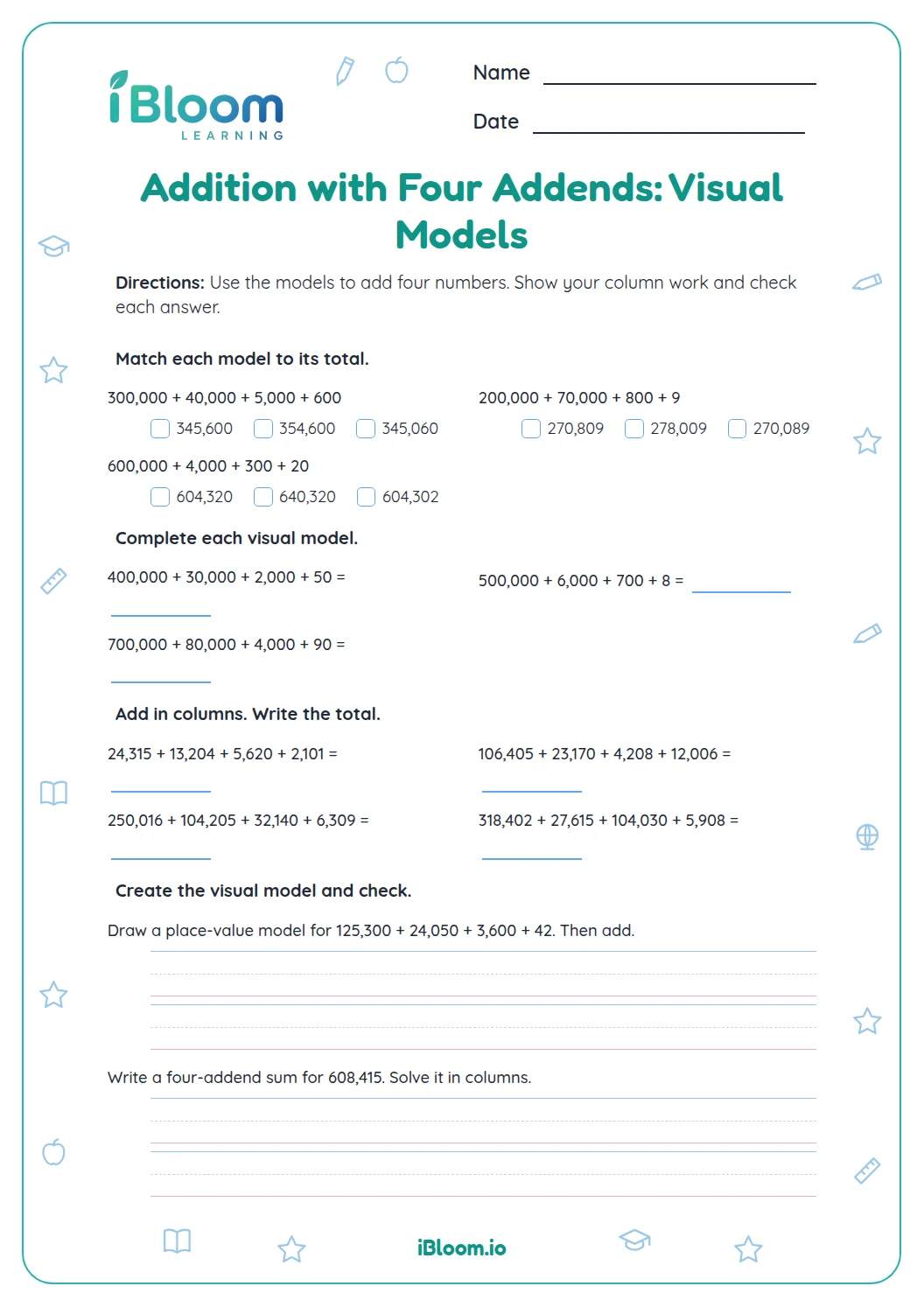
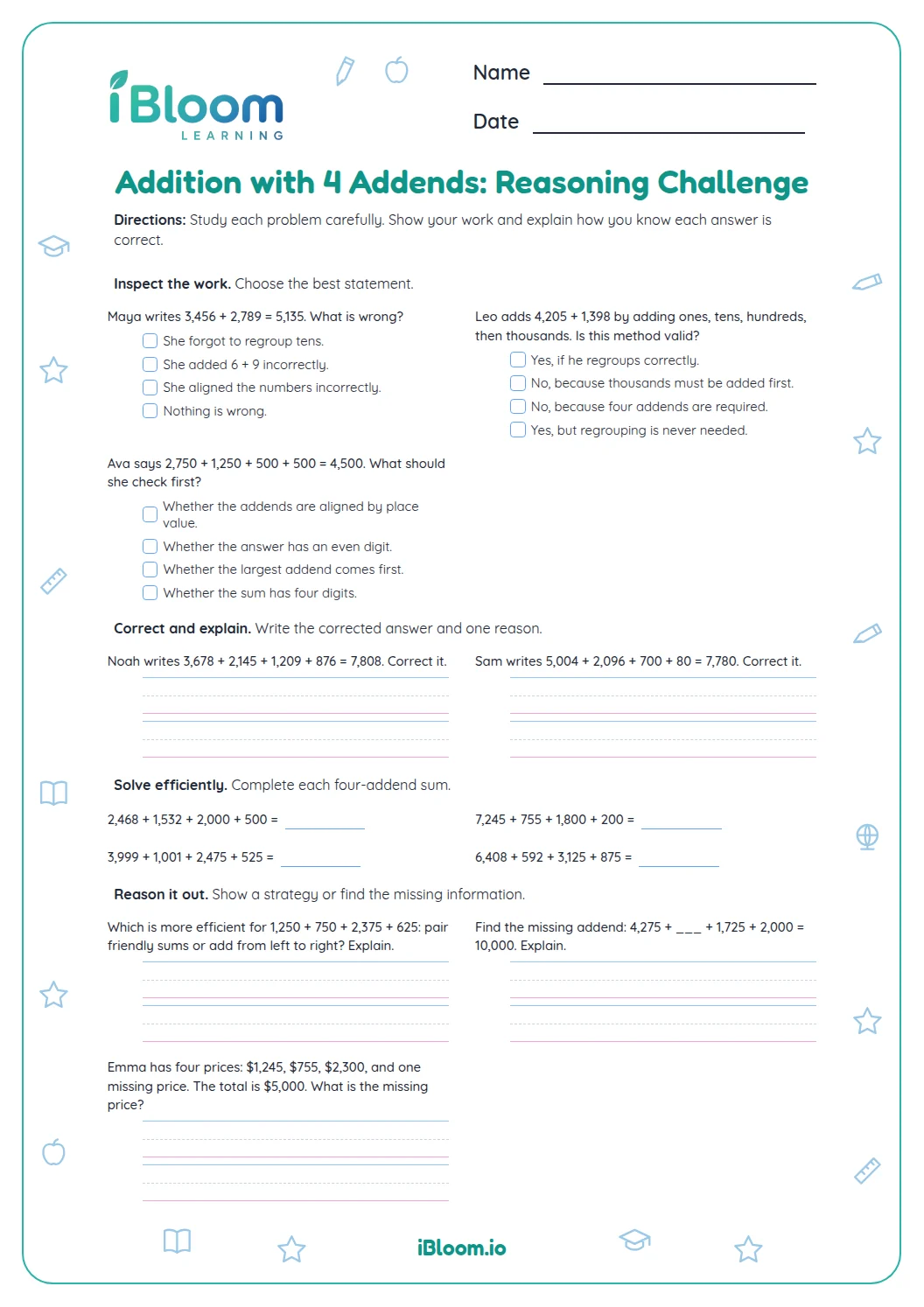
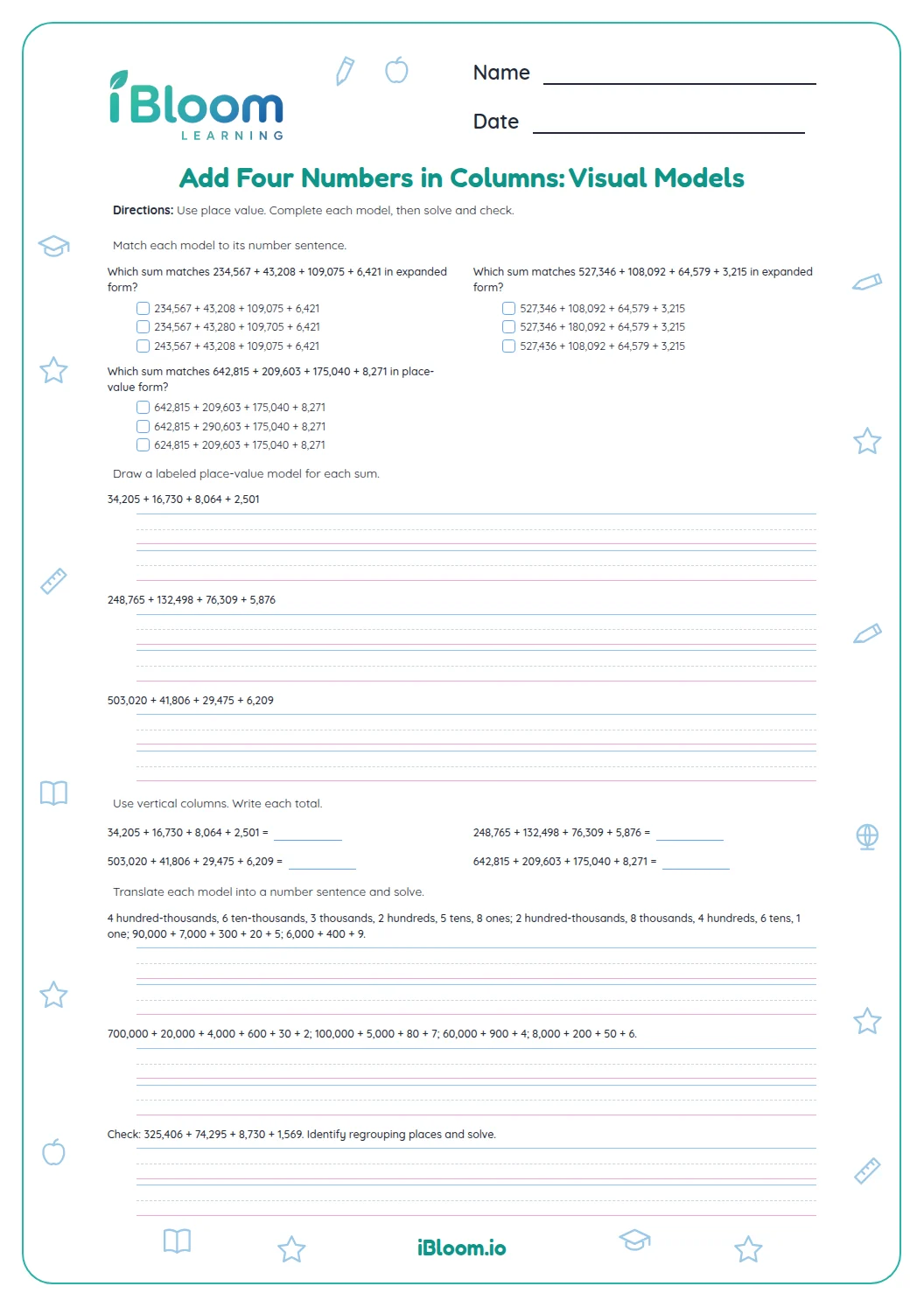
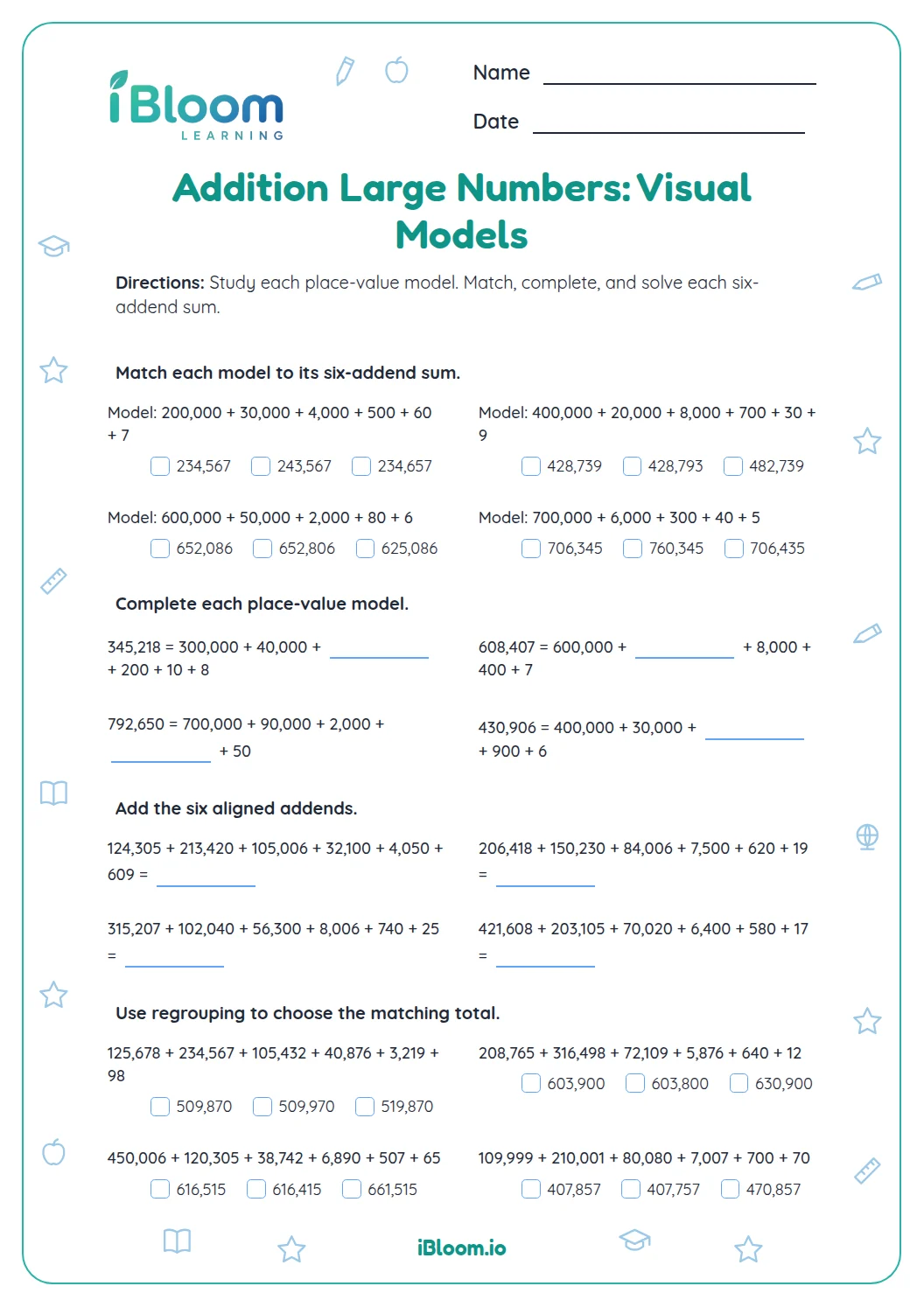
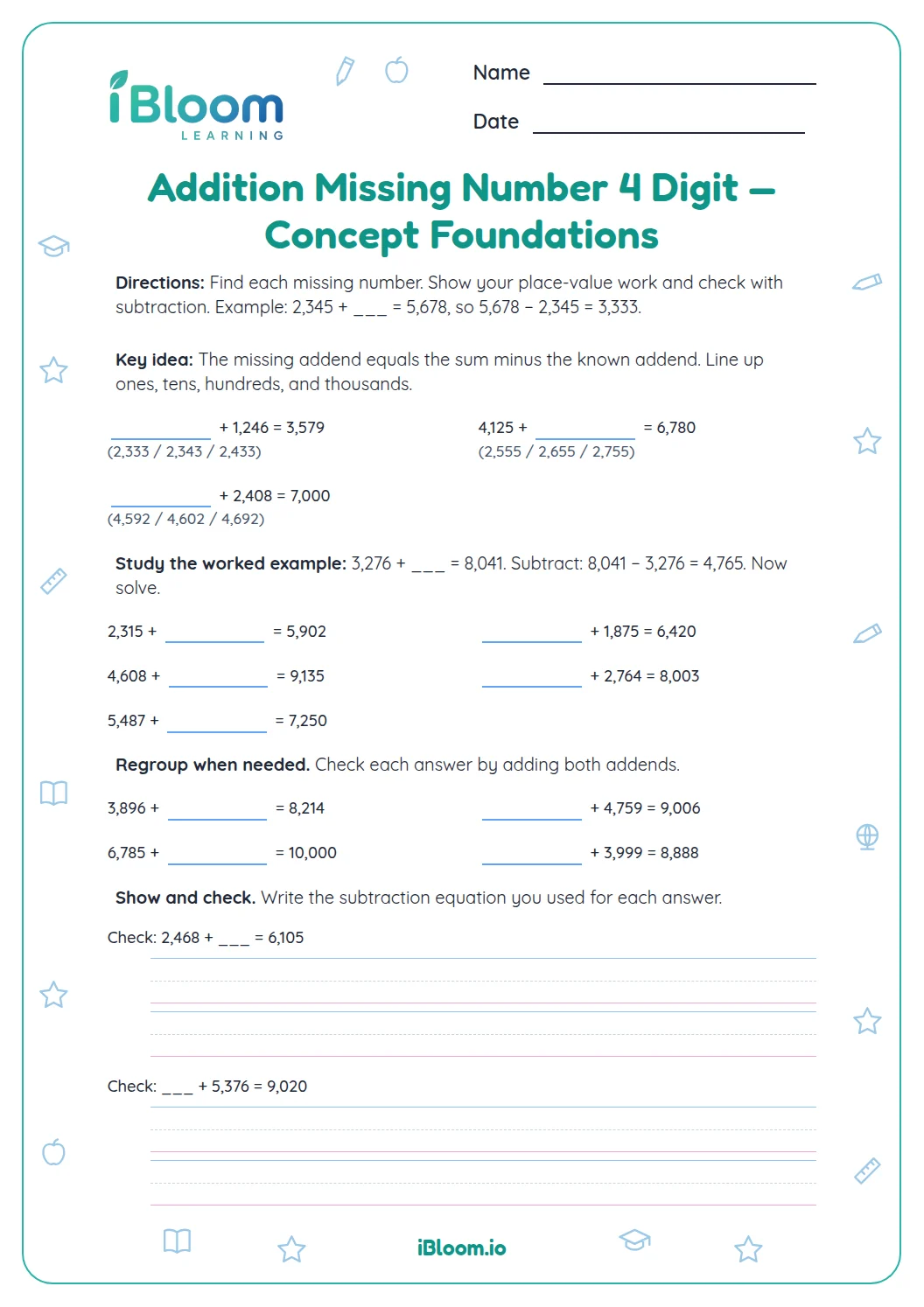
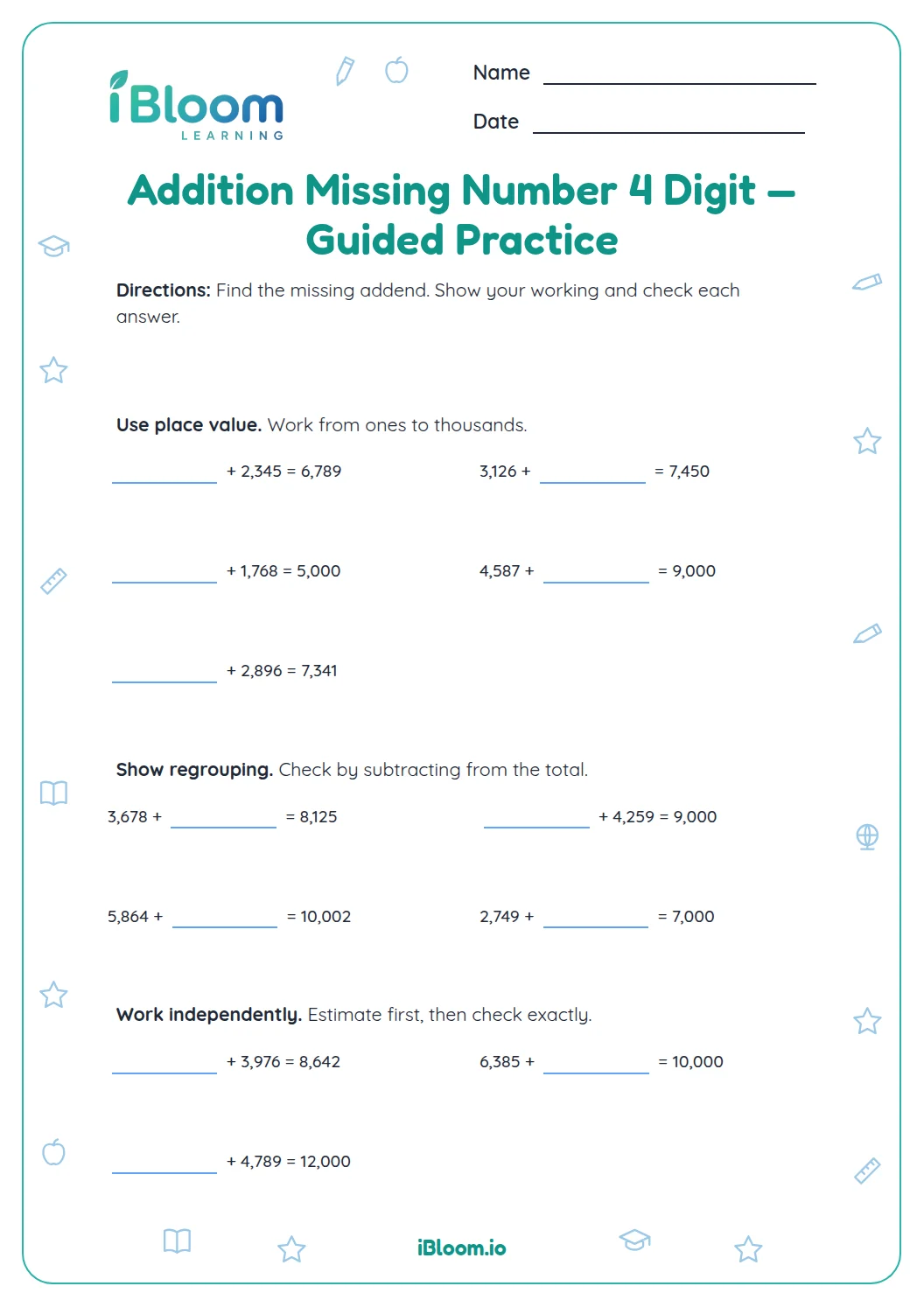
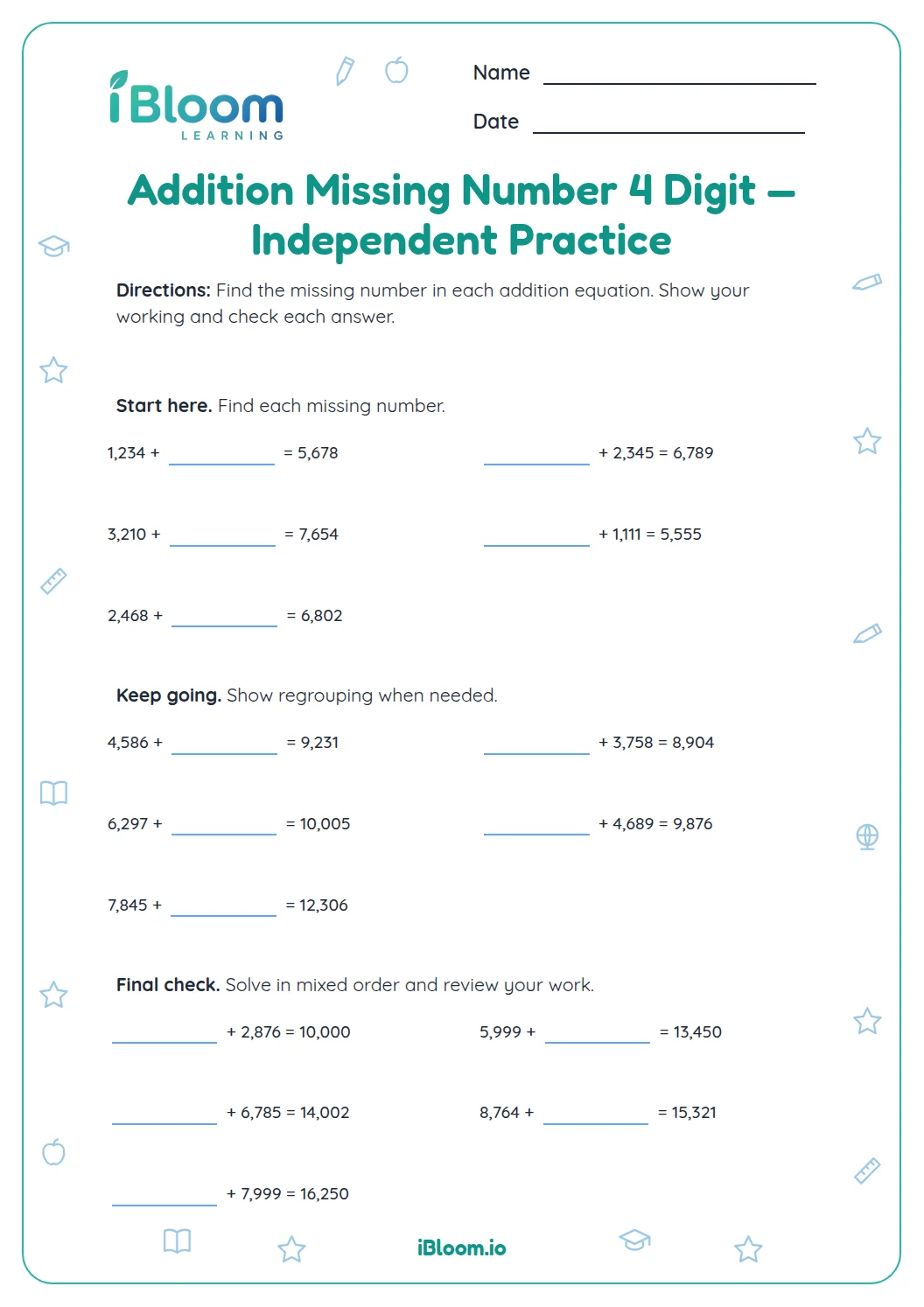
This free printable gives Grade 5 students 12 problems adding 4 multi-digit whole numbers in columns. Every addend is printed with its own plus sign so students can copy the expression clearly, line up place values, regroup, and find the total. The first part offers a measured start; the second gives a fresh set for independent work. The answer key lists each checked sum.
How should the addends line up?
Place digits with the same value in the same column: ones under ones, tens under tens, and so on. The printed plus signs separate every addend, but the columns still need careful alignment before adding.
For example, question 1 begins with 245,638 + 176,492 + 308,715 + 129,846. Put the ones digits together first, then work leftward through the columns. When a column totals ten or more, write its ones digit and carry the remaining value into the next column.
- 1245,638 + 176,492 + 308,715 + 129,846
- 2Total: 860,691
- 3Check by adding the addends in a different order; the total stays the same.
When do you regroup?
Regroup whenever a column total is 10 or more. For instance, if the ones column totals 17, record 7 ones and carry 1 ten to the tens column. Include that carried ten when you add the next column.
With several addends, a column can have more than one carried ten. Keep the written carries small and check each column before moving left.
What does this worksheet ask students to do?
Both parts use 4 addends in every problem, so students can focus on the standard column algorithm. The first eight sums build a routine; the last eight use new values for independent checking. No prompt asks for an estimate in the answer blank.
The equations have space for written work. Students should copy the addends vertically, record regrouping above the columns, and then compare their totals with the key.
A steady way to solve each sum
- 1Copy every addend vertically, keeping matching place values in the same column.
- 2Check that each number has the same right-hand alignment before adding.
- 3Start in the ones column and include every digit in that column.
- 4Write the ones digit of the column total and carry any tens to the next column.
- 5Repeat through the largest place value, then read the total with commas.
- 6Use the key to recheck a sum by adding the addends in a different order.
Common addition slips and fixes
The mistake
Leaving out one addend when several numbers are stacked.
The fix
Before calculating, point to each printed addend and tick it after copying it into the vertical setup.
The mistake
Forgetting a carried ten in the next column.
The fix
Circle each carry and include it as an extra addend in the next place-value column.
The mistake
Writing a column total as two digits in one place.
The fix
Keep only the ones digit in that column and carry the tens value one place left.
What to practice next
Make more practice
Questions parents and teachers ask
Why are the numbers written with plus signs?
Each plus sign marks a separate addend, so the expression can be read without guessing where one number ends and the next begins. For example, question 1 prints every number with a clear plus sign between it and the next addend. Students can then copy the full sum into columns.
Should students add from left to right?
For the standard column method, start at the ones column on the right and move left. If a column makes ten or more, record its ones digit and carry the tens into the next column. This keeps regrouping connected to place value.
How many numbers are in each problem?
Each of the 12 questions has exactly 4 addends. The two parts use the same number of addends throughout, so students can keep practicing one column-addition routine while the values change. Each addend is separated by a visible plus sign.
What is a good way to check a sum?
Add the same numbers in a different order or estimate the size of the total before comparing with the key. A check should use all the addends. If the answer seems too small, make sure none of the printed plus signs was skipped.
Does the answer key include every problem?
Yes. The separate key lists a sum for all 12 questions in order. Students can first complete a part, then compare the totals and return to any column where a carry or addend may have been missed. Every keyed total was checked by adding all the printed addends.