

About this worksheet
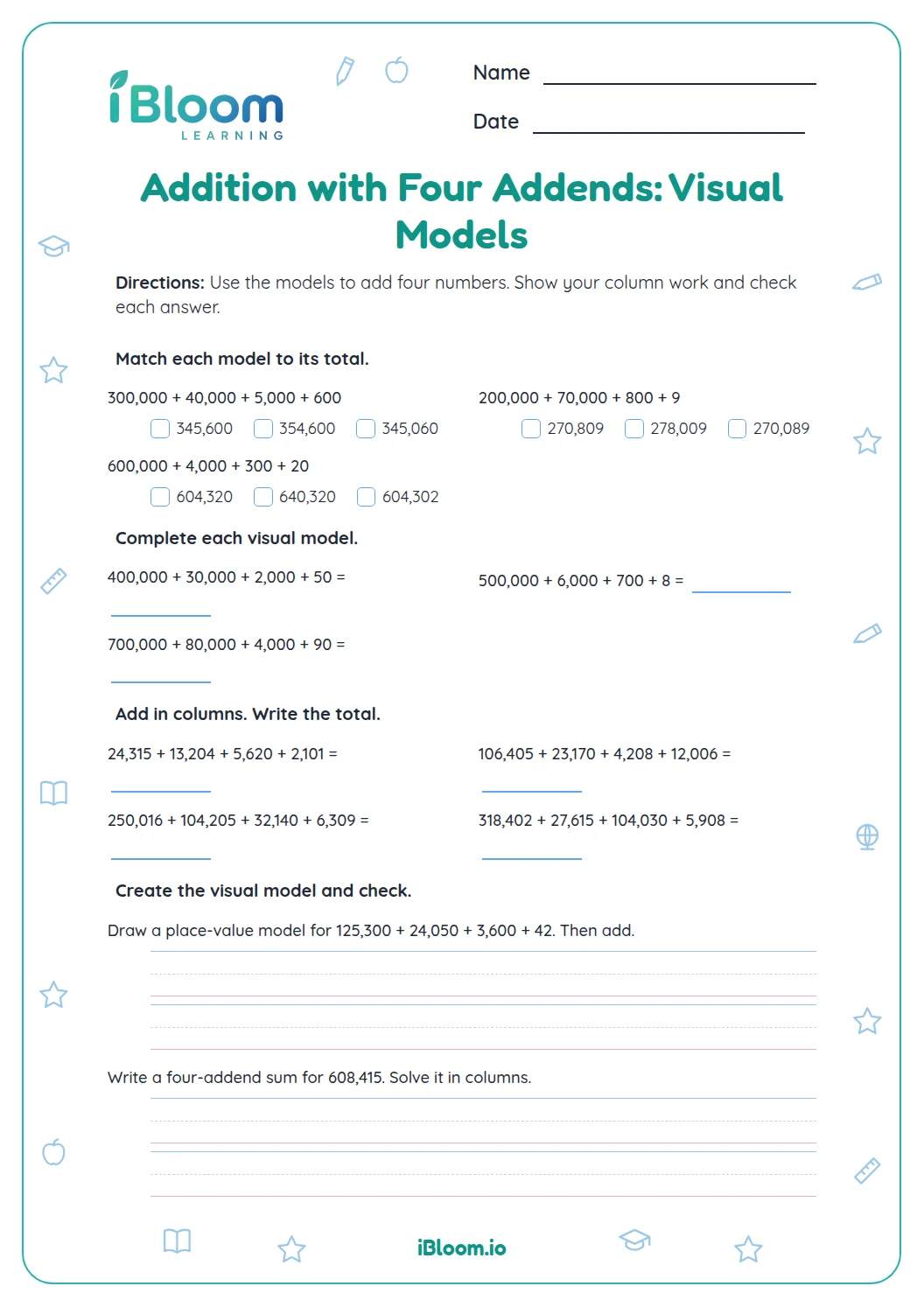
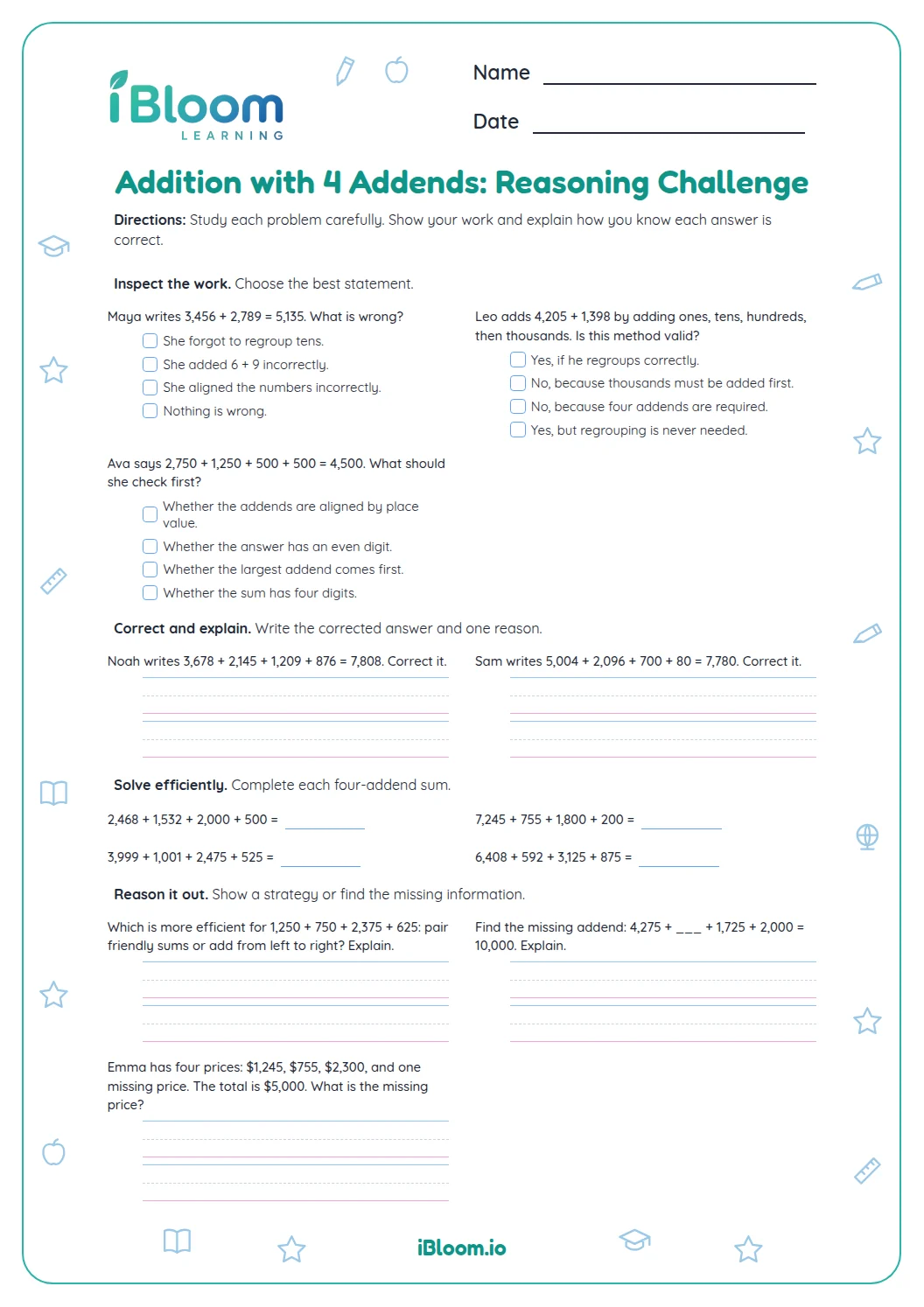
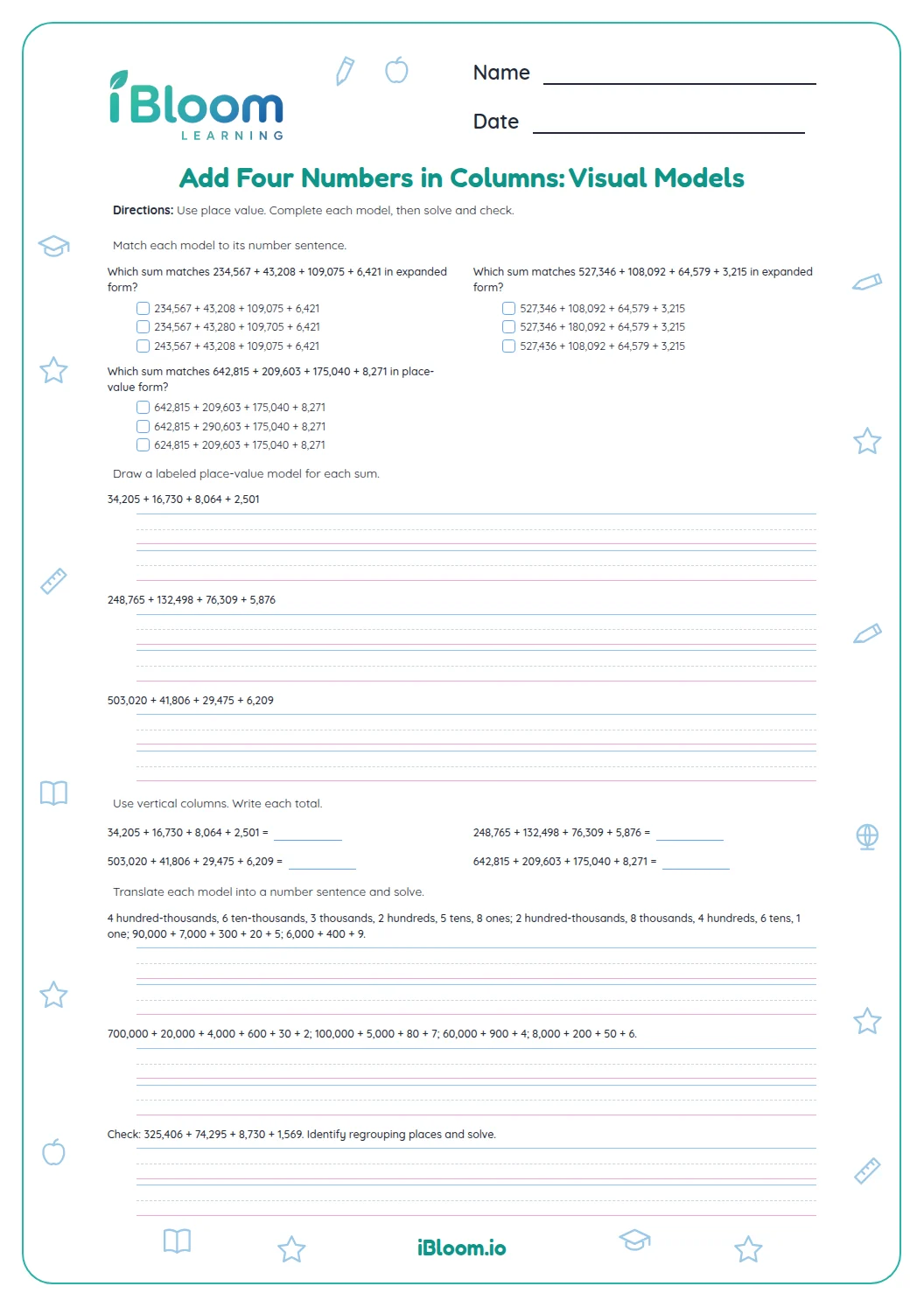
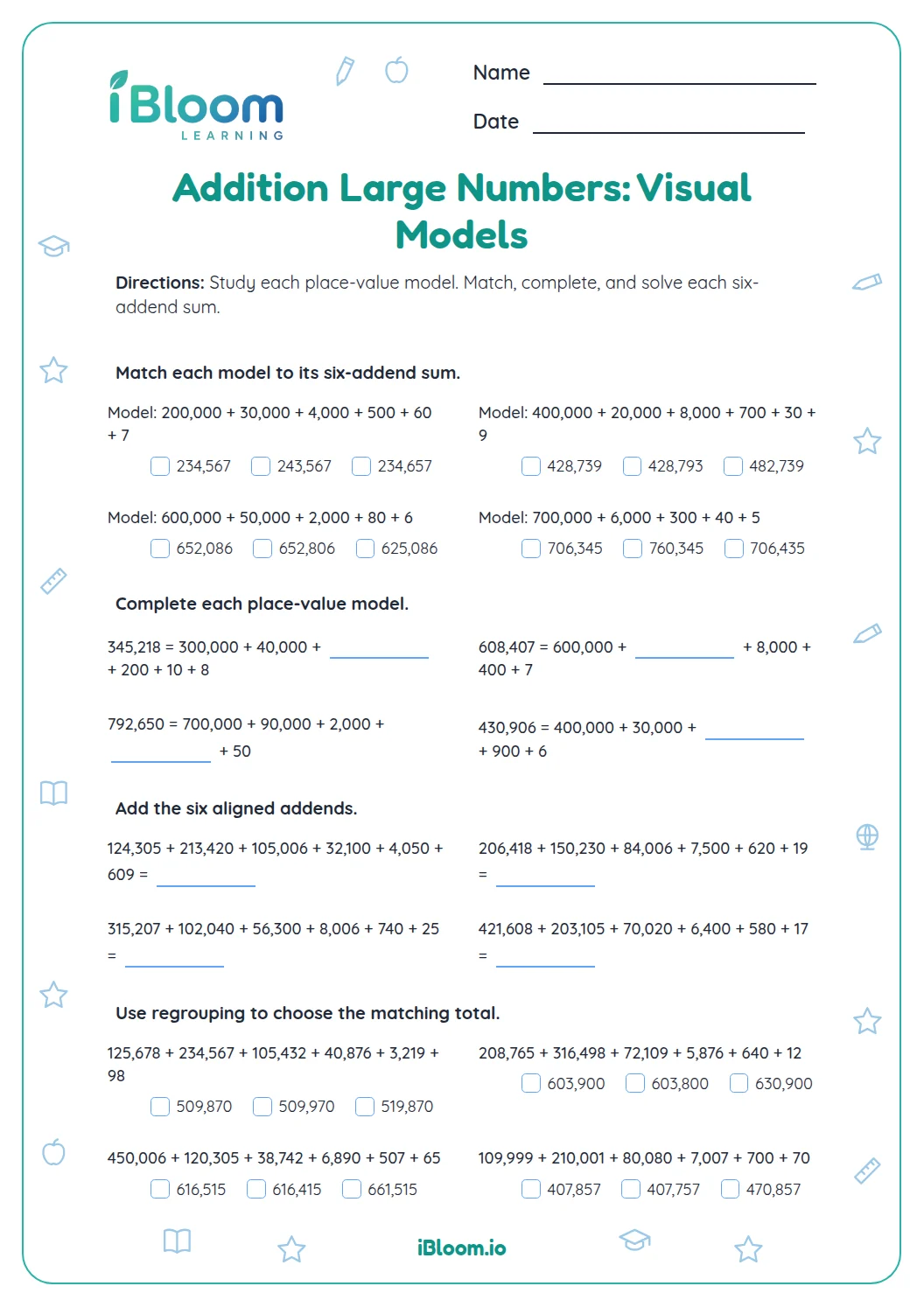
This independent practice worksheet gives Grade 5 students sixteen four-addend sums, all printed with a plus sign between every number. Problems grow from three-digit addends to larger values, with regrouping throughout and an estimate-first section. Students can write each equation vertically to keep place values aligned. The separate answer key lists a checked total for each sum.
How should four addends line up?
Write each addend so ones are under ones, tens under tens, hundreds under hundreds, and so on. Keep a plus sign for every addend after the first; that makes clear which numbers are being combined.
Question 5 is 1,245 + 2,103 + 1,110 + 402. Align the columns, add from the ones place, and regroup as needed.
- 11,245
- 22,103
- 31,110
- 4+ 402
- 54,860
When should you regroup?
If a column totals 10 or more, write the ones digit in that column and carry the remaining tens to the next column. With four addends, a column can total more than 20, so add all four digits before regrouping.
What changes across the four groups?
The first four sums use three-digit addends. The next four use four-digit addends, the third group asks students to estimate before solving, and the last four give longer independent column practice.
How can I use this worksheet?
- 1Write each addend on its own row.
- 2Align ones, tens, hundreds, and larger places.
- 3Check that every number after the first has a plus sign.
- 4Add all digits in the ones column and regroup.
- 5Continue left and estimate to check the final total.
Common mistakes and quick fixes
The mistake
Leaving out a plus sign between addends.
The fix
Write one plus sign before each addend after the first.
The mistake
Adding only two or three of the four numbers.
The fix
Count the four addend rows before starting and again before totaling.
The mistake
Misaligning digits with different lengths.
The fix
Line up each number by its rightmost digit in the ones column.
What to practice next
Questions parents and teachers ask
Why are there plus signs between all four numbers?
Each plus sign shows that the next number is another addend in the same sum. The worksheet prints all three signs explicitly so the values remain separate when students read the equation. They can then place each addend on its own row.
How do I add four numbers in columns?
Align the numbers by place value, then add the digits in the ones column across all four rows. Regroup any tens into the next column, and repeat through the largest place. Question 5 demonstrates this with 1,245 + 2,103 + 1,110 + 402.
What if the numbers have different numbers of digits?
Line up each number by its rightmost digit in the ones column. Shorter addends have empty places on the left, which contribute zero to those columns. For example, in question 5, 402 lines up with the hundreds, tens, and ones of the other addends.
Why estimate before solving?
An estimate gives a quick size check. Round each addend to a nearby thousand or ten thousand, add those rounded amounts, then compare your exact total. If the exact sum is far away, recheck the columns and regrouping.
Does the key show column work?
The separate answer key lists the correct total for each equation. Students can show their own vertical work on the worksheet, including regrouping marks, then use the key to check each sum. The key keeps the printed addends in order, making it easy to find a total.