Free printable practice
Energy Sound Light Practice Activities
Class 1 Science and EVS worksheets introduce energy, sound, heat, light, shadows, shade, transparency, and everyday fuel needs through simple activities.
Explore Energy Sound Light
Free printable worksheet PDFs
Preview every available page, then download the free worksheet PDF for home, homeschool, tutoring, or classroom practice.
Preview the exact activity before downloading it.
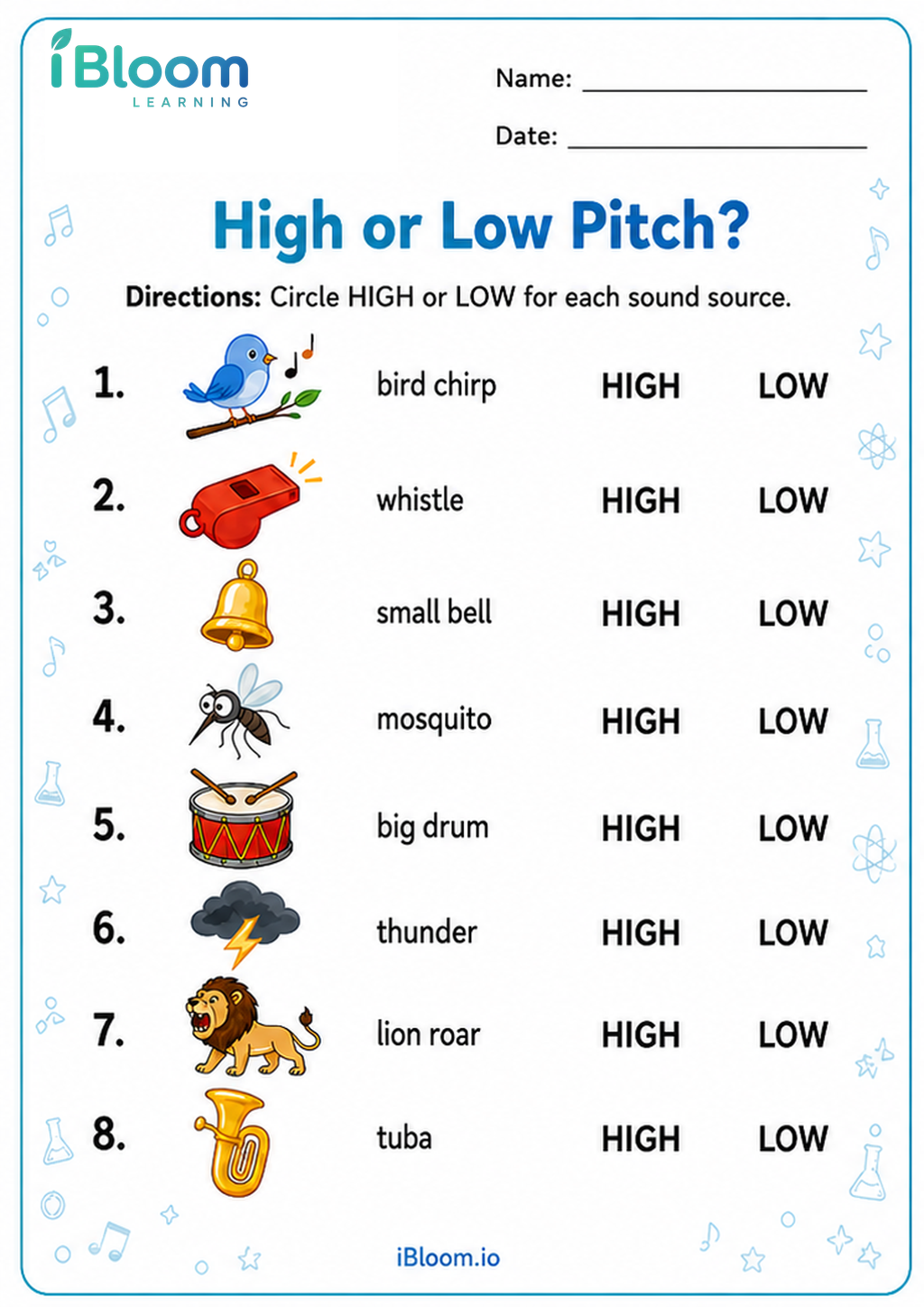 High or Low Pitch?Class 1 printable practice for Sound Pitch.Class 1Free PDF preview
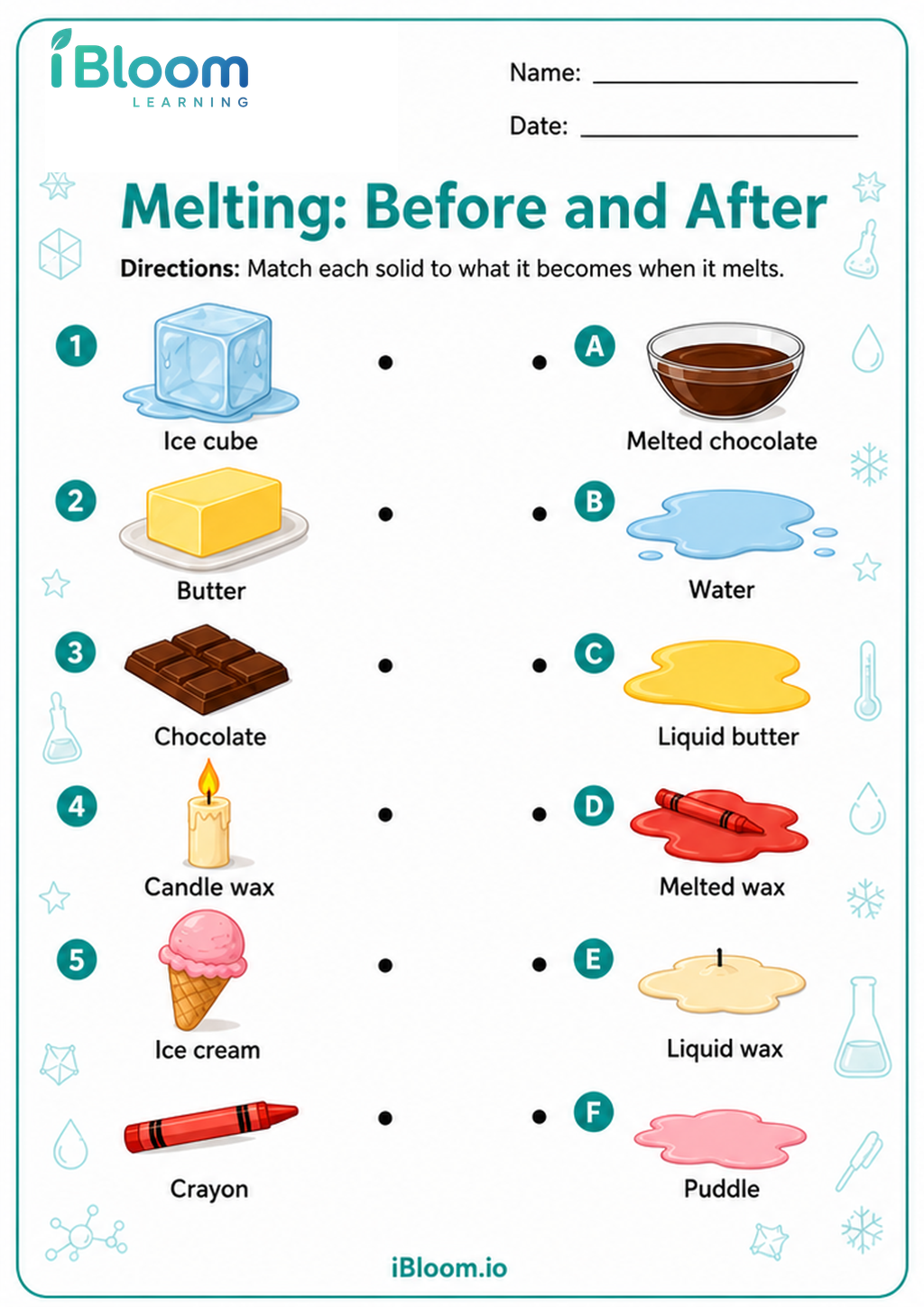 Melting: Before and AfterClass 1 printable practice for Melting.Class 1Free PDF preview
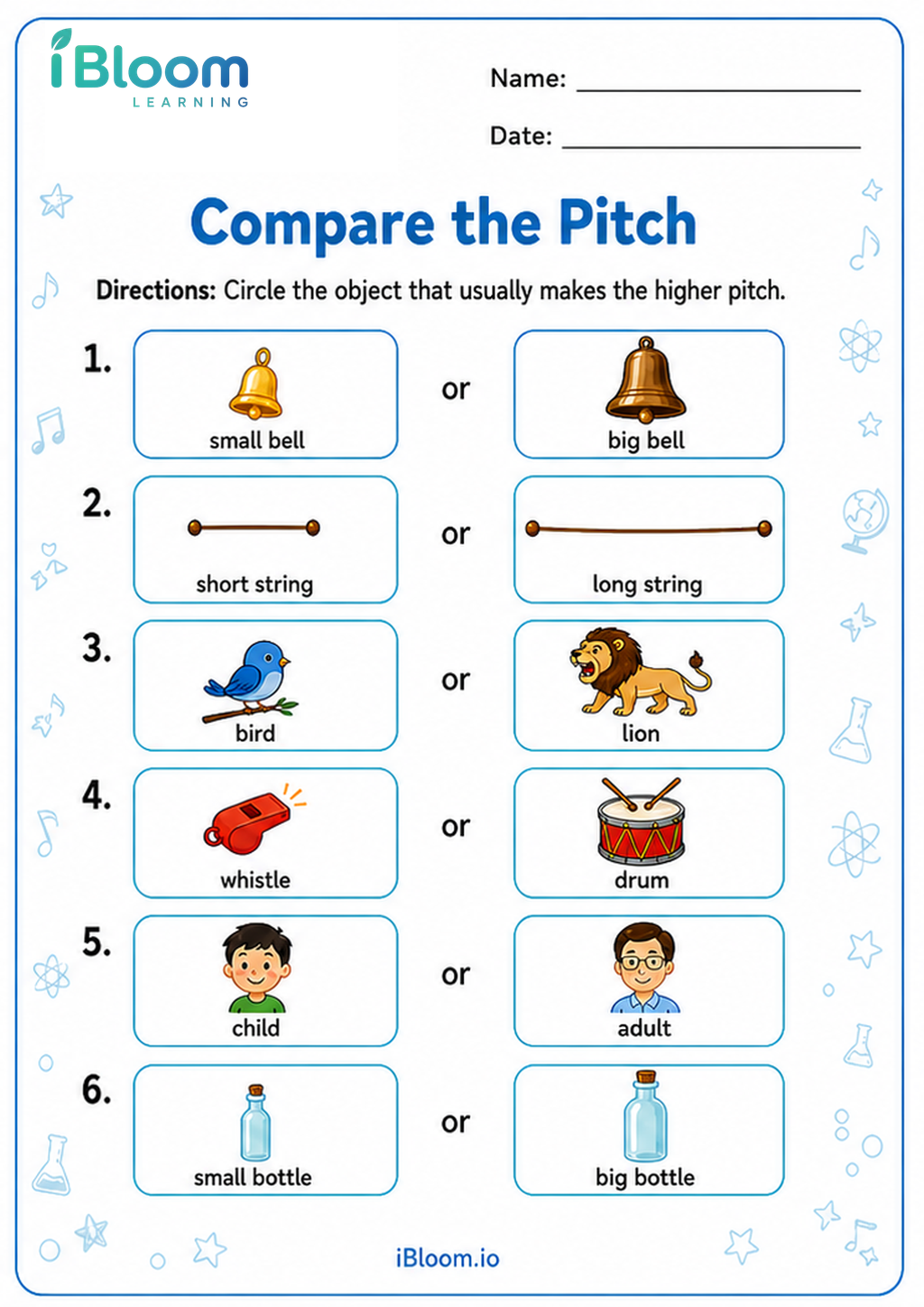 Compare the PitchClass 1 printable practice for Sound Pitch.Class 1Free PDF preview
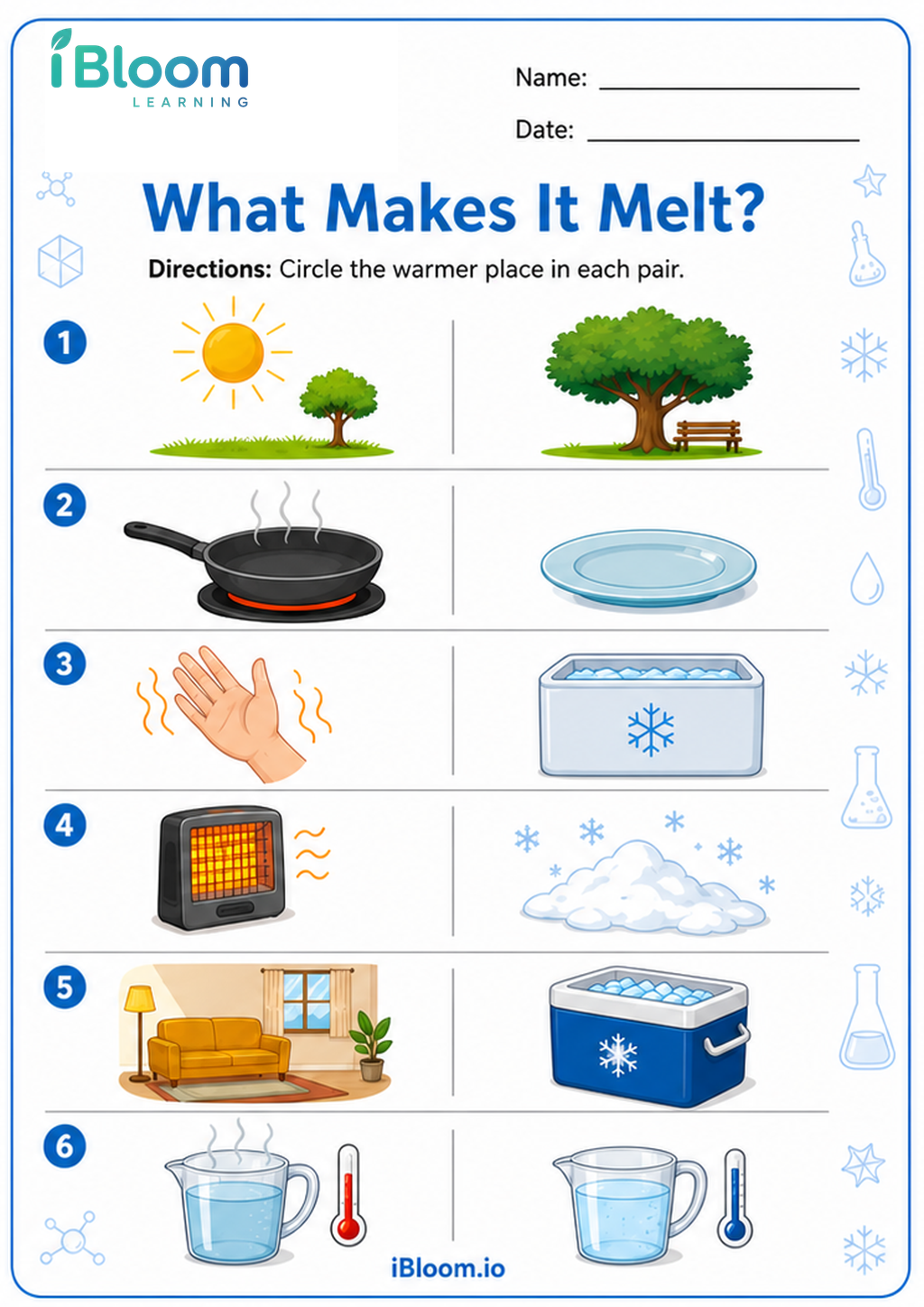 What Makes It Melt?Class 1 printable practice for Melting.Class 1Free PDF preview
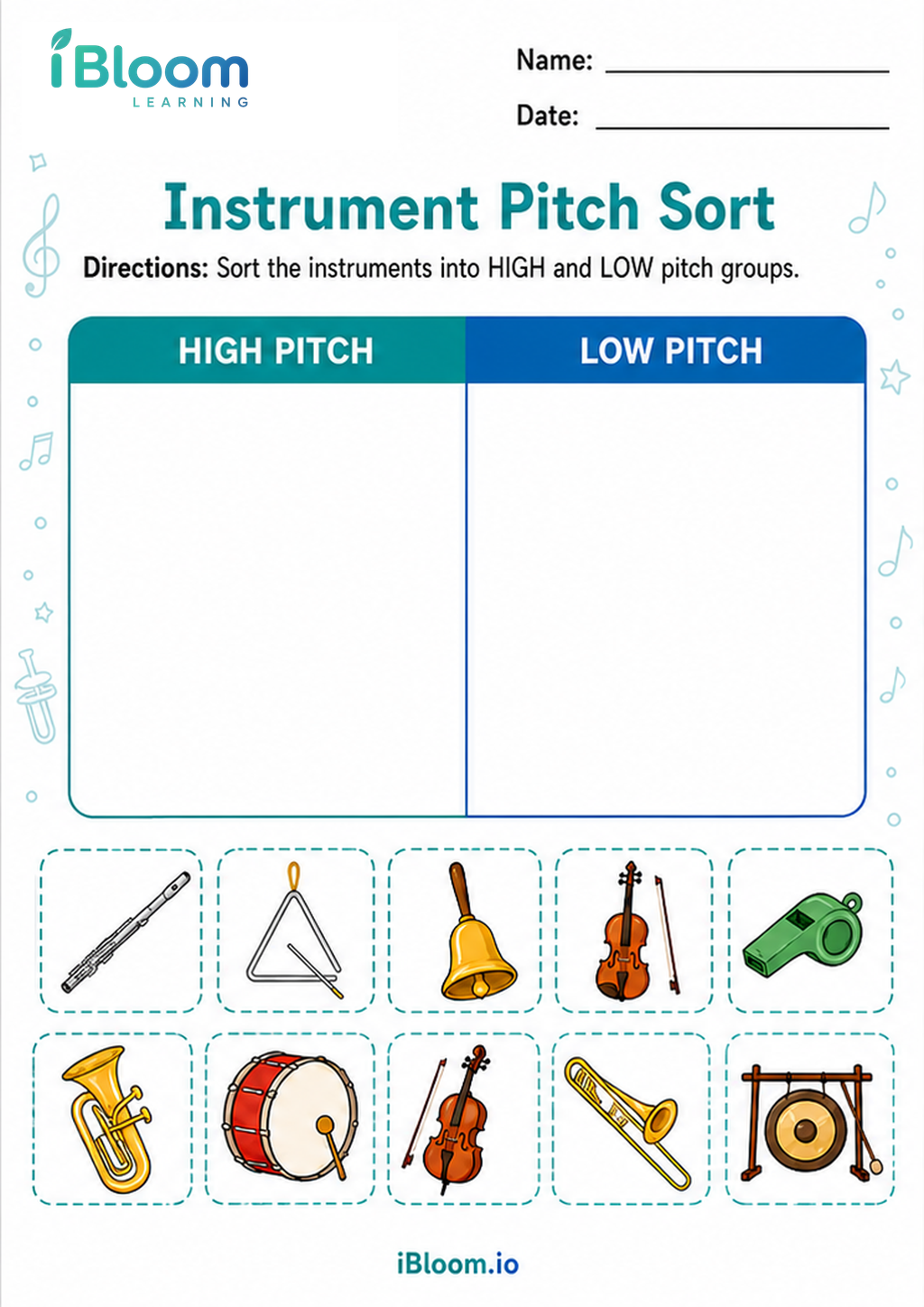 Instrument Pitch SortClass 1 printable practice for Sound Pitch.Class 1Free PDF preview
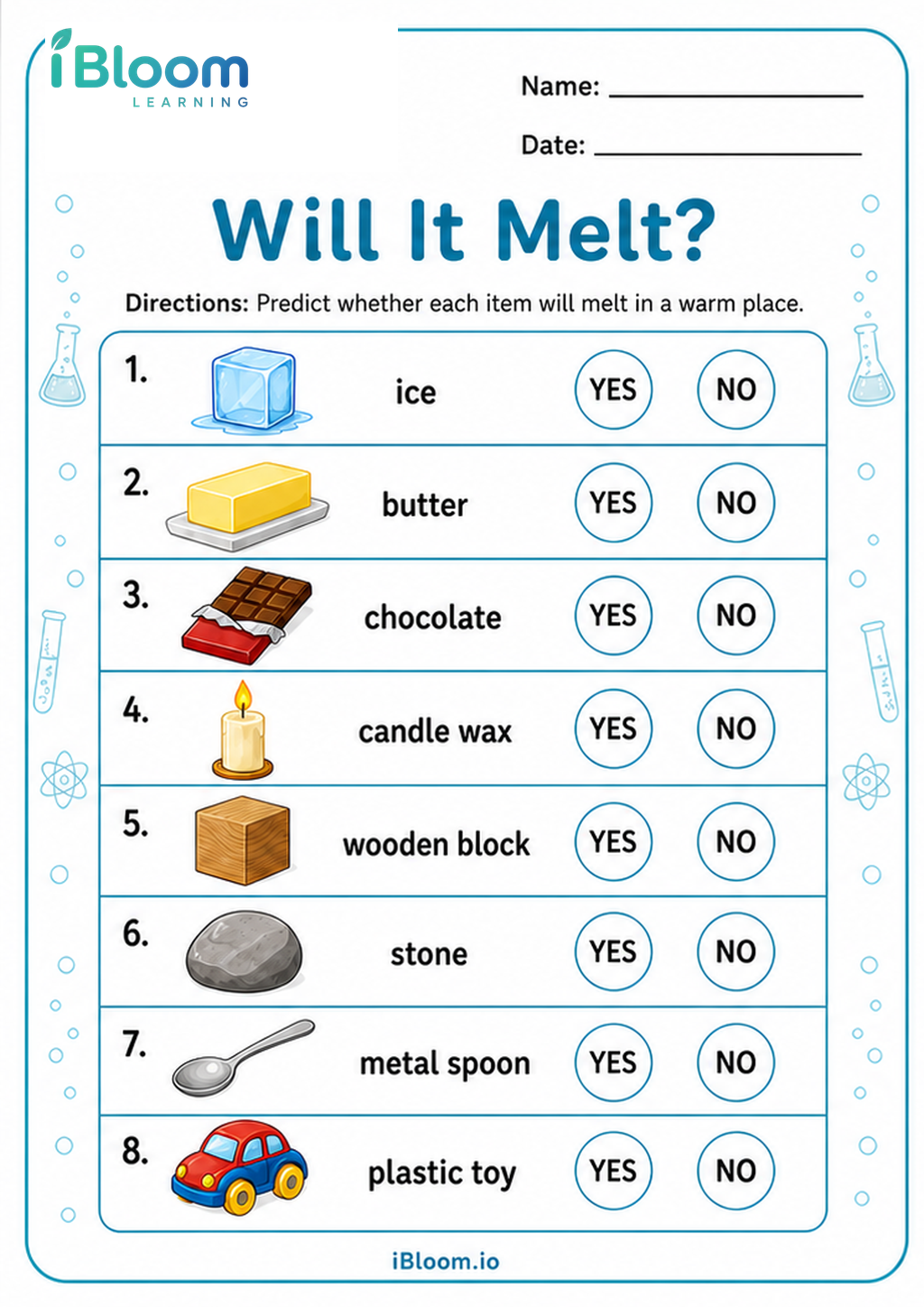 Will It Melt?Class 1 printable practice for Melting.Class 1Free PDF preview
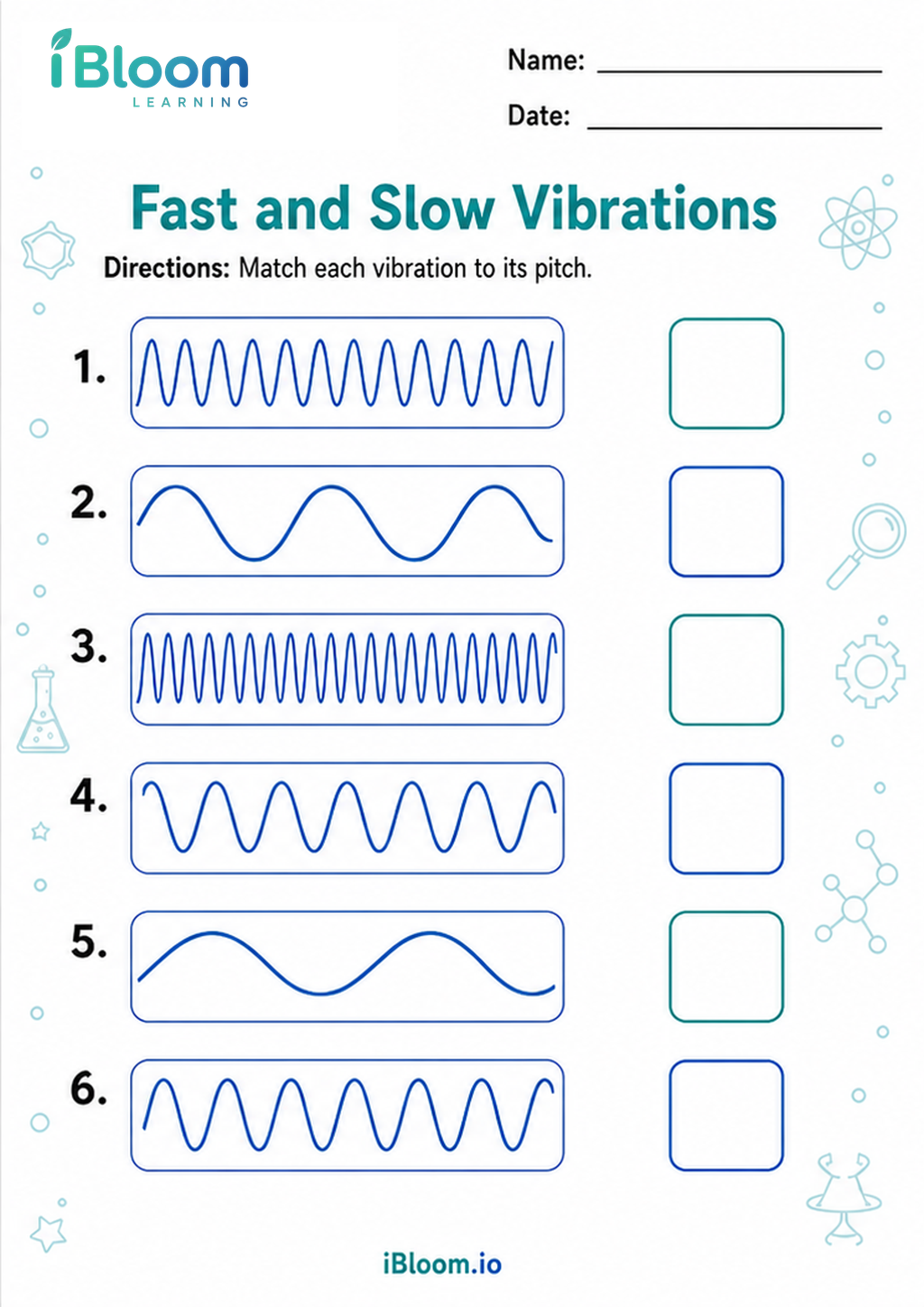 Fast and Slow VibrationsClass 1 printable practice for Sound Pitch.Class 1Free PDF preview
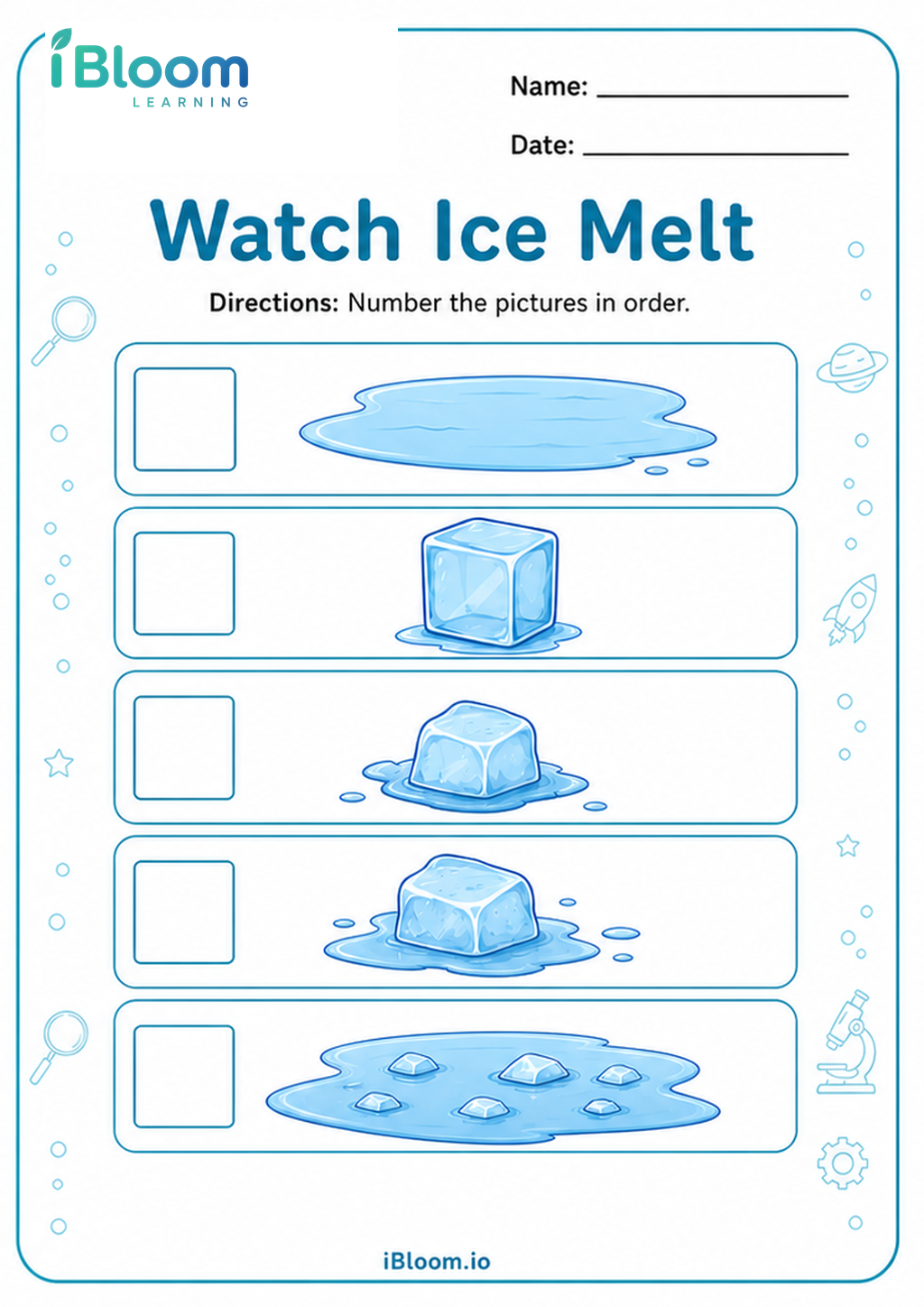 Watch Ice MeltClass 1 printable practice for Melting.Class 1Free PDF preview
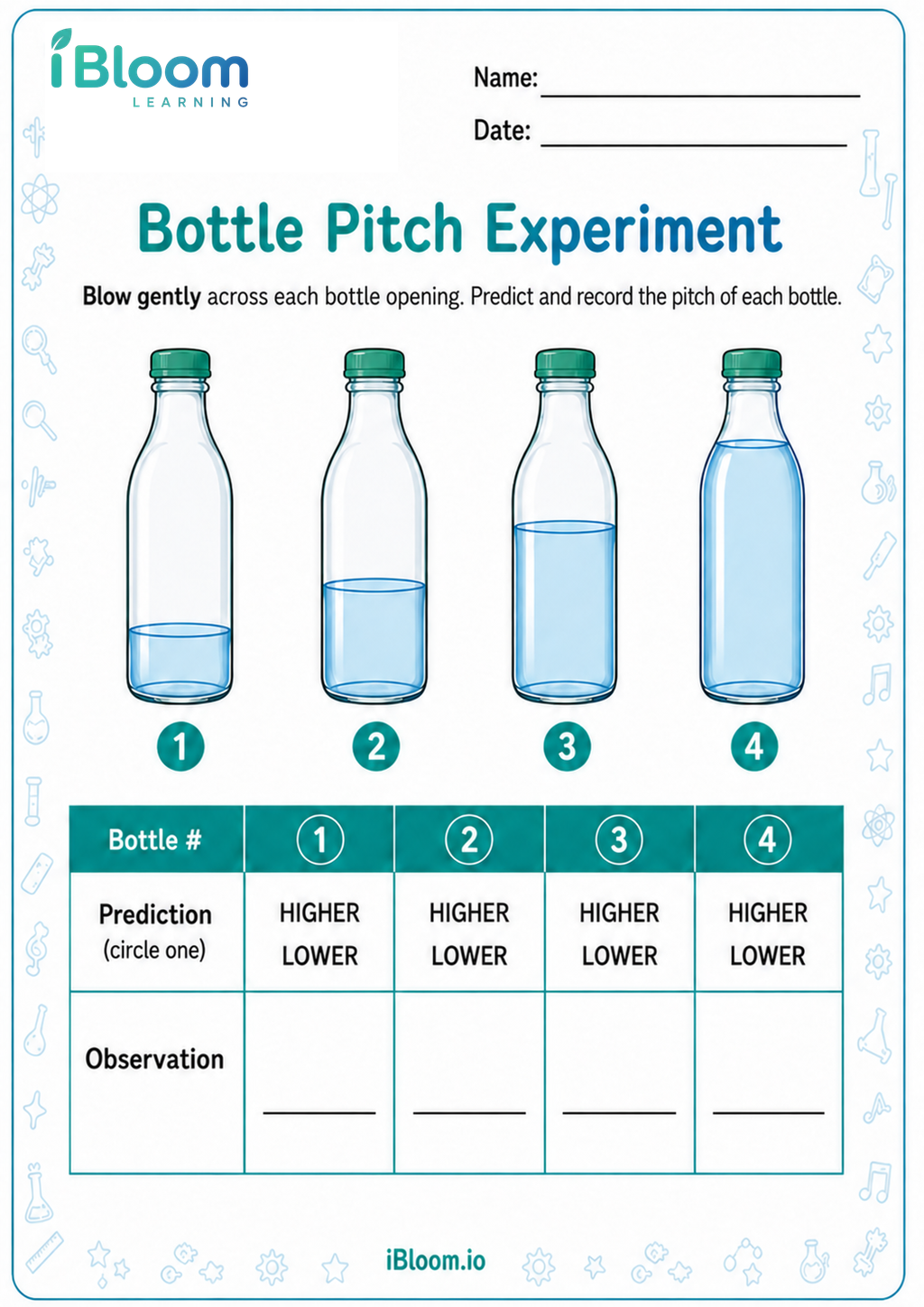 Bottle Pitch ExperimentClass 1 printable practice for Sound Pitch.Class 1Free PDF preview
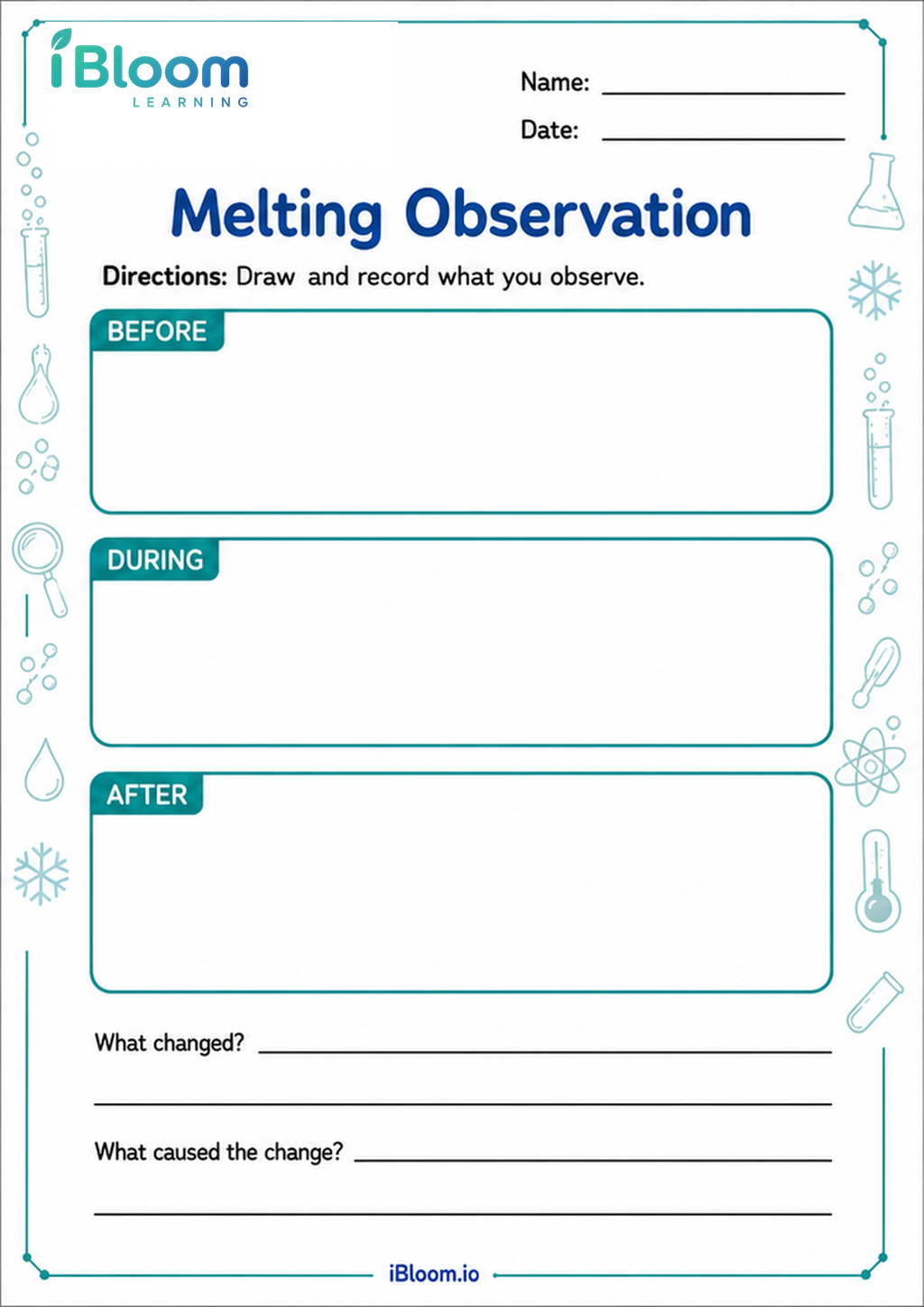 Melting ObservationClass 1 printable practice for Melting.Class 1Free PDF preview
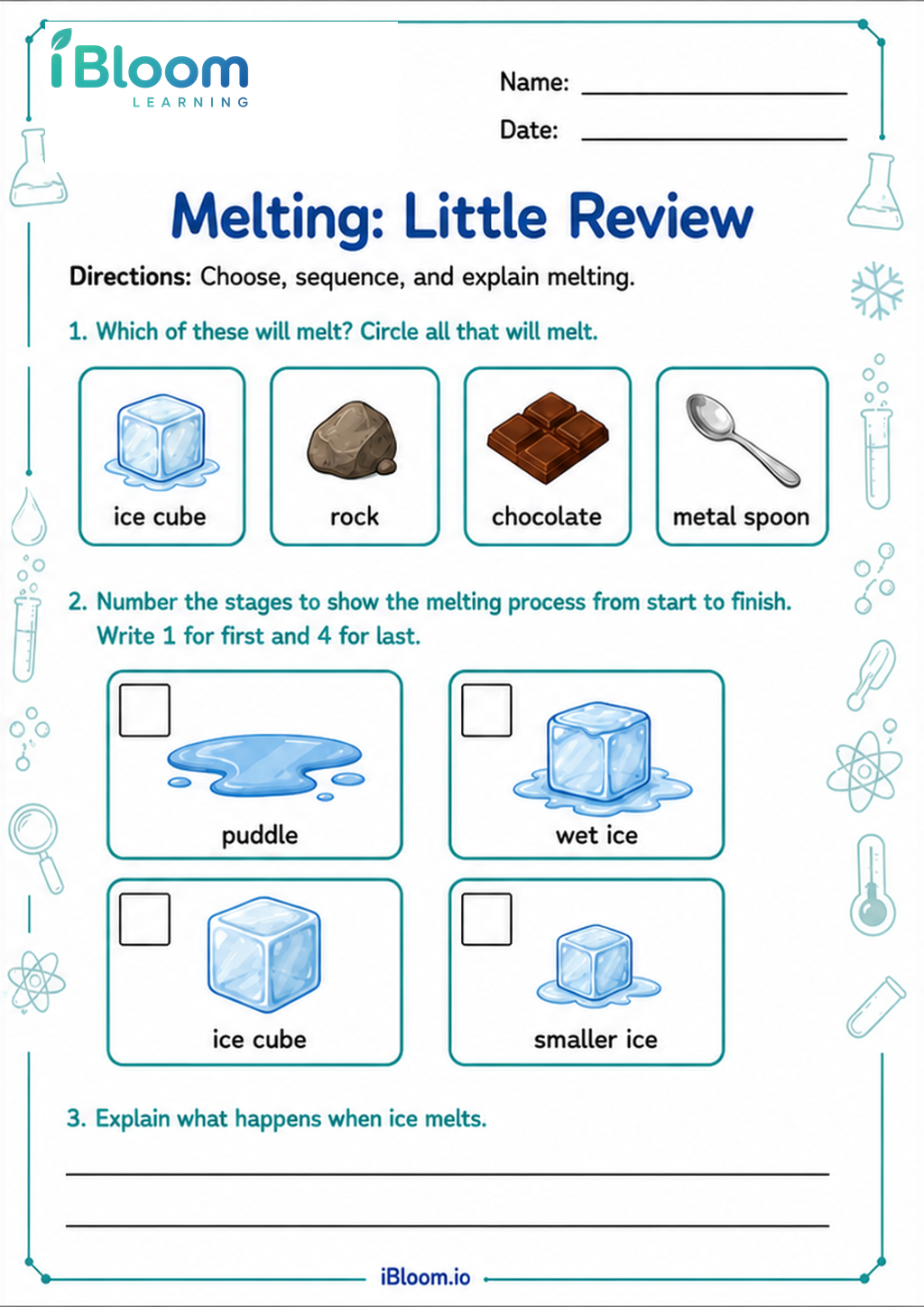 Melting: Little ReviewClass 1 printable practice for Melting.Class 1Free PDF preview
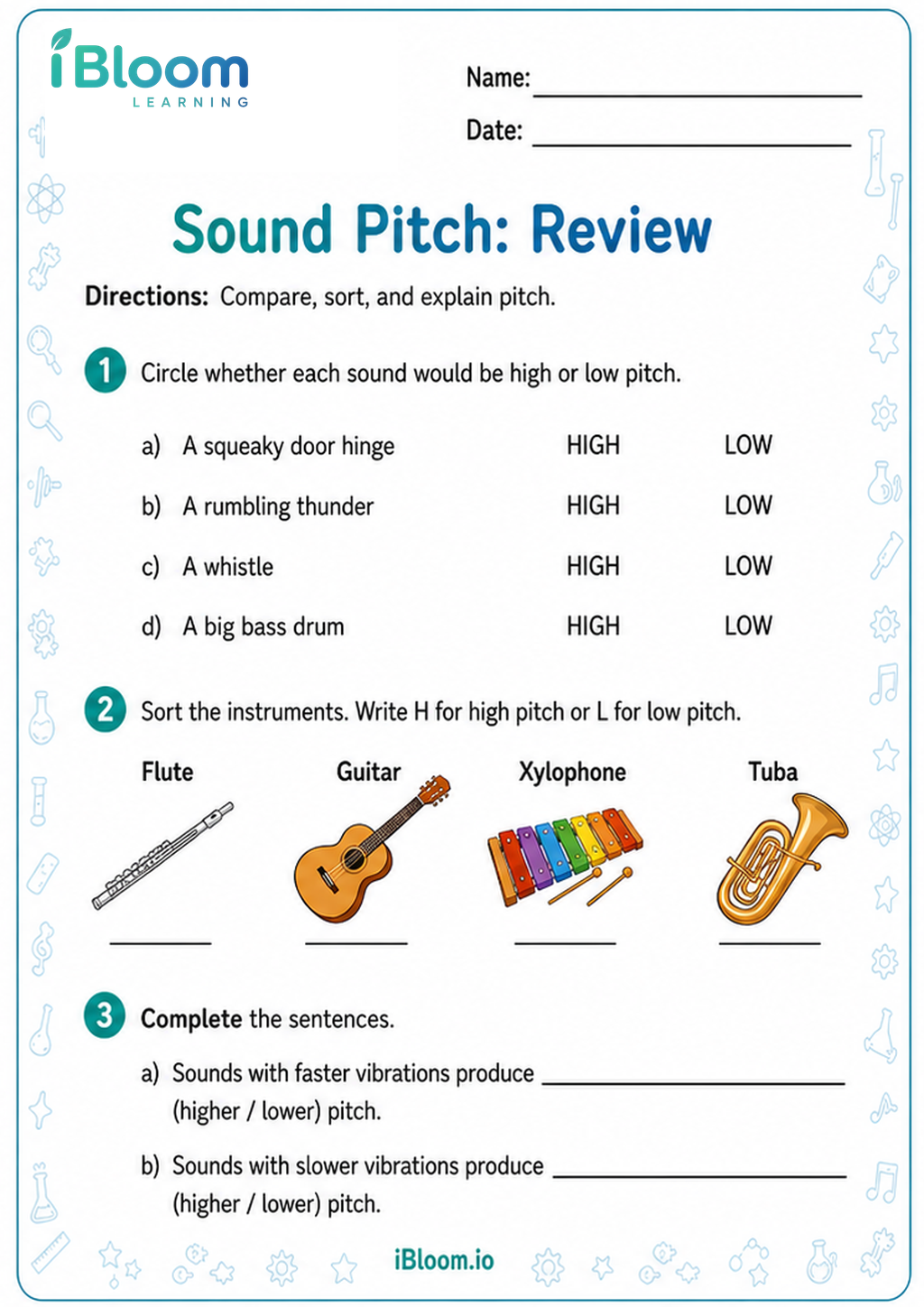 Sound Pitch: ReviewClass 1 printable practice for Sound Pitch.Class 1Free PDF preview
Practice that builds confidence
Exploring light and darkness
These Class 1 Science and EVS worksheets introduce Energy, Sound and Light through everyday observations. Children explore how we see, hear, feel warmth, make shadows, use shade, and get energy for daily life.
The printable activities include picture-based questions, sorting tasks, matching, labelling, and simple observation prompts covering transparency, sun and shade, heat, melting, pitch, light rays, darkness, sound words, shadows, shade structures, and fuel energy.
Children learn that light helps us see and that darkness happens when there is little or no light. Activities on light rays, light and dark, transparency, and shadows help them notice how light travels, passes through some materials, and is blocked by others.

Heat, melting, and the Sun
The worksheets connect heat to familiar experiences such as warmth from the Sun and melting. Children compare sun and shade, identify ways to stay cool, and observe that some materials change when heated. The focus stays on simple Class 1 observations, not complex explanations.
Sound in everyday life
Sound topics include sound words and sounds pitch. Children match sounds to objects, notice loud and soft sounds, and compare high and low sounds in simple ways. This builds vocabulary for describing what they hear around home, school, and the street.
Energy people use
The People Fuel Energy topic helps children understand that people need food for energy and that homes, vehicles, and tools may use different fuels or energy sources. The aim is to identify common examples and talk about safe, sensible use.
Parent routine and classroom use
At home, try a simple observation walk: find a shadow, name a sound, stand in shade, and point to something transparent. In class, teachers can use the printables after demonstrations with a torch, paper, water, or classroom objects. They also work well for EVS discussion, picture reading, and quick revision.

Free printable PDF download
Use this Class 1 energy sound light worksheet page to preview the activity, print it, or download it as a PDF for quick practice. It works well for homework, homeschool lessons, tutoring, morning work, revision, and classroom centers.
Answers and answer key support
After the child completes the worksheet independently, parents and teachers can use the answer support or answer key information to check the work, review mistakes, and choose the next practice step.
Why iBloom worksheets help
The iBloom worksheets connect Science and EVS vocabulary to real objects children already know. Watch for mix-ups such as calling every clear object “invisible,” thinking shadows appear without light, or confusing heat with light. A child-friendly strategy is Look, Feel, Listen, Tell: observe safely, use senses, and describe what changed.
Helpful answers
Frequently asked questions
What topics are included in Energy, Sound and Light for Class 1?
The worksheets cover transparency, sun and shade, heat, melting, sound words, pitch, light rays, light and dark, shadows, shade structures, and people’s fuel energy.
How can children observe shadows safely?
They can look at shadows made by sunlight or a torch on a wall or floor. They should never look directly at the Sun.
What is a simple way to explain transparency?
Tell children that transparent materials let us see through them, like clear glass or clean water, while other materials block the view.
How do these worksheets teach sound pitch?
They use simple comparisons such as high and low sounds, helping children describe sounds they hear rather than memorise definitions.
Can these activities be used for EVS observation work?
Yes. Teachers can pair the worksheets with classroom objects, outdoor shade, simple sounds, and safe heat or light demonstrations.
Is this Class 1 energy sound light worksheet free?
Yes. You can preview it for free and use the printable worksheet for home or classroom practice.
Can I download this Class 1 energy sound light worksheet as a PDF?
Yes. Use the worksheet download option to save a printable PDF, or print the worksheet directly from the page.
Does this Class 1 energy sound light worksheet include answers or an answer key?
When the activity has fixed answers, iBloom includes answer support so parents and teachers can check the completed worksheet.