Free printable practice
Melting Practice Activities
Class 1 Science and EVS worksheets that help children observe, name, and explain melting through familiar solids like ice, butter, and chocolate.
Free printable worksheet PDFs
Preview every available page, then download the free worksheet PDF for home, homeschool, tutoring, or classroom practice.
Preview the exact activity before downloading it.
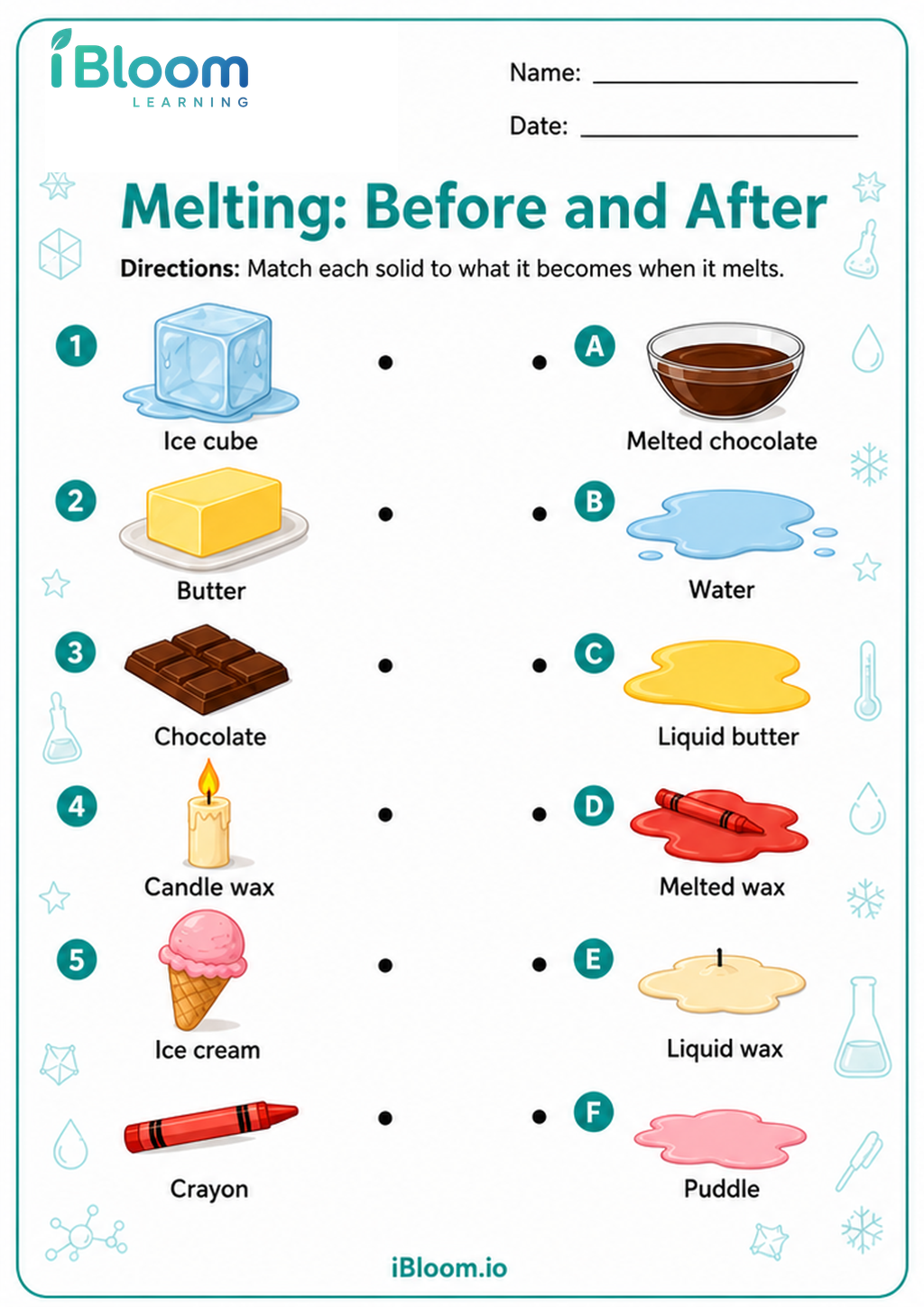 Melting: Before and AfterClass 1 printable practice for Melting.Class 1Free PDF preview
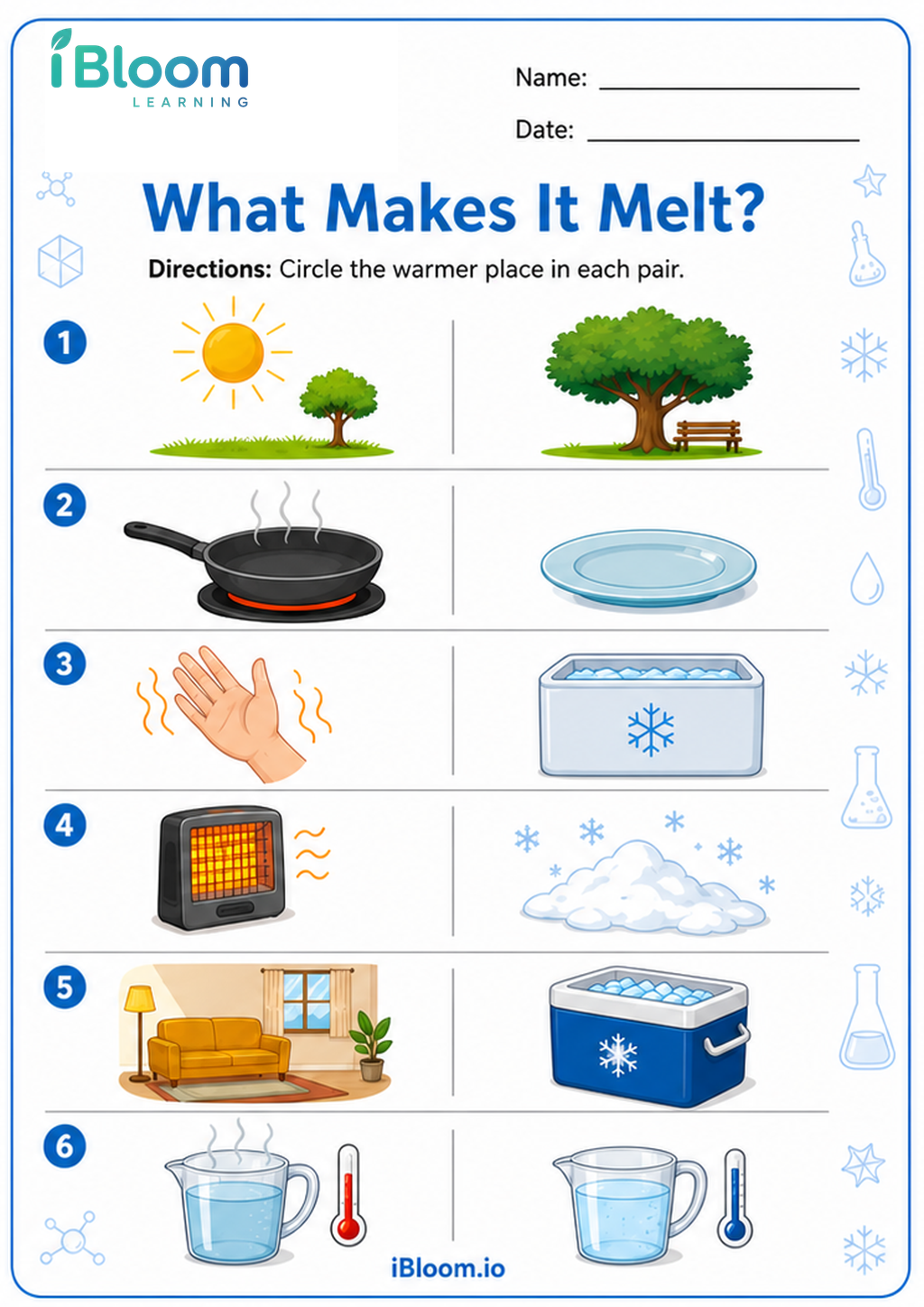 What Makes It Melt?Class 1 printable practice for Melting.Class 1Free PDF preview
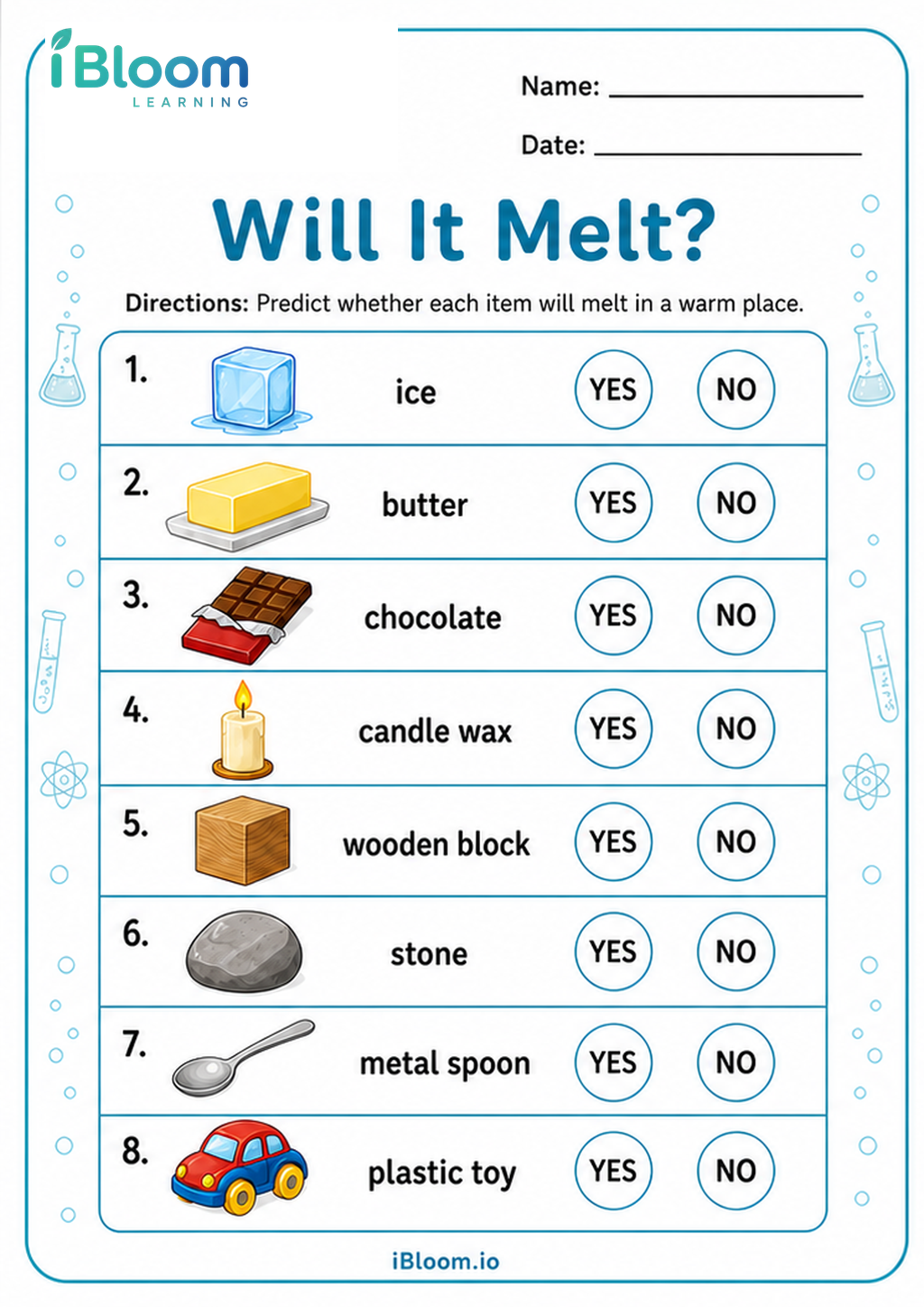 Will It Melt?Class 1 printable practice for Melting.Class 1Free PDF preview
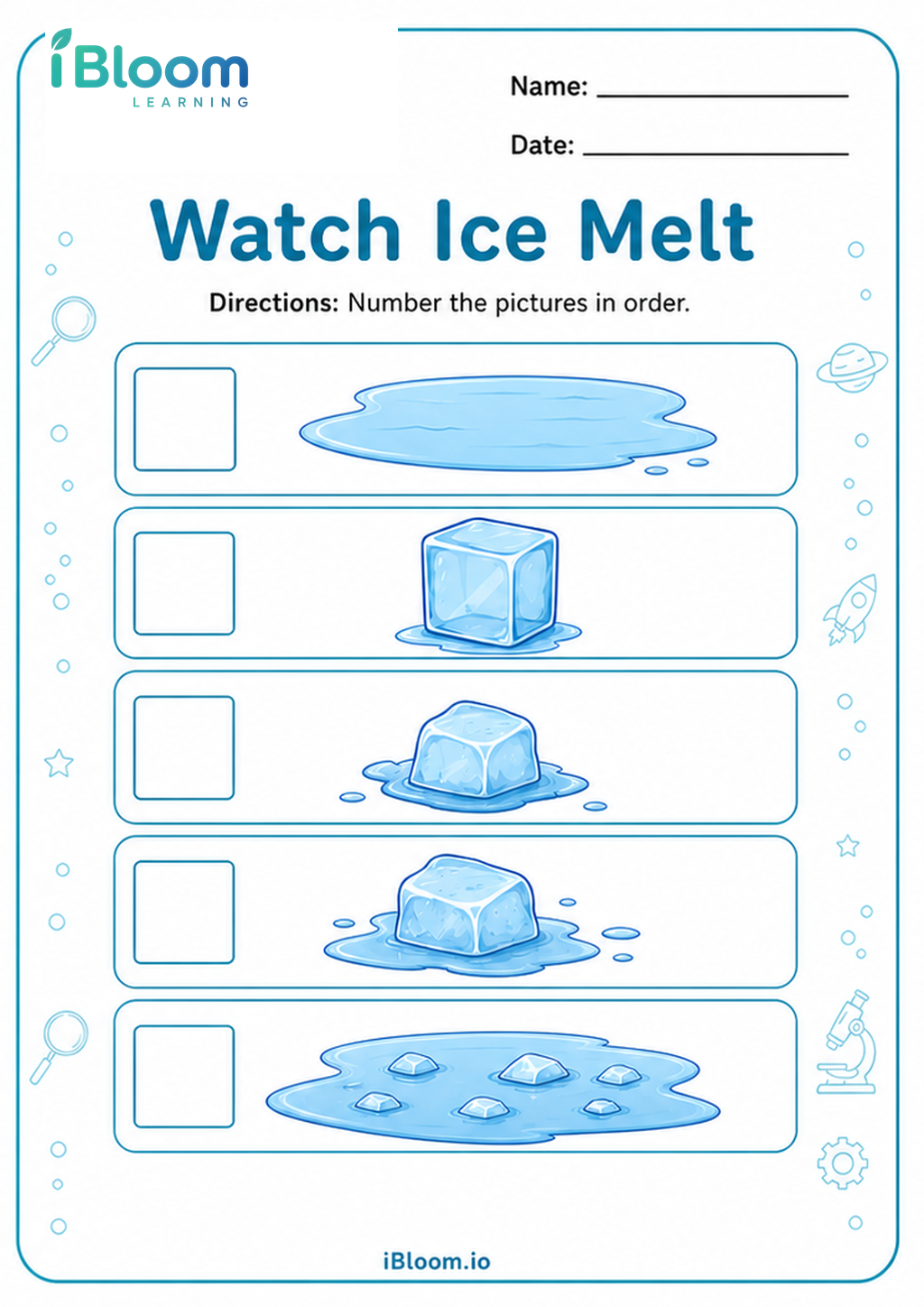 Watch Ice MeltClass 1 printable practice for Melting.Class 1Free PDF preview
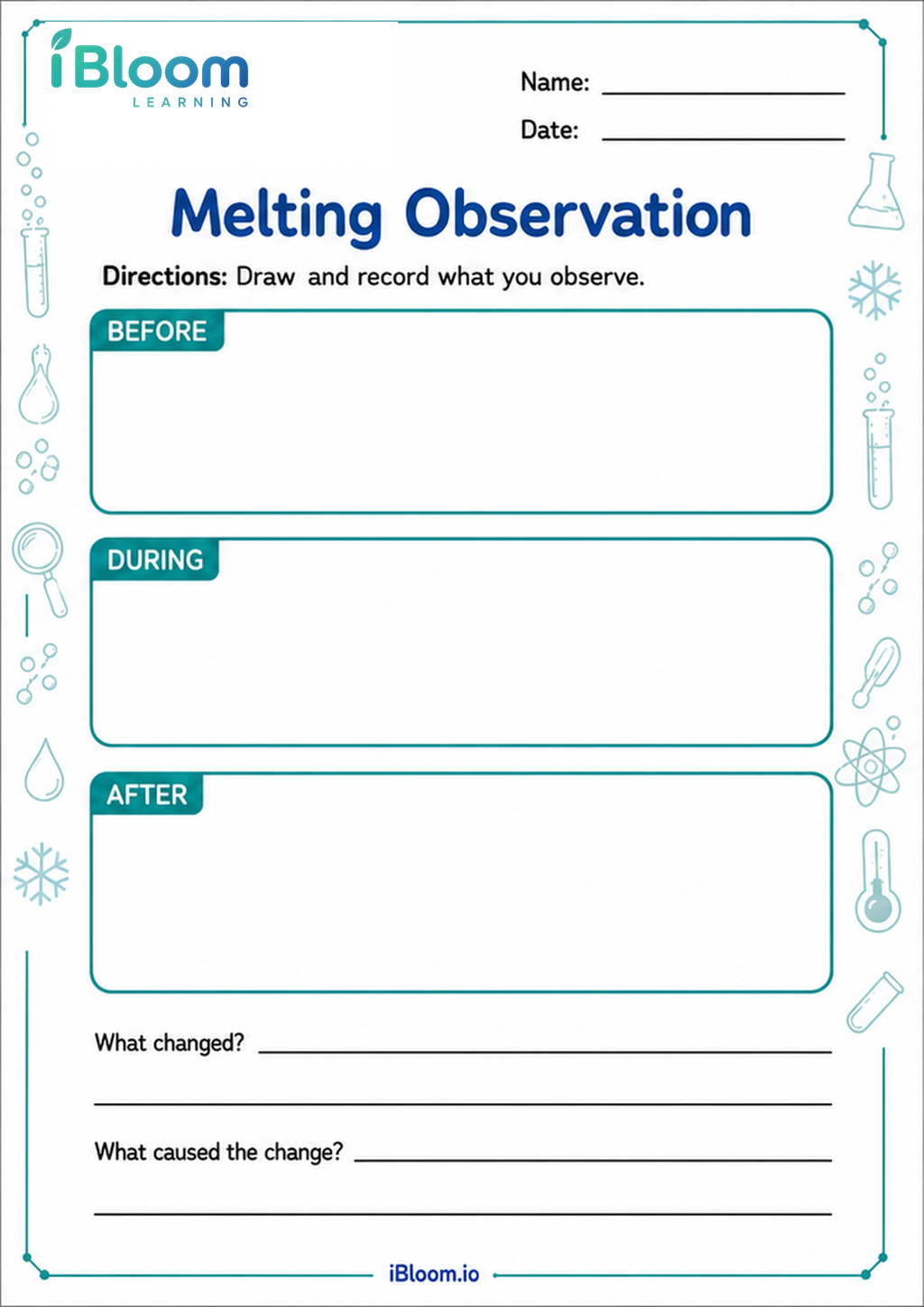 Melting ObservationClass 1 printable practice for Melting.Class 1Free PDF preview
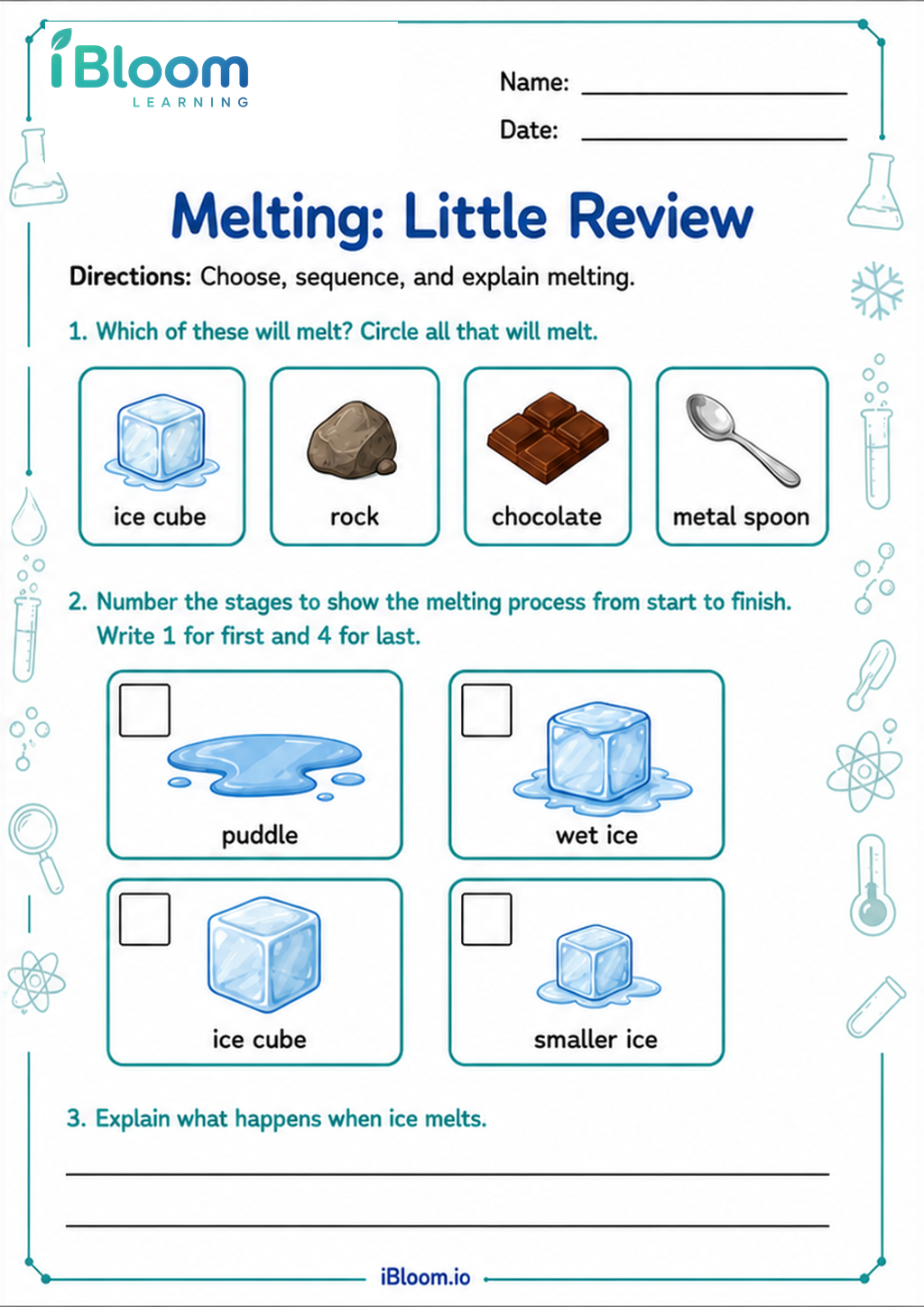 Melting: Little ReviewClass 1 printable practice for Melting.Class 1Free PDF preview
Practice that builds confidence
What children learn about melting
These Class 1 melting practice activities help children understand that some solids change into liquids when they become warm. Learners practise observing everyday examples such as ice, butter, wax, and chocolate, then describe the change using simple science words.
The printable worksheets include picture-based tasks, sorting activities, sequencing, matching, and short answer prompts. They are designed for the Science and EVS topic Energy Sound Light, where children begin noticing how heat can change materials around them.
Melting is introduced as a change from solid to liquid caused by heat. At this level, children do not need detailed particle explanations. They focus on visible changes: ice becomes water, butter softens and turns runny, and chocolate can melt in a warm place. The worksheets build the vocabulary of solid, liquid, heat, warm, cold, melt, freeze, and change.

Progression of activities
The practice begins with recognising objects that can melt. Children then match before-and-after pictures, circle items that melt in the sun or on a hot pan, and place simple events in order, such as ice cube, melting ice, water. Later tasks ask them to complete sentences like “Heat makes ice melt” or choose the correct word between solid and liquid.
Parent routine at home
Use a safe kitchen observation. Place an ice cube in a bowl and ask your child to draw it first. After a few minutes, let the child look again and say what changed. Ask three questions: “Was it a solid first?”, “What made it change?”, and “What is it now?” Repeat with butter kept near warm food, without letting the child touch anything hot.

Classroom uses for teachers
Teachers can use these sheets after a demonstration, as EVS notebook practice, or in a science corner with picture cards. Pair work works well: one child names the object and the other says whether heat will melt it. The sequencing pages are useful for checking whether children understand that melting is a process, not an instant magic change.

Common errors to watch for
Some children say all soft things are melted, or that water “disappears” when ice melts. Others confuse melting with dissolving, as when sugar mixes in water. Keep the focus on the same material changing form: ice is still water after it melts. Also remind children that heat should be observed safely with an adult.
Free printable PDF download
Use this class 1 melting worksheet page to preview the activity, print it, or download it as a PDF for quick practice. It works well for homework, homeschool lessons, tutoring, morning work, revision, and classroom centers.
Answers and answer key support
After the child completes the worksheet independently, parents and teachers can use the answer support or answer key information to check the work, review mistakes, and choose the next practice step.
Why iBloom worksheets help
iBloom activities use familiar Indian home and classroom examples, clear pictures, and small steps so Class 1 children can connect science words to real observations. A child-friendly strategy is: “Look, name, change, tell why.” Look at the object, name whether it is solid or liquid, notice the change, and tell that heat caused melting.
Helpful answers
Frequently asked questions
What should a Class 1 child understand about melting?
A Class 1 child should understand that melting happens when a solid becomes a liquid because it gets warm or receives heat, such as ice changing into water.
Do these worksheets explain melting with difficult science terms?
No. The activities use simple words like solid, liquid, heat, warm, cold, and melt, with picture examples that young children can observe and describe.
Which examples of melting are useful for young learners?
Safe and familiar examples include ice melting into water, butter melting near warmth, chocolate melting in a warm place, and wax melting with adult supervision.
How can I teach melting at home without unsafe heating?
Use an ice cube in a bowl. Let your child observe it over a few minutes, draw the before-and-after change, and explain that warmth from the surroundings helped it melt.
How is melting different from dissolving for Class 1 children?
Melting means the same material changes from solid to liquid, like ice to water. Dissolving means something mixes into a liquid, like sugar in water.
Is this class 1 melting worksheet free?
Yes. You can preview it for free and use the printable worksheet for home or classroom practice.
Can I download this class 1 melting worksheet as a PDF?
Yes. Use the worksheet download option to save a printable PDF, or print the worksheet directly from the page.
Does this class 1 melting worksheet include answers or an answer key?
When the activity has fixed answers, iBloom includes answer support so parents and teachers can check the completed worksheet.