Free printable practice
Sounds Pitch Practice Activities
Class 1 science worksheets that help children identify, compare, and describe high-pitch and low-pitch sounds in everyday life.
Free printable worksheet PDFs
Preview every available page, then download the free worksheet PDF for home, homeschool, tutoring, or classroom practice.
Preview the exact activity before downloading it.
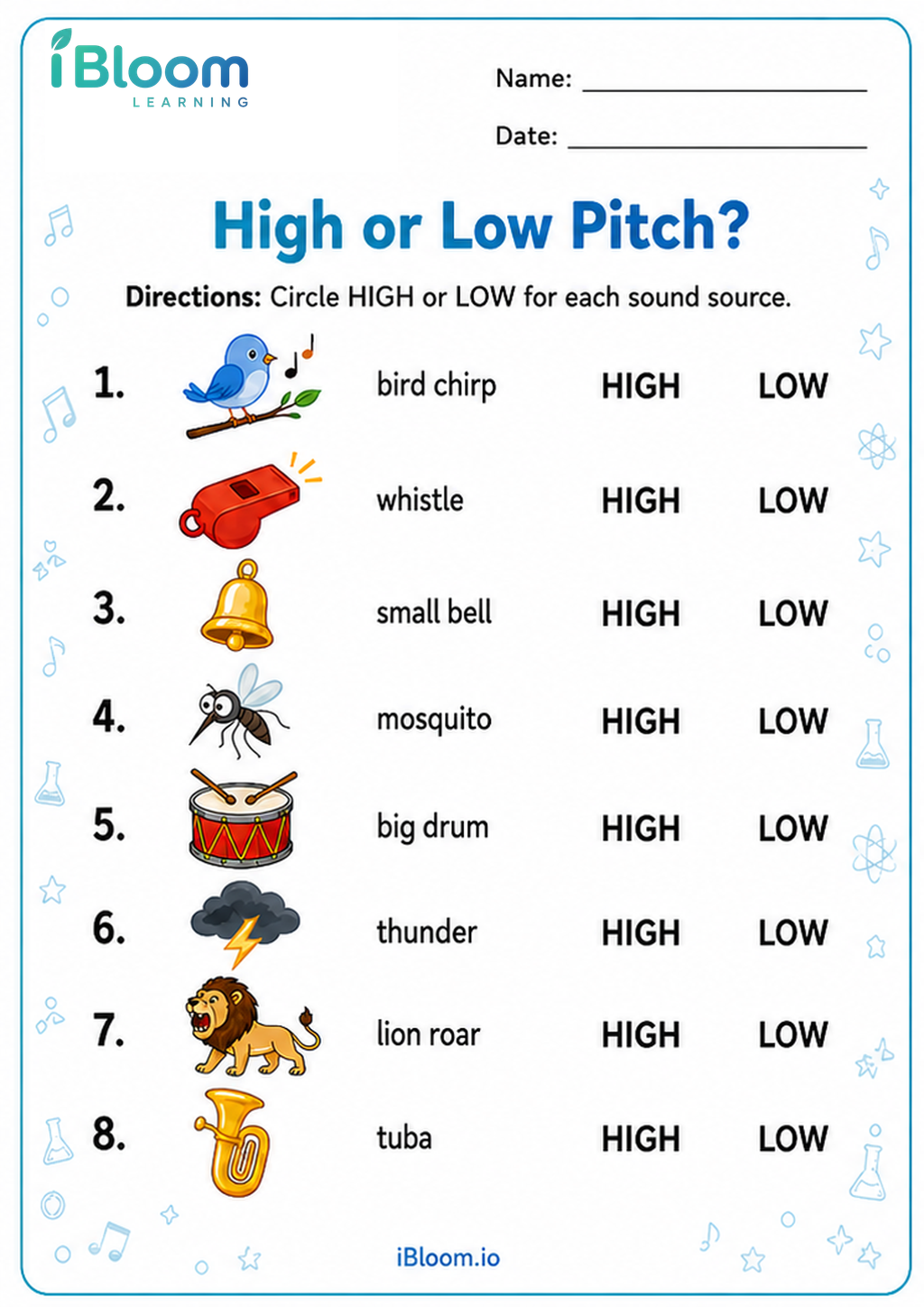 High or Low Pitch?Class 1 printable practice for Sound Pitch.Class 1Free PDF preview
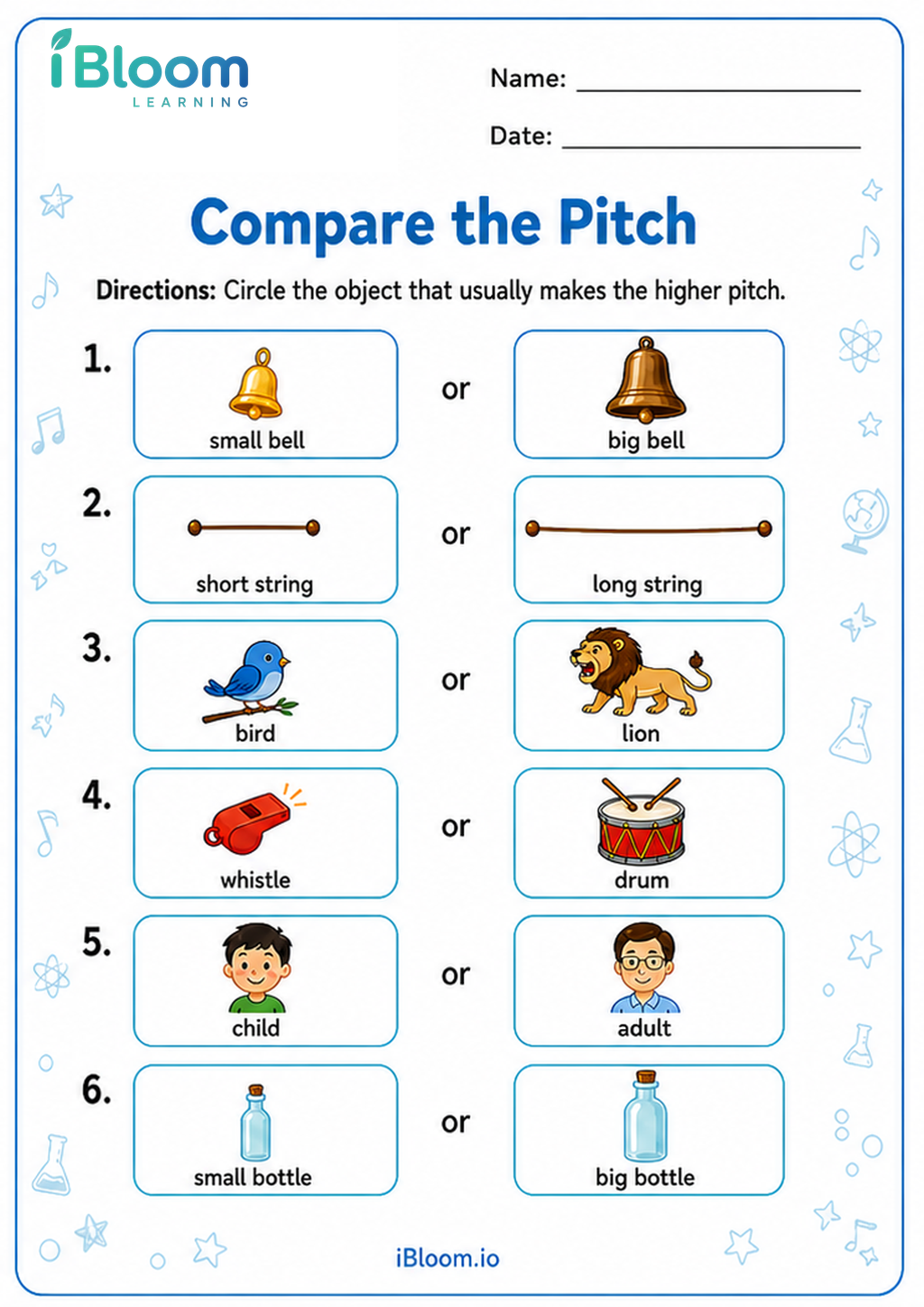 Compare the PitchClass 1 printable practice for Sound Pitch.Class 1Free PDF preview
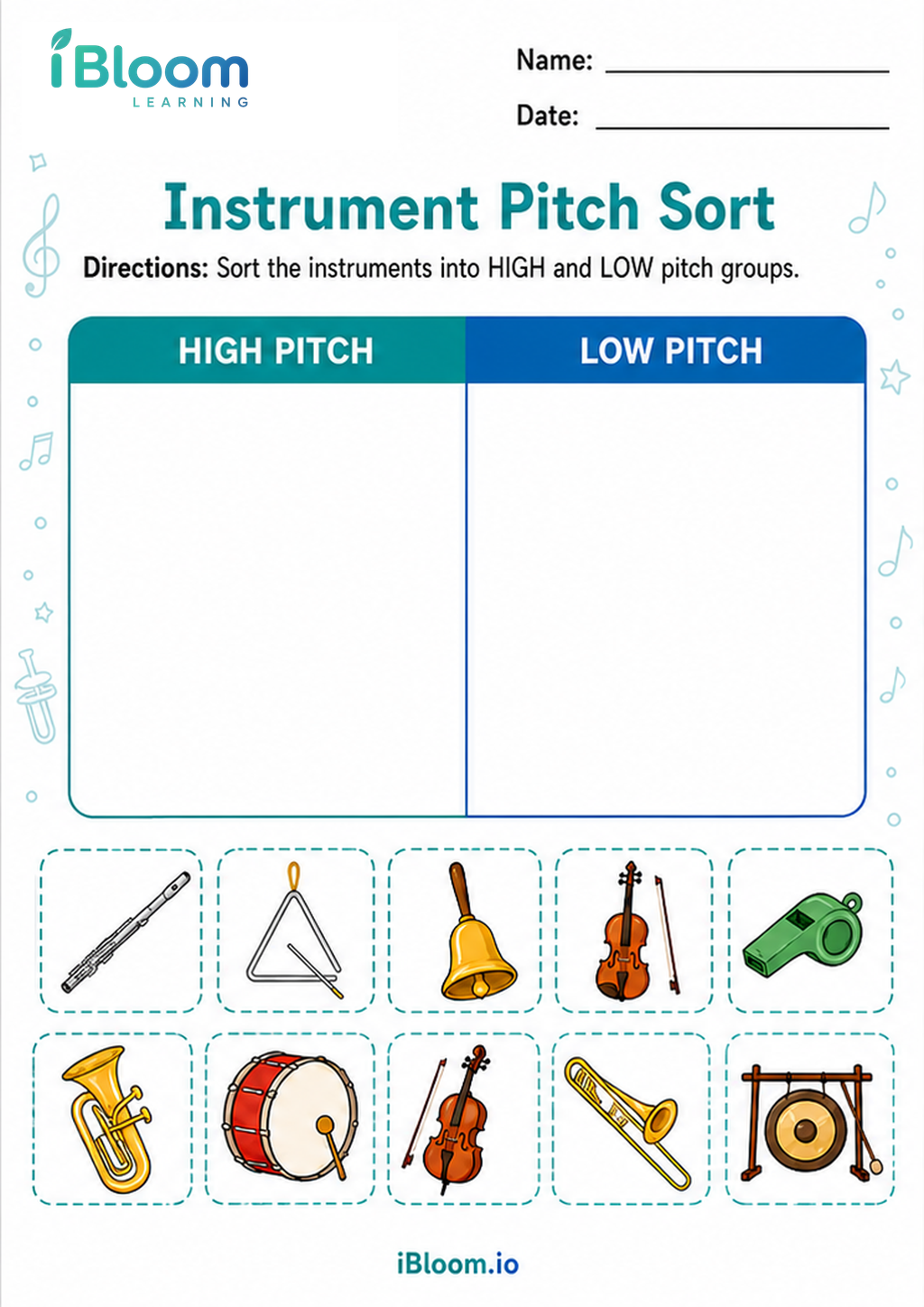 Instrument Pitch SortClass 1 printable practice for Sound Pitch.Class 1Free PDF preview
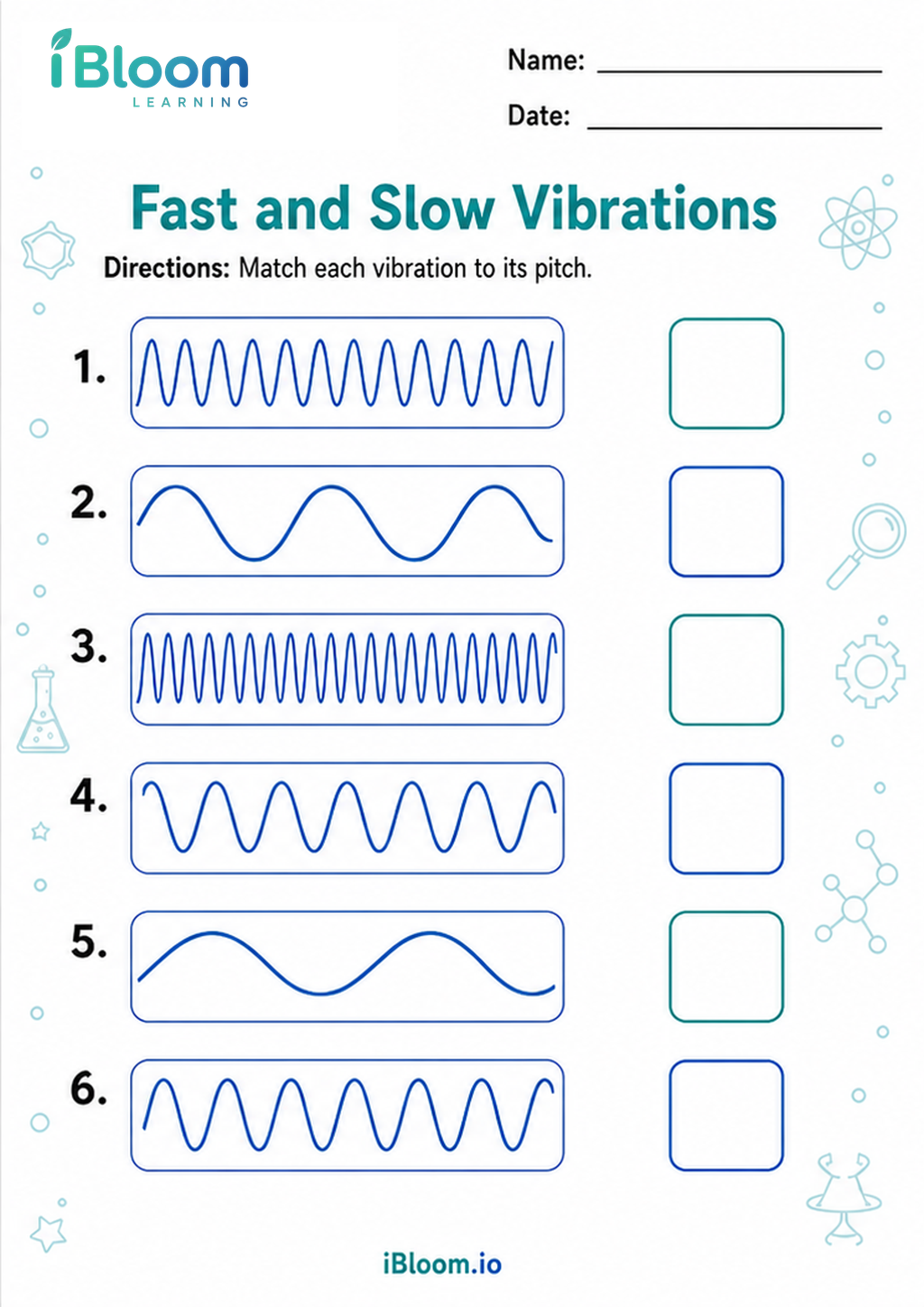 Fast and Slow VibrationsClass 1 printable practice for Sound Pitch.Class 1Free PDF preview
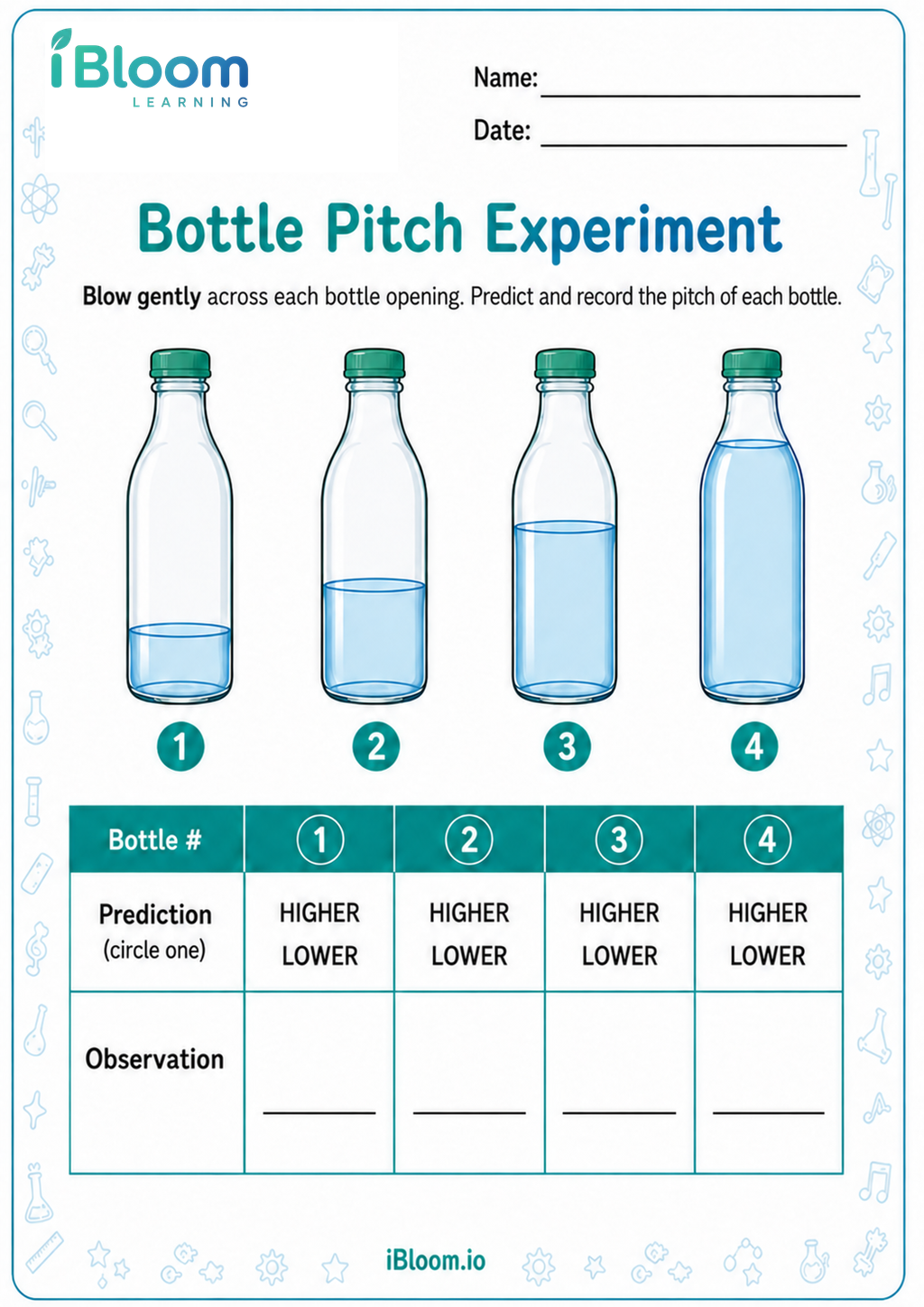 Bottle Pitch ExperimentClass 1 printable practice for Sound Pitch.Class 1Free PDF preview
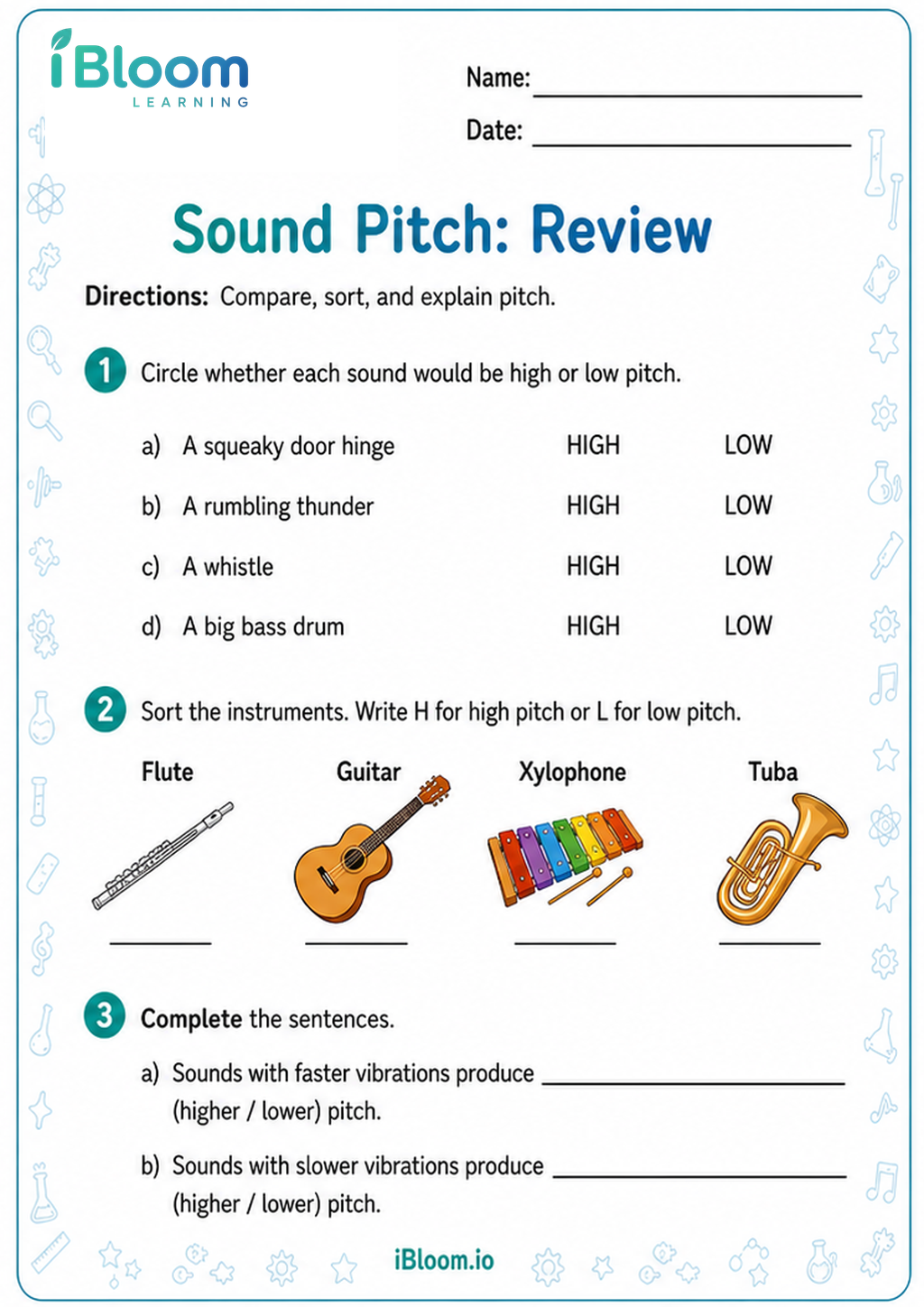 Sound Pitch: ReviewClass 1 printable practice for Sound Pitch.Class 1Free PDF preview
Practice that builds confidence
Understanding pitch in Class 1
These Class 1 Science and EVS worksheets help children notice that sounds can be high or low in pitch. Learners practise listening carefully, comparing familiar sounds, and using words such as high pitch, low pitch, sound, listen, and vibration in simple contexts.
The printable activities include picture sorting, matching, circling, colouring, and short observation tasks based on everyday examples such as bells, whistles, drums, birds, and thunder. Children build the habit of describing what they hear instead of only saying whether a sound is loud or soft.
Pitch tells us whether a sound is high or low. A small bell, whistle, or chirping bird often makes a high-pitch sound, while a drum, lion’s roar, or thunder may sound low. At this level, children do not need technical detail; they need many clear chances to listen, compare, and describe.

Building the idea step by step
The worksheets move from simple recognition to comparison. Children may first identify one high sound and one low sound, then sort pictures into two groups, and later choose which object is likely to make a higher sound. Some tasks invite them to draw or colour an item that makes a high-pitch or low-pitch sound, helping them connect science words with real experiences.
Parent routine for home practice
Choose three safe household sounds: a spoon tapping a glass, a door knock, and your own humming voice. Ask your child, “Which one sounds higher?” and “Which one sounds lower?” Keep the focus on pitch, not volume. Repeat the same sound softly and loudly to show that loudness can change while the pitch may stay similar. Then use one worksheet page to record or circle the matching examples.

Classroom uses for teachers
Teachers can use these printables after a sound walk, during an Energy, Sound and Light lesson, or as a science centre activity. Pair work is useful: one child names the picture, and the other decides whether it belongs in the high-pitch or low-pitch group. The pages also work well for quick oral assessment because children can explain their choices in simple sentences.

Common errors to watch for
Many Class 1 children confuse high pitch with loud sound. A loud drum can still be low-pitch, and a soft whistle can still be high-pitch. Some children also choose based on object size alone. Encourage them to think about the sound they hear, not only the picture they see. If needed, make the sound with your voice or an object before asking them to answer.
Free printable PDF download
Use this Class 1 sounds pitch worksheet page to preview the activity, print it, or download it as a PDF for quick practice. It works well for homework, homeschool lessons, tutoring, morning work, revision, and classroom centers.
Answers and answer key support
After the child completes the worksheet independently, parents and teachers can use the answer support or answer key information to check the work, review mistakes, and choose the next practice step.
Why iBloom worksheets help
iBloom worksheets use familiar Indian classroom language and everyday examples so young learners can connect science with their surroundings. The mix of matching, sorting, colouring, and observation keeps the practice concrete. A helpful child-friendly strategy is: “Listen, compare, then name it.” First listen to the sound, compare it with another sound, and then say high pitch or low pitch.
Helpful answers
Frequently asked questions
What does pitch mean for Class 1 children?
Pitch means whether a sound is high or low. For example, a whistle or bird chirp usually sounds high, while a drum or thunder usually sounds low.
How are these worksheets different from loud and soft sound practice?
These worksheets focus on pitch, not volume. Children learn that a sound can be soft but high-pitch, or loud but low-pitch, which helps prevent a common misunderstanding.
Can I use these worksheets without special science materials?
Yes. The activities use familiar examples such as bells, drums, whistles, voices, birds, and thunder. You can also make simple sounds at home or in class to support the worksheet tasks.
What should I do if my child keeps choosing by object size?
Ask the child to imagine or listen to the actual sound before answering. Remind them that pitch is about how the sound feels to the ear, not just whether the object is big or small.
Are these pages suitable for Class 1 Science and EVS revision?
Yes. They are designed for the Energy, Sound and Light topic in Class 1 and work well for revision, homework, class practice, or a short listening activity.
Is this Class 1 sounds pitch worksheet free?
Yes. You can preview it for free and use the printable worksheet for home or classroom practice.
Can I download this Class 1 sounds pitch worksheet as a PDF?
Yes. Use the worksheet download option to save a printable PDF, or print the worksheet directly from the page.
Does this Class 1 sounds pitch worksheet include answers or an answer key?
When the activity has fixed answers, iBloom includes answer support so parents and teachers can check the completed worksheet.