



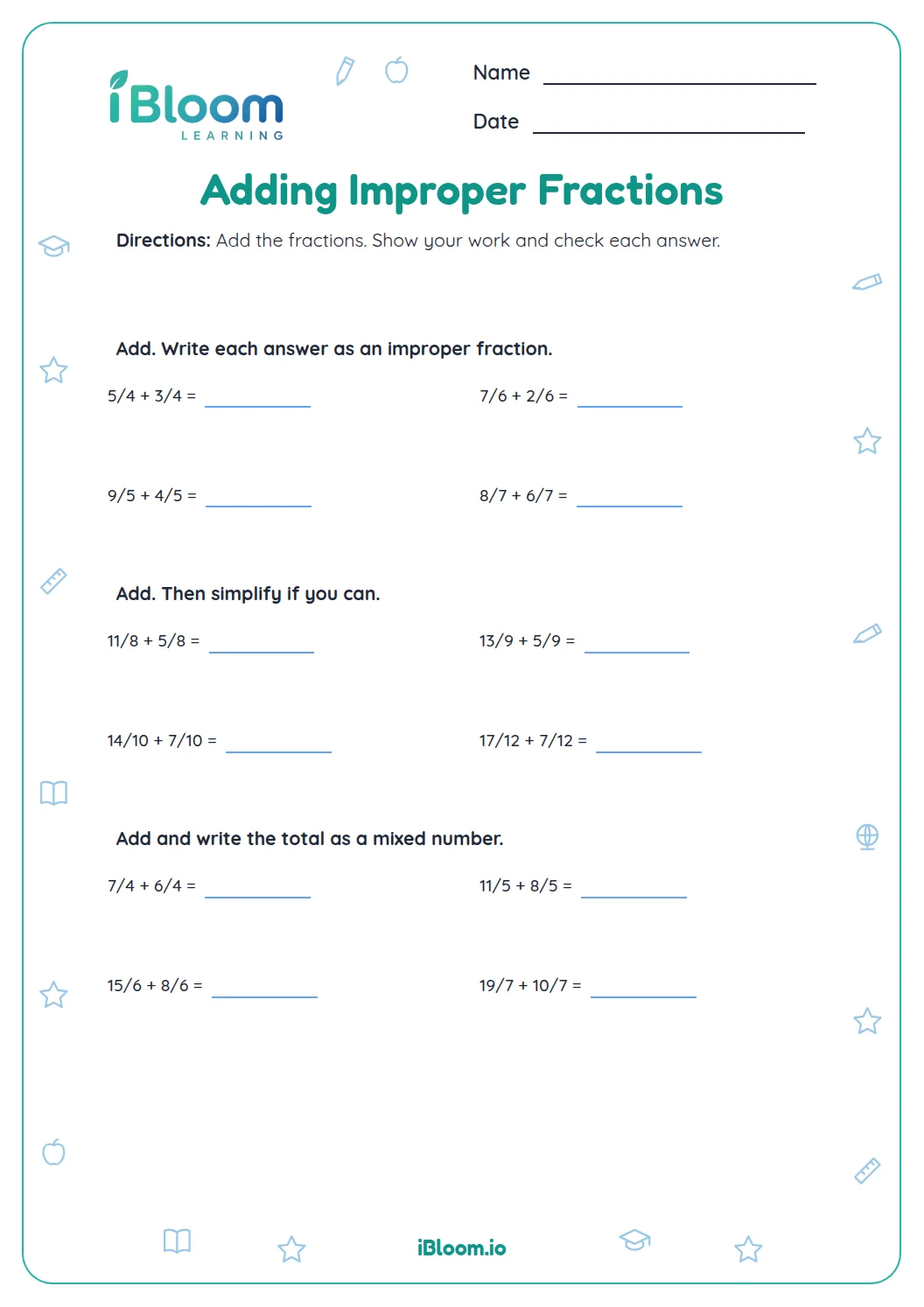

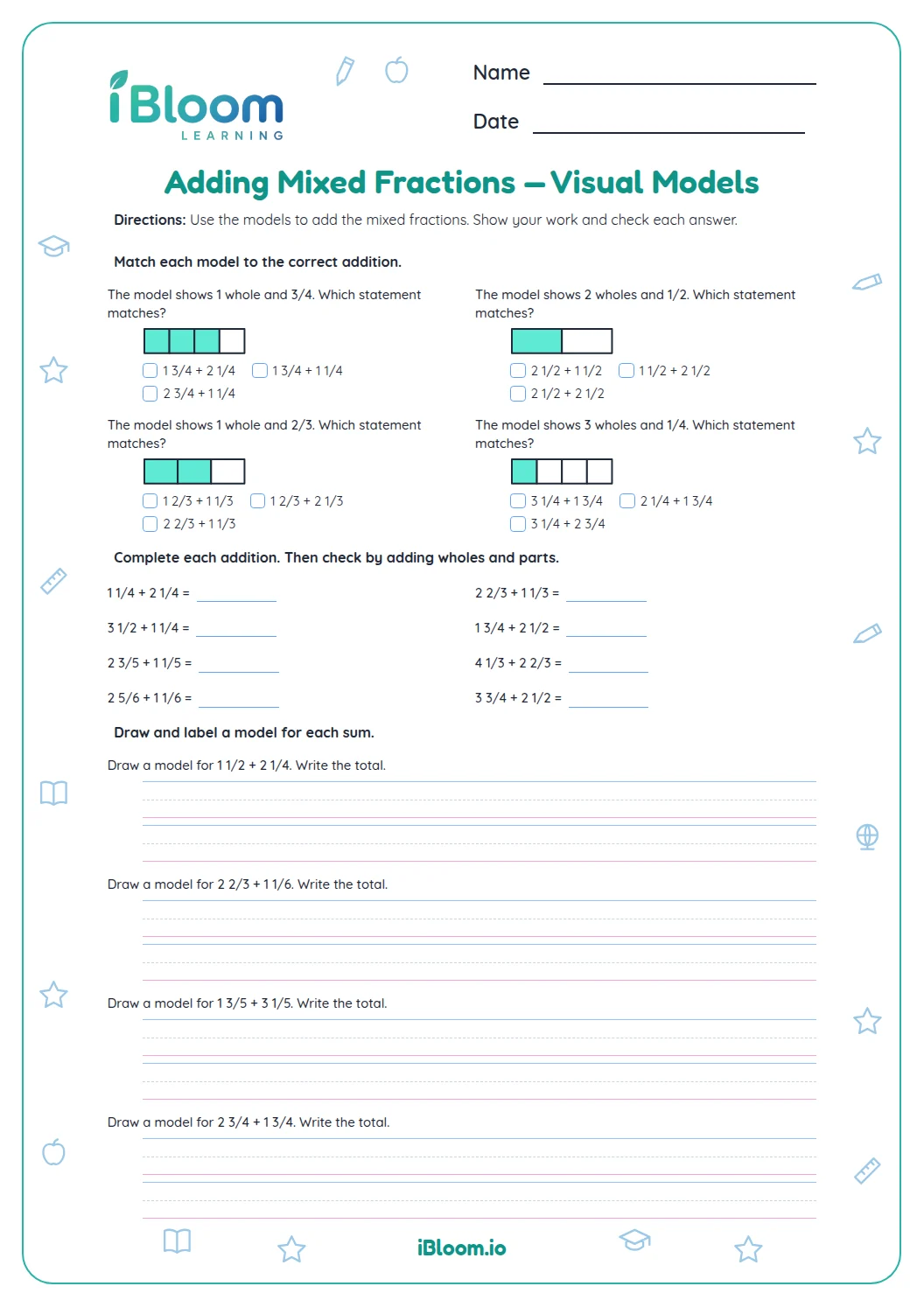
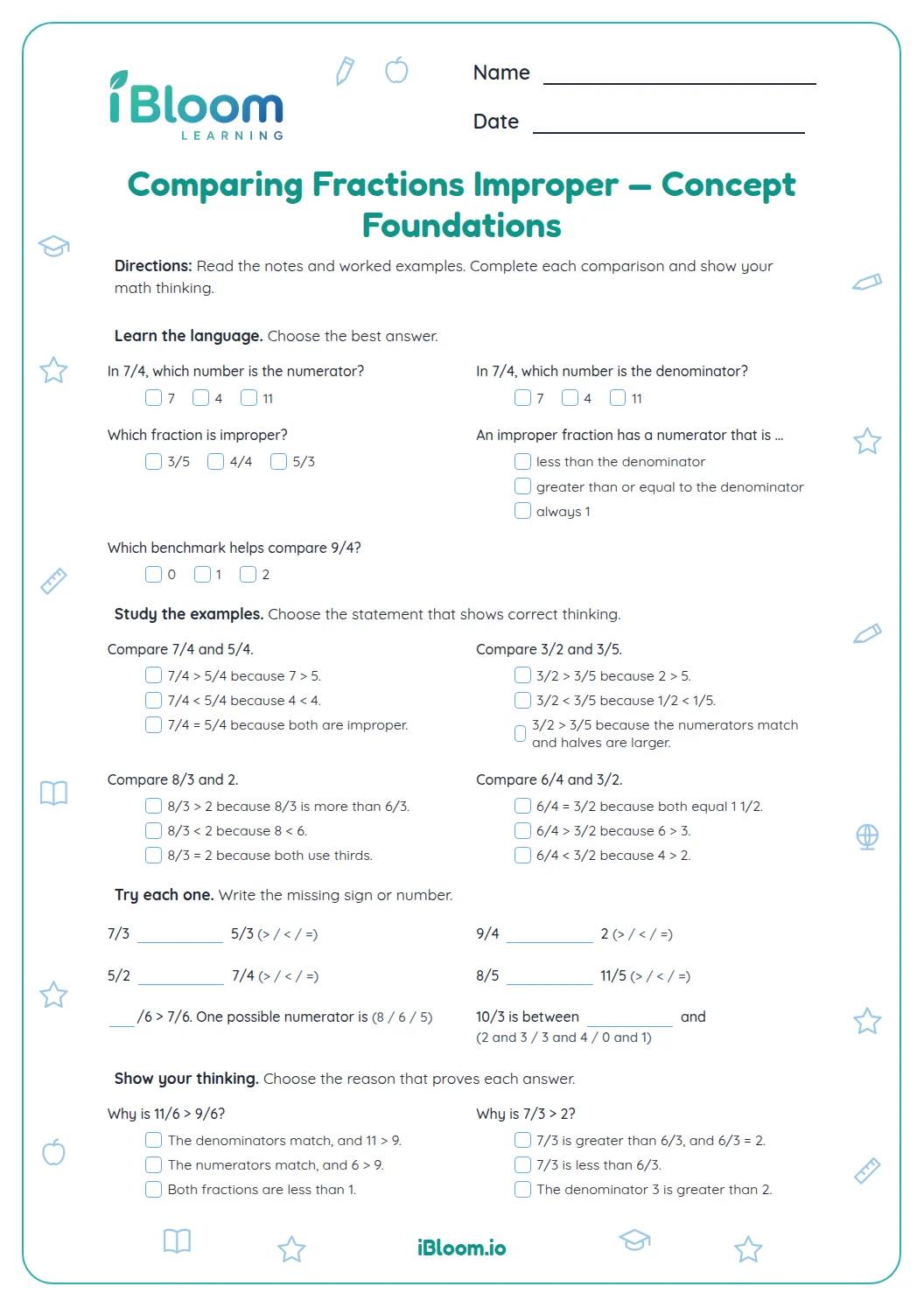

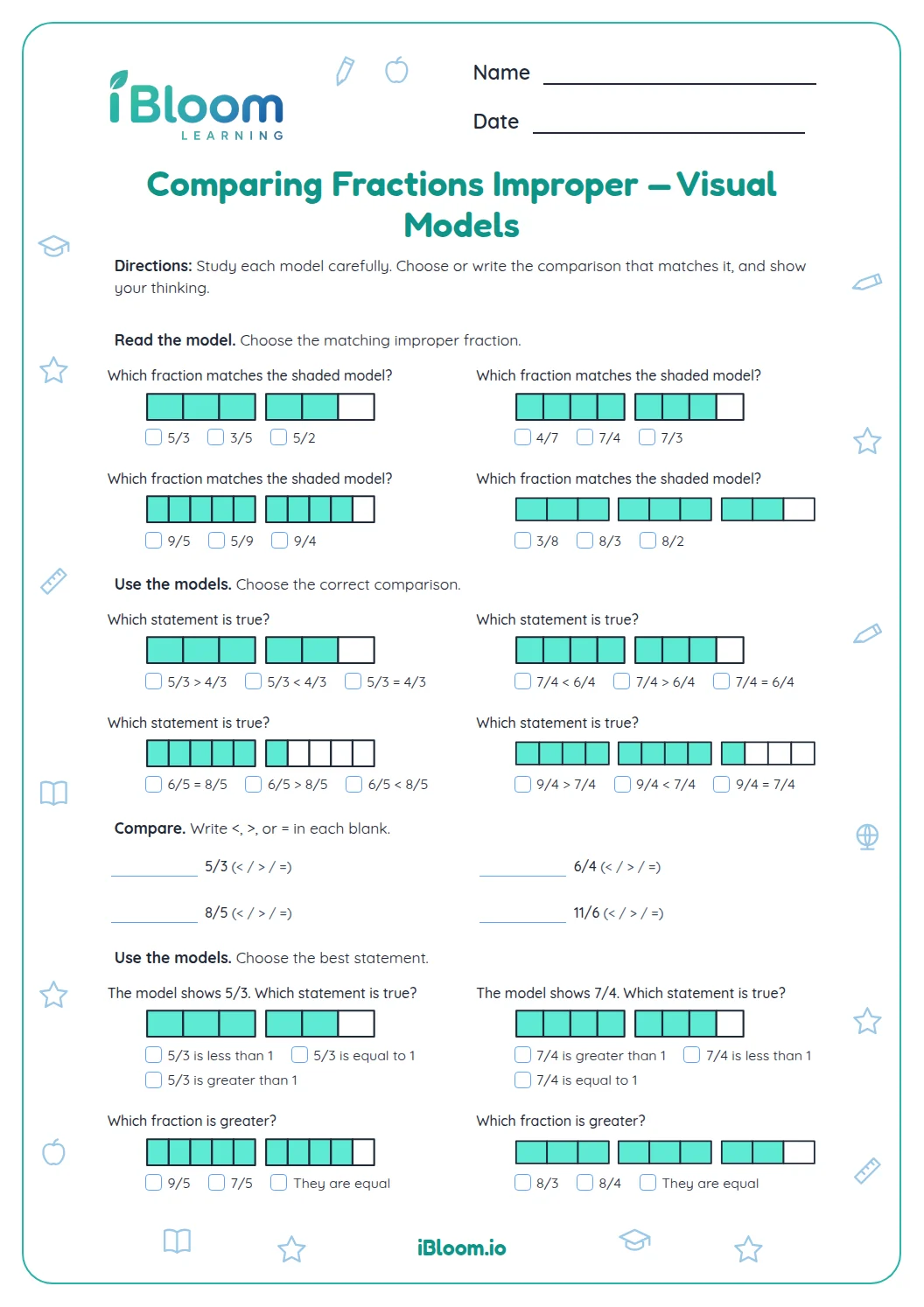

About this worksheet
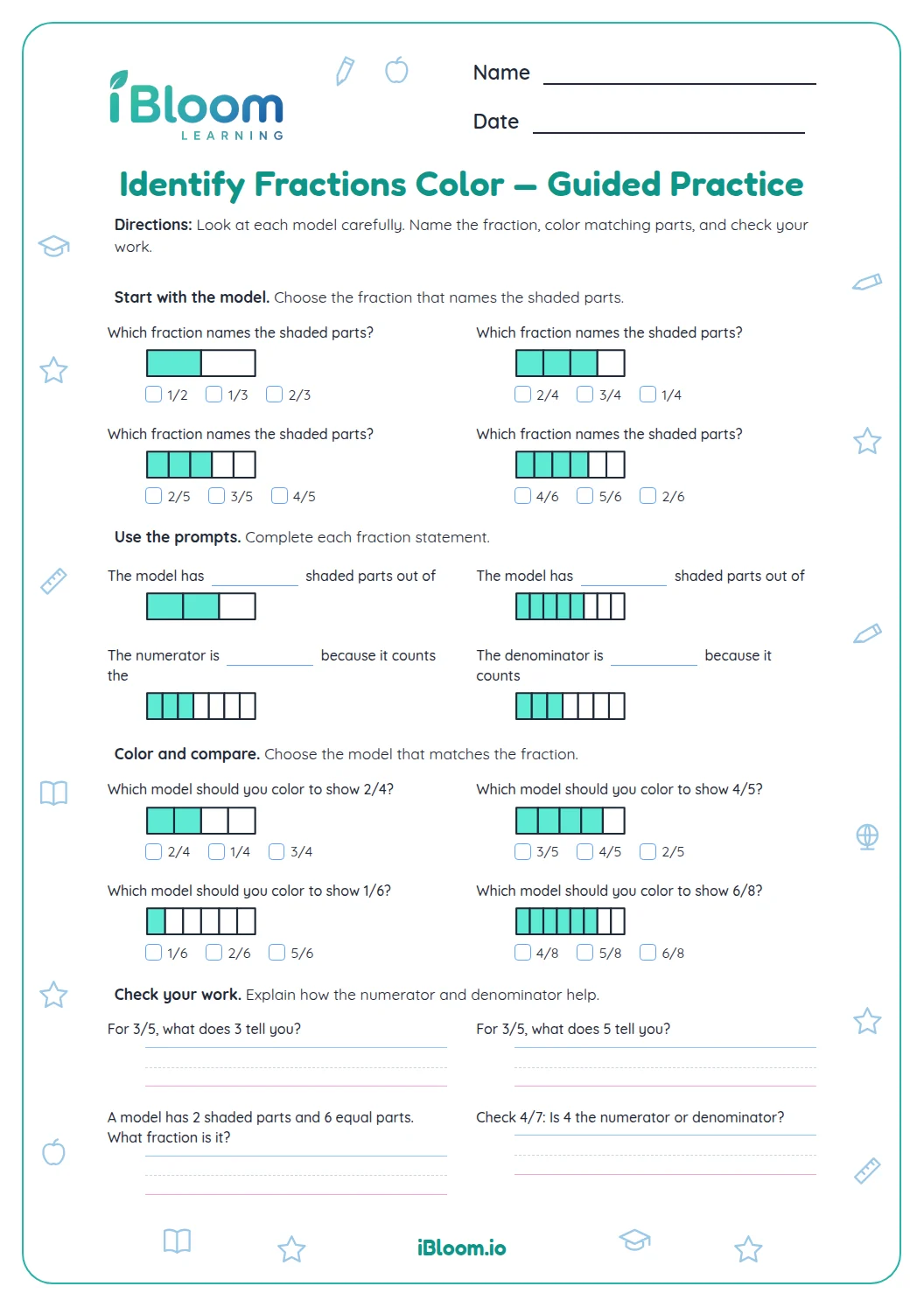
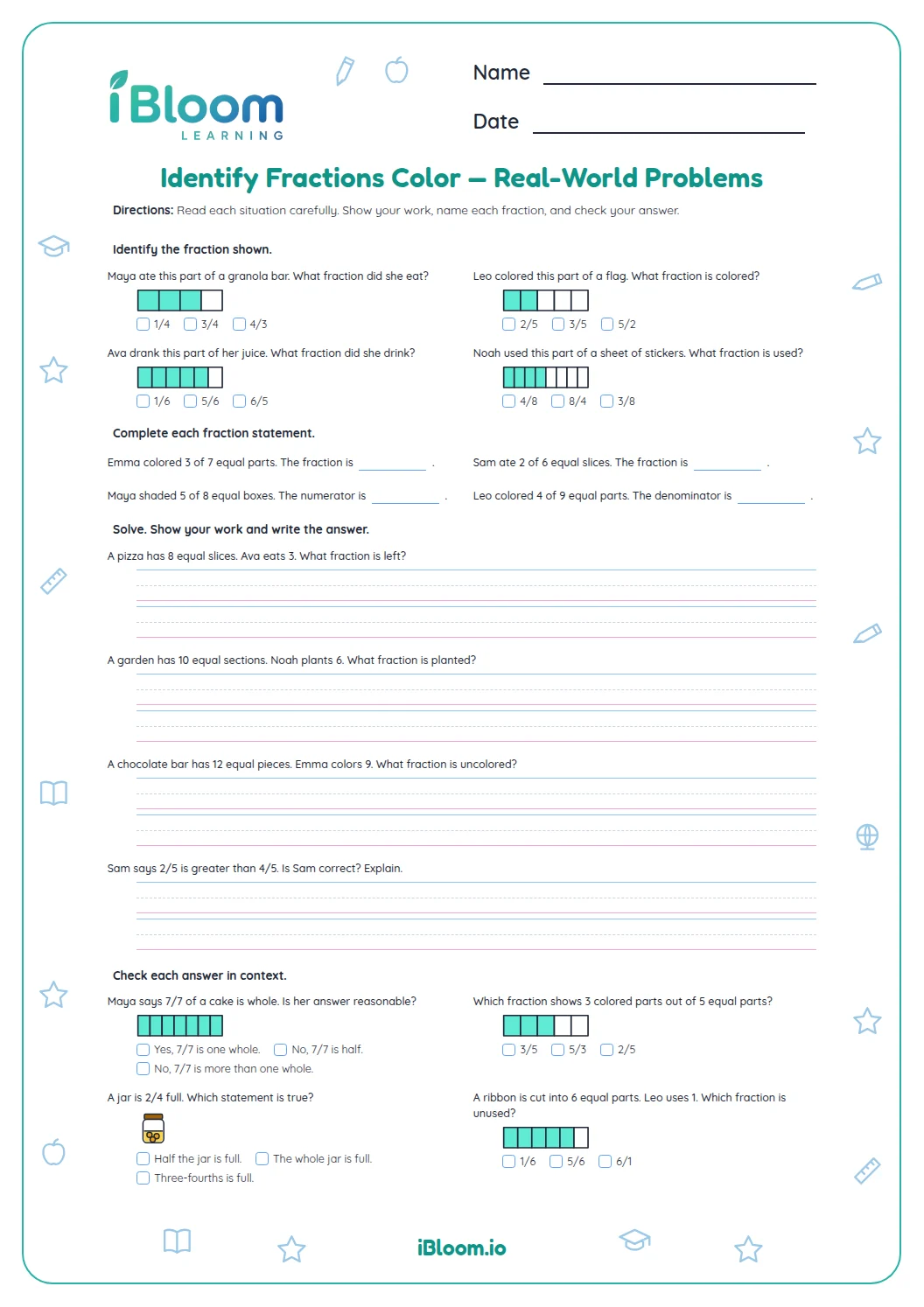
This foundation sheet teaches the two pieces of a fraction name: the numerator counts shaded or selected parts, and the denominator counts all equal parts in the whole. Children read fraction drawings, identify numerators and denominators, and use short situations to apply the same idea. There are 15 questions and an answer key.
What do the two numbers in a fraction mean?
The denominator is the total number of equal parts in one whole; the numerator tells how many of those parts are shaded or selected. In question 3, a bar with three of four parts shaded is 3/4.
- 1Model: three of four equal parts are shaded.
- 2Numerator = 3 shaded parts.
- 3Denominator = 4 total parts.
- 4The fraction is 3/4.
How does the sheet move from pictures to words?
Students first name shaded models, then identify what each number means, and finally read a short situation. The repeated routine makes the fraction notation connect to a visible whole and its equal parts.
How to work through the fraction models
- 1Start by checking that the shape is divided into equal parts.
- 2Count all parts to find the denominator.
- 3Count shaded parts to find the numerator.
- 4Write numerator first and denominator second.
- 5For “not shaded,” count only the unshaded parts in the numerator.
Common fraction mistakes and quick fixes
The mistake
Writing the total parts first, as 4/3 for three shaded out of four.
The fix
Say “shaded out of total”: numerator first, denominator second.
The mistake
Using the numerator for all sections.
The fix
Count every section for the denominator, including unshaded sections.
The mistake
Counting a section that is not shaded when asked for shaded parts.
The fix
Look for the filled regions only when finding the numerator for shaded fraction.
What to practice next
Make more practice
Further reading
Questions parents and teachers ask
Which number is the denominator?
The denominator is the bottom number in the written fraction. It tells how many equal parts make one whole. In 3/8, the denominator is 8, so the whole is divided into eight equal parts. Have the student name the total equal parts first, then the selected parts, and connect each count to its place in the fraction.
Which number is the numerator?
The numerator is the top number. It tells how many parts are shaded or selected. In 3/8, the numerator is 3, meaning three of the eight equal parts are shaded. Have the student name the total equal parts first, then the selected parts, and connect each count to its place in the fraction.
What if the question asks for parts that are not shaded?
Count the unshaded sections for the numerator, while keeping the total equal sections as the denominator. In question 12, one of four parts is shaded, so three of four parts are not shaded: 3/4. Have the student name the total equal parts first, then the selected parts, and connect each count to its place in the fraction.
Why do the parts need to be equal?
A fraction names a fair share of one whole. If sections have different sizes, counting each section as one equal part would not describe the amount accurately. Check the equal partitions before writing the fraction. Have the student name the total equal parts first, then the selected parts, and connect each count to its place in the fraction.
How many questions are on the sheet?
There are 15 questions across model reading, numerator and denominator meaning, and short applications. The separate answer key gives the fraction or number for each item, plus a sample explanation for the final response. Have the student name the total equal parts first, then the selected parts, and connect each count to its place in the fraction.