






About this worksheet
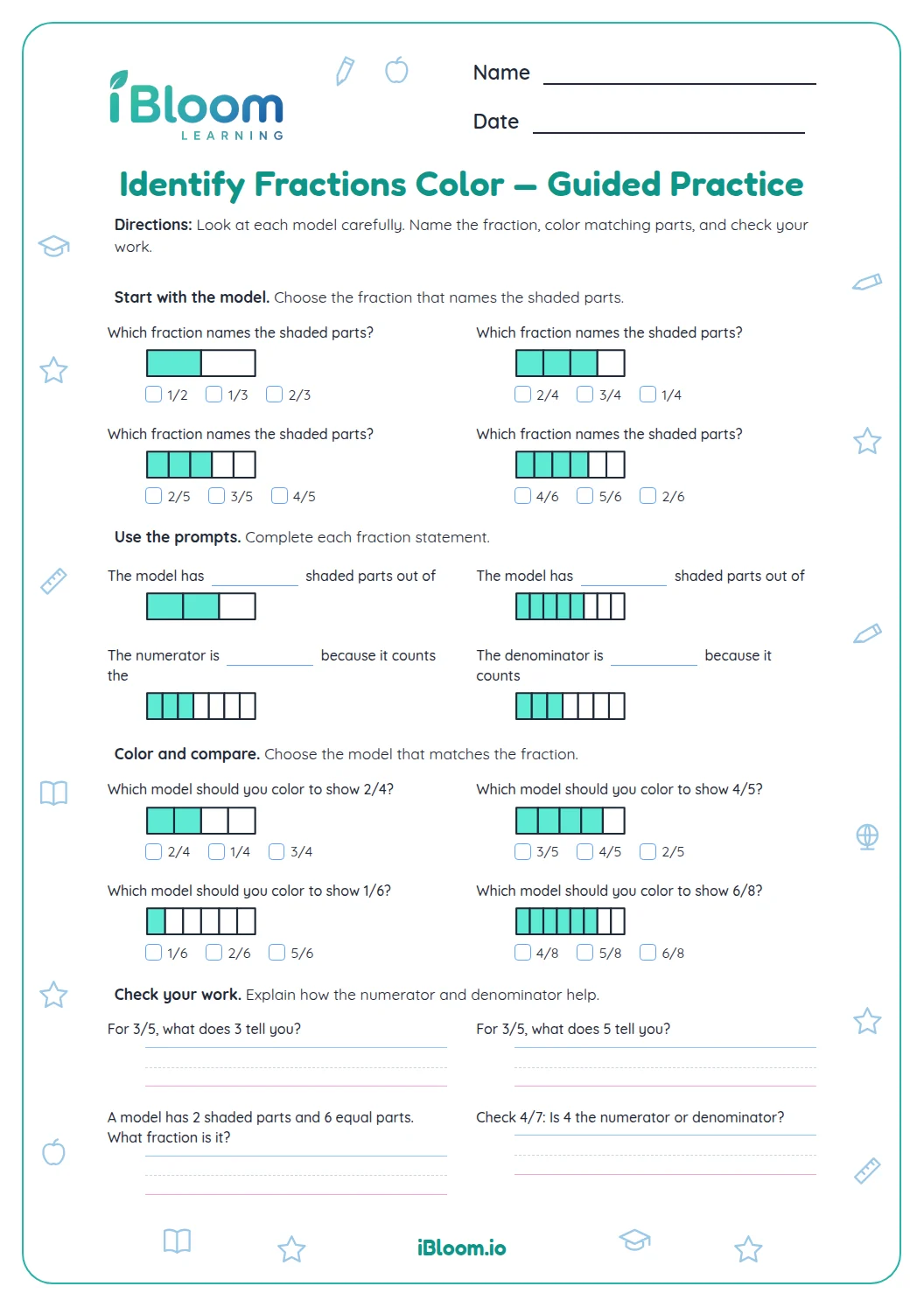
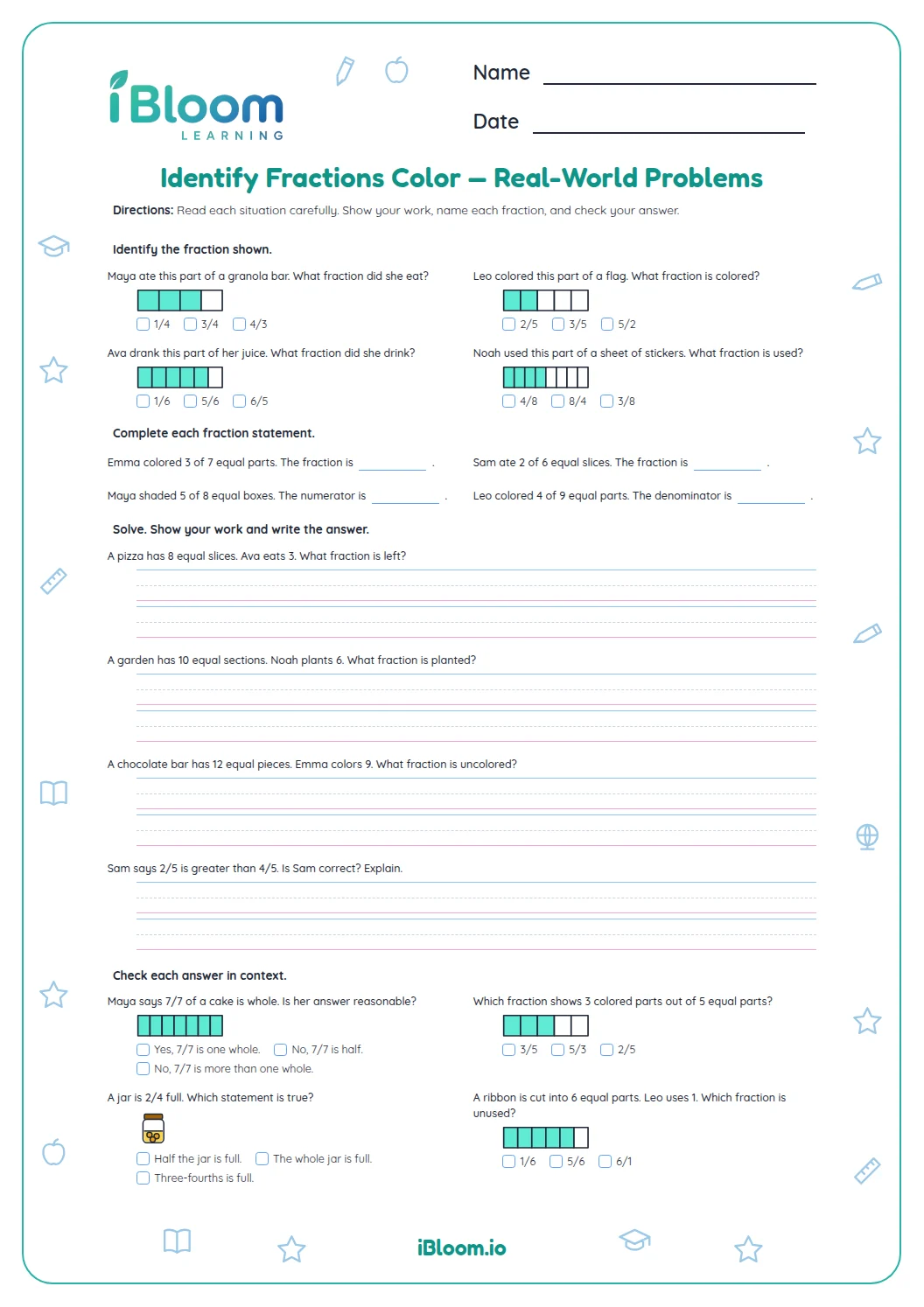
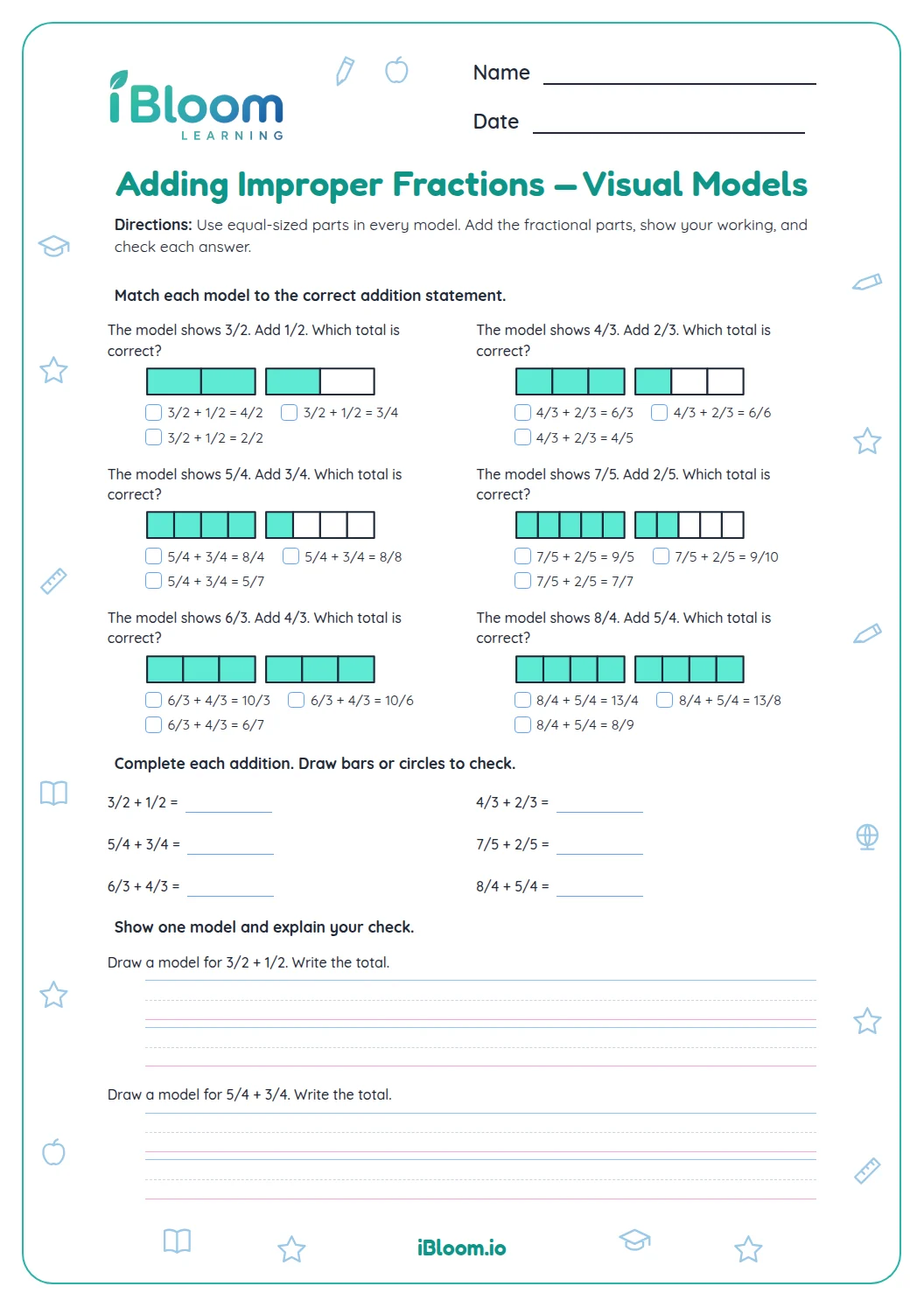
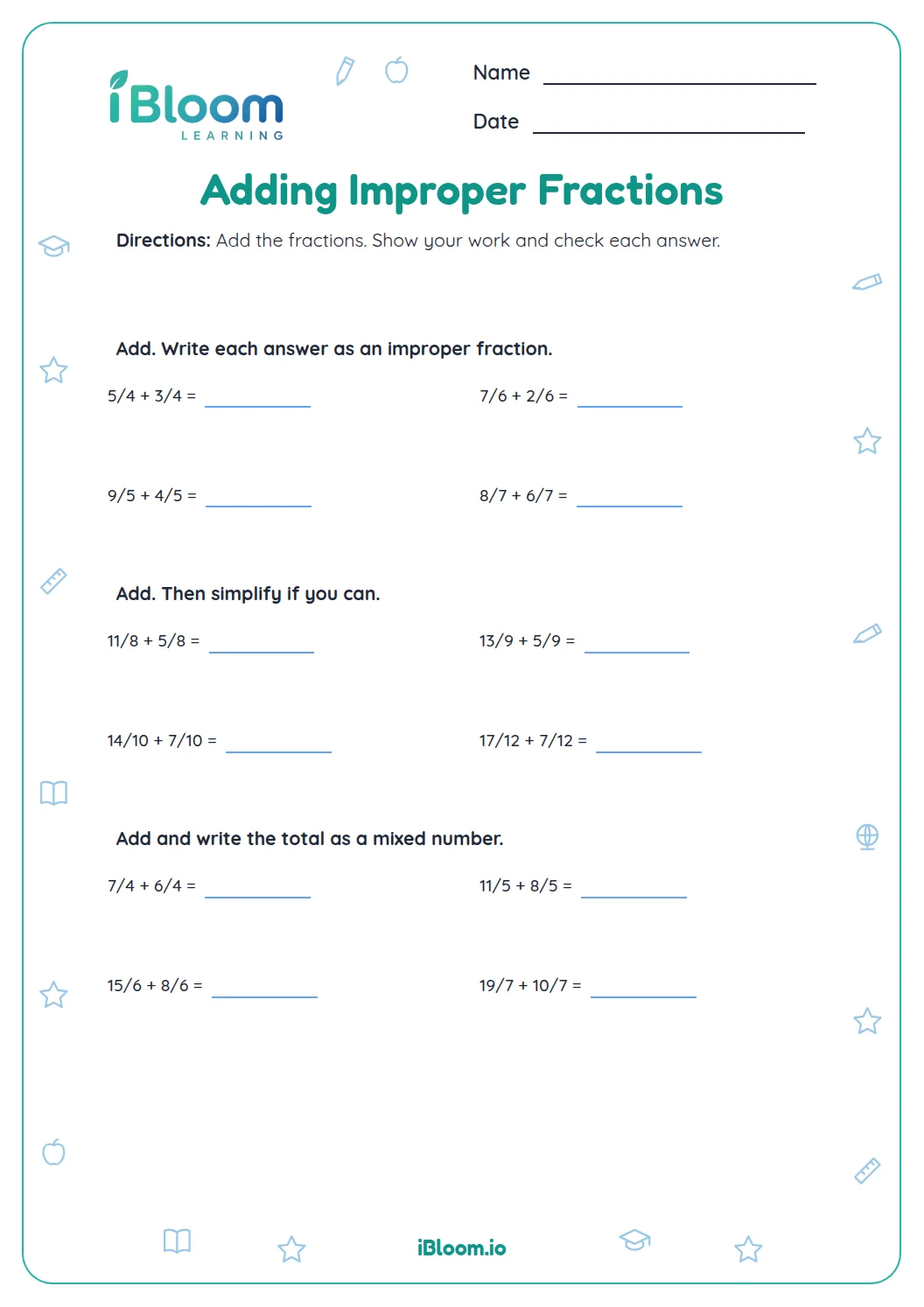
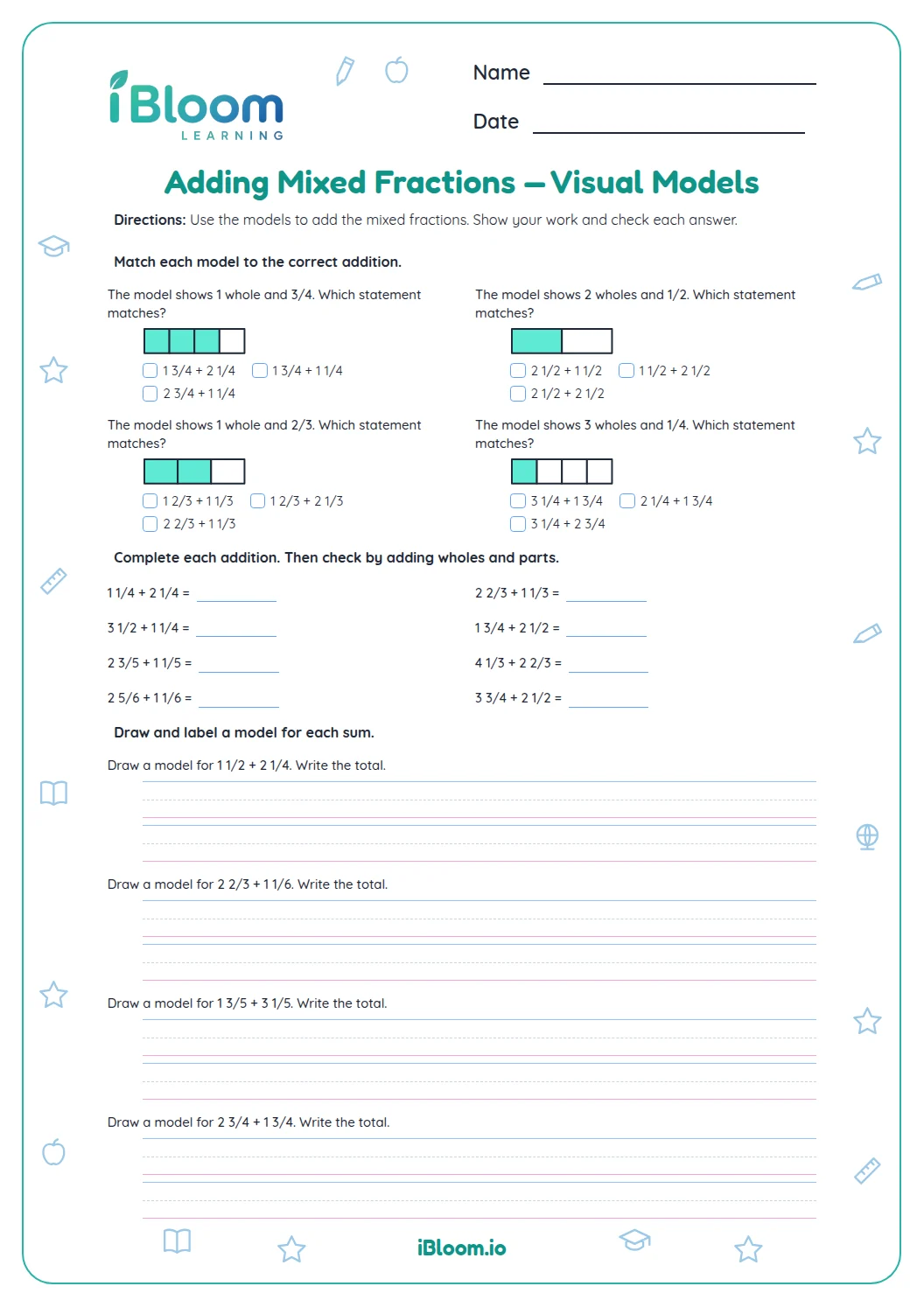
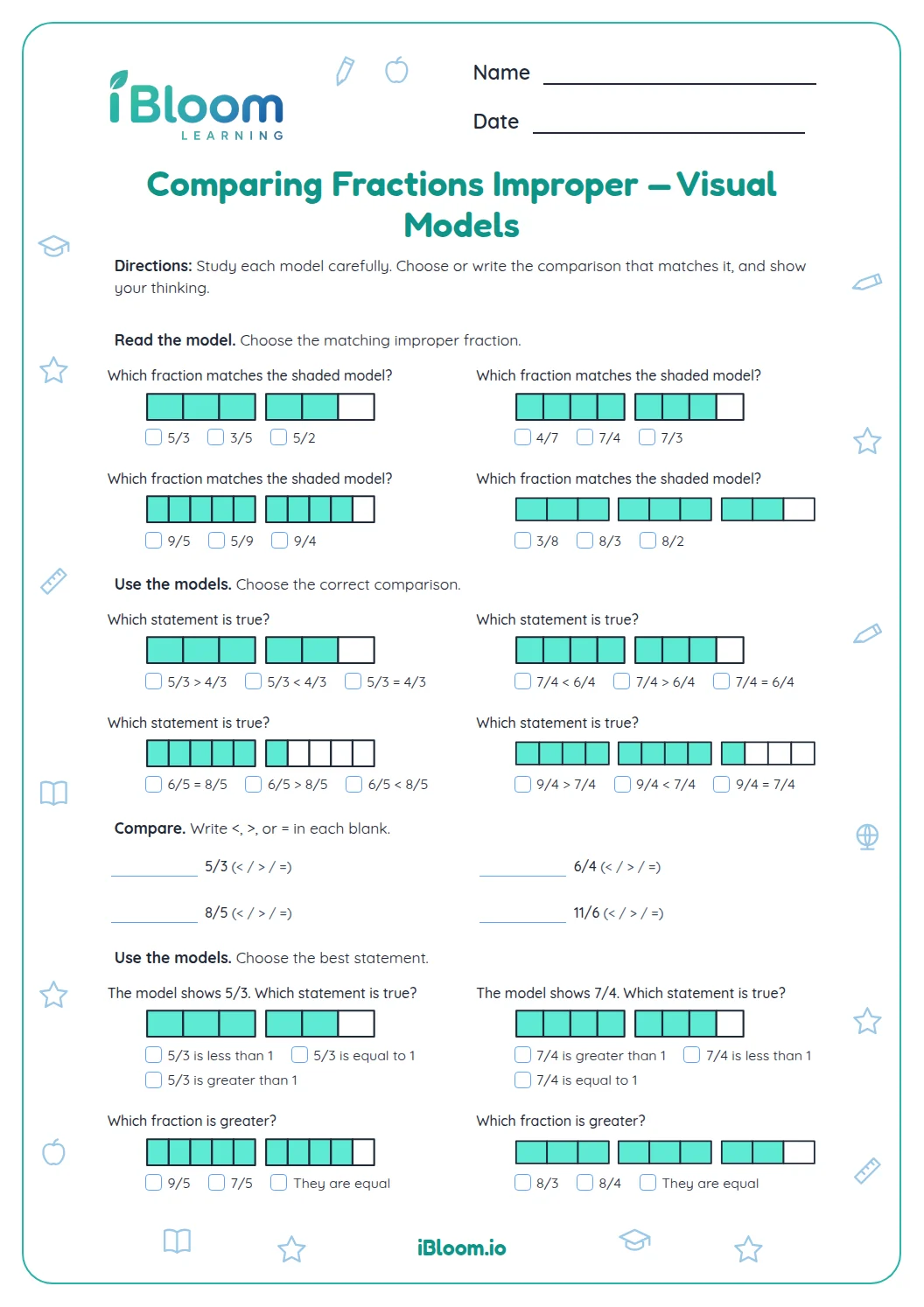
This Grade 3 visual-model worksheet varies the shape and partition so students focus on the fraction rather than one drawing style. They read shaded bars, circles and squares, match a model to notation, identify an equivalent fraction, and interpret short descriptions of equal parts. It has 15 questions and a separate answer key.
How do I read a model when the shape changes?
The shape can be a bar, circle or square; the same counting rule applies. Count every equal piece for the denominator and the shaded pieces for the numerator. In question 1, two of four square parts are shaded, so the fraction is 2/4.
- 1Four equal square parts.
- 2Two shaded parts.
- 3Numerator = 2; denominator = 4.
- 4The fraction is 2/4.
How do pictures connect to equivalent fractions?
Some models ask students to match a shaded amount to a fraction name rather than copy what they see. For example, two of four equal parts cover the same amount as one half. The final questions also ask students to describe what a model would need to show.
How to work through the fraction models
- 1Check that all parts in the model are equal.
- 2Count the whole set of parts for the denominator.
- 3Count only the shaded parts for the numerator.
- 4When matching choices, look for numerator and denominator in the right order.
- 5For equivalent models, compare the portion shaded in the whole.
Common fraction mistakes and quick fixes
The mistake
Counting sides or corners of a shape instead of its partitioned regions.
The fix
Count the equal regions inside the shape, not the outline.
The mistake
Reading the model as total parts over shaded parts.
The fix
Say “shaded parts out of total parts” before writing the fraction.
The mistake
Assuming different fraction names always show different amounts.
The fix
Compare shaded portions; 2/4 and 1/2 can name the same amount.
What to practice next
Make more practice
Further reading
Questions parents and teachers ask
Do circles, bars and squares use different fraction rules?
No. Each model represents one whole split into equal parts. Count all equal parts for the denominator and shaded parts for the numerator, regardless of whether the whole is drawn as a circle, bar or square. Have the student name the total equal parts first, then the selected parts, and connect each count to its place in the fraction.
How can I tell what a fraction model represents?
Count the shaded regions first and use that count as the numerator. Then count all equal regions for the denominator. For example, three shaded parts in a shape split into four equal parts show 3/4. Have the student name the total equal parts first, then the selected parts, and connect each count to its place in the fraction.
Why is 2/4 equivalent to 1/2?
Two of four equal pieces cover one half of the whole. If each fourth is paired with another fourth, two fourths make one half. Question 7 uses the model to connect those different names for the same shaded amount. Have the student name the total equal parts first, then the selected parts, and connect each count to
What should a model of 3/6 show?
It should show one whole split into six equal parts, with three of those parts shaded. The exact shape can vary, but the parts must be equal and the shaded count must be three. Have the student name the total equal parts first, then the selected parts, and connect each count to its place in the fraction.
What is in the answer key?
The separate key names all fractions shown, gives the matching choices and equivalent fraction, and includes a sample description for the final model question. Students can check by recounting the equal parts in each drawing. Have the student name the total equal parts first, then the selected parts, and connect each count to its place in the fraction.