Free printable practice
Animal Babies Practice Activities
Printable Nursery, LKG and UKG science worksheets for recognising animals and their babies through matching, naming, sorting and picture-based activities.
Free printable worksheet PDFs
Preview every available page, then download the free worksheet PDF for home, homeschool, tutoring, or classroom practice.
Preview the exact activity before downloading it.
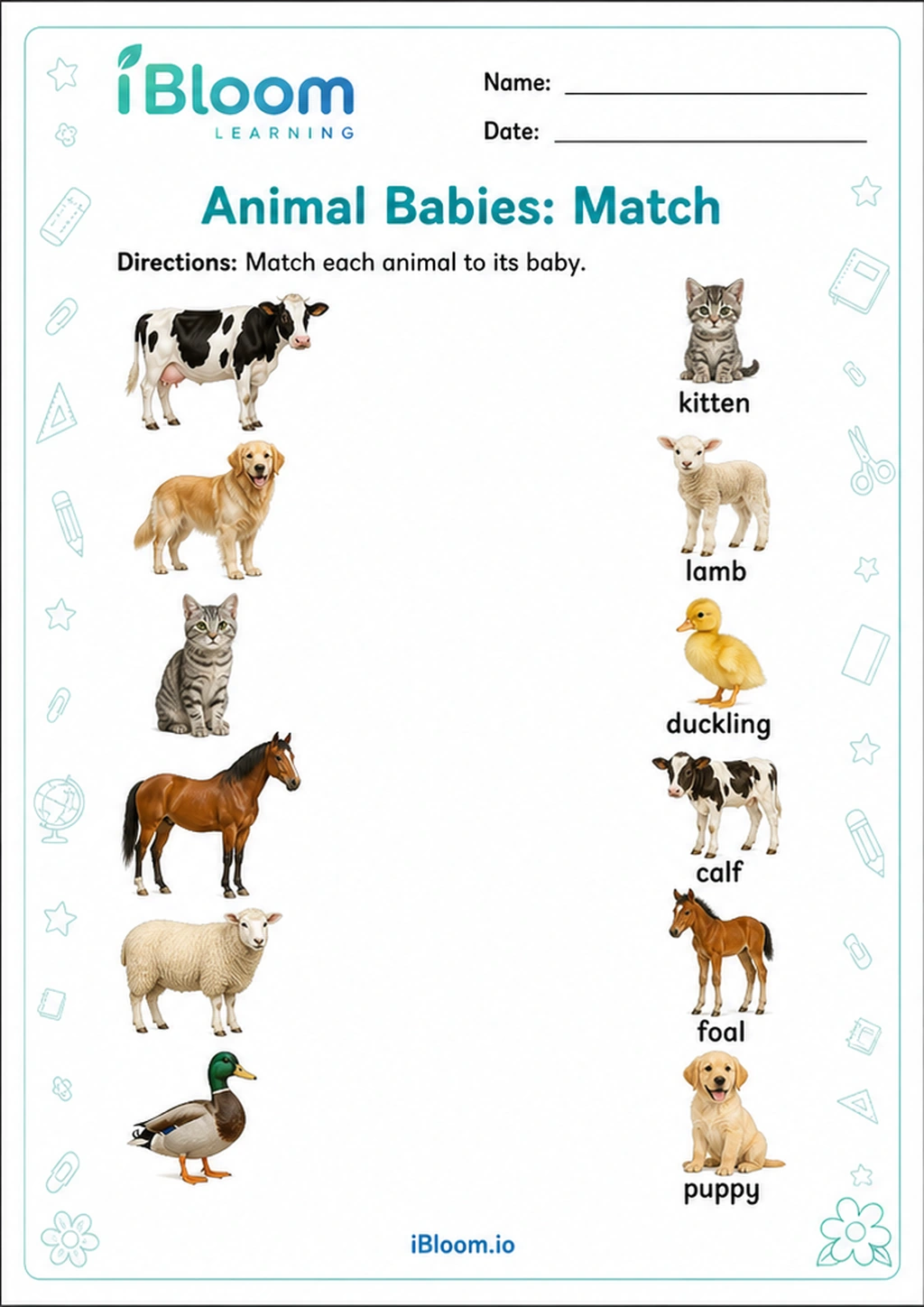 Animal Babies: MatchLKG printable practice for Animal Babies.LKGFree PDF preview
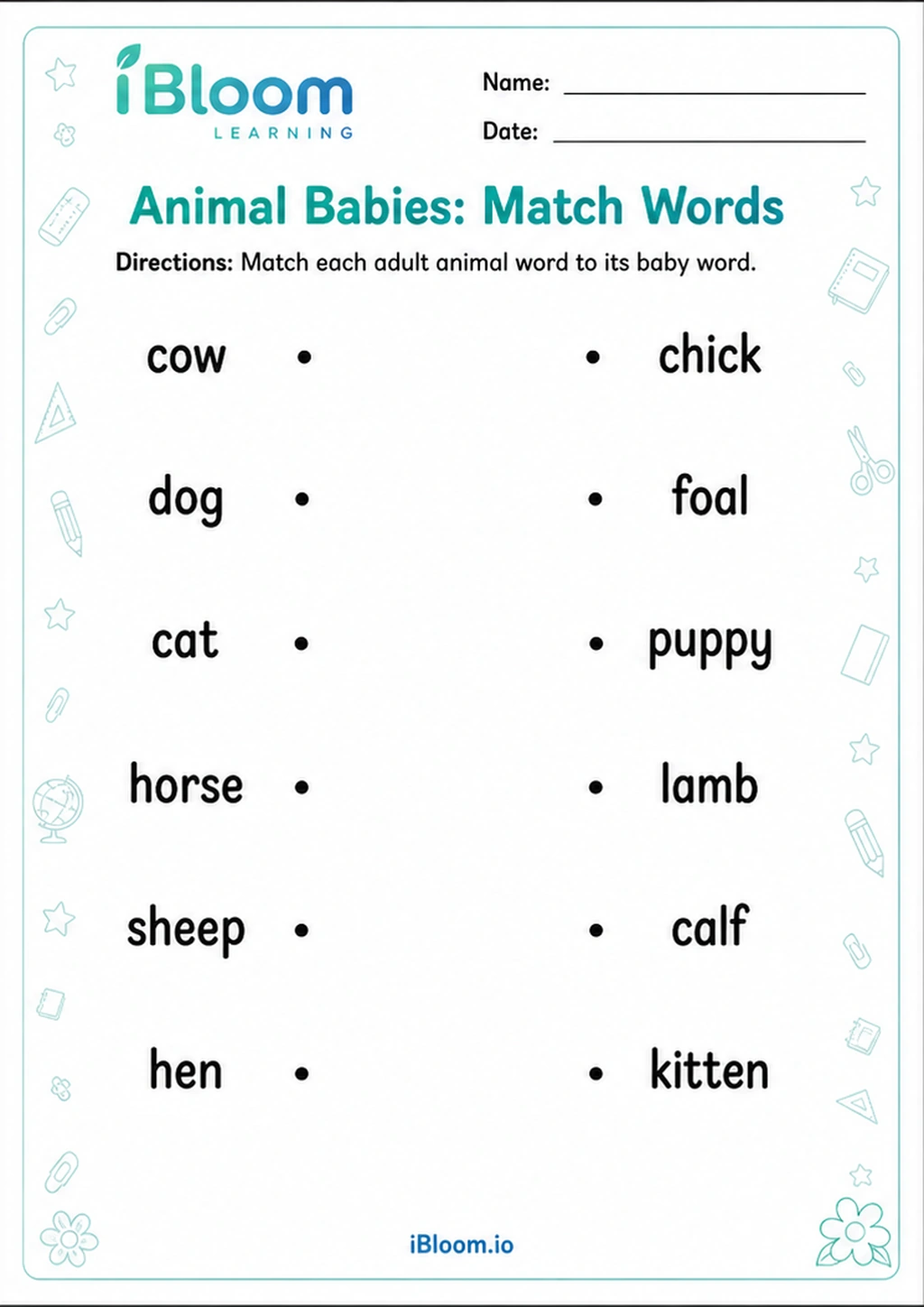 Animal Babies: Match WordsLKG printable practice for Animal Babies.LKGFree PDF preview
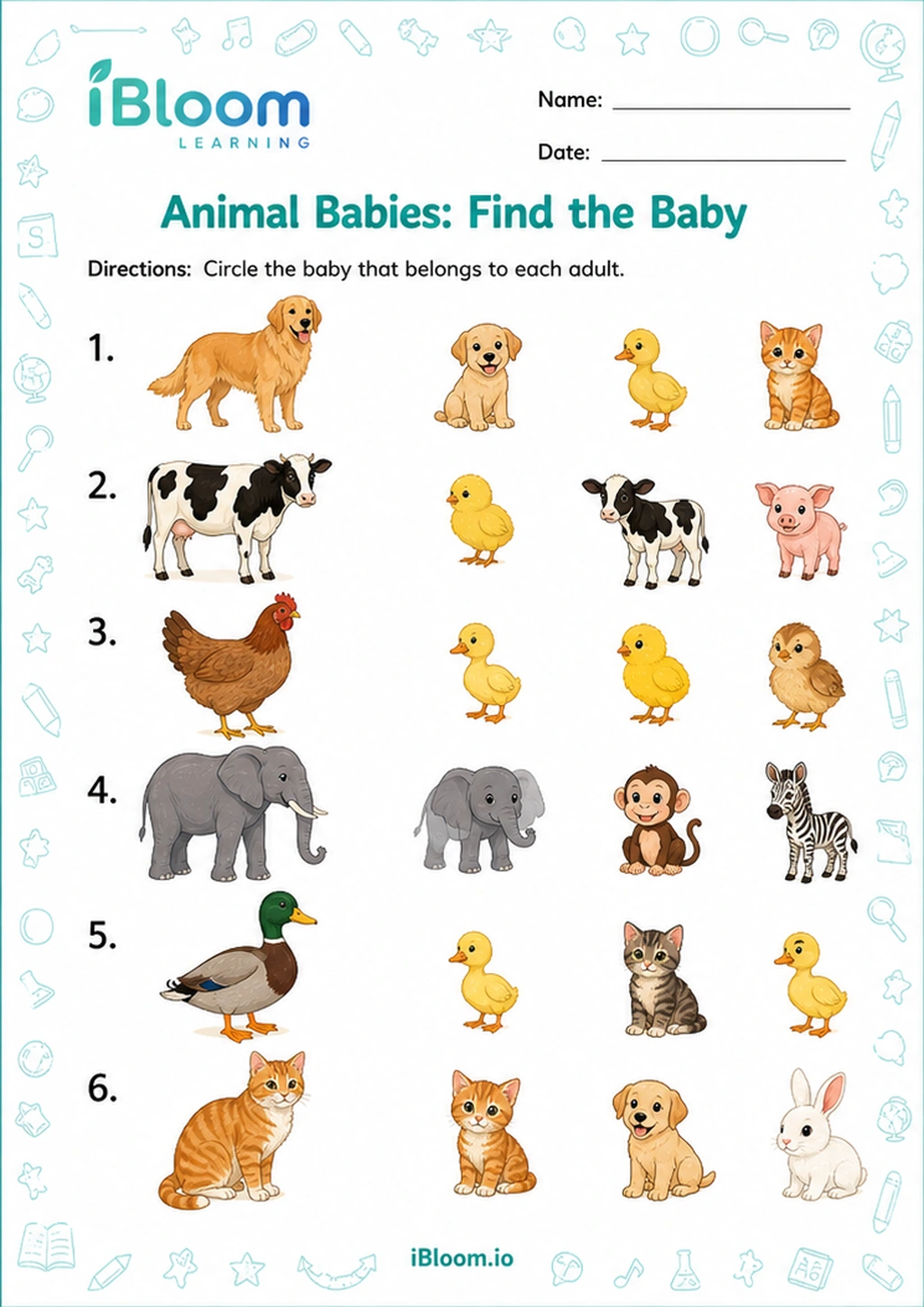 Animal Babies: Find the BabyLKG printable practice for Animal Babies.LKGFree PDF preview
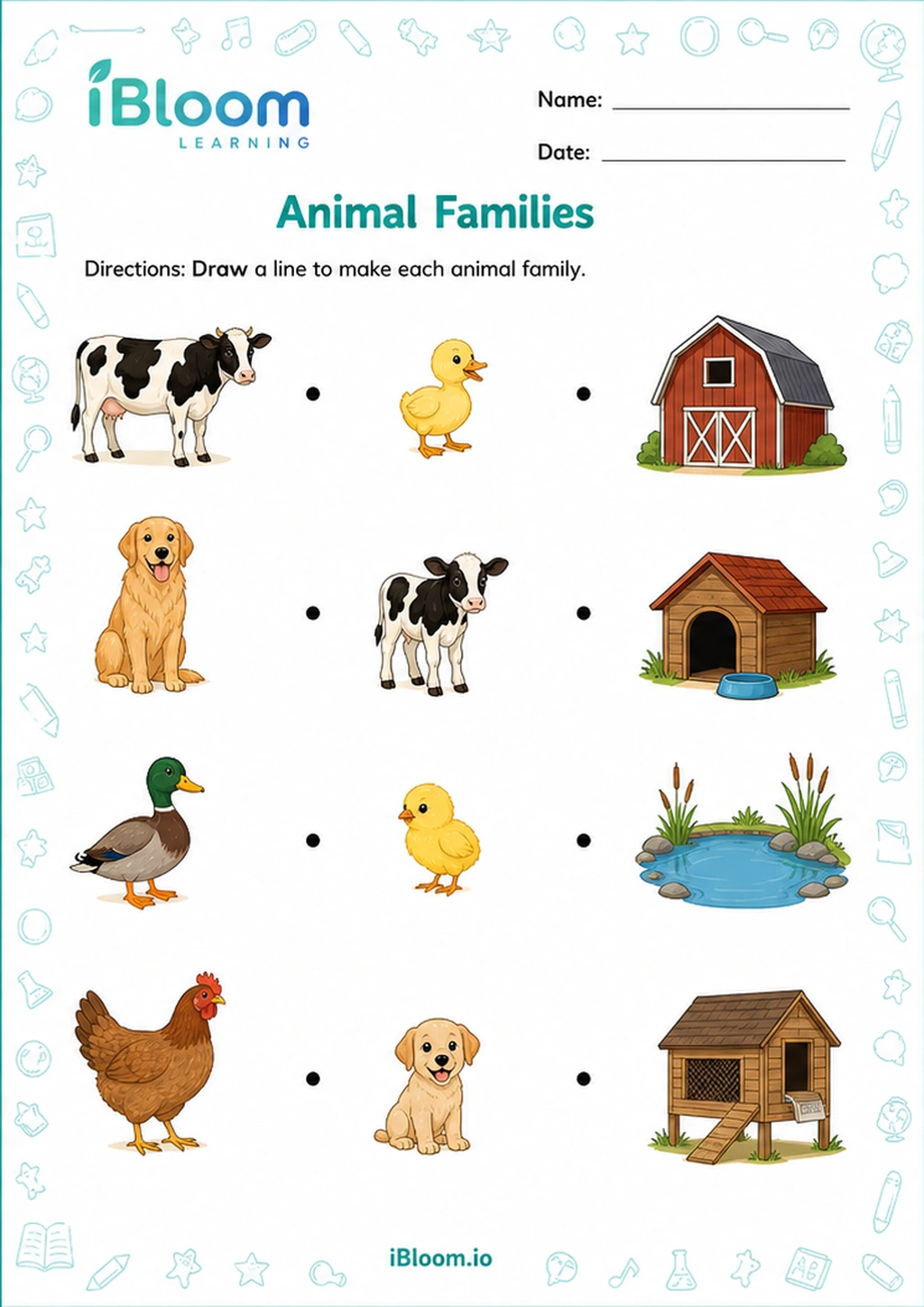 Animal FamiliesLKG printable practice for Animal Babies.LKGFree PDF preview
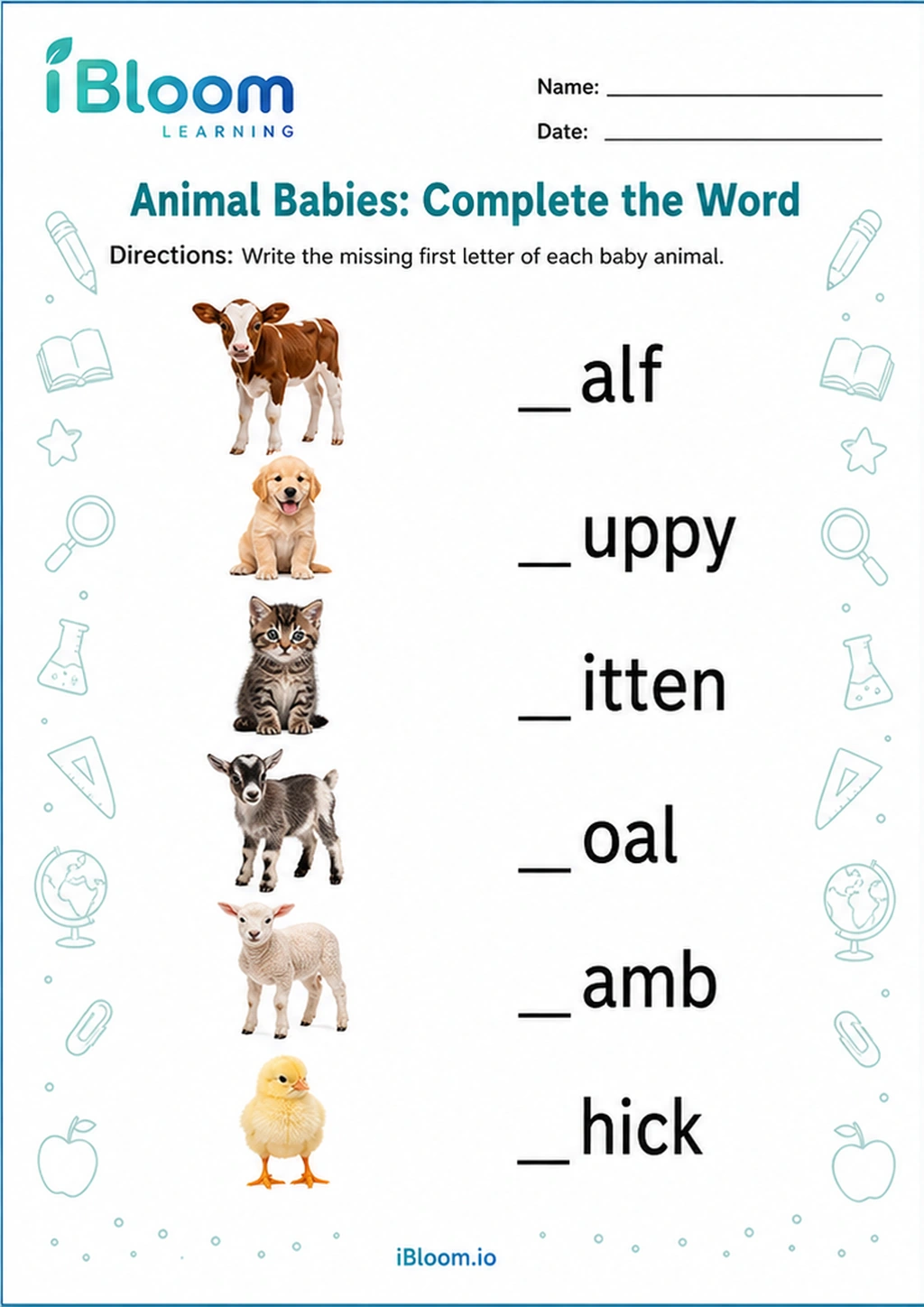 Animal Babies: Complete the WordLKG printable practice for Animal Babies.LKGFree PDF preview
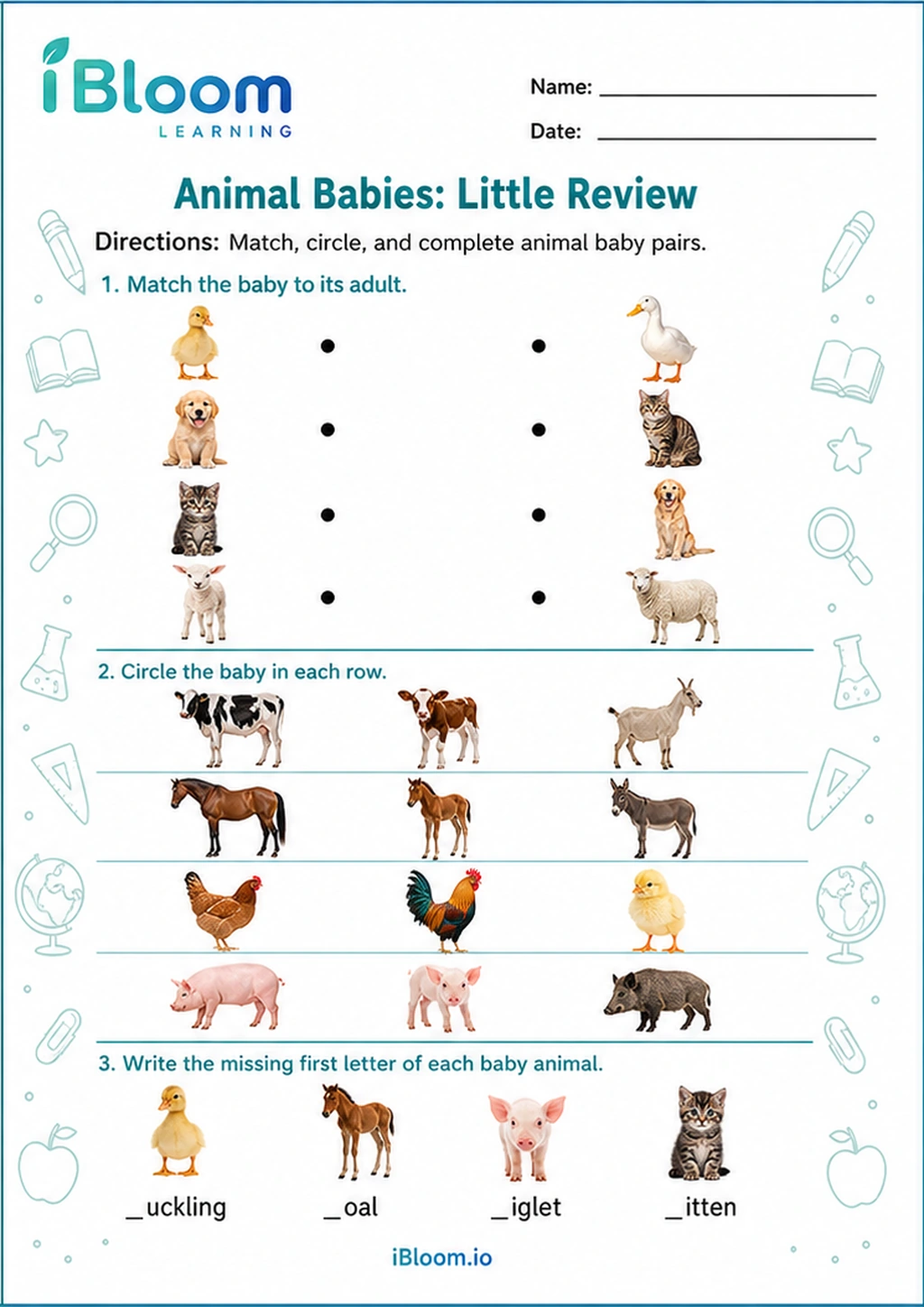 Animal Babies: Little ReviewLKG printable practice for Animal Babies.LKGFree PDF preview
Practice that builds confidence
What children learn
These Animal Babies practice activities help Nursery, LKG and UKG children notice that adult animals and their young often have different names. Children build early science vocabulary as they connect familiar animals such as a cow and calf, dog and puppy, cat and kitten, hen and chick, and goat and kid.
The printable worksheets use clear pictures, simple prompts and age-appropriate tasks such as matching, circling, colouring, tracing and saying the names aloud. They fit naturally into the Plants and Animals science topic and support observation, listening and spoken language.
Children begin with recognition: looking carefully at an adult animal, finding its baby, and saying both names. This develops vocabulary as well as the idea that living things grow and change. The worksheets keep the focus concrete, using animals children may see in books, homes, farms or stories.

Skill progression in the pages
Activities usually move from picture-to-picture matching to choosing the correct baby from options, then to naming or tracing simple words. A child may first draw a line from a sheep to a lamb, then circle the chick among other baby animals, and later say, “A dog’s baby is a puppy.” This gentle progression is useful for children who are still developing pencil control and attention.
Parent routine for home practice
Pick two or three animal pairs at a time. Point to the adult animal, ask, “Who is the baby?” and let your child answer by pointing before expecting spoken words. After completing the worksheet, play a quick recall game: “I say cow, you say calf.” Revisit the same pairs on another day so the words become familiar rather than memorised only for one page.

Classroom uses for teachers
Teachers can use these printables during science corners, picture-talk sessions, morning work or small-group activities. The pages also work well after a story, rhyme or flashcard lesson about farm and domestic animals. For mixed Nursery, LKG and UKG groups, younger children can match pictures while older children can attempt tracing or oral sentences.

Common errors to watch for
Children may call every baby animal “baby dog” or “small cat” instead of using the specific name. Some may match by colour or size rather than by animal features. Gently guide them to look at ears, beak, tail, body shape or fur. Keep corrections simple: “This is a hen. Its baby is called a chick.”
Free printable PDF download
Use this animal babies worksheets for nursery lkg ukg page to preview the activity, print it, or download it as a PDF for quick practice. It works well for homework, homeschool lessons, tutoring, morning work, revision, and classroom centers.
Answers and answer key support
After the child completes the worksheet independently, parents and teachers can use the answer support or answer key information to check the work, review mistakes, and choose the next practice step.
Why iBloom worksheets help
The worksheets combine visual recognition with repeated oral practice, so children are not just memorising a list. A child-friendly strategy is: look at the big animal, look for the small one with similar features, say both names, then match. This makes early science learning active, clear and confidence-building.
Helpful answers
Frequently asked questions
What do children practise in these Animal Babies worksheets?
Children practise matching adult animals with their babies, recognising picture clues, saying animal-baby names aloud, and completing simple tasks such as circling, colouring, tracing or drawing lines.
Which animal baby names are useful for Nursery, LKG and UKG?
Common pairs such as cow-calf, dog-puppy, cat-kitten, hen-chick, goat-kid, sheep-lamb and horse-foal are useful because they are familiar and easy to show with pictures.
How can I help my child remember animal baby names?
Practise a few pairs at a time. Say the adult animal first, let your child point to the baby, then say the pair together. Short recall games like “cow—calf” and “dog—puppy” help build memory.
Are these worksheets suitable for children who cannot read yet?
Yes. The activities are mainly picture-based, so non-readers can match, point, circle and colour. Adults can read any words aloud and encourage children to repeat the names.
How can teachers use these pages in a Plants and Animals lesson?
Teachers can use them after introducing animal flashcards, during science centres, as a follow-up to a story or rhyme, or in small groups where children describe the adult animal and its baby.
Is this animal babies worksheets for nursery lkg ukg free?
Yes. You can preview it for free and use the printable worksheet for home or classroom practice.
Can I download this animal babies worksheets for nursery lkg ukg as a PDF?
Yes. Use the worksheet download option to save a printable PDF, or print the worksheet directly from the page.
Does this animal babies worksheets for nursery lkg ukg include answers or an answer key?
When the activity has fixed answers, iBloom includes answer support so parents and teachers can check the completed worksheet.