Free printable practice
Animal Names Practice Activities
Printable animal names activities help Nursery, LKG and UKG children recognise, say and connect common animals with pictures.
Free printable worksheet PDFs
Preview every available page, then download the free worksheet PDF for home, homeschool, tutoring, or classroom practice.
Preview the exact activity before downloading it.
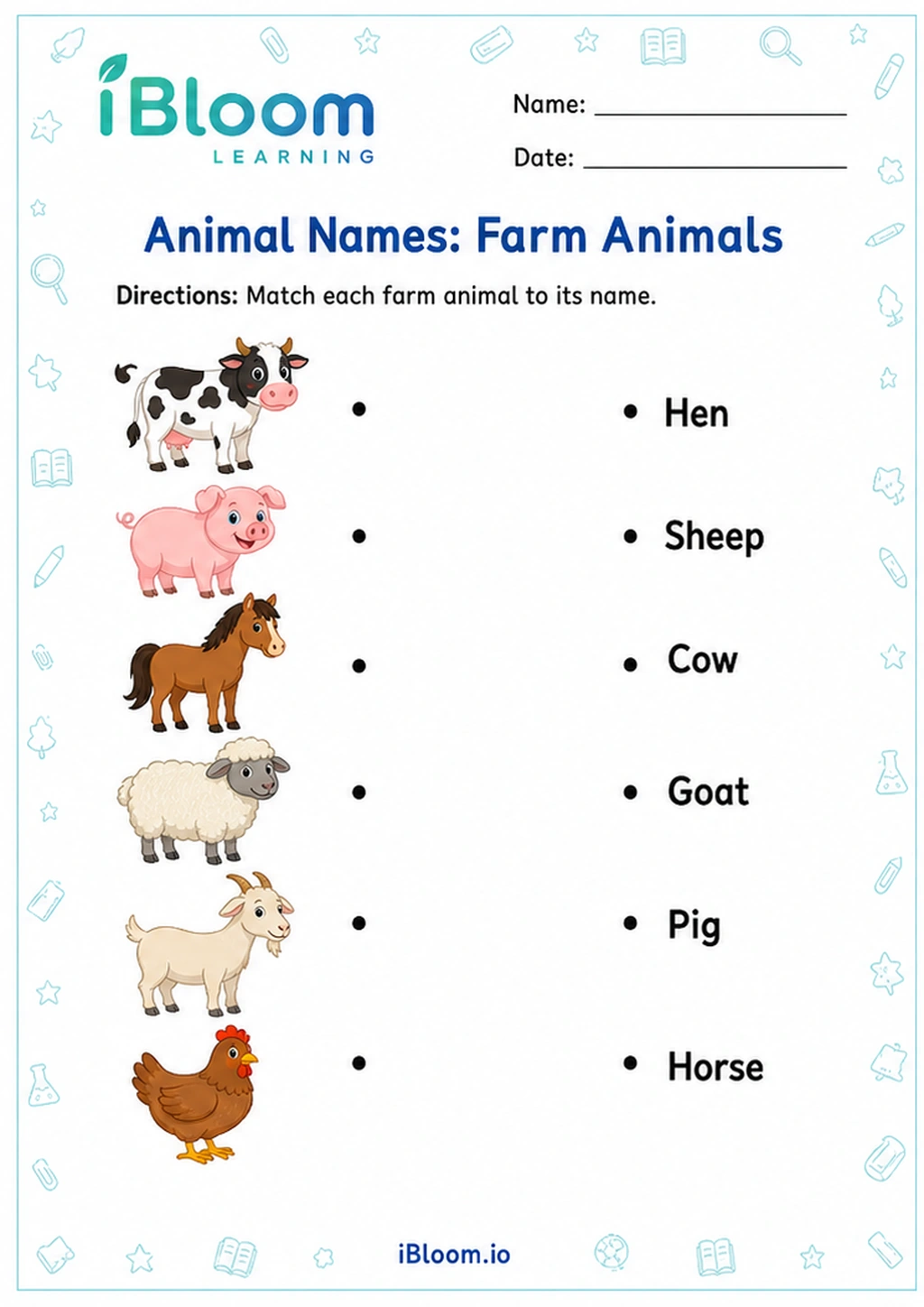 Animal Names: Farm AnimalsLKG printable practice for Animal Names.LKGFree PDF preview
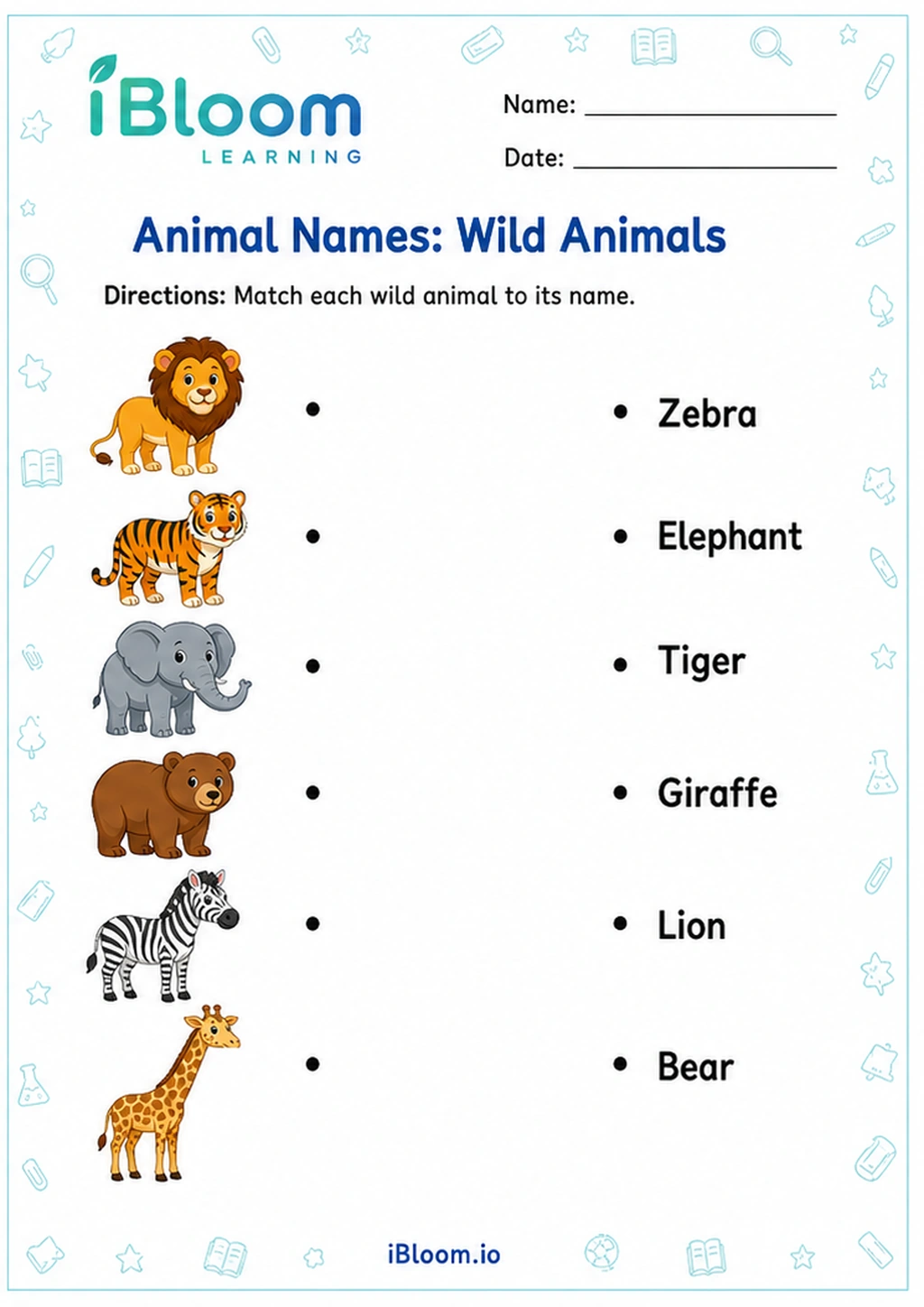 Animal Names: Wild AnimalsLKG printable practice for Animal Names.LKGFree PDF preview
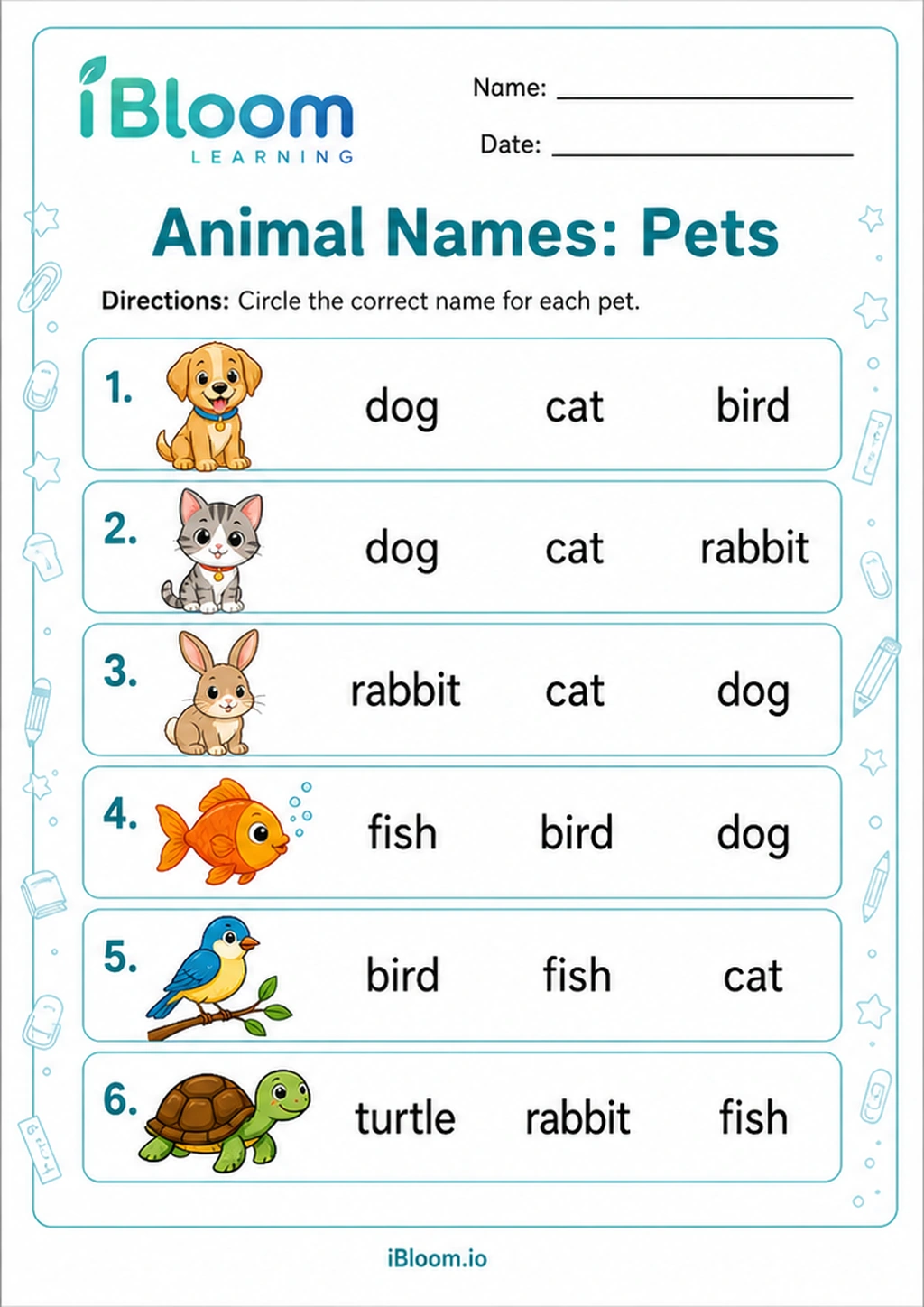 Animal Names: PetsLKG printable practice for Animal Names.LKGFree PDF preview
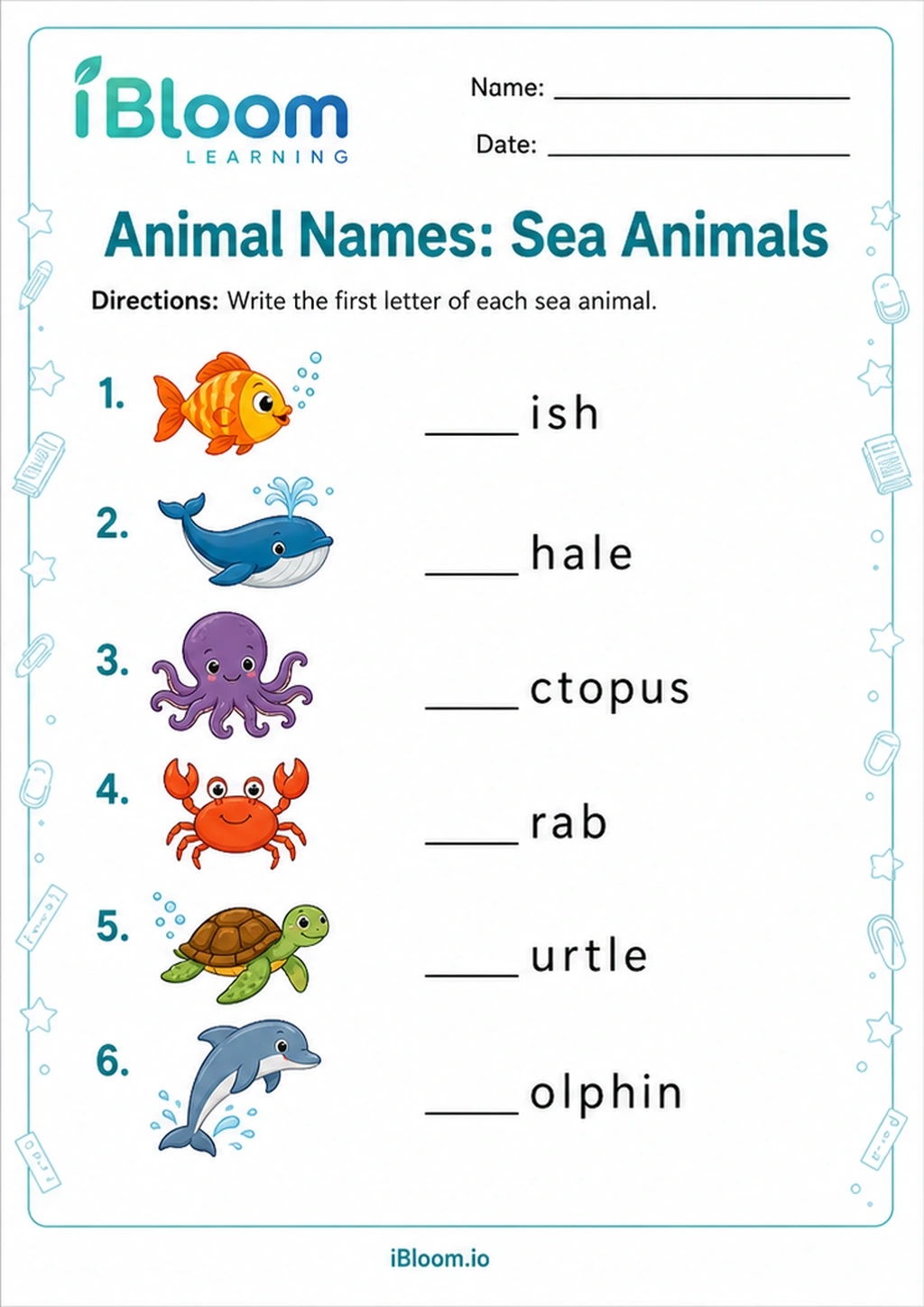 Animal Names: Sea AnimalsLKG printable practice for Animal Names.LKGFree PDF preview
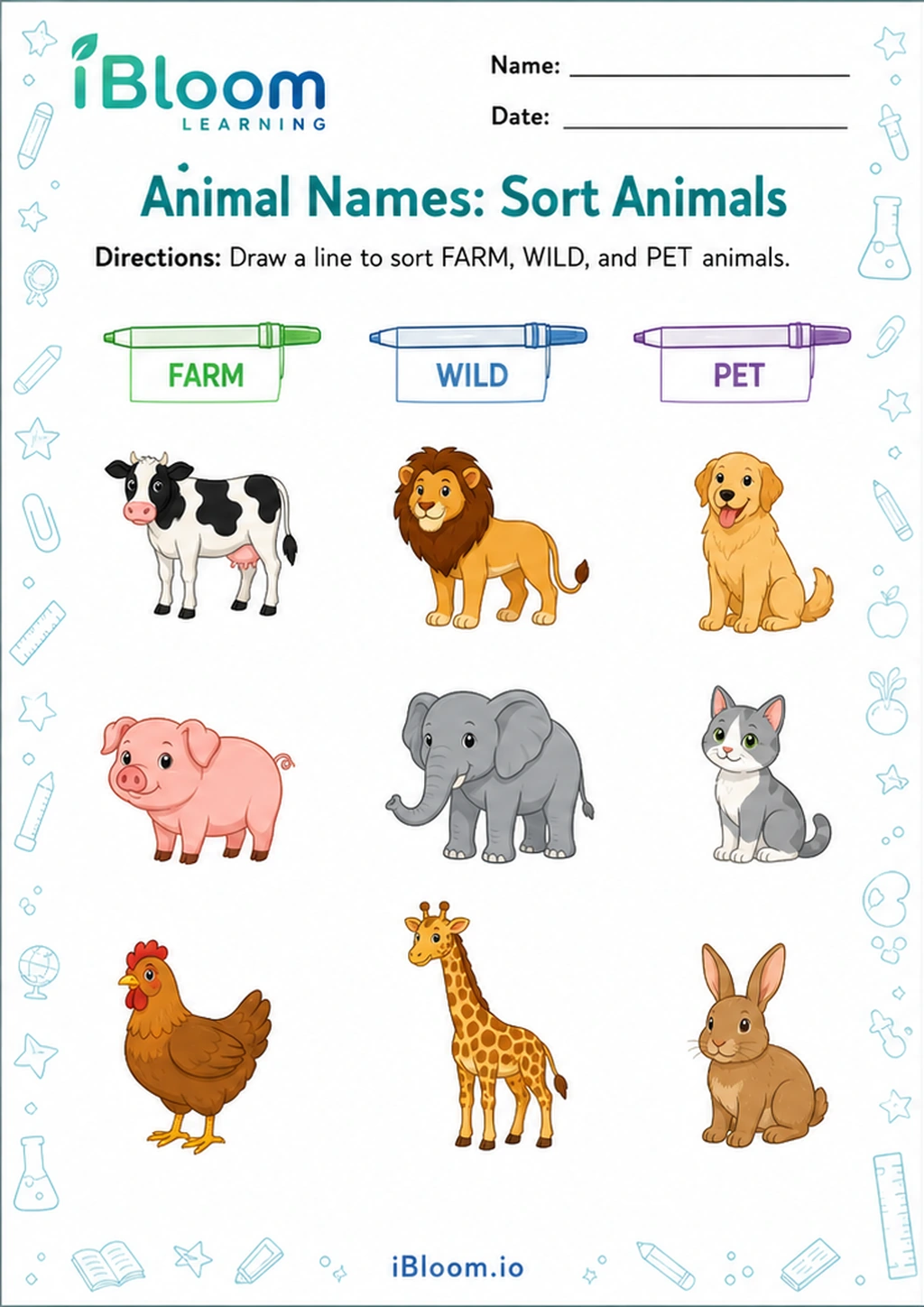 Animal Names: Sort AnimalsLKG printable practice for Animal Names.LKGFree PDF preview
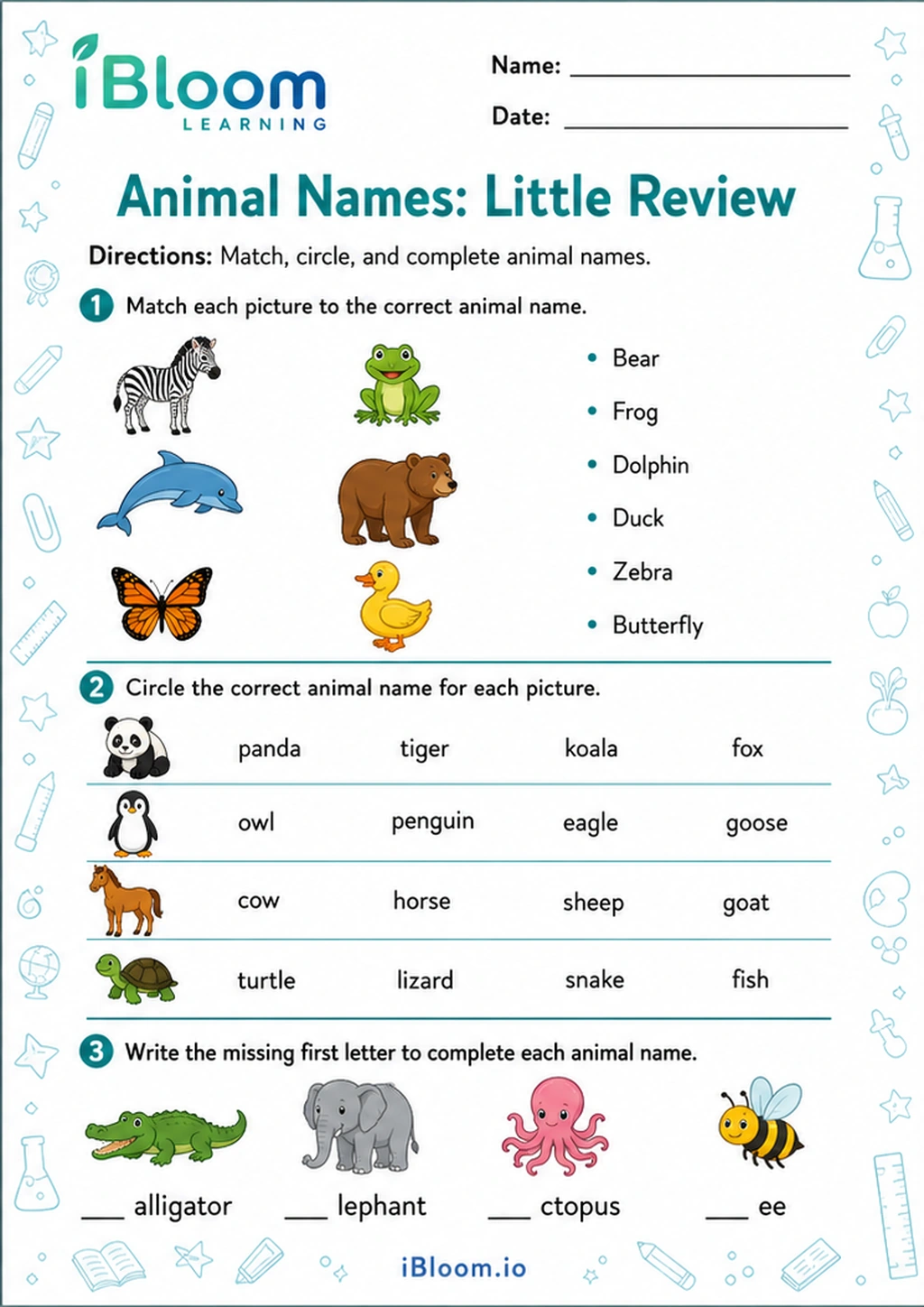 Animal Names: Little ReviewLKG printable practice for Animal Names.LKGFree PDF preview
Practice that builds confidence
Building animal vocabulary
These animal names practice activities help Nursery, LKG and UKG children build early science vocabulary by identifying familiar animals and saying their names clearly. Children learn to notice animals they see at home, in stories, on farms, in zoos and in nature.
The printable worksheets include simple picture-based tasks such as naming, matching, circling, colouring and tracing animal words. They are designed for young learners who are still developing observation, listening, speaking and early writing skills.
Animal names are often a child’s first science words. These worksheets support recognition of common animals through clear pictures and repeated naming practice. Children connect a picture to a spoken word, then begin to recognise the printed word. Useful vocabulary includes animal, pet, farm animal, wild animal, bird, fish and insect when these categories are introduced gently.

How the practice progresses
Early activities can begin with pointing and naming: dog, cat, cow, lion, elephant, fish or bird. Children then move to matching the same animal, choosing the correct name from options, colouring a named animal, or tracing simple words. This progression keeps the focus on understanding before expecting independent reading or spelling.
Parent routine at home
Use one worksheet with a short talk routine. First, ask, “What animal is this?” If your child is unsure, say the name and ask them to repeat it. Next, ask one simple question such as “Where have you seen this animal?” or “What sound does it make?” Finally, let your child colour or trace the word while saying the animal name aloud. Revisit the same sheet later using toys, picture books or real-life examples.

Classroom uses for teachers
Teachers can use these pages during science introduction, picture reading, vocabulary corners, speaking practice or quiet table work. They also work well in small groups: one child names an animal, another points to it, and a third describes a feature such as big, small, tail, wings or four legs. Finished sheets can be added to a class animal wall to reinforce names throughout the week.

Common errors to watch for
Young children may call every four-legged animal “dog” or confuse similar animals such as goat and sheep, tiger and lion, or duck and bird. Some may know an animal sound but not its name. Gently correct by comparing one visible feature: “A lion has a mane” or “A fish lives in water.” Avoid rushing into spelling if the child is still learning to identify the animal.
Free printable PDF download
Use this animal names worksheets for nursery lkg ukg page to preview the activity, print it, or download it as a PDF for quick practice. It works well for homework, homeschool lessons, tutoring, morning work, revision, and classroom centers.
Answers and answer key support
After the child completes the worksheet independently, parents and teachers can use the answer support or answer key information to check the work, review mistakes, and choose the next practice step.
Why iBloom worksheets help
iBloom worksheets keep the page simple, visual and age-appropriate for Nursery, LKG and UKG learners. The activities combine speaking, observation, colouring and early word recognition so children meet each animal name in more than one way. A child-friendly strategy is: look at the picture, say the name, notice one feature, then find or trace the word.
Helpful answers
Frequently asked questions
What age group are these animal names worksheets for?
They are made for Nursery, LKG and UKG children who are learning to recognise common animals, say their names and connect pictures with simple words.
Do children need to read before using these worksheets?
No. Many activities can be done through listening, pointing, naming, matching and colouring. Tracing and word recognition can be added when the child is ready.
How can I teach animal names at home?
Show the picture, say the animal name clearly, ask your child to repeat it, then talk about one feature or sound. Use toys, storybooks and real-life sightings to reinforce the same names.
Which animal groups can children begin to understand?
Young children can start with simple groups such as pets, farm animals, wild animals, birds and water animals, but the focus should remain on recognising and naming individual animals.
What if my child mixes up similar animals?
Use visual clues instead of long explanations. For example, compare a lion and tiger by mane and stripes, or a goat and sheep by horns, wool and body shape.
Is this animal names worksheets for nursery lkg ukg free?
Yes. You can preview it for free and use the printable worksheet for home or classroom practice.
Can I download this animal names worksheets for nursery lkg ukg as a PDF?
Yes. Use the worksheet download option to save a printable PDF, or print the worksheet directly from the page.
Does this animal names worksheets for nursery lkg ukg include answers or an answer key?
When the activity has fixed answers, iBloom includes answer support so parents and teachers can check the completed worksheet.