Free printable practice
Animal Homes Practice Activities
Printable Nursery, LKG and UKG science activities that help children match familiar animals to their homes using pictures, words and simple reasoning.
Free printable worksheet PDFs
Preview every available page, then download the free worksheet PDF for home, homeschool, tutoring, or classroom practice.
Preview the exact activity before downloading it.
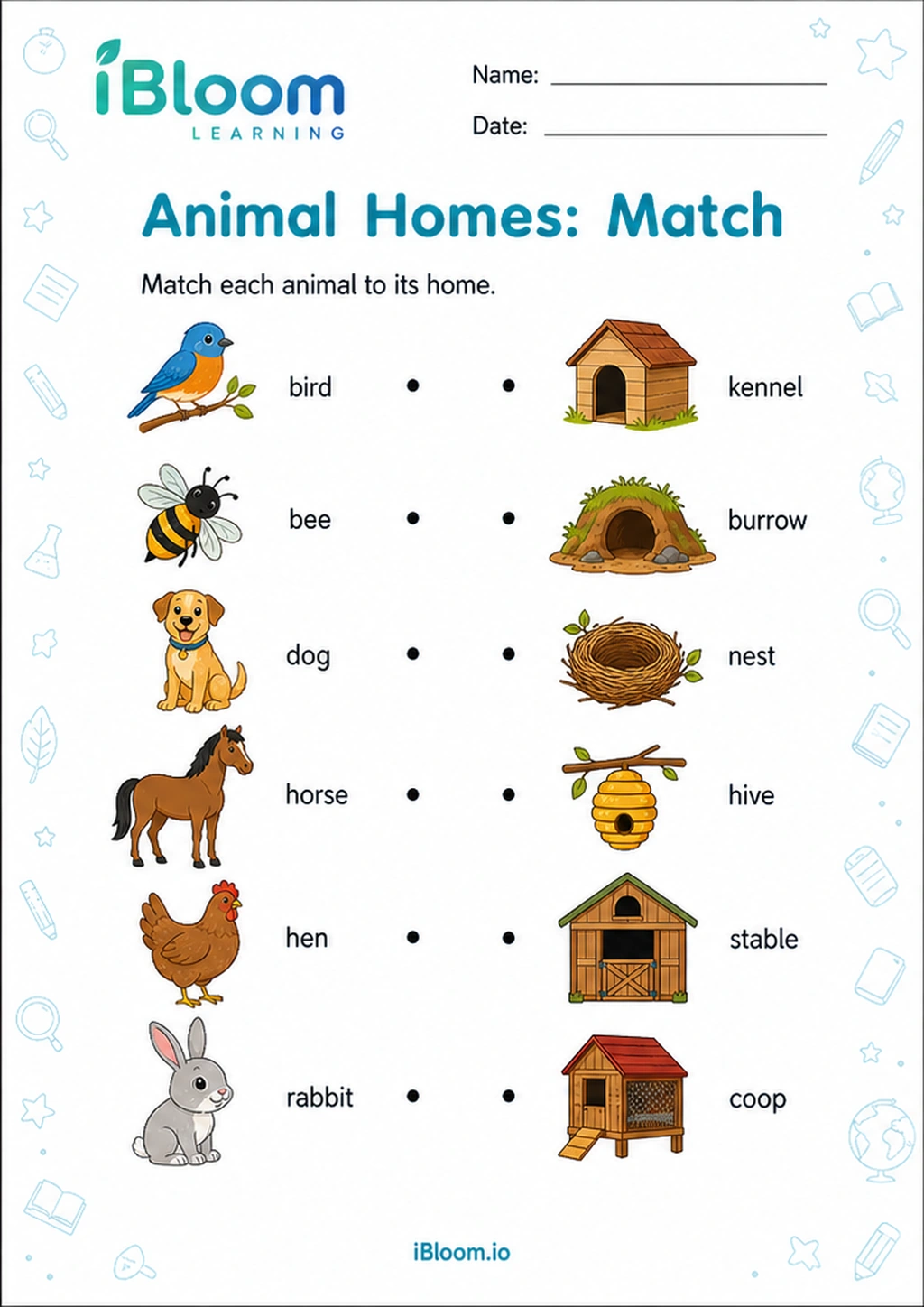 Animal Homes: MatchLKG printable practice for Animal Homes.LKGFree PDF preview
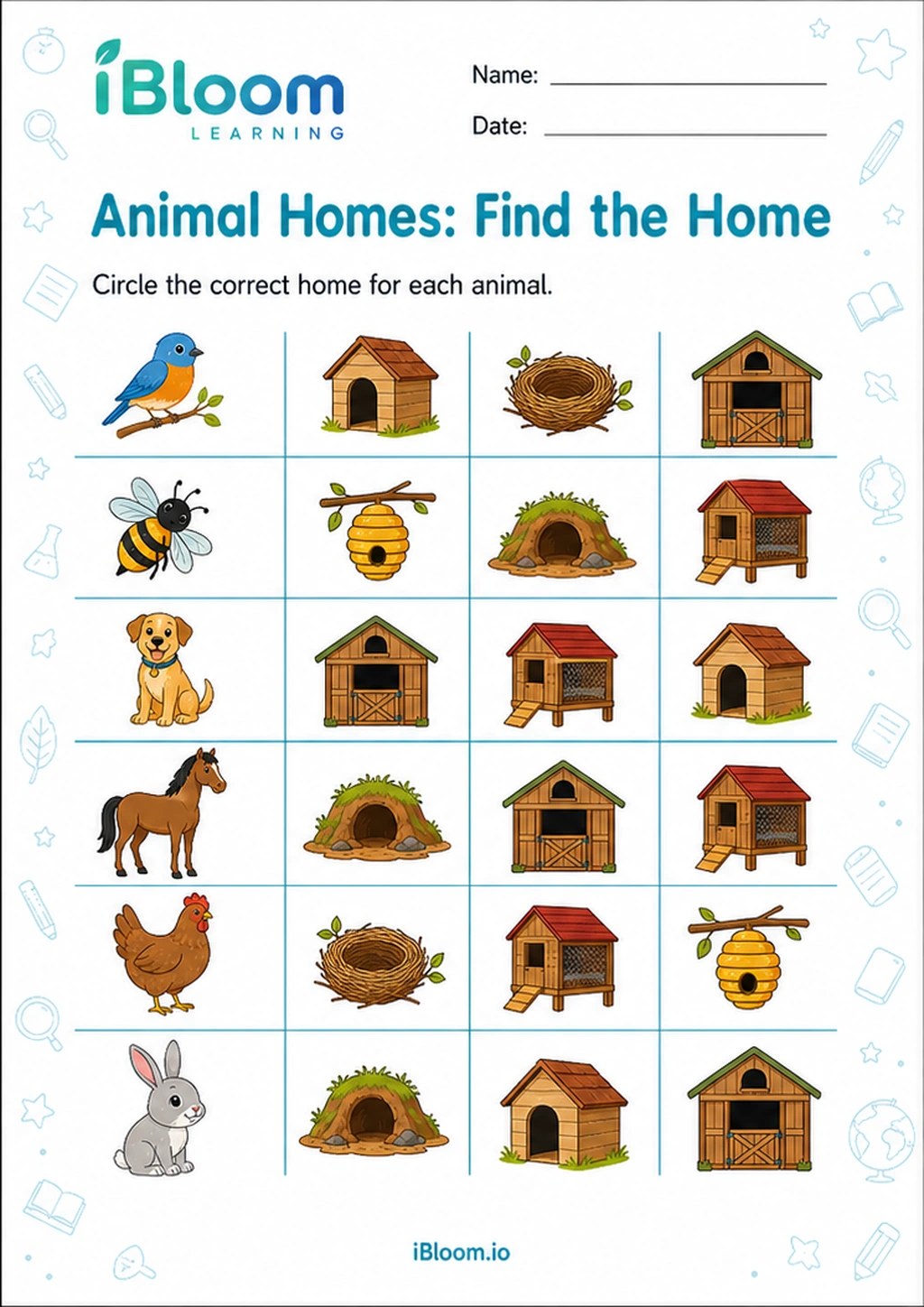 Animal Homes: Find the HomeLKG printable practice for Animal Homes.LKGFree PDF preview
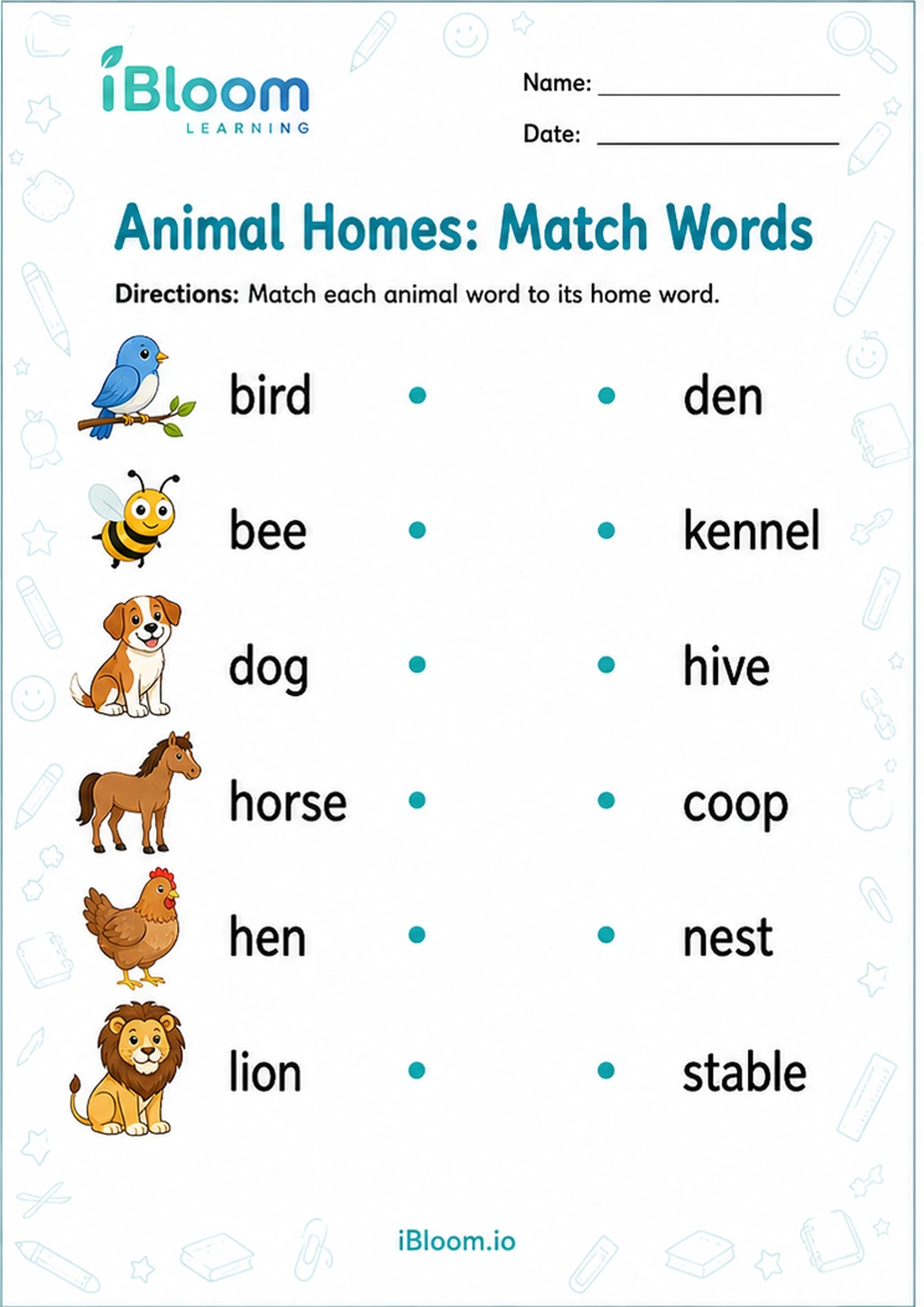 Animal Homes: Match WordsLKG printable practice for Animal Homes.LKGFree PDF preview
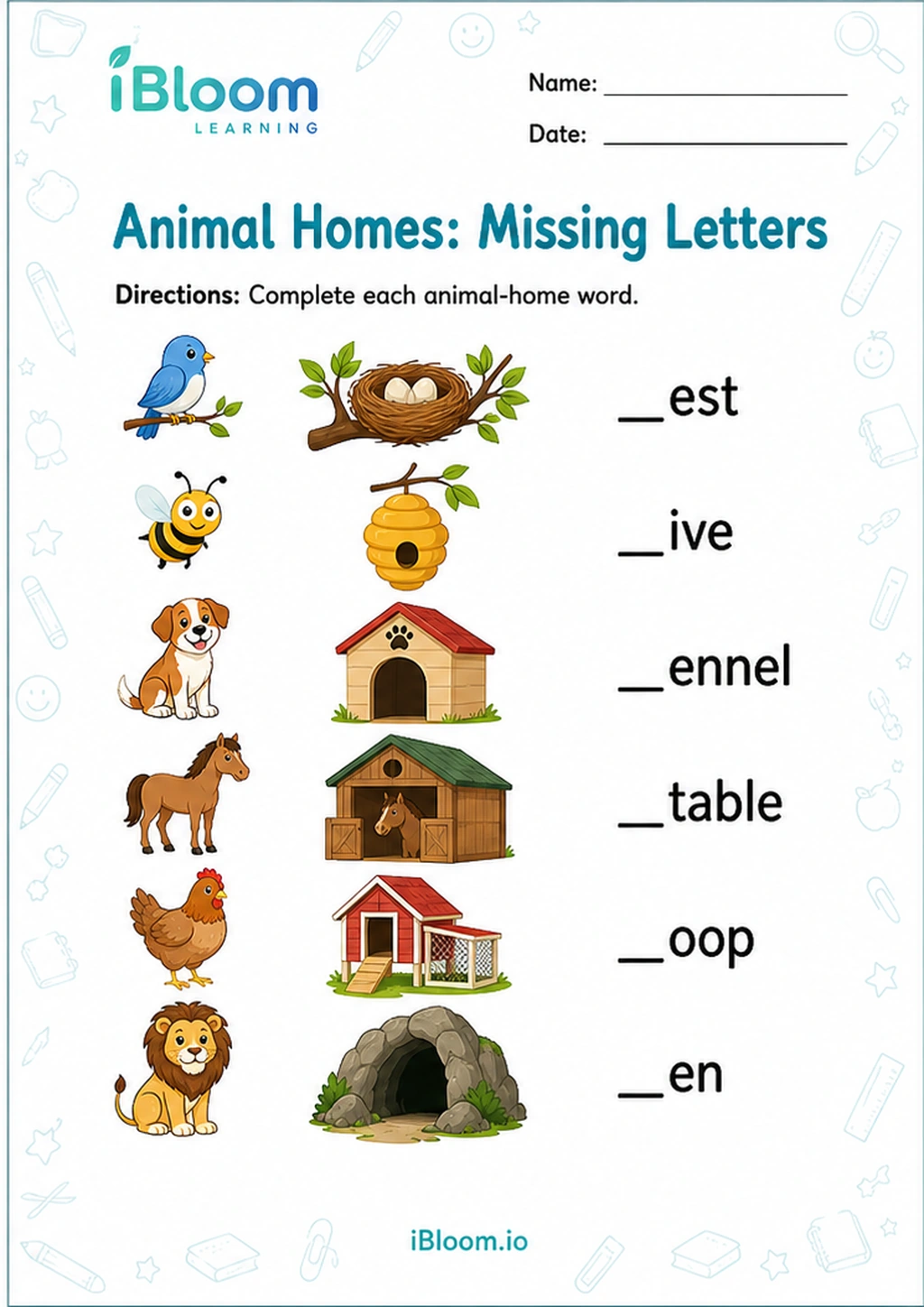 Animal Homes: Missing LettersLKG printable practice for Animal Homes.LKGFree PDF preview
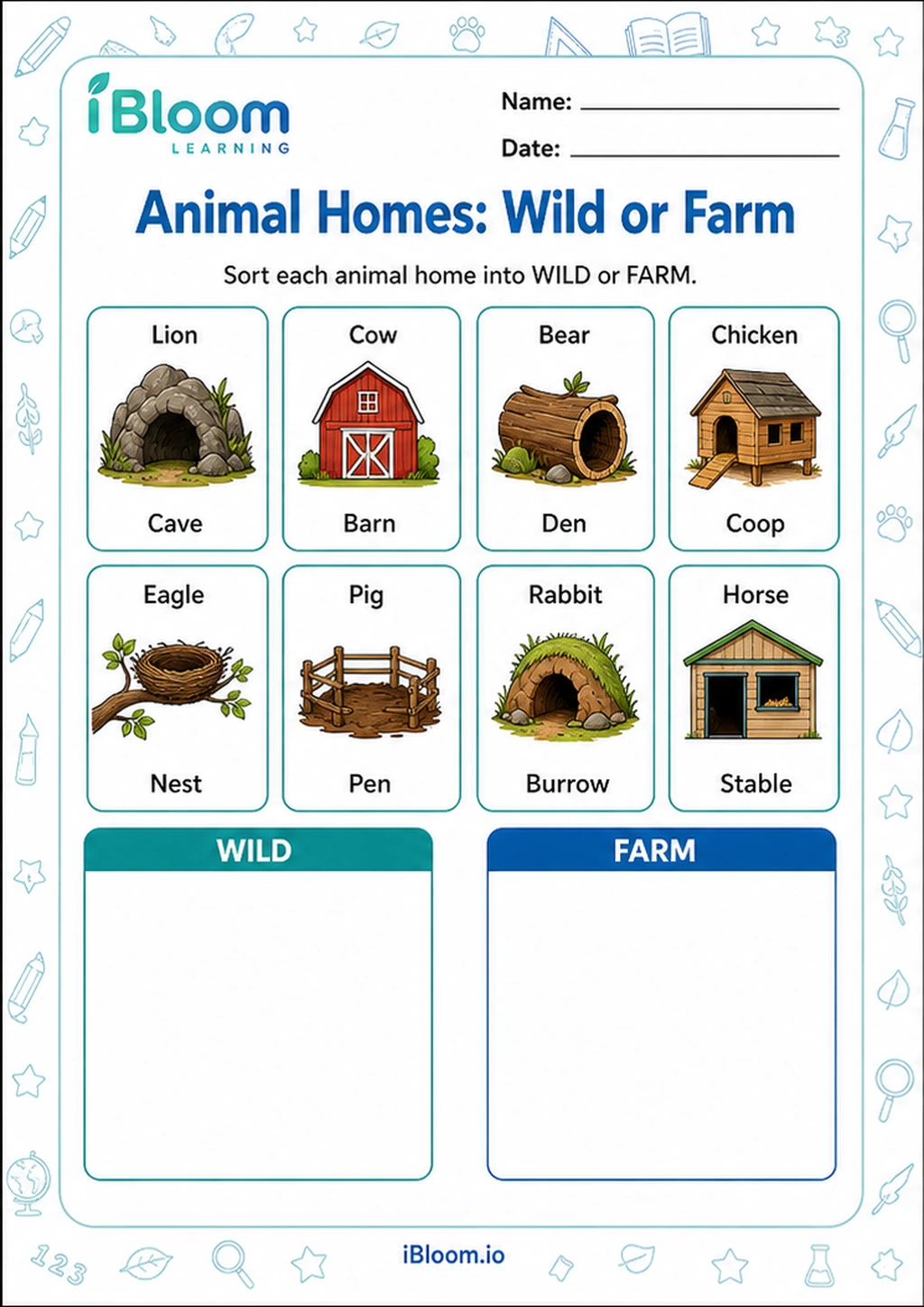 Animal Homes: Wild or FarmLKG printable practice for Animal Homes.LKGFree PDF preview
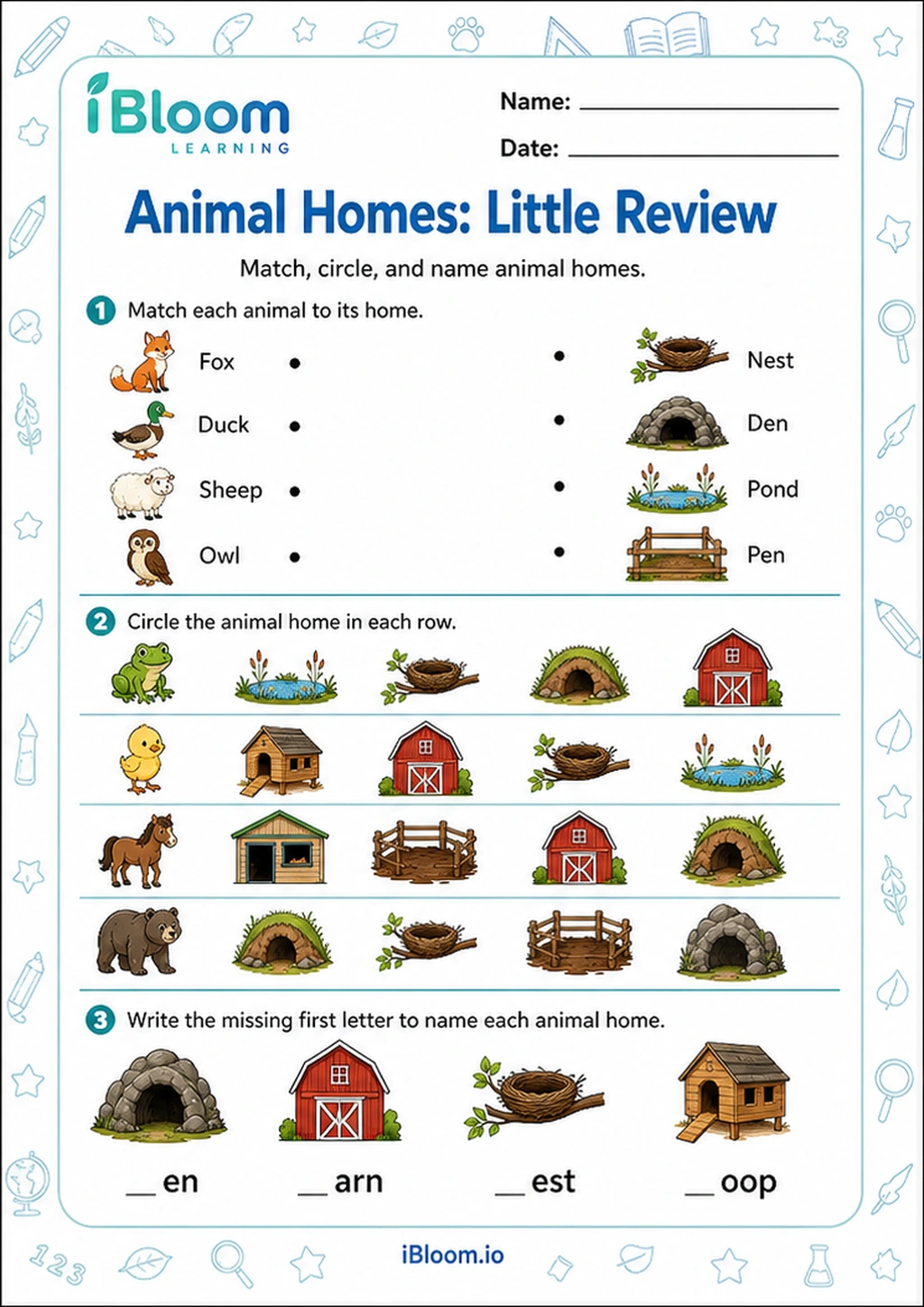 Animal Homes: Little ReviewLKG printable practice for Animal Homes.LKGFree PDF preview
Practice that builds confidence
What children learn
Animal Homes worksheets help Nursery, LKG and UKG children observe where familiar animals live, such as a bird in a nest, a dog in a kennel, a bee in a hive and a lion in a den. Children practise naming animals, recognising homes and saying simple sentences about them.
The printable activities include picture matching, circling, tracing, colouring, cut-and-paste tasks and drawing prompts. They build early science vocabulary while also supporting fine motor skills, visual discrimination and speaking practice.
Animal homes is an early Plants and Animals topic that connects daily observation with simple science vocabulary. Children learn that animals need safe places to rest, care for babies, hide from danger and find food nearby. The focus is on familiar pairs: bird-nest, dog-kennel, cow-shed, horse-stable, rabbit-burrow, lion-den, bee-hive, spider-web and fish-water or aquarium.

How the activities progress
The worksheets move from recognising pictures to making choices. A child may first draw a line from an animal to its home, then circle the correct home from two or three options, trace words like nest or den, and finally draw or colour an animal in the right place. Some pages ask children to complete a scene, which encourages them to notice clues such as a hive hanging from a tree or a web in a corner.
Parent routine at home
Use one sheet with a short talk before writing. Point to each animal and ask, “Where does it live?” Then let the child answer in a full sentence: “A bird lives in a nest.” After the worksheet, look around the home, balcony, garden or picture books for real examples. If the child is unsure, give two choices instead of telling the answer immediately.

Classroom use for teachers
Teachers can use these printables in science corners, picture-talk sessions, revision folders or small-group work. They also work well after rhymes, story cards or a nature walk. For mixed Nursery, LKG and UKG groups, younger children can match pictures, while older children can trace labels, sort domestic and wild animals, or speak one fact about each home.

Common errors to watch for
Young learners may confuse an animal’s home with the place where they saw it, such as saying every animal lives in a cage. They may also mix similar words like shed and stable, or call a spider web a nest. Gently repeat the correct pair and show a clear picture. Avoid overloading them with too many new homes in one sitting.
Free printable PDF download
Use this animal homes worksheets for nursery lkg ukg page to preview the activity, print it, or download it as a PDF for quick practice. It works well for homework, homeschool lessons, tutoring, morning work, revision, and classroom centers.
Answers and answer key support
After the child completes the worksheet independently, parents and teachers can use the answer support or answer key information to check the work, review mistakes, and choose the next practice step.
Why iBloom worksheets help
The pages use bold illustrations, limited choices and age-appropriate vocabulary so children can focus on the animal-home relationship. A child-friendly strategy is: “Look at the animal, say its name, look for the place it can rest, then match.” This simple routine builds confidence and makes early science feel concrete.
Helpful answers
Frequently asked questions
Which animal homes are usually covered in these worksheets?
The activities use familiar examples such as bird-nest, dog-kennel, cow-shed, horse-stable, lion-den, rabbit-burrow, bee-hive, spider-web and fish-water or aquarium.
Are these worksheets suitable for Nursery children who cannot read yet?
Yes. Many tasks are picture-based, such as matching, circling, colouring and pointing. Adults can read the words aloud while children identify the correct animal home.
How can I teach animal homes without rote memorising?
Use real-life talk and pictures. Ask why a bird needs a nest or why a rabbit may live in a burrow, then let the child match the picture. Simple reasoning helps the words stick.
Can these pages be used for UKG revision?
Yes. UKG children can use them to revise vocabulary, trace or copy home names, speak full sentences and compare homes of domestic, wild and small animals.
What should I do if my child gives a different but possible answer?
First check the context. Some animals can be seen in more than one place, but the worksheet may expect a common early-learning pair. Explain the expected pair gently, such as “In this picture, the dog’s home is a kennel.”
Is this animal homes worksheets for nursery lkg ukg free?
Yes. You can preview it for free and use the printable worksheet for home or classroom practice.
Can I download this animal homes worksheets for nursery lkg ukg as a PDF?
Yes. Use the worksheet download option to save a printable PDF, or print the worksheet directly from the page.
Does this animal homes worksheets for nursery lkg ukg include answers or an answer key?
When the activity has fixed answers, iBloom includes answer support so parents and teachers can check the completed worksheet.