Free printable practice
Habitats Practice Activities
Printable habitats activities for Nursery, LKG and UKG children to match animals and plants with places they live, such as land, water, trees and homes.
Free printable worksheet PDFs
Preview every available page, then download the free worksheet PDF for home, homeschool, tutoring, or classroom practice.
Preview the exact activity before downloading it.
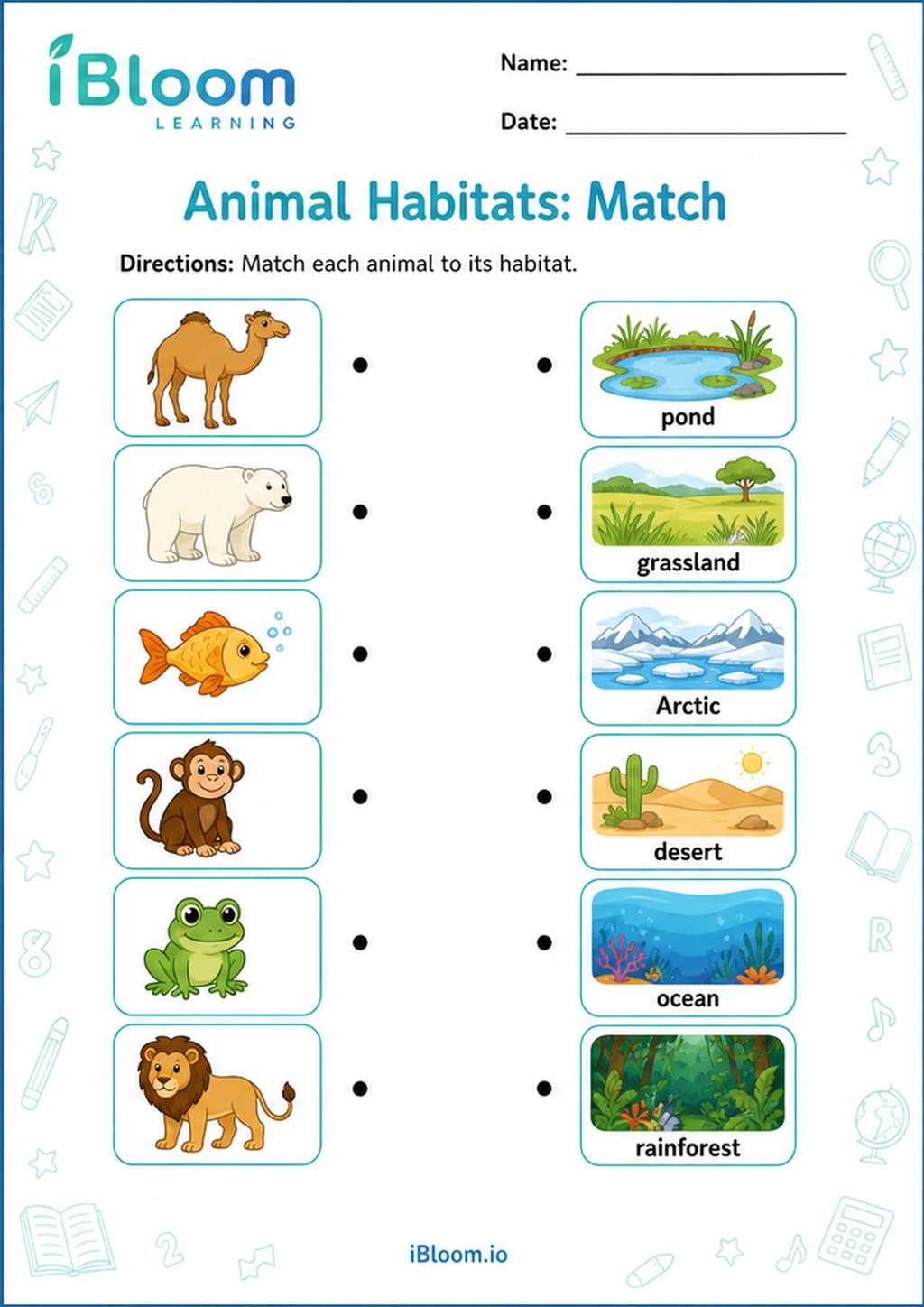 Animal Habitats: MatchUKG printable practice for Animal Habitats.UKGFree PDF preview
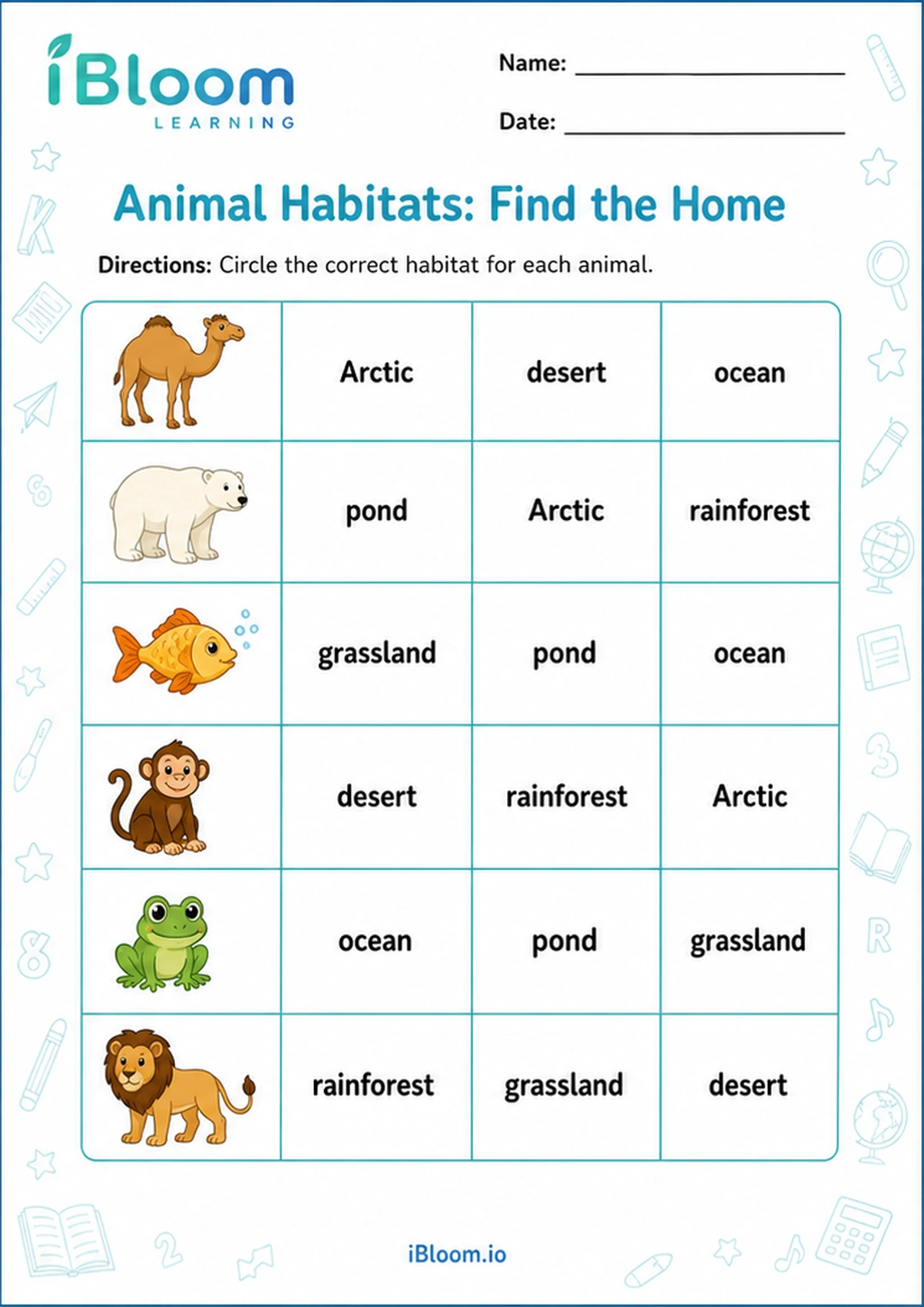 Animal Habitats: Find the HomeUKG printable practice for Animal Habitats.UKGFree PDF preview
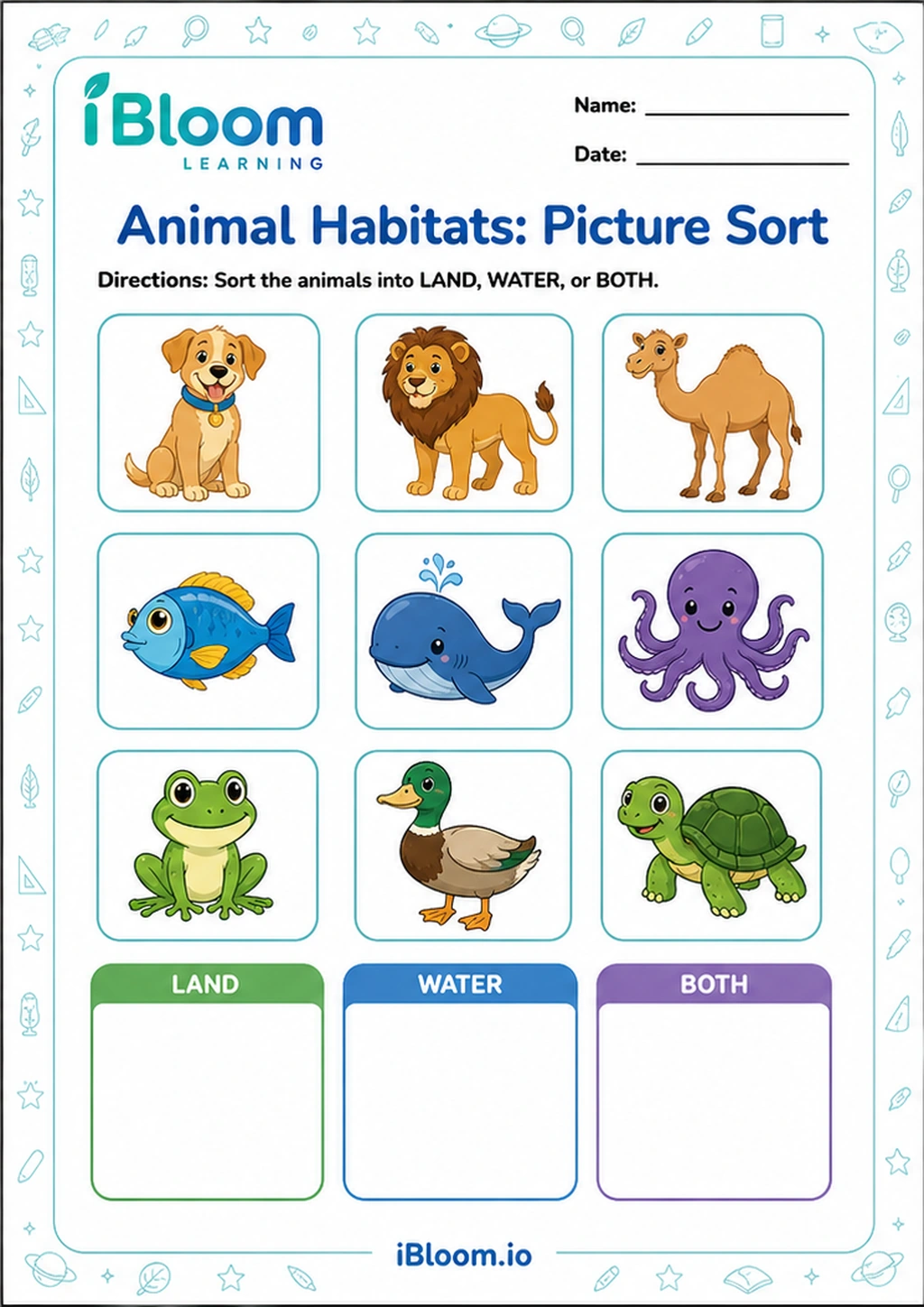 Animal Habitats: Picture SortUKG printable practice for Animal Habitats.UKGFree PDF preview
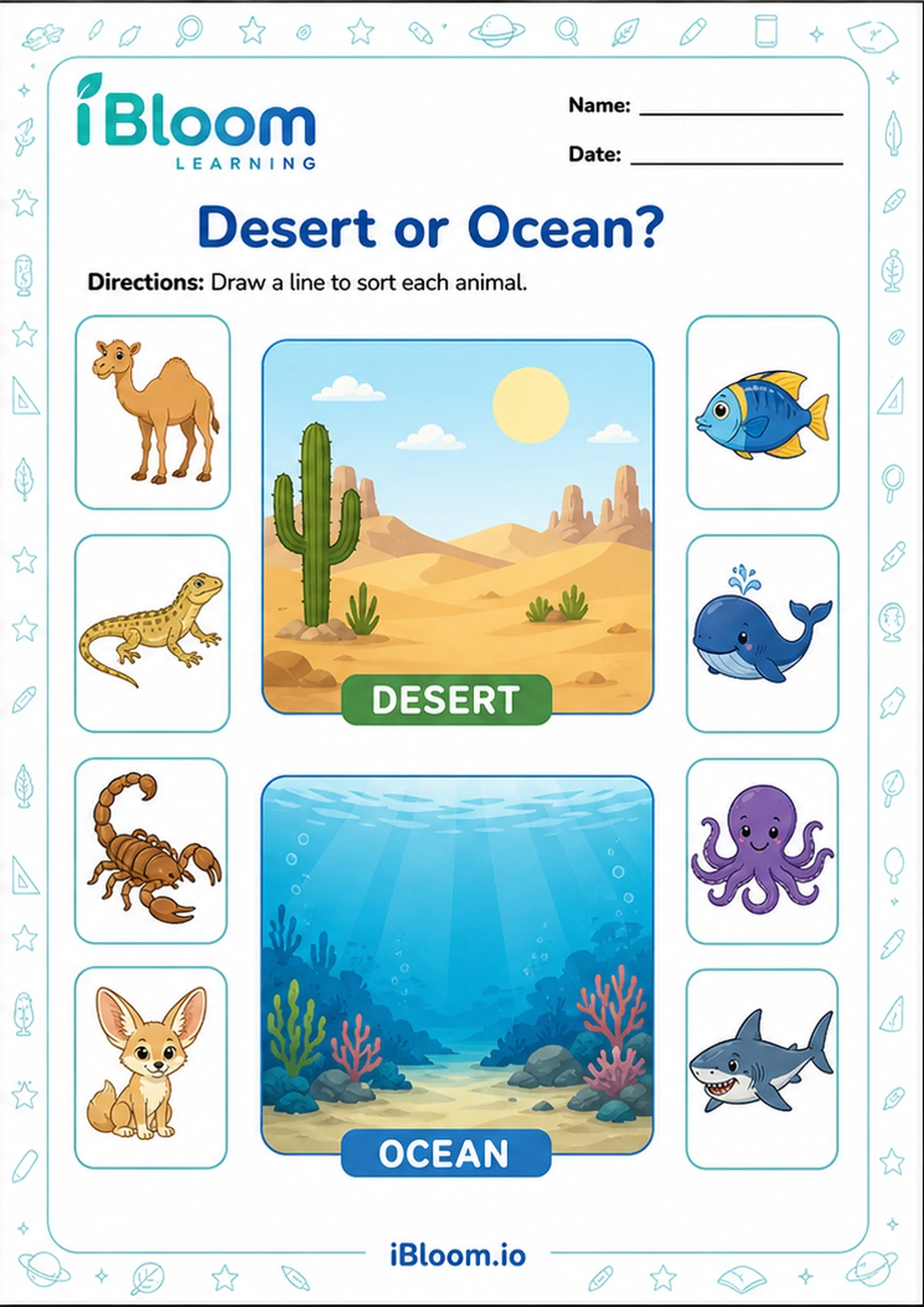 Desert or Ocean?UKG printable practice for Animal Habitats.UKGFree PDF preview
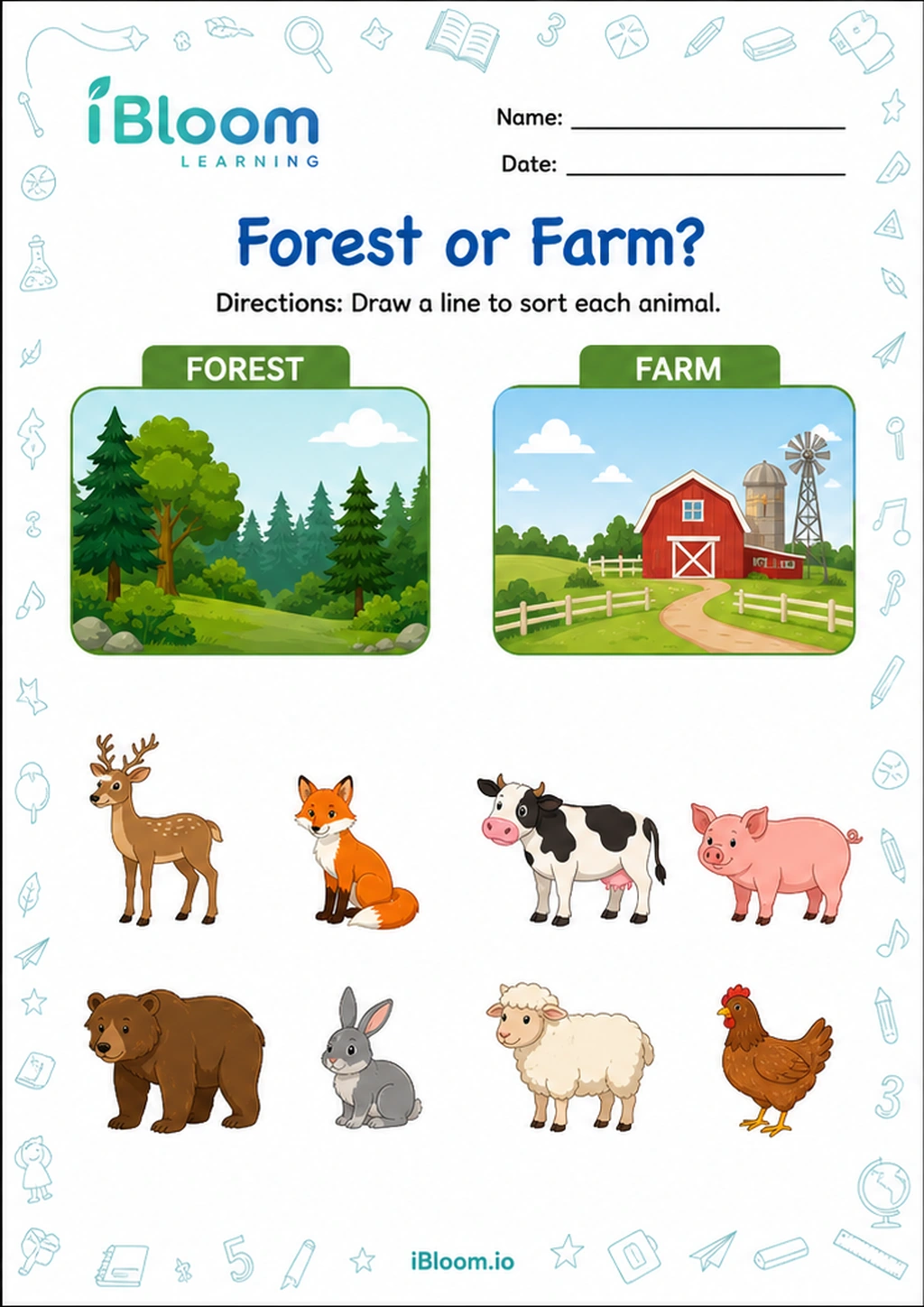 Forest or Farm?UKG printable practice for Animal Habitats.UKGFree PDF preview
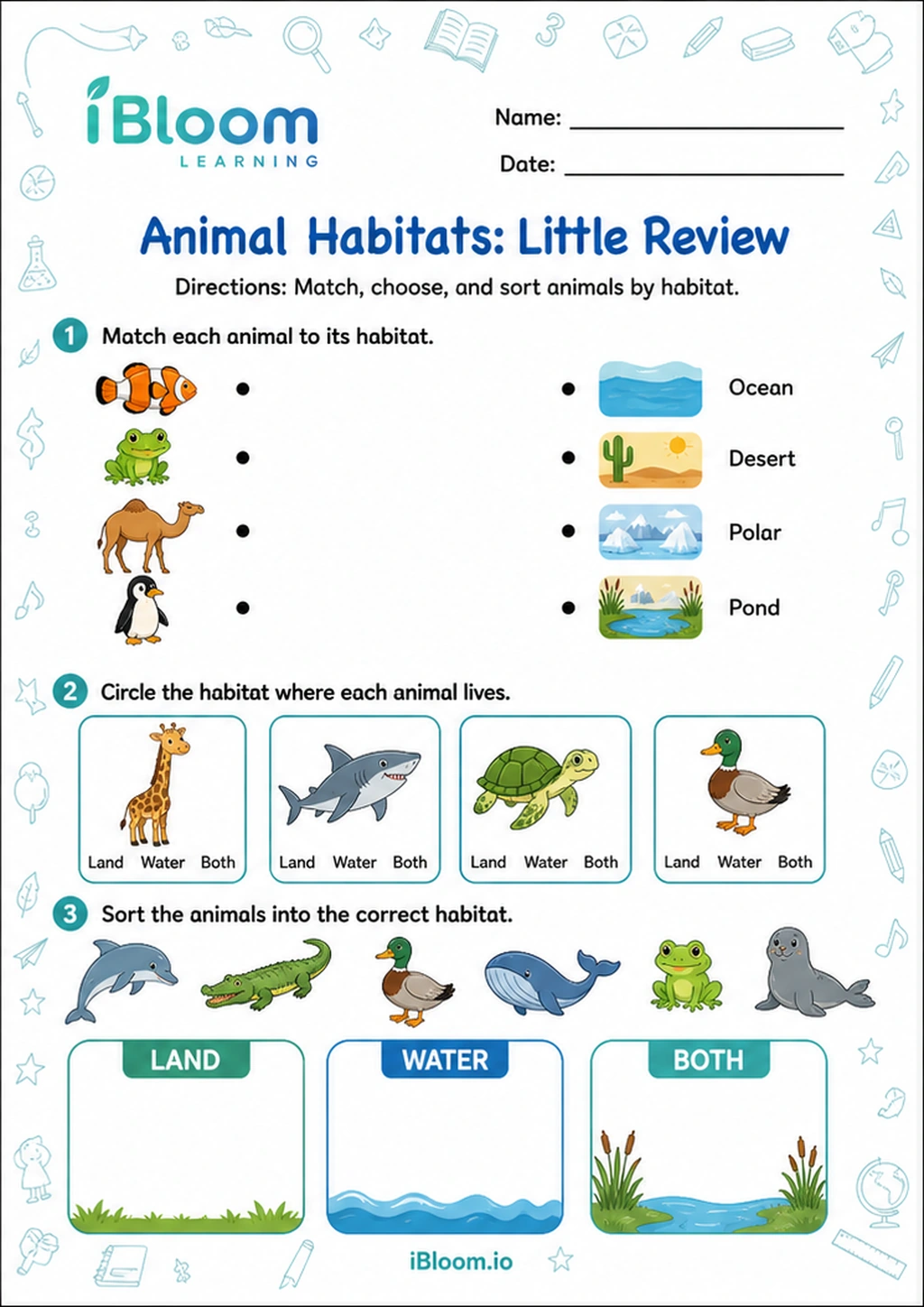 Animal Habitats: Little ReviewUKG printable practice for Animal Habitats.UKGFree PDF preview
Practice that builds confidence
What children learn about habitats
These habitats practice activities help Nursery, LKG and UKG children notice where living things are found. Children practise simple science ideas such as animals living on land, in water, on trees, in nests, in burrows, or near people.
The printable worksheets include picture-based matching, circling, sorting and naming tasks that suit early learners. Activities use familiar plants, animals and places so children can connect classroom science with what they see at home, in the garden, at the park or in storybooks.
At this level, a habitat means a place where a plant or animal lives and gets what it needs. Children begin with easy observations: a fish lives in water, a bird may live in a nest, a cow lives on a farm, and a monkey is often seen in trees. The focus is not memorising long facts, but noticing connections between living things and their surroundings.

Progression in the worksheets
The activities move from recognising single pictures to sorting more than one living thing by place. A child may first match a duck to a pond, then circle animals that live in water, and later compare land and water habitats. This gradual practice builds vocabulary such as land, water, tree, nest, farm, forest, garden and home, while strengthening visual discrimination and early reasoning.
Parent routine at home
Choose one worksheet and talk before writing. Ask, “Where have you seen this animal?” or “What does it need there?” Let your child point, say the answer aloud and then mark it. After the worksheet, take a two-minute habitat hunt: look for an ant near soil, a plant in a pot, a bird on a tree, or a pet’s sleeping place. This makes the science idea real without needing extra materials.

Classroom uses for teachers
Teachers can use these printables during science corners, picture discussion, small-group sorting or revision after a lesson on plants and animals. They also work well with flashcards: children can place an animal card beside a habitat card, then complete the worksheet independently. For mixed-ability groups, ask some children to simply match, while others explain their choice in one sentence.

Common errors to watch for
Young children may choose a habitat because of colour or because two pictures are close together, not because the living thing belongs there. Some may think every bird lives only in a tree or every animal seen in water is a fish. Gently ask, “Can it breathe/live there all the time?” and use real examples to refine their thinking.
Free printable PDF download
Use this habitats worksheets for nursery lkg ukg page to preview the activity, print it, or download it as a PDF for quick practice. It works well for homework, homeschool lessons, tutoring, morning work, revision, and classroom centers.
Answers and answer key support
After the child completes the worksheet independently, parents and teachers can use the answer support or answer key information to check the work, review mistakes, and choose the next practice step.
Why iBloom worksheets help
The pages use clear pictures, limited choices and age-appropriate tasks for Nursery, LKG and UKG learners. A helpful child strategy is: look at the living thing, name it, think where you have seen it, then match or circle. This simple “Name it, place it” routine builds confidence and careful observation.
Helpful answers
Frequently asked questions
What does a habitat mean for Nursery, LKG and UKG children?
For young children, a habitat can be explained as the place where a plant or animal lives. Examples include a fish in water, a bird in a nest, a plant in soil and a cow on a farm.
What kinds of tasks are included in these habitats worksheets?
The worksheets use early-learning tasks such as matching animals to homes, circling living things found in water or on land, sorting pictures and naming familiar places where plants and animals live.
How can I help my child if they guess the habitat from the picture colour?
Ask your child to name the animal first, then ask, “Where have you seen it?” or “Can it live there?” This helps them think about the living thing instead of choosing by colour or position.
Are these activities suitable before children can read sentences?
Yes. The activities are mainly picture-based, so children can complete them with oral instructions, pointing, matching, circling or simple teacher and parent support.
How can teachers extend a habitats worksheet in class?
After completing the worksheet, teachers can ask children to group flashcards into land, water, tree, farm or home habitats, then let each child say one simple sentence such as “A fish lives in water.”
Is this habitats worksheets for nursery lkg ukg free?
Yes. You can preview it for free and use the printable worksheet for home or classroom practice.
Can I download this habitats worksheets for nursery lkg ukg as a PDF?
Yes. Use the worksheet download option to save a printable PDF, or print the worksheet directly from the page.
Does this habitats worksheets for nursery lkg ukg include answers or an answer key?
When the activity has fixed answers, iBloom includes answer support so parents and teachers can check the completed worksheet.