Free printable practice
Adding Two Single Digit Numbers Sum 20 Or Less Practice Activities
Grade 1 addition worksheets for building fluency with two single-digit addends and sums within 20.
Free printable worksheet PDFs
Preview every available page, then download the free worksheet PDF for home, homeschool, tutoring, or classroom practice.
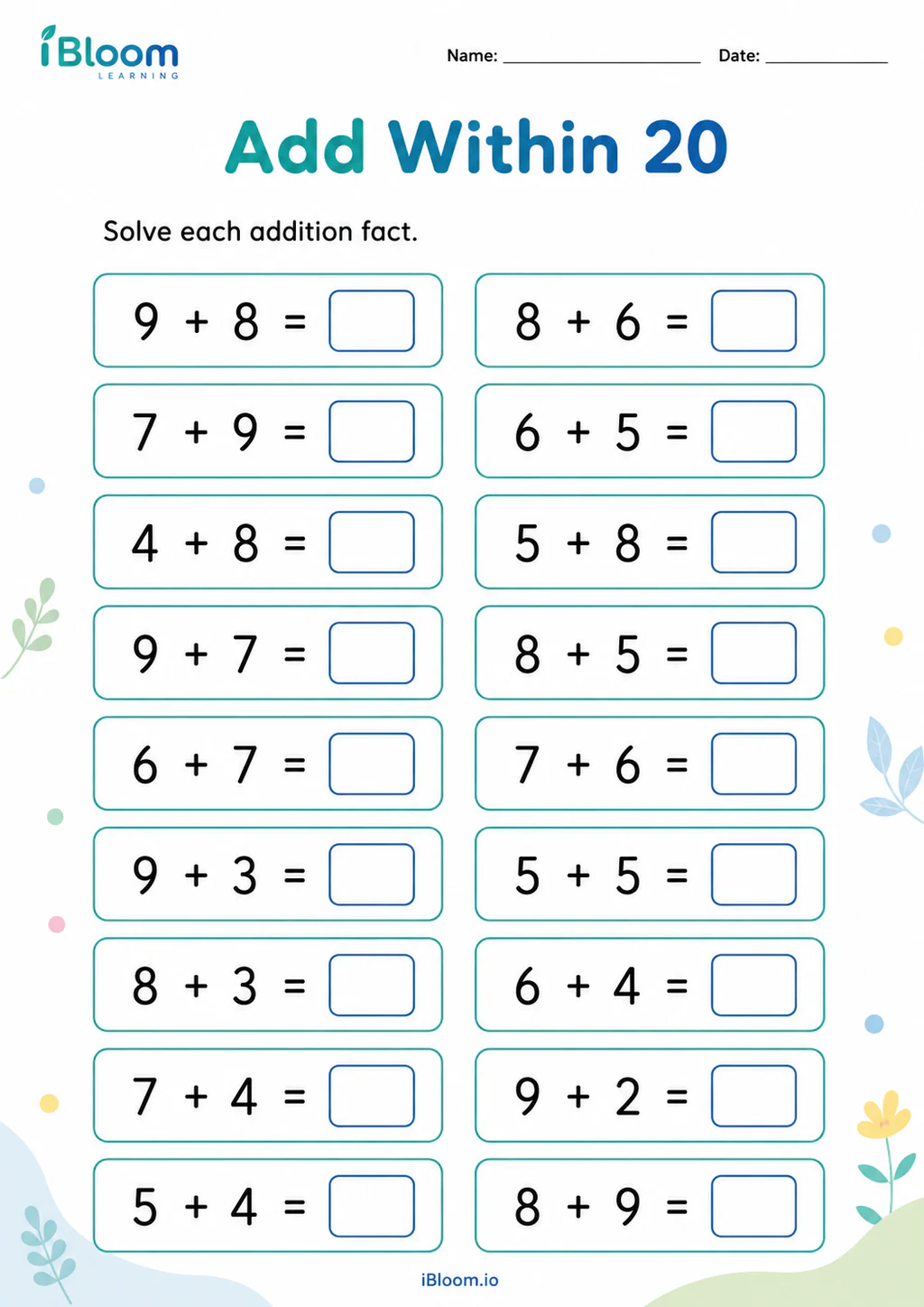
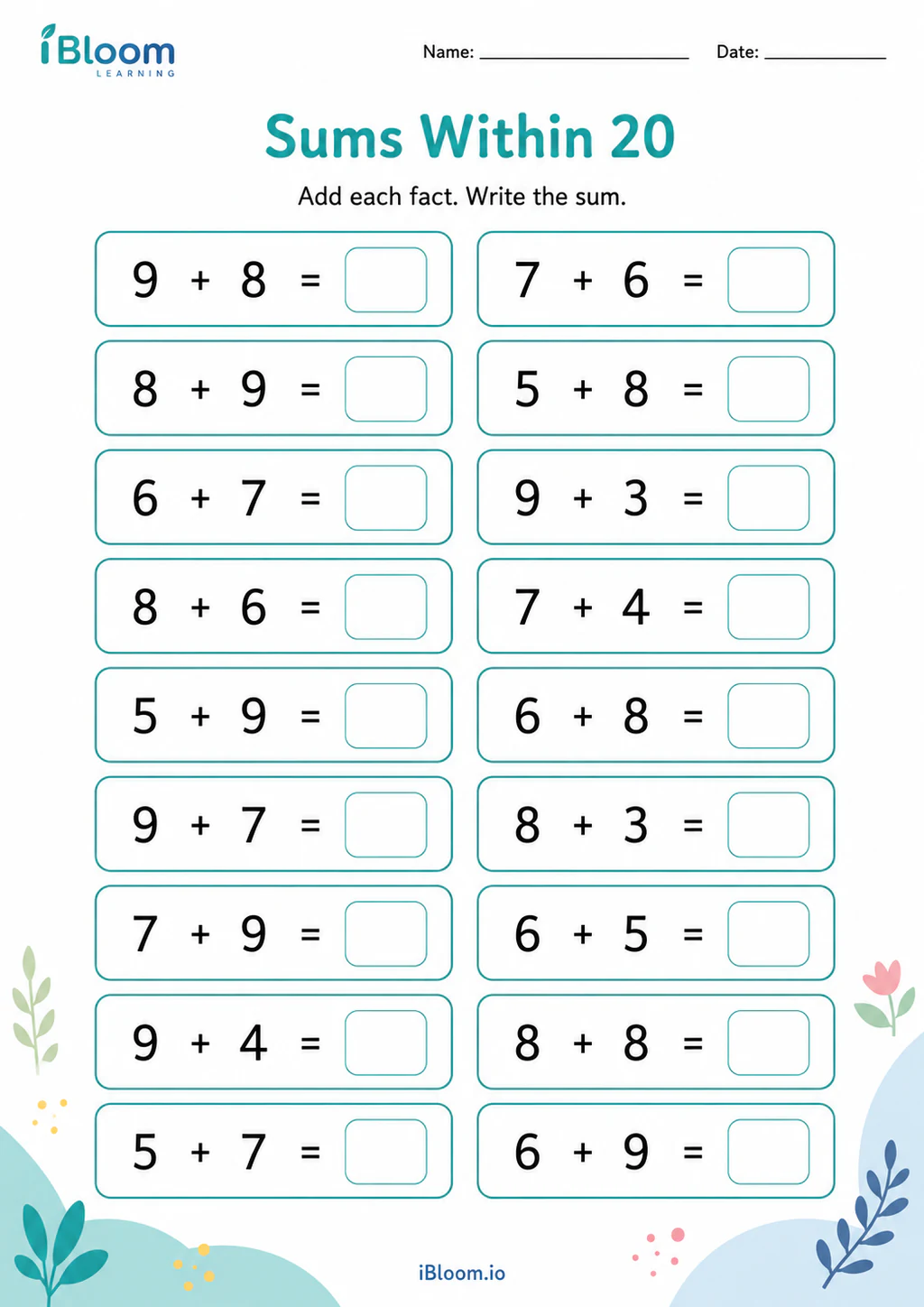
Preview the exact activity before downloading it.
Practice that builds confidence
What this skill builds
Children practise adding two single-digit numbers and finding sums within 20. The activities build from counting all to counting on, helping Grade 1 learners connect pictures, number sentences, and mental addition facts.
These printable worksheets include focused problems with familiar addends, mixed fact practice, and space to show thinking. They are useful for morning work, homework, math centers, or extra practice after an addition lesson.
Adding two single-digit numbers is a key Grade 1 addition skill. Children learn that 4 + 3 means combining two quantities, and that the total can be found with objects, fingers, drawings, a number line, or known facts. Since the sums stay within 20, learners can focus on accuracy, fact patterns, and efficient strategies instead of large-number procedures.

How the practice progresses
Worksheets can begin with easier facts such as adding 0, adding 1, and doubles like 6 + 6. Children then meet near doubles, make-ten facts, and mixed problems such as 7 + 8 or 9 + 6. This steady mix helps them move from counting every object to starting with the greater addend and counting on.
A simple parent routine
Use one short page at a time. Ask your child to read each number sentence aloud, circle the larger addend, then count on the smaller amount. For 8 + 5, they say, “8… 9, 10, 11, 12, 13.” After checking, choose two problems and ask, “How did you know?” This keeps the focus on reasoning, not just speed.

Classroom uses for teachers
Teachers can use these sheets for independent practice after a mini-lesson, small-group review, math centers, or quick checks for addition fluency. The same page can be adapted: some students may draw counters, while others solve mentally and write a related fact, such as 5 + 7 = 12 and 7 + 5 = 12.

Common errors to watch for
Children may count the first addend again instead of counting on, skip a number while counting, reverse a digit in the answer, or confuse the plus sign with the equal sign. Encourage them to touch each count, use a number line when needed, and reread the full equation to see whether the answer makes sense.
Free printable PDF download
Use this adding two single digit numbers sum 20 or less worksheet page to preview the activity, print it, or download it as a PDF for quick practice. It works well for homework, homeschool lessons, tutoring, morning work, revision, and classroom centers.
Answers and answer key support
After the child completes the worksheet independently, parents and teachers can use the answer support or answer key information to check the work, review mistakes, and choose the next practice step.
Why iBloom worksheets help
The pages give Grade 1 students repeated, purposeful practice without overwhelming them. Clear layouts, sums within 20, and varied fact combinations help children notice patterns. A child-friendly strategy is: “Start big, count small, check the total.”
Helpful answers
Frequently asked questions
What does adding two single-digit numbers with sums within 20 mean?
It means children add two one-digit addends, such as 6 + 7 or 9 + 4, and write a total that is less than 20. This builds early addition fluency.
Should my Grade 1 child use fingers or drawings for these worksheets?
Yes. Fingers, counters, dots, and drawings are helpful supports. Over time, encourage counting on from the larger number and using known facts to solve more efficiently.
Which addition facts are usually hardest in this set?
Facts with larger addends, such as 8 + 7, 9 + 6, or 8 + 9, can be harder because counting mistakes are more likely. Make-ten and near-double strategies help.
How can I help if my child keeps getting answers off by one?
Have your child say the starting number first, then count only the second addend. For 7 + 4, say “7” and then count “8, 9, 10, 11,” using four taps or marks.
Can these worksheets be used for math centers?
Yes. They work well as independent center tasks, partner checking activities, or quick review pages after teaching counting on, doubles, or addition facts within 20.
Is this adding two single digit numbers sum 20 or less worksheet free?
Yes. You can preview it for free and use the printable worksheet for home or classroom practice.
Can I download this adding two single digit numbers sum 20 or less worksheet as a PDF?
Yes. Use the worksheet download option to save a printable PDF, or print the worksheet directly from the page.
Does this adding two single digit numbers sum 20 or less worksheet include answers or an answer key?
When the activity has fixed answers, iBloom includes answer support so parents and teachers can check the completed worksheet.