Free printable practice
Addition Practice Activities
Grade 1 addition worksheets for sums to 20, number bonds, number lines, doubles, missing addends, and no-regrouping 2-digit addition.
Explore Addition
Free printable worksheet PDFs
Preview every available page, then download the free worksheet PDF for home, homeschool, tutoring, or classroom practice.
Preview the exact activity before downloading it.
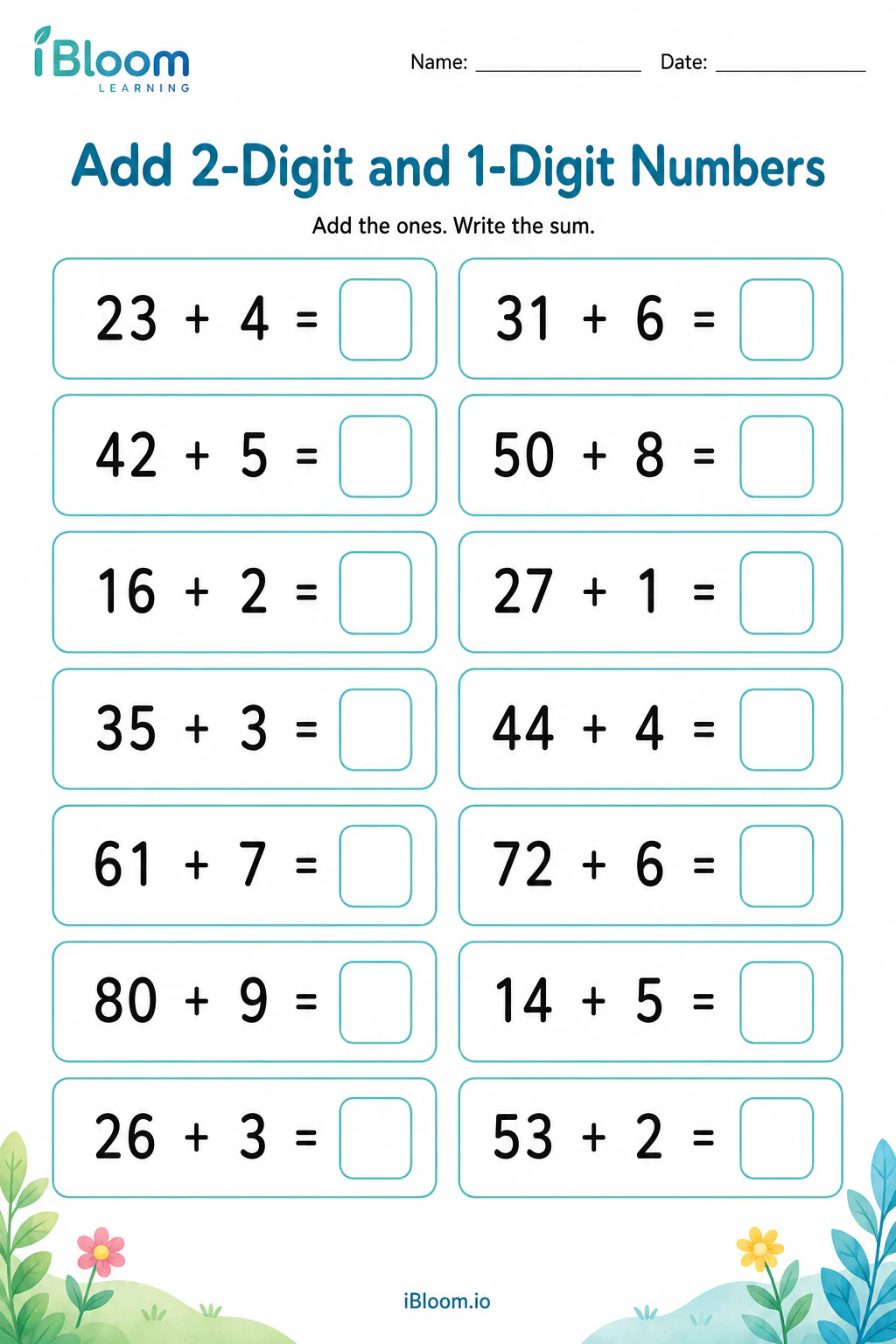 Add 2-Digit and 1-Digit NumbersA Grade 1 worksheet for adding one-digit numbers to two-digit numbers without regrouping.Grade 1Free PDF preview
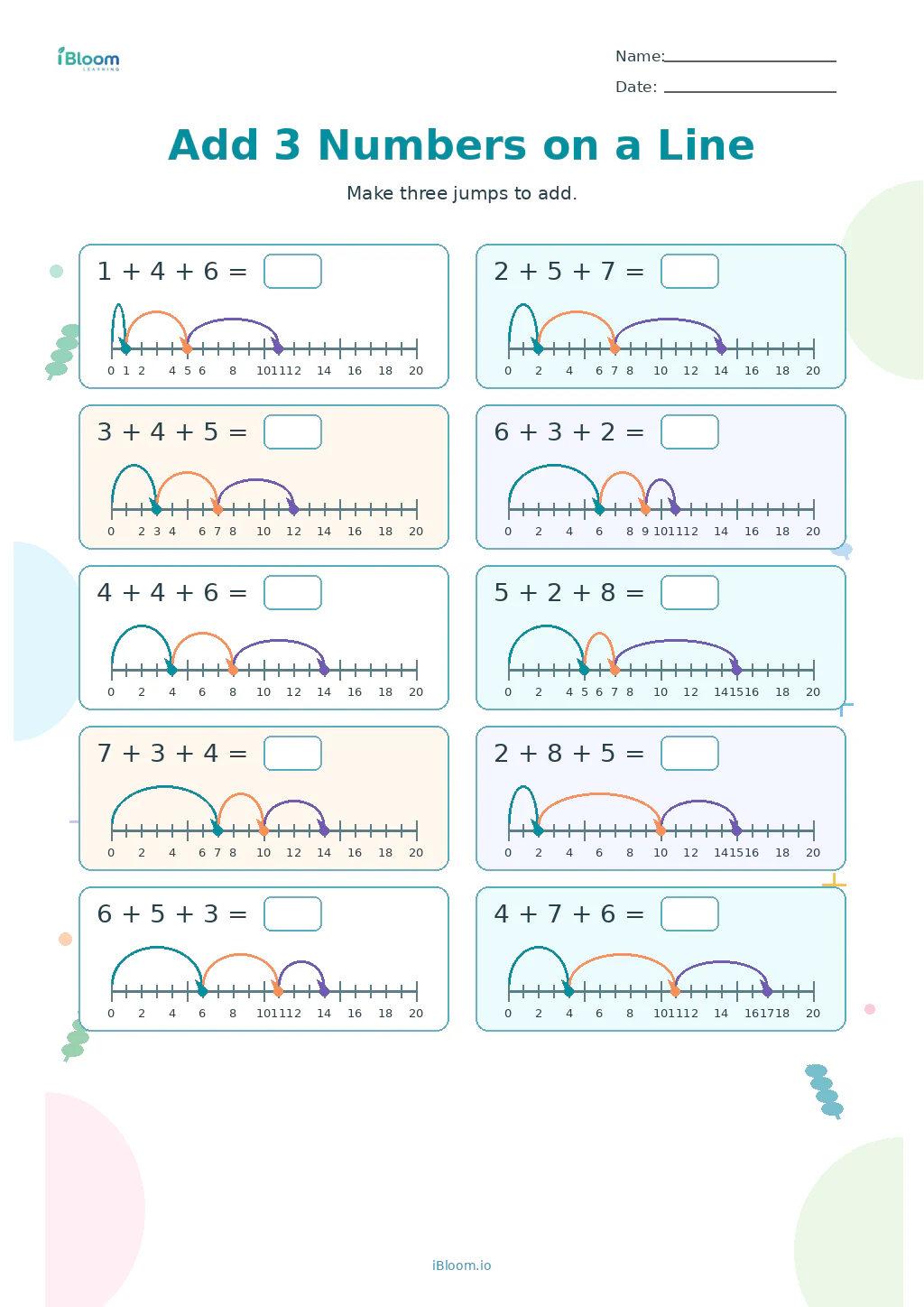 Add 3 Numbers on a LineA Grade 1 worksheet for using number lines to add three small numbers.Grade 1Free PDF preview
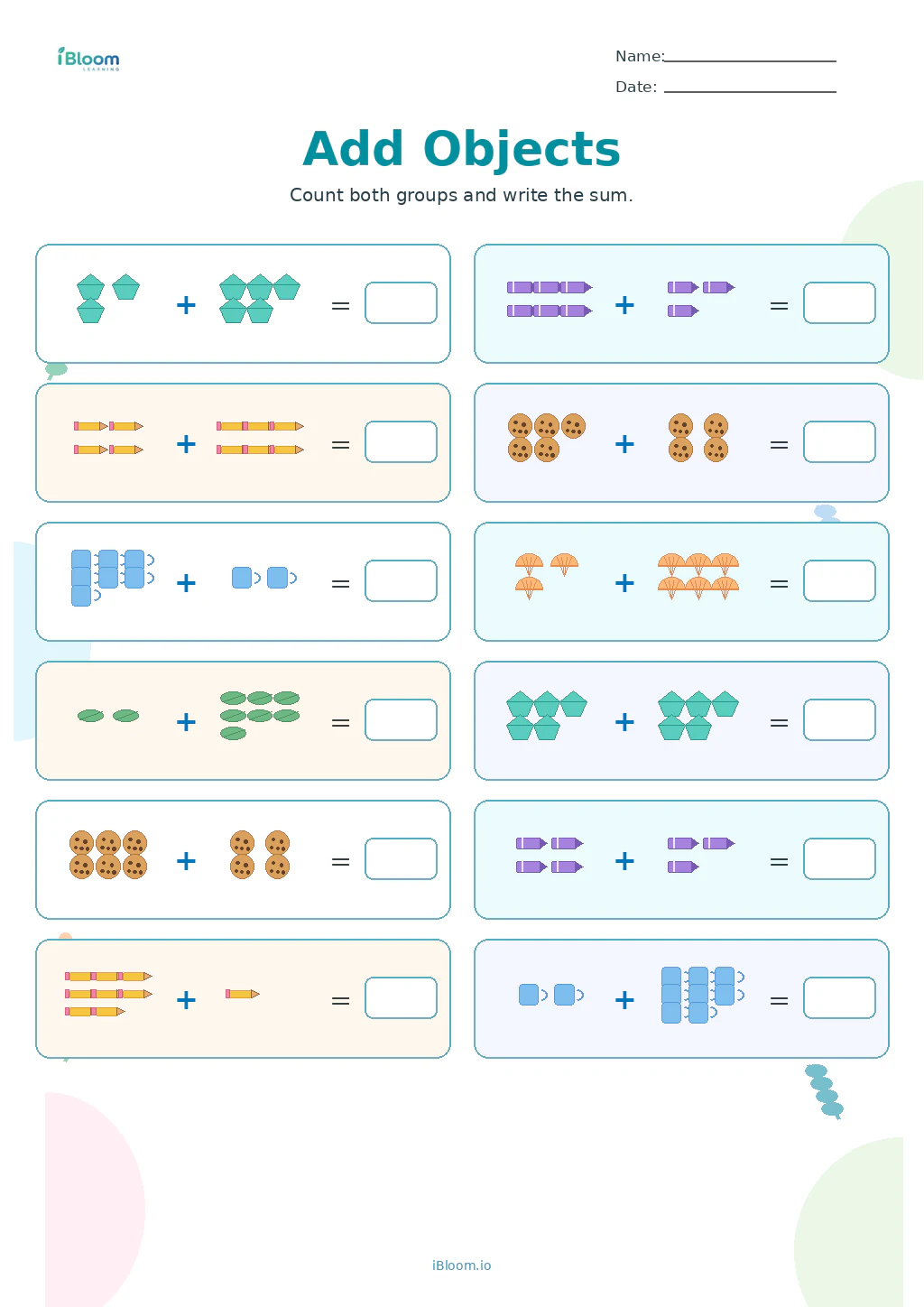 Add ObjectsA Grade 1 worksheet for adding two groups of familiar objects and writing the total.Grade 1Free PDF preview
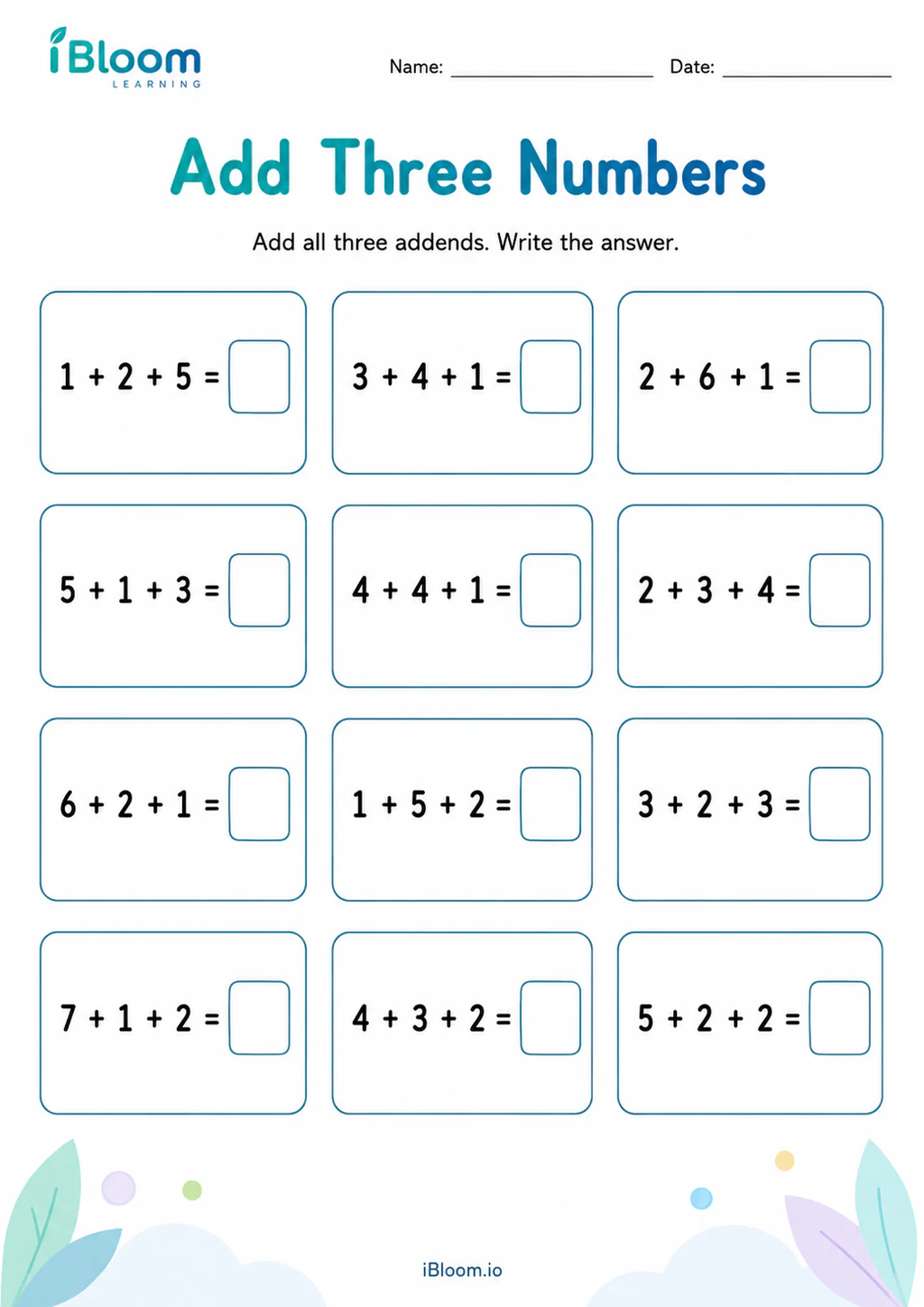 Add Three NumbersA colorful Grade 1 worksheet where children add three one-digit numbers and write each sum.Grade 1Free PDF preview
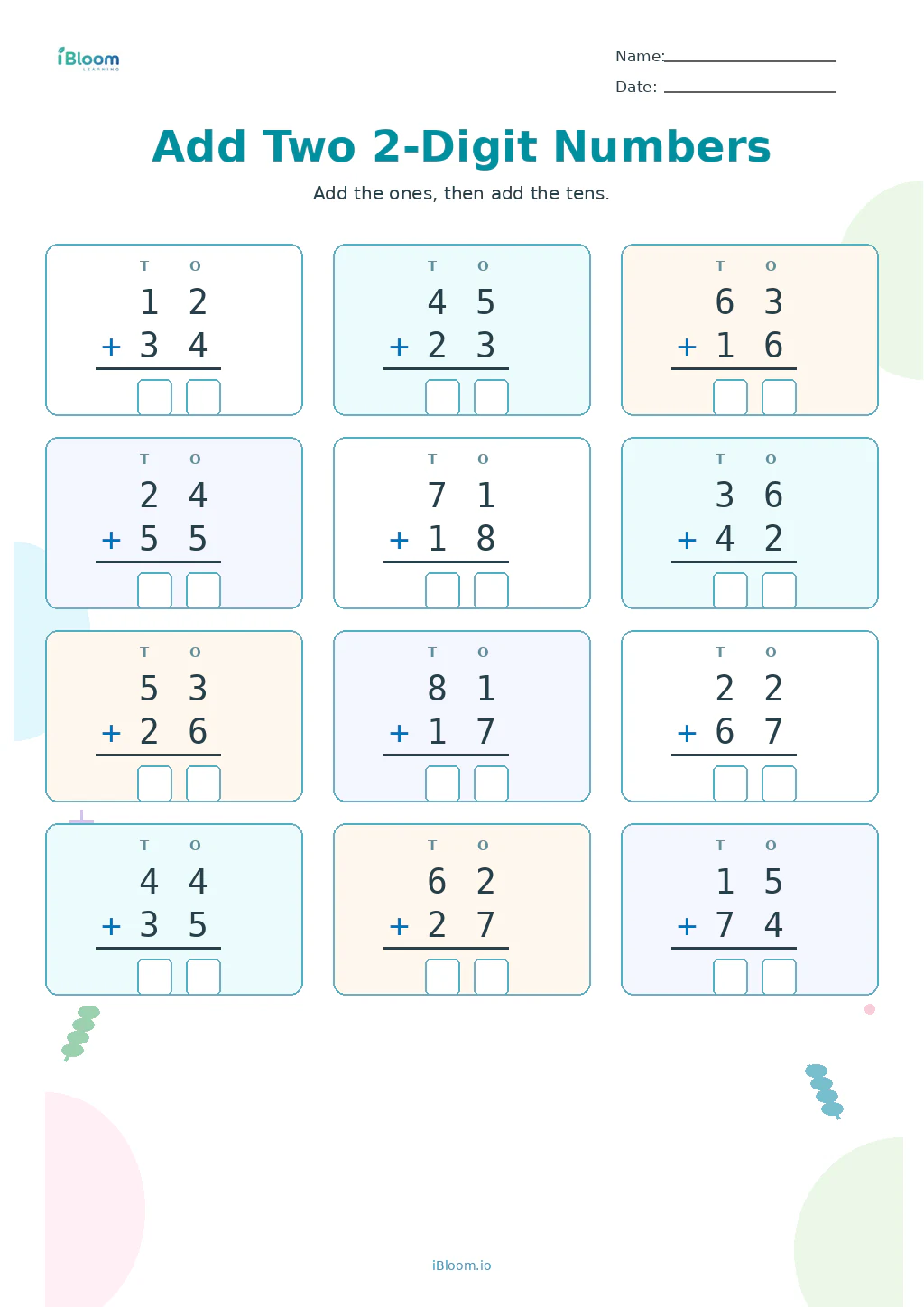 Add Two 2-Digit NumbersA Grade 1 worksheet for adding two 2-digit numbers in columns without regrouping.Grade 1Free PDF preview
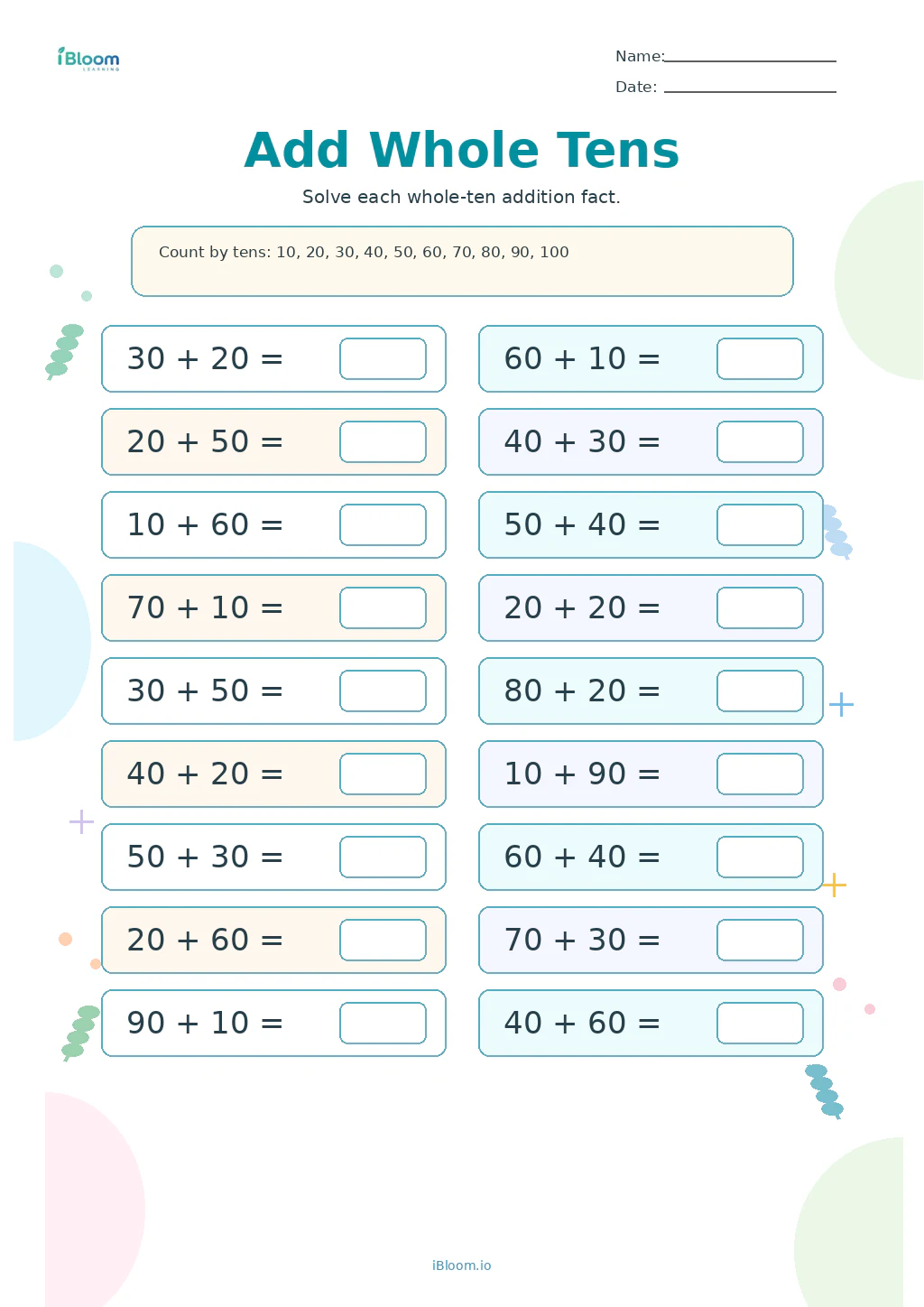 Add Whole TensA Grade 1 worksheet for adding whole tens up to 100.Grade 1Free PDF preview
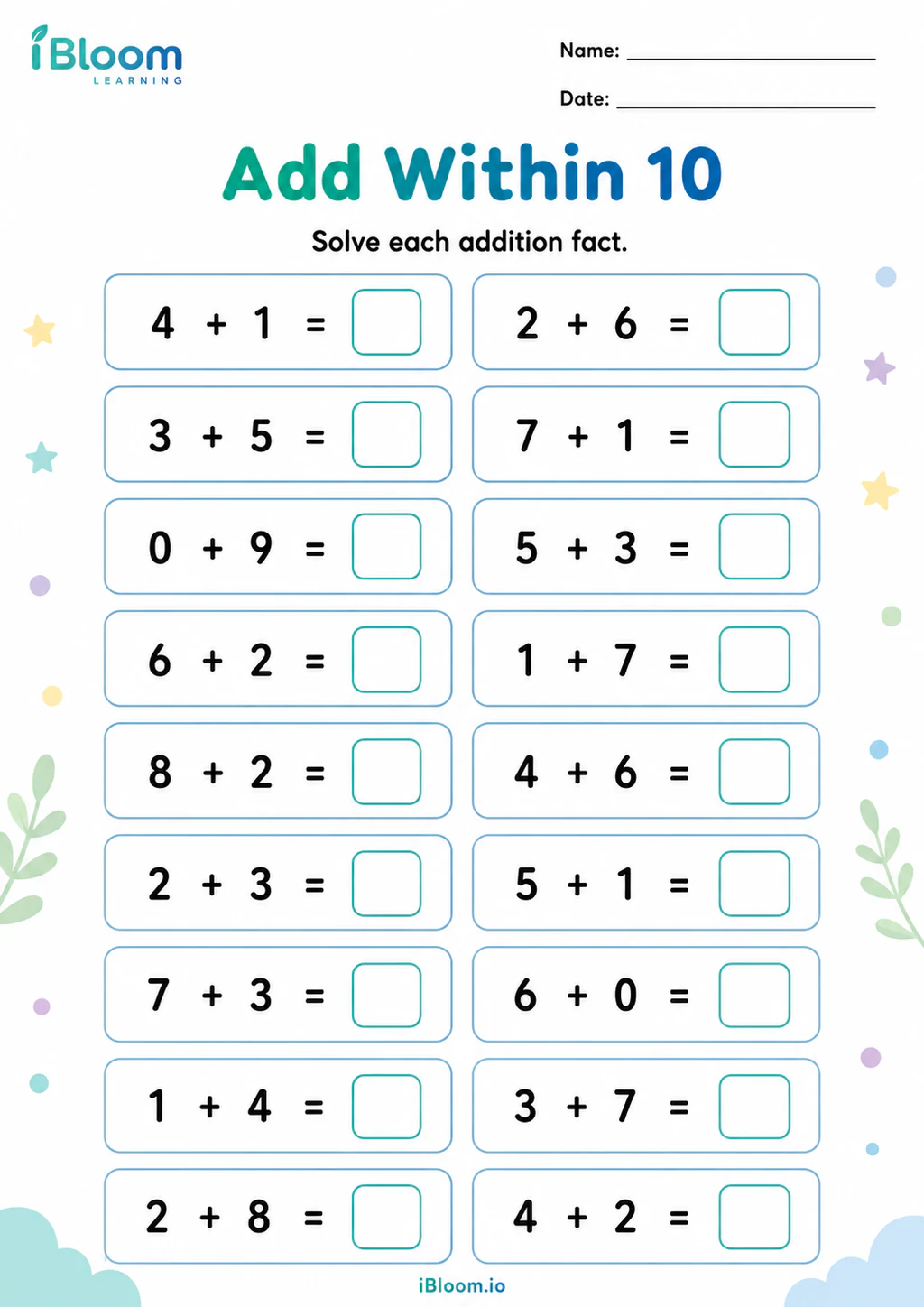 Add Within 10A Grade 1 worksheet for adding two single-digit numbers with sums of 10 or less.Grade 1Free PDF preview
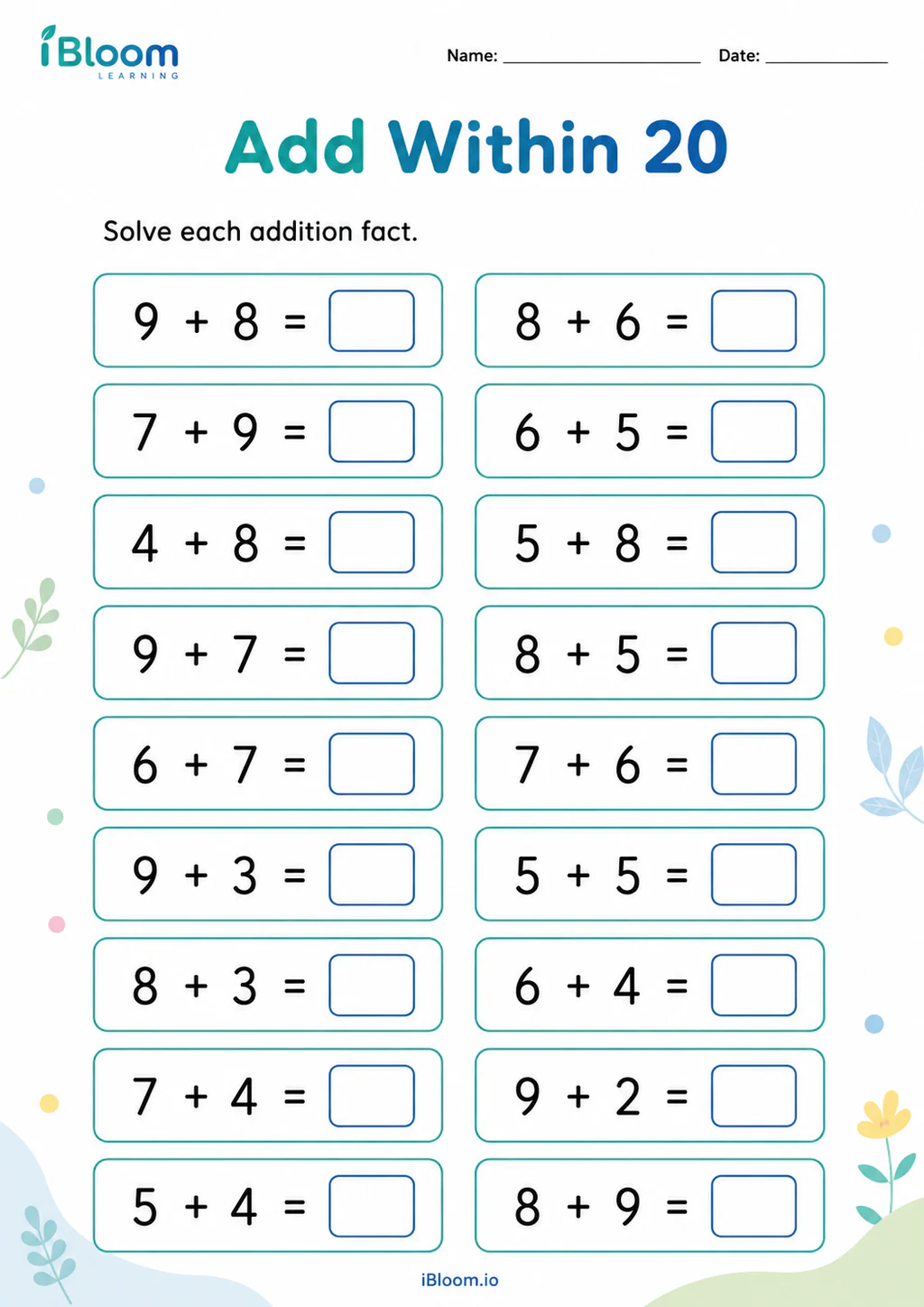 Add Within 20A Grade 1 addition worksheet where children solve addition facts within 20 and use workspace to show thinking.Grade 1Free PDF preview
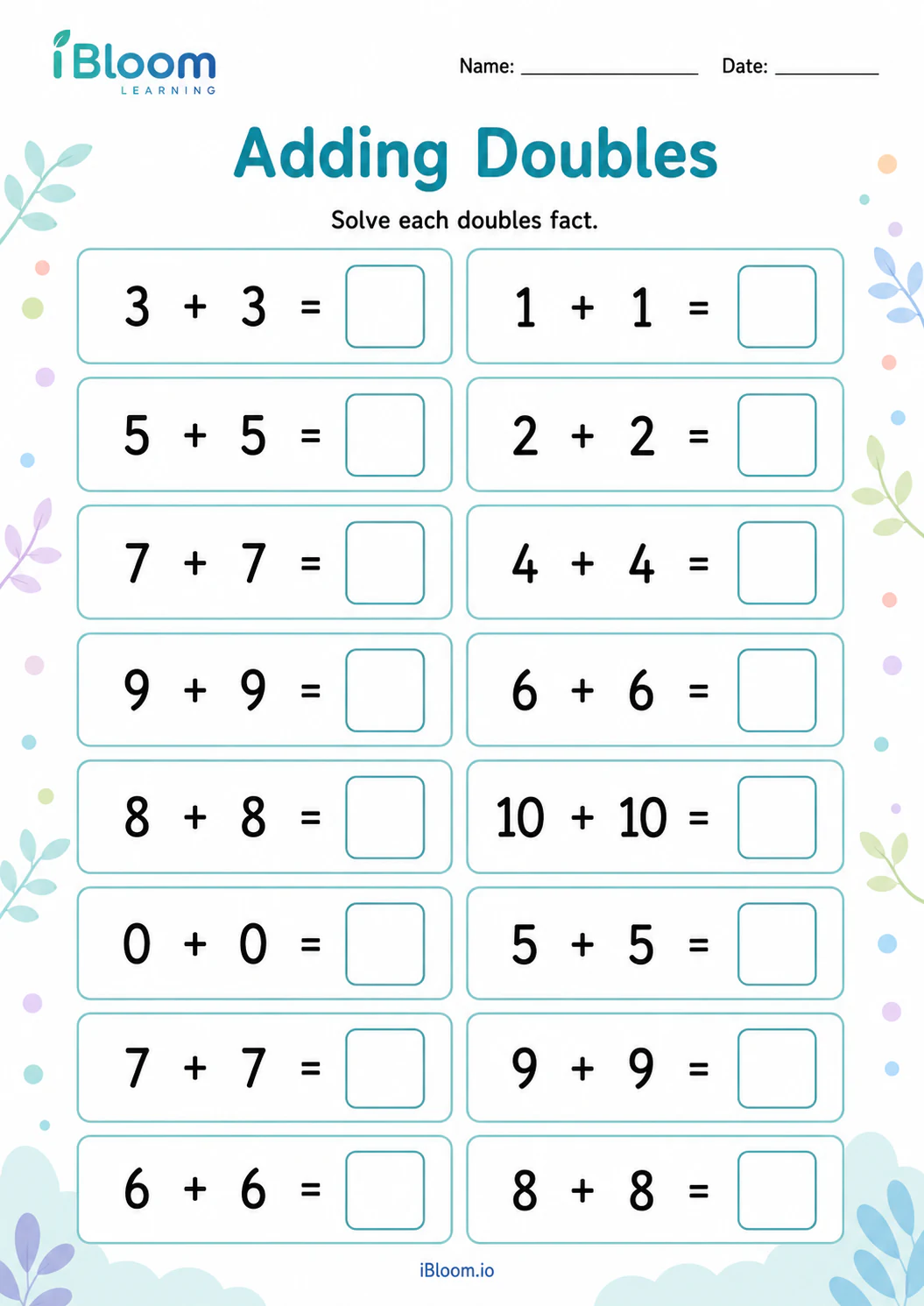 Adding DoublesA Grade 1 addition worksheet for practicing doubles facts.Grade 1Free PDF preview
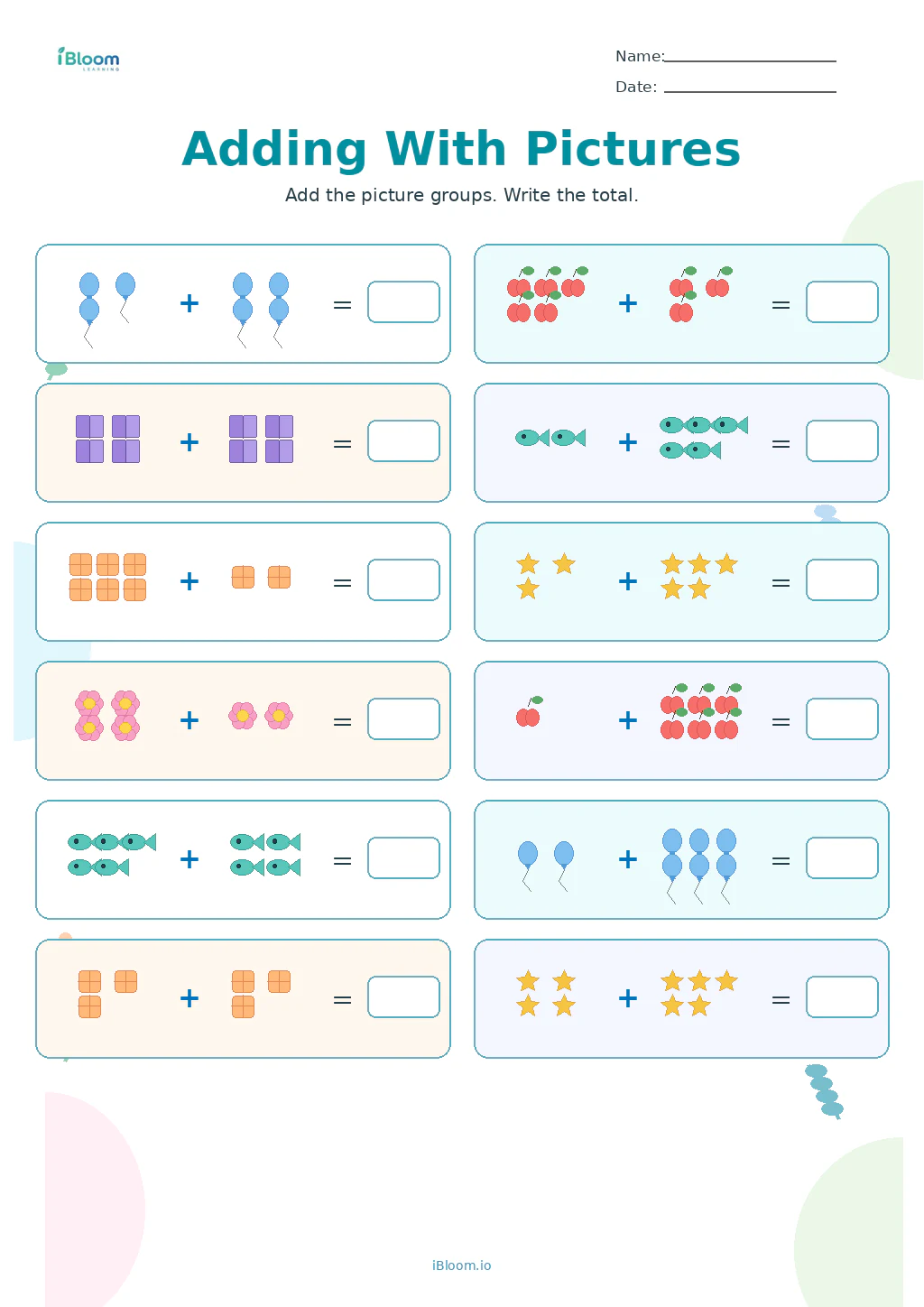 Adding With PicturesA Grade 1 worksheet for counting two picture groups and writing each addition sum.Grade 1Free PDF preview
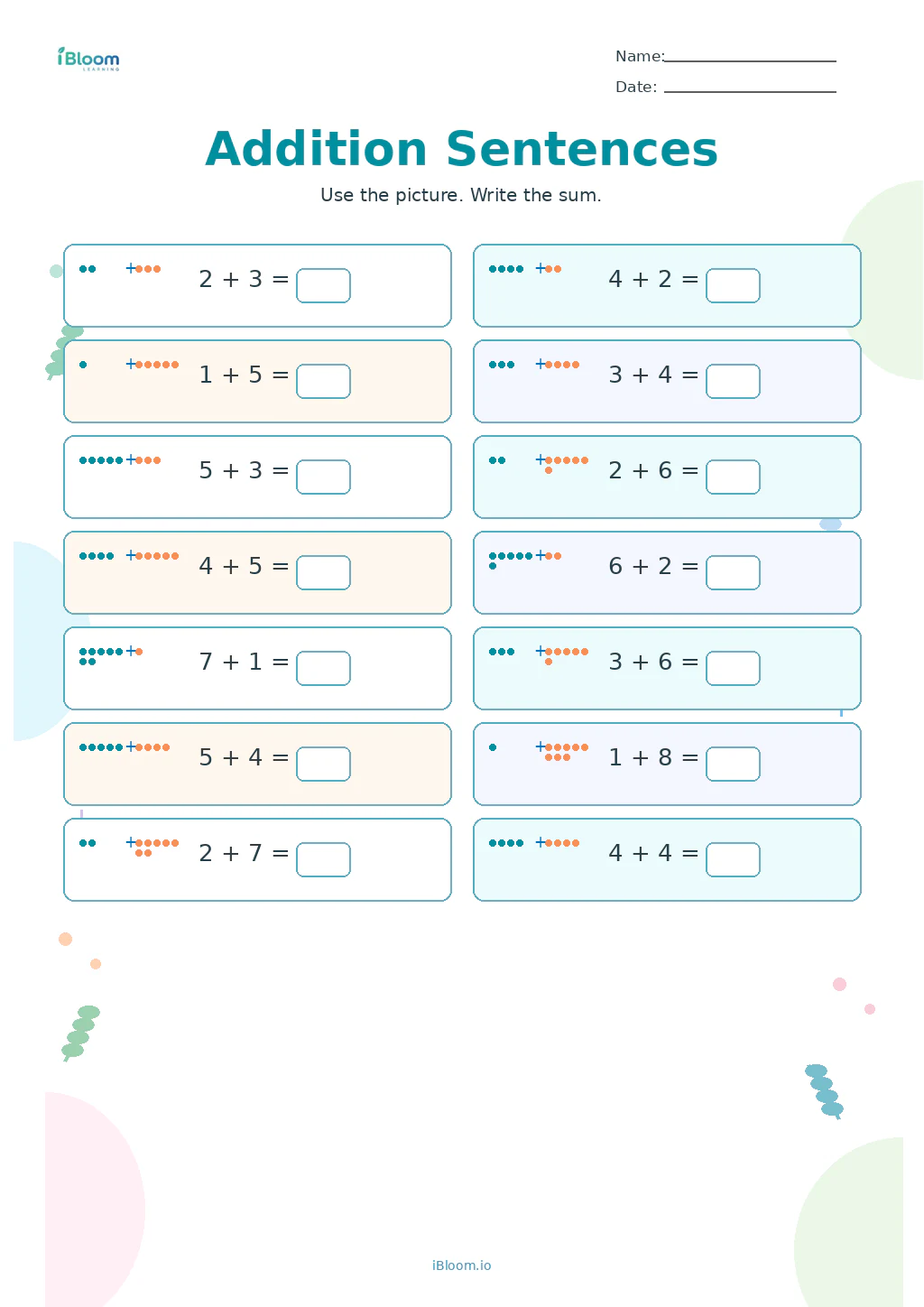 Addition SentencesA Grade 1 worksheet for completing simple addition sentences with sums up to 10.Grade 1Free PDF preview
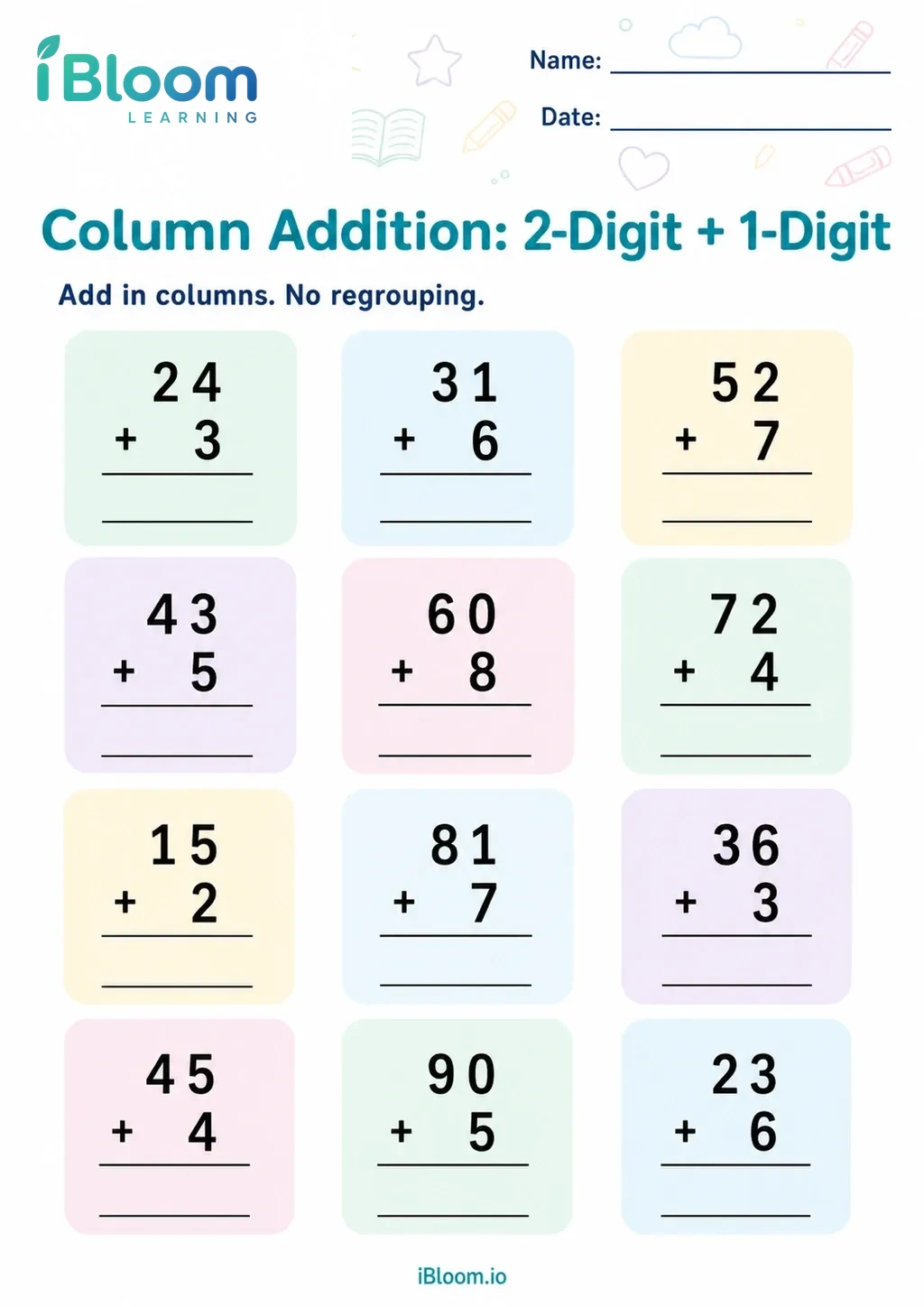 Column Addition: 2-Digit + 1-DigitA Grade 1 column addition worksheet with two-digit plus one-digit problems and no regrouping.Grade 1Free PDF preview
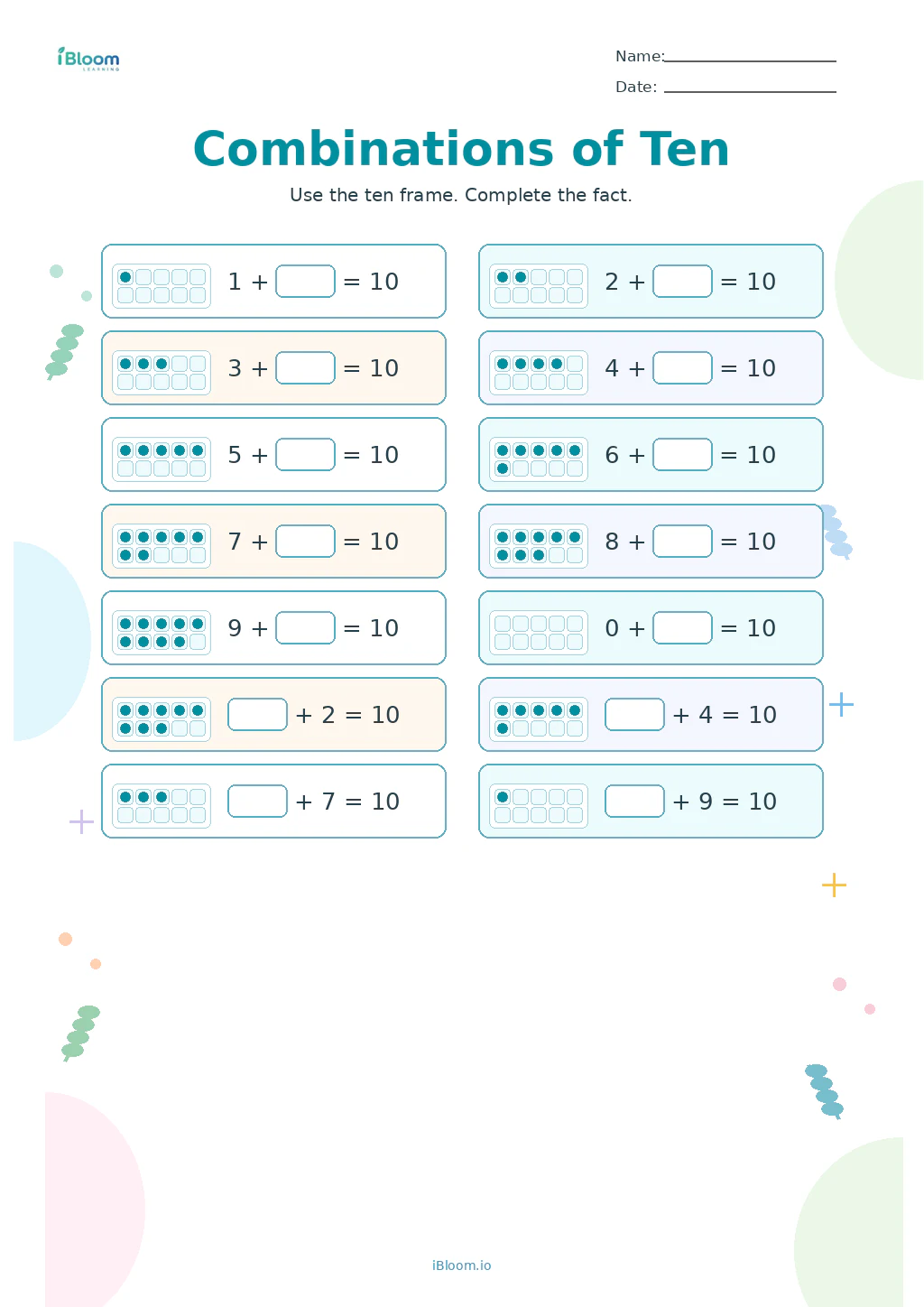 Combinations of TenA Grade 1 worksheet for completing addition combinations that make 10.Grade 1Free PDF preview
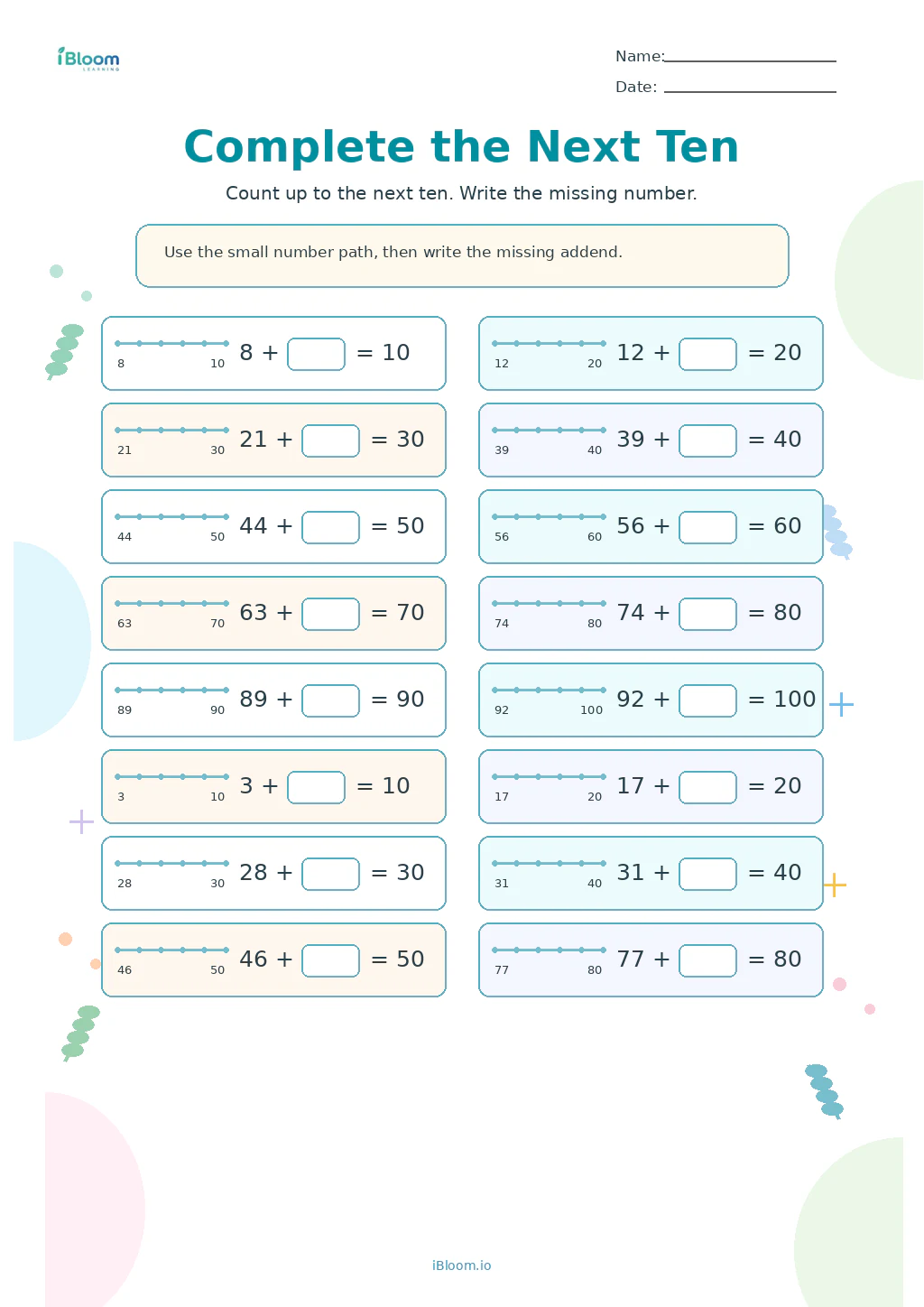 Complete the Next TenA Grade 1 worksheet for finding the missing addend that completes the next ten.Grade 1Free PDF preview
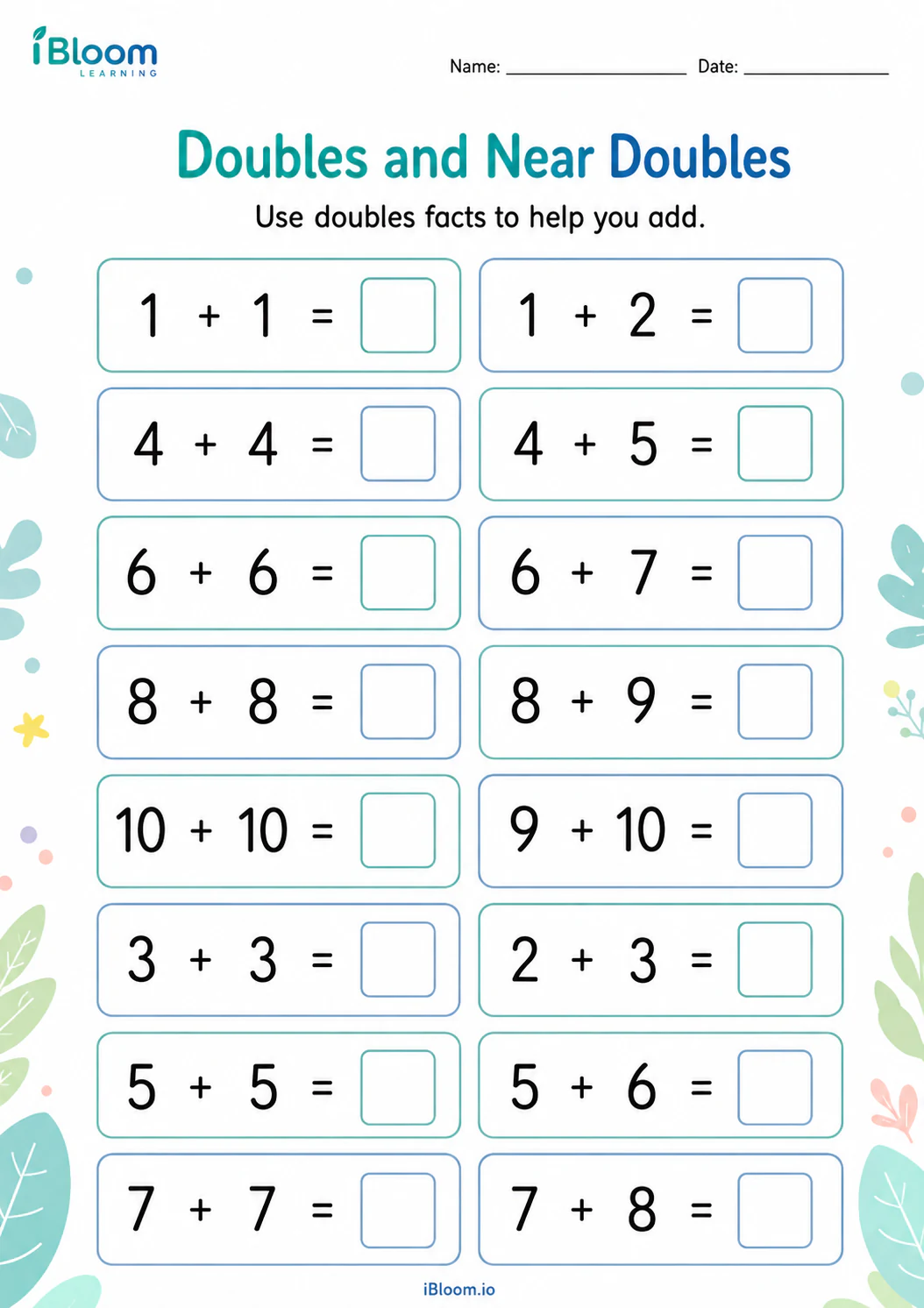 Doubles and Near DoublesA Grade 1 addition worksheet for practicing doubles facts and near doubles within 20.Grade 1Free PDF preview
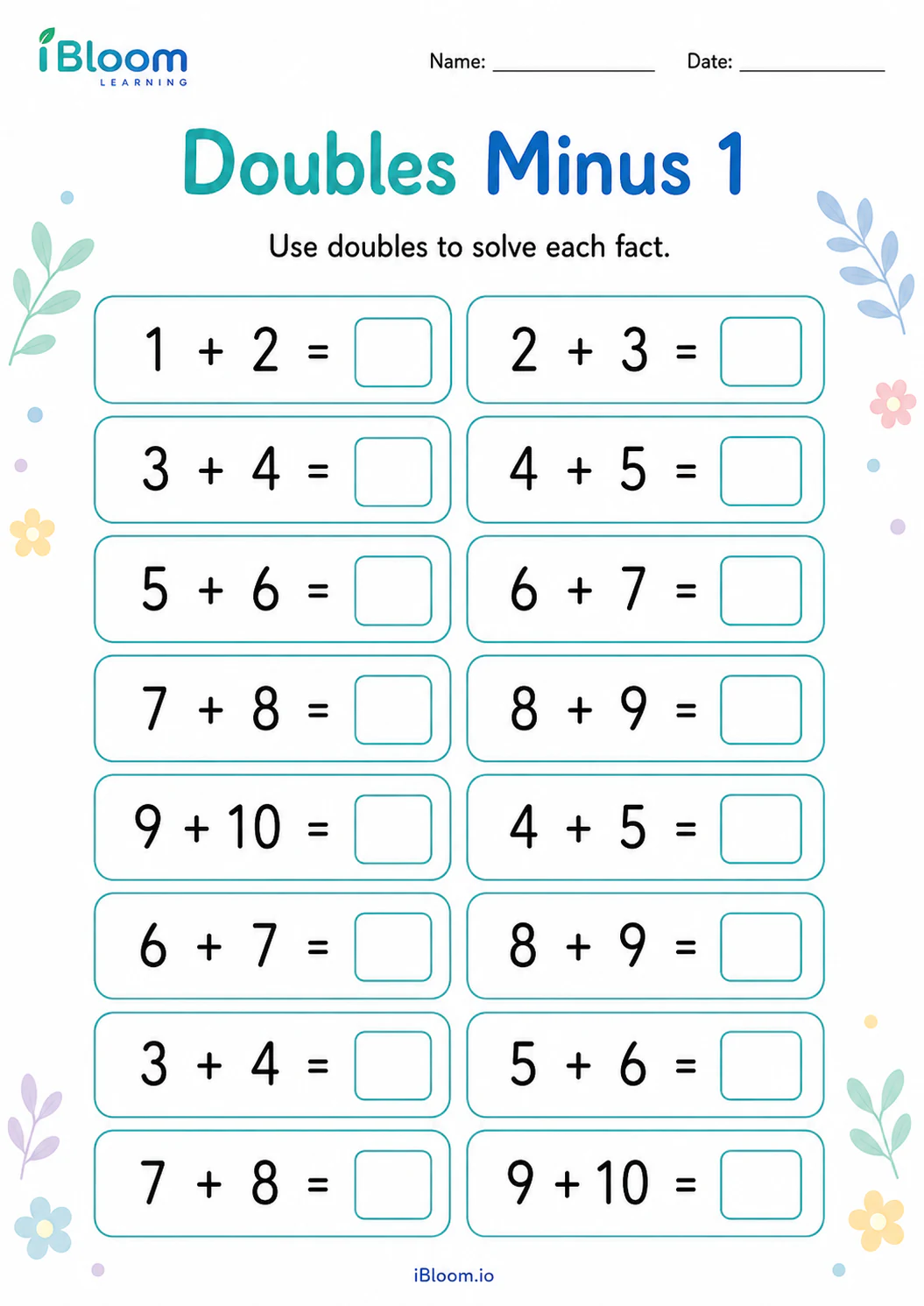 Doubles Minus 1A Grade 1 worksheet for using doubles-minus-one facts to add near doubles.Grade 1Free PDF preview
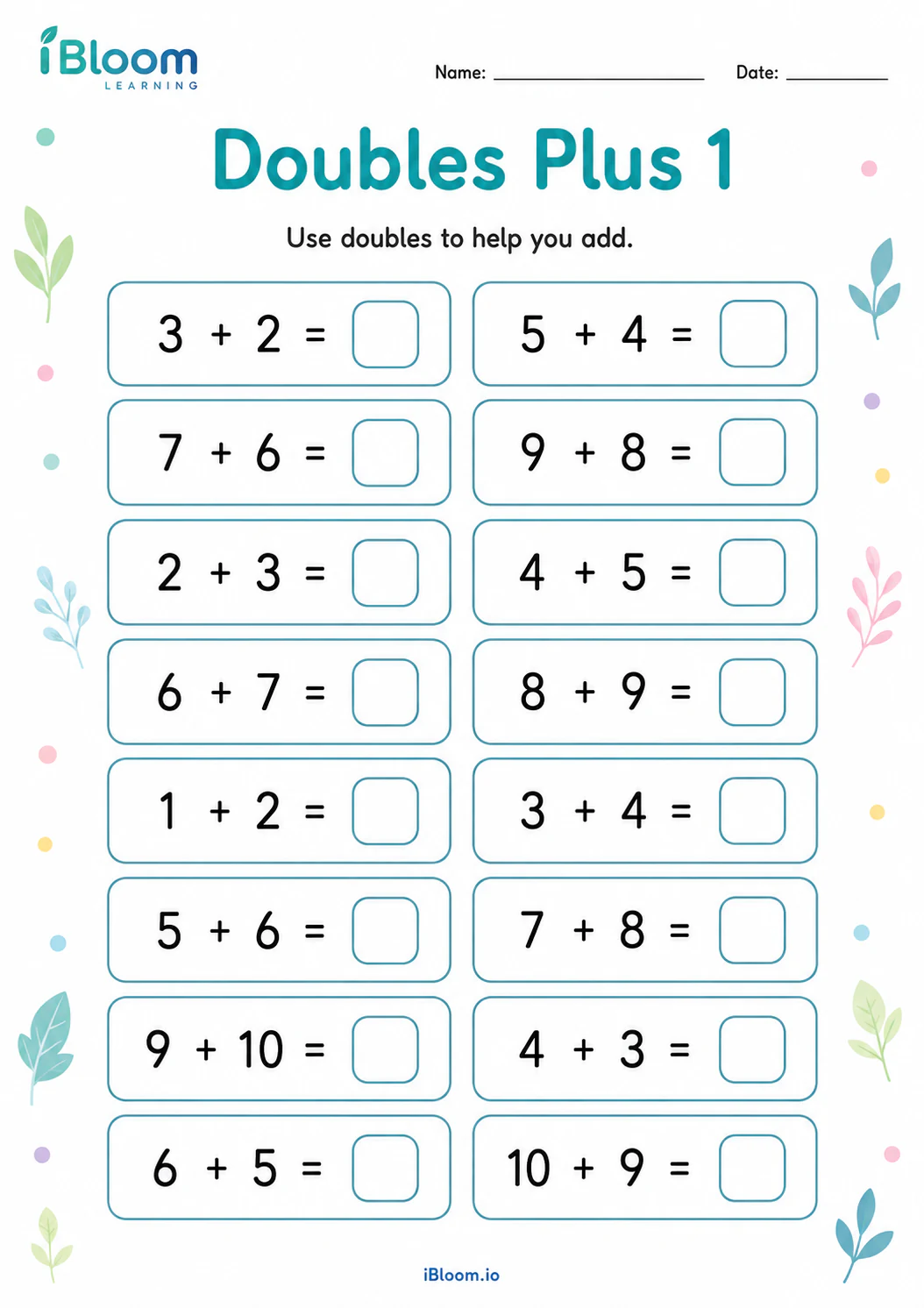 Doubles Plus 1A Grade 1 worksheet for solving doubles-plus-one addition facts.Grade 1Free PDF preview
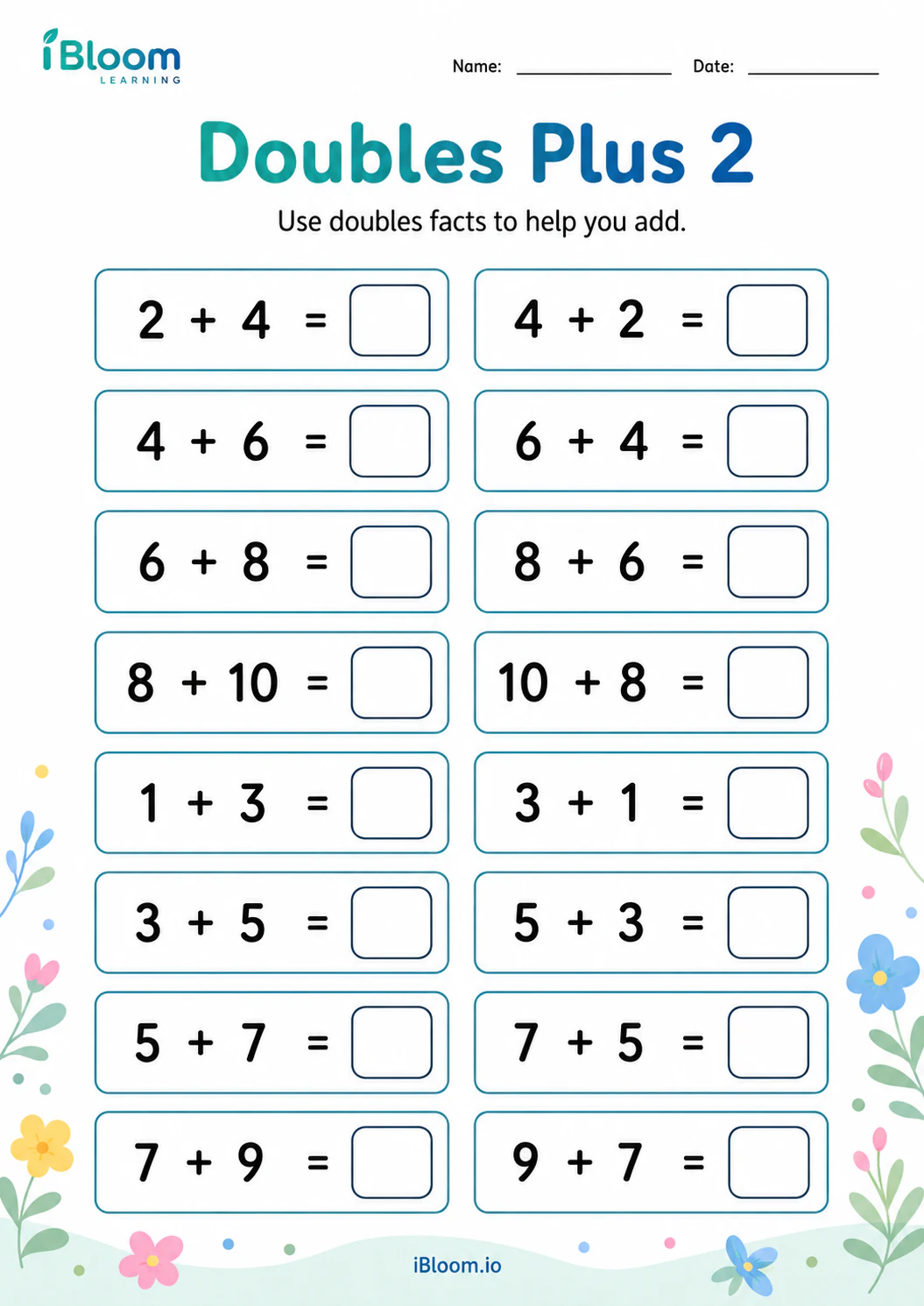 Doubles Plus 2A Grade 1 worksheet for using doubles-plus-two patterns to add near doubles.Grade 1Free PDF preview
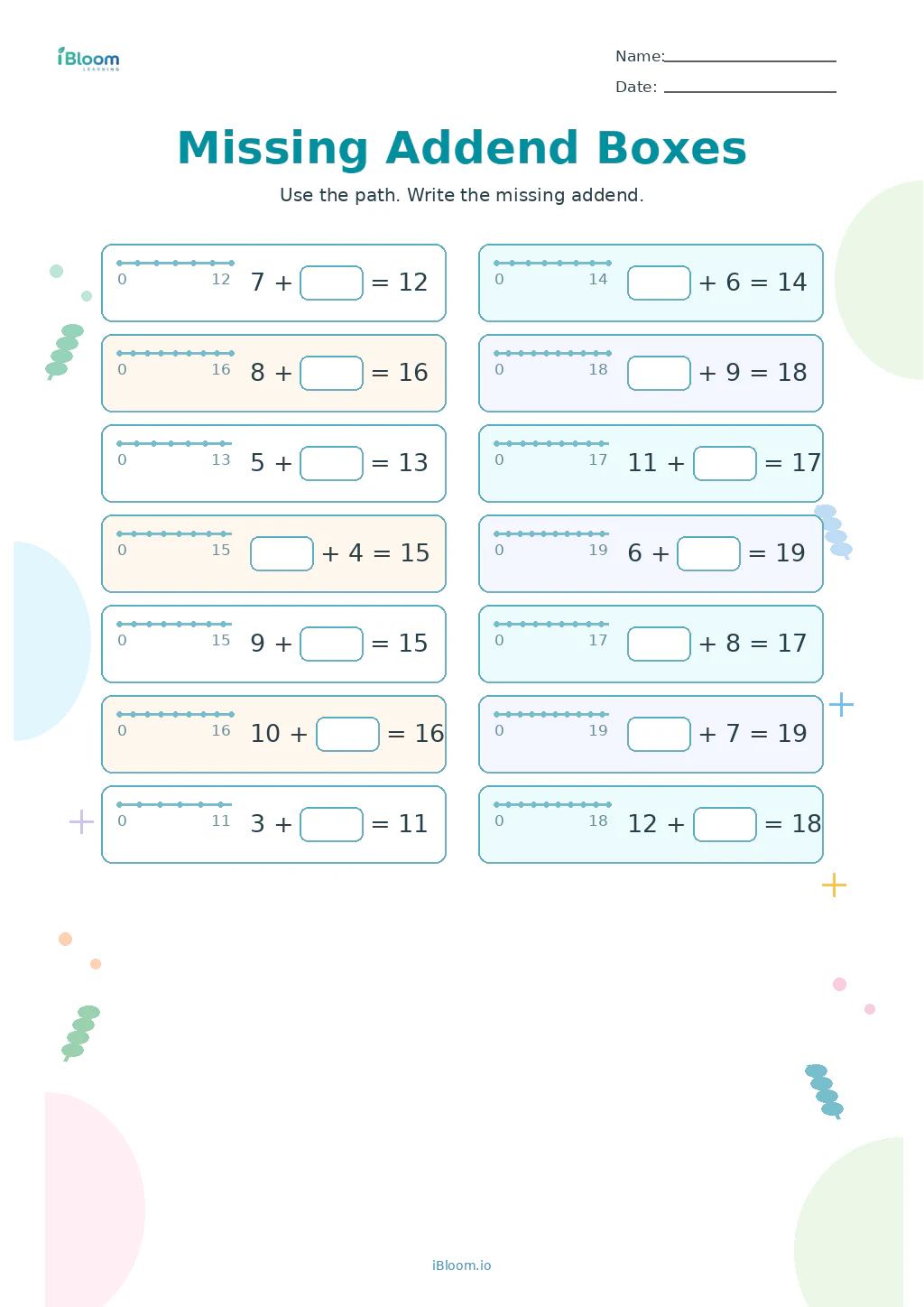 Missing Addend BoxesA Grade 1 missing-addend worksheet with large blank boxes for finding the unknown number in addition equations.Grade 1Free PDF preview
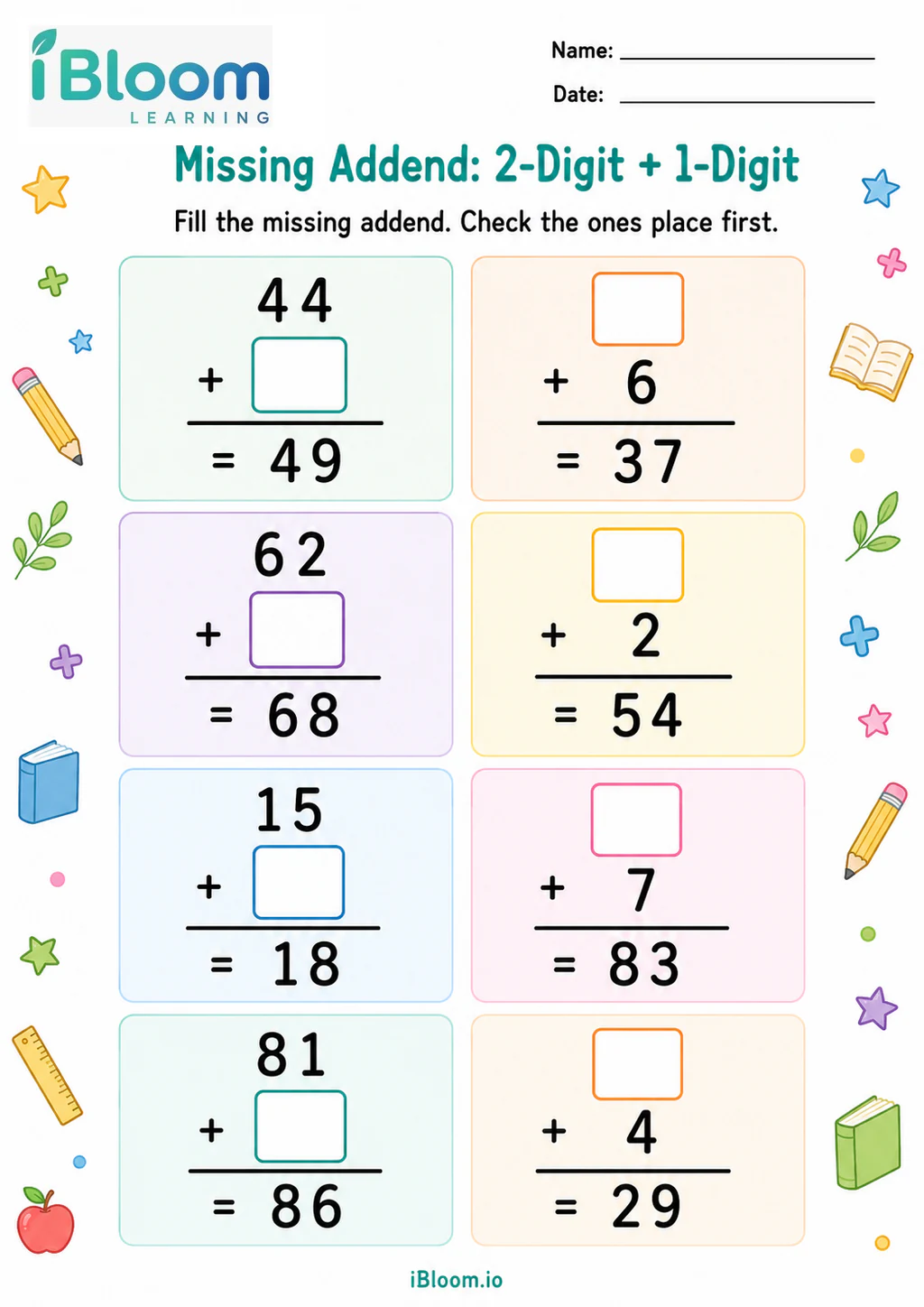 Missing Addend: 2-Digit + 1-DigitA Grade 1 worksheet for finding missing numbers in 2-digit and 1-digit addition equations.Grade 1Free PDF preview
Practice that builds confidence
How the skills build
These Grade 1 addition worksheets help children practise the core ways first graders learn to add: counting pictures and objects, writing addition sentences, using number lines, making combinations of ten, and building number bonds for sums such as 8 and 10.
The printable activities move from adding two single-digit numbers to sums of 10 or 20, doubles and near doubles, three addends, missing addends, whole tens, and 2-digit plus 1-digit or 2-digit addition in columns without regrouping.
Children begin by connecting real quantities to equations: pictures, objects, and vertical object layouts become addition sentences such as 6 + 3 = 9. Number lines show each jump, including number line equations and adding 3 numbers. From there, students practise sums under 10, sums to 20, combinations of ten, and number bonds for 8 and 10 before moving into mental strategies.

Doubles, tens, and place value
Doubles facts, near doubles, and doubles plus 2 help children stop counting every object and start recognizing useful patterns. Whole-ten addition and no-regrouping problems such as 24 + 5 or 30 + 40 introduce place value without the extra step of carrying. Column work keeps tens and ones lined up, while missing addend pages ask children to think, “What part is missing?”
A simple home routine
Choose one page that matches your child’s current skill. Start with three oral problems using fingers, counters, or a quick sketch. Then let your child complete a few items independently. Ask them to explain one answer with words: “I started at 8 and jumped 4,” or “I know 6 + 6, so 6 + 7 is one more.” End by reviewing any missed problem with a drawing or number line rather than simply giving the answer.

Classroom uses for teachers
Use picture addition for warm-ups, number bonds at math centers, number lines for small-group reteaching, and column addition for independent practice. Missing addend sheets work well as exit tickets because they reveal whether students understand the relationship between parts and total. Mixed pages can help teachers see which strategies children choose on their own.

Common errors to watch for
First graders may count the starting number again on a number line, reverse the missing addend and total, or add all digits in a 2-digit problem without respecting tens and ones. Some children also memorize doubles but struggle to use near doubles. Encourage them to circle the known fact, mark jumps clearly, and say the equation aloud.
Free printable PDF download
Use this grade 1 addition worksheet page to preview the activity, print it, or download it as a PDF for quick practice. It works well for homework, homeschool lessons, tutoring, morning work, revision, and classroom centers.
Answers and answer key support
After the child completes the worksheet independently, parents and teachers can use the answer support or answer key information to check the work, review mistakes, and choose the next practice step.
Why iBloom worksheets help
The collection gives repeated practice without staying in one format too long. Children see addition as pictures, sentences, bonds, number lines, and columns, so they can connect meaning, strategy, and written notation. A child-friendly strategy is: “Find what you know first—make ten, use a double, or jump on the number line—then check that the total makes sense.”
Helpful answers
Frequently asked questions
What addition skills are covered in these Grade 1 worksheets?
They cover picture addition, addition sentences, number lines, number bonds for 8 and 10, combinations of ten, doubles and near doubles, missing addends, three single-digit addends, whole tens, and 2-digit addition without regrouping.
Are these worksheets only for children who already know addition facts?
No. Some pages use pictures, objects, and number lines for children who are still building meaning. Other pages provide fact practice and early column addition for children ready for more independent work.
How can I help my child with missing addend problems?
Read the equation as a part-part-total question, such as “7 plus what makes 10?” Use counters, a number bond, or a number line to show the known part and find the missing part.
Do the 2-digit addition pages include regrouping?
No. The 2-digit plus 1-digit and 2-digit plus 2-digit column problems on this page focus on no-regrouping addition, so children can practise place value and alignment first.
When should my child use a number line instead of counting objects?
Use objects when a child is still learning what addition means. Move to number lines when they can count forward and are ready to show jumps, compare strategies, and connect counting to equations.
Is this grade 1 addition worksheet free?
Yes. You can preview it for free and use the printable worksheet for home or classroom practice.
Can I download this grade 1 addition worksheet as a PDF?
Yes. Use the worksheet download option to save a printable PDF, or print the worksheet directly from the page.
Does this grade 1 addition worksheet include answers or an answer key?
When the activity has fixed answers, iBloom includes answer support so parents and teachers can check the completed worksheet.