Free printable practice
Phonics Practice Activities
Printable phonics worksheets for Nursery, LKG and UKG to practise letter sounds, sound matching, beginning sounds and early blending.
Free printable worksheet PDFs
Preview every available page, then download the free worksheet PDF for home, homeschool, tutoring, or classroom practice.
Preview the exact activity before downloading it.
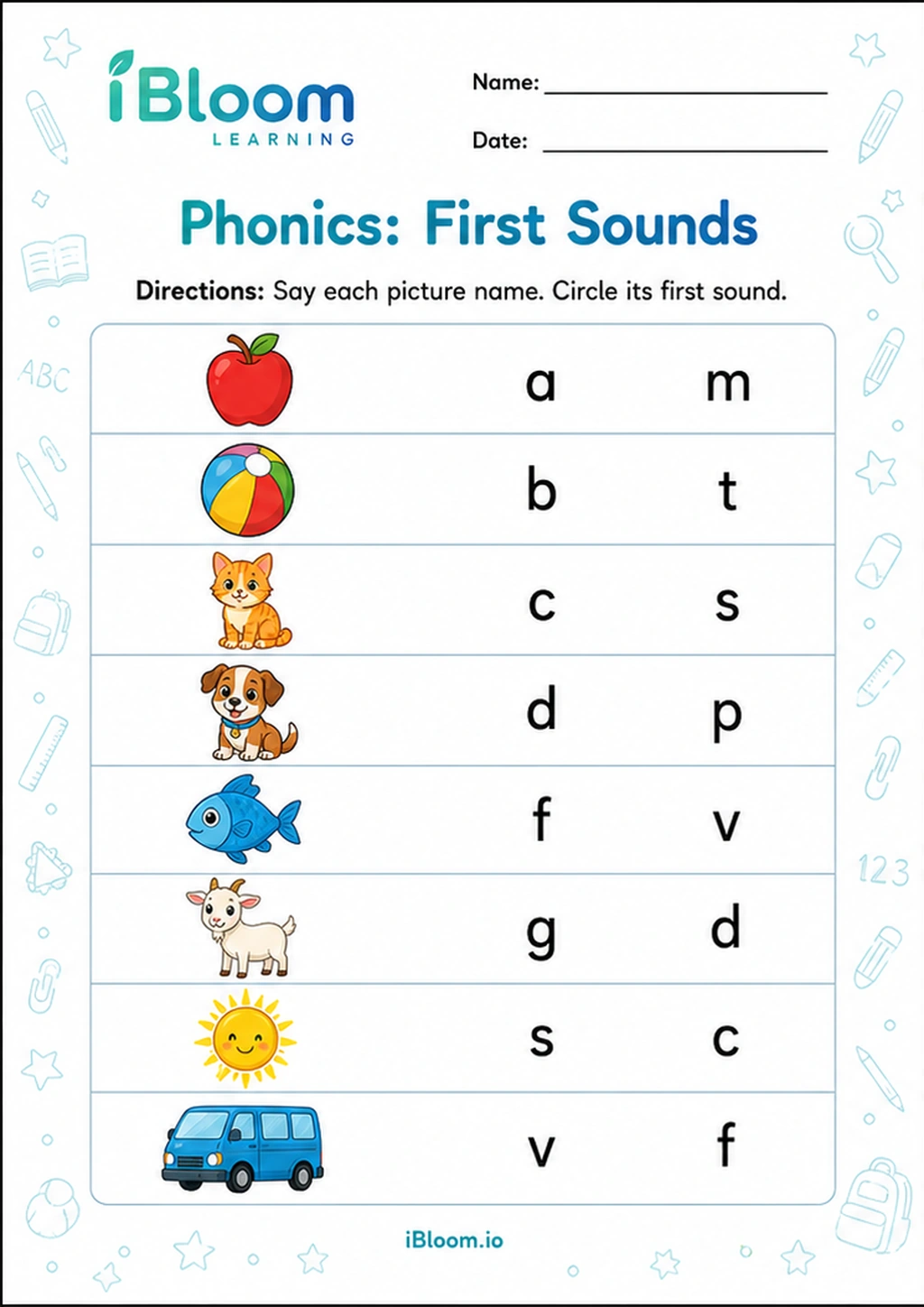 Phonics: First SoundsLKG printable practice for Early Phonics.LKGFree PDF preview
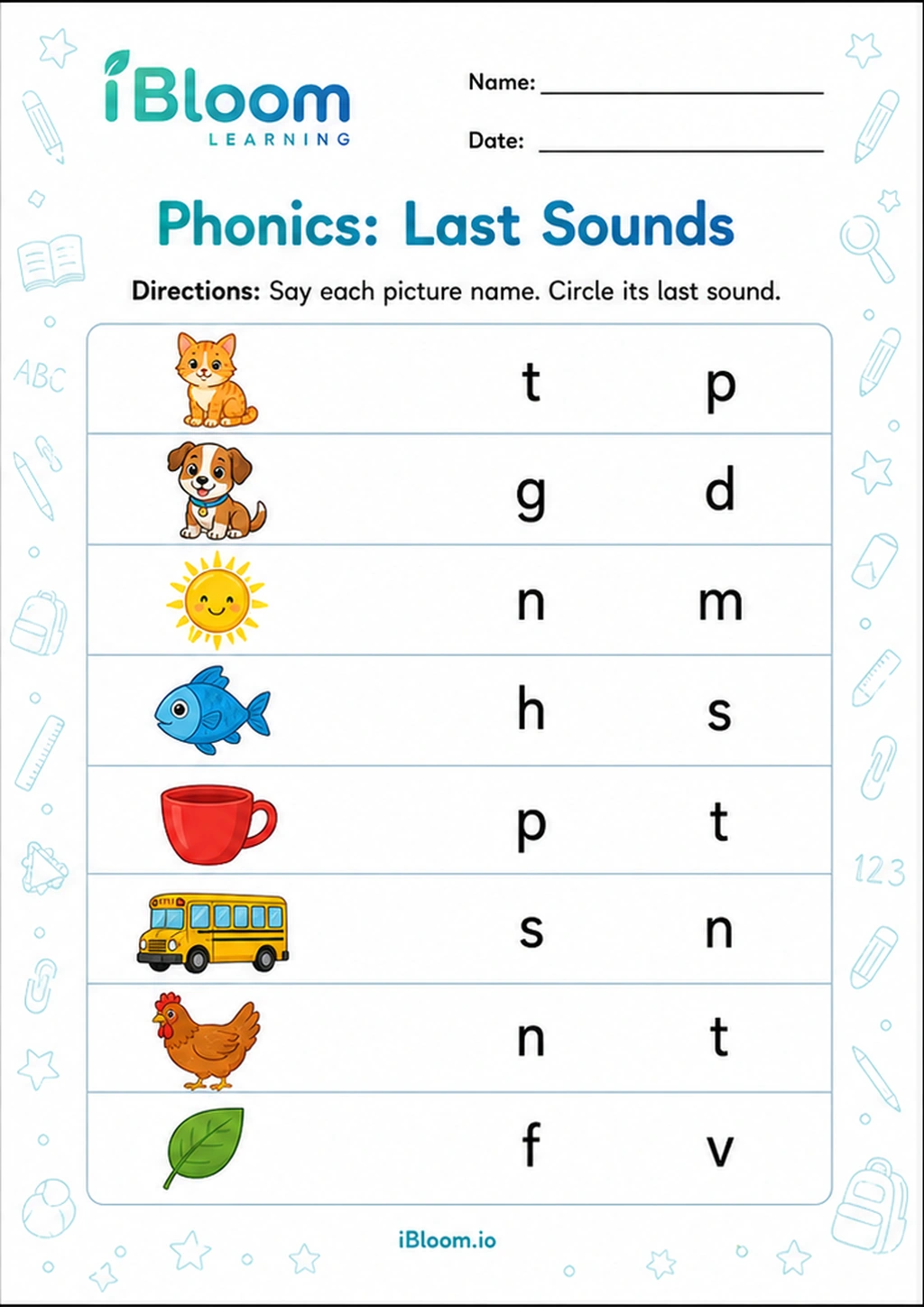 Phonics: Last SoundsLKG printable practice for Early Phonics.LKGFree PDF preview
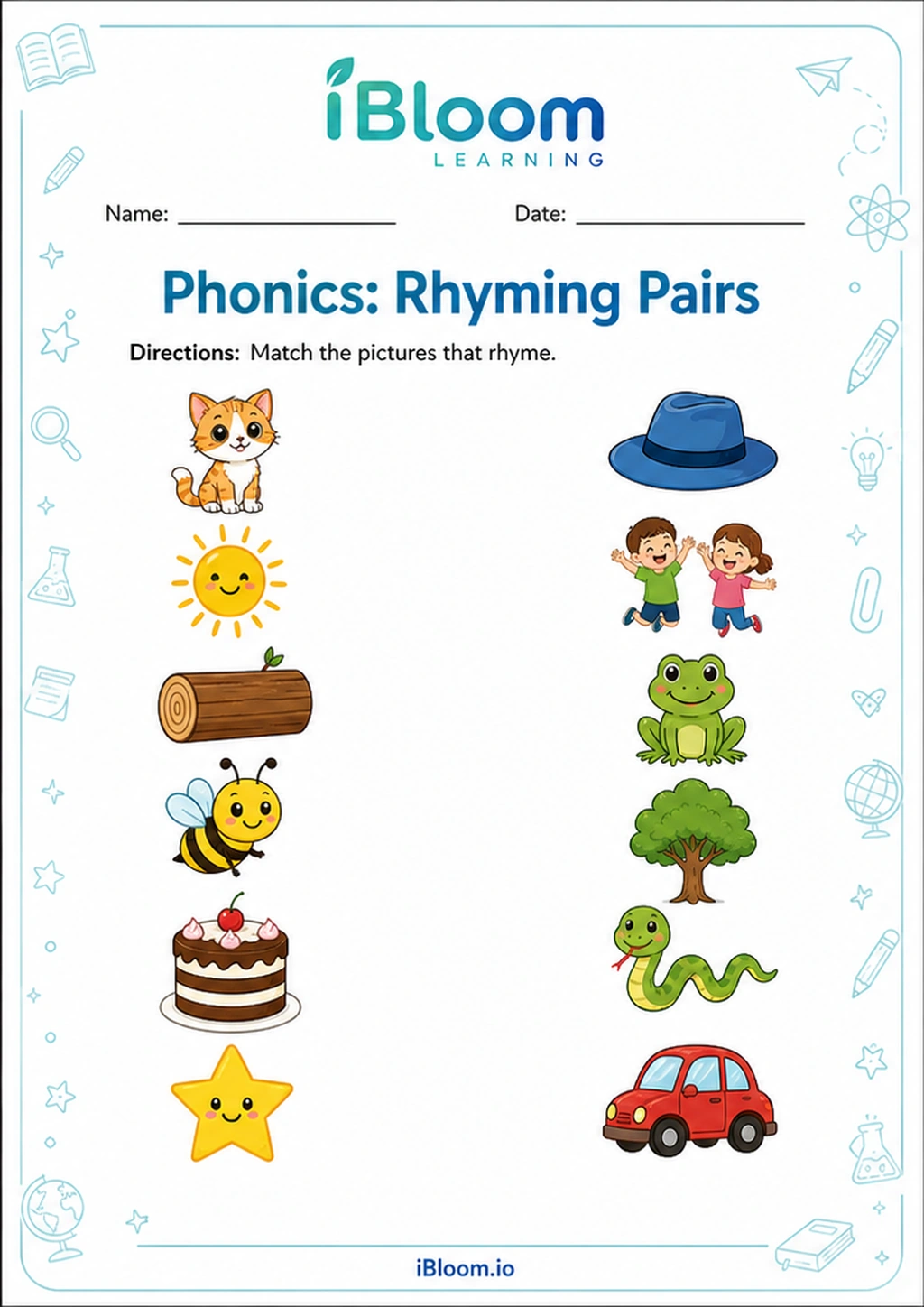 Phonics: Rhyming PairsLKG printable practice for Early Phonics.LKGFree PDF preview
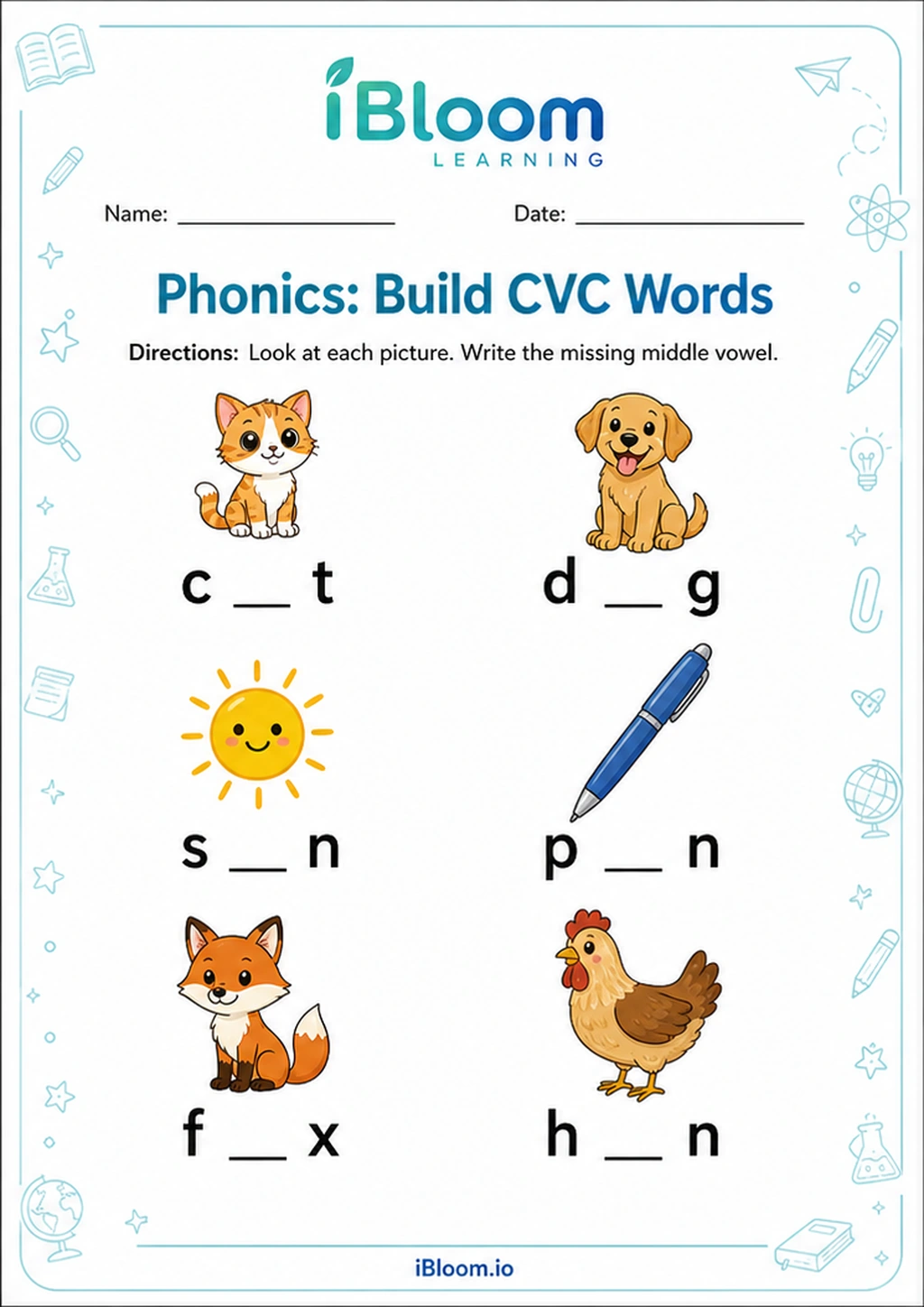 Phonics: Build CVC WordsLKG printable practice for Early Phonics.LKGFree PDF preview
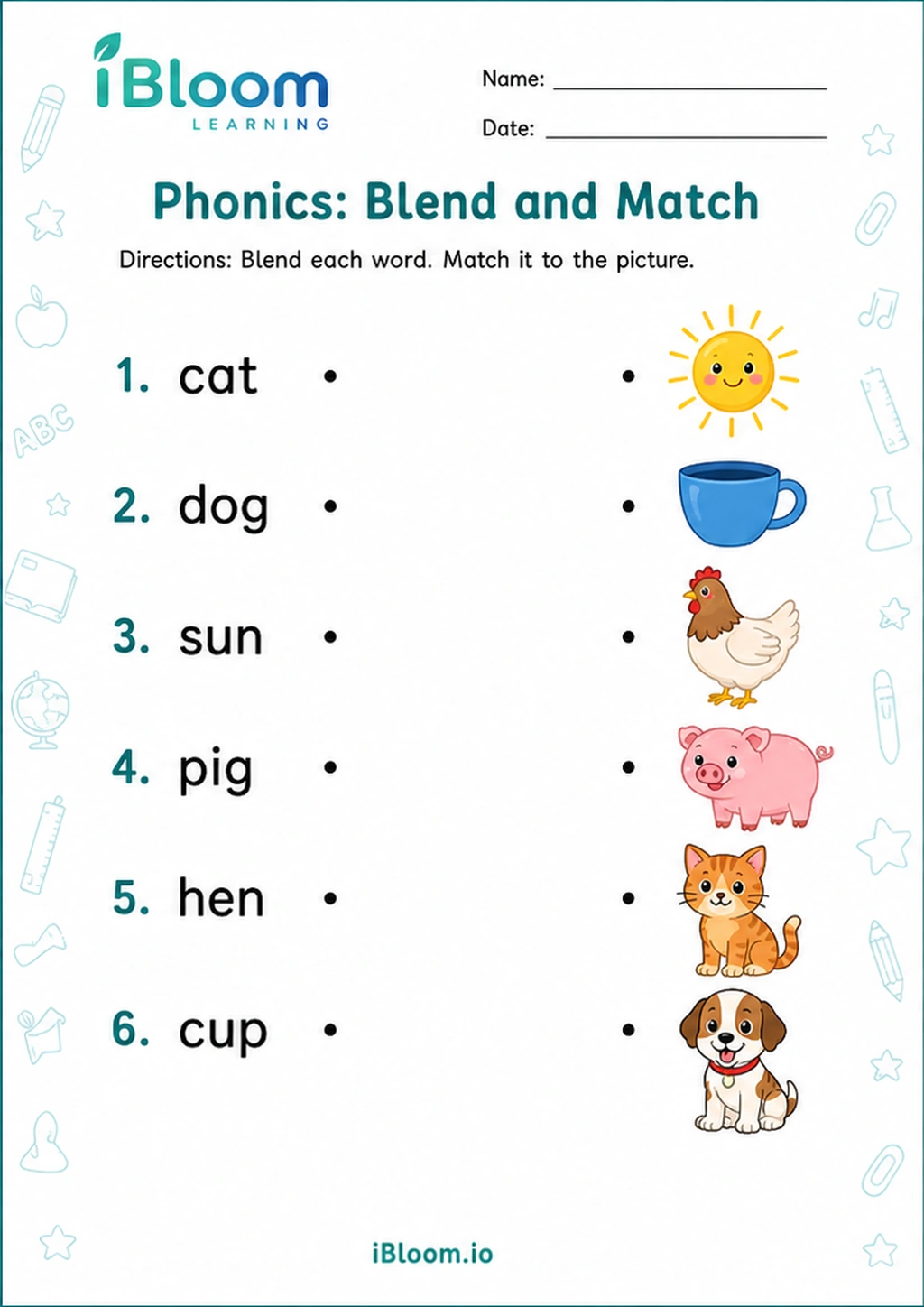 Phonics: Blend and MatchLKG printable practice for Early Phonics.LKGFree PDF preview
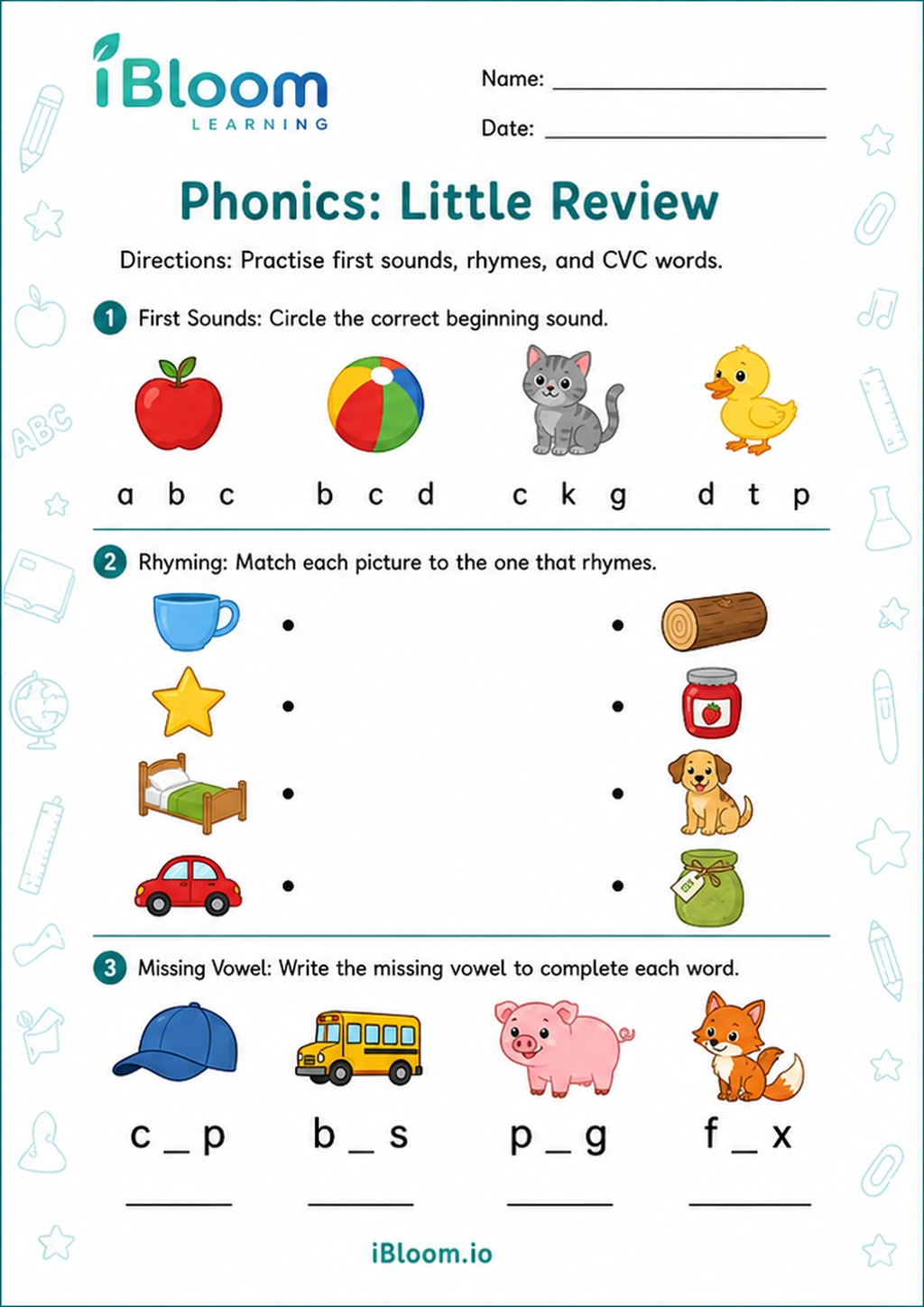 Phonics: Little ReviewLKG printable practice for Early Phonics.LKGFree PDF preview
Practice that builds confidence
What children practise
These phonics practice activities help Nursery, LKG and UKG children connect letters with the sounds they hear in words. Children practise listening carefully, saying sounds aloud, spotting beginning sounds, and matching letters to familiar pictures.
The printable worksheets include age-appropriate tasks such as circle the sound, match the picture, trace the letter, colour the correct object, and simple CVC sound work for children who are ready. Each activity builds confidence before reading whole words.
Phonics is the bridge between spoken language and reading. In these Nursery, LKG and UKG worksheets, children work with letter names, letter sounds, beginning sounds, picture clues, and simple sound-to-letter matching. They may identify that sun starts with /s/, match a ball to b, or choose the picture that begins with a given sound.

How the skill develops
The practice begins with listening: hearing whether two words start alike, noticing rhymes, and saying clear sounds. It then moves to recognising letters, matching uppercase and lowercase forms, and connecting a sound to a picture. For UKG learners, some pages can extend towards blending short CVC words such as mat, pin, or cup, only after the child is comfortable with individual sounds.
A simple parent routine
Choose one sound for the day. Say the sound, not just the letter name, then ask your child to repeat it with a clear mouth movement. Look around the home for two or three objects that begin with that sound, such as cup, cap, or comb for /c/. After the worksheet, ask your child to draw one more matching object. Keep the focus playful and praise careful listening.

Classroom uses
Teachers can use these pages during phonics circles, small-group practice, revision work, or literacy centres. Picture-based activities are useful for mixed-readiness groups because children can respond by circling, colouring, matching, or tracing. A teacher may first model the sound, then let children complete the page, and finally review answers aloud to strengthen pronunciation and vocabulary.

Common errors to watch for
Young learners may confuse letter names with sounds, for example saying “bee” when the task needs /b/. They may also reverse b and d, mix up short vowel sounds, or choose a picture because they like it rather than because of its starting sound. Encourage children to say the word slowly, stretch the first sound, and point to the letter before answering.
Free printable PDF download
Use this phonics worksheets for nursery lkg ukg page to preview the activity, print it, or download it as a PDF for quick practice. It works well for homework, homeschool lessons, tutoring, morning work, revision, and classroom centers.
Answers and answer key support
After the child completes the worksheet independently, parents and teachers can use the answer support or answer key information to check the work, review mistakes, and choose the next practice step.
Why iBloom worksheets help
The worksheets are designed for early years learners in India, with clean layouts, familiar objects, and varied response styles to avoid rote copying. A child-friendly strategy is: “Say the word, hear the first sound, find the letter.” Repeating this simple routine helps children become more independent as they move from sound awareness to early reading.
Helpful answers
Frequently asked questions
What phonics skills do these worksheets cover?
They focus on early phonics skills such as recognising letter sounds, identifying beginning sounds, matching letters to pictures, tracing letters, and, for ready UKG children, blending simple CVC words.
Are these worksheets suitable for Nursery children?
Yes. Nursery children can use the simpler pages that involve listening, colouring, matching pictures, and recognising a few familiar sounds. They do not need to read words independently.
How should I teach letter sounds at home?
Introduce one sound at a time. Say the sound clearly, name a few familiar objects that begin with it, and then complete a short worksheet. Emphasise the sound /m/ rather than only the letter name “em”.
Can UKG children use these for reading practice?
Yes. UKG children who know many letter sounds can use the advanced pages to blend short CVC words like cat, pin, and sun, while still revising beginning sounds and letter recognition.
What if my child confuses similar letters like b and d?
This is common in early years. Give extra visual and oral practice, ask the child to trace the letter while saying its sound, and use picture cues such as ball for b and dog for d.
Is this phonics worksheets for nursery lkg ukg free?
Yes. You can preview it for free and use the printable worksheet for home or classroom practice.
Can I download this phonics worksheets for nursery lkg ukg as a PDF?
Yes. Use the worksheet download option to save a printable PDF, or print the worksheet directly from the page.
Does this phonics worksheets for nursery lkg ukg include answers or an answer key?
When the activity has fixed answers, iBloom includes answer support so parents and teachers can check the completed worksheet.